A small curved carton can make a bracelet, soap bar, sample vial, or candle tin feel gift-ready in seconds. Customized pillow boxes only perform that trick well when the board, crease depth, and product fit are right. If the item is too thick, the end flaps fight back. If the paperboard is too light, the box collapses. If artwork crosses a hard fold, a clean logo on the PDF can look warped on the finished carton.
What Customized Pillow Boxes Are Really Built to Do
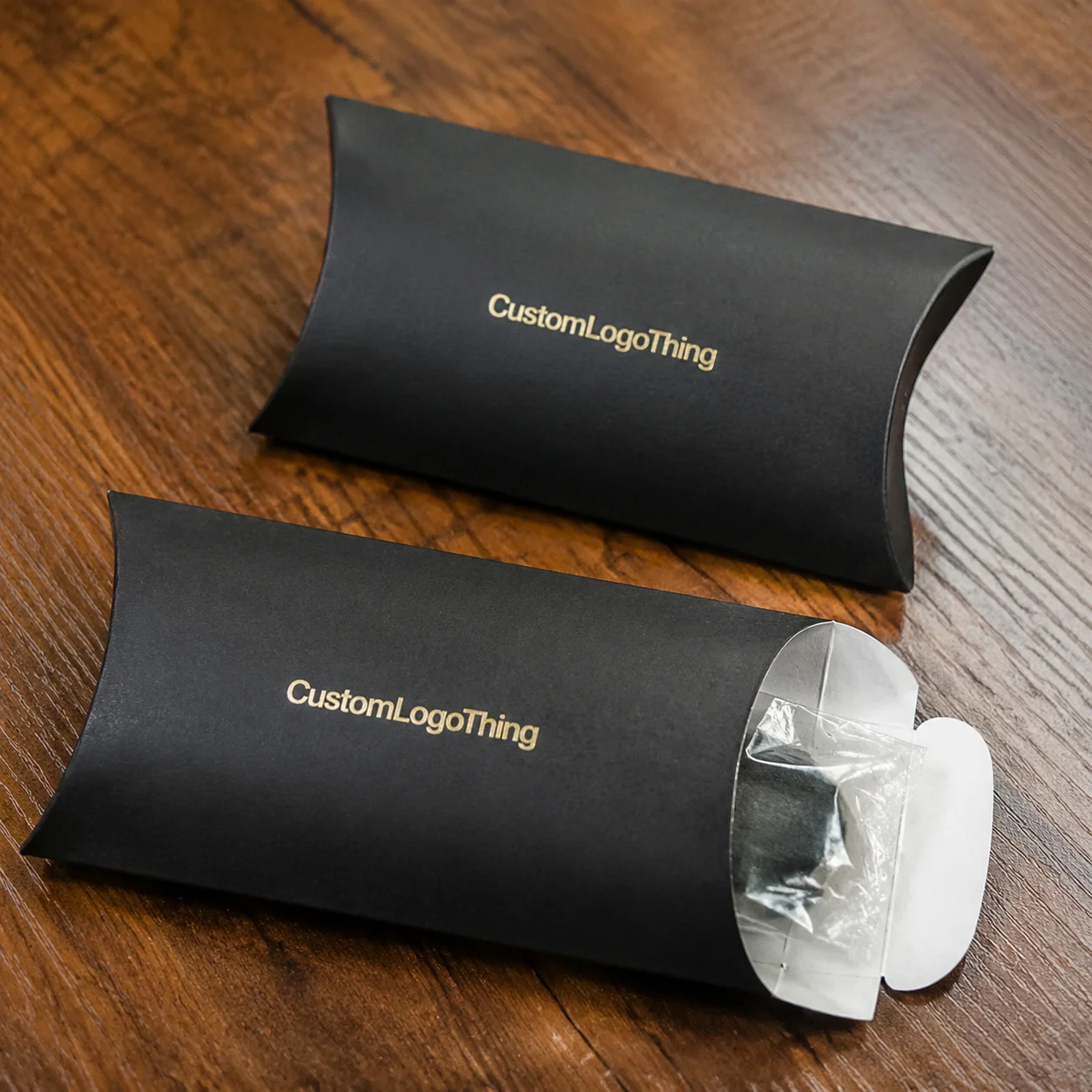
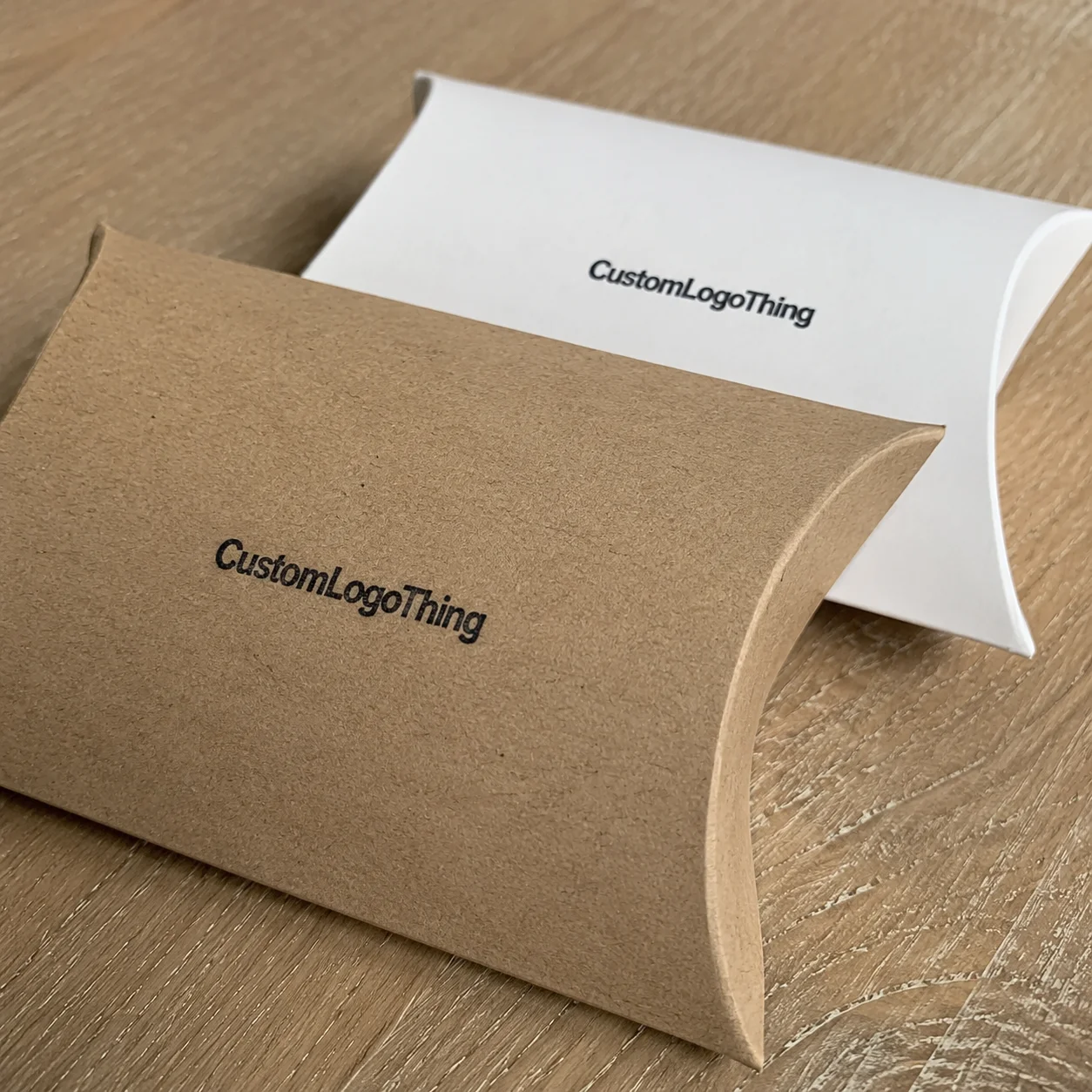
Customized pillow boxes are curved folding cartons made from die-cut paperboard. They are printed flat, cut to shape, scored along the curved fold lines, and tucked closed at both ends after packing. Depending on the run, they may include full-color printing, one-color ink, foil stamping, embossing, a die-cut window, ribbon holes, hang holes, or a branded belly band.
The appeal is easy to understand. The curved profile feels softer and more gift-like than a rectangular tuck carton. For lightweight goods, the format can also reduce packing friction because the box pops open, receives the product, and closes without much training. That is why pillow carton packaging appears so often around jewelry, cosmetics, soaps, candles, socks, scarves, accessory kits, product samples, wedding favors, and event gifts.
For a packaging buyer, the value is not only decorative. A good pillow box gives a compact product more perceived value without the cost, storage volume, and freight weight of a rigid setup box. It also ships flat. A thousand small pillow cartons may fit in a few master cartons; a thousand rigid boxes can consume pallet space quickly.
There are limits. Pillow boxes are not the first choice for heavy metal items, unprotected glass bottles, sharp-edged tools, crush-sensitive electronics, or anything that needs real stacking strength. They can be paired with tissue, sleeves, inserts, dividers, or an outer shipper, but the basic structure is still a light-duty folding carton. Most failures in this format come from asking a pretty box to do a corrugated shipper’s job.
Practical rule: if the product can dent the board, force the ends open, or get damaged from side pressure, plan for an insert, inner wrap, or secondary shipping protection before approving the structure.
How the Pillow Box Structure Works from Flat Sheet to Curved Carton
The engineering starts with a flat sheet. A structural dieline defines the outside shape, curved end flaps, glue flap if needed, score lines, bleed areas, and safe print zones. After printing, the sheet is die-cut, creased, stripped, and packed flat. Some styles are side-glued at the converter so the packer can squeeze the carton open. Others may be supplied as flat blanks for manual folding.
The curved end flaps matter more than they appear to. If the scores are too shallow, the flaps spring open and the box feels cheap. If the scores are too deep, the board can crack, especially on dark ink coverage, kraft stocks with visible fibers, or laminated sheets. A 350gsm C1S board with heavy black ink and matte lamination, for example, needs cleaner scoring control than an uncoated white board with light one-color printing.
Common closure choices include standard tuck ends, small locking tabs, ribbon holes for gift presentation, hang holes for peg display, and belly bands that slide over the box for branding or a light tamper cue. None is automatically better. A belly band adds another packing step. A hang hole changes the load path if the product is heavier on one side.
Sizing should be based on the full packed profile, not just the product length. Measure length, width, depth, and the thickest point after adding tissue, cards, sleeves, caps, ribbons, or protective wrap. Then allow clearance. On small cartons, 2–4 mm can be enough, though irregular shapes may need more. Too much clearance feels sloppy; too little creates bulging, crushed edges, and flap tension.
Paper grain direction also affects performance. Board folds more cleanly with the grain than against it, and curved scores can show cracking if the layout ignores grain. On production runs, grain direction influences how smoothly the pillow shape forms, how much spring-back the carton has, and how polished the side panels look after packing.
Flat Shipping vs. Pre-Assembled Packing
Flat shipping usually saves freight and storage space, one reason customized pillow boxes are common for seasonal promotions and small retail goods. Pre-assembled packing can reduce fulfillment labor, but it increases carton volume and may raise freight cost. If a team is packing 500 event gifts by hand, flat supply may be fine. If a line is packing 25,000 units for a launch, labor minutes per carton become a real cost line.
Materials, Printing, and Finishes That Change the Final Look
Material choice sets the tone before the customer reads a word. SBS paperboard gives a bright white, smooth surface for cosmetics, jewelry, and high-color artwork. Kraft paperboard gives a natural look and works well with black, white, or earth-tone ink, though colors print less brightly on brown fiber. CCNB, often made with recycled content and a gray back, can be economical for some runs, but it may not feel premium unless the outside liner and print treatment are chosen carefully. Specialty textured stocks add hand-feel, but they can complicate fine detail printing and foil registration.
Thickness is usually discussed in points, GSM, or caliper. For small pillow boxes, buyers often see board around 250–400gsm, depending on product weight and desired stiffness. A light soap sample might work in 300gsm SBS. A denser candle tin or accessory bundle may need 350gsm or heavier stock. Thicker is not always better, because heavy board can resist curved folding and may require stronger scores to close cleanly.
Printing options range from spare to highly decorated. CMYK printing is used for full-color artwork, product imagery, gradients, and broad visual designs. Pantone spot colors help when brand color matching is tighter, especially for logos and solid brand fields. Inside printing can make the unboxing feel more premium, though it adds print coverage and cost. One-color printing on kraft or white board is often the smarter budget move for handmade goods, apothecary products, and event packaging.
Finishes change both appearance and manufacturing behavior. Matte lamination softens glare and gives a refined retail look. Gloss lamination makes colors brighter and adds surface protection. Soft-touch coating feels velvety, but it can scuff in rough handling and usually costs more than basic aqueous coating. Foil stamping, embossing, debossing, spot UV, and die-cut windows can lift perceived value quickly, but each adds setup steps, tooling, or registration control.
Windows deserve extra thought. A die-cut window can help shoppers see soap texture, jewelry color, or a small accessory set, but clear film may affect recyclability and cost. If sustainability claims matter, ask about FSC-certified paperboard through FSC sources and confirm whether the final construction matches your recycling goals. Also check whether the window will still help after the product is wrapped. A clear opening over opaque tissue does not earn its keep.
| Material or Finish | Best Use | Typical Tradeoff |
|---|---|---|
| SBS paperboard, 300–400gsm | Beauty, jewelry, colorful retail packaging | Higher brightness and print quality, usually higher cost than basic recycled board |
| Kraft paperboard, 280–350gsm | Natural goods, soaps, handmade products | Warm sustainable look, but colors print darker and less vividly |
| Matte or gloss lamination | Retail cartons needing surface protection | Improves finish, but can affect recyclability and folding behavior |
| Foil stamping or embossing | Premium gifts, cosmetics, jewelry packaging | Adds tooling, setup cost, and lead time |
| Die-cut window | Products where visibility helps sell | May require film patching and extra quality checks |
Match the finish to the job. Kraft with one-color ink can be perfect for small-batch candles or soap. Soft-touch lamination with foil makes sense for a beauty launch or jewelry gift set. Gloss or spot UV can help promotional packaging feel bright and energetic. The best finish supports the product, budget, and packing method without turning a simple folding carton into an overbuilt project.
Cost, Pricing, and MOQ Factors Buyers Should Understand
Price is driven by more than dimensions. Structure, size, board grade, print coverage, color count, finishing, order quantity, tooling, packing method, proofing needs, and freight all matter. Two customized pillow boxes with the same outside size can price very differently if one is kraft with black ink and the other is SBS with full CMYK, soft-touch lamination, foil, and a window patch.
Setup costs are the part buyers often miss. A custom dieline may require structural design time. A cutting die is needed unless an existing die already matches the size. Foil stamping requires a foil die. Embossing or debossing requires tooling. Offset printing may involve plates, while digital printing can avoid some plate costs but has different unit economics. Proofing and sampling also carry cost, especially when the project needs a physical pre-production sample.
Minimum order quantity, or MOQ, exists because custom carton work has make-ready time. Material must be ordered, the press must be set up, dies must be mounted, finishing equipment must be adjusted, and cartons must be packed. Simple one-color or digital print runs may start lower. Specialty finishes and custom sizes often require higher quantities to make the setup worthwhile.
As a planning range, a very simple small paperboard pillow box might land around $0.18–$0.45 per unit at several thousand pieces, depending on size, board, print, and freight. Add foil, lamination, windows, thicker stock, or smaller quantities, and the unit cost can move to $0.60, $1.00, or more. These are not quotes. Freight, material markets, exchange rates, waste allowances, and finishing choices can swing the final number.
Unit cost usually drops as quantity rises because setup costs are spread across more cartons. If a cutting die costs $150–$300 and a foil die costs another $80–$200, those numbers hurt on 500 pieces but barely move the unit price at 20,000 pieces. Press make-ready and finishing setup follow the same math.
Before requesting a quote, prepare the basics: product dimensions and weight, target quantity, artwork status, desired material, finish preferences, shipping destination, deadline, and whether the boxes should ship flat or assembled. If you are still comparing formats, reviewing Custom Packaging Products can help narrow whether a pillow box, tuck carton, sleeve, rigid box, or mailer is the better starting point.
Production Process and Timeline from Dieline to Delivery
A clean project usually follows a predictable path: product measurement, structural dieline, artwork placement, proofing, material confirmation, print production, coating or lamination, die cutting, stripping, folding or gluing, quality checks, packing, and shipping. Each step has a handoff. Each handoff can either keep the schedule moving or stall it.
Timeline depends on complexity. Simple printed pillow boxes can often move faster than boxes with foil stamping, embossing, die-cut windows, specialty stocks, or multiple components. A digital proof may be turned quickly because it confirms layout, copy, logo placement, bleed, and fold orientation. A flat printed proof gives better color and print feel, but it may not show final folding behavior. A physical pre-production sample is the most useful for fit and structure, yet it takes more time and should be reserved for projects where fit, finish, or launch risk justifies it.
Several approval bottlenecks repeat across packaging projects. Low-resolution logos slow artwork. Missing barcodes delay retail packaging. Unclear Pantone references create color debates. Late copy changes force proof revisions. Product samples that do not match final production size can lead to cartons that are close on paper but wrong on the packing table.
Quality checks should cover more than print. Look for clean die-cut edges, accurate score depth, correct glue seam position, good registration on foil or spot UV, readable small text, and closures that stay shut without crushing the product. Open and close a few samples more than once. A carton that behaves well on the first tuck but splits on the third may create trouble during packing.
If the box will ship through parcel networks, consider outer packaging performance as well. The International Safe Transit Association publishes widely used package testing procedures that are useful for thinking about distribution risk, especially for e-commerce and subscription programs. A pillow carton does not need to survive alone if it is designed as inner retail packaging, but the full pack-out still has to protect the product.
Build in buffer. Seasonal launches, retail set dates, influencer kits, subscription-box packing windows, and overseas freight can turn a small delay into a real problem. If packaging needs to arrive before a co-packer starts filling, set the artwork approval deadline backward from that date, not forward from the day the idea is approved.
Step-by-Step Ordering Guide for Better Fit and Fewer Revisions
A good order starts with measurements, not decoration. Artwork matters, but structure comes first because the dieline controls where the artwork can safely live. Customized pillow boxes have curved panels and closing flaps, so a design that looks centered on a flat PDF may sit awkwardly once the carton is filled and tucked.
- Measure the product at its widest, tallest, and thickest points. Include any sleeve, bottle cap, bow, tissue, protective insert, product card, or wrap that will sit inside the package.
- Define the use case. Retail shelf display, gifting, event handout, subscription insertion, and e-commerce presentation all create different handling, finish, and protection requirements.
- Choose board type and thickness. Use product weight, brand feel, and handling conditions to decide between SBS, kraft, recycled board, textured stock, or a heavier caliper.
- Request the dieline before final artwork. Keep logos, QR codes, barcodes, and fine text away from curved scores, tuck flaps, glue areas, and bleed edges.
- Select print and finish details with a budget ceiling. A supplier can suggest better options if they know whether the target is closer to $0.30, $0.70, or $1.25 per box at the planned quantity.
- Review proofs slowly. Check copy, color, barcode size, logo placement, closure orientation, flap direction, and product fit before approval.
For artwork, vector logo files are strongly preferred. AI, EPS, or properly built PDF files keep edges sharp for printing, foil, embossing, and spot UV. Raster images can work for photos, but logos pulled from websites are often too low in resolution. A 300 dpi image at final print size is a safer baseline for photographic elements.
Also think about packing labor before locking the design. Ribbon holes look charming, but threading ribbon through 5,000 boxes is real labor. Belly bands add branding space, but they create another component to receive, inventory, and apply. Window films show the product, but they add another converting step. None of these choices is wrong. They just need to justify their cost, handling, and timeline.
If you are comparing styles for a larger product family, use one size chart and one finish matrix. A soap brand, for example, might use kraft one-color pillow boxes for samples, SBS matte boxes for retail bars, and foil-stamped gift sleeves for holiday sets. Organizing those decisions early makes quoting cleaner and reorders less chaotic.
Common Mistakes Before You Request a Quote
The most common mistake is choosing the box size from product length alone. A pillow box wraps around thickness, and the curved panels need room to form without pressure. If a product is 100 mm long but unusually thick, the correct carton may need more depth than expected. Add tissue, cards, or inserts, and the size changes again.
Another common issue is artwork placed too close to curved score lines. Logos can bend. QR codes can become harder to scan. Fine text can drift onto a flap. Keep critical graphics inside safe zones and treat the dieline as a production tool, not a rough suggestion.
Over-specifying finishes too early can also create budget trouble. Buyers sometimes ask for foil, embossing, soft-touch lamination, inside printing, and a window before confirming whether the order quantity, MOQ, lead time, or price target can support that build. A cleaner approach is to separate must-have features from nice-to-have details. If the brand mark must be foil, maybe the inside print can wait. If sustainability is the priority, a kraft board with one ink color may beat a laminated windowed structure.
Shipping protection deserves the same attention as retail presentation. Pillow boxes look polished, but they are still folding cartons. For e-commerce fulfillment, plan master cartons, dividers, mailers, void fill, or inner wrap as needed. If the box is going into a subscription kit, test how it behaves beside heavier items during handling. A beautiful carton with crushed corners still feels like a miss.
- Gather product measurements, including wraps, inserts, tissue, and cards.
- Define quantity tiers, such as 500, 1,000, 2,500, and 5,000 pieces, so pricing can be compared honestly.
- Choose two material directions, such as kraft board and white SBS, before debating advanced finishes.
- List must-have finishes separately from optional upgrades like foil, embossing, windows, or inside print.
- Prepare vector logo files and any Pantone color references before proofing starts.
Send product measurements, artwork files, target quantity, shipping destination, finish preferences, and deadline together if you want a cleaner quote and fewer revisions. Customized pillow boxes can be simple, elegant, and cost-effective packaging. The best versions are not guessed from a pretty mockup; they are built around the real product, the packing method, and the level of protection the order actually needs.
Frequently Asked Questions
What products work best in custom pillow box packaging?
Custom pillow box packaging works best for lightweight or moderately light items such as jewelry, soaps, cosmetics, candles, socks, small accessories, samples, and event gifts. Products with sharp corners, high weight, glass fragility, or crush sensitivity may need inserts, tissue, sleeves, or outer shipping cartons.
How do I measure my product for personalized pillow boxes?
Measure the product length, width, and thickness at the largest points, then include any wrap, insert, tissue, card, ribbon, or protective layer that will go inside. Allow a small clearance, often a few millimeters on small cartons, so the curved panels close smoothly without bulging, splitting, or forcing the end flaps open.
What affects the price of customized pillow box packaging the most?
The biggest pricing factors are box size, paperboard type, order quantity, print coverage, specialty finishes, tooling, proofing, packing method, and freight. Unit cost usually improves at higher quantities because setup and tooling costs are spread across more boxes.
Can customized pillow boxes be made with windows or foil stamping?
Yes, they can include die-cut windows, clear window film, foil stamping, embossing, debossing, spot UV, matte coating, gloss coating, or soft-touch lamination. Each added finish should be checked against the budget, MOQ, recyclability goals, and production timeline before approval.
How long does it take to produce printed pillow boxes?
Timing depends on artwork readiness, proof approval, material availability, tooling, order quantity, finishing complexity, and shipping method. Simple printed runs usually move faster than boxes with foil, embossing, window patching, specialty stocks, or physical pre-production samples.