For boutique brands, Clothing Labels Unit Cost for boutique orders is usually higher than expected, and the reason is straightforward: the label itself is only part of the bill. Setup, finishing, folding, inspection, and minimum order rules can matter more than the raw material, especially when the order needs premium texture, low quantities, and quick turnaround at the same time.
That gap between expectation and quote causes a lot of friction. A brand wants a soft neck label, a clean care label, and a polished look that still protects margin. Then the estimate arrives and the "small detail" suddenly has a real number attached to it. That is not the supplier being difficult. It is simply how custom production pricing works.
The cleanest way to think about labels is this: unit cost is a mix of material, production method, color count, quantity, and finishing. Two orders that look similar can end up very far apart once the spec is fixed. If you want a better buy, define the spec first and compare price second.
A tighter label spec can protect margin, reduce waste, and still look premium on a garment, hang tag, or packaging insert.
The hidden cost drivers behind small-batch boutique labels
The expensive part is rarely the label substrate alone. What drives the bill up is the work around it: artwork setup, loom or plate preparation, trimming, folding, inspection, and the fact that a short run still needs the same production attention as a larger one. That is why Clothing Labels Unit Cost for boutique orders can feel uneven at first glance. It is not random. It is spread across fixed steps.
From a packaging buyer's point of view, the common mistake is to compare a boutique order to a mass-production price sheet. That is apples to a warehouse pallet. Large-run pricing assumes the supplier can spread setup charges and tooling fees across tens of thousands of pieces. A 300-piece order cannot do that. The math does not bend because the brand is new.
There is a second trap: asking for premium finish on every label in the line. A woven main label, care label, size tab, and hang tag insert can all be custom, but they do not all need the same level of detail. The smarter move is to put the premium treatment where customers actually see and touch it, then simplify the hidden pieces.
That keeps the presentation polished and keeps cost per piece under control. In practice, that is how small brands protect margin without making the product feel cheap.
Order structure matters too. A single SKU with one label style is easier to price than a mixed order with multiple sizes, folds, and placements. If you need split shipments, batch changes, or a last-minute artwork tweak, the quote will reflect that extra handling. It is normal work, just not free work.
If you are comparing label specs before committing, it helps to look at other packaging items that already have clear cost discipline. Our Custom Labels & Tags page is a useful starting point because it shows how size, finish, and order quantity change the buying math.
Pick the label style that fits the garment and margin
Not every boutique garment should wear the same label style. A ribbed knit tee, a structured jacket, and a linen dress all ask for different hand feel and durability. Choose poorly and the label scratches the skin, looks flimsy, or costs more than it should. That is how a small detail turns into avoidable waste.
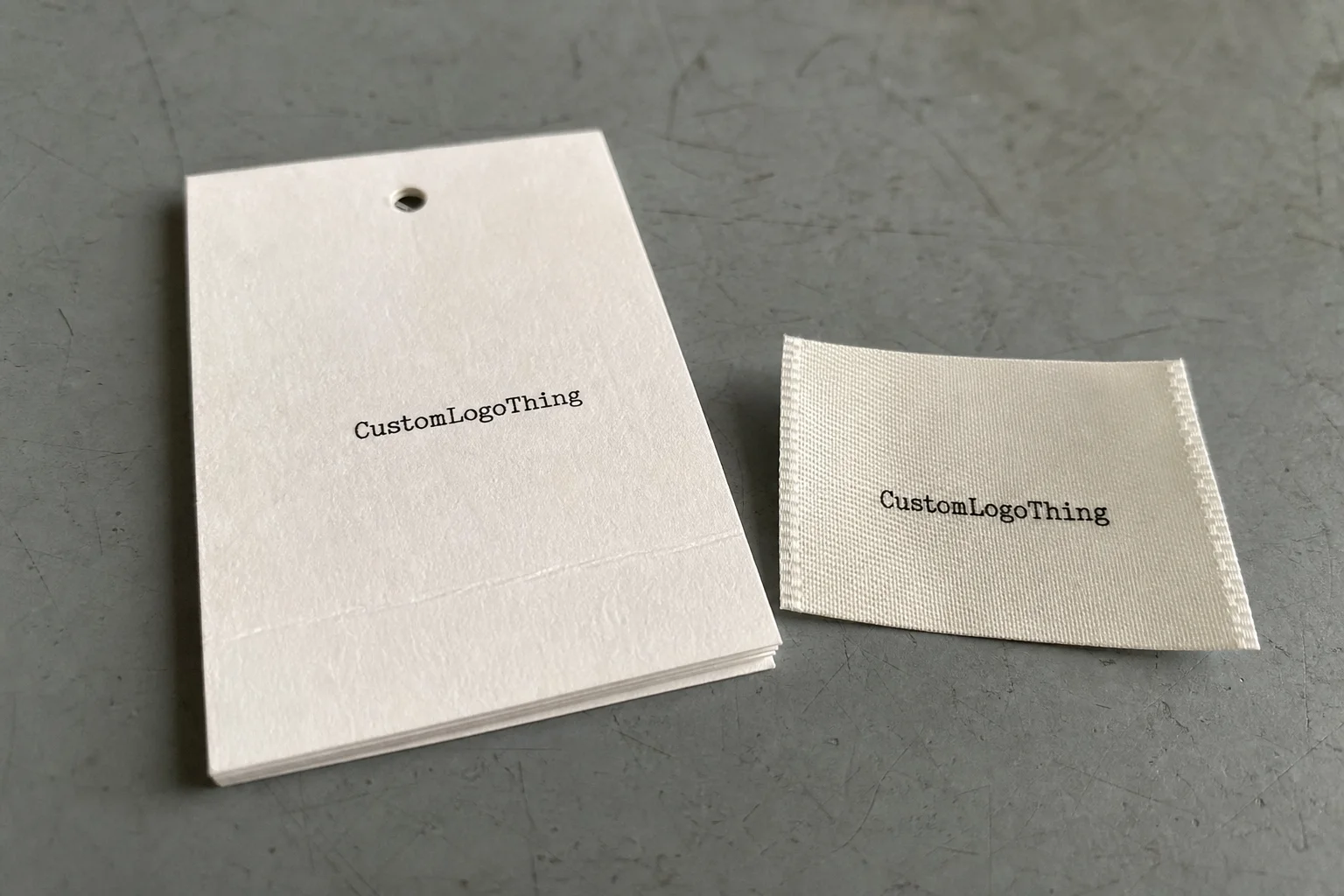
Woven labels are usually the strongest option when you want texture, durability, and a more premium branded feel. They hold detail well and tend to age better through wash cycles than many lower-grade options. The tradeoff is price. Woven labels usually sit above printed labels, especially on smaller runs.
Printed satin labels are a practical middle ground. They are soft, legible, and often cheaper than woven labels when the design is simple. They work well for care content, size details, and lighter garments where softness matters more than tactile structure.
Cotton labels bring a natural, craft-oriented look. They suit boutique brands that want a handmade or heritage impression. They are not always the lowest-cost option, though. If the design needs fine color detail, cotton can be less forgiving than a smoother synthetic substrate.
Heat Transfer Labels are the tagless route. They are useful for activewear, kidswear, or any garment where comfort at the neck matters. They remove sewn-in bulk, but the artwork and application method need to be planned carefully, especially if the garment fabric stretches or has unusual texture.
Here is the decision rule that tends to hold up: if the garment is delicate, prioritize softness; if the brand leans heritage or craft, prioritize texture; if the run is price-sensitive, prioritize print efficiency. That one rule removes a lot of bad label decisions before they get into the order.
For teams that want to compare packaging and label materials side by side, the Packaging & Manufacturing Association is a useful reference point for broader material and print discussions. Different application, same discipline: specify what matters, then price that exact spec.
One more practical point. If the label is part of a broader retail presentation, do not treat it in isolation. A label that pairs well with hang tags, inserts, and carton graphics creates a cleaner brand story than a pile of mismatched finishes. That matters more for boutique brands than for giant catalogs, because small ranges are judged as a whole.
Specifications that change durability, hand feel, and print quality
The spec sheet is where the quote becomes real. Size, fold type, edge finish, color count, material density, and placement all change the production path. Buyers often ask for a "small woven label" as if that is enough information. It is not. A 20 mm center-fold neck label and a 40 mm straight-cut hem label are different jobs, with different labor and different costs.
Wider labels are not automatically better. Yes, they can carry more brand detail. They can also feel bulky on lightweight apparel and use more material than necessary. For boutique garments, a label that is slightly smaller but better proportioned often looks more expensive than a larger one trying too hard.
Color is another quiet cost driver. More colors can increase the quote, especially in woven work where thread complexity matters. On printed labels, the effect is often less dramatic, but extra color still adds handling and proofing time. Clear contrast usually beats excessive color count. One strong dark-on-light or light-on-dark combination can do the job cleanly.
Fold type matters too. Straight cut is simpler. End fold, center fold, book fold, and miter fold each change how the label sits and how it is sewn in. If the label must sit flat inside a slim garment, the wrong fold can create irritation or a visible bump. That is not theory. It is what customers feel when they put the garment on.
For buyers who need a more technical lens, ASTM testing language helps keep things grounded when durability claims get loose. For transport and handling of finished products, ISTA standards are worth checking if labels are shipped with delicate packaging components or retail kits that need more than basic carton protection.
A practical approval step saves money: request a digital proof for layout and spelling, and ask for a physical sample when the order is premium or the run is large. A proof catches design errors. A sample catches feel, size, and edge behavior. Those are not the same thing, and treating them as the same thing is expensive.
| Label option | Typical boutique use | Relative unit cost | Main advantage | Main tradeoff |
|---|---|---|---|---|
| Woven label | Brand ID, premium neck labels, exterior branding | Higher | Texture and durability | More expensive at low MOQ |
| Printed satin | Care labels, soft inner labels, lightweight garments | Low to medium | Soft hand feel | Less tactile prestige |
| Cotton label | Heritage, natural, artisan positioning | Medium | Organic look and feel | Less crisp fine detail |
| Heat transfer | Tagless neck branding, activewear, kidswear | Medium | No sewn-in bulk | Application must be controlled |
One easy way to overspend is to request premium everything without defining what the customer actually touches. If the label sits inside the garment and only the team sees it during packing, there is no reason to spend like it is the hero product. Save the premium spec for the visible placement.
Clothing labels unit cost for boutique orders: what moves the quote
Here is the part most buyers actually need. Clothing Labels Unit Cost for boutique orders is driven by a predictable stack: quantity tier, material, finish, number of colors, packaging format, and any custom folding or trimming. If a quote is vague, the price is vague. If the spec is precise, the quote becomes useful.
MOQ changes the entire equation. Small runs almost always carry a higher unit cost because setup is spread across fewer pieces. Larger orders improve the per-label rate because the supplier can absorb prep costs over more units. That does not mean you should buy more than you need. It means you should understand what the minimum is doing to the math.
For practical budgeting, these are realistic directional ranges for boutique runs:
- Printed satin labels: often about $0.06-$0.18 per piece at 1,000-3,000 units, depending on size and color count.
- Woven labels: often about $0.10-$0.28 per piece at 1,000-5,000 units, depending on density and fold type.
- Heat transfer labels: often about $0.12-$0.35 per piece, with price influenced by artwork complexity and application requirements.
- Custom cotton labels: often about $0.14-$0.30 per piece, depending on finish and print detail.
Those numbers are not universal. They are practical ranges, not gospel. A tight, simple order can come in lower. A premium spec with small quantity, special packaging, or rush handling can land higher. That is why any honest supplier should quote against the exact same spec set, not a "similar" one.
Ask these questions before you approve anything:
- Is artwork setup included?
- Are samples billed separately?
- Can the same tooling be reused on repeat orders?
- Are rush fees or split-shipment charges already in the quote?
- Does the price change if I adjust fold type or color count?
Those five questions expose the real price structure fast. They also reveal whether the supplier understands small-brand buying or is only quoting from a template.
Packaging format can add hidden cost as well. Labels delivered loose are easier to quote than labels packed on rolls, bundled, or prepared for a specific sewing workflow. If your team expects machine feeding or line-side use, say that upfront. Rework after production is a bad way to discover that the "cheap" quote missed the real requirement.
Repeat orders are where boutique brands can improve efficiency. If the supplier retains approved artwork and tooling, the second and third runs often move faster and cost less per unit. But you should confirm that in writing. "We can probably find the file" is not a process. It is a guess with a logo on it.
For material sourcing beyond labels, FSC-certified paper stock is a practical benchmark when you are producing hang tags, inserts, or carton components alongside the label order. See FSC for chain-of-custody standards that matter if your brand sells sustainability as part of the product story.
The cleanest way to compare offers is to force each vendor into the same box: same size, same fold, same quantity, same print method, same shipment terms. Once you do that, the real difference between quotes shows up. Usually it is not magic. It is a cheaper spec, a larger MOQ, or a hidden charge waiting to appear later.
Process and turnaround from artwork to finished labels
Good label projects follow the same path most of the time: brief, artwork check, digital proof, sample approval if needed, production, inspection, and shipping. When the process is clear, lead time is manageable. When it is fuzzy, every delay becomes a problem for the brand.
Standard orders move faster when the artwork is already clean and dimensioned correctly. If you are changing fonts, asking for special folds, or trying to match an exact color reference, the timeline stretches. That is normal. Custom work is not a vending machine.
The biggest delays are usually boring, which is exactly why they keep happening: missing dimensions, low-resolution artwork, unclear placement instructions, and late approvals. A supplier cannot print a label that has not been specified. They can only wait while the brand team debates whether the logo should sit 2 mm higher.
Typical boutique timelines often look like this:
- Artwork and proofing: 1-3 business days if files are ready.
- Sampling: 3-7 business days depending on label style.
- Production: often 7-15 business days after approval.
- Shipping: depends on destination and service level.
If the order supports a launch date, build in margin for proof revisions and transit. Betting on the best-case timeline is how brands end up paying rush freight for a label order that should have been ordinary.
There is a practical difference between lead time and turnaround. Lead time is the full path from brief to arrival. Turnaround is the production window after approval. Buyers who mix those up usually underestimate the calendar by a week or more. That is enough to break a rollout.
When the order is part of a broader launch, pair the label timeline with the rest of the packaging plan. Neck labels, hang tags, polybags, and inserts should not all be treated as separate emergencies. One coherent schedule costs less than four rushed ones.
Why boutique brands get better results with a tighter spec process
Clear specs save money because they cut revisions. They also reduce production mistakes, which matters more on low-MOQ orders because there is less room to absorb waste. A mistake on 10,000 labels stings. A mistake on 250 labels can feel absurdly expensive. Both hurt, just in different ways.
A good supplier should do more than send a price. They should translate brand intent into usable production details: material choice, fold type, placement, print method, and finish. If they only ask for "premium," that is not a spec. That is a mood.
For repeat buyers, the biggest benefit is consistency. Once the spec is locked, the next order should match the first run in color, texture, and size. Without that discipline, boutique brands drift. One order looks refined, the next looks slightly off, and customers notice even if the team pretends not to.
Consistency also helps the finance side. Once a label spec is stable, you can forecast bulk pricing more accurately and spot whether a quote has drifted because of a real production change or because someone changed a detail and forgot to say so. That sort of drift is common. It is also preventable.
Here is the buying habit that works: write down the exact label requirement, then keep that spec unchanged unless there is a clear product reason to alter it. That sounds dull. It is. It also saves the most money.
Small brands get burned when they treat label sourcing like a one-off creative task instead of a repeatable production item. The brands that do it well think like buyers. They define the spec once, approve it properly, then reuse it with discipline. That is how they keep label cost under control while the brand grows.
If your team is trying to align labels with other production items, it helps to standardize all retail-facing components together. That includes hanging tags, folded inserts, and carton markings. A cleaner spec process across the board usually lowers the total admin load, not just the label quote.
Next steps to lock in the right label spec and budget
Start with five things: garment type, placement, label size, quantity, and deadline. That is enough to build a useful starting quote without wasting time. If those five inputs are missing, you are not really buying yet. You are just asking for a number to see what it feels like.
Then add the details that actually move the price: material, fold type, finish, color count, and whether you need samples before production. Those details change the quote in predictable ways. Ignore them, and the order will surprise you in the wrong direction.
Before approval, compare the full order math:
- Unit price: the line item everyone sees first.
- Setup charges: prep costs that may or may not be included.
- Shipping: freight can wipe out a small savings fast.
- Repeat-order savings: check whether tooling is retained.
- Sample cost: useful when comfort or appearance matters.
That checklist keeps the conversation honest. A low headline number is not always the best buy if it hides weak material or a larger MOQ than current demand can support. And if the supplier cannot explain the price difference between two specs, you probably should not let them manufacture either one.
For boutique brands, the best label order is the one that matches the garment, the margin, and the timeline without forcing a compromise later. That is the real way to judge Clothing Labels Unit Cost for boutique orders: not by the cheapest quote, but by the right mix of material, finish, MOQ, and schedule.
Compare the spec, not the fantasy. That is how you protect budget, keep the product looking sharp, and avoid paying for waste disguised as premium.
What is the typical clothing labels unit cost for boutique orders?
It depends on material, label style, fold, color count, and quantity, so there is no honest one-size-fits-all number. Small runs usually cost more per label because setup is spread over fewer pieces. Ask for a quote using the exact same specs if you want a real comparison.
Do higher MOQ levels always lower the unit cost for boutique labels?
Usually yes, because production setup gets amortized across more units. The savings flatten out when the order gets large enough that other costs, like shipping or packaging, become more visible. If you only need a short run, do not chase a huge MOQ just to save pennies you may never use.
Which label type is cheaper for boutiques, woven or printed?
Printed labels are often cheaper for soft, simple applications, especially when you want a clean look with fewer texture demands. Woven labels usually cost more, but they deliver a more premium finish and better long-term durability. The right choice depends on the garment and brand position, not just the lowest quote.
What do I need to request an accurate quote for boutique clothing labels?
Provide the label size, artwork, quantity, placement, preferred material, and deadline. Include fold type, color requirements, and whether you need samples before production. If any of those details are missing, the quote will be a rough estimate, not a real buying number.
Can I reorder the same boutique label without paying setup again?
Often yes, if the supplier keeps the approved artwork and tooling on file. Repeat orders are usually easier and cheaper because the spec is already locked. Confirm whether the seller retains your production files and whether any storage or relaunch fee applies.