Clothing Labels Unit Cost for Hotel Orders
Hotel buyers tend to discover very quickly that a label is never just a label. It touches brand presentation, wash durability, garment comfort, and the amount of time staff spend fixing avoidable mistakes. That is why Clothing Labels Unit Cost for hotel programs should be judged on the full operating picture, not on a single quoted number. A low headline price can disappear as soon as a label needs reproofing, reprinting, or replacing after a few laundry cycles.
The better question is whether the label fits the garment and the way the hotel actually uses it. A spa robe, a housekeeping shirt, and a retail polo sold in the gift shop do not live the same life. They need different materials, different print methods, and sometimes different levels of finish. The quote gets more accurate once those details are stated clearly.
Most hotel teams are trying to control four things at once: consistency across properties, wash performance, replenishment speed, and brand accuracy. Those priorities are practical, not decorative. A label that fails in laundry or arrives with the wrong fold becomes expensive long before anyone notices the unit price. The cheapest run is the one that lands right the first time and can be reordered without reworking the spec.
A label that cannot survive the garment it is sewn into is not low-cost. It is deferred expense.
Why Hotel Buyers Compare Labels on Unit Cost, Not Just Price
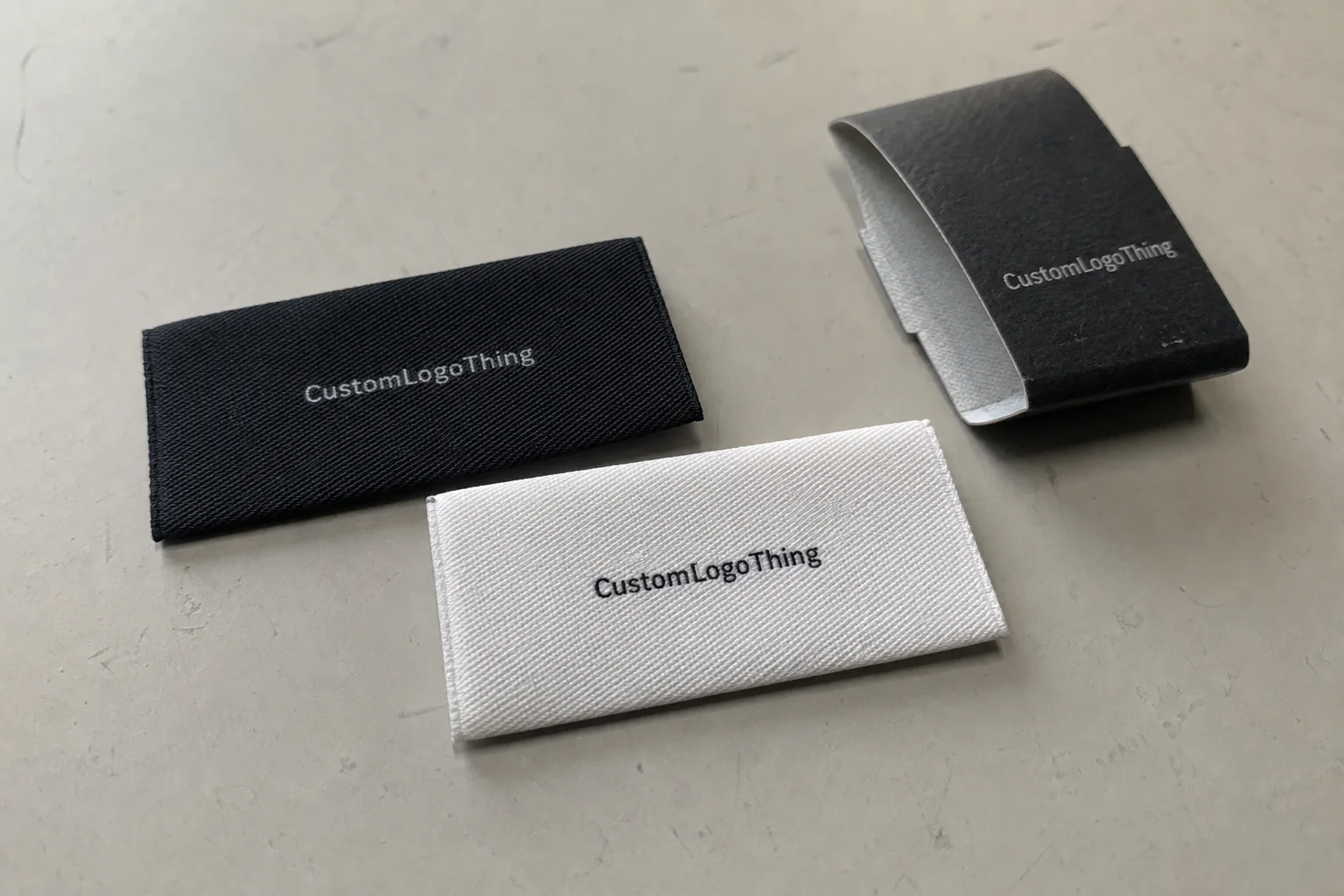
Hotel procurement does not usually buy labels as a one-off purchase. It buys a repeatable standard. Uniforms need to look the same from one property to another, spa textiles need to hold up under repeated washing, and retail apparel needs a finish that does not cheapen the item the moment it is turned inside out. That is why the useful comparison is unit cost, not just price per batch.
The quote can be misleading if the supplier separates costs in an unhelpful way. A label may look cheap until artwork edits, tooling, fold changes, or rush freight appear later. Another quote may look higher at first glance because it includes proofing, setup, and shipping in a more honest way. Buyers who compare only the first number often end up comparing incomplete offers.
There is also a difference between label price and program cost. A hotel label program can include one-off artwork prep, samples, approval cycles, inbound freight, redistribution to multiple sites, and occasional reprints. Those factors matter because hotels rarely have the luxury of stopping operations while a missing label is remade. If the label is going on housekeeping apparel or guest-facing retail merchandise, the real cost includes the time spent keeping that item in circulation.
If the spec is still being defined, start with the garment path. Ask how often the item is laundered, whether the label needs care text or size data, and whether the label is visible to guests or only to staff. Then compare Custom Labels & Tags by format. That is usually the cleanest way to get a quote that means something.
For hotel groups with multiple properties, the best price is usually attached to a stable spec and a clear reorder history. Suppliers can price repetition better than ambiguity. Once a label format is approved, the unit cost usually becomes easier to defend because the buyer is no longer paying for guesswork.
Label Formats That Fit Hotel Garments, Linens, and Amenities
The label formats that show up most often in hospitality are woven labels, printed satin labels, heat-transfer labels, and care-content labels. Each serves a different purpose, and none should be treated as interchangeable. A hotel robe does not need the same interior finish as a banquet uniform, and a retail shirt does not need the same care panel as a housekeeping jacket.
Woven labels are the obvious choice when presentation matters. They hold detail well, look finished, and typically read as more premium than a simple print. Woven construction is also useful when the logo or lettering is small, because the structure of the weave can preserve shape better than a thin printed layer. The trade-off is cost. Woven labels usually require more setup and are harder to make cheaply at very low quantities.
Printed satin labels are common in hotel apparel because they are soft, economical, and easy to read. They work well for care instructions, sizing, and interior branding on garments that sit against the skin. For high-volume uniform programs, they often deliver the best balance of comfort and unit cost.
Heat-transfer labels remove the sewn tag entirely. That can be useful for athletic-style uniforms or guest merchandise that needs a clean interior hand-feel. They can look excellent, but only if the fabric and application method are matched properly. If the substrate is wrong, the print can crack, peel, or lose clarity after laundering. That is not a design problem so much as a material compatibility problem.
Care-content labels carry the practical information that keeps garments in service: fiber content, size, care symbols, and compliance text if needed. These labels are easy to underestimate because they are small, but they are often the most read part of the garment after repeated use. If the text is too tight, it becomes unreadable after wash cycles. If the material is too stiff, staff will complain about comfort.
Placement matters as much as format. A collar tag, a side-seam label, a hem label, and a folded neck label are not priced the same way. Labels added during garment manufacturing are usually more efficient than labels stitched in later. If a hotel is relabeling existing stock or splitting production across vendors, that handling has to be included in the quote.
A simple way to think about it:
- Choose woven labels for premium branding and stronger visual structure.
- Choose printed satin for comfort, clear care text, and better economy at scale.
- Choose heat-transfer for tag-free interiors and a cleaner garment feel.
- Choose care-content labels for fiber content, sizing, and laundry instructions.
For hotels ordering several garment types at once, a single label format rarely fits every use case. That is normal. A robe label can be softer and simpler, while a retail polo or branded apron may justify a more finished woven construction. The most efficient purchase is the one matched to the garment, not the one forced to look uniform across unrelated products.
Materials, Print Methods, and Care Details That Change Durability
Material choice shapes both comfort and lifespan. Polyester satin is widely used because it is smooth, accepts print well, and stands up reasonably well to repeated laundering. Taffeta is more utilitarian and often used where the label needs to remain legible without needing a polished finish. Woven damask gives better texture and sharper detail for small logos or fine type. Coated printed materials can improve clarity, but the coating still has to survive the washing chemistry and heat the garment will actually see.
Print method changes the equation as well. Screen printing can be efficient for simple graphics and limited colors. Thermal transfer is useful for dense care copy and variable data, but the film and adhesive need to match the fabric. Woven construction does not rely on ink sitting on top of the label, which helps when the design needs to survive a lot of abrasion.
Commercial laundering is the stress test most buyers underestimate. Hot wash cycles, tumble drying, and repeated exposure to detergent and finishing chemicals can shorten the life of a weak label quickly. A sample can look fine on day one and still be the wrong choice for a hotel laundry room. The real test is not how the label looks in a proof; it is how it behaves after repeated wash and dry cycles.
Care details are not filler. They carry the information staff and guests depend on after the garment has been used. Size, fiber content, care symbols, and compliance wording should stay readable long enough to matter. If the label is for guest-facing retail apparel, the clarity of that information affects perceived quality as much as the logo does.
There is a balance to hold between durability and comfort. A label that is too stiff will create complaints on robes or shirts worn against the skin. A label that is too soft may lose definition sooner than expected. Good specifications avoid both extremes by matching the construction to the garment’s role and wash environment.
For larger hospitality programs, shipping and handling should not be an afterthought. Labels often move through a central warehouse before being distributed to individual properties, and that introduces another chance for scuffed cartons, bent packs, or mixed lots. Standards such as ISTA are a useful reference point if the program needs a more disciplined approach to transit and distribution quality.
Clothing Labels Unit Cost for Hotel Orders: What Drives the Quote
The main drivers behind Clothing Labels Unit Cost for hotel orders are quantity, material, size, number of colors, fold style, and the amount of artwork work required before production starts. If any of those are vague, the quote becomes less useful because the supplier has to assume too much. A precise brief is not bureaucracy; it is what keeps the price honest.
Quantity is usually the strongest lever. A larger run almost always lowers the cost per piece, but only within the limits of the chosen format. A simple 10,000-piece printed run can price very differently from a 2,000-piece woven run with several colors and custom finishing. High volume helps, but complexity can eat into the savings faster than many buyers expect.
Setup charges are another place where the real cost can shift. Some suppliers separate production price, proofing, artwork prep, and shipping. Others roll those costs into the unit price. Neither method is wrong, but the buyer needs to know what is included before comparing one offer to another. If the quote does not say whether sample approval, file prep, or freight is included, the final invoice may tell a different story.
Here is a practical budget view of common hotel label types:
| Label format | Typical use | Approx. unit cost at lower volume | Approx. unit cost at higher volume | Notes |
|---|---|---|---|---|
| Printed satin | Uniforms, spa wear, soft interior labels | $0.05-$0.16 | $0.02-$0.06 | Comfortable, clear copy, efficient for bulk pricing |
| Woven damask | Premium branding, robes, retail apparel | $0.12-$0.28 | $0.05-$0.12 | More setup, stronger visual structure, better for fine detail |
| Heat-transfer | Tag-free interiors, athletic-style uniforms | $0.08-$0.22 | $0.03-$0.09 | Fabric compatibility and application conditions matter |
| Care-content label | Wash instructions, fiber content, compliance text | $0.04-$0.12 | $0.015-$0.04 | Functional labeling with low visual complexity |
These ranges are directional, not universal. They are useful for budgeting, not for pretending every supplier prices the same way. The market moves with material availability, print complexity, and the amount of finishing work needed. A hotel buyer who treats the first quote as a final number usually misses the real cost structure.
The most common quote problems are predictable. Vague dimensions force assumptions. Missing artwork creates delay. An unclear fold style changes the production method. A late shipping destination can turn an otherwise competitive quote into a freight problem. Good quotes state the label type, size, fold, quantity by property, colors, artwork status, and ship-to details up front.
For multi-property hotel groups, it helps to request a master spec with property-level quantity splits. That keeps the program consistent and makes reorder pricing easier to compare. It also prevents small changes from slipping into the production file simply because different people are approving different versions in email.
Production Steps, Proofing, and Lead Time for Repeat Orders
The production process should be visible before approval. A sensible flow is inquiry, artwork review, digital proof, sample approval if needed, production, quality check, packing, and shipment. If the supplier cannot explain that sequence clearly, the risk tends to show up later in missed dates or avoidable revisions. Most delays happen in proofing or in last-minute spec changes that should have been locked earlier.
Repeat orders move faster because the approved spec already exists. For a hotel group reordering the same label across multiple properties, the supplier usually only needs to confirm quantity, addresses, and any small copy updates. First-time custom runs take longer, especially if the buyer wants physical samples before release. A repeat order might ship in roughly 7 to 12 business days after approval. A first-time run can take 12 to 20 business days or more depending on revisions, construction, and finishing.
What should be locked before production starts? Dimensions. Colors. Fold. Copy. Placement. If any of those move after approval, the schedule and the quote can both change. That is where disciplined buyers save money: fewer emergency revisions, fewer rush charges, and fewer chances for the wrong label to enter the line.
For hotel groups, a stored spec file is worth asking for. The better suppliers keep approved artwork, dimensions, and reorder history on file so a repeat purchase does not need to be rebuilt from scratch. That matters in hospitality because stock is rarely consumed evenly. One property may be out while another still has inventory, and a label program needs to support staggered replenishment without changing the spec every time.
Production lead time is not the same thing as total delivery time. Transit to a hotel dock, warehouse, or distribution partner still needs to be added on top. That distinction becomes important during seasonal uniform changes or new opening schedules, where a label that is technically on time in production can still arrive too late in practice.
Use Custom Labels & Tags as the reference category when checking whether a reorder matches the original purchase. Even a small change in dimension or fold can shift the unit cost and create inconsistencies across properties.
Supplier Checks That Reduce Misprints, Delays, and Rework
The supplier checklist should focus on things that fail in the real world. Start with proofs. Ask whether the supplier provides a digital proof, a physical strike-off, or both, and how many revision rounds are included before extra charges begin. Artwork revisions can turn an apparently cheap quote into a slow one if the process is not disciplined.
Color matching needs a direct question. If a hotel brand has a defined palette, ask how the supplier controls the match. Pantone references are useful, but they are not a guarantee that woven thread and printed satin will behave the same way. The correct question is not just whether the supplier can match color, but how it verifies the match on the chosen material.
Wash testing deserves specificity. If the labels are going into commercial laundry, ask what conditions were used: wash temperature, detergent exposure, dry cycle, and number of cycles tested. General claims about durability are easy to say and hard to verify. A useful answer has numbers attached to it.
Batch consistency matters just as much. A hotel chain does not need the first run to be correct while the second lot drifts. Ask whether the supplier tracks lots, what inspection standard it uses, and how it handles a production lot that misses the approved spec. A solid answer here usually says more about reliability than any marketing page does.
If the supplier is making a recycled-content or certified-sourcing claim, ask for the actual documentation. The FSC framework only matters if the material in the label program actually falls under that certification. Otherwise, the claim is decoration. Hotels should ask for evidence that is relevant to the construction being ordered.
The failure points that cost the most in hospitality are usually the ordinary ones:
- Tiny text that becomes unreadable after laundry.
- Weak adhesion on heat-transfer labels that starts peeling early.
- Color drift across properties or reorder lots.
- Wrong fold style that forces hand-finishing or relabeling.
- Unclear MOQ terms that surprise the buyer at reorder time.
A slightly lower quote is not worth much if it creates a second order to repair the first one. The smarter comparison includes proof quality, lead time, inspection discipline, and reprint risk. Price matters, but program stability matters more.
What to Send Next: Artwork, Quantities, and Approval Steps
If you want a quote that can be used without a long back-and-forth, send one clean specification sheet. Start with vector artwork if it is available, then add exact label dimensions, label type, fold style, quantity by property, and the intended garment. A robe label and a retail polo label should not be quoted as if they were the same product.
The request should also state whether the labels are for uniforms, robes, towels, spa wear, or retail merchandise. That use case affects material choice, tactile finish, and likely MOQ. A care label for housekeeping apparel can be a completely different spec from a branded hangtag for a shop item. If the buyer wants accurate clothing Labels Unit Cost for hotel budgeting, that distinction needs to be in the first request.
- Send logo files in vector format if possible.
- Confirm the exact size and placement.
- State quantity by property and total quantity.
- Include care text, fiber content, and any compliance wording.
- Provide the ship date and delivery locations up front.
- Request a digital proof or sample before release.
That list saves time because it removes guesswork from the quote. It also makes supplier comparisons much cleaner. If one offer includes setup, proofing, and shipping while another does not, the difference is visible before anyone signs off. If one supplier is pricing production only, the buyer knows that immediately instead of discovering it later.
For larger hotel groups, internal approval matters as much as supplier approval. Procurement, brand, and operations should agree on the spec before the order is released. It may take a little longer to lock the details, but that is usually cheaper than reprinting a label that looked fine in the quote and wrong in the laundry room.
The most reliable label programs are not the flashiest. They are the ones with a stable spec, clear proofing, sensible materials, and a reorder path that does not require reinventing the purchase every time stock runs low. That is what keeps clothing labels unit cost for hotel orders controlled across multiple properties and repeated wash cycles.
What affects clothing labels unit cost for hotel uniforms the most?
Quantity is usually the biggest driver, followed by material choice, label size, and how many colors or care symbols are included. Complex folds, specialty finishes, and artwork setup can raise the price even when the visible design is small. Hotels should compare the landed cost, not only the label price, because shipping and rework can change the real unit cost.
What is the typical MOQ for hotel clothing labels?
MOQ depends on the label type and production method. Standard printed labels are often available at lower minimums than fully Custom Woven Labels, while special folds or premium finishes can push the minimum up. A supplier should state whether the MOQ applies per design, per colorway, or per size run. If a hotel needs to test several properties before scaling, it is reasonable to ask about a sample-run option.
How long does production usually take after approval?
Digital proofing is usually the first step, followed by production once the artwork and specifications are approved. Repeat orders are generally faster than first-time custom runs because the spec is already on file. Lead time should be confirmed in writing, including transit time to the hotel, warehouse, or distribution center.
Can you match clothing labels to a hotel brand standard?
Yes, if the supplier has brand files, Pantone references, and clear instructions for size, placement, and fold. Matching should cover color, typography, and finish, not just the logo shape. If the brand standard is strict, request a proof or physical sample so the final label can be checked before the full run begins.
What files do you need to quote hotel clothing labels accurately?
Provide vector artwork when possible, plus label dimensions, quantity, fold style, and intended garment type. Include any care text, fiber content, and compliance wording so the quote reflects the full print area. State the deadline and delivery locations up front so the supplier can price the production plan correctly.


