Order Custom Heat Transfer Labels for Apparel That Last
Learn how to order custom heat transfer Labels for Apparel that last, what they cost in 2026, and how to spec them for stretch, wash durability, and cleaner production runs without rework.
If you need to order custom heat transfer labels for apparel that last, the goal is simple: a label that feels clean on skin, survives washing, and does not slow production. Heat-applied branding is common on tees, babywear, activewear, and lightweight knits because it sits flat and avoids the bulk of a sewn-in tag.
The decision is less about the mockup and more about the process. A transfer can look sharp in proof and still fail if the garment is heat-sensitive, the adhesive is mismatched, or the press settings are off. That is why brands that order custom heat transfer labels for apparel that last should treat the label spec like a garment spec, not a decorative add-on.
For teams comparing label types, a useful reference is our guide to custom heat transfer neck labels for apparel buyers. It covers placement choices, hand feel, and the tradeoffs between neck branding and exterior decoration.
These labels can replace a sewn-in tag or handle secondary branding more efficiently. They remove one sewing step, reduce trim handling, and make short runs easier to manage when speed and consistency matter.
"A label that disappears into the garment usually does its job. The failure is when it only disappears after the first wash."
What custom heat transfer labels actually solve for apparel
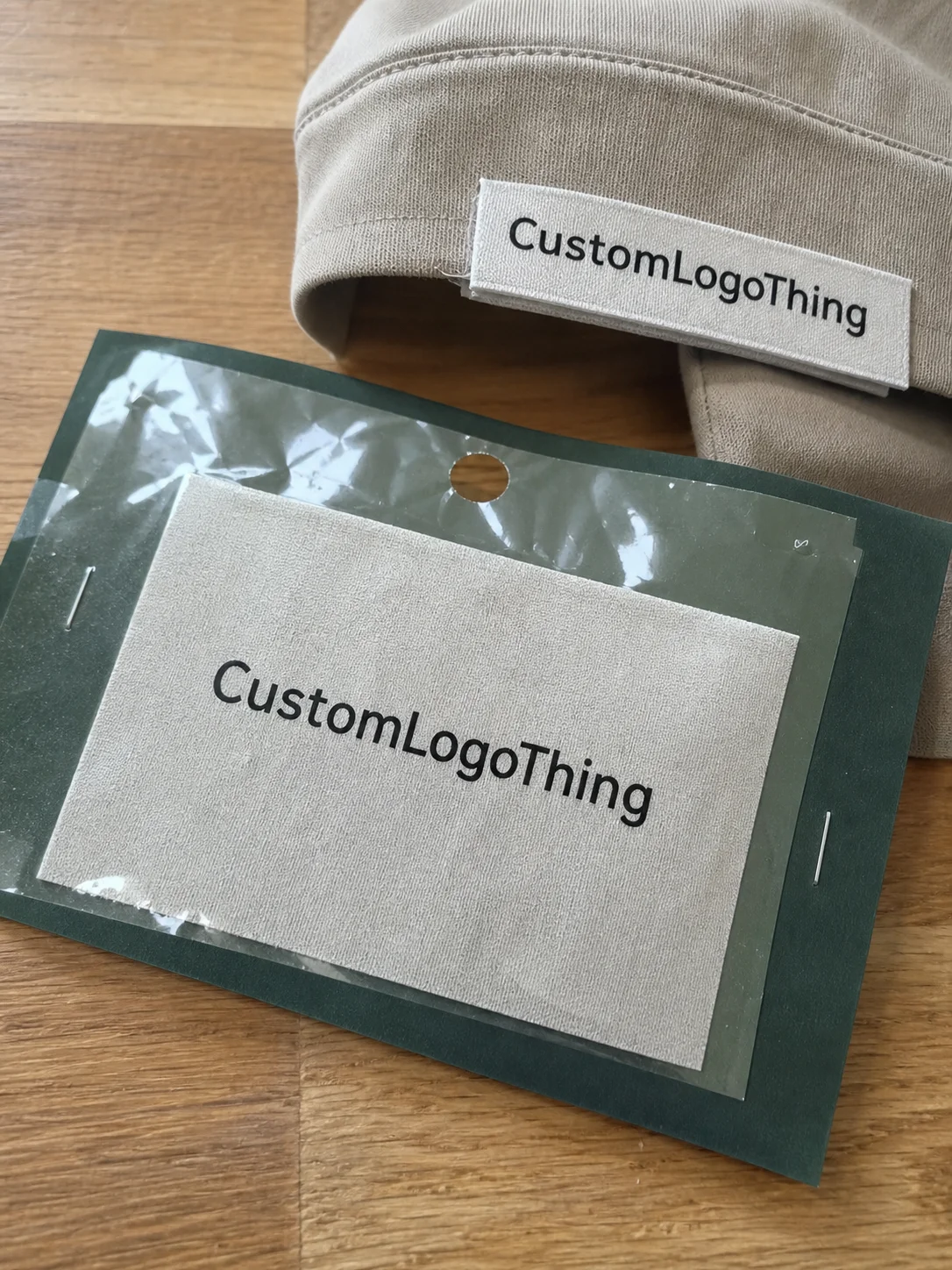
The main benefit is comfort. A neck tag that scratches or bunches can make a garment feel cheap even when the fabric and construction are solid. A flat transfer avoids that problem and helps the product feel cleaner on skin.
They also simplify production. Sewn labels require extra trim inventory, a separate sewing step, and more handling before the garment is finished. A heat-applied label can streamline the workflow if the line already uses a heat press or automated application system.
Placement is another reason brands choose them. Slim necklines, side seams, and stretch fabrics can make sewn-in labels twist or pucker. A transfer usually sits flatter and is easier to keep aligned in small spaces.
The tradeoff is that the label becomes a process item, not just a graphic. If the material is too rigid, the edges can crack. If the press settings are off, the finish can turn glossy or show edge lift. That is why the label spec should be treated like part of the garment spec.
For brands already ordering Custom Labels & Tags and related Custom Packaging Products, heat-applied branding can fit into the same presentation system. The useful question is not whether the label looks good on its own, but whether it matches the garment and the rest of the branded components.
How the heat transfer process works from art to garment
The workflow is straightforward: prepare artwork, produce the transfer, and apply it with heat and pressure. The quality problems usually come from the details inside those steps.
Start with the file. Vector art is safest because it preserves sharp edges and small type at label size. If the design depends on thin outlines or tiny text, review it at actual size rather than trusting a full-size mockup.
The transfer construction matters. Screen-printed transfers, digital transfers, silicone-based systems, and specialty materials all behave differently. The base material affects feel, stretch, opacity, and how forgiving the application process will be on different fabrics.
Application is where most failures happen. Heat, pressure, and dwell time need to match the fabric and adhesive. Many systems land somewhere around 285 to 325 degrees Fahrenheit for 8 to 15 seconds, but that range is not universal. Too much heat can distort the garment surface, while too little pressure can leave weak edges.
Peel timing matters just as much. Cold peel, warm peel, and hot peel are not interchangeable. If the transfer is removed too early, it may lift later even if it looks fine immediately after pressing.
A good spec sheet matters more than a mockup. It should define the artwork, transfer type, application settings, garment fiber, and peel method so the first run is repeatable instead of experimental.
What drives cost, MOQ, and unit price
Price is driven by setup work, complexity, and quantity. Small orders carry more of the fixed cost for file prep, proofing, and production setup, so unit pricing usually looks less attractive at low volume.
For brands that order custom heat transfer labels for apparel that last in 2026, a simple one-color digital run often lands around $0.48 to $1.05 per piece at low quantity. Mid-volume standard transfers commonly fall around $0.20 to $0.38 each, while specialty finishes or low-temp constructions can range from $0.34 to $0.78 depending on the fabric, size, and finishing steps.
MOQ works the same way. A supplier may accept a smaller run, but the price per piece rises because the setup is spread over fewer labels. If you are comparing options, ask for pricing at 500, 1,000, 5,000, and 10,000 pieces so you can see the break points clearly.
Watch for added charges that do not always show up in the headline rate. Artwork changes after proof, Pantone matching, specialty adhesives, rush production, matte or soft-touch finishes, and nonstandard sizing all affect the quote. Reprints caused by bad files can erase any savings from a lower base price.
| Order Type | Typical Unit Price | Best For | Tradeoff |
|---|---|---|---|
| Low-MOQ digital run | $0.48-$1.05 | Samples, launch drops, test programs | Higher unit cost |
| Mid-volume standard transfer | $0.20-$0.38 | Core apparel lines | Needs more accurate forecasting |
| Specialty finish transfer | $0.34-$0.78 | Premium branding, performance wear | More setup and tighter process control |
The better comparison is landed cost per applied label. Include spoilage, press time, rework, and the labor needed to place it correctly. A quote that looks slightly lower but creates waste is not actually cheaper.
What’s new in 2026 for brands that order custom heat transfer labels for apparel that last
In 2026, the biggest change is not one new transfer type. It is the shift toward lower application temperatures, softer hand feel, and shorter launch runs. Brands are asking for heat-applied Labels That Work on polyester blends, rayon, and performance knits without leaving press marks, and suppliers are responding with lower-temp adhesives and more matte finishes.
We are also seeing more interest in recycled liners, reduced-waste packaging, and faster sample cycles. For many buyers, the first order is no longer a full-season commitment. It is a test run sized to social drops, pop-up inventory, or a limited retail release. That makes it easier to order custom heat transfer labels for apparel that last without overbuying.
In our 2026 sample approvals, the most common issue is still process control, not artwork quality. The label usually fails because the press profile was set for the wrong garment. Polyester can turn glossy, rib knits can distort, and stretch fabrics can pull at the edges if the dwell time is too long. That is why the application sheet matters as much as the transfer itself.
If you are still comparing branding methods, it is worth checking how heat-applied labeling compares with stitched trim. Our overview of woven labels for apparel and hats is useful if you want a traditional sewn finish for a different product line.
How to choose material, stretch, and wash performance
The label has to match the garment, not just the design. Cotton jerseys are usually easier to work with. Polyester, nylon, and performance blends are less forgiving because they can react to heat and adhesive differently than expected.
Stretch is one of the most important variables. Rib knits, athletic fabrics, and blended materials need a label that flexes with the garment instead of resisting movement. If the transfer is too rigid, the edges can crack or start lifting at stress points like the neckline or hem.
For 2026 programs, ask about low-temperature films for heat-sensitive garments, stretch-rated systems for activewear, and matte soft-touch Finishes for Premium basics. Those options matter if you need to order custom heat transfer labels for apparel that last while keeping the hand feel close to the fabric.
Comfort and durability usually pull in opposite directions. Softer systems tend to feel better against skin, but they may wear faster under abrasion or repeated drying. More durable systems can last longer but may feel more noticeable on lightweight garments.
Ask for the application range, peel method, expected wash performance, and finish level. Matte, gloss, and soft-touch all have different effects on appearance and hand feel. If the supplier can reference wash-cycle testing or adhesion data, that is more useful than a general promise that the label is high quality.
The right material is the one that behaves like part of the garment. A premium product should not carry a label that feels like an afterthought.
Typical turnaround and production steps for an order
The usual sequence is quote, artwork review, proof approval, production, quality check, and shipping. In 2026, a standard order typically lands in 10 to 15 business days after proof approval. Specialty constructions, complex art, or added testing can push that to 2 to 4 weeks.
Most delays come from missing inputs. The supplier needs to know the garment fiber, label size, placement, and press method. They also need final artwork that is clean at production scale. If the file arrives as a low-resolution image with tiny type, the process slows immediately.
The cleanest approvals include the final design, quantity, garment type, label dimensions, placement, and press profile. If the production line uses a swing-away press, clamshell, or automated application system, include that as well. Those details affect pressure, consistency, and final finish.
If the label order sits inside a wider branding program, keep the approval process aligned with your broader packaging design workflow. That makes reorders easier and reduces drift between the original sample and the next production run.
Common mistakes that make labels peel, crack, or look cheap
The first mistake is matching the wrong transfer to the wrong fabric. A system that works on cotton may fail on nylon, coated materials, or textured fleece.
The second mistake is poor press control. Too much heat can distort the garment surface. Too little pressure can leave weak edges that peel after washing. Both can pass a quick visual check and still fail later.
Peel timing is another common error. A cold-peel product that gets removed too soon may appear finished, then lift at the corners after cooling or after the first wash. That creates avoidable rework.
Artwork problems also show up late. Low-resolution files create fuzzy edges, thin lines can disappear, and tiny type can become unreadable once the label is reduced to actual size. If the design depends on detail, test it on the actual fabric before approving the run.
Wash testing should match the product's real use. A label that survives one delicate home wash may not survive repeated hot drying or industrial laundering. If the garment is going to be worn hard, test it hard.
Next steps for testing, approving, and scaling your order
Start with a sample on the exact garment you plan to sell. A similar shirt is not enough. The actual fabric matters more than the mockup or the paper proof.
Use a simple approval checklist: artwork, size, placement, press temperature, dwell time, pressure, peel method, and wash result. The list is basic because the failure points are basic. What scales is the version that gets documented and repeated.
Record the final settings once the sample is approved. Note the transfer type, garment SKU, and press profile so the next run does not depend on memory or a single operator.
Scale only after the label survives wear and wash without edge lift, cracking, or visible surface damage. If the garment is part of a premium line, the label should hold up with the rest of the product presentation.
The most useful way to think about custom heat transfer labels is as a production spec, not a decorative extra. That framing keeps the order aligned with cost, lead time, and quality instead of just appearance. If you need to order custom heat transfer labels for apparel that last, this is the point where a short test run saves money later.
Are custom heat transfer labels better than sewn-in labels?
They are better when comfort, a flat finish, and low-profile branding matter more than a traditional stitched tag. If you need to order custom heat transfer labels for apparel that last, they are especially useful on lightweight garments and in places where sewn labels would bunch or irritate the skin. Sewn-in labels still make sense when a brand wants a classic apparel look or needs label structure built into the garment.
How long do custom heat transfer labels last after washing?
There is no single answer because durability depends on the fabric, adhesive, application settings, and the transfer system itself. A properly matched label should survive repeated home washing if the spec is right. For uniforms, kids' apparel, or heavy-use products, ask for wash-cycle testing before full production.
What artwork format works best for custom heat transfer labels?
Vector files are usually best because they keep edges sharp and small text readable. If you only have a raster file, send the highest-resolution version available and expect some cleanup. Fonts, thin lines, and tiny details should be checked at the actual label size before approval.
How much do custom heat transfer labels cost per piece?
Price depends on size, quantity, color count, finish, and how much setup the order needs. Smaller runs cost more per piece because the fixed production work is spread across fewer units. For a real comparison, ask for pricing at multiple volumes, not one attractive number that hides the break point.
Can custom heat transfer labels be used on stretch or performance fabrics?
Yes, but the transfer system and application settings need to match the fabric's stretch and heat tolerance. Performance fabrics often need extra attention to adhesion and flexibility so the label does not crack or lift. Testing on the exact garment is the safest way to avoid expensive rework.


