Buyer Fit Snapshot
| Best fit | Cmyk Printed Corrugated Cartons projects where brand print, material claims, artwork control, MOQ, and repeat-order consistency need to be specified before quoting. |
|---|---|
| Quote inputs | Share finished size, material target, print colors, finish, packing count, annual reorder estimate, ship-to region, and any compliance wording. |
| Proofing check | Approve dieline scale, logo placement, barcode or warning zones, color tolerance, closure strength, and carton packing before bulk production. |
| Main risk | Vague material claims, crowded artwork, missing packing details, or unclear freight terms can make a low unit price expensive after revisions. |
Fast answer: Cmyk Printed Corrugated Cartons: Board, Finish, Dieline, and Unit Cost should be specified like a repeatable production item. The safest quote records material, print method, finish, artwork proof, packing count, and reorder notes in one written spec.
Production checks before approval
Compare the actual filled-product size with the drawing, then confirm tolerance on folds, seals, hang holes, label areas, and retail display edges. Reserve space for logos, QR codes, warning copy, and material claims before decorative graphics fill the panel.
Quote comparison points
Review material grade, print process, finish, sampling route, tooling charges, carton quantity, and freight assumptions side by side. A quote is only useful when the supplier can repeat the same color, closure quality, and packing count on the next order.
CMYK printed corrugated cartons can look flawless on a screen and still fall apart in the real world of board texture, adhesive, pressure, and transit. That gap is the whole story here. A carton has to carry a brand message and survive shipping, which means cmyk printed corrugated cartons live at the intersection of marketing and logistics.
Buyers usually feel that tension first. A carton may sit beautifully on a shelf or photograph well in a render, then arrive with bruised corners, muted tones, or a scuffed face that makes the brand feel a little less careful than it wanted to look. Packaging is not just about a sharp logo. It is about whether cmyk printed corrugated cartons can handle stacking, vibration, humidity, and rough handling without losing the message printed on the outside.
The best projects treat structure and artwork as one decision. If the board is too weak, the carton becomes a liability. If the artwork is too delicate for corrugated stock, the print can turn soft or uneven. I have seen teams spend days perfecting a full-color design, only to discover that the barcode lands in a seam or the ink coverage weakens a fold line. That is exactly why cmyk printed corrugated cartons deserve more scrutiny than a polished mockup.
CMYK Printed Corrugated Cartons: Why the Best-Looking Box Can Still Fail in Transit
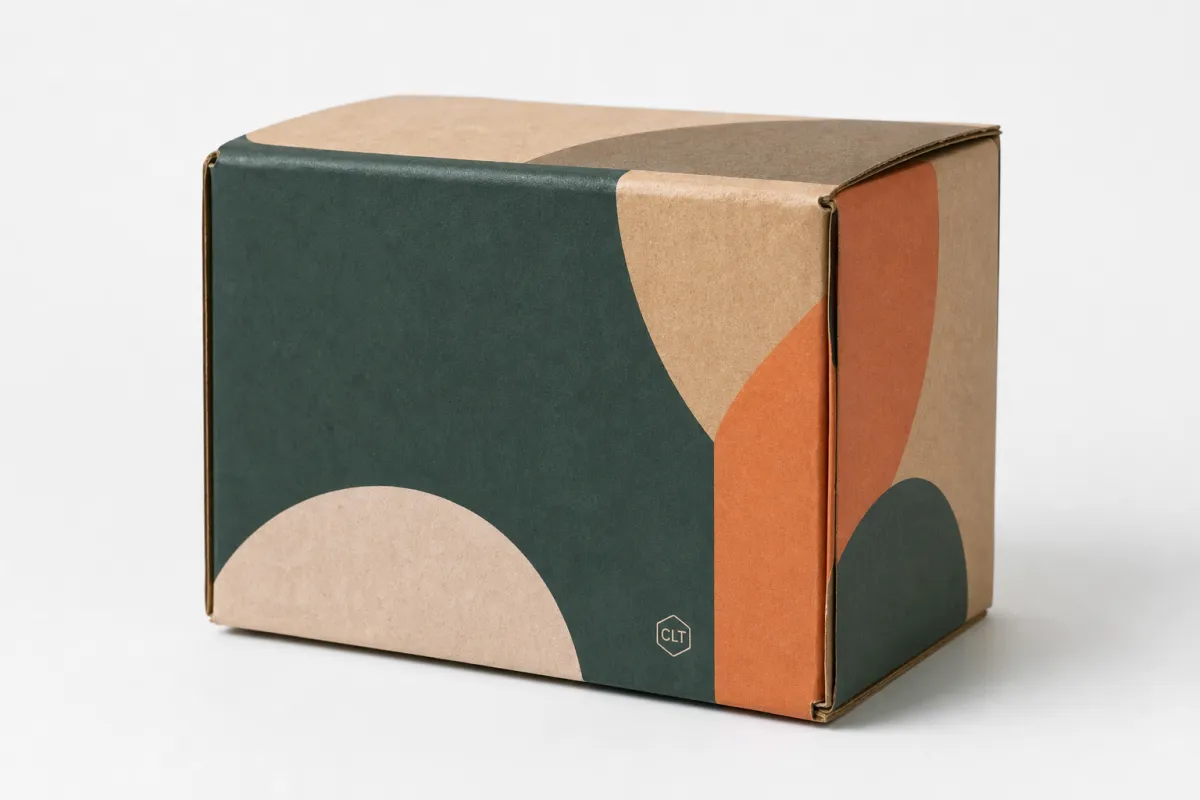
A polished mockup can fool even experienced teams. On a monitor, cmyk printed corrugated cartons often look saturated, crisp, and expensive. Production changes the picture. Corrugated board is textured, absorbent, and far less predictable than coated folding carton stock, so the same artwork can come out flatter, softer, or slightly banded. That is not a defect in the art file; it is the nature of the substrate.
That difference matters more than many first-time buyers expect. Cyan, magenta, yellow, and black behave differently on a rough liner. Dot gain increases. Ink sinks into fibers. Small type loses clarity. A proof may promise rich color, then the real cmyk printed corrugated cartons arrive with a surface that feels one step less refined because the ink settled into the board instead of sitting on top of it.
Logistics teams should care just as much as designers. A carton that looks strong but collapses under pallet load is not premium packaging. A box with a full-color face and weak crush resistance may fail before the customer even opens it. Packaging spec sheets tell this story over and over: cmyk printed corrugated cartons only work when art direction and distribution reality point in the same direction.
Think about a direct-to-consumer launch with a vivid outer shipper. The layout uses gradients, tight type, and a barcode tucked into a corner. The first sample looks promising. Then transit testing changes the picture. Edges bruise. Barcode contrast falls off. Heavy ink on one panel makes the board feel less clean after compression. That failure is ordinary, not exotic, and honestly it is kinda easy to miss if you only review one sample by hand.
A carton that photographs well is not automatically a carton that survives a parcel network.
That sentence is the core of cmyk printed corrugated cartons. They are not decorative sleeves. They are shipping components with a brand on top. Buyers who start there make better choices about print method, board grade, and finishing from the beginning.
How CMYK Printed Corrugated Cartons Work: Process and Production Steps
The production path for cmyk printed corrugated cartons starts well before ink touches board. Artwork setup comes first: dieline review, bleed, safe zones, fold lines, seam placement, barcode location, and any panel that needs to stay clean for tape or labels. Skip that stage and the project can pay for it twice, once in time and once in reprints.
CMYK is a process color system. Cyan, magenta, yellow, and black combine in varying percentages to build the image. The system works across many substrates, but corrugated board changes the terms. Compared with offset printing on coated paperboard, the surface is rougher and more absorbent, so cmyk printed corrugated cartons usually need tighter control over ink limits and more restraint in the artwork.
Three printing paths show up most often. Digital printing fits short runs and variable artwork because setup is light and proofing is fast. Flexographic printing is common for larger runs and becomes efficient once plates are made. Offset printing paired with litho-lamination can produce a cleaner, more premium face, though it adds steps and cost. The right choice depends on the look you need and the job the carton has to do.
Prepress catches many of the expensive mistakes. A good vendor will review color density, trap, fine-line legibility, and whether the file pushes beyond practical ink coverage for corrugated. Proofing follows. For cmyk printed corrugated cartons, a digital proof helps, but a press proof or sample run is better if the design depends on exact color, photographic detail, or small legal copy.
After print comes conversion: cutting, scoring, slotting, gluing, and bundling. Each step can change the final carton. Scores that are too deep crack liners. Glue that lands off target can throw off panel registration. Weak stack packing can bruise edges before the cartons even reach the fulfillment floor. cmyk printed corrugated cartons should be treated as a full production system, not as a graphic file with flaps attached.
- Dieline review: confirm dimensions, seams, and print-safe areas before artwork is locked.
- Proofing: verify color, barcode contrast, and fold placement with a sample or press proof.
- Conversion: check cutting and scoring tolerances, especially on heavier board.
- Inspection: review print registration, glue quality, and stacking integrity before shipment.
For brands comparing protective outer packaging, Custom Shipping Boxes are a useful benchmark because they make the structural spec harder to ignore. If the carton is going to carry real shipping loads, the structure has to settle the argument first.
CMYK Printed Corrugated Cartons Cost, Pricing, and MOQ
Pricing for cmyk printed corrugated cartons comes down to a small cluster of variables, and each one can move the number more than a first-time buyer expects. Board grade, flute type, carton size, print coverage, finishing, and quantity all affect unit cost. Change one of them and the quote can shift in a way that makes sense only after the order is placed.
Board choice is usually the first cost lever. E flute often prints well for retail-facing packs, while B flute or double wall may be needed for extra strength. Heavier board is not automatically better, but it usually costs more. If a carton needs polished graphics plus parcel protection, cmyk printed corrugated cartons tend to sit above plain kraft shippers for that reason alone.
Setup charges matter too. Dies, print plates, prepress work, and proofing can add meaningful cost on a small order. MOQ changes the math fast. A 500-unit run may carry a much higher unit price than a 5,000-unit run even if the artwork never changes. With cmyk printed corrugated cartons, scale often lowers the per-box cost faster than people expect.
Here is a practical comparison of common print paths. The ranges are broad, but they reflect how the market usually behaves: short-run digital gives flexibility, flexographic printing rewards volume, and offset printing with lamination chases the highest visual finish.
| Print Method | Typical Use | Setup Cost | Color Quality | Best Fit |
|---|---|---|---|---|
| Digital printing | Short runs, launches, seasonal trials | Low to moderate | Strong for short runs; variable across substrates | 1 to 2,000 units, fast changes |
| Flexographic printing | Mid to high volume cartons | Moderate | Good, but design should respect dot gain and coverage limits | 2,000+ units, repeat orders |
| Offset printing with litho-lamination | Premium retail presentation | Higher | Excellent on the face sheet | High-visibility cartons, premium branding |
The hidden costs are where budgets get squeezed. Freight can be meaningful on bulky carton orders. Warehousing adds up when cartons arrive early. Revisions trigger more proofing. Rush orders raise almost everything. With cmyk printed corrugated cartons, the quote on the page is rarely the full cost of the project.
A realistic planning range helps. Short-run digital work may price higher per unit but save money when you avoid plate charges and overbuying. A larger flexographic order can pull the per-carton price down into a much tighter range. On a typical commercial order, unit pricing might move from roughly $0.80-$2.00 for a small digital run to around $0.20-$0.60 at higher flexographic volumes, depending on size and coverage. That is why cmyk printed corrugated cartons should be quoted against the actual use case, not against a generic box idea.
One more filter helps. If a supplier comes in dramatically below the others, compare the spec line by line. Thinner board, lower coverage, different finish, or missing overage can make the quote look attractive while quietly changing the carton's performance. The cheap option is not always a bargain once damage, rework, and replacements enter the picture.
Key Factors That Affect Color, Durability, and Shipping Performance
The best-looking cmyk printed corrugated cartons usually start with the right substrate. Liner quality affects print clarity, and flute profile affects both crush resistance and visual appearance. E flute can offer a smoother face than bulkier options, while B flute often strikes a stronger balance for shipping. Double wall has its place, especially for heavier loads, but it is not automatically better for print.
Color behavior also depends on the board itself. Corrugated absorbs ink differently than coated stock, so dot gain can soften detail and deepen shadows. Solid fills may not lay down evenly if the ink density runs too heavy. Fine type, reversed text, and hairline graphics are all vulnerable. For that reason, cmyk printed corrugated cartons usually look better with simpler artwork and stronger contrast than a designer might use on a label or insert.
Environmental exposure is easier to underestimate than to fix. Cartons stored in humid warehouses lose stiffness. Temperature swings can affect glue and board integrity. Long dwell times before use raise the odds of scuffing and edge wear. That matters most for cmyk printed corrugated cartons headed into long storage or multi-leg distribution.
Shipping performance should never be guessed. Standards such as ISTA distribution testing protocols and ASTM-based methods give brands a more realistic picture of how a carton behaves under vibration, compression, and drop conditions. The exact test depends on the product, but the logic is simple: cmyk printed corrugated cartons that pass in the lab are more likely to survive in the field.
There is a branding tradeoff too. Decorative coverage can be beautiful, yet if it covers the surfaces most likely to scuff in transit, the carton may look tired before the customer sees it. A cleaner approach reserves the most vivid branding for the panels people actually notice and keeps stress-prone zones simpler. That is how cmyk printed corrugated cartons feel deliberate instead of overworked.
If the carton has to survive parcel handling, the design should serve the shipment, not fight it.
Heavy products make that rule impossible to ignore. A 2-pound subscription box and a 15-pound retail shipper do not need the same design logic. The first can lean harder into presentation. The second needs closer attention to flute selection, seam placement, and compression resistance. In both cases, the best cmyk printed corrugated cartons print cleanly without weakening the structure.
Step-by-Step Guide to Ordering CMYK Printed Corrugated Cartons
Start with the use case. A retail display carton, a DTC mailer, a shelf-ready outer box, and a subscription shipper all place different demands on cmyk printed corrugated cartons. If the product sells online, the outer structure matters as much as the branding. If the carton sits on a shelf, face presentation carries more weight. If the product crosses borders, compression and moisture resistance climb higher on the list.
Gather the technical inputs before asking for quotes. At minimum, you need dimensions, product weight, stacking expectations, fill method, and artwork files. If the inserts need extra clearance or the carton must fit automated packaging equipment, say so early. cmyk printed corrugated cartons become much easier to price and produce once the vendor has enough detail to compare one spec against another.
Good vendors will ask for a spec sheet. That is a positive sign. It means they are comparing board grade, flute style, print method, finish, and MOQ with discipline. If you are reviewing a supplier's proposal against a wider packaging program, it can help to compare the structure with Custom Shipping Boxes so the printed carton is not judged only by graphics. For cmyk printed corrugated cartons, the structural line tells you more than the mockup does.
- Define the role: shipping, shelf display, subscription, or secondary packaging.
- Lock the structure: board grade, flute, dimensions, closure style, and stacking target.
- Review artwork: check bleed, safe zones, CMYK values, and barcode placement.
- Approve proofing: confirm color, readability, and panel alignment before mass production.
- Plan logistics: storage space, overage, freight timing, and receiving capacity.
Ask for a sample or press proof if the design is color-sensitive. A proof can expose subtle issues that digital mockups hide: a logo that reads too dark, a barcode that needs more contrast, or a seam that interrupts a panel image. That matters a great deal for cmyk printed corrugated cartons because the same artwork can behave differently across board suppliers and print processes.
Think past production day. How will the cartons be inspected? Where will they be stored? How many extras should be ordered to cover spoilage and fulfillment errors? A sound purchasing plan usually includes a small overage allowance, especially on first runs. That cushion can stop a reprint from becoming an emergency.
Common Mistakes With CMYK Printed Corrugated Cartons
The most common mistake is assuming screen color equals carton color. It does not. Monitor settings, board texture, ink limits, and print method all shape the final result. cmyk printed corrugated cartons almost always print a little differently than a digital mockup, and buyers who ignore that gap are usually the ones most surprised by the first shipment.
Overcomplication causes another round of trouble. Tiny legal text, thin reversed type, and low-contrast gradients can disappear once printed on corrugated. The board surface is not built for heroic detail everywhere at once. In practice, cmyk printed corrugated cartons often look better when the layout is cleaner, the typography is stronger, and the most important branding gets room to breathe.
Skipping transit testing can get expensive fast. A carton may pass a tabletop review and still fail in compression, vibration, or drop conditions. Brands that ship through parcel networks should test early. If you need guidance on packaging behavior during distribution, groups such as FSC are useful for responsible sourcing conversations, but structural validation still belongs in testing. cmyk printed corrugated cartons are not finished until they survive the movement they were built for.
Lead time gets underestimated all the time. Artwork revisions, die creation, proof approval, and production scheduling all take time. If a launch date is fixed, build a buffer. Rush orders are possible, though they usually cost more and leave less room for quality control. That is a bad trade for cmyk printed corrugated cartons, because last-minute changes tend to increase mismatch and rework.
- Assuming exact color match: CMYK on corrugated is close, not perfect.
- Ignoring board texture: rougher surfaces reduce sharpness and fine detail.
- Choosing on unit price only: low bids can hide weak board or missing services.
- Skipping a test order: first-run issues are cheaper to find in samples.
Comparison errors show up constantly too. Buyers line up two quotes that look similar, but one includes better board, a more controlled print method, or more realistic overage. The cheaper quote wins the spreadsheet and loses in the warehouse. That is the wrong trade. With cmyk printed corrugated cartons, total value matters more than sticker price.
Expert Tips and Next Steps for Better CMYK Printed Corrugated Cartons
Start small if the design is ambitious. A sample pack or test run is usually worth the extra spend, especially when the carton uses heavy solids, gradients, or fine text. That early check can surface issues that would be expensive in a full production run. For cmyk printed corrugated cartons, samples are not a luxury; they are a risk filter.
Focus on the panels people actually see. The top, front, and opening surfaces usually carry the heaviest branding load. Less visible sides can stay simpler, which reduces ink coverage and keeps the carton cleaner under wear. That approach often improves both appearance and durability. It is one of the easiest ways to make cmyk printed corrugated cartons feel premium without forcing every surface to carry the same message.
Put acceptance criteria in writing. Color tolerance, seam alignment, barcode quality, and crush targets should never live only in someone's memory. If the carton has to pass warehouse scanning or parcel handling, say so in the spec. If you are ordering through a broader packaging program, compare the project against Custom Shipping Boxes so the structural standard stays visible throughout the buying process. Strong cmyk printed corrugated cartons begin with clear expectations.
A simple internal checklist keeps the process honest:
- Confirm specs: dimensions, board, flute, print method, and MOQ.
- Compare at least two quotes: make sure you are comparing like for like.
- Review the proof: look for contrast, placement, and legibility.
- Test transit: compression, vibration, and drop risk should all be considered.
- Approve the run: release production only after the sample meets the target.
From a packaging buyer's point of view, the smartest next step is usually not ordering more cartons. It is tightening the spec. Audit the current board grade, print method, and artwork file. Find the weakest point. Fix that first. Then ask for a sample that reflects the real production plan, not a wish list. That is how cmyk printed corrugated cartons shift from a promising idea into dependable packaging.
The brand payoff is real when the work is done properly. A carton with clean color, readable copy, and sound structure signals care before the customer even sees the product. The message is subtle, but the effect is not. In a crowded market, cmyk printed corrugated cartons can make a shipment feel deliberate rather than routine, and that often separates packaging that merely arrives from packaging that performs.
FAQ
What affects print quality on cmyk printed corrugated cartons?
Board surface, flute profile, and ink absorption all influence sharpness and color density. Artwork setup matters too, especially image resolution, line weight, and safe color limits. A proof or sample run is the best way to catch dull areas, banding, or registration issues before full production.
Can cmyk printed corrugated cartons match brand colors exactly?
CMYK can get close, but exact brand color matching is not guaranteed on every corrugated substrate. Coated inks, board texture, and press variation can shift the final appearance. If a color is mission-critical, ask whether a spot color, underprint, or approved proof is needed.
What is the typical lead time for cmyk printed corrugated cartons?
Lead time depends on artwork approval, sampling, tooling, print method, and order size. Rush jobs often cost more because they compress proofing and production windows. Build extra time if your project needs new die tooling, multiple revisions, or international freight.
Are cmyk printed corrugated cartons good for e-commerce shipping?
Yes, if the board grade is strong enough for parcel handling and the print design is built for durability. Use transit testing to check corners, seams, scuffing, and compression before launch. For heavy products, prioritize structural performance first and decorative coverage second.
How should I compare quotes for cmyk printed corrugated cartons?
Compare identical specs: board grade, dimensions, print coverage, finishing, MOQ, and freight terms. Watch for hidden differences in setup charges, overages, or packaging included in the quote. The lowest unit price is not always the best value if the carton fails in storage or transit.
If you are evaluating cmyk printed corrugated cartons for a new launch or a packaging refresh, start with the spec, not the artwork. Then test the sample, compare the quotes, and verify the carton can survive the trip it is meant to make. That sequence is slower than guessing, but it is far less expensive than reprinting a full run of cmyk printed corrugated cartons that look good on the artboard and fail where it counts.


