An apparel Printed Poly Mailers material thickness guide matters because the number on the spec sheet rarely tells the full story. A bag can look light and still hold up well if the film blend, seal construction, and print layout are handled properly. Another can feel “thicker” in hand and still split at the seam the first time it meets a zipper pull, a boxed fold, or a rough conveyor belt.
That gap between appearance and performance is where a lot of packaging budgets go sideways. Buyers often focus on a single thickness number and ignore the rest of the build. In practice, the mailer has to match the garment, the packing method, and the route it will travel. A single folded tee does not ask much. A hoodie, denim, or a mixed apparel kit asks a lot more.
The goal is not to buy the heaviest film possible. That usually just means higher cost, stiffer bags, and more waste. The better goal is a mailer that protects the product, seals cleanly, prints well, and survives real handling without forcing you to pay for material you do not need.
Apparel Printed Poly Mailers Material Thickness Guide: What Buyers Miss
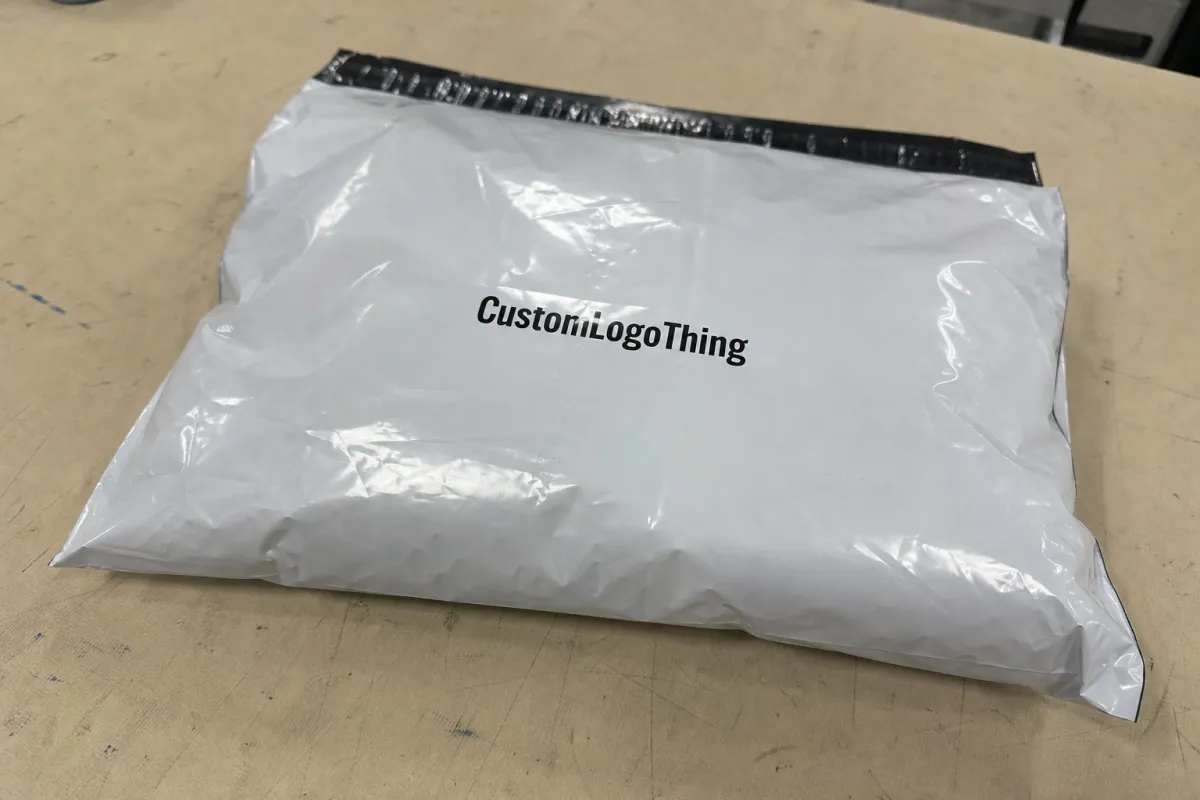
Thickness in poly mailers is usually measured in mil, where 1 mil equals 0.001 inch. Buyers see that number and assume it is the whole quality story. It is not. Two mailers with the same nominal thickness can behave very differently if one uses a better resin blend, a co-extruded structure, a wider seal, or tighter conversion control.
That difference shows up fast in apparel shipping. Flat tees are forgiving. The corners of a folded hoodie are not. Denim, ribbed fabric, zipper tape, and metal snaps all create pressure points inside the bag. If the film is too soft, it may stretch or split at the edge. If it is too rigid, it can crack at fold lines or become harder to pack efficiently.
Buyers sometimes treat thickness as if it were a direct proxy for durability. It is really only one variable. Film quality, layer structure, dart resistance, and seal strength decide whether the bag holds together after the packing line, the hub scan, the truck transfer, and the drop at the porch. That is why a well-built 2.75 mil mailer can outperform a poor 4 mil bag in the real world.
A mailer spec should protect the garment, look clean at delivery, and avoid paying for material you do not need.
There is also a difference between packaging that sounds sustainable and packaging that actually fits the job. Kraft paper mailers and corrugated shippers bring their own strengths, and paper-based systems may use recycled materials or FSC certified fiber. That matters for brand positioning. It does not replace puncture resistance or moisture protection. If the product can be damaged by rain, abrasion, or tight handling, poly still earns its place.
One more thing buyers miss: printed mailers are converted products, not raw film in a vacuum. A bag with large solids, heavy ink density, or artwork pushed too close to the seal needs more layout discipline than a plain clear bag. The artwork can affect the usable print area, the heat seal zone, and how predictable the finished bag feels in packing. Pretty art that ignores the conversion process is how reprints happen.
How Film Gauge, Layers, and Seal Strength Work
Film construction carries more weight than the thickness number alone. A single-layer film is simple: one web, one set of properties, one chance to get it right. Co-extruded film spreads those jobs across multiple layers. One layer can focus on toughness, another on seal behavior, another on print surface or slip. That is why a multilayer bag can feel stronger without becoming annoyingly stiff.
For apparel shipping, that flexibility matters. The outer layer may need print adhesion and scuff resistance. The inner layer needs sealing performance. The middle layer helps with strength and puncture control. If a supplier cannot explain what each layer does, the buyer is basically shopping blind.
Three physical behaviors matter most in practical use:
- Dart impact - resistance to a pointed hit, like a sharp garment accessory or a rough edge in transit.
- Tear resistance - how far a nick can travel once the film is compromised.
- Tensile strength - how much load the film can take before stretching or breaking.
Lab numbers help, but only if they map to the package use case. Buyers often ask about ASTM D1709 for dart impact and ASTM D882 for tensile properties. Those standards are useful. They are not a replacement for understanding what is actually going in the bag. A 12-ounce tee and a heavyweight hoodie do not create the same stress profile, even if both fit inside the same size mailer.
Seal strength deserves just as much attention as film gauge. A strong film with a weak seam is still a weak bag. The seal area needs enough width to absorb production variation and handling stress. Too narrow, and the seal becomes a failure point. Too inconsistent, and one side of the bag may seal hotter than the other, creating weak spots that only show up after shipping.
Good suppliers check for seam width, seal consistency, and closure type early in the spec process. Permanent adhesive strips, double strips, and tamper-evident closures each solve a different problem. A return-friendly program does not need the same closure behavior as a one-way promotional shipment. That sounds obvious, yet it gets ignored constantly.
Print coverage also changes the conversation. Dense black panels, large color fields, or heavy ink close to the edge can change how the film handles heat and flex. The design may look fine on screen and even on a proof, then force awkward compromises on the press. A competent spec leaves room for the bag to behave like a bag instead of pretending it is a flat poster.
The real takeaway is simple: gauge, layer count, seal design, and print layout are a system. Looking at any one of them in isolation creates false confidence. That is usually expensive confidence.
Key Factors That Set the Right Thickness for Apparel Orders
Garment weight is only the starting point. A single light tee may work in a thinner film. A pair of joggers, a hoodie, or a mixed set with inserts and accessories changes the pressure completely. The bag has to hold the item in place without over-stretching around corners or rubbing thin spots against itself.
Shape matters as much as weight. A soft folded sweatshirt behaves differently than a boxy stack of jeans. Zippers, snaps, hang tags, and rigid labels create little pressure points that can puncture lower-grade film. If a package has sharp edges, the film specification should rise with that risk, not with somebody’s guess from a product photo.
Packing method matters too. Manual packout tends to be more variable than automated lines, and variation shows up in bag stress. Overstuffed mailers fail faster. Underfilled mailers look sloppy and can shift enough inside the parcel to rub against the film during transit. The cleanest packaging spec is the one that matches the way the warehouse actually works.
For direct-to-consumer apparel, presentation is part of the job. The mailer lands on a doorstep and becomes the first physical proof of the brand. If it arrives wrinkled, scuffed, or stretched to the limit, nobody calls it premium. They just notice that it looks tired.
Sustainability claims also need context. Some buyers want recycled-content packaging, some want paper, and some need the moisture resistance and lower freight volume of poly. There is no universal winner. A recyclable or recycled-content carton can fit some programs better than a film bag. For high-volume apparel with a consistent shipping profile, a right-sized poly mailer often wins on cost and protection. For heavier or more fragile bundles, the answer can move somewhere else entirely.
Actual use case should drive the thickness, not branding language. A light fashion launch and a bulky workwear order are not the same problem. Neither are a repeat reorder and a first-run pilot. Buyers who treat all three as one category usually pay for it later in damage claims or unnecessary resin weight.
For quick screening, a practical rule of thumb looks like this: lighter basics can often run in the 2.0-2.5 mil range; most standard apparel orders land comfortably around 2.5-3.0 mil; and heavier bundles, rougher handling, or sharper contents push toward 3.0-4.0 mil. Beyond that, you are usually solving a specific handling problem, not buying a default apparel bag.
Cost, Pricing, and MOQ Tradeoffs for Printed Poly Mailers
Thicker film costs more because it uses more resin, weighs more, and usually requires tighter control during conversion. Print coverage and bag size affect pricing too, but resin is the main lever. Suppliers also price in setup, plate work, color matching, and the complexity of the run. None of that gets cheaper just because the buyer wants a smaller order.
On a 5,000-piece run, a light custom mailer may fall around $0.12-$0.20 per unit. A standard apparel bag often lands near $0.16-$0.26. Heavier constructions can move to $0.22-$0.35 or more, depending on size, print coverage, and finish. Those are planning ranges, not promises. A glossy white mailer with several ink colors is not priced the same way as a simple two-color black-on-gray job.
Minimum order quantity changes the math. A 1,000-piece order often carries a higher unit price than a 5,000-piece repeat because setup costs get spread across fewer bags. That is not greed. That is how converting works. Flexographic plates, machine setup, color adjustment, and waste allowance still exist even if the buyer only needs a short run.
The cheapest quote is often the least useful one. Compare freight, plate charges, over- or under-run policy, and whether the supplier can reuse tooling on repeat orders. Then compare the cost of failure. A bag that tears in transit creates replacements, service tickets, and return freight. Suddenly the “cheap” option is the expensive one wearing a fake mustache.
| Thickness range | Typical apparel load | Handling feel | Typical budget signal |
|---|---|---|---|
| 2.0-2.5 mil | Light tees, socks, slim basics | Soft, easy to fold, less puncture margin | Lowest material cost, often best for high volume |
| 2.5-3.0 mil | Standard apparel orders, mixed tees and light layers | Good balance of flexibility and toughness | Common sweet spot for custom print runs |
| 3.0-4.0 mil | Hoodies, denim, multi-item kits, higher puncture risk | More body and better abuse resistance | Higher resin and freight cost, usually justified by load |
| 4.0 mil and above | Heavy bundles, rough handling, special protection needs | Stiffer, more protective, less forgiving on fold lines | Best reserved for specific use cases, not default spec |
Good pricing conversations stay apples-to-apples. Same size. Same thickness. Same seal. Same print coverage. Same quantity. If those variables are not aligned, the quote comparison is mostly theater.
Process and Lead Time: From Artwork Approval to Delivery
Custom mailer production usually follows a familiar sequence. The supplier confirms size, film structure, thickness, closure, and print coverage. Artwork gets checked for safe margins near the seal area. After approval, the film is printed, cured, slit, formed into bags, inspected, and packed for shipment.
Lead time depends on where the order gets complicated. Incomplete artwork slows proofing. Color matching can add time. A new film spec often needs more review than a repeat order because the supplier has to confirm how it behaves in print and sealing. For a typical custom apparel run, 12-15 business days after proof approval is a realistic planning window. First runs with more variables can take longer.
Clear decisions shorten lead time. Lock the thickness early. Pick the closure style. Confirm quantity before the press schedule fills up. If the spec keeps shifting from 2.5 mil to 3.5 mil, or from matte to glossy, the clock resets in practice because the production team is no longer running a stable repeat. That is the part buyers dislike hearing, but it is still true.
Quality control should not stop at the proof. A supplier should check seal strength, print registration, bag dimensions, and basic film consistency during production. Buyers should ask for the same discipline on their side. Sample the bag with the actual garment. Confirm the closure. Check that the artwork sits clear of the seam. One weak assumption early can turn into a full pallet of unusable bags later.
Transit validation is worth the time if the order is sensitive. ISTA test methods give a practical framework for simulating shipping stress. That matters more than people admit. A light mailer that looks fine on a table may fail after a few real drops or a week of sortation abuse. A short pilot saves more money than a guessing contest ever will.
Common Mistakes That Cause Tears, Reprints, and Overpaying
The first mistake is choosing thickness by feel. Someone holds a sample, decides it feels “substantial,” and signs off. Then the product changes, the packing line speeds up, or the route gets rougher, and the bag starts failing for reasons that had nothing to do with the sample in hand. A useful spec is tied to the actual packed item, not to a gut reaction.
The second mistake is ignoring the seam. A film can be strong and still fail if the seal is too narrow, inconsistent, or overheated. I have seen buyers blame the material when the real issue was a weak seal line. That is an irritating waste of money, because the fix is usually in the conversion process, not in ordering a heavier bag.
Artwork creates its own problems. Heavy ink coverage near the edges can crowd the safe print area. Dark-on-dark designs can look sharp in proof and mushy in real life. If readability matters, sometimes the answer is a different base color or a different print strategy, not a thicker film. The design has to survive manufacturing, not just look nice in mockup software.
Warehouse conditions expose weak specs quickly. Conveyor friction, drop impact, packout speed, and carton stacking all add stress that a static sample cannot mimic. A mailer that passes a bench test can still split once workers move quickly or parcels press against one another in transit. The packaging line is rarely as polite as the mockup file.
Overpaying for unnecessary thickness is the other common miss. Buyers sometimes treat heavier film as a quality badge. It is not. If the load is light and the route is controlled, an oversized spec just burns resin and raises freight without improving the outcome. Waste is not premium.
Expert Tips and Next Steps for Ordering the Right Spec
Start with a short spec sheet. List the garment type, packed dimensions, average weight, print colors, closure style, and annual usage. If the order includes multiple SKUs, include the heaviest and sharpest item. That product usually sets the safe minimum, not the one that fits your mood that morning.
Ask for samples or a pilot run before locking volume. Then test the mailer the way it will actually be used. Fold real garments. Pack at production speed. Stack the finished bags. Drop a few. Ship some through normal transit. That practical check is far more useful than a polished render or a promise that everything “should be fine.”
Use the same discipline when comparing suppliers. Match size, thickness, closure, print coverage, and quantity before you compare price. Confirm acceptable tolerances for dimensions and overrun. Ask how the supplier handles reprints if artwork or color lands off target. Good buying decisions are built from the unglamorous details.
My blunt advice: treat the order as a packaging system, not a film purchase. The art, the seal, the garment, the route, and the warehouse all shape the final result. A smart apparel Printed Poly Mailers material thickness guide does not just name a number. It helps you choose a spec that fits the actual job and avoids the usual expensive mistakes.
What thickness is best for apparel printed poly mailers?
Lightweight tees and flat basics often work in lighter gauges, while hoodies, denim, and mixed bundles usually need more film strength. The best choice depends on puncture risk, seal quality, and how tightly the garments are packed, not just on the number on the spec sheet.
Are thicker apparel printed poly mailers always better?
No. Extra thickness raises cost, adds stiffness, and can make bags harder to fold, store, and run through packing lines. A well-constructed midweight film with strong seals can outperform a heavier but poorly designed mailer.
How do I compare cost per bag vs total shipping cost?
Start with resin and printing cost, then add freight, setup, and any MOQ-related charges to get the real unit cost. Also factor in damage replacement, customer complaints, and returns, because a cheaper bag can become expensive if it fails in transit.
How long does printed poly mailer production usually take?
Lead time depends on artwork approval, film availability, print complexity, and whether the order is a repeat run or a new spec. Simple repeat orders move faster, while new custom specs usually need more time for proofing and production steps.
What should I send when requesting a thickness quote?
Share garment type, packed size, estimated weight, print colors, quantity, closure preference, and any handling requirements like puncture resistance. The more complete the spec, the easier it is to get an accurate quote and avoid back-and-forth revisions.


