Buyer Fit Snapshot
| Best fit | Compare Bubble Mailers vs Poly Mailers Shipping projects where brand print, material claims, artwork control, MOQ, and repeat-order consistency need to be specified before quoting. |
|---|---|
| Quote inputs | Share finished size, material target, print colors, finish, packing count, annual reorder estimate, ship-to region, and any compliance wording. |
| Proofing check | Approve dieline scale, logo placement, barcode or warning zones, color tolerance, closure strength, and carton packing before bulk production. |
| Main risk | Vague material claims, crowded artwork, missing packing details, or unclear freight terms can make a low unit price expensive after revisions. |
Fast answer: Compare Bubble Mailers vs Poly Mailers Shipping should be specified like a repeatable production item. The safest quote records material, print method, finish, artwork proof, packing count, and reorder notes in one written spec.
Production checks before approval
Compare the actual filled-product size with the drawing, then confirm tolerance on folds, seals, hang holes, label areas, and retail display edges. Reserve space for logos, QR codes, warning copy, and material claims before decorative graphics fill the panel.
Quote comparison points
Review material grade, print process, finish, sampling route, tooling charges, carton quantity, and freight assumptions side by side. A quote is only useful when the supplier can repeat the same color, closure quality, and packing count on the next order.
Quick Answer: Compare Bubble Mailers vs Poly Mailers Shipping
When I first started helping brands compare bubble Mailers vs Poly mailers shipping, one of the most expensive mistakes I saw was almost laughably small on paper: a team tried to save $0.04 per order on mailer cost, then lost $0.37 to $1.12 per order replacing damaged items, paying reshipment fees, and fielding complaints. I remember standing in a warehouse in Edison, New Jersey, where the packing line looked clean enough to eat off, cartons were stacked in neat rows, and everyone kept saying the math made sense. Then the returns started. The “cheap” option turned into a very expensive lesson, kinda fast.
The short answer is simple. Bubble mailers suit fragile, scratch-prone, or hard goods that need cushioning, while poly mailers suit apparel, soft goods, and other low-damage items that do not need internal padding. If you are trying to compare bubble Mailers vs Poly mailers shipping for ecommerce orders, the real decision is not just about unit price; it is about protection, dimensional weight, carrier handling, label adhesion, and how your orders move through fulfillment. A 2.5 mil LDPE mailer and a kraft bubble mailer do not behave the same way on a 48-inch packing line, and the difference shows up quickly when a warehouse is shipping 800 parcels a day. Honestly, people get tripped up because mailers look simple. They are not. A mailer is often the difference between a smooth delivery and a customer sending you the kind of email that makes you stare at the screen for a full minute.
I have tested both formats on packing lanes where order fulfillment teams were moving 600 to 900 parcels a day, and the differences showed up fast. Bubble mailers held their shape better on rough induction belts and in mixed-carrier sortation, while poly mailers moved faster on the pack table because they stored flat, opened quickly, and nested in smaller bins. In one client meeting with a cosmetics brand in Secaucus, New Jersey, we ran a side-by-side drop test from 36 inches onto corrugated board and steel; the bubble mailers protected glass compacts far better, but the poly mailers won hands-down on speed for cotton tees and tote bags. That split is exactly why there is no one-size-fits-all answer, despite how much people wish there were.
So yes, this comparison matters in the real world, not just on a spec sheet. If you compare bubble mailers vs poly mailers shipping without looking at carrier handling, exterior print quality, label adhesion, and customer unboxing, you can end up optimizing the wrong variable. I am going to compare protection, cost, speed, sustainability, branding, and fulfillment workflow so you can match the mailer to the product rather than guessing. I’ll also be blunt where I can: some of the “best practice” advice floating around sounds nice but falls apart the minute a warehouse gets busy, a printer jams, or someone packs one size too many into a mailer that should have stayed in the sample drawer.
For buyers building out a packaging system, I also recommend looking at the broader kit, not just the mailer itself. Our team at Custom Packaging Products often sees brands pair the wrong transit packaging with the wrong secondary material, and that can hurt the entire shipping process. If a rigid item needs a box, a sleeve, or a protective insert, a mailer is not automatically the answer. I’ve seen people try to force a mailer to do a box’s job, which is a bit like asking a paper towel to be a raincoat.
Top Options Compared: Compare Bubble Mailers vs Poly Mailers Shipping
To compare bubble mailers vs poly mailers shipping properly, you have to look beyond the broad category names and compare actual formats. A kraft bubble mailer behaves differently than a metallic bubble mailer, and a 2.5 mil poly mailer behaves differently than a 4 mil version with strong seal integrity. I have seen buyers assume all mailers are interchangeable, then get burned when their label printers misread the surface texture or the warehouse team complains about static cling and slow pack-out. Nothing humbles a purchasing team faster than a pallet full of “close enough” supplies that are, in fact, not close enough at all.
| Mailer type | Typical build | Best use cases | Key strengths | Common tradeoffs |
|---|---|---|---|---|
| Kraft bubble mailer | Kraft paper exterior with polyethylene bubble lining, often 4 x 8 in. to 12 x 15.5 in. | Books, cosmetics, electronics accessories, small hard goods | Cushioning, rigid feel, decent print surface | Heavier than poly, takes more storage space |
| Padded paper mailer | Paper-based exterior with fiber cushioning, often made with 200gsm to 350gsm facings | Retail brands wanting paper-forward packaging | Better curb appeal, lower plastic content | Usually less impact resistance than traditional bubble formats |
| Metallic bubble mailer | Poly or foil-style exterior with bubble lining and heat-sealed edges | Promotion kits, light premium goods, samples | Eye-catching, moisture resistance, tamper visibility | Less natural look, can scratch more visibly |
| Low-density polyethylene poly mailer | Flexible LDPE film, usually 2.0 to 4.0 mil, with pressure-sensitive adhesive flap | Apparel, soft goods, non-fragile ecommerce orders | Low weight, compact storage, fast packing | Minimal cushioning, not for fragile items |
Where do these formats shine? Bubble mailers are my first pick for books, cosmetics, electronics accessories, replacement parts, and anything with a hard edge that can scratch or crack. Poly mailers make far more sense for apparel, scarves, socks, T-shirts, leggings, soft promotional goods, and clean non-fragile items that do not need package protection from impacts. That is the clearest way to compare bubble mailers vs poly mailers shipping without getting lost in branding language.
Sealing method matters too. Bubble mailers usually rely on a peel-and-seal adhesive strip that is easy for packers but can suffer if the warehouse is dusty or the air is damp. Poly mailers may use a pressure-sensitive adhesive flap that sticks well when the film is handled correctly, but I have watched humid summer conditions in Savannah, Georgia, reduce seal confidence if the packer rushed and trapped lint at the closure. That sort of detail never shows up in the product photo, but it shows up in returns. And yes, it is as annoying as it sounds.
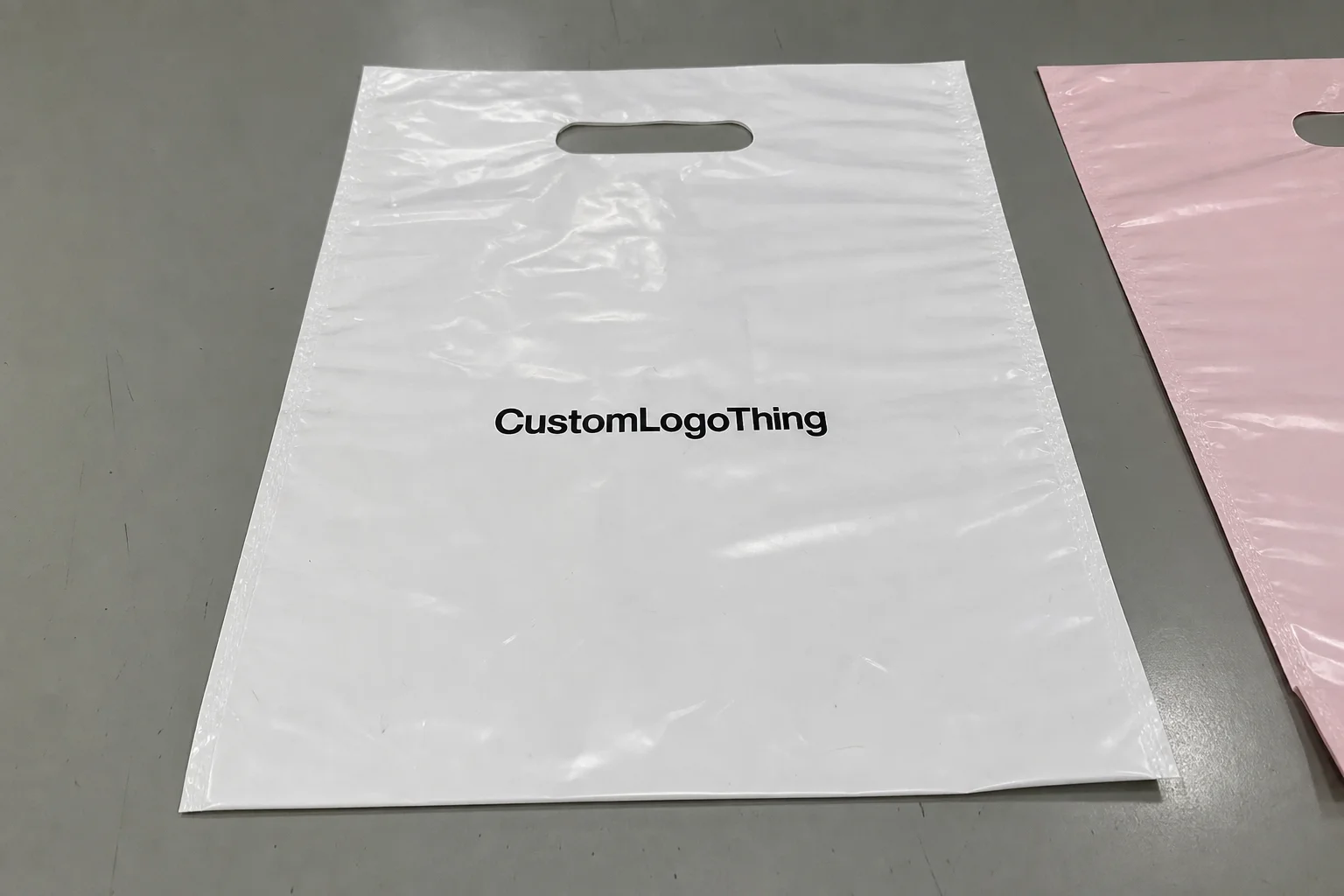
Exterior print quality is another practical split. Poly mailers generally give you a smoother canvas for branding, bold logo work, and high-contrast artwork, especially when you want a matte or glossy custom finish. Bubble mailers can still print well, but the surface pattern and padding layer sometimes limit the look, especially on large solid fills. If you are comparing bubble mailers vs poly mailers shipping for brand presentation, the finish of the outer film matters almost as much as the product inside.
And then there is storage. In a fulfillment center I visited outside Dallas, the operations manager told me flatly that switching to poly mailers freed enough rack space to reclaim one full bay for cartons and inserts. That happened because poly mailers arrive flat and stack tightly, while bubble mailers occupy more cubic space. If your warehouse pays attention to pallet density and carton counts, that difference becomes real money. I’ve watched operations get weirdly emotional about this part, and honestly, I get it. Space is expensive.
For brands that want a custom look, Custom Poly Mailers often provide the best balance of print area, low shipping cost, and packing speed. If your product line includes heavier add-ons, pair the mailer decision with the rest of your transit packaging rather than treating it as a standalone purchase.
Detailed Reviews: Protection, Appearance, and Shipping Performance
When you compare bubble mailers vs poly mailers shipping, the protection story starts with how each structure handles stress. Bubble mailers use an interior cushioning layer that disperses pressure and reduces abrasion, which is exactly why I trust them for items with painted surfaces, polished finishes, or delicate packaging sleeves. In practical terms, that bubble layer can be the difference between a product arriving pristine and one arriving with corner wear, scuffs, or a crushed box edge.
The bubble size, film thickness, and quality of the seal all matter. I have opened bargain bubble mailers that looked fine on paper but had inconsistent bubble inflation and weak seams that split on a conveyor turn. Better versions, especially those made for commercial fulfillment, hold up far better in parcel networks and during sortation drops. If a product has any sharp point or fragile surface, bubble mailers usually win this round. I know that sounds obvious, but I’ve seen enough “obvious” packaging decisions go sideways to stop trusting instinct alone.
Poly mailers, by contrast, rely on film performance. A 2.5 mil LDPE mailer can work beautifully for soft apparel, while a 4 mil mailer offers more tear resistance for heavier garments or bundled orders. The film should stretch without splitting, the side welds should be strong, and the adhesive flap should stay shut through handling, scanning, and final-mile delivery. When I compare bubble mailers vs poly mailers shipping for clothing brands, the poly mailer often wins because it does the job with less weight, less bulk, and less friction on the packing line.
From a handling standpoint, bubble mailers have more structure. They stand up better in bin racks, remain easier to sort manually, and are less likely to collapse before labeling. Poly mailers fold flat, which is great for storage, but packers sometimes overstuff them or trap air, and that can create odd shapes that annoy label applicators and slow the lane. In an apparel warehouse in Los Angeles, I watched a team shave several seconds per order just by switching from boxed apparel to poly mailers with a better opening gusset. It was one of those tiny changes that looks boring from the outside and feels like a miracle when you’re actually doing the work.
Here is the real shipping-network difference. Bubble mailers handle rough treatment better because they absorb shocks. Poly mailers are lighter and smaller, so they can reduce postage and sometimes improve dimensional weight, but they do not protect against impact the same way. On long parcel routes with multiple conveyor transfers, bubble mailers give you a stronger buffer against crushed corners and rubbing. Poly mailers are best when the contents can handle compression, bending, and light scuffing.
I also pay attention to customer experience, because that affects repeat orders. Bubble mailers feel more protective and a bit more premium for small hard goods, though they can make a slight popping noise that some customers notice. Poly mailers feel lighter and cleaner for apparel, and they often create a very efficient unboxing moment because the customer tears the flap and gets straight to the product. If the goal is to compare bubble mailers vs poly mailers shipping for perceived value, the question is not which feels fancier in abstract terms, but which matches the product category and brand tone. Customers can tell the difference, even if they never say it out loud.
One merchant selling ceramic coasters in Columbus, Ohio, told me after a pilot test that customers commented on the bubble mailer as “careful” and “thoughtful,” while another clothing brand in Portland, Oregon, found that Poly Mailers Made the order feel faster and more modern. Both were right for their market. That is why I do not believe there is a universal winner here. Packaging has a personality, whether we want to admit it or not.
“We stopped treating the mailer as a generic supply item and started matching it to the product. Our damage rate dropped, and packing got faster.” — Operations lead at a Midwest fulfillment center in Indianapolis, Indiana
For compliance-minded teams, it helps to think about test standards, too. When I evaluate transit packaging, I like to reference practical shipping tests aligned with ISTA testing methods, because an actual drop test, vibration cycle, or compression event tells you more than a sales brochure ever will. If your order profile includes delicate retail goods, those tests are not optional in my book.
There is also an appearance angle tied to the product itself. Apparel can look bulked up in a bubble mailer, which sometimes makes the pack seem heavier than the item really is. Cosmetics, accessories, and tech add-ons often look better in a padded mailer because the cushioning suggests care. I have seen brands win or lose customer confidence over a mailing format that was one size too generic for the product they sell. That one gets under my skin because the fix is usually so simple.
Price Comparison, Materials, and Process Timeline
Price is where people usually start, but if you compare bubble mailers vs poly mailers shipping only by unit cost, you are looking at half the equation. In bulk purchasing, stock bubble mailers might run roughly $0.18 to $0.42 each depending on size and material, while stock poly mailers can land closer to $0.06 to $0.18 each for common apparel sizes. Custom printing, specialty finishes, recycled content, and adhesive upgrades push both categories higher.
Here is the catch: the cheapest mailer is not always the cheapest packaging. A bubble mailer may cost more per unit, but if it cuts damage claims on a fragile item from 3% to under 1%, the total landed cost can be lower. I watched one subscription box operation in Atlanta lose more money on one month of replacements than they saved in six months of mailer purchasing. Their issue was not mailer price; it was choosing a low-protection format for glass vials and metal accessories. The postmortem on that mess was not fun, but it was unforgettable.
Labor also changes the math. Poly mailers are fast to open, fast to insert, and fast to seal. A good packer can move through them with minimal motion, which matters in a peak season lane where each extra second multiplies across thousands of orders. Bubble mailers can slow the process slightly because the product has to fit into a stiffer cavity, especially if the item is oddly shaped or shipped with a small insert card, desiccant pack, or return note.
Now let us compare the economics in a simple view.
| Factor | Bubble mailers | Poly mailers |
|---|---|---|
| Typical unit cost | Higher, often $0.18-$0.42 depending on size and construction | Lower, often $0.06-$0.18 for common sizes |
| Packing speed | Moderate, especially for rigid items | Fast, especially for soft goods |
| Storage footprint | More cubic space | Very compact |
| Damage protection | Strong for scratches and minor impacts | Low to moderate, depending on product |
| Dimensional weight impact | Can be slightly higher | Usually lower |
| Best fit | Fragile, rigid, or surface-sensitive items | Apparel, soft goods, and low-risk products |
Lead times matter too. Stock mailers may ship in a matter of days, but Custom Printed Mailers can take 12 to 15 business days from proof approval, and sometimes longer if you choose specialty inks, recycled films, or extra-heavy laminations. If you are making a seasonal push, that timeline should sit inside your planning calendar, not outside it. I have seen purchase teams approve artwork late and then scramble because they forgot the proofing and freight window. That sort of scramble has a very specific warehouse smell to it: panic and cardboard dust.
From a process standpoint, the timeline usually runs like this: artwork review, digital proof, print sign-off, production, carton pack, palletization, freight transit, then receiving at your warehouse. If you need a custom shipper alongside mailers, our Custom Shipping Boxes page is often the next stop for brands that need a box for a fragile SKU and a mailer for the rest of the assortment. That mixed approach can lower waste and improve order fulfillment efficiency.
There is another hidden cost many people forget: returns processing. A damaged shipment does not just cost the item and the postage; it costs the customer service time, the inspection labor, and often a replacement unit plus outbound freight. In some cases, the wrong packaging creates enough friction that customers abandon repeat purchases. If you compare bubble mailers vs poly mailers shipping only on invoice price, you miss the operational pain that shows up in the returns stack.
Sustainability also feeds into cost decisions, but I always advise buyers to look past slogans. The EPA offers useful guidance on waste reduction and packaging choices at epa.gov/recycle, and those principles matter because a lighter, right-sized mailer can reduce material usage and transportation burden. That said, the greener option is the one that actually fits the product and avoids re-shipments, not the one with the best marketing line.
How to Choose the Right Mailer for Your Product
The cleanest way to compare bubble mailers vs poly mailers shipping is to start with the product, not the packaging. I ask four questions every time: Is it fragile? Is it rigid? Is the surface easily scratched? Does it need moisture resistance or tamper evidence? Those four checks eliminate a lot of bad decisions before a sample even gets ordered.
Bubble mailers are the safer choice for items that can crack, chip, dent, or scuff. That includes small electronics accessories, glass jars with tight packaging, metal components, compact tools, framed prints, and hard cosmetics packaging. Poly mailers are usually the smarter pick for T-shirts, sweatshirts, scarves, bedding accessories, soft promotional items, and other non-fragile products. If the item can be folded without damage, a poly mailer tends to be the better operational fit.
Special cases deserve attention. Moisture exposure, for example, can push a buyer toward a poly mailer with a stronger seal or even a paper-poly hybrid system, especially if the warehouse is shipping through rainy regions or variable temperature lanes. Oversized but lightweight products may also fit into a poly mailer, provided they are not prone to bending damage. I have seen posters, fabric swatches, and foam accessories ship successfully in poly formats that were sized correctly and not overfilled. The trick is resisting the urge to “make it work” when the item is quietly telling you it deserves something else.
Branding matters, but it should not override function. A custom-printed poly mailer can feel sharp and professional for apparel brands, while a kraft bubble mailer can signal protection and care for small retail goods. If your customer expects a premium unboxing, the mailer should match that expectation rather than fight it. For brands that ship both soft goods and fragile accessories, hybrid selection is often the best path: poly mailers for garments, bubble mailers for add-on items, and boxes for anything too delicate to risk.
Here is the checklist I would use before placing an order:
- Weight: Keep the packaged item under the carrier target for your service level.
- Fragility: Use bubble mailers for hard or breakable items.
- Surface finish: Protect polished, painted, or scratch-prone surfaces.
- Size fit: Avoid oversized mailers that create extra movement.
- Warehouse speed: Choose the format your team can pack fastest.
- Label area: Make sure labels adhere cleanly and scan well.
- Brand feel: Match the packaging to the customer experience you want.
One more practical note: if your product line changes often, sample both mailer types before committing. I have walked into operations where the purchasing team bought 20,000 units of one style, only to discover the new product launch had sharper corners or a new finish that scratched easily. A $50 sample run can save a five-figure cleanup later. That is not theory; that is factory-floor reality.
If you want the decision to hold up inside a real warehouse, test it under actual conditions: pack the item at a normal station, label it with the same printer, send it through your carrier pickup window, and measure what comes back. That means checking tape adhesion, film puncture, label scuffing, and packing time. Compare bubble mailers vs poly mailers shipping using the same SKU, the same staff, and the same route mix, because controlled side-by-side testing reveals a lot more than product descriptions do.
What Is the Best Way to Compare Bubble Mailers vs Poly Mailers Shipping?
The best way to compare bubble mailers vs poly mailers shipping is to test both formats with the exact product, the same carrier mix, and the same packing team. A spreadsheet can tell you unit price; it cannot tell you how a 2.5 mil poly mailer behaves under real handling, or whether a bubble mailer saves enough damage to offset its higher cost. That is why the featured-snippet answer is simple: compare performance under actual fulfillment conditions, not just supplier specs.
Start with a small pilot. Pack the same SKU into both mailer types, then measure damage rate, packing time, label adhesion, postage, and customer feedback. If the item is fragile or has a polished surface, the bubble mailer usually wins on protection. If the item is soft and non-fragile, the poly mailer usually wins on cost and speed. That is the practical framework I use whenever a buyer asks me to compare bubble mailers vs poly mailers shipping without wasting weeks on theory.
Feature tests should also include drop handling, compression, and sortation. A mailer that looks fine on a desk can behave very differently on a conveyor, especially when the package gets tossed, squeezed, or stacked with other parcels. I like to see how each option holds up after the carrier pickup window, because that is where the real damage story usually starts. If you care about repeatability, document everything: product type, packaging size, seal style, and the number of touches between packing and delivery.
Here is the quickest decision rule I give teams: use bubble mailers for protection-first shipments and poly mailers for speed-first shipments. Then confirm the choice with a pilot. That keeps the process honest and avoids buying thousands of units based on assumptions that sound tidy but do not survive the warehouse floor.
Our Recommendation After Testing Both Shipping Options
After years of seeing these materials used in real order fulfillment, my recommendation is simple but not simplistic. If the product is fragile, rigid, glossy, or scratch-sensitive, bubble mailers are usually worth the extra cost. If the product is soft, non-fragile, and volume-sensitive, poly mailers are usually the smarter operational choice. That is the clearest way I can compare bubble mailers vs poly mailers shipping without pretending one format solves every shipping problem.
For apparel brands, I usually point to poly mailers first because they lower postage exposure, reduce storage footprint, and speed packing. For beauty, accessories, books, small parts, and electronics add-ons, I lean toward bubble mailers because they reduce risk in transit packaging and help prevent avoidable damage claims. If the item has a hard edge or a polished surface, I would rather over-protect slightly than pay for a replacement later. I’ve never had a customer thank me for saving two cents and sending a broken item.
For growing ecommerce brands, a hybrid strategy often works best. Use poly mailers for the bulk of the catalog, then switch to bubble mailers for fragile add-ons, promotional bundles, and products that will be handled heavily by carriers. That approach keeps the warehouse fast without sacrificing package protection where it matters. I have seen brands cut material cost on the easy SKUs and still preserve quality on the risky ones. It’s a little boring, maybe, but boring is underrated when boring means fewer angry emails.
My practical next-step framework is this: audit your products by fragility, request samples of both mailer styles, run a transit test through your usual carrier mix, and compare damage rates against packing time and shipping cost. Do not skip the numbers. A package that saves two cents but adds a one-percent damage rate is rarely a savings in the real world. If you compare bubble mailers vs poly mailers shipping that way, you will make a much better buying decision.
And if you want to build out the rest of the shipping system, start with the product category and work outward. The right mailer, the right box, and the right insert all pull in the same direction when your operation is mature.
FAQ: Bubble Mailers vs Poly Mailers Shipping
For fragile items, should I choose bubble mailers vs poly mailers shipping?
Choose bubble mailers for fragile, scratch-prone, or hard-surface items because the inner cushioning reduces abrasion and impact risk. Use poly mailers only if the product is already protected inside a secondary package or is not breakable.
Are bubble mailers more expensive than poly mailers shipping in bulk?
Usually yes, because bubble mailers use more material and include cushioning layers. The real comparison should include damage rates, labor, and replacement shipments, not just unit price.
Which mailer is better for apparel when comparing bubble mailers vs poly mailers shipping?
Poly mailers are usually better for apparel because they are lighter, slimmer, and faster to pack. Bubble mailers are typically unnecessary unless the apparel includes delicate accessories or hard add-ons.
How do bubble mailers and poly mailers affect shipping cost and dimensional weight?
Poly mailers often reduce shipping cost because they are thinner and lighter, which helps with dimensional weight and carton space. Bubble mailers can increase parcel size slightly, but the added protection may prevent expensive claim replacements.
What is the best way to test bubble mailers vs poly mailers shipping before buying large quantities?
Run a small transit test with actual products, including drop handling, label application, and carrier pickup conditions. Track damage, packing speed, customer feedback, and total landed packaging cost before committing to a larger order.
If I had to summarize the entire decision in one sentence, it would be this: compare bubble mailers vs poly mailers shipping by product risk, not by habit. I have seen brands win on cost and customer satisfaction when they match the mailer to the SKU, and I have seen them lose both when they choose the cheapest carton-fill option and hope for the best. The right choice is the one that protects the item, fits your fulfillment flow, and keeps your shipping materials honest to the product.