Buyer Fit Snapshot
| Best fit | Compare Kraft Folding Carton Options projects where brand print, material claims, artwork control, MOQ, and repeat-order consistency need to be specified before quoting. |
|---|---|
| Quote inputs | Share finished size, material target, print colors, finish, packing count, annual reorder estimate, ship-to region, and any compliance wording. |
| Proofing check | Approve dieline scale, logo placement, barcode or warning zones, color tolerance, closure strength, and carton packing before bulk production. |
| Main risk | Vague material claims, crowded artwork, missing packing details, or unclear freight terms can make a low unit price expensive after revisions. |
Fast answer: Compare Kraft Folding Carton Options: Board, Finish, Dieline, and Unit Cost should be specified like a repeatable production item. The safest quote records material, print method, finish, artwork proof, packing count, and reorder notes in one written spec.
Production checks before approval
Compare the actual filled-product size with the drawing, then confirm tolerance on folds, seals, hang holes, label areas, and retail display edges. Reserve space for logos, QR codes, warning copy, and material claims before decorative graphics fill the panel.
Quote comparison points
Review material grade, print process, finish, sampling route, tooling charges, carton quantity, and freight assumptions side by side. A quote is only useful when the supplier can repeat the same color, closure quality, and packing count on the next order.
I learned to compare kraft folding carton options the expensive way, which is a surprisingly good teacher even if it is a deeply annoying one. One quote came back at $0.18 per unit for 5,000 boxes from a supplier in Dongguan, then crept up to $0.26 after a 28 gsm insert, matte aqueous coating, and ocean freight to Los Angeles were added. That extra $0.08 looked harmless on a spreadsheet. On the pallet, it became the difference between a tidy March launch and a very real margin fight in the boardroom, with everyone suddenly discovering the emotional intensity of packing tape and pallet patterns.
If you compare kraft folding carton options honestly, the right answer depends on the product, the print, and the route to market. Natural kraft brings warmth and visible fiber, especially on 300-350 gsm boards from mills in Malaysia or British Columbia. White-kraft or coated kraft gives you sharper branding and cleaner type, which matters when you are printing 6-point legal copy or a barcode that has to scan at a Costco dock in Phoenix. A heavier 400-450 gsm board usually beats a lighter sheet the moment you are packaging a 250 g jar, a glass bottle, or a metal accessory that can crush in transit. I have seen a strong creative idea collapse because the board was too soft, and no amount of brand poetry fixes a crushed corner in a warehouse outside Atlanta.
The tradeoff is not subtle. Kraft often carries an authentic, lower-impact story, but print contrast, scuff resistance, and color accuracy can change the winner fast. I have watched a brown substrate make a navy logo feel calm and premium, then seen the same board bury cream text under store LEDs in Tokyo like it was trying to hide from the shelf. Shelf readability is not a vibe. It is a 3-second test, and the shelf is a pretty brutal judge when it wants to be, especially in fluorescent aisles in Chicago or Santiago.
This is a buyer's comparison, not a brochure. I compare kraft folding carton options by appearance, price, lead time, finishing, and the mistakes that only show up after samples arrive from plants in Suzhou, Ho Chi Minh City, or Monterrey. Quotes rarely tell you those parts. Freight invoices do. So do the boxes that return from a retail test looking tired, scuffed, and a little insulted after 18 touches from a distributor in New Jersey.
Quick Answer: compare kraft folding carton options by real use
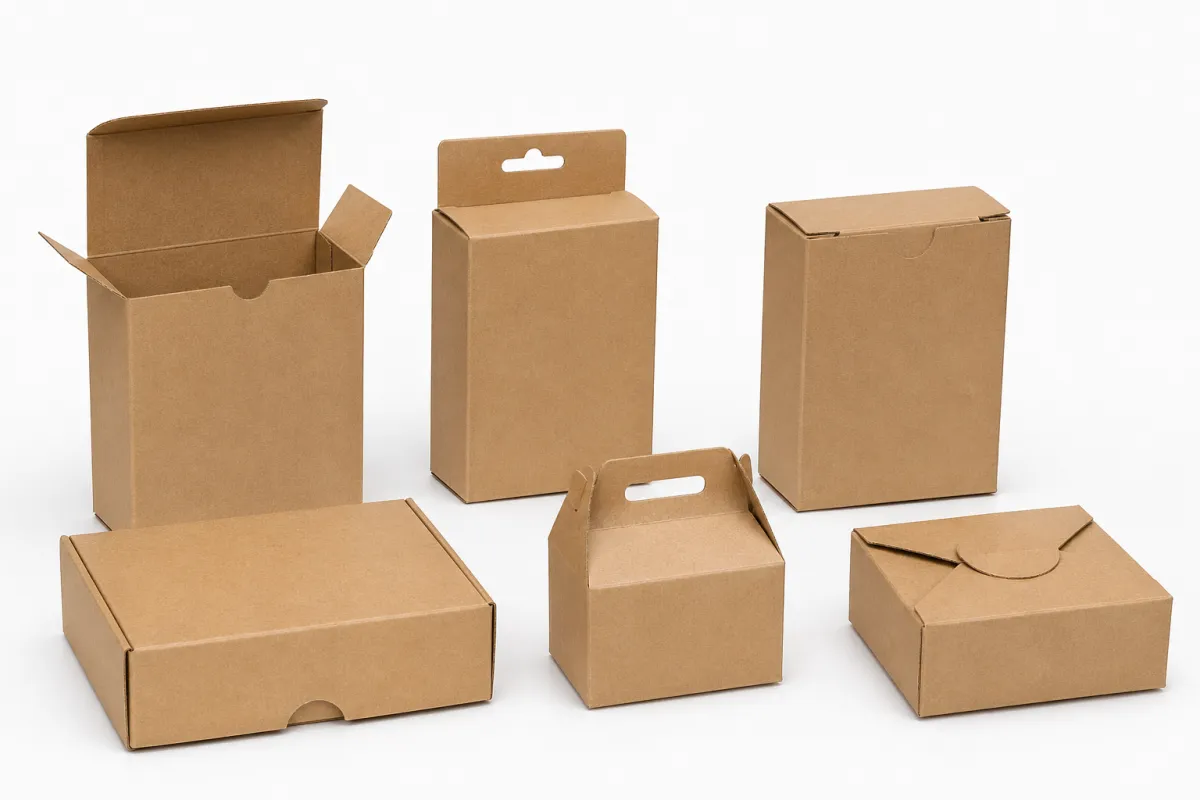
Here is the short answer I give buyers when they ask me to compare kraft folding carton options in one sentence: choose natural kraft for an earthy, visible-fiber look; choose white-kraft or coated kraft for sharper branding; and move up to a heavier board when crush resistance matters more than the raw-fiber look. That rule holds up across soap bars, supplement jars, tea tins, and small apparel accessories, whether the run is 2,000 units for a boutique in Portland or 50,000 units for a national roll-out. It also saves a lot of back-and-forth email that nobody actually enjoys reading.
Last spring, I sat in a client meeting where a candle brand in Brooklyn insisted the cheapest carton was the winner because the quote came in $0.14 lower per unit. After inserts, a custom dieline, and retail freight protection, the "cheapest" carton ended up costing more than the cleaner coated option by roughly 9%. I remember thinking the spreadsheet looked confident right up until the real world arrived. That is why I compare kraft folding carton options by landed cost, not by the first line on the quote sheet, especially when the cartons are shipping 1,500 miles by LTL freight.
Most people get the tradeoff backwards. They start with sustainability language and only later ask whether the design can survive a 6-point legal line, a dark ink flood, or 18 inches of shelf glare. A kraft carton can be the right choice and still fail the job if the type is too small, the artwork is too busy, or the board is too soft for the product weight. Honestly, some of the hardest packaging mistakes are the ones that sound noble in a meeting and look awful on a shelf at 9 a.m. under store LEDs in Denver.
The practical rule stays simple: compare kraft folding carton options by end use first, then by finish, then by cost. Retail shelf packaging pushes print clarity to the top. E-commerce packaging pushes scuff resistance and crush resistance up fast, especially if the parcel route runs through Memphis and Dallas hubs. If the brand story depends on recycled content or FSC claims, the board specification matters just as much as the visual. I have seen teams argue over a recycled badge for two weeks and then approve a board that could barely survive a parcel sorter. That is the kind of thing that makes me grind my teeth a little.
Top Kraft Folding Carton Options Compared
When I compare kraft folding carton options, I group them into five buying paths: natural unbleached kraft, white kraft, coated kraft, recycled kraft, and premium virgin kraft. The label matters less than the behavior. Two cartons can both be called kraft and still print, fold, and ship very differently once the pressman starts running sheets through the line in Dongguan or Guadalajara. That part is not glamorous, but it is where the money goes.
The visual differences are easy to spot once you know what to look for. Natural kraft shows visible fiber and a warmer brown tone, usually with lower contrast on fine text. White kraft gives you a bright face on one or both sides, which helps logos and photography. Coated kraft tends to carry ink more evenly and resists rub better, especially with a 12-18 micron aqueous coat. Recycled kraft can look honest and textured, though it may vary from lot to lot. Premium virgin kraft is usually the cleanest sheet and the most predictable under finishing. I personally like premium virgin kraft when the brief demands control, because it behaves like it had a good night's sleep.
I compare kraft folding carton options by three things before anything else: appearance under store light, structural performance in transit, and how much brand polish the package has to carry on its own. A gift set for a premium skincare line can live with a restrained natural sheet from a mill in British Columbia. A 60-count supplement bottle in a pharmacy aisle usually needs white-faced stock and a better coat, often 350 gsm C1S artboard with a satin aqueous finish. A shipping carton for a product tray needs caliper and lock strength first, beauty second. That is not romantic, but crushed product is even less romantic.
Structure changes the result more than many buyers expect. A tuck-end box can look elegant but may not hold up as well as an auto-lock bottom on a heavier fill. A window carton can lift shelf appeal, and it also adds die-cut complexity, patching, and waste. I have seen a white-kraft window carton outperform a more expensive full-print design simply because the product itself looked strong through the opening and the box stayed clean after 12 transit touches on a route from Shenzhen to Chicago. That was one of those rare moments where the humble option won by being simply not fragile.
| Option | Visual feel | Print performance | Strength | Typical quote at 5,000 units | Best fit |
|---|---|---|---|---|---|
| Natural unbleached kraft | Warm, fibrous, rustic-premium | Good for 1-2 colors, weaker for photos | Moderate to strong, depending on caliper | $0.12-$0.22/unit | Soap, tea, low-graphic wellness brands |
| White kraft | Cleaner, brighter, more retail-ready | Sharper type and stronger contrast | Moderate to strong | $0.15-$0.28/unit | Cosmetics, supplements, gift packaging |
| Coated kraft | Smoother, more finished, less absorbent | Best for fine detail and stable color | Moderate to strong | $0.17-$0.32/unit | Retail cartons, e-commerce packs, premium SKU lines |
| Recycled kraft | Textured, earthy, sometimes variable | Acceptable, but less consistent than coated board | Moderate, varies by blend | $0.13-$0.25/unit | Sustainability-led brands, mailers, craft goods |
| Premium virgin kraft | Cleanest sheet, most uniform look | Strongest for crisp graphics and finishes | Strong | $0.18-$0.35/unit | Luxury gifts, cosmetics, high-value accessories |
If you compare kraft folding carton options only by the board name, you miss the real difference: brightness, surface holdout, coating, and the way the box folds after the score line gets hit 1,000 times in production. That is the hidden layer buyers pay for. One carton can look modest on a sample bench and still win after print, coating, and assembly are added together. I have had samples from a plant in Xiamen that looked forgettable in hand and then became the right answer once the art, the fold, and the shipping constraints all got involved.
Detailed Reviews: compare kraft folding carton options by construction
Natural unbleached kraft is the option I reach for when the brand wants grain, warmth, and a visible fiber line. When I compare kraft folding carton options for soaps or hemp balms, natural kraft usually wins if the artwork stays to one or two inks and the logo carries the message. It starts to struggle as soon as you ask for a 4-color image or 6-point legal copy, because the brown base eats contrast. On a press floor near Shenzhen, I watched a crew scrap 400 sheets after a white underbase lifted fibers at the fold and made the score line fuzzy. Nobody was thrilled. I was, if anything, impressed that a cardboard sheet could behave that badly and still look innocent on a PDF.
White kraft is the safer path when the brand needs cleaner branding and sharper type. I compare kraft folding carton options for skin care and supplements this way often because white-faced stock makes 8-point ingredients text readable and keeps Pantone color closer to the proof, especially on a 350 gsm C1S artboard sourced through factories in Dongguan or Ningbo. A 350 gsm white-faced board with aqueous coating handled a mascara carton for me with barely any rub after a 1.2 meter drop test and three parcel transfers. That would have been a much harder result on natural kraft, and probably a much grumpier conversation with the client too.
Coated kraft is the one I recommend when the design has photographic elements, dense color blocks, or any finish that cannot tolerate dull edges. It also protects against scuffing, which matters more than many people expect. I have compared kraft folding carton options on samples that looked nearly identical on a desk, then found the coated board stayed clean after pocket wear, shelf friction, and a rough 24-hour courier route from Seattle to San Francisco. The uncoated version showed corner burnishing after one afternoon, which is a great way to ruin an otherwise polished launch.
Recycled kraft brings a stronger story, but it is not always the prettiest sheet. I compare kraft folding carton options with recycled content carefully because the fiber blend can change the feel, the brightness, and sometimes the print consistency from batch to batch. A Chicago supplement client once wanted 100% recycled stock, then changed their mind after their burgundy text shifted enough to make the whole pack look muddy under pharmacy lighting. The carton was not bad. It was simply not the right stage for that ink set. I remember the room going very quiet, which is usually the sound of packaging reality winning.
Premium virgin kraft is the path I use when the brand wants the cleanest die-cut edges, better fold memory, and the least visual noise. It usually costs more, but it also gives the most predictable result for embossing, foil, and small-window design work. If I compare kraft folding carton options for a gift box or a high-value accessory, this is often the one I shortlist first because the sheet behaves like a controlled surface instead of a recycled compromise. That predictability matters more than people admit, especially when the launch date is breathing down everyone's neck and the production slot in Suzhou is booked for only 6 days.
"We thought the rougher brown sheet would look more premium because it felt natural, but the type disappeared at 10 feet and the shelf test failed by Tuesday afternoon." That came from a brand manager after a retail mockup review in Minneapolis, and it matches what I have seen on more than one project with 10,000-unit runs.
My verdict is blunt. If you compare kraft folding carton options for low-graphic, story-led products, natural kraft is often enough. If you compare kraft folding carton options for retail brands that need crisp type, white-faced or coated kraft is usually the smarter play. If the product ships hard, gets stacked, or includes fragile contents, choose the stronger board first and decorate around that decision. A pretty carton that collapses in transit is not premium. It is expensive waste, and the warehouse in Nashville will let you know with absolutely no tenderness.
Price Comparison: what changes the cost when you compare kraft folding carton options
When I compare kraft folding carton options on price, I break the quote into six pieces: board choice, print count, coating, structural complexity, windowing, and finishing. That is where the spread comes from. A simple two-color natural kraft tuck box can stay near the low end of the range, often around $0.11-$0.16 per unit at 5,000 pieces. Add a white face, a custom die, a soft-touch finish, and a window patch, and the unit cost can double before freight even enters the picture. It is astonishing how fast a "simple box" stops being simple once everyone adds one little enhancement.
The biggest mistake I see is treating unit price as the same thing as total cost. It is not. I watched one snack brand save about $900 on the carton line and then spend $1,400 on extra inserts and freight because the lighter stock crushed in shipper testing. The quote was cheaper; the program was not. If you compare kraft folding carton options by landed cost, you catch those losses before they hit the month-end report. That is the boring truth, but it saves real money and a few headaches that nobody has time for.
At small volumes, setup is loud. At 1,000 units, the die, plates, proofing, and color approval can account for 35%-45% of landed cost. At 10,000 units, that same setup burden often falls under 12%, which is why a more refined board sometimes becomes the better buy once the run gets larger. I have seen a $0.06-per-unit gap disappear after a job crossed the 8,000-unit mark and the more expensive stock needed fewer rejects. The factory floor in Dongguan is very good at making math less dramatic and more annoying.
If you compare kraft folding carton options with special finishes, the hidden drivers show up fast. Foil, embossing, emboss-deboss, spot UV, and tight color matching can add 15%-30% to the carton price. A custom window can add another 5%-12%, depending on patch size and labor. Tight tolerances on a custom dieline can cost more too, especially if the product has rounded shoulders or a fill method that forces deeper tuck flaps. None of that feels like "extra" until you see the press schedule and realize every choice brought a friend.
For buyers who want a simple rule, I use this one: compare kraft folding carton options on the quote, then on the sample, then on the packed shipper. If the third step changes the numbers by more than 7%, the quote was incomplete. That happens more often than people think, especially on launches where the product team, sales team, and procurement team all approved different versions of the spec sheet. That kind of cross-functional chaos is basically a rite of passage, though I would be happy never to relive it.
Process and Timeline: from quote to shipped cartons
The normal workflow is dull on paper and rarely dull in practice. I compare kraft folding carton options by moving through request for quote, spec confirmation, dieline approval, proof review, sample, revision, and then production. If any of those steps changes after the first sample, the schedule moves. A carton that looked like a 12-business-day job can turn into a 24-day job with one artwork correction and one board swap. I have seen a launch plan wobble because somebody caught a typo in a legal line three days too late. A painful little classic, especially when the cartons are already on press in Guangzhou.
Delays usually happen in the same three places. First, the artwork arrives without bleed, safe margins, or barcode checks. Second, the board changes after the sample, which forces a new proof cycle. Third, the fill method is not defined, so the carton gets designed around the wrong insertion sequence. I compare kraft folding carton options faster when I already know the product weight, the closure style, and whether the team will hand-pack or machine-pack the order. If I have to guess, I can still help, but the schedule is going to develop opinions.
For transit testing, I still keep the guidance from ISTA open when a pack will move through parcel networks, and I check FSC language when the buyer needs a traceable forest-source claim. Those two references prevent a lot of avoidable arguments later. I also cross-check the EPA's recycled-content guidance when a recycled claim sits on the front panel, because one sloppy sentence can create a bigger problem than a weak score line. Nobody wants a legal review because a carton tried to be inspirational.
"Every day the artwork waits, the carton waits twice as long." A production manager said that to me during a supplier review in Shenzhen, and I have repeated it to more than one client since then because it is painfully accurate on 20,000-unit print runs.
Here is the timing I usually see: 3-5 business days for a clean quote on a standard structure, 2-4 days for proofing if the art is press-ready, 5-8 days for sampling, and 12-15 business days from proof approval to shipment for a standard run. Custom structures, foil, or a window patch often push production into the 18-28 business-day range. If you compare kraft folding carton options with those numbers in mind, you stop promising launch dates that the factory cannot keep. That alone can save a few stressful meetings and at least one passive-aggressive email thread.
- Final dimensions: send the exact product size, not just a marketing name, and include fill tolerance in millimeters.
- Product weight: note gross weight per carton, especially above 250 g.
- Fill method: hand-pack, semi-auto, or fully automatic changes the dieline.
- Artwork assets: provide print-ready files, font outlines, and Pantone references.
- Target ship date: give the launch date plus a 7-day buffer for customs or transit.
Tight timelines can raise cost, and I compare kraft folding carton options differently once the schedule is compressed. A rush proof can add a premium of $75-$150 per SKU. A rush ship can move freight from sea to air, which can add $0.03-$0.09 per unit on a 5,000-piece order if the cartons are flying from Hong Kong to Chicago. Planning is part of the box decision, not an afterthought buried under procurement paperwork. I know that sounds obvious, but obvious is rarely the same as followed.
How do you compare kraft folding carton options for your product?
My rule is simple: compare kraft folding carton options against the product, the shelf, and the shipping lane, not against a mood board. A low-weight soap bar can live in a natural kraft tuck box. A 500 ml glass bottle needs stronger caliper and probably an auto-lock bottom, often 400 gsm or more if the ship route runs from New Jersey to Texas. A subscription kit that gets opened on camera needs cleaner print and a better face, because the unboxing becomes part of the brand story. I have watched a lovely product look ordinary because the carton gave up its job too early.
For e-commerce, I favor scuff resistance and crush performance. That means coated kraft or a sturdier white-faced board at 350-450 gsm, depending on the fill. For retail display, I care more about read distance and the 3-second shelf test, which usually pushes me toward white kraft or coated kraft. For food packaging, I check whether the board, inks, and coatings fit the intended use and whether the grease resistance is real or just assumed from the sample. I compare kraft folding carton options for these jobs differently because the failure modes are different, and pretending otherwise is how you end up with a neat-looking disaster.
For sustainability-led brands, I ask a blunt question: is the claim the main selling point, or is it just decoration? If the answer is "main selling point," recycled kraft or FSC-certified board deserves more weight. If the answer is "decoration," then print clarity or strength may matter more. I have seen brands spend weeks arguing about recycled content, then put the carton in a poly mailer that wiped out the whole sustainability message. That one never gets old, mostly because it is so frustrating. That is why I compare kraft folding carton options with the full package system in view.
Here is the scoring system I use when clients want a fast decision. Score each option from 1 to 5 on print clarity, crush resistance, sustainability story, shelf appeal, and budget fit. Multiply crush resistance by 2 if the product ships by parcel. Multiply print clarity by 2 if the box sits on a retail shelf for more than 30 days. The highest score is not always the cheapest box. It is the least risky one, and honestly, the least risky one tends to be the one that survives real handling without drama.
- Score 1-5: print clarity, crush resistance, sustainability, shelf appeal, budget fit.
- Double-weight: crush resistance for e-commerce, print clarity for retail.
- Reject fast: any option that fails the fill method or closure test.
- Test in light: review the sample under 2 lighting conditions, not just a desk lamp.
That is the part many teams skip. They compare kraft folding carton options on the PDF, then discover the real issue only after the packed sample sits under store LEDs or takes a 48-hour transit run from Shanghai to Toronto. A 15-minute side-by-side comparison with the product inside the carton saves far more money than a week of debate on Slack. And yes, I have watched that exact debate go on long enough to make everyone forget what the original box looked like.
Our Recommendation: compare kraft folding carton options and act
If I had to rank the field after years of samples, plant visits, and supplier negotiations, I would do it this way. Best value: natural kraft with restrained print, usually 1-2 colors and no fancy finish. Best premium look: white-faced or coated kraft with a clean 350 gsm or 400 gsm board from a plant in Dongguan or Quanzhou. Best sustainability story: FSC-certified recycled kraft with a clear claim and simple graphics. Best all-around choice: coated white-faced kraft, because it balances print quality, shelf presence, and transit toughness. That is the lineup I use when I compare kraft folding carton options under real budget pressure.
My advice is to order samples, not just quotes. Ask for two versions with identical specs, then compare them under the same light, at the same fill weight, and with the same freight assumption. Check scuff resistance by rubbing the corner with a sleeve, not a finger. Check assembly speed by timing 25 units with the packer who will actually build the run. If one carton saves 20 seconds per 100 units, that is real labor. It is also the kind of detail that makes operations people nod instead of sigh, especially in a plant outside Monterrey where every minute gets counted.
The practical next step is straightforward: finalize dimensions, choose the board, request a sample set, and approve artwork only after physical testing. If you compare kraft folding carton options with the same criteria across every supplier, the final pick is defensible. It will stand up in a pricing meeting, a shelf review, and a post-launch audit. That is the kind of decision I trust, because it survives contact with the factory floor and the people who actually have to live with the result.
How do I compare kraft folding carton options for food packaging?
Check whether the board, inks, and coatings fit the intended food use and any barrier needs Before You Order the sample set. I compare kraft folding carton options for food by looking first at grease resistance, closure strength, and legibility, because a pretty carton that stains in transit is a bad pack. Ask for a filled sample, not an empty mockup, so you can see how the carton behaves under the exact fill method. If the product sweats, oils, or sits near cold-chain handling in Denver or Miami, that test matters even more.
Which option looks most premium when I compare kraft folding carton options?
White-faced or coated kraft usually gives the cleanest graphics and the sharpest type, especially with a 350 gsm or 400 gsm board. Natural kraft can still look premium if the design is restrained, the ink count stays low, and the brand uses one deliberate accent color instead of a busy palette. Embossing, foil, or a soft-touch coat can lift perceived value without changing the base board. I personally think restraint does more for premium feel than people give it credit for, especially on cartons displayed in a boutique in SoHo or a gift shop in Santa Monica.
Are kraft folding cartons cheaper than coated white cartons?
Not always. The base board may be cheaper, but coating, print count, and setup choices can reverse the result quickly. I compare kraft folding carton options by total landed cost, not by the carton price alone, because a low quote can still become the expensive choice once inserts, freight, and waste are counted. The quote is the opening act; the invoice is where the plot gets real, especially when a 5,000-piece run ships by air instead of sea.
What is the typical lead time when I compare kraft folding carton options?
Simple reorders can move quickly if the dieline and artwork are already approved, often within 12-15 business days after proof approval. Custom structures, finish changes, and sampling usually add time before production starts, and a window patch or foil detail can push the job into the 18-28 business-day range. I compare kraft folding carton options more realistically when sampling time and production time are shown separately, because one number hides too much and can throw off a launch in Toronto or Houston.
What minimum order quantity should I expect with kraft folding cartons?
MOQ depends on board type, print complexity, and whether the job uses custom tooling or a standard shape. Higher decoration levels often push the minimum higher because setup costs need to be spread out over more units. If volume is uncertain, ask for a staged order plan so you can compare kraft folding carton options, test the market, and avoid locking cash into boxes that may not move. I have watched teams overcommit to packaging just because the first round sounded efficient, and that usually gets awkward later, especially when storage fees start showing up in the budget.
Related packaging resources
Use these related guides to compare specs, costs, quality checks, and buyer decisions before making the final call.