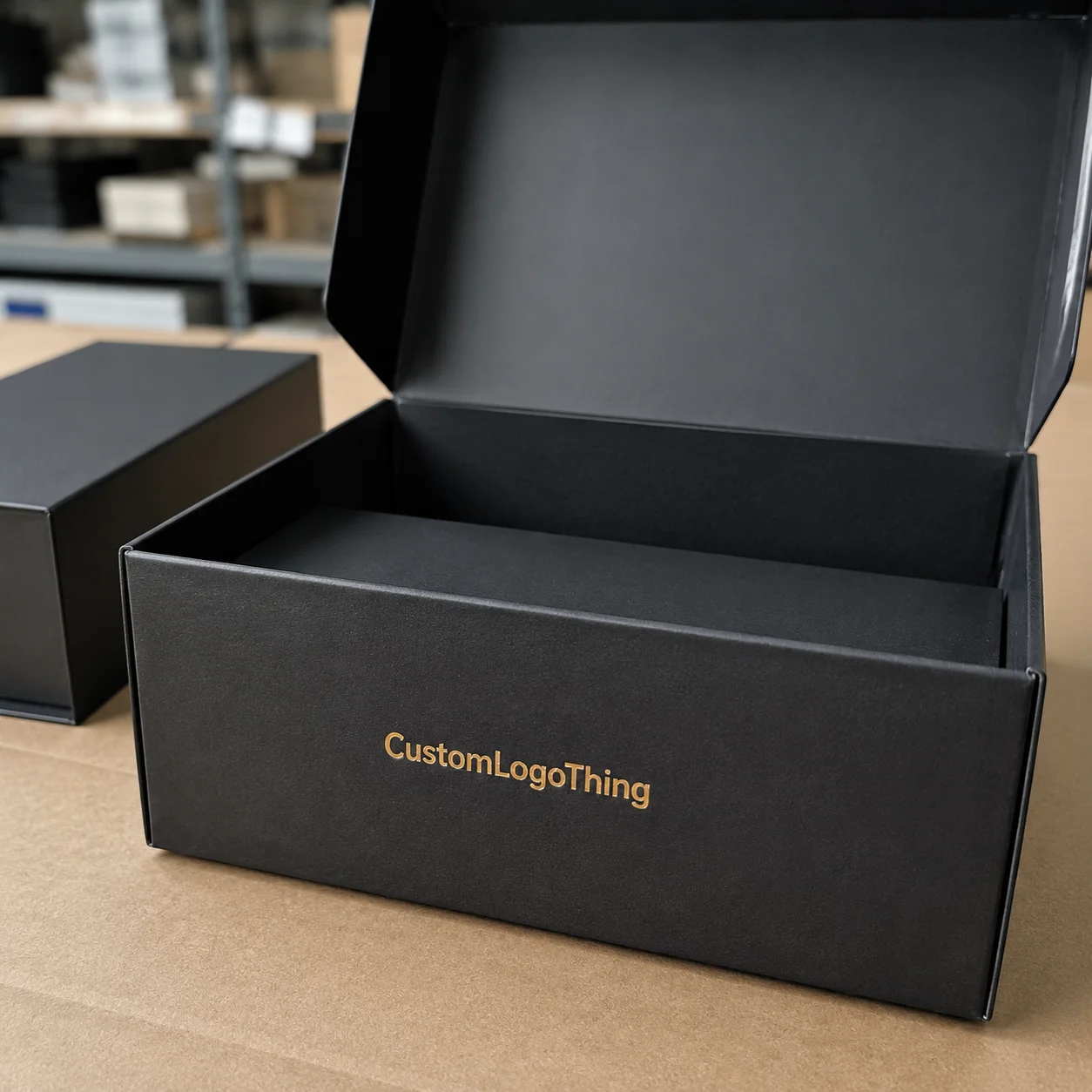
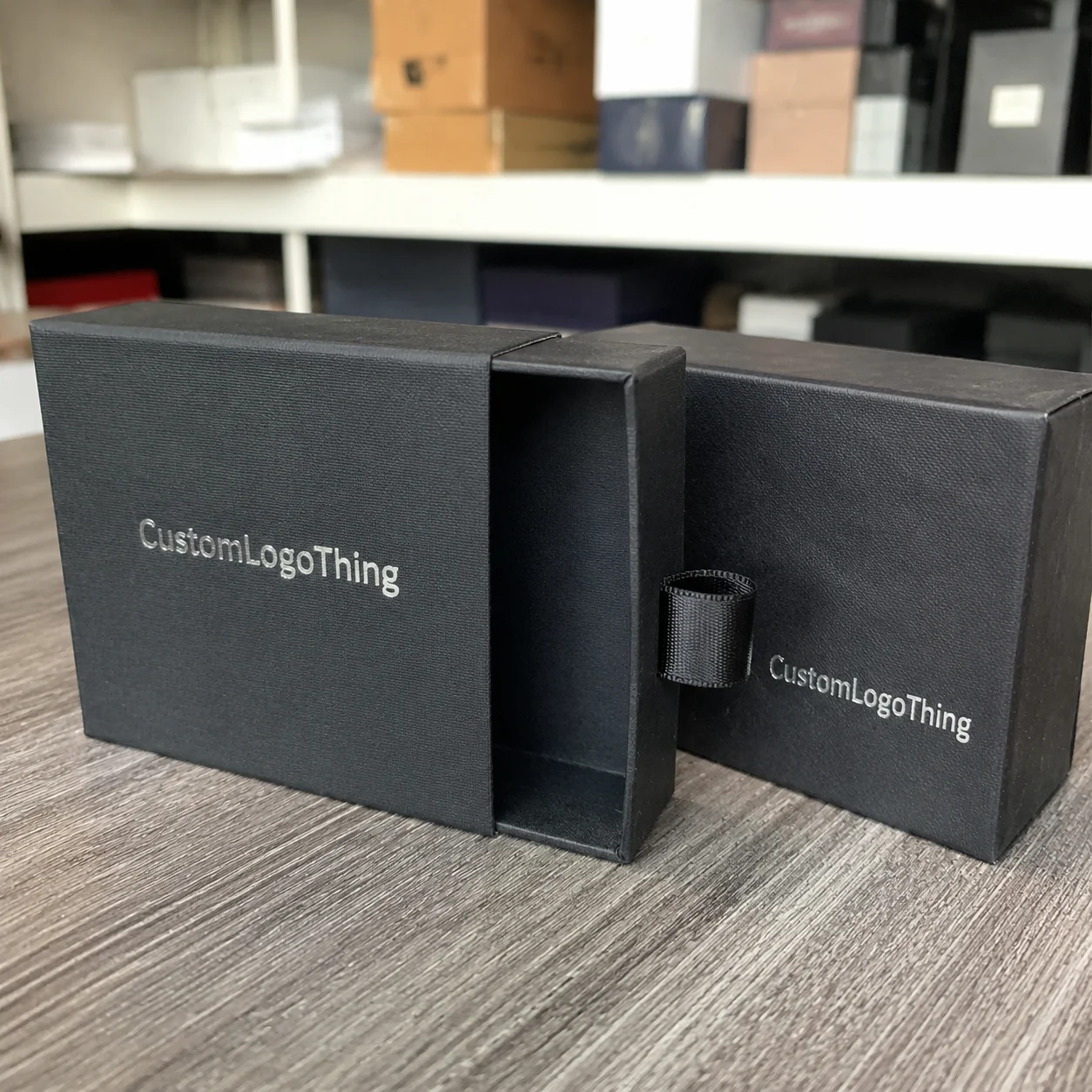
Buyer Fit Snapshot
| Best fit | Corrugated Boxes Selection One projects where brand print, material claims, artwork control, MOQ, and repeat-order consistency need to be specified before quoting. |
|---|---|
| Quote inputs | Share finished size, material target, print colors, finish, packing count, annual reorder estimate, ship-to region, and any compliance wording. |
| Proofing check | Approve dieline scale, logo placement, barcode or warning zones, color tolerance, closure strength, and carton packing before bulk production. |
| Main risk | Vague material claims, crowded artwork, missing packing details, or unclear freight terms can make a low unit price expensive after revisions. |
Fast answer: Corrugated Boxes Selection One: Board, Finish, Dieline, and Unit Cost should be specified like a repeatable production item. The safest quote records material, print method, finish, artwork proof, packing count, and reorder notes in one written spec.
Production checks before approval
Compare the actual filled-product size with the drawing, then confirm tolerance on folds, seals, hang holes, label areas, and retail display edges. Reserve space for logos, QR codes, warning copy, and material claims before decorative graphics fill the panel.
Quote comparison points
Review material grade, print process, finish, sampling route, tooling charges, carton quantity, and freight assumptions side by side. A quote is only useful when the supplier can repeat the same color, closure quality, and packing count on the next order.
Corrugated Boxes How to Choose: What They Are and Why It Matters
Two boxes can sit side by side on a pallet and behave in completely different ways once they hit a parcel network, a freight trailer, or the top tier of a warehouse stack. I’ve watched that play out more times than I can count, from cartons built in Dongguan to subscription mailers packed in Chicago, Illinois. The logo on the outside rarely tells the story. The structure does. Flute type, liner grade, and the way the corrugated medium is built usually decide whether a carton protects the product or folds under pressure. That is why Corrugated Boxes How to Choose is never just a sizing exercise.
In simple terms, a corrugated box has an outer liner, an inner liner, and a fluted medium sandwiched between them. Those arches in the middle do most of the heavy lifting. They help resist compression, absorb shock, and keep the box light enough to stay economical. A common single-wall mailer might use 32 ECT kraft board with a B-flute, while a sturdier retail shipper may use 44 ECT C-flute or a double-wall spec for extra stacking strength. The catch is that not every corrugated box is built the same. Pick the wrong one and a $2 packaging decision can turn into a $40 damage claim before anyone notices. Honestly, that is one of the most irritating parts of packaging: the expensive mistake often looks boring on a spreadsheet right up until it isn’t boring anymore.
I’ve seen another mistake again and again: buyers assume “stronger” automatically means “better.” It doesn’t. A heavier board may protect a ceramic mug beautifully, yet it may also bump the parcel into a higher dimensional weight bracket. That can change freight cost more than the box itself. For brands shipping 5,000 to 50,000 units a month, the math gets loud very quickly, especially when the difference between two box styles is only $0.15 per unit on a 5,000-piece run. The smartest teams treat corrugated boxes how to choose as a balance of protection, cost, and channel fit.
The customer sees the box before they ever see the product. A carton that arrives crushed or bulging makes the brand look careless even if the item inside survives. A carton that is oversized and stuffed with filler looks wasteful. I once sat in a client meeting where the team had a 12% damage rate on subscription kits. After we reduced the box footprint by 18 mm and changed the flute profile, that number fell below 2% in the next test run. Same product. Different box. Same budget pressure, too, because the new spec took about 14 business days from proof approval to first production run at a plant in Suzhou, Jiangsu.
So the question is not whether you can find the toughest carton in the catalog. It is whether the structure fits the product, the route, and the budget. If you are trying to master corrugated boxes how to choose, start with use case, not habit. For a practical lineup of formats, see our Custom Shipping Boxes and broader Custom Packaging Products range. For some programs, the right answer is a 32 ECT single-wall shipper; for others, it is a double-wall carton with a 275# burst rating and a 350gsm C1S artboard insert panel.
How Corrugated Boxes Work: Strength, Structure, and Protection
The science is easier than most buyers expect. Corrugation works because the flute acts like a series of tiny arches. Arches distribute pressure. They also create air space, which adds cushioning without much added weight. That is why a 32 ECT single-wall box can outperform a thicker-looking but poorly built carton when the route is short and the product is light. I’ve seen a 300 mm x 200 mm x 120 mm mailer protect a 900 g apparel bundle just fine, while a visually “heavier” box failed because its flap scoring was weak and the product could shift 14 mm in transit.
Flute profile matters. A-flute is thicker and offers better cushioning; B-flute is tighter and gives a better print surface; C-flute is a common middle ground; E-flute is thin and often used for retail-ready cartons; F-flute is even finer and tends to support high-quality graphics. I’ve stood at a converting line in a Shenzhen facility while a production lead explained why a client’s printed box panel scuffed less on E-flute than C-flute. He was right. The flatter surface can matter as much as the strength number. On one luxury-candle project in Shanghai, a switch from C-flute to E-flute shaved about 0.6 mm off the wall thickness, yet improved print clarity enough to reduce rework by 11%.
Board performance is usually described with two numbers: burst strength and edge crush resistance. Burst strength reflects the force required to rupture the board. Edge crush resistance, often shown as ECT, is more relevant in stacking situations because it indicates how well the box resists compression from above. For shipping and warehousing, ECT usually tells you more than raw thickness. I’ve seen 275# burst board fail in storage while a properly specified 44 ECT box stayed square through a 6-high stack for 10 days in a 24°C warehouse near Rotterdam. Same footprint, very different outcome.
Here is the simplest way to think about the main constructions:
- Single-wall corrugated: one fluted layer between two liners. Common for light to medium-weight products, apparel, cosmetics, books, and many ecommerce items. A 32 ECT B-flute box is a frequent starting point for parcels under 2 kg.
- Double-wall corrugated: two fluted layers with three liners. Used when stacking strength, puncture resistance, or heavier items are a concern, such as 8 kg appliance parts or bulk retail packs.
- Triple-wall corrugated: three fluted layers. Usually reserved for industrial parts, bulk shipments, or very heavy loads, often moving by pallet from factories in Foshan, Guangdong to distribution centers in Los Angeles, California.
One of the most useful standards in this space comes from testing rather than guesswork. Packaging teams often reference ASTM methods and ISTA procedures to assess whether a box can survive drop, vibration, and compression conditions. If you want a good neutral starting point, the ISTA testing standards site is a useful reference for transit simulation, and the EPA sustainable materials guidance helps frame packaging in a waste-reduction context. A standard ISTA 3A test for parcel shipping may take 2 to 4 hours in a lab, but it can save weeks of customer-service headaches later.
Image note: the structure below is only as good as the match between board type and application. That is the part many people miss. A double-wall box is not automatically the right answer for every heavy item. If the load is dense but stable, a stronger single-wall with correct dimensions may be the smarter call. If the load shifts, the box may fail even when the board grade looks impressive on paper. A 350gsm C1S artboard sleeve can also improve presentation, but it will not fix a carton that is 20 mm too large.
Corrugated Boxes How to Choose Based on Product Needs
corrugated boxes how to choose starts with the product, not the supplier catalog. Weight matters, yes. So does shape, fragility, surface finish, and how much empty space you’ll need to manage. A 1.2 kg candle set in a rigid insert tray behaves differently from a 1.2 kg metal part with sharp corners. Both weigh the same. The packaging problem is not the same. A single-wall carton with a 44 ECT rating might be perfect for one and too light for the other, even if both ship from the same plant in Xiamen.
For lightweight items, single-wall boxes with the right flute profile often work well. Think apparel, small home goods, paperback books, or cosmetics in secondary packaging. Fragile goods may need a tighter fit, inserts, or partitions before you jump to a heavier board. I once worked with a glassware brand that wanted to move straight to double-wall boxes after 3 breakages in 500 shipments. We tested a custom-sized single-wall carton with molded pulp dividers instead. Damage fell to zero in the next 1,000-unit pilot, and their freight spend stayed flat. That is the sort of outcome that makes people rethink corrugated boxes how to choose. The insert cost $0.07 per unit, while the upgrade to double-wall would have added $0.19 per unit on a 10,000-piece order.
Shipping method changes the rules. Parcel networks punish oversize cartons and exposed corners. Freight shipments care more about stacking and pallet pressure. Retail Display Boxes need graphics and shelf presence. Subscription boxes often need a balance of unboxing experience and easy fulfillment. Storage cartons need compression resistance more than print quality. If a carton will sit in a warehouse for 60 days under other cases, you are solving a different problem than if it will travel by air and land on a porch the next morning. A box moving from Ho Chi Minh City to Sydney has different stress points than one moving from a local fulfillment center in Dallas, Texas to a nearby apartment building.
| Use Case | Typical Construction | Typical Benefit | Tradeoff |
|---|---|---|---|
| Light ecommerce goods | Single-wall, E or B flute | Lower material cost, lighter parcel weight | Less stack resistance than heavier boards |
| Fragile consumer products | Single-wall with inserts or double-wall | Better shock protection and fit | Higher unit cost |
| Heavy retail or industrial items | Double-wall or triple-wall | Improved stacking and puncture resistance | More board weight, higher freight risk if oversized |
| Subscription and branded kits | Custom-sized single-wall, often E flute | Better presentation and reduced filler | More setup work if dimensions change often |
Cost is where many teams get trapped. A stronger box costs more per unit, but overboxing can cost even more through filler, labor, and dimensional weight. If you use a box that is 20 mm too wide and 15 mm too tall, the void space grows fast. Then you add air pillows or kraft paper. Then pack-out time increases by 15 to 20 seconds per unit. Multiply that by 10,000 shipments, and the “cheap” box gets expensive. This is why corrugated boxes how to choose should always include a dimension audit. A product packed in a 310 mm x 220 mm x 90 mm carton often ships more efficiently than the same product floating in a 340 mm x 250 mm x 120 mm box.
Custom sizing often solves a quiet but costly problem. When the box matches the product more closely, you reduce motion, cut void fill, and often improve unit economics. It also tends to improve presentation. I’ve seen brands spend thousands trying to make inserts compensate for a poorly sized carton when the cleaner fix was a 4 mm reduction in each panel. Simple. Not glamorous. Effective. In one Guangzhou project, a Custom Die Cut took 13 business days from proof approval and saved the brand about $0.11 per shipment by eliminating a foam layer.
How to Choose Corrugated Boxes Step by Step
If you want a reliable method for corrugated boxes how to choose, use a five-step process and document the results. I have watched teams save weeks simply by writing down their assumptions before they ask for samples. Guessing feels faster. It usually isn’t. And yes, I have seen more than one team try to “eyeball” box dimensions on a call. That went about as well as you’d expect, especially when the final product was supposed to fit a 310 mm x 210 mm x 70 mm footprint and ended up 9 mm too tight.
Step 1: Measure the product correctly
Start with exact dimensions, not rounded estimates. Measure length, width, and height at the widest points, then include accessories, instruction sheets, chargers, or inserts that must fit inside. Weight needs to be recorded too, and if the item has a dense core or uneven mass, note the balance point. A 340 mm x 240 mm x 90 mm product does not behave like a 350 mm x 250 mm x 90 mm product, even if the difference seems tiny on a spec sheet. If the item ships with a 6 mm foam sleeve or a 2 mm printed wrap, include that in the final internal dimension.
I once sat with a client whose products were failing in transit because the team measured the product only, not the closure flap with the magnetic insert. That extra 8 mm caused the lid to bow. A few sketches and one revised dieline solved it. That is not theory; that is factory-floor reality. The replacement carton moved from a 280 mm x 180 mm x 60 mm spec to 288 mm x 188 mm x 68 mm, and the buckle issue disappeared in the next 200-unit pilot.
Step 2: Map the shipping conditions
Parcel, freight, retail, and storage each create different stress points. Parcel shipments experience drops, tosses, conveyor impacts, and corner hits. Freight pallets see compression from above and side-to-side shift. Long-distance or multi-handling routes increase fatigue. Temperature swings can also affect adhesives and some coatings. If your cartons leave a 22°C packing room and sit in a 38°C loading dock in Phoenix, Arizona, the box behavior changes more than most non-technical buyers expect.
Ask where the box will spend its time, not just where it will end. A carton that performs in the final mile may still fail in a warehouse stack. That is why corrugated boxes how to choose must include route analysis, not only product analysis. A carton built for a one-day domestic parcel route from Atlanta, Georgia will not always survive a 21-day ocean freight leg through Ningbo and Hamburg.
Step 3: Match construction to performance
Now compare flute type, wall construction, and board grade. A light but fragile product may need better cushioning. A heavy but sturdy product may need more compression resistance. A small carton can sometimes use a higher-performing single-wall board instead of moving to double-wall. That saves material, reduces weight, and often keeps print quality cleaner. If you only look at thickness, you can easily overbuy the box. A 32 ECT B-flute carton may be enough for a 700 g apparel kit, while a 44 ECT C-flute carton may be the better choice for a 3.5 kg skincare bundle with glass bottles.
For many ecommerce programs, I see teams land on three practical options: an economy single-wall, a premium single-wall with better ECT, and a double-wall for worst-case routes. That gives them room to test without creating 12 box SKUs. Fewer SKUs usually means fewer mistakes on the pack line. At a plant outside Kuala Lumpur, one brand reduced packing errors by 19% after standardizing around four carton sizes instead of nine.
Step 4: Test samples like you mean it
Do not approve a box based on a CAD drawing and a handshake. Request samples, pack real product, and test closure, fit, and movement. Drop tests should cover corners, edges, and faces. If possible, test stacking for at least 24 to 48 hours under realistic warehouse load. Many teams use ISTA methods, or at least borrow the mindset: simulate the way the box will actually fail. If the product is fragile, add vibration and compression checks too. A 1.8 kg diffuser kit that survives a 30-inch corner drop in the lab but fails after 36 hours under a 7-high stack is telling you something concrete.
“The carton looked fine in the conference room. The test pallet told a different story.” That was a line a plant manager gave me during a supplier review in Foshan, and he was right. The box had enough burst strength on paper, but the stacking failure told us the ECT was too low for the route.
Step 5: Confirm branding and production details
Once protection is set, check print, finishing, and workflow. Will the carton be plain kraft, one-color flexo, or full-color litho-lam? Does it need peel-and-seal, tear strips, or friction-lock tabs? Can the pack team assemble it in under 20 seconds, or does it create a bottleneck? A technically perfect carton that slows packing by 6 seconds per unit may still be the wrong answer. That is another reason corrugated boxes how to choose requires both engineering and operations input. A pack line in Manchester, England might handle a tuck-top in 18 seconds, while the same format could take 27 seconds on a busier warehouse line in Toronto, Ontario.
For teams building a packaging line from scratch, I recommend keeping a written spec sheet with product dimensions, target ECT or burst range, flute style, printing method, and shipping method. That one page becomes gold when you reorder six months later. If you have a premium retail requirement, add notes such as 350gsm C1S artboard inserts, matte aqueous coating, and approved Pantone colors. Future you will be grateful in a very practical, not sentimental, way.
Cost, Pricing, and Timeline Considerations
Pricing is shaped by several variables: size, board grade, print complexity, order volume, die-cut needs, and whether the box is stock-based or fully custom. A simple unprinted corrugated mailer can be dramatically cheaper than a custom printed carton with specialty finishes. A stock 200 mm x 150 mm x 100 mm shipper in plain kraft might cost far less than a branded box with two-color flexo and a 350gsm C1S artboard insert. The lowest unit price is not always the lowest total cost. If the box is too large, you may spend more on filler, labor, and shipping than you save on board.
Here is the reality I’ve seen in quotes and negotiations: the difference between a standard size and a custom size can look like a 10% or 15% increase on paper, but the total landed cost may improve if the custom box reduces product movement and lowers dimensional weight. I’ve had buyers push back on a $0.18 unit increase for a custom carton, only to discover they were spending $0.22 in void fill, labor, and rework. In another case, a 5,000-piece run quoted at $0.15 per unit for a basic custom mailer saved more than a stock option once the brand removed 1.4 minutes of pack-out labor per dozen cartons. That is exactly why corrugated boxes how to choose cannot be reduced to unit price alone.
Typical production timing depends on the structure and print complexity. If the design is based on an existing style, sampling may move quickly. Full custom die-cuts, graphics approvals, and structural changes take longer. In practical terms, a straightforward project can move from spec approval to production in roughly 12 to 15 business days after final proof approval, while more complex printed programs can stretch beyond that if artwork or dielines keep changing. The biggest delays usually come from three places: artwork revisions, structural edits, and “small” last-minute size changes that are actually not small at all. A plant in Dongguan may quote 10 business days for production, but the actual clock often starts only after the final proof is signed.
| Option | Typical Unit Cost | Lead Time Impact | Best Fit |
|---|---|---|---|
| Stock-size corrugated box | Lower upfront cost | Fastest | Short runs, urgent replenishment, simple packing |
| Custom size, unprinted | Moderate | Moderate | Repeat shipments, better fit, lower filler use |
| Custom printed box | Higher | Longer due to proofing and setup | Brand-focused ecommerce, retail, premium unboxing |
| Heavy-duty double-wall or triple-wall | Highest | May require extra testing | Heavy, fragile, or industrial goods |
One more practical point: if you are placing a 5,000-piece order, ask for pricing at two or three volume breaks. Sometimes the difference between 5,000 and 10,000 units is smaller than buyers expect, especially once tooling is spread out. Don’t chase bulk savings so aggressively that you end up with the wrong carton in inventory for a year. Old packaging is expensive in its own way. I’ve seen a warehouse in Newark, New Jersey sit on 18,000 obsolete cartons for 11 months because a buyer saved $0.03 per unit on the first order and lost far more on storage and rework.
Common Mistakes When Choosing Corrugated Boxes
The first mistake is picking a box that is too large. Oversized cartons let the product move, and movement is what causes edge wear, crushed corners, and broken contents. Oversized boxes also increase dimensional weight charges. I have seen a light 900 g item ship in a carton that added nearly 30% to the bill purely because the box was oversized by 25 mm in two directions. That is an expensive way to create empty space. In one example, a product that should have shipped in a 280 mm x 180 mm x 80 mm carton was packed in a 320 mm x 220 mm x 120 mm box, and freight charges jumped by $0.42 per parcel.
The second mistake is choosing based on thickness alone. Board performance depends on the full structure, not a single measurement. A thick-looking carton may not outperform a thinner one with a better flute combination and better ECT. Thickness can fool people. Performance data usually tells the real story. A 275# burst board from one mill in Taicang may behave differently from another board with the same listed burst number if the liner quality and flute bonding are inconsistent.
The third mistake is ignoring stacking and warehouse conditions. A carton can survive one parcel drop and still collapse after two days under pallet load. That happens more often than people think, especially with seasonal inventory and mixed pallets. If the box will spend time in storage, test compression resistance. If it will travel through multiple handoffs, test impact and vibration too. A box sitting under 500 kg of mixed merchandise for 72 hours in a warehouse near Birmingham will show weaknesses that never appear in a quick drop test.
The fourth mistake is skipping validation or assuming one box fits all products. A carton used for a candle set may fail completely for a ceramic diffuser or a bottled skincare kit. Different products create different stress patterns. corrugated boxes how to choose only works if you treat each product family as its own packaging problem. A 6-bottle serum kit and a single rigid gift set may both look “small,” but one needs dividers and the other may need a snug sleeve and a stronger closure tab.
Expert Tips for Better Protection and Lower Total Cost
Start with right-sizing. That means designing the box around the product, not stuffing the product into the nearest standard size and hoping for the best. Right-sizing usually reduces filler, improves presentation, and lowers shipping inefficiency. As a rule of thumb, aim to minimize void space while leaving enough room for safe insertion and closure. A 4 mm tolerance on each side is often enough for a well-controlled pack-out, while 15 mm of extra space tends to invite movement and creasing.
Next, choose the lightest board grade that still passes your performance needs. I am not suggesting you skimp. I am suggesting you stop paying for protection you do not use. If a product passes compression and drop tests in a strong single-wall carton, there is no prize for moving to a heavier board just because it feels safer. The shipping bill will remind you later. A move from 48 ECT to 44 ECT on a 20,000-unit annual program can save several hundred dollars in board costs, and more if parcel weight thresholds are tight.
For fragile items, consider inserts, dividers, or partitions before upgrading the whole box. A $0.04 molded pulp insert can sometimes protect a product better than adding a full step up in board strength. That is a classic packaging tradeoff: localized protection versus blanket reinforcement. Most teams learn this only after spending too much on board. I saw one cosmetics brand in Seoul replace foam with molded pulp and cut material spend by 9%, while keeping damage below 1.5% across a 2,500-unit test.
Test the worst-case route, not the average route. If 90% of your shipments move through one clean lane and 10% go through a rougher carrier or an overseas pallet chain, design to the rougher scenario if the product is sensitive. Damage usually shows up at the edges of the system. That might be a temperature spike, a corner crush during palletization, or a rough manual sort at a hub. A box that survives 1,200 km by truck from Madrid to Paris may still fail when it is transloaded twice in a humid dock.
Standardize where you can. Instead of maintaining 11 box sizes, many brands can operate effectively with 3 to 5. That simplifies purchasing, reduces setup errors, and makes inventory easier to manage. I watched a cosmetics brand cut warehouse picking mistakes by 28% simply by reducing box variety and color-coding the pack list. Not every operational win is glamorous. Some are just quiet and profitable. In that case, the company also reduced carton obsolescence by 17% over six months.
If sustainability matters to your buyers, look for fiber sourcing and recyclability claims that can be supported. FSC-certified options may matter for certain markets, especially retail and premium ecommerce. Check supplier documentation and, if relevant, verify chain-of-custody claims through the FSC website. Sustainability is not a substitute for performance, though. A recyclable box that fails in transit is still a bad box. A 100% recycled liner with a clearly documented mill spec from Taiwan or South Carolina is far more useful than a vague green claim with no paperwork behind it.
What to Do Next: Final Checks Before You Order
Before you place an order, run through the decision path one more time: product weight, product dimensions, fragility, shipping method, storage conditions, branding needs, cost target, and production timeline. If you can answer those eight items clearly, corrugated boxes how to choose becomes much less confusing. A product under 1 kg with low fragility does not need the same carton as a 4 kg glass set leaving a warehouse in Mexico City for regional parcel delivery.
Then build a short spec sheet. Keep it simple and specific: target internal dimensions, outside dimensions if needed, board grade, flute type, print method, closure style, pack-out accessories, and approved sample reference. That sheet saves time on future reorders and prevents well-meaning mistakes from suppliers or internal teams. I have seen one missing decimal point turn a near-perfect carton into a 6 mm-too-tight headache. The kind that makes everyone stare at the printout like it personally offended them. A clean spec sheet can also specify a 0.25 mm score line tolerance or a 1-color flexo print with black ink on kraft board.
Request samples from at least two or three options. Pack real products. Shake the box. Stack it. Drop it from a realistic height. If you can, send a test shipment through the actual shipping route rather than assuming the lab result will match the field. Field behavior is messier, and that is exactly why it matters. Document what worked and what failed. The next purchase will be faster and better. If the final production run is in Shenzhen, ask for pre-production samples, not just flat dielines.
If you are building a packaging program from scratch, start with a small set of box sizes and expand only when the data says you should. That approach keeps inventory manageable and lets you learn from actual damage reports instead of guessing. The brands that get this right are not necessarily the ones with the biggest packaging budgets. They are the ones that ask better questions. A team that launches with four sizes, two flute options, and one standard insert often outperforms a team that orders twelve box styles and hopes the warehouse will sort it out.
So if you remember only one thing, remember this: corrugated boxes how to choose becomes far easier when performance, price, and process are judged together. Not separately. Not emotionally. Together. That is how you get fewer damages, saner freight bills, and Packaging That Feels intentional from the warehouse to the customer’s doorstep. In practical terms, that usually means a carton spec that is measurable, repeatable, and manufacturable in a place like Dongguan, Suzhou, or Ciudad de México without last-minute surprises.
Frequently Asked Questions
How do I choose corrugated boxes for heavy products?
Start with product weight and stacking load, then compare stronger board constructions and higher-performing flute combinations. If the product is dense, sharp-edged, or likely to shift, use inserts or double-wall construction before assuming a heavier box alone will solve the problem. I always recommend a real-world pack test before ordering at scale, especially for items over 5 kg or cartons stacked more than 6 high in a warehouse.
What is the difference between single-wall and double-wall corrugated boxes?
Single-wall boxes have one fluted layer and are common for lighter or moderately fragile items. Double-wall boxes add a second fluted layer, which improves stacking strength and impact resistance. The better choice depends on the shipping stress, pallet load, and handling conditions, not just product weight. A 32 ECT single-wall carton may be enough for a 1 kg product, while a 48 ECT double-wall box may be better for a 9 kg retail bundle.
How does box size affect shipping cost?
Oversized boxes can increase dimensional weight charges even when the product itself is light. A right-sized carton reduces filler materials and often lowers labor time during pack-out. If the same product ships repeatedly, custom dimensions can save money over time. A 20 mm reduction in each direction can be enough to move a parcel into a lower billing bracket on major carriers.
How long does it take to get custom corrugated boxes made?
Lead time depends on whether the design is based on an existing structure or a fully custom build. Sampling, proof approval, and any structural changes can add time to the schedule. In many cases, the fastest projects are the ones with final specs approved before production starts. A straightforward custom run often reaches production in 12 to 15 business days after proof approval, while complex printed cartons may take 18 to 25 business days depending on the factory location.
What should I test before I finalize a corrugated box order?
Test fit, product movement, closure strength, stacking resistance, and transit durability. If possible, simulate the actual shipping route or warehouse handling the box will face. Check both protection and presentation so the box works in real operations, not just in theory. A 24-hour compression test, a corner drop, and a vibration cycle are a practical minimum for many ecommerce products.