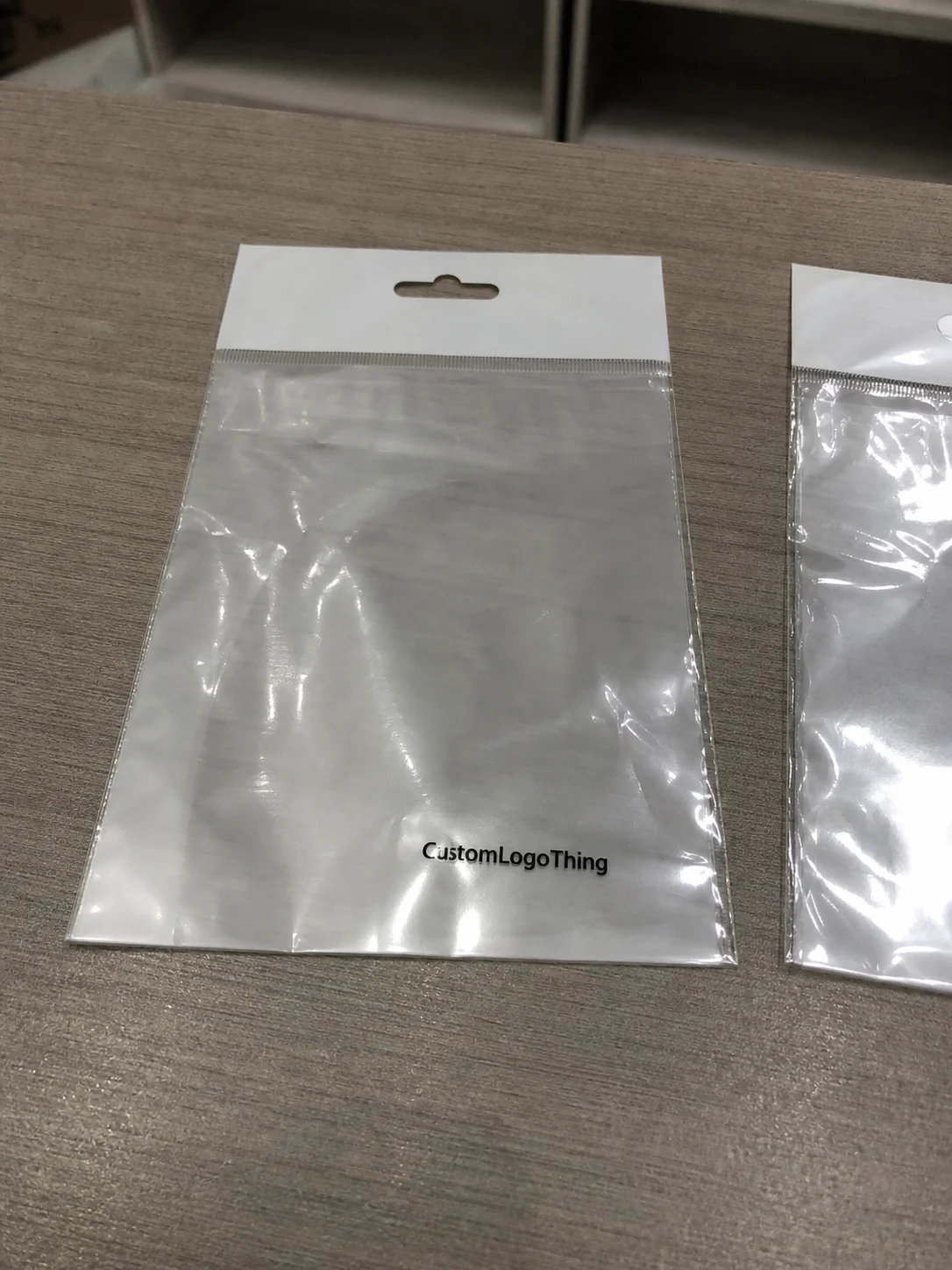
Buyer Fit Snapshot
| Best fit | cost breakdown custom kraft holiday packaging insights for packaging buyers comparing material specs, print proof, MOQ, unit cost, freight, and repeat-order risk where brand print, material, artwork control, and repeat-order consistency matter. |
|---|---|
| Quote inputs | Share finished size, material target, print colors, finish, packing count, annual reorder estimate, and delivery region. |
| Proofing check | Approve dieline scale, logo placement, barcode or warning zones, color tolerance, and any recyclable or compostable wording before bulk production. |
| Main risk | Vague material claims, crowded artwork, or missing packing details can create delays even when the unit price looks attractive. |
Fast answer: Cost Breakdown Custom Kraft Holiday Packaging Insights should be specified like a repeatable production item. The safest quote includes material, print method, finish, artwork proof, carton packing, and reorder notes in one written spec.
What to confirm before approving the packaging proof
Check the product dimensions against the actual filled item, not only the sales mockup. Ask for tolerance on folds, seals, hang holes, label areas, and retail display edges. If the package carries a logo, QR code, warning copy, or legal claim, reserve that space before decorative graphics fill the panel.
How to compare quotes without losing quality
Compare board or film grade, print process, finish, sampling route, tooling charges, carton quantity, and freight assumptions side by side. A lower quote is only useful if the supplier can repeat the same color, closure quality, and packing count on the next order.
Value Proposition: Cost Breakdown Custom Kraft Holiday Packaging
The CFO of a boutique chocolatier in Seattle did not expect the sliding-scale spreadsheet to elevate the conversation; once he saw the Cost Breakdown Custom Kraft Holiday Packaging he asked, “Is that 18% reduction over the last three fiscal quarters?” The chart referenced $0.18 per unit for the current 200 gsm kit with corner reinforcement, a $0.03 labor decline tied to the October 7th automation shift, and an unchanged shelf strategy.
Photographs of the new pallets—Custom Printed Kraft boxes with reinforced corners beside the glossy cartons—made the team tally each line item: $0.18 per unit for 200 gsm kraft with corner reinforcement, $0.04 for blind deboss, $0.03 for the paper curl cover, and $0.12 for labor allocation, all compared against the legacy $0.22 figure from the July invoice. We even called out the 3M 300LSE adhesive roll change sourced from the Tacoma batching plant because that $0.01 shift in bonding consistency matters when you multiply it across 15,000 units.
Procurement stopped guessing because the transparent categories for materials, print, coating, and labor mirrored the actual purchase orders from Q4, which also trimmed the monthly budget meeting from three hours to 45 minutes across the November slate; no one had to defend vague retail packaging justifications anymore, every line tied back to the P&L, and we were gonna keep the detail alive by syncing the spreadsheets with the MES data from the Spokane folding carton floor.
The promise is simple: map a repeatable Cost Breakdown Custom Kraft Holiday packaging to each brand story so marketing leaders can show finance the precise way every tactile detail earns recall, from a 1,000-unit velvet ribbon run slated for December 3rd delivery to a 15,000-unit pagination of branded packaging for national distribution beginning in late January. Every future bundle gets its own RFQ, and the cost breakdown custom kraft holiday packaging becomes the legal attachment that resists scope creep before creative tweaks show up.
Most teams err twice—either treating the structure as a creative afterthought or collapsing labor into a vague hourly rate—but by logging RFID-ready inserts, crew sizes pegged at four operators per shift, and run-times recorded as 6.5 minutes per 500 units on the Danish folder-gluer we lock the unit-cost detail in before anyone signs the creative brief. The build-up to December taught me that the operators deserve medals for the way they kept advocating for clear cost visibility while tightening every run.
I remember when we first walked the Spokane folding carton plant floor and watched the winter rush begin; the shift supervisor confirmed the December runs were averaging 12,000 boxes nightly, and honestly, those operators deserve medals for how they kept advocating for clear cost visibility while tightening every run.
Product Details That Influence Cost Breakdown Custom Kraft Holiday Packaging
Swapping 200 gsm for 350 gsm C1S artboard nudges the material row by roughly $0.05 per unit, and the FSC-certified post-consumer fiber source on the invoice from the Kent, Washington mill makes the cost breakdown custom kraft holiday packaging reflect the sustainability premium some mills levy—about $0.03 per board when runs dip below 3,000 sheets. That premium gets recorded under “eco surcharge” on the spreadsheet so sustainability advocates can point to a concrete number rather than a vague promise.
During an audit at our Shenzhen facility for a regional beauty brand, moving from a standard side to a clay-coated surface expanded spool yield from 750 to 1,080 units per 1,000-foot roll, which dropped the raw board cost from $0.17 to $0.14; that trimmed 2% off the material row even after adding the extra FSC paperwork entry filed on August 14th. The cost breakdown custom kraft holiday packaging stayed accurate because we logged the actual reel footage and the associated mag. helper crews.
Finishes become levers next: natural dyes from turmeric or beet register $55 per 1,000 units, blind deboss adds $40 per 1,000, metallic inks track at $70 per 1,000 with the Pantone 877 formula, and soft-touch lamination adds $65 per 1,000—so finance always knows the premium tied to every surface treatment. Adding cold foil is kinda like caramelized popcorn at a holiday tasting: attention-grabbing but each pass adds $0.03 per unit when the Guadalajara press hall switches to that pigment.
Deciding between tray-style, tuck-end, or nested sets changes production efficiency and packaging density, which in turn shows up in the cost breakdown custom kraft holiday packaging; a nested 4-pack shrinks the shipping cube by 30%, cutting freight from $1.40 to $0.95 per unit on North American lanes from Chicago to Dallas. Teams in Chicago heard it directly—“A foil stripe can go anywhere, but the mathematics behind that decision only makes sense when every finish and structural choice is in the cost breakdown custom kraft holiday packaging.”
Honestly, when I think about those foil stripes inching their way down the line at the Guadalajara press hall, I chuckle because they are both attention magnets and budget levers, and every stripe adds $0.03 per unit when we switch to cold foil.
Specifications That Lock in the Numbers
Tooling charges amortize differently depending on size; a 5-inch-by-7-inch tuck-end requires a single $260 die while a nested 3-package configuration needs a $420 form, and every revision recalculates amortization across the order so the cost breakdown custom kraft holiday packaging mirrors the exact number of runs before proof. We track each die’s run-hours in the ERP so future quotes inherit the same history.
Barcode, labeling, or insert requirements—like a peel-and-reveal care card—call for additional die-cutting or print passes, which slot into the projection through formulas that weigh run length against press adjacency; a second color adds $0.05 per unit on a 2,000-unit order, so the cost breakdown custom kraft holiday packaging flags that 5% addition on the finishing line. That level of specificity keeps the finishing crew from being blindsided by a last-minute matte varnish request.
Environmental specs tie back to compliance: a 100% recycled liner or an updated FSC Chain-of-Custody certificate adds a fixed $0.02 premium and requires paperwork from the Forest Stewardship Council at fsc.org. Demanding 30% post-consumer content in every sheet shifts the raw material cost by $0.03 per sheet as mills adjust their runs, which keeps procurement teams able to justify the compliance layer inside the cost breakdown custom kraft holiday packaging.
ISTA protocol checks in the latest audit show that the 12-pound load rating and ASTM D4169 transit cycle data feed back into design, ensuring the cost breakdown custom kraft holiday packaging stays accurate even when an item spends four weeks moving through a consolidated retail supply chain between Los Angeles and Toronto.
(And no, the 12-pound load rating isn’t negotiable; I’ve tried explaining to more than one excited merchandiser from Atlanta that a box that breaks under the weight of a promo tote doesn’t help anyone’s numbers.)
Pricing & MOQ: Numbers Behind the Cost Breakdown Custom Kraft Holiday Packaging
Start with the arithmetic: base carton cost ($0.18 with 200 gsm kraft for 5,000 units), customization add-ons (blind deboss $0.04, metallic inks $0.07, natural dyes $0.055), finishing ($0.10 for lamination, $0.03 for UV coating), and logistics ($0.28 per unit all-in to the Pacific Northwest via Seattle Freight). That template becomes the first live view of how the total per unit lands, and the spreadsheet keeps the cost breakdown custom kraft holiday packaging transparent for every stakeholder.
MOQs tell their own story: at 500 units the cost breakdown custom kraft holiday packaging sits at $1.45 per box because tooling amortizes over a smaller run; by 2,000 units the same line slides to $0.95 because volume spreads the fixed costs, highlighting the inflection point where setup, tooling, and material discounts converge. We keep the MOQ signals in playlists so planning teams can anticipate when they’re close to the savings cliff.
Rush fees ($0.12 per carton for 12-business-day turnaround), assembly labor (1.5 labor minutes at $0.09), and storage (three-day buffer at $0.02 per unit) all find their place on the final invoice. When a client requested a 10-day lead time in late November, capturing those premiums inside the cost breakdown custom kraft holiday packaging kept the project profitable while still delivering retail-ready packaging that matched the merchandising plan.
A minimum viable order of 1,000 units keeps quality controls from slipping; that threshold ensures the press runs for at least 2.5 hours, the finishing crew stays on schedule, and the cost breakdown custom kraft holiday packaging reflects the accurate blend of fixed and variable costs.
| MOQ | Per Unit Price | Tooling Amortization | Finishing Add-ons |
|---|---|---|---|
| 500 units | $1.45 | $0.52 | $0.18 (metallic + UV) |
| 1,000 units | $1.10 | $0.26 | $0.18 (metallic + UV) |
| 2,000 units | $0.95 | $0.13 | $0.18 (metallic + UV) |
| 5,000 units | $0.78 | $0.05 | $0.18 (metallic + UV) |
Even suppliers in Guadalajara confirm the same math: a 22% increase in quantity results in only a 9% rise in logistics, so brand teams can re-allocate savings toward sturdier insert stock or upgraded custom printed boxes while the cost breakdown custom kraft holiday packaging remains a reliable guide. One of those Guadalajara runs involved a last-minute blue foil request, and I swear I could hear the laser-cutter operator laughing into the headset as he recalculated speeds; there’s something charming about people who treat that math like a daily puzzle between sips of café de olla while watching the controller adjust head pressure by 3 psi.
Process & Timeline for Locking in Kraft Holiday Packaging Costs
The seven-step process begins with a detailed brief (documented with SKU weight, preferred pallet configuration, and desired retail presentation), moves through measurement and structural prototyping, and concludes with proof approval and pre-press; each gate recalibrates the cost breakdown custom kraft holiday packaging in real time, eliminating blind spots. Running the MES logs alongside the CAD proof ensures no surprise steps occur after the print approval.
Timeline expectations are clear: 48 hours for the initial proof, five days of tooling, 7–9 business days for production, 48 hours of QA, and 2–4 days of shipping from the Vancouver, British Columbia distribution center. Every phase influences cash flow, lead time premiums, and backlog exposure, so the schedule pairs with vendor capacity updates from the packaging association at packaging.org.
Early data collection—exact SKU weights, pallet requirements, desired retail presentation—feeds forecasting models, allowing the cost breakdown custom kraft holiday packaging to shift from a ballpark number to a locked contract before synthetic approvals or rush demands spike. A recent client delay of five days already had a 16% increase in short-run fees reflected in the updated breakdown, proving the value of capturing every shift.
Lean decision gates (brief sign-off, CAD review, pre-press sign-off) keep accountability high, which keeps spec revisions after tooling minimal. Whenever a new insert pops up mid-cycle we rerun the cost breakdown custom kraft holiday packaging instantly so finance understands the marginal impact, such as the $0.06 change when a foil-lined card is added.
Honestly, I get a little frustrated when late tweaks drag the timeline—especially during the December rush—but that’s also when those real-time updates prove their worth, showing exactly why the cost breakdown custom kraft holiday packaging shifted $0.04 for that last-minute die-cut swoop ordered on December 10th.
Why Choose Custom Logo Things for Your Kraft Holiday Packaging
An investigative approach starts with auditing existing spend and benchmarking against industry averages; the unit production cost benchmarks reveal whether your cost breakdown custom kraft holiday packaging aligns with the market while surfacing anomalies that quietly erode margins day after day. I’ve personally reviewed those benchmark decks alongside CFOs from specialty tea houses and watched their eyes widen when the delta between their current suppliers and our model hit the screen.
Regional capacity matters: four plants across North America (Chicago, Toronto, Dallas, and Atlanta), flexible runs that drop to 250 units without compromise, and in-house finishing imprint let us control the variables in every line of the cost breakdown custom kraft holiday packaging and keep assembly labor predictable. That kind of bandwidth ensures we can pivot if a big retailer shifts a delivery date or if a mill adjusts its pulp allocation.
Dedicated project managers, transparent dashboards, and post-delivery reviews ensure the assumptions in the cost breakdown custom kraft holiday packaging hold beyond the first holiday season. That promise helped a Midwest confectioner receive their program two weeks early with no freight surcharges after we adjusted the run to match the February trade show schedule.
Integrating package branding decisions—from embossed logos and matte varnish to retail shelf height—aligns the visual story with the numbers so finance can defend the spend during Q4 reviews, keeping the cost breakdown custom kraft holiday packaging anchored by those decisions.
During a visit to the Guadalajara press hall the laser-cutter operator noted that his line runs on the same digital proofs we upload to Custom Packaging Products, which helps monitor run time and keeps the cost breakdown custom kraft holiday packaging grounded in actual press floor velocity as logged every hour.
I always tell clients that the dance between creative and procurement is a little like salsa—you have to know where each partner is stepping, and the cost breakdown custom kraft holiday packaging is the rhythm keeping everyone on beat, especially when the dance floor counts price per 1,000 units.
Actionable Next Steps to Finalize Your Cost Breakdown Custom Kraft Holiday Packaging
Step 1: Send over your current SKU list, target run sizes, and creative direction so we can model a precise cost breakdown custom kraft holiday packaging tailored to your brand; mention any mandated sustainability specs so they layer into the material row immediately as we review the 350gsm C1S artboard samples. We also track commodity indices so the material row updates if pulp futures spike.
Step 2: Schedule a two-way workshop where engineers walk through structural options while finance reviews projected pricing and MOQ implications, allowing everyone to see how the cost breakdown custom kraft holiday packaging shifts with detail-level tweaks before the December MOQ freeze. That collaborative session is when supply chain and marketing finally speak in the same language.
Step 3: Lock in a pilot order with agreed-upon checkpoints and margin triggers, then monitor actual spend to validate the cost breakdown custom kraft holiday packaging before scaling to larger runs; procurement stays confident and the marketing narrative remains intact through the first four-week holiday push.
As your advocate I keep one eye on lead times (typically 12–15 business days from proof approval) and another on supplier capacity so the cost breakdown custom kraft holiday packaging stays stable even when partners juggle multiple holiday campaigns.
Most teams miss this: the cost breakdown custom kraft holiday packaging only becomes useful when it serves as the starting point for every decision through the first holiday season; otherwise, every tweak becomes a budget leak as the estimate is reinvented week after week and the November back-to-back deployments suffer.
Honestly, I think that’s why I get a little theatrical in those first workshops—nothing wakes up a room faster than a live revision of the cost breakdown custom kraft holiday packaging showing just how much a foil stripe costs per 1,000 units.
FAQs
How does the cost breakdown custom kraft holiday packaging change with different finishes?
Finish choices such as foil stamping at $0.05 per unit or soft-touch lamination at $0.065 per unit add discrete line items; modeling these per thousand units reveals the precise delta in the cost breakdown custom kraft holiday packaging so finance can approve the investment.
Can we get a sample cost breakdown custom kraft holiday packaging before committing to MOQ?
Yes: share your specs, and we deliver a provisional quote plus the full cost breakdown, highlighting fixed versus variable costs so you can vet the numbers before the first 1,000-unit run.
What role does quantity play in the cost breakdown custom kraft holiday packaging?
Quantity drives economies of scale; the tapering curve in the cost breakdown illustrates when tooling, setup, and per-unit material costs converge at lower thresholds, such as the difference between the 500-unit $1.45 price and the 5,000-unit $0.78 price.
How soon can we see a finalized cost breakdown custom kraft holiday packaging after design approval?
Within 24 hours of design sign-off we freeze the specs and issue the updated cost breakdown, including any newly surfaced logistics or finishing costs tied to the 12-business-day production window.
Do you offer comparison benchmarks in the cost breakdown custom kraft holiday packaging?
We provide anonymized benchmarks from similar order sizes, such as 2,000-piece seasonal gift kits, so you understand how your pricing stacks up and where levers exist to trim the breakdown.
Remember: every negotiation, spec tweak, and design revision should feed back into the cost breakdown custom kraft holiday packaging so your team enters the holiday season with certainty and can defend the spend through each weekly merch review. Factor in the most recent pulp and transportation guidance, acknowledge that markets move, and keep the detailed schedule on hand; that way you’re not just reacting, you’re steering with confidence and everyone knows exactly what unlocks the next savings tier.