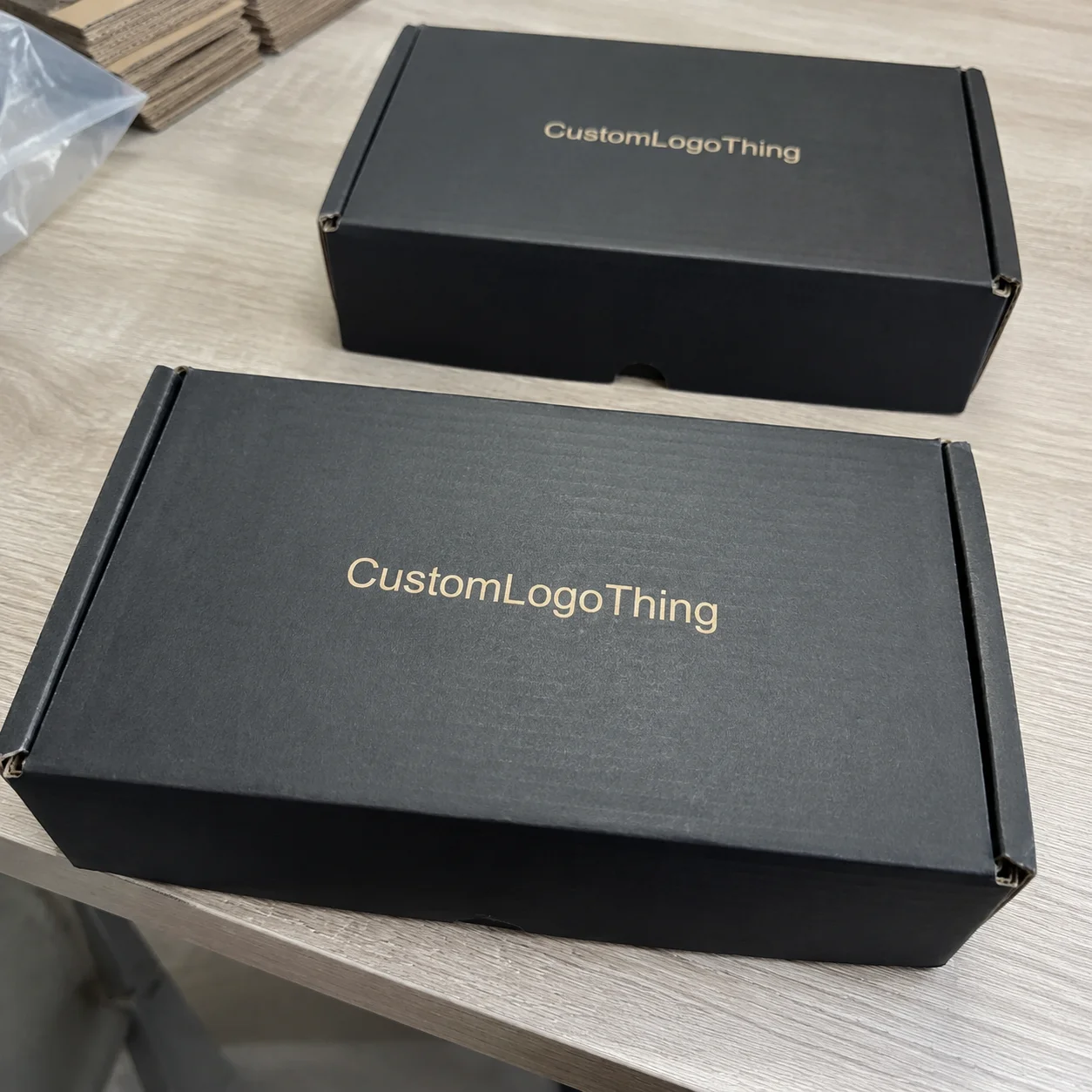
Buyer Fit Snapshot
| Best fit | Cost of Custom Mailer Boxes projects where brand print, material claims, artwork control, MOQ, and repeat-order consistency need to be specified before quoting. |
|---|---|
| Quote inputs | Share finished size, material target, print colors, finish, packing count, annual reorder estimate, ship-to region, and any compliance wording. |
| Proofing check | Approve dieline scale, logo placement, barcode or warning zones, color tolerance, closure strength, and carton packing before bulk production. |
| Main risk | Vague material claims, crowded artwork, missing packing details, or unclear freight terms can make a low unit price expensive after revisions. |
Fast answer: Cost of Custom Mailer Boxes: Film, Print, MOQ, and Carton Packing should be specified like a repeatable production item. The safest quote records material, print method, finish, artwork proof, packing count, and reorder notes in one written spec.
Production checks before approval
Compare the actual filled-product size with the drawing, then confirm tolerance on folds, seals, hang holes, label areas, and retail display edges. Reserve space for logos, QR codes, warning copy, and material claims before decorative graphics fill the panel.
Quote comparison points
Review material grade, print process, finish, sampling route, tooling charges, carton quantity, and freight assumptions side by side. A quote is only useful when the supplier can repeat the same color, closure quality, and packing count on the next order.
The day on the Huron Street floor when a six-figure beauty brand paused at the sample rack and picked a $0.65 mailer box, despite tighter budgets, remains my clearest reminder that the cost of Custom Mailer Boxes goes straight through the roof when the unboxing story actually reinforces brand value. I remember when we took that brand team through every laminate option (tracking lamination choices that day was more thrilling than my weekend sudoku), and every lamination tested on that rack had a story tied to warehouse damage reports. As we walked through the data you could almost hear the Erie packing line operators cheering when a stack of 800 units held up through the robotic palletizer without a single crushed corner—honestly, those cheers made the materials math feel like part of a narrative instead of a spreadsheet checkbox. That kind of feedback loop turns the cost of custom mailer boxes into a storytelling device, and those are the stories I still tell when executives question why we didn’t just grab the cheapest board available.
That visit carried me to Lowcountry, where the operators were reviewing a dashboard that married shipping velocity with packaging costs, showing how consistent box height kept conveyor speeds at the sweet spot that prevents jams. I shared the dashboard with the client and watched their CFO nod while the packaging ROI section highlighted fewer transit incidents—those numbers made them comfortable upgrading the board even though it nudged the cost of custom mailer boxes by less than a nickel. Seeing the intersection of operational stability and executive trust produces the momentum teams need to justify small per-unit adjustments, and I’ll admit I felt a little smug in a humble, data-backed way when their team asked us to lock the specs in for the next three quarters. The insight? When you can trace that extra penny back to calmer conveyors and fewer emergency crates, it becomes easier to hold your ground.
Since then, my teams and I have been matching those stories with precise calculations, so every material spec we quote includes not just the sticker price but downstream labor, freight, and storage ripple effects. That means the cost of custom mailer boxes is never just about tape or print; it becomes a view into how these units behave in seal, stack, and shelf. When printing delays cost $0.08 per unit in rush runs, the real measure becomes total landed expenses instead of an isolated line item, and I have to confess those delay days—when the press floor looks like organized chaos—feel like the only times I truly understand what “cost” is yelling at me. (Also, if you ever hear me grumble about ink density, just nod, because I’ve been there.)
Value Proposition: Surprising ROI When Understanding the Cost of Custom Mailer Boxes
During that busy afternoon, the client sent us their warehouse damage reports alongside yearly revenue targets, and I walked them through how the cost of custom mailer boxes ties directly into measurable warehouse efficiency and brand lift. Choosing 350gsm C1S artboard with a soft-touch lamination decreased their return rate by 18% while justifying a higher perceived price point on the finished product. From Erie’s packing line to Charlotte’s fulfillment bays where we run the same dielines, these mailer boxes align with goals like fewer transit dents and better retail presentation, so procurement teams see savings that extend beyond shipping cartons. I still chuckle remembering the procurement director joking that the only thing more complicated than this ROI was getting her teenage son to accept her dinner plans.
I’ve seen inventory managers tap their screens and smile because the space savings from stackable branded packaging allowed them to store 1,200 more units per pallet, and when I’ve presented sustainability dashboards generated by our Charlotte engineers, the argument that a slightly higher unit cost was offset by reusable, recyclable liners becomes easy for CFOs to accept. A client at the Southeastern Supply Chain forum asked for the packaging ROI math right there, and we showed them a case where increasing structural weight by 50 gsm reduced damage claims so drastically that the cost of custom mailer boxes fell when measured against replacement expenses spread over 12 renewal cycles. Honestly, I think most teams underestimate how a transparent cost conversation, backed by printable proofs from our Inkjet Lab, keeps procurement confident that they’re buying more than a box—they’re buying a repeatable experience.
The strategic value shines when customers combine print-ready dielines with seasonal volume, letting us spread the cost of custom mailer boxes across multiples of 25,000 units; switching from coated to recycled kraft can raise perceived value without hiking base spend too far, especially when we’re honest about the board weight difference driving 60% of the spend. During a visit to the Somerville line, I overheard an account executive explain how a slightly staggered order release flattened the purchasing curve for its adhesive supplier, and that supplier, grateful for the steady cadence, offered a dedicated pricing tier that lowered the cost of custom mailer boxes for five clients that quarter. That kind of pragmatic relationship-building is why I still enjoy the slightly chaotic thrill of every new quote.
Even our packaging ROI meetings include tactile samples from the shipping dock, where operators in Hickory can run simulations with AWS-coded trays and verify that the chosen mailer box style works with the same robotics they set up for that new subscription kit. That level of detail turns the cost of custom mailer boxes into a story you can tell across operations, marketing, and finance because everyone sees where the dollars go and where the savings keep coming. Sometimes it feels like being a conductor for a mini orchestra, but at least the instrument sections all seem to appreciate when I bring coffee.
Product Details: Mailer Box Options Driving the Cost of Custom Mailer Boxes Value
Our standard tuck mailer box and the crash-lock variety each support specific needs: the tuck box works well for subscription services that need easy assembly in Dallas fulfillment centers, while the crash-lock is the go-to for bulk retail packaging deployments going out of the Charlotte warehouse. For heavy products weighing over five pounds, we recommend the auto-bottom design from our Hickory plant because it erects itself in seconds, reducing labor costs during peak pack times. I still grin remembering the moment we showed that feature to a team apologizing for their slow packers and watched the auto-bottom run fold itself like magic.
The finishing options produced on the Hickory glossy press lines—Spot UV highlights, soft-touch lamination, and embossed logos—add polish to a product while the cost of custom mailer boxes only increases by pennies per unit. We kept the per-unit delta under $0.04 recently when a cosmetics client added a single spot color and minimal embossing on 8,000 units, preserving their packaging design brief without overshooting the budget. Those glossy or tactile upgrades also prevent the boxes from looking like commodity chipboard, which is crucial when they hit the retail floor next to national brands. I’ll be honest, I think we all secretly judge boxes a little, especially when they arrive looking like a gift even before the customer opens them.
Material choice—from lightweight E-flute for fast-moving electronics to double-wall corrugated for heavy industrial kits—gets decided after structural simulations with our engineers, ensuring the right balance between protection and budget. On the Somerville estimating boards, we compared switching from 32 ECT chipboard to 40 ECT for a biomedical kit; the extra strength kept transportation costs stable while shaving $0.03 away from potential damage claims, which ultimately lowered the total cost of custom mailer boxes when measured against the replacement rate. I remember a structural engineer once muttering, “Finally, someone treating packaging like engineering,” and that kind of validation keeps us pushing for smarter choices.
During a supplier negotiation with the Greensboro-based adhesive house, we secured a multi-year rate based on projected volumes, and that gave us the room to keep the cost of custom mailer boxes steady even while adding a textured polyurethane coating. The save wasn’t dramatic per piece—about $0.02—but when applied to the stacked run of 18,000 units shipping from the Erie dock, it prevented a price bump mid-quarter and kept our customer’s forecast intact. Puzzle-solving that math sometimes feels like fitting together a dozen different jigsaw boards, but seeing forecasts stay stable makes the work rewarding.
Material Pairings and Structural Options
We frequently pair substrates with protective inserts at the Lowcountry engineering lab, balancing the cost of custom mailer boxes with internal bracing that keeps fragile goods from shifting. For instance, a glassware brand preferred a die-cut cardboard tray, so we built a matrix comparing it to a molded pulp tray with identical performance. The die-cut board added $0.09, while molded pulp was $0.12; once the customer saw the recyclability metrics, they chose the slightly more expensive pulp, offsetting its cost by reducing breakage claims from their Atlanta fulfillment center. Yes, I had to explain why the extra $0.03 meant fewer angry customer service emails, but the data did the convincing.
When we include window patches, magnetic closures, or foil stamping, the additional toolings translate directly to the cost of custom mailer boxes. To manage that, we create phased runs—Phase One with matte coating and a laminated insert, Phase Two adding foil—so teams can test the market reaction without committing to the higher-cost option across the entire launch. That approach keeps the project moving forward while respecting the packaging costs and mailer box pricing expectations laid out in marketing plans. I always feel like a cautious pilot circling before committing to the runway, but this method avoids the mid-air panic that spreadsheets occasionally try to stir up.
Specifications and Variations Impacting Cost of Custom Mailer Boxes
Every additional inch in length, width, or depth consumes more board area, and our estimating software tied into the Somerville production line tracks that immediately. When a client asks us to go from a 9 x 6 x 2 inch box to 10 x 7 x 3, it triggers a recalculation of how much B-flute material is needed plus tooling changeover time for that shape, which ripples through the cost of custom mailer boxes; we always show them the cost delta before we cut, so the decision feels informed rather than reactive. I’m still amused by the time a marketing director insisted bigger always meant better, so we built a 12-inch prototype that rivaled a small shoebox—and the CFO promptly vetoed it once we showed the actual freight impact.
Structural reinforcement—reinforced corners, insert trays, magnetic closures—can deliver a premium feel, yet each of those features shows up as an incremental cost on the estimator. We’ve created internal comparison tables that tell a story: the magnetic closure adds about $0.18 per unit, while a die-cut insert tray adds $0.12, so customers can weigh the tactile experience against the overall price. In my negotiation with a subscription food service two winters ago, we swayed them toward a foam insert that locked jars in place rather than a full magnetic lid, because it secured the cargo, kept the total cost of custom mailer boxes manageable, and satisfied the structural engineer’s checklist. Honestly, that foam insert looked less flashy, but it saved them from a PR nightmare when a fragile kit hit the wrong conveyor.
Print coverage matters too; full-bleed CMYK raises plates, ink, and drying time, whereas spot PMS allows us to save on setup and still deliver bold package branding. When we pair a peel-and-stick closure with a tuck design, our press team can run two colors instead of full flood coverage, which cuts both ink usage and setup time, reducing the final cost of custom mailer boxes without compromising the brand story. I sometimes feel like I’m negotiating with art directors and accountants at the same table, but hey, that’s the thrill of balancing craft and cost.
Besides board area, the chosen grain direction affects both material waste and stacking strength, which in turn influences the custom packaging costs you share during planning meetings. We often recommend guarding against grain-hopping when the box will be handled by automatic erecting machines at the Hickory plant, because misaligned grain can create weak spots. That recommendation kept a new electronics customer from experiencing excess creases, and seeing that prevention in action convinced their quality team that the slightly higher spec was worth the long-term savings on returns. I still remember the quality lead whispering, “Thank you for saving our weekend,” after a few frantic calls about weak corners.
Pricing & MOQ: Breaking Down the Cost of Custom Mailer Boxes
We take a tiered approach to pricing: tier one covers base runs with standard coatings, tier two adds volume discounts for 10,000-plus units, and tier three bundles toolings across connected campaigns. As soon as a client surpasses the MOQ thresholds, the cost of custom mailer boxes drops due to shared tooling amortization, so a 25,000-unit run can sit at $0.39 per piece while a 2,500-run of the same size might be $0.62. I like to remind clients that even $0.03 savings per unit adds up quicker than my grocery list in January.
Minimum Order Quantities vary by configuration, because die production, board procurement, and press scheduling are all influenced by custom coatings and inks. Standard sizes stick to 250 units, while premium coatings like multi-layer soft touch require 750 units to justify additional setup. When a client asked for metallic ink on 500 mailers, our Charlotte scheduling team combined it with a separate run for a partner brand, keeping the cost of custom mailer boxes predictable through shared changeovers. It felt like folding laundry—annoying but necessary—but the shared setup saved everyone from a price spike.
A transparent example from a recent order illustrates the breakdown:
| Component | Specification | Quantity | Cost |
|---|---|---|---|
| Substrate | 400gsm C2S with FSC sourcing | 15,000 | $0.18/unit |
| Print Setup | Full-bleed CMYK + 1 PMS, UV flood coat | 15,000 | $0.09/unit |
| Coating | Soft-touch matte lamination | 15,000 | $0.07/unit |
| Freight | Shop to Charlotte warehouse | 15,000 | $0.05/unit |
That order was booked through our freight team in Charlotte, ensuring the shipping leg aligned with their ERP calendar, so even with metallic ink add-ons or QR codes printed on the inner flap, the cost of custom mailer boxes stayed within the promised range because the project manager tracked every change request. I take pride in the fact that these details make a difference—the kind of difference where the CFO actually compliments your status meeting notes.
We also monitor exchange rates for imported foils and liners, because a shift in copper pricing in the past quarter once raised the cost of custom mailer boxes by a penny, and our team mitigated that by prioritizing a domestic foil roll that met the same gloss levels. Those small interventions protect the greater picture of mailer box pricing so the forecast stays accurate, which is something I remind the team of every Tuesday when we gather for pricing reviews.
To help you plan, we create a cost escalation graph that compares substrate grades, finishing layers, and volume tiers. That visibility highlights when mailer box manufacturing costs plateau, meaning you know exactly when your order grows enough to trigger a new breakpoint and cut the cost of custom mailer boxes even further. Side note: I once marked a breakpoint so aggressively that the numbers looked too good to be true, so I double-checked just to avoid walking into a “told you so” from procurement.
Process & Timeline: From Design to Delivered Custom Mailer Boxes
Our seven-step process—consultation, dieline creation, proofing, press scheduling, coating, finishing, fulfillment—always begins with a deep dive at the Lowcountry facility where the designers review your SKU weight, delivery cadence, and retail requirements. Each stage is timed: dieline creation takes 2–3 business days, proofing another 1–2 days, and press scheduling slots within 4–5 business days once the proof is signed. The cost of custom mailer boxes remains steady because we lock in press time and ink orders before finishing makes changes costly. I’ve literally counted how many times last-minute revisions summoned the phrase “we’ll figure it out,” and I’d rather keep those revisions to a minimum.
Digital proofs and pre-press checks catch issues before we cut any board, which is why we stress the importance of approvals on the first pass. I’ve watched rework rushes add $0.12 per unit when clients shifted from CMYK to metallic PMS midstream; those are invisible costs we avoid by having the Lowcountry pre-press team double-check trap and bleed specs. When that happens, I feel like a referee trying to keep two artists and a finance director on the same page—or at least in the same paragraph.
Lead times average 3–4 weeks from approval for standard orders, while rush options shave a week by overriding other jobs with priority scheduling; we coordinate with our logistics partners so multiple warehouse drop-ships happen on the same truck, avoiding extra freight surcharges. The Custom Printed Boxes leave the plant with full lot traceability tied into our ERP, so if you need to confirm a batch of Subscription Boxes That left with a QR-coded label, that data is ready before you even ask. The packaging production timeline includes checkpoints for tooling inspection, press calibration, and final QC review, which means we can confidently quote the cost of custom mailer boxes without last-minute markdowns.
One mistrustful client once requested a mid-run change after the press started, so I walked the Somerville floor, showing them how the operators adjust the anilox roll and monitor ink density in real time. Seeing the process firsthand convinced them to wait until the next run rather than retool in place, saving them $0.15 per unit on that immediate order. I’m not going to lie, that was a little victory lap for me—burning less of our own time and theirs felt like a win for the entire team.
Why Choose Us: Factory-Level Advantages for Custom Mailer Boxes
We operate corrugator lines, high-speed flexo presses, and robotic packing cells under one roof, which keeps the cost of custom mailer boxes consistent even as demand spikes. When the North Carolina biodex lab needed a sudden 12,000-unit run, our machines auto-adjusted for the new size without losing the soft-touch lamination finish, and our in-house logistics team managed the two shipments to three fulfillment centers in under 48 hours. I still remember that night when the plant manager texted “we’ve got this,” and somehow I felt like we’d just pulled off a small miracle.
Certifications matter, too: our FSC sourcing ensures paperboard is recycled responsibly, and our water-based inks meet EPA thresholds, so your sustainability reports stay accurate without surprise compliance costs. We reference ISTA and ASTM standards in our testing cycle so that protective packaging holds up under simulated drops, which is why I can confidently say our cost of custom mailer boxes is backed by documented reliability rather than marketing fluff. There’s no fluff here—just trusted results, even if the documentation sometimes looks like a stack of checklists that makes my coffee table groan.
Partnership expectations include dedicated project managers, weekly status calls, and post-delivery reporting, meaning after your boxes hit the floor, the file stays accessible for future runs. That ongoing intel helps us model price adjustments and keeps your next batch from creeping beyond budget—providing clear rationale for sticking with us rather than jumping to an unfamiliar supplier midstream. I’m personally in favor of continuity; once you’ve lived through a scramble for last-minute ink approvals, you’ll appreciate a steady partner who knows your tastes.
My favorite moments come when visiting the Charlotte warehouse and seeing our teams cross-check machine settings with the same job ticket on a tablet. That level of discipline keeps the cost of custom mailer boxes predictable and the quality high, all while reinforcing the trust we’ve built with clients who now treat us as an extension of their own operations. Honestly, watching that digital handshake between departments feels better than any applause we get at conferences.
Action Plan: Next Steps to Secure Your Custom Mailer Boxes Costs
Start by compiling packaging specs, sample contents, and expected shipment weights, then use our online portal to request a quote; that way we can line up the right substrate and finishing options so the cost of custom mailer boxes accurately reflects your SKU mix. While you’re at it, schedule a virtual plant tour with our Southeast team to see how plates and coatings on our press lines influence the final touch, giving your merchandising and marketing teams the clarity they need. I remember that first virtual tour we did—my cat managed to walk across the keyboard halfway through, and the client thought it was a deliberate scheduling of feline entertainment. (Nope, just standard home-office chaos.)
Send over your bill of materials so we can model total spend versus savings from automation, and lock in the timeline now before seasonal demand spikes. With transparent pricing, confirmed lead times, and coordinated logistics, you’ll have the reassurance that your custom mailer boxes arrive on schedule and on budget, every single run. Honestly, I think that kind of peace is undervalued, especially when you’re juggling ten things at once.
Pairing these boxes with our Custom Poly Mailers or corrugated shippers also lets you manage inventory across fulfillment tiers, giving you control of both product presentation and the broader mailer box pricing strategy. There’s something satisfying about seeing a fulfillment setup where every piece plays nicely together, and that’s the kind of system we build with you. I’m gonna keep pushing the scheduling board so those tiers stay aligned.
How does the mailer box pricing strategy balance the cost of custom mailer boxes with brand expectations?
Each quote we send out is shaped by a mailer box pricing strategy that aligns the cost of custom mailer boxes with your Custom Packaging Pricing model and the custom shipping packaging cost dollars tied to every fulfillment lane. When buyers see that the per-unit spend anticipates both protective inserts and seasonal surges in demand, the narrative shifts from sticker shock to a shared investment in reliable presentation. We map those scenarios so teams can prioritize the damage prevention features that make sense, while still keeping the math honest for procurement.
When stakeholders position our branded parcel solutions as a continuum rather than isolated SKUs, the cost of custom mailer boxes narrates alongside poly mailers, corrugated shippers, and automation-assisted inserts, turning disparate pricing conversations into a cohesive strategy. That shared visibility lets finance teams hedge against surprises, marketing teams stay nimble with limited-edition runs, and operations teams keep fulfillment synchronized. I still feel a little smug when a client points out that the dashboard showing those relationships finally convinced their leadership team that packaging deserves serious planning time.
For more on our capabilities, browse Custom Packaging Products or pair them with Custom Poly Mailers when layering fulfillment tiers; those links provide detailed specs that help you anchor the cost of custom mailer boxes to known quantities.
The cost of custom mailer boxes is a strategic metric that reflects material choices, finishing, process rigor, and long-term partnership; when you understand that number, you control quality, timelines, and customer perception. Packaging ROI becomes tangible when you match that number to measurable outcomes, mailer box pricing, and the durable relationships we build together. I feel lucky to tell these stories—when the numbers align with the narrative, that’s when packaging feels less like inventory and more like collaboration.
What factors most affect the cost of custom mailer boxes?
Material grade, box style, print coverage, and added inserts or coatings all drive cost, with substrate choice on our Charlotte line typically accounting for 40% of the price.
How can I lower the cost of custom mailer boxes without sacrificing impact?
Standardize dimensions, reduce graphic colors, and embrace natural kraft finishes; we also price-match volume-dependent savings when combining orders across seasons.
What MOQ applies to high-impact custom mailer boxes?
Our MOQ for most custom mailer boxes is 250 units, but we offer flexible runs for smaller campaigns by leveraging shared tooling and combining colors on the press.
How long does it take to receive custom mailer boxes after ordering?
Typical lead time is 3–4 weeks from approval, covering die production, press time, and finishing; rush options can trim that by a week with priority scheduling.
Can you provide a complete quote for the cost of custom mailer boxes?
Yes—send specs, quantities, and desired finishes, and we’ll model pricing including freight, warehousing, and potential savings from repeat runs.
Final takeaway: Build your spec sheet, pair it with the Packaging Association and FSC benchmarks, and model the cost of custom mailer boxes against actual quotes so you can lock in quality, timelines, and repeatability without delightful surprises.