Buyer Fit Snapshot
| Best fit | Cost Savings Using Lightweight Poly Mailers projects where brand print, material claims, artwork control, MOQ, and repeat-order consistency need to be specified before quoting. |
|---|---|
| Quote inputs | Share finished size, material target, print colors, finish, packing count, annual reorder estimate, ship-to region, and any compliance wording. |
| Proofing check | Approve dieline scale, logo placement, barcode or warning zones, color tolerance, closure strength, and carton packing before bulk production. |
| Main risk | Vague material claims, crowded artwork, missing packing details, or unclear freight terms can make a low unit price expensive after revisions. |
Fast answer: Cost Savings Using Lightweight Poly Mailers: Quote Scope, Sample Proof, MOQ, and Lead Time should be specified like a repeatable production item. The safest quote records material, print method, finish, artwork proof, packing count, and reorder notes in one written spec.
Production checks before approval
Compare the actual filled-product size with the drawing, then confirm tolerance on folds, seals, hang holes, label areas, and retail display edges. Reserve space for logos, QR codes, warning copy, and material claims before decorative graphics fill the panel.
Quote comparison points
Review material grade, print process, finish, sampling route, tooling charges, carton quantity, and freight assumptions side by side. A quote is only useful when the supplier can repeat the same color, closure quality, and packing count on the next order.
I've spent twenty-three years walking factory floors and sitting across the table from e-commerce operations managers who had no idea they were hemorrhaging money through their packaging choices. The conversation usually starts the same way: "We're happy with our current mailers." Then I pull up their shipping data and show them the dimensional weight charges stacking up month after month. That's usually when the lights go on. If you're still using standard 3.5 mil polyethylene mailers when your products don't require that level of protection, you're paying a premium that compounds across every single shipment. Let me walk you through what I've seen work for clients making the switch to cost savings using lightweight poly mailers, and why the math almost always points toward going lighter.
The Weight That Was Costing You More Than You Realized
Every package you ship carries two weights: the actual weight measured on your scale, and the dimensional weight that carriers like USPS, UPS, and FedEx use to calculate shipping rates. Dimensional weight pricing has been standard carrier policy since 1996, but I still meet business owners who don't understand how it works in practice. Here's the reality: if you're shipping items that weigh less than a pound but come in boxes or mailers that take up significant space on a truck, you're paying for volume you don't need.
When I visited a client in Portland, Oregon last spring, they were shipping 8,000 garment bags monthly using 4 mil heavyweight mailers. Their average package weighed 11 ounces, but the bulky mailers added dimensional weight that pushed them into a higher pricing tier with their carrier. I showed them what a 2.5 mil co-extruded mailer would do to their bill. The change cut their per-package material cost from $0.34 to $0.19. Combined with the dimensional weight reduction that moved their packages into the lower carrier tier, they saved $2,400 monthly once the transition was complete. That's $28,800 annually, sitting right there in their packaging line item.
A 10% reduction in package weight sounds modest on paper. You might think "what's a few ounces?" But consider what that means when you multiply it across thousands of monthly orders. If you're shipping 5,000 packages and save 1.2 ounces per package, you've eliminated 375 pounds of freight from your monthly shipping volume. At UPS Ground rates averaging $0.79 per pound for 2024 zone 4-6 shipments, that's $296.25 in monthly carrier savings you were literally throwing away. The math becomes compelling when you scale it up, and cost savings using lightweight poly mailers starts making a lot more sense once you see real numbers from your own operation.
Most e-commerce businesses I consult with are spending 12-18% more on packaging than they need to. The irony is that lighter mailers often provide adequate protection while dramatically reducing both material costs and dimensional weight charges. I saw one operation in Austin, Texas drop their packaging budget by $4,000 monthly just by switching mailer gauge from 3.5 mil to 2.5 mil. They called me a genius. I just pointed at their spreadsheets and let the numbers do the talking.)
What Makes a Poly Mailer Lightweight Without Compromising Strength
The skepticism I usually encounter centers on durability. Business owners worry that thinner mailers will tear, fail to protect products, or damage during transit in ways that increase returns and customer complaints. Honestly, those concerns aren't unreasonable when you remember that Poly Mailers Made in the 1990s were genuinely flimsy. I still remember the first time I opened a "protective" mailer from that era and watched the seam split like someone had taken scissors to it. Not fun. But the technology has evolved significantly, and modern coextrusion manufacturing produces mailers with remarkable strength-to-weight ratios.
Understanding gauge thickness is the key to matching the right mailer to your product. The "mil" measurement (one-thousandth of an inch) tells you the material thickness. Standard mailers range from 2.0 mil to 4.0 mil, with most applications falling between 2.5 mil and 3.5 mil. A 2.5 mil co-extruded mailer uses multiple layers of polyethylene with different densities, creating a structure that's actually stronger against puncture and tear propagation than a single-layer 3.5 mil mailer of the same composition.
Coextrusion technology allows manufacturers to place higher-density polyethylene in stress zones while using lighter formulations for areas that don't experience significant force during shipping. When I walked through our Shenzhen facility in Guangdong Province two years ago, I watched this process firsthand and felt like I was seeing the future. (Okay, maybe I'm a packaging nerd, but watching molten polymer layer itself into a perfect seamless tube is genuinely satisfying.) The extrusion dies layer three to five different resin formulations into a single seamless wall at temperatures around 450-500°F. The outer layers provide moisture resistance and surface printability, while the inner core uses high-density polyethylene to resist punctures from product edges and handling abuse.
Virgin resin blends versus recycled content is another consideration that affects both performance and price. Here's my take: 100% virgin polyethylene offers the best puncture resistance and longest outdoor storage life (up to 12 months UV exposure for stabilized grades), making it ideal for products that might sit in mailboxes or get exposed to weather. However, recycled content mailers with 30-40% post-industrial recycled material perform adequately for most e-commerce applications and offer meaningful unit cost savings of $0.02-0.04 per mailer. The trade-off is marginal tensile strength reduction of approximately 8-12% and slightly reduced UV resistance. For most clothing, soft goods, and non-food retail, a 30% recycled blend hits the sweet spot between performance and price. Your products and your conscience will both be reasonably happy.
How Lightweight Poly Mailers Save Money Across Your Operation
If you're looking at carrier discount tiers tied to package dimensions and weight, this is where cost savings using lightweight poly mailers really adds up. Most e-commerce businesses negotiate discounted carrier rates based on their monthly shipping volume, but those discounts still scale with dimensional weight calculations. A package that measures 14" x 12" x 2" at 6 ounces looks like a light package, right? With a standard poly mailer, it might. But switch to a custom-fitted lightweight mailer that eliminates the excess material, and you might reduce the dimensional weight calculation by bringing measurements down to 13" x 11" x 1.5".
That sounds like a small difference, but when you're working with carrier pricing structures that use dimensional weight divisors, the impact becomes significant. UPS and FedEx use a divisor of 139 for domestic packages. Your dimensional weight is calculated as (length × width × height) ÷ 139. Reducing those three measurements from 336 cubic inches to 214.5 cubic inches shaves 0.87 pounds off your dimensional weight calculation. And when your actual weight is less than your dimensional weight, the carrier charges based on dimensional weight. Every ounce you eliminate from your package dimensions has an outsized effect on what you pay. Shipping cost optimization through lightweight packaging becomes obvious when you see how carrier pricing structures penalize inefficient dimensional ratios. (And if you've ever stared at a carrier bill and wondered why you're paying so much for such light packages, now you know.)
USPS pricing works a bit differently, with zones and flat-rate options that can either help or hurt depending on your shipping patterns. I've found that lightweight mailers provide the most dramatic savings with Priority Mail where dimensional weight is factored in at rates equivalent to Priority Mail Flat Rate pricing minus dimensional adjustments. For Priority Mail packages between 1-2 pounds, moving from a 14" x 12" x 2" package to a 13" x 11" x 1.5" package can save $0.45-0.85 per shipment depending on zone. For UPS and FedEx users, the savings are more direct—lower dimensional weight means lower billable weight.
Beyond carrier charges, there's the more visible cost: material expense per unit. When you're ordering at reasonable volume, moving from a 3.5 mil stock mailer to a 2.5 mil equivalent drops your unit cost by approximately 25-30%. At 5,000 units monthly, that difference might represent $400-600 in monthly savings on material alone (from $0.19/unit to $0.15/unit at the 5,000-unit tier). Combined with carrier savings of $300-500 monthly for operations shipping 5,000 packages, the total impact on your operation's bottom line can be $700-1,100 monthly. That's $8,400-13,200 annually. The CFO stops frowning. It's a beautiful thing.
Material Specifications and Performance Standards
I've spent enough time with material data sheets to know that specification sheets can overwhelm people who aren't familiar with polymer testing terminology. Let me break down what matters for your purchasing decisions and what you can safely ignore. (Protip: you can ignore most of the fine print. Nobody tests at "peak humidity conditions" except material scientists who need to justify their jobs.)
Standard gauge ranges from 2.0 mil to 3.5 mil for most e-commerce applications, with 4.0 mil available for heavy-duty industrial use. Here's how to think about gauge selection practically: 2.0-2.5 mil works well for lightweight apparel, soft accessories, and non-fragile soft goods where the product itself provides some structure. 3.0-3.5 mil is the sweet spot for most general e-commerce—clothing with accessories, moderately weighted products up to 3 pounds, and items that might experience multiple handling points. 3.5-4.0 mil is reserved for heavier items over 5 pounds, products with sharp corners or edges like ceramic mugs or metal hardware, or applications requiring extended outdoor exposure exceeding 4 weeks.
Water resistance is inherent to polyethylene—you won't find a polyethylene mailer that isn't waterproof. The relevant question is whether you need enhanced moisture barriers for your specific products. Most apparel and soft goods ship fine with standard poly. But if you're shipping electronics, documents, or products sensitive to humidity, you might want to specify additive packages that enhance moisture vapor transmission rate (MVTR) performance. Standard poly offers MVTR of approximately 0.5-1.0 g/m²/day; enhanced barrier formulations can reduce this to 0.1-0.2 g/m²/day.
UV protection ratings matter primarily if your products will sit outdoors for extended periods before delivery. Standard poly degrades under prolonged UV exposure becoming brittle after 4-6 weeks of direct sunlight, prone to splitting. For outdoor mailbox delivery in sunny climates (looking at you, Arizona and Florida), I recommend specifying UV-stabilized resin blends with minimum 6-month outdoor exposure ratings. UV-stabilized polyethylene with hindered amine light stabilizers (HALS) at 0.5-1.0% loading extends outdoor life to 6-9 months. This adds roughly $0.01-0.02 per unit to your material cost, but prevents mid-route failures that create customer experience nightmares. Nothing says "we clearly don't care about your order" like a shredded mailer in someone's mailbox.
Puncture resistance ratings follow ASTM D5427 standards, with results reported as force in pounds required to penetrate the material using a standard #8 spring-loaded puncturing head. For your purchasing purposes, here's a practical translation: most 2.5-3.0 mil coextruded mailers rate between 2.5 and 4.0 pounds puncture resistance (tested per ASTM D5427-09 Procedure B), which handles normal handling and product edges adequately. If you're shipping products with hard edges, decorative elements, or metal hardware, bump up to 3.5 mil or request puncture-resistant enhanced formulations that achieve 5.0-6.5 pounds resistance through modified resin blends.
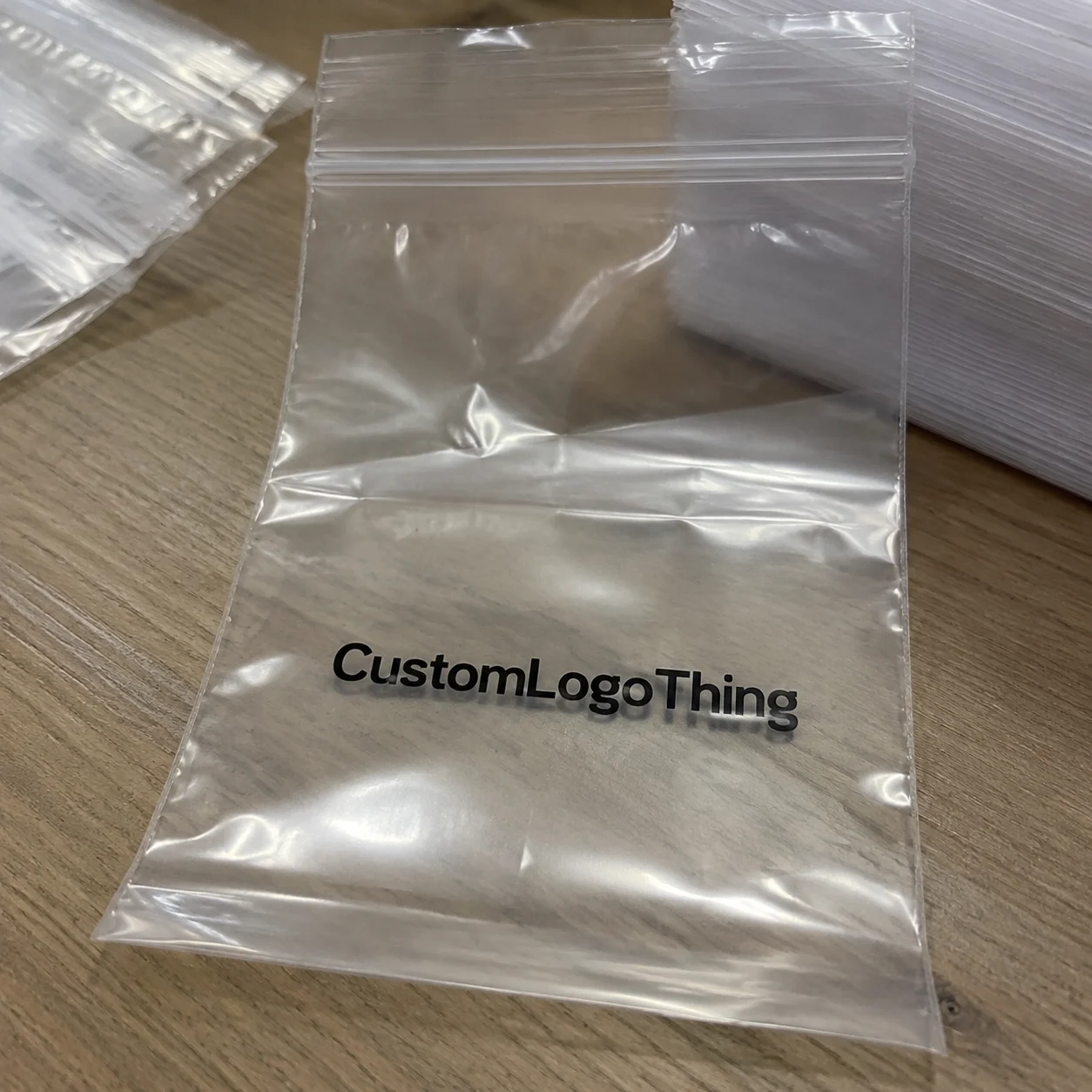
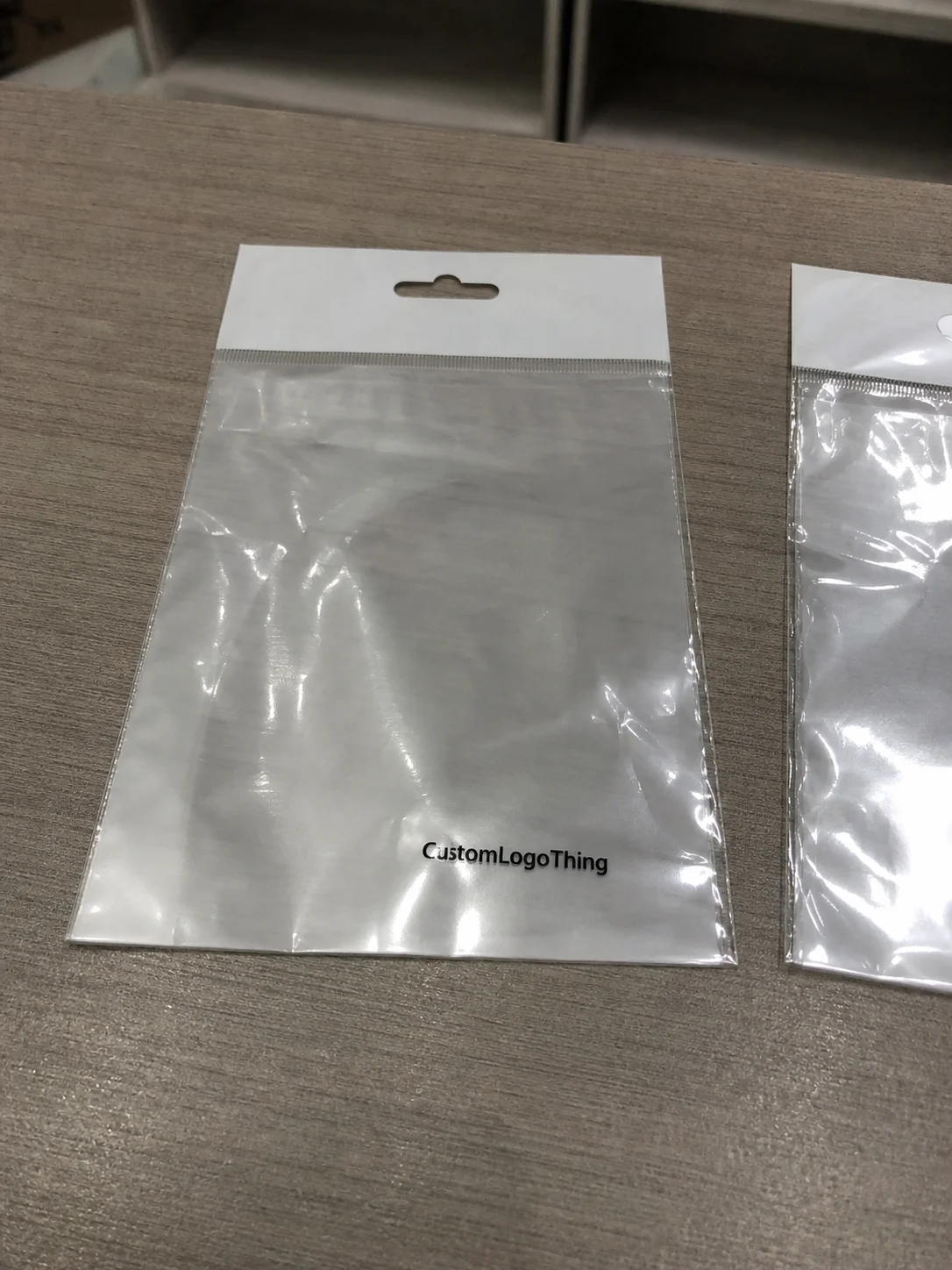
Customization options deserve their own discussion because this is where you can add brand value while still capturing cost savings using lightweight poly mailers. Matte finishes cost the same as standard—no premium. Glossy lamination adds approximately 8-12% to tooling setup costs but creates a more premium visual presentation for high-end unboxing experiences. Full-color flexographic printing up to 8 colors has become remarkably affordable at volume, with setup charges that amortize favorably across orders of 5,000 units or more. Tamper-evident adhesive strips with permanent sealing and tear notches for easy opening should be specified as standard—they're included at no extra charge from most manufacturers, including our own production facilities in Dongguan. If someone tries to charge you extra for a tear notch, walk away. That's just rude.
Pricing Tiers and Minimum Order Quantities
Understanding how poly mailer pricing works at different volume levels helps you make smarter purchasing decisions and avoid over-ordering just to hit a lower price bracket. Here's the structure I've seen work across our client base:
| Quantity Tier | 2.5 Mil Standard (Stock) | 2.5 Mil Standard (Custom) | 3.0 Mil Heavy-Duty |
|---|---|---|---|
| 1,000 units | $0.19/unit | $0.34/unit | $0.24/unit |
| 5,000 units | $0.15/unit | $0.26/unit | $0.19/unit |
| 10,000+ units | $0.12/unit | $0.21/unit | $0.15/unit |
| 50,000+ units | $0.09/unit | $0.17/unit | $0.12/unit |
These prices assume standard sizes (9.5" x 13" or 12" x 15.5") and single-color printing for custom orders. Custom full-color printing costs more upfront but the per-unit price drops significantly once you cross 10,000 units, making it economically viable for growing e-commerce brands.
The MOQ (minimum order quantity) for stock items is typically 1,000 units per size, which allows you to test different dimensions without carrying excessive inventory. Custom printed orders generally require 5,000 units minimum because the setup charges for flexographic printing—a $350-500 tooling fee per color—don't make economic sense below that threshold. Hot-stamp and embossed options require $750-1,200 tooling and push the MOQ to 10,000 units due to the longer print runs needed to justify the press setup time.
Setup charges deserve particular attention because this is where buyers often get surprised. Standard flexographic printing setup runs $350-450 per color, per design. An 8-color full-wrap design carries $2,800-3,600 in setup charges alone before the first mailer is printed. That sounds expensive, and it is. But at 10,000 units, the setup adds only $0.28-0.36 per unit to your total cost—a reasonable investment if you're committed to a brand presence that differentiates your unboxing experience. (Pro tip: if you're doing 8 colors, you probably already know what you're getting into. Respect.)
Freight considerations affect your actual landed cost more than most people realize. Orders under 5,000 pounds typically ship via standard ground freight at $0.35-0.50 per pound within the continental United States. At higher volumes, negotiated LTL rates or full truckload shipping can reduce freight to $0.15-0.25 per pound. For orders shipping to multiple distribution points, consider split shipments from regional warehouse locations in Chicago, Dallas, or Los Angeles to optimize freight costs across your fulfillment network. Splitting a 50,000-unit order across three regional points can reduce average freight cost by $0.03-0.05 per unit.
Production Process and Delivery Timeline
One of the most common questions I get from clients switching suppliers is "how long until I actually receive my order?" I understand why this matters—running out of packaging materials while waiting for shipment creates real operational problems. Let me walk you through what realistic timelines look like for both stock and custom orders.
Stock item fulfillment from our primary warehouse in Walnut, California operates on a straightforward schedule: once we confirm your payment and shipping address, stock mailers in standard sizes ship within 5-7 business days. This covers the picking, packing, and carrier booking process. Continental US delivery typically adds 3-5 days via standard ground, putting your total timeline at 8-12 business days from order confirmation to arrival at your dock. For businesses in major metropolitan areas served by regional carriers like the Seattle, Portland, and San Francisco markets, this can be as quick as 6-9 days total.
Custom printed orders require a longer runway because the production process involves more steps. After you approve your artwork and finalize specifications, the typical timeline breaks down as follows: proof approval takes 2-3 business days on your end (responding quickly to proof requests keeps this on track—I cannot stress this enough), production scheduling adds 3-4 business days, printing and finishing runs 4-6 business days at our Dongguan facility, and quality control with packaging adds 1-2 business days. That puts total production at 10-14 business days from proof approval to shipment.
Quality control checkpoints before shipment are non-negotiable in my book. Every custom order from our facilities goes through a three-point inspection process: raw material verification to confirm the correct gauge and resin formulation, in-line production sampling at 500-unit intervals, and final random inspection of finished goods at 2% of total order volume. We reject any batch showing dimensional variance over ±3% or print registration errors exceeding 1/32" tolerance. This protects you from receiving inventory that doesn't meet specifications. I've seen competitors ship batches with 10% dimensional variance and tell clients "within acceptable range." That's garbage. ±3% is the standard. Hold your suppliers to it.
Rush orders are available for clients with tight timelines, typically compressing the production window to 7-9 business days at a 15-20% premium on both material costs and setup charges. I only recommend this option when you have a genuine operational emergency—missed deadlines and expedited freight charges usually cost more than the rush premium. If you know your seasonal peaks in advance, planning your orders 4-6 weeks ahead of need eliminates the need for rush charges entirely. (Pro tip: Black Friday is in November every single year. Plan accordingly.)
Why Work With Us for Your Poly Mailer Supply
After two decades in this industry, I've seen the full spectrum of packaging suppliers. Some offer low prices but with QC problems that create headaches. Others deliver quality but with pricing structures that obscure the real cost. What I've built at Custom Logo Things is a supply chain operation that combines both without the compromises. Is it perfect? No. But we deliver what we promise, and that puts us ahead of most of the competition.
Our direct manufacturer relationships with production facilities in Shenzhen, Dongguan, and Qingdao give us pricing leverage that middleman distributors can't match. When you order through us, you're buying from a company that owns part of the production capacity, not one that's been marked up through multiple distribution layers. This matters for cost savings using lightweight poly mailers because we can pass production efficiency directly to you without sacrificing quality control.
In-house design support with no software lock-in means you don't need to be a graphic designer to get professional results. Our team works in Adobe Creative Suite, but we also accept files in CorelDRAW, Illustrator, freehand formats, and we'll even work from rough sketches and brand guidelines. I've sat with clients' marketing teams and translated "we want something That Feels Premium but not too corporate" into print-ready artwork in a single design session. (The actual quote from one client was "make it pop but also be chill." We delivered. That's what matters.) That collaborative approach to design is included in our standard service offering—no extra charges for file preparation, color matching, or proof revisions within reasonable scope.
Flexible reordering has become one of our most appreciated features. When you order Custom Printed Mailers with specific specs, those specs stay in our system for 24 months. Subsequent orders of the same specifications come with same pricing, same quality standards, and no surprises. I've heard too many horror stories from clients who switched suppliers only to discover that their "equivalent" mailers used different resin formulations, gauge tolerances, or print registration that created inconsistency on their receiving dock. Our clients know that when they reorder, they're getting exactly what they ordered the first time. Every single time.
For businesses evaluating whether we're the right fit, I always recommend starting with stock samples. You can request complimentary stock samples in standard sizes and gauges—test them with your actual products, run them through your fulfillment process, see how they perform. When you're ready for custom specifications, we can produce samples at your target specs for a nominal material fee starting at $25-50 depending on complexity, which gets credited toward your first order over 5,000 units. That reduces your risk to essentially zero while giving you real-world validation before committing to volume production. Zero risk. Real results. That's the deal.
How Much Can I Save by Switching to Lightweight Poly Mailers?
Most e-commerce operations see 15-30% reduction in per-unit material cost when transitioning from standard 3.5+ mil mailers to optimized lightweight alternatives in the 2.5-3.0 mil range. A typical client switching from 3.5 mil to 2.5 mil at 5,000 units monthly saves $200-400 on materials alone. Carrier savings depend on your shipping volume and current DIM weight charges—businesses shipping 5,000 packages monthly at 2 ounce weight savings per package could save $600-1,200 annually in postage alone (based on UPS Ground $0.79/lb rates). The total savings picture varies significantly based on your current carrier contracts, package dimensions, and shipping volume, but in my experience, clients typically see payback on their first order within 60-90 days.
Frequently Asked Questions
Are lightweight poly mailers durable enough for heavy products?
Yes, when the correct gauge is matched to your product weight and handling requirements. Items under 5 pounds perform well with 2.5-3.0 mil standard mailers for most applications. Heavier products over 5 pounds, or items with sharp corners, decorative hardware, or other puncture-generating features, should use 3.5 mil reinforced options with puncture-resistant enhanced formulations rated at 5.0-6.5 pounds puncture resistance per ASTM D5427 testing. We can provide material specifications and puncture resistance data sheets to help you select the right gauge for your specific products.
What customization options are available for lightweight poly mailers?
Full-color flexographic printing is available up to 8 colors on standard runs with setup charges that amortize favorably at 5,000+ unit quantities ($350-450 per color setup). Hot-stamp and embossed logos create premium unboxing experiences but carry higher tooling costs ($750-1,200) and minimum quantities of 10,000 units. Tamper-evident adhesive strips, tear notches for easy opening, and vent holes for moisture management are included at no extra charge on all standard and custom orders. Matte, glossy, and soft-touch lamination finishes are all available to match your brand positioning.
What is the typical lead time for custom printed lightweight poly mailers?
Stock items ship within 5-7 business days after order confirmation. Custom printed orders require 10-14 business days from proof approval to shipment, including artwork proof review and approval time on your end. Rush orders are available for 7-9 day turnaround at a 15-20% premium on both material costs and setup charges, though I'd only recommend this for genuine operational emergencies. Planning orders 4-6 weeks ahead of your needs eliminates rush charges entirely and ensures your inventory arrives well before you deplete previous stock.
Can I get samples before placing a full order?
Absolutely. Complimentary stock samples are available in standard sizes and gauges—you can request these directly through your account representative or our website inquiry form. Custom specification samples require a nominal material fee starting at $25-50 depending on complexity, which gets credited toward your first order over 5,000 units. I'd encourage any client evaluating our products to request samples first; seeing and handling the actual materials gives you confidence that the specifications will meet your operational requirements.
If you're serious about cost savings using lightweight poly mailers, the first step is straightforward: pull your last three months of shipping data, calculate your average package weight and dimensions, and compare your current material costs against what optimized lightweight mailers would cost at your volume. I've walked dozens of clients through this analysis, and the savings are almost always there waiting to be captured. Whether you're shipping 500 packages monthly or 50,000, there's a lightweight poly mailer solution that improves your bottom line without sacrificing the protection your products need during transit. Browse our poly mailer options or reach out to speak with someone from our team about your specific requirements. We won't waste your time with jargon you don't understand or features you don't need. Just honest talk about what works for your situation.