If you need to create Custom Stickers online, the hard part is usually not finding a supplier. The harder part is choosing a sticker construction that fits the job, the surface, and the budget without creating surprises during proofing or application. A sticker might be a seal for a mailer, a logo for a product box, or a small branded insert, but in every case it is one of the first physical touchpoints a customer notices. If the stock feels flimsy, the cut is rough, or the colors are off, that impression lands fast.
Ordering online gives buyers access to more than a handful of standard options. You can compare kiss-cut sheets, die-cut singles, roll labels, weatherproof vinyl, clear film, and specialty finishes side by side, which matters when the sticker has to support branded packaging, product packaging, or lighter retail packaging programs. The range is useful, but it also means the spec sheet matters more than it would in a simple walk-in print order.
Why custom stickers online can outperform in-house labels
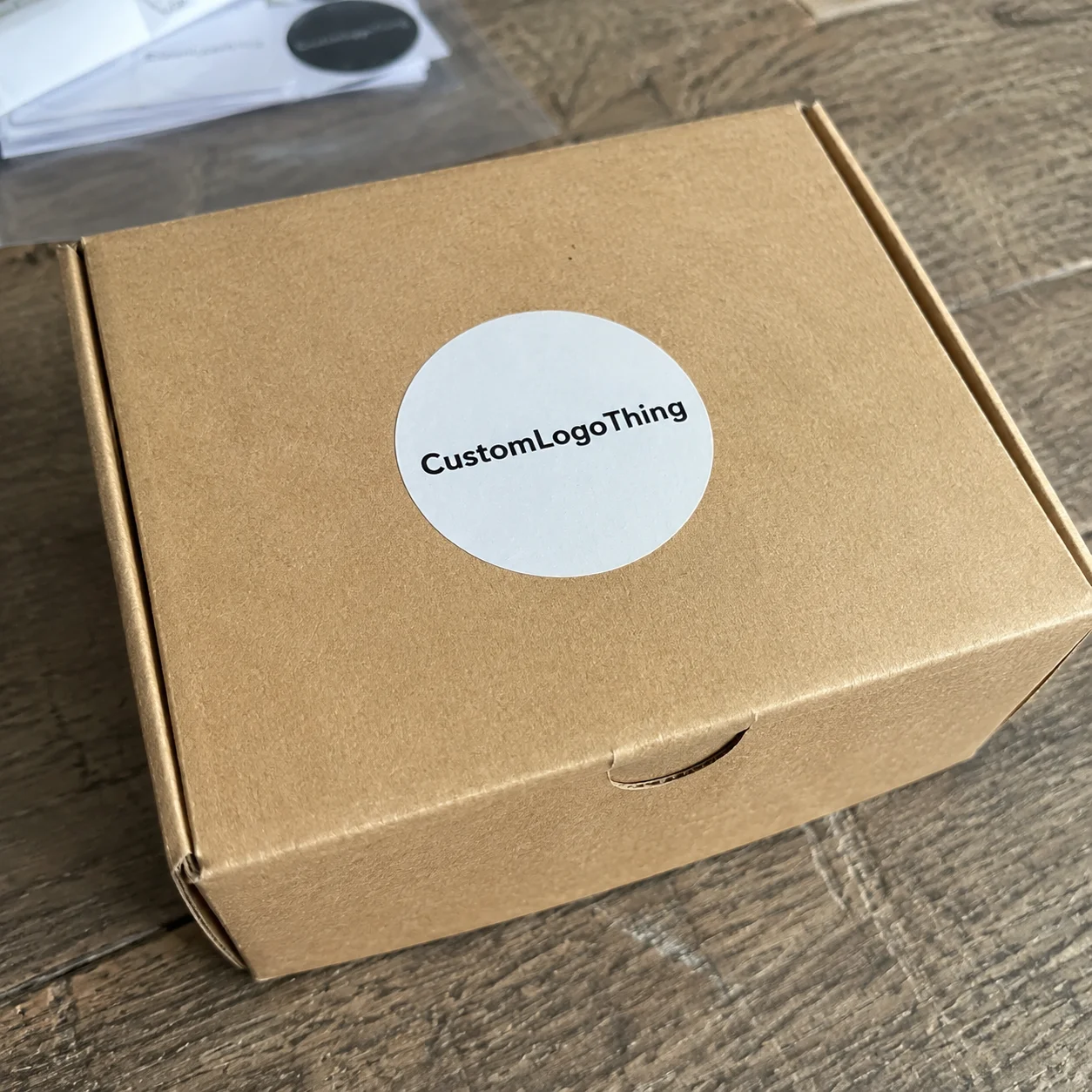
Stickers often do more work than people expect. They may close a pouch, identify a SKU, carry a campaign message, or make a plain carton feel finished. That sounds simple until a team tries to print labels in-house and runs into the usual problems: inconsistent cut lines, drift in color from one batch to the next, or adhesive that behaves differently depending on the surface.
Online ordering usually gives buyers a wider production menu. Die-cut stickers offer a premium, shaped edge that follows the artwork. Kiss-cut stickers are easier to peel because the liner stays intact around the design. Sheeted labels work well for hand application and office packing. Roll labels make more sense when volume goes up or application speed matters. That range is useful for packaging design, because shape and finish can support package branding just as much as the logo itself.
There is also a practical pricing advantage. Online systems usually show how quantity, material, and finish change the cost before an order is placed, which is helpful when comparing sticker add-ons with custom printed boxes or other packaging elements. The key is not to chase the cheapest unit price. It is to pick a material and finish that will still look intentional after shipping, handling, and storage.
Common sticker formats include:
- Kiss-cut for easy peel-and-apply handling
- Die-cut for fully custom shapes that follow the artwork
- Sheeted labels for manual packing lines or office use
- Roll labels for speed and higher-volume application
- Gloss, matte, and laminated finishes for different visual and durability needs
“A sticker is small, but the decision behind it is not small. Material choice, adhesive strength, and cut accuracy all show up in the customer’s hand.”
How the online ordering process works
The online ordering flow is usually straightforward: choose size, shape, material, finish, and quantity; upload artwork; review a proof; then approve production. The best ordering systems make that sequence easy to follow without hiding the technical details that matter. A buyer should be able to see whether the sticker uses vinyl or paper, whether the adhesive is permanent or removable, and whether the finish is gloss, matte, or laminated.
Automation helps with speed, but it does not replace prepress judgment. Software can calculate dimensions, yet it will not always catch a logo set too close to the trim, a border too thin to survive cutting, or a CMYK conversion that flattens a brand color. Proof review is where those problems get caught before they become waste.
Instant-quote tools are useful for standard shapes and common materials. Custom quotes are better when the order includes unusual dimensions, clear film, metallic stock, multiple SKUs, or print requirements that push beyond the default product menu. If you are managing Custom Labels & Tags alongside packaging components, a custom quote usually gives a more realistic picture of the total spend and the actual lead time.
A clean order typically follows this sequence:
- Product selection
- Artwork upload
- Spec review
- Proof generation
- Customer approval
- Production and shipping
This process matters because sticker orders fail in small, annoying ways. A cut line can clip a logo. A finish can arrive shinier or flatter than expected. A quantity can be right but the application method wrong for the customer’s workflow. For buyers balancing stickers with Custom Packaging Products, the proof stage is the last chance to make sure the whole package still holds together.
| Order path | Best for | Typical advantage | Tradeoff |
|---|---|---|---|
| Instant quote | Standard sizes and shapes | Fast pricing and easy reorders | Less flexible for specialty specs |
| Custom quote | Unique materials or complex orders | Better fit for unusual requirements | Takes longer to confirm |
| Manual prepress review | Brand-critical packaging runs | More protection against file issues | Adds a proofing step |
Cost, pricing, and MOQ factors that change the quote
Sticker pricing turns on several variables, and size is only one of them. Shape complexity, substrate, finish, quantity, and ink coverage all affect the quote. A simple round label with light artwork is a different production job from a custom die-cut holographic sticker with full coverage and a protective laminate.
Volume changes the economics quickly. Setup and proofing costs get spread across more units as quantity rises, so the unit price usually drops. A run of 250 pieces may look affordable at first glance, but the per-piece cost can be much higher than a 5,000-piece order. That does not mean small orders are bad. It just means the fixed costs matter more when the run is short.
MOQ, or minimum order quantity, is another area where buyers need to read carefully. A very low MOQ can look appealing, but the unit price may climb enough that the order stops making sense for recurring packaging. A higher MOQ can be the better buy if the stickers will be used repeatedly for seasonal promos, product labels, or a retail line that will be reordered.
For planning purposes, the budget usually falls into a few practical tiers:
| Sticker type | Budget level | What you get | Typical use case |
|---|---|---|---|
| Paper sheet labels | Lowest | Good for dry indoor use | Short-term promotions, office packs |
| Standard vinyl | Mid-range | Better durability and moisture resistance | Product stickers, mailers, boxes |
| Laminated vinyl | Higher | Extra abrasion and handling protection | Retail packaging, bottles, shipping |
| Specialty film or clear stock | Highest | Distinct look with premium finish | Luxury branding, limited editions |
The question is rarely “What is cheapest?” The better question is “What survives the real use case and still looks like the brand meant it?” A sticker that curls on a refrigerated jar, scratches on a shipping box, or peels during packing is not inexpensive. It becomes reprint cost, labor cost, and time lost.
Choosing the right specs before you create custom stickers online
If you want to create Custom Stickers Online without backtracking later, start with the surface and the job the sticker has to do. Paper is usually fine for dry indoor applications. Vinyl is the safer default for moisture, handling, and longer wear. Clear film can look clean and modern, but it only works if the design has enough contrast to stand out once it is applied. Removable adhesive makes sense for temporary promotions or short-lived inserts. Permanent adhesive is better for packaging that needs to stay put.
Finish changes more than appearance. Gloss reflects more light and can make colors feel brighter. Matte softens the look and reduces glare, which helps on premium packaging where a quieter finish feels more deliberate. Lamination adds another layer of abrasion resistance, and that matters if the sticker will be touched, stacked, or rubbed during transport.
Size and shape deserve real attention. A logo that looks sharp on a monitor can lose clarity if the font is too thin or the line weight too delicate. A custom shape can make the sticker feel more tailored, but only when there is enough edge clearance for the cutter. Leaving breathing room around the trim is not a technical nicety; it is what keeps a slight cut shift from clipping the artwork.
Contrast is just as important as material choice. Dark text on a busy image, or a white logo on a low-opacity clear sticker, can disappear once the piece is applied to bottles, jars, or cartons. If the sticker is part of broader package branding, treat it like a small sign. It has to read quickly, at arm’s length, in real light.
Spec checklist:
- Substrate: paper, vinyl, clear, removable, or weatherproof
- Finish: gloss, matte, or laminated
- Adhesive: permanent or removable
- Shape: standard round, square, or custom die-cut
- Use case: mailer, jar, box seal, promo pack, or retail display
If the sticker will sit on a shipping box, think about abrasion, stack pressure, and handling more than visual texture alone. If it is going on a premium insert, the tactile finish may matter more than outdoor durability. The right answer depends on the environment, not just the catalog page.
Step-by-step production steps for a clean order
Start with the application surface. Measure the area where the sticker will live and define its job before you think about artwork. Is it branding, sealing, promotion, or compliance? A logo sticker on a tissue insert has a different purpose from a label that closes a mailer or identifies a product SKU. That distinction changes size, durability, adhesive choice, and sometimes even the finish.
Artwork prep is where many orders get better or go sideways. Vector files are ideal because they scale cleanly and keep edges crisp. AI, EPS, and SVG are the most reliable formats for production artwork. If only a raster file is available, a high-resolution PNG or JPG can work, but it needs to be sharp at the final print size. As a practical benchmark, 300 dpi at finished size is a sensible target. For cut stickers, include bleed and safe margins so the trim line does not crowd the design.
When the proof arrives, read it like a production document rather than a thumbnail. Check dimensions, quantity, finish, and ship date. Confirm color notes if the brand color is sensitive. Study the cut path, especially on irregular die-cut shapes. A proof displayed at full size should be compared against the actual packaging surface, not just approved because it looks fine on a screen.
That last check catches more mistakes than most people expect. A design that reads well on a monitor can become too small once applied to a jar lid, a narrow tuck flap, or a mailer seal. Proofing is the last cheap place to fix size, spacing, or line weight.
“Approve the proof only when you know what the sticker will look like on the real package, not just in the preview.”
For brands ordering custom printed boxes, labels, and inserts together, consistency matters. Matching sticker color, box print, and internal packaging elements keeps the product experience coherent. It also keeps production notes in one place, which reduces the chance that one spec gets updated while another stays stale.
If sustainability is part of the brief, ask for the actual material documentation. Some papers and films may be available with FSC chain-of-custody support, but those claims should be backed by paperwork, not assumptions. The FSC site is a useful reference point, and the EPA offers broader context on material management.
Timeline, turnaround, and delivery expectations
Turnaround has three pieces: proof time, production time, and shipping time. Buyers often focus on the middle piece and forget the first and last. A simple reorder may move through proofing quickly and into production fast. A first-time custom job with specialty film, multiple versions, or custom cut lines usually takes longer because more review is required.
In many production workflows, proof approval is the real starting line. Once the proof is signed off, a standard sticker run may take roughly 12 to 15 business days before shipping, though that depends on queue length, material availability, and the number of versions in the order. Shipping can add a few more days, especially if the order needs to go to multiple destinations or move by expedited freight.
Delay points are usually predictable:
- Artwork corrections after file review
- Proof revisions due to size or color changes
- Backordered materials or finish options
- Peak-season production queues
- Late approvals from internal stakeholders
If the stickers are tied to a product launch, retail reset, or event kit, build in buffer time. A small delay can ripple into packing, warehousing, and shipping schedules. That is especially true when stickers are part of a larger branded packaging run and one missing component holds up the rest.
Common mistakes that raise cost or delay approval
The most expensive sticker problems are usually not dramatic. They are the quiet ones: low-resolution art, missing bleed, a border that is too thin, or a file that looks fine in a browser but falls apart in production. A design with a border narrower than 1/8 inch can look uneven after trimming, even if the press output is clean.
Another common issue is choosing a finish or adhesive without matching it to the environment. A removable adhesive on a shipping box may peel too early. A paper sticker on a humid product surface may curl. Gloss can make colors pop, but it can also create glare that works against the packaging if the display lighting is bright. The right answer depends on where the sticker lives and how long it has to survive.
Vague quantities create confusion too. “A few hundred” is not enough information. Neither is “whatever hits the best price break.” If you are comparing quotes, give exact counts, note whether the order is a one-time run or a reorder, and include the needed ship date. Clear inputs usually mean fewer revisions and a cleaner proof.
The cheapest-option trap is another familiar one. A low unit price may look smart until a second run is needed because the first batch failed, the adhesive was wrong, or the finish did not suit the surface. Once reprints and wasted labor are added in, the bargain order often stops being a bargain.
The same logic applies across packaging. Whether it is labels, cartons, or inserts, the lowest quote is not always the lowest total cost.
Expert tips for better results and next steps
If the sticker design is new, order a small test run before scaling up. Ten to fifty units can reveal more than a screen preview ever will. You learn whether the color holds on the actual substrate, whether the adhesive behaves on the intended packaging surface, and whether the finished size feels right in the hand.
Keep a spec sheet. Record the size, shape, material, finish, adhesive, color notes, and approved artwork version. The easiest way to make future orders efficient is to remove guesswork from the process. If there are multiple packaging lines, that record also helps keep branding consistent across launches and seasonal changes.
Compare options by use case instead of headline price. A laminated vinyl sticker may cost more than paper, but if it prevents a reorder or looks better on retail packaging, it may be the better spend. The same thinking applies to custom printed boxes and other package branding elements. Cost matters, but the right material for the application matters more.
For buyers ready to create Custom Stickers online, the process is manageable when the inputs are clear: gather artwork, define quantity, choose the substrate, request a quote, and confirm the proof before production starts. The best sticker orders are rarely the flashiest ones. They are the ones that fit the package, survive handling, and look like they were chosen on purpose.
FAQs
How do I create custom stickers online if I only have a logo file?
Start with the best file you have, ideally vector artwork such as AI, EPS, or SVG. If you only have a PNG or JPG, make sure it is large enough for the final sticker size and not pixelated. Once the artwork is usable, the production team can usually help place it into the right size, shape, and finish.
What affects the price most when I create custom stickers online?
Size, quantity, material, finish, and shape complexity usually drive price the most. Smaller runs tend to cost more per sticker because setup is spread across fewer units. Specialty choices such as clear film, laminate, or custom die-cuts typically raise the quote.
How long does it usually take to create custom stickers online and receive them?
Total timing depends on proof approval, production queue, and shipping speed. Simple reorders often move faster than first-time jobs with custom shapes, multiple versions, or file corrections. If the stickers are tied to an event or product launch, allow extra buffer time.
What file format is best for custom sticker orders?
Vector files are best because they keep edges crisp at any size. High-resolution PNGs can also work for simple designs when vector files are not available. Include bleed and safe margins so the final cut stays clean and centered.
Should I choose matte, gloss, or laminated stickers?
Matte works well for a softer, lower-glare look. Gloss adds shine and makes colors appear more vivid. Laminated stickers are usually the better choice when durability, handling, or moisture resistance matters.


