Beanies have a habit of disappearing right when a coffee shop needs them most: cold mornings, packed registers, gift baskets on the counter, and new staff asking for winter gear before a rush. A practical Cuffed Beanies Bulk Reorder Planning guide for coffee shops keeps that from becoming a last-minute scramble. The goal is simple enough: protect retail revenue, keep staff uniforms consistent, and cover seasonal gifting without opening the last carton before the next order is even quoted.
Cuffed Beanies Bulk Reorder Planning Guide for Coffee Shops
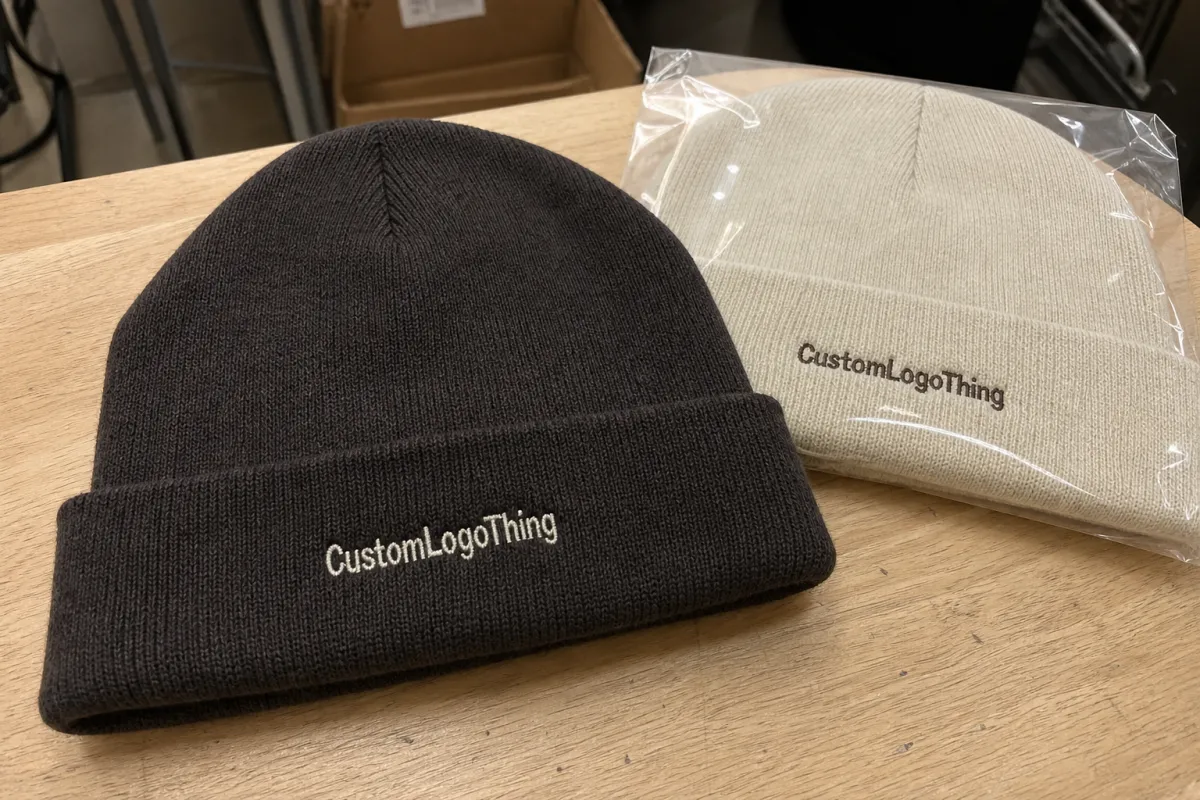
Cuffed beanies are small, visible, and easy to merchandise. They sit cleanly near the register, ship well for online merch drops, fit into employee kits, and work as loyalty rewards without taking over the stockroom. A carton of beanies takes far less space than outerwear, yet the logo stays in plain view every time a customer wears one on a walk, commute, market run, or weekend coffee stop.
The harder buying decision is rarely whether beanies are useful. Most coffee shops already know they are. The real work is deciding how many to reorder, when to approve artwork, and which specifications keep the logo looking clean after regular wear. That means thinking beyond the first order and keeping a repeatable record of decoration size, thread colors, cuff height, beanie color, packing needs, and delivery timing.
Custom Logo Things helps coffee shops move from rough guesses into a workable reorder plan based on quantity, decoration method, color, timeline, and budget. Some shops only need a 72-piece staff and merch top-up. Others need 300 to 1,000 pieces for multi-location winter retail, wholesale coffee partners, or seasonal gift programs. The best number depends on sell-through, reorder lead time, and the amount of safety stock you want before the next cold snap.
Practical rule: do not wait until the last case is opened. Start the reorder conversation while you still have enough beanies to cover proofing, production, quality control, and transit.
How Cuffed Beanies Fit Coffee Shop Merch, Uniforms, and Gift Bundles
Coffee shops use cuffed beanies in more ways than many first-time buyers expect. Staff winter wear is the obvious use, especially for drive-through windows, outdoor lines, farmers market booths, delivery runs, and early-morning receiving. Retail merch usually comes next. A clean embroidered beanie with a strong shop mark can sit beside whole-bean bags, mugs, enamel pins, and gift cards without looking like filler.
Seasonal drink launches create natural demand. A limited latte menu, patio closure, grand opening, roaster subscription box, or corporate coffee catering kit can all justify a fresh beanie run. For college towns, move-in weekends and parent weekends may outperform traditional holiday windows. For neighborhood shops, gift basket planning often begins before customers are ready to buy, which means the beanies need to be produced before the shelves start looking festive.
The cuff matters. It gives embroidery a stable double-layer surface, helps the logo sit in a consistent front-facing position, and makes the beanie feel more substantial than a thin uncuffed cap. On a typical 2.5-inch to 3-inch cuff, a compact logo can be placed with enough breathing room so it does not sag below the fold or stretch too wide across the curved front.
From a buyer’s point of view, the cleanest plan separates the reorder into four buckets: employee allocation, sell-through inventory, promotional reserves, and replacement stock. That simple split prevents common problems. You avoid changing yarn colors mid-season, switching decoration size between batches, or ordering too few pieces to reach a better unit price. Reorder planning should make those allocations visible before anyone approves the purchase order.
Beanie Materials, Knit Weight, Cuff Height, and Logo Placement
Most coffee shop programs use one-size adult cuffed beanies because stretch knit construction simplifies staff distribution. No size chart. No small, medium, and large forecast. That matters when baristas, shift leads, roasters, and managers are all pulling from the same shelf. A good acrylic knit usually covers the broadest range of wearers while holding shape through regular use.
Acrylic knit remains popular because it is durable, cost-efficient, and available in reliable colors such as black, charcoal, navy, oatmeal, forest green, and espresso brown. Acrylic-poly blends can feel softer in the hand, which helps for retail merch because customers often touch the product before buying. Recycled yarn options may be available depending on the blank style and supplier inventory, and heavier rib knits can give the beanie a more structured retail feel.
For sustainability claims, ask for documentation rather than assuming a recycled label covers the full product. Fiber content, recycled percentage, and packaging claims are separate issues. The FSC is a useful reference for responsibly sourced paper packaging, while yarn claims need product-specific support from the blank or material supplier.
Cuff height affects more than appearance. A taller cuff gives more decoration space, but a thick fold can require adjustments in hooping, backing, and stitch density. Fine lettering may close up if the embroidery is too small, especially on ribbed knit. A firm cuff helps small lettering stay legible, while a loose, stretchy cuff can distort a mark after wear. This is one of the details buyers often underestimate because the flat proof looks cleaner than the finished beanie will look on a head.
Decoration choice should match the logo. Flat embroidery works well for bold marks, short wordmarks, and simple icons. Patch applications add texture and can help a badge-style design feel more retail-ready. Woven labels are useful for minimalist brands, small marks, or artwork with finer detail that would not stitch cleanly at a 2-inch width. The decoration should sit high enough on the cuff to remain visible, but not so high that it gets lost near the top fold.
Before approving a bulk reorder, look at how the beanie sits on an actual head form or wearer. A 3.5-inch-wide logo may look fine on a flat proof and too wide across the curved front. A tiny tagline may look clever on screen and unreadable in thread. A production proof or detailed digital proof helps catch those issues before the full run starts.
Specifications to Lock Before You Place a Reorder
Reorders are easiest when the original specs are not treated like tribal knowledge. Confirm the beanie color, yarn type, cuff style, logo file, decoration method, thread colors, stitch size, patch dimensions, quantity, delivery address, and in-hands date before asking for a final quote. If the first run sold well, the goal is usually to repeat the winning formula, not accidentally create a slightly different version.
Color continuity can be tricky. A warm oatmeal from one blank supplier may not match another supplier’s oatmeal, and charcoal can shift from cool gray to brown-gray depending on yarn lot and style. Forest green and espresso brown are especially sensitive because small shade changes become visible beside aprons, menu boards, and packaging. If you have a prior order number, approved proof, final production photo, or physical sample, keep it with the reorder record.
- Order history: prior order number, quantity, ship date, and reorder contact.
- Artwork record: approved proof, logo dimensions, thread colors, and digitized file notes.
- Product specs: blank style, beanie color, cuff height, yarn content, and decoration placement.
- Sales notes: monthly sell-through, staff feedback, fastest-moving colors, and returns or damage.
- Operational details: delivery ZIP code, required in-hands date, and internal approver.
Vector files are preferred because they give the digitizing team clean edges and scalable artwork. If you only have a high-resolution PNG or PDF, send it for review rather than guessing. A production team can usually advise whether the file is usable or whether the logo needs to be rebuilt. Fine script, tiny taglines, thin coffee steam lines, and small established-date text may need simplification, especially on a knit cuff rather than a flat printed card.
Keep notes from the last run where the buyer, manager, or merch lead can find them. Did black sell twice as fast as cream? Did staff prefer a softer blend? Did the logo sit too low on the fold? These are not minor details. They are the difference between a controlled reorder and a repeat of avoidable mistakes.
Cost, Pricing, MOQ, and Unit Cost Factors for Bulk Reorders
Bulk beanie pricing is driven by the base beanie style, order quantity, decoration method, stitch count or patch type, number of logo colors, packaging requests, shipping destination, and production speed. MOQ, or minimum order quantity, exists because setup, digitizing, machine time, trimming, quality checks, and packing must be spread across enough pieces to make the run efficient. A 36-piece emergency order can be possible in some cases, but it will rarely carry the same unit economics as 144 or 288 pieces.
Reorders often reduce friction because approved artwork, thread choices, and specifications may already be on file. That does not guarantee identical pricing forever. Blank costs, freight rates, supplier availability, quantity, rush timing, and decoration changes can all move the final number. Compare a few quantity breaks rather than quoting only the smallest amount.
| Reorder Quantity | Typical Use Case | Unit Cost Pattern | Buyer Note |
|---|---|---|---|
| 72-96 pieces | Small staff refresh or limited merch top-up | Higher per unit because setup is spread across fewer beanies | Good for cautious testing, weaker for retail margin |
| 144-288 pieces | Single busy shop or modest multi-location reorder | Often a stronger balance of cash flow and unit cost | Useful for staff, retail, and a small promotional reserve |
| 500-1,000 pieces | Seasonal merch program, gift bundles, or several locations | Lower unit cost when blank availability and production time support it | Best when sell-through history is known and storage is available |
As a working range, simple embroidered cuffed beanies in bulk may land around $6.50-$12.00 per unit depending on style, quantity, logo complexity, and packing. Patch beanies can run higher if the patch has a custom shape, specialty materials, or extra sewing time. Treat those numbers as planning ranges, not a final quote, because decoration size and order speed can change the math quickly.
Retail pricing needs the same discipline. A beanie that costs $8.25 landed may look profitable at $18, but the margin changes if you discount gift bundles, comp pieces for staff, or absorb shipping into online orders. Coffee shops should also account for dead stock in slow colors. Two strong colorways often beat five colorways that split demand and complicate reorders.
Custom Logo Things can help coffee shops choose the quantity that matches the actual reorder cycle instead of pushing unnecessary inventory into a cramped back room. If your shop has a predictable 40-piece monthly sell-through during cold weather, a 288-piece reorder may make more sense than three small reorders that each carry setup pressure and shipping cost. For broader replenishment planning, the Wholesale Programs page is a good starting point.
Production Process, Lead Time, and Reorder Timeline
A clean reorder follows a clear path: spec review, quote, artwork check, digital proof or production proof, approval, material allocation, decoration setup, production, quality control, packing, and shipping. Lead time should be counted from proof approval, not from the first inquiry. Production cannot move cleanly until the logo size, colors, quantity, and shipping details are confirmed.
For many custom embroidered beanie reorders, a practical planning window is often 10-20 business days from final proof approval, depending on quantity, blank availability, decoration method, and seasonal production load. Larger runs, custom patches, split shipments, or special packaging can require more time. Transit adds another layer, especially during winter weather or heavy parcel volume.
Embroidery on knit goods deserves careful setup. Hoops, backing, thread tension, and placement checks all affect whether the finished beanie looks retail-ready. Too much tension can pucker the cuff. Too little structure can let the logo wave with the knit. Patch applications need alignment checks and secure stitching around the edge, especially if the beanie will be worn daily by staff rather than purchased as a one-time souvenir.
Quality control should be practical rather than theatrical. Finished beanies need consistent logo placement, clean trimming, secure threads, correct color counts, and cartons labeled in a way that makes sense for the shop. If the order is split by location, labels should identify color, quantity, and destination. If the beanies are going into gift boxes, confirm whether they need individual poly bags, paper bands, size stickers, or no individual packaging at all.
For coffee shops with predictable spikes, build the calendar backward. Pre-fall planning supports cold-weather sales. Early holiday ordering supports gift kits and subscription boxes. A smaller mid-season top-up can cover stronger-than-expected sell-through without forcing a panic reorder. If current inventory drops below safety stock before a quote is even requested, the choices narrow fast.
- Count current inventory while you still have at least one normal sales cycle available.
- Request pricing at two or three quantity breaks.
- Approve the proof before seasonal demand hits its peak.
- Hold safety stock for staff onboarding, damage, and late promotional requests.
- Review actual sell-through after the run so the next reorder is sharper.
External transit testing standards such as ISTA are more relevant to complex shipping programs than a simple local beanie delivery, but the principle still applies: packed goods need to arrive clean, counted, and protected. For beanies, that usually means sensible carton packing, moisture awareness, and clear labeling by color or location.
Common Reorder Mistakes That Raise Cost or Delay Delivery
The most expensive mistake is waiting until staff or retail shelves are already out. Rush timelines can narrow material choices, increase freight cost, and put pressure on proof approval. The finished product may still be good, but the buyer loses flexibility. That is a poor position for a seasonal merch item with known demand.
Casual specification changes create another problem. Switching from embroidery to a patch, changing cuff height, or choosing a near-match beanie color can affect the full branded set. Sometimes the change is smart. Sometimes it makes the new batch look unrelated to the first batch. Review the full visual impact before approving.
Artwork drift is a quiet source of inconsistency. If a shop sends a fresh logo file instead of referencing the previous proof, the logo may be resized, re-digitized, or matched to different thread colors. Even a small change in stitch angle can make a mark feel different on rib knit. Referencing the prior order helps the production team match what worked.
Under-ordering can also raise the effective cost. A very small reorder may carry a higher unit price and still fail to cover staff turnover, damaged pieces, gift requests, or an unexpectedly strong retail weekend. That does not mean every shop should buy 1,000 beanies. It means the reorder quantity should reflect actual demand plus a defined buffer.
Over-ordering has its own risk. Beanies are easier to store than jackets, but a slow colorway still ties up cash and shelf space. Shops with limited storage should be honest about the space available for cartons, especially if coffee, cups, syrups, and retail packaging already compete for the same back-room footprint. A larger order only helps if the product can be stored cleanly and sold within a realistic season.
One more practical point: decide who approves branded merchandise. Owner, marketing manager, roaster, operations lead, or multi-location manager? If that person is not available during proofing, production waits. Name the approver in the reorder plan so a 10-minute decision does not become a 5-day delay.
Next Steps to Build a Coffee Shop Beanie Reorder Plan
Start with a count. How many beanies are on the shelf, how many are reserved for staff, and how many are truly available for sale? Then review the last order quantity and estimate monthly sell-through. If you sold 120 pieces in six cold weeks last season, a 72-piece reorder may only buy a little time. If you sold 40 pieces across a mild season, a smaller top-up may be enough.
List staff needs separately. Include new hires, outdoor roles, market crews, managers, and replacements for worn or lost pieces. Then choose a reorder date and define the earliest acceptable delivery date. That date matters because it tells the production team whether a standard schedule is realistic or whether rush planning needs to be discussed before the quote is finalized.
Before contacting Custom Logo Things, gather the quote inputs: desired quantity, beanie color, logo file, previous order details if available, decoration preference, delivery ZIP code, and in-hands deadline. If you are unsure about artwork or MOQ, review the FAQ or send what you have. A production team can usually work faster with imperfect information than with no information.
Set a safety stock number. For some shops, that means enough beanies to cover one staff onboarding cycle. For others, it means one busy merch weekend, such as 24-48 pieces held back from retail display. The number should be specific, because reordering from a threshold is calmer than reordering from a panic point.
Custom Logo Things can review prior specs, suggest quantity breaks, confirm the decoration approach, and provide a clear quote with production assumptions. The best reorder plan turns a seasonal merch idea into a repeatable buying system: known specs, known timing, cleaner approvals, and fewer surprises when the weather turns.
Frequently Asked Questions
How early should coffee shops start a cuffed beanies bulk reorder?
Start while you still have enough stock to cover normal sales or staff needs during proofing, production, and transit. For seasonal launches or holiday gifting, begin earlier than a standard replenishment order because demand, freight volume, and approval delays can stack up. Count lead time from final proof approval, not from the first quote request.
What MOQ should I expect for custom cuffed beanies for a coffee shop?
MOQ depends on the blank beanie, decoration method, artwork complexity, and whether the order is a new setup or a repeat run. Higher quantities usually lower the unit cost because setup, digitizing, machine time, and packing are spread across more pieces. Ask for a few quantity breaks so you can compare a small top-up against a stronger bulk reorder.
Can we reorder the same embroidered beanies from a previous coffee shop order?
Yes, if the previous specifications, artwork, thread colors, and approved proof are available, the reorder can usually be matched more efficiently. You should still confirm the exact beanie color and style because blank inventory can change over time. Referencing the old order number or sending a photo of the finished beanie helps reduce matching errors.
What logo style works best for coffee shop cuffed beanies in bulk?
Clean marks, bold lettering, simple icons, and compact badge-style logos usually embroider better on knit cuffs than tiny taglines or thin script. If the logo has fine detail, a woven patch or label may preserve more detail than direct embroidery. A production proof or detailed digital proof helps confirm size, placement, and color before the full run begins.
How do we plan quantities for a coffee shop beanie reorder?
Separate the order into staff allocation, retail merch, promotional use, and safety stock instead of choosing one rough total. Review how fast the last batch sold, whether any colors moved faster, and whether new staff or new locations will need inventory. Use the reorder plan to decide whether a small replenishment or a larger bulk order gives the better unit cost and fewer future stockouts.