Cosmetics Paper Bags Quote Checklist for Bulk Buyers
Cosmetics Paper Bags Quote Checklist: Stop Paying for Vague Specs
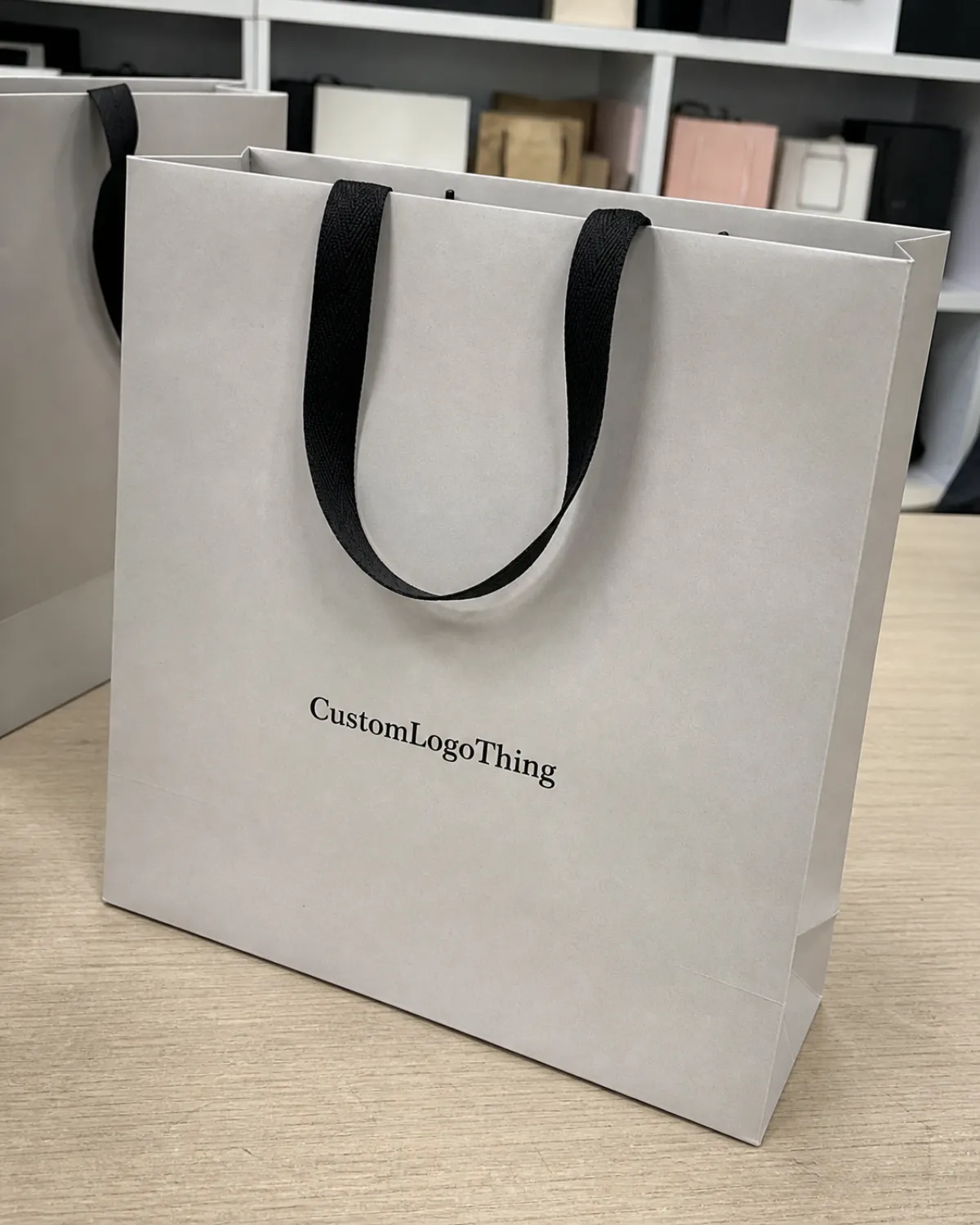
A beauty brand asks three suppliers for “nice paper bags” and gets three cheap-looking quotes. Then handle type, paper weight, lamination, freight, and color matching appear later like surprise guests nobody invited. A Cosmetics Paper Bags quote checklist stops that nonsense before it burns time and budget.
The lowest quote is often just the least complete quote. Shocking, I know. One supplier may price a 180gsm kraft bag with twisted paper handles. Another may quote 250gsm art paper, matte lamination, reinforced top fold, and cotton rope handles. Same “paper bag” label. Completely different product.
For cosmetics, the bag is not just a carrier. It sits on a retail counter, travels home with glass bottles, appears in unboxing photos, and quietly tells shoppers what price point your brand thinks it owns. A flimsy bag can make a $68 serum feel like it came from a clearance bin.
A clean quote needs the same structure from every supplier: size, gusset, material, GSM, print method, finish, handle, quantity, packing method, delivery terms, and production timeline. Miss one, and comparison turns into apples versus tissue paper.
This guide is built for skincare brands, makeup lines, beauty retailers, spa chains, launch kit teams, influencer mailer prep groups, and distributors buying branded retail bags in bulk. The goal is not mood boards. The goal is a complete quote you can approve, compare, and move into production without five rounds of avoidable questions.
Buyer reality: if your quote request says “premium paper bag” but does not name size, paper weight, handle type, finish, and delivery location, you are not requesting a quote. You are requesting a guess.
Bag Styles That Actually Work for Cosmetics Retail
Cosmetics packaging is often boxy, glossy, heavy for its size, and irritatingly unforgiving. A lipstick sample and a glass moisturizer jar do not need the same bag. Start with the bag format before debating foil stamping or ribbon color.
| Bag Style | Best Use | Typical Buyer Notes |
|---|---|---|
| Flat paper bag | Samples, sachets, lip liners, small promo inserts | Lower cost, limited depth, not ideal for rigid boxes |
| Square-bottom retail bag | Checkout bags for boxed serums, cleansers, jars, palettes | Most practical bulk option for beauty retail counters |
| Rope-handle boutique bag | Premium skincare, fragrance, spa retail, gift purchases | Higher perceived value, higher unit cost, better hand feel |
| Laminated gift bag | Sets, bundles, seasonal promotions, influencer kits | Better structure and print pop, but recycling claims need care |
Small bags usually fit lipsticks, brow pencils, sample sachets, travel-size skincare, and one or two boxed items. Medium bags work for cleansers, palettes, boxed serums, candles, and jars. Large bags are for gift sets, holiday bundles, multi-item purchases, or retail promotions where the bag needs to carry volume without looking stuffed.
Gusset depth gets forgotten all the time. Big mistake. Cosmetics cartons are rarely flat. A bag may look wide enough on a spec sheet, but a 70mm side gusset will struggle if the product box is 90mm deep. Ask suppliers to quote length, width, and gusset clearly, such as 220 x 100 x 280mm.
Handle choice affects cost, strength, and the brand impression. Twisted paper handles are economical and work well for standard retail bags. Cotton rope feels more boutique and supports heavier cosmetics better when attached properly. Ribbon handles signal gifting, though they are not always the strongest choice. Die-cut handles look clean but suit short-use bags and lighter fills.
Do not ask for “strong handles.” Ask for load capacity based on actual product weight. A bag carrying three lip liners might only need 0.5kg capacity. A bag carrying two glass skincare bottles, a jar, and a rigid gift box may need 2kg or more. Optimistic vibes are not a structural specification.
Material, Finish, and Print Specs to Lock Before Quoting
The material line in your cosmetics paper bags quote checklist should never say only “paper.” That tells a supplier almost nothing. White kraft, brown kraft, C1S art paper, and textured specialty papers behave differently in print, folding, finishing, price, and sustainability claims.
White kraft is common for clean beauty branding because it gives decent brightness while keeping a natural paper feel. Brown kraft works for organic, refill, apothecary, or eco-positioned lines, but colors print duller on it. Art paper gives smoother, sharper graphics and suits high-coverage artwork, gradients, and premium retail bags. Textured papers can look beautiful for boutique launches, but MOQ and lead time often rise.
Paper weight needs a number. Not “thick.” Not “luxury.” Use GSM. Lightweight sample bags may sit around 120-150gsm. Standard Retail Paper Bags often run 170-210gsm. Premium cosmetics bags may use 230-300gsm paper, especially with lamination, rope handles, or bottom inserts. Heavy stock gives structure, but it also raises material cost and shipping weight.
Finish choices create tradeoffs. Matte lamination gives a soft, luxury feel and can calm down bright colors. Gloss lamination makes color more vivid and resists scuffing better, but it can look too shiny for minimalist skincare. Spot UV highlights a logo or pattern. Foil stamping adds metallic detail. Embossing adds texture. No-lamination kraft can support a more recyclable direction, depending on inks, handles, adhesives, and local recycling rules.
- CMYK printing: best for full-color artwork, gradients, product illustrations, and photographic graphics.
- Pantone spot color: better for strict brand color matching, especially logos and signature brand shades.
- Foil stamping: useful for gold, silver, rose gold, holographic, or metallic accents that ink cannot truly match.
- Single-color printing: a strong budget choice for kraft bags, launch runs, and clean beauty brands.
Structural add-ons deserve their own quote line. Reinforced top folds improve handle strength. Cardboard bottom inserts help bags carry jars and boxed sets. Handle patches reduce tearing at stress points. Hang tags can add campaign detail without changing the bag print. These extras cost money, yes. So does a broken handle at checkout.
If you plan to claim FSC sourcing, ask for documentation before production. The Forest Stewardship Council explains chain-of-custody expectations, and suppliers should be able to confirm what they can actually certify. A logo on a mockup is not proof.
Pricing, MOQ, and Unit Cost Details Buyers Should Ask For
Pricing is where vague quotes become expensive. Bag size, paper grade, GSM, handle type, print coverage, number of colors, lamination, foil, embossing, order quantity, packing method, and delivery destination all push the final number around.
As a rough buying range, basic Custom Printed Kraft paper bags can land around $0.18-$0.45 per unit at 5,000 pieces, depending on size, paper weight, and print coverage. Mid-range laminated cosmetics bags with better structure may sit closer to $0.45-$0.95 per unit. Premium boutique bags with rope handles, foil stamping, heavy art paper, and bottom inserts can run $0.90-$2.25+ per unit. These are planning ranges, not a universal price list. Freight, duties, and custom specs can change the math fast.
Ask for quantity breaks. Always. A single quantity quote hides the curve. Request 500, 1,000, 3,000, 5,000, and 10,000 pieces if your forecast allows it. Sometimes moving from 3,000 to 5,000 lowers the unit cost enough to justify the larger run. Sometimes it just fills your storage room with bags you will resent. Cash flow and campaign timing still matter.
| Quote Option | Likely Spec | Typical Unit Range | Best Fit |
|---|---|---|---|
| Budget retail | 170-200gsm kraft, 1-color print, twisted paper handle | $0.18-$0.45 | Pop-ups, sample sales, basic checkout use |
| Mid-range beauty | 200-250gsm art paper, CMYK or Pantone, matte lamination | $0.45-$0.95 | Skincare retail, salons, standard branded shopping bags |
| Premium boutique | 250-300gsm art paper, rope handle, foil or embossing | $0.90-$2.25+ | Gift sets, luxury launches, fragrance, spa retail |
MOQ depends on the build. Stock-size printed bags often have lower minimums because the structure already exists. Fully custom dimensions, specialty paper, foil stamping, embossing, custom ribbon, or unusual handles can push MOQ higher. A supplier may offer 500 pieces for a stock-size kraft bag but require 2,000-5,000 pieces for a custom laminated boutique bag.
Hidden gaps are where “cheap” quotes get cute. Ask whether pricing includes plate fees, artwork setup, sample fees, digital proofing, color proof charges, inner carton requirements, export carton specs, duties, local delivery, and rush fees. If freight is not included, ask for estimated carton count, carton size, gross weight, and shipping method.
Compare total landed cost, not only unit cost. A $0.38 bag with messy freight and weak packing can beat up your margin harder than a $0.44 bag with cleaner delivery terms. Put that in your cosmetics paper bags quote checklist and save yourself the spreadsheet gymnastics later.
Process and Timeline From Quote Request to Finished Bags
The buying process is predictable when the spec is clear: quote request, spec confirmation, artwork review, digital proof, sample or pre-production proof if needed, deposit, mass production, quality inspection, packing, shipping, and final delivery. Skip steps and risk rises. Simple.
Before asking for a quote, prepare the basics: bag dimensions, target quantity, preferred paper type, GSM range, handle style, print colors, finish, delivery destination, in-hands deadline, logo files, and estimated product weight. Missing details slow everything down. Every time.
Sample choices should match risk. A blank structural sample checks size, gusset, and strength. A digital proof checks logo placement and layout. A printed pre-production sample checks color, finish, foil, lamination, and final appearance. If the bag is for a retail rollout, investor launch, trade show, or influencer kit, a sample is usually worth the time.
Timeline depends on complexity, but practical ranges help. A repeat order with approved artwork may move into production within a few business days. A new custom paper bag often needs 2-5 business days for quote and proof coordination, 5-10 business days for sampling if required, and roughly 12-25 business days for mass production after approval. Ocean shipping can add weeks. Air shipping costs more but can rescue a deadline if the order is not huge.
Approval bottlenecks are painfully common: late artwork, missing Pantone references, changing bag size after proofing, debating matte versus gloss for six days, and delayed deposit. Suppliers can be fast. They cannot manufacture around indecision.
Build buffer time for retail launches, influencer kits, trade shows, spa openings, and holiday campaigns. Bags are often ordered late because they seem simple. They are simple until they are late.
For transport testing on heavier retail packaging programs, buyers may also reference standards from the International Safe Transit Association. Not every paper shopping bag needs formal testing, but heavy glass cosmetics and gift kits deserve more than a hopeful tug on the handle.
Artwork and Branding Checks Before You Approve Production
Beauty bags usually look better with restraint. Clean spacing, a centered logo, and one deliberate finish often beat a bag covered in gloss, foil, embossing, ribbons, and a slogan that sounds like a candle label wrote itself.
Your artwork file should include vector logo files, Pantone or CMYK color references, print position, bleed if needed, safe margins, handle clearance, side gusset artwork direction, and confirmation of one-side or two-side printing. If the logo wraps onto the gusset, say so clearly. If the side panel needs a website, barcode, or social handle, include it before proofing.
Color shifts are real. A soft blush pink on white art paper will not match the same ink on brown kraft. Matte lamination can mute color. Gloss can intensify it. Foil does not behave like ink, and metallic foils reflect light differently in photos, stores, and trade show booths.
Check retail visibility. The front panel should face customers cleanly. If the bag sits beside testers, stacked boxes, a checkout display, or a mirror tray, logo placement matters. A logo placed too low may disappear behind the counter edge. A logo placed too high can fight with rope handles.
Compliance and sustainability claims need proof. If the bag says recyclable, FSC, compostable, recycled content, or plastic-free, the material, finish, ink, adhesive, and handle should support the claim. Marketing copy without material confirmation creates headaches you do not need.
Approve the final proof only after checking spelling, logo version, color callouts, quantity, size, gusset, GSM, handle, finish, shipping address, and delivery deadline. Basic? Yes. Still the place where expensive mistakes happen.
Supplier Fit: What Separates a Real Packaging Partner From a Price List
A strong supplier asks annoying but useful questions. Product weight, retail use, launch deadline, freight destination, storage limits, and target budget all affect the right bag. A supplier who quotes instantly from one vague sentence is guessing with confidence. That is not a skill.
Verify capabilities before you compare numbers. Can the supplier handle custom sizing, multiple handle types, kraft and art paper, Pantone printing, foil stamping, embossing, lamination, export packing, quality checks, and repeat-order consistency? Can they explain tradeoffs without hiding behind “premium quality” as if that means something?
Custom Logo Things is a practical option for cosmetics brands that need branded paper bags without drama. The value sits in clear specifications, quote comparison support, artwork review, production coordination, and bags built for actual retail use. If you already know your specs, send them over. If you need help tightening them, use the Contact Us page and ask for structured options.
Quality control should cover size tolerance, print registration, color consistency, handle attachment, bottom strength, lamination quality, carton labeling, and packing protection before shipment. For heavier cosmetics sets, ask how the bottom insert and handle area are checked. Pull strength matters more than a pretty mockup.
Communication standards matter. Expect clear quote sheets, realistic production lead times, proof approval steps, and direct answers about exclusions. “Don’t worry” is not a production plan. Neither is a quote with no delivery terms.
Choose based on fit, not only the lowest line item. A supplier who prevents a failed launch, damaged bags, wrong finish, or unusable color usually saves more than the discount supplier ever did.
Next Steps to Request a Clean Cosmetics Bag Quote
Start with the products going inside the bag. Confirm the item types, carton sizes, total filled weight, and whether customers will carry one product or several. Then choose a preferred bag size, paper style, handle type, print colors, finish, and target order quantity.
A strong quote brief includes dimensions in length, width, and gusset; quantity; artwork files; Pantone or CMYK references; finish requirements; delivery address; in-hands date; and any retail or sustainability requirements. Attach product photos if sizing is uncertain. Better yet, include the boxed product dimensions so the supplier can check whether the gusset works.
Ask for two or three smart options, not ten random ones. A budget kraft version, a mid-range laminated version, and a premium foil-stamped boutique version will show the real tradeoffs quickly. Ten vague options just create decision fog.
Compare the returned quotes by total landed cost, MOQ, paper GSM, print method, handle construction, proofing process, production lead time, shipping method, payment terms, and exclusions. If one quote omits freight, sample cost, or proofing details, do not pretend it is cheaper. It is incomplete.
If you want help building a clean quote request, send your artwork, rough quantity, target deadline, and product details through Contact Us. Include your cosmetics paper bags quote checklist so the quote comes back complete the first time. That is how you avoid surprise fees, weak specs, and the thrilling sport of re-quoting everything twice.
FAQ
What should be included in a cosmetics paper bag quote request?
Include bag size, gusset, quantity, paper type, GSM, handle style, print colors, finish, artwork files, delivery address, target deadline, and estimated product weight. If size is uncertain, send product dimensions and photos so the supplier can recommend a practical bag format instead of guessing.
How does MOQ affect custom cosmetics paper bags pricing?
Higher quantities usually reduce unit cost because setup, printing, finishing, and packing costs spread across more bags. MOQ depends on bag style, material, custom size, print method, and finishing. Stock-size printed bags often have lower MOQs than fully custom premium bags with foil, embossing, or specialty paper.
What is the usual lead time for branded cosmetics paper bags?
Lead time depends on artwork approval, sample requirements, material availability, order quantity, finishing complexity, and shipping method. Repeat orders with approved specs are faster. New custom projects with foil, embossing, specialty paper, or strict color matching need more review time before mass production starts.
Which paper bag finish is best for premium cosmetics packaging?
Matte lamination, foil stamping, embossing, and cotton rope handles are common choices for premium beauty packaging. For natural or clean beauty brands, white or brown kraft with simple one-color printing can look more credible than overdone gloss and foil. The best finish depends on brand position, budget, and recycling claims.
Can I get a sample before placing a bulk cosmetics paper bag order?
Yes, buyers can usually request a blank structural sample, digital proof, or printed pre-production sample depending on budget and timeline. A sample is worth it when the bag carries heavy products, uses special finishes, or supports an important launch. Send your cosmetics paper bags quote checklist with the sample request so size, material, handle, print, finish, and delivery details are checked before bulk production.

