Buyer Fit Snapshot
| Best fit | Custom Apparel Mailer Boxes Price projects where brand print, material claims, artwork control, MOQ, and repeat-order consistency need to be specified before quoting. |
|---|---|
| Quote inputs | Share finished size, material target, print colors, finish, packing count, annual reorder estimate, ship-to region, and any compliance wording. |
| Proofing check | Approve dieline scale, logo placement, barcode or warning zones, color tolerance, closure strength, and carton packing before bulk production. |
| Main risk | Vague material claims, crowded artwork, missing packing details, or unclear freight terms can make a low unit price expensive after revisions. |
Fast answer: Custom Apparel Mailer Boxes Price: What Drives the Cost should be specified like a repeatable production item. The safest quote records material, print method, finish, artwork proof, packing count, and reorder notes in one written spec.
Production checks before approval
Compare the actual filled-product size with the drawing, then confirm tolerance on folds, seals, hang holes, label areas, and retail display edges. Reserve space for logos, QR codes, warning copy, and material claims before decorative graphics fill the panel.
Quote comparison points
Review material grade, print process, finish, sampling route, tooling charges, carton quantity, and freight assumptions side by side. A quote is only useful when the supplier can repeat the same color, closure quality, and packing count on the next order.
Custom Apparel Mailer Boxes Price: What Actually Drives the Cost The cheapest quote is usually the one missing the most. Freight, setup, artwork, and finish can turn a low carton rate into a bad deal fast. Judge the custom apparel mailer boxes price as landed cost, not as a single line on a spreadsheet.
Apparel packaging has a split job. It has to protect folded product through packing, stacking, and parcel handling. It also has to look like the brand knew exactly what it was doing the second the customer opens it. That is why the custom apparel mailer boxes price is never just about cardboard. Structure, print coverage, finish, freight, and damage risk all move the number.
Buyers often ask for the cheapest option first. Fair enough. Nobody enjoys overpaying for a box. The catch is that a low unit price can hide a lot of pain later. A plain mailer might work for basic replenishment. A launch kit with interior print, premium coating, and thicker board carries a different cost because it does more work for the brand and less work for the claims team.
There is a second trap too. Some quotes look comparable because they use the same carton style, but the details are not actually the same. One supplier may quote a smaller board caliper, another may exclude freight, and a third may be pricing a different print method entirely. If the spec is not locked, the price is basically a guess with a logo on it.
Custom Apparel Mailer Boxes Price: Why the First Quote Can Mislead
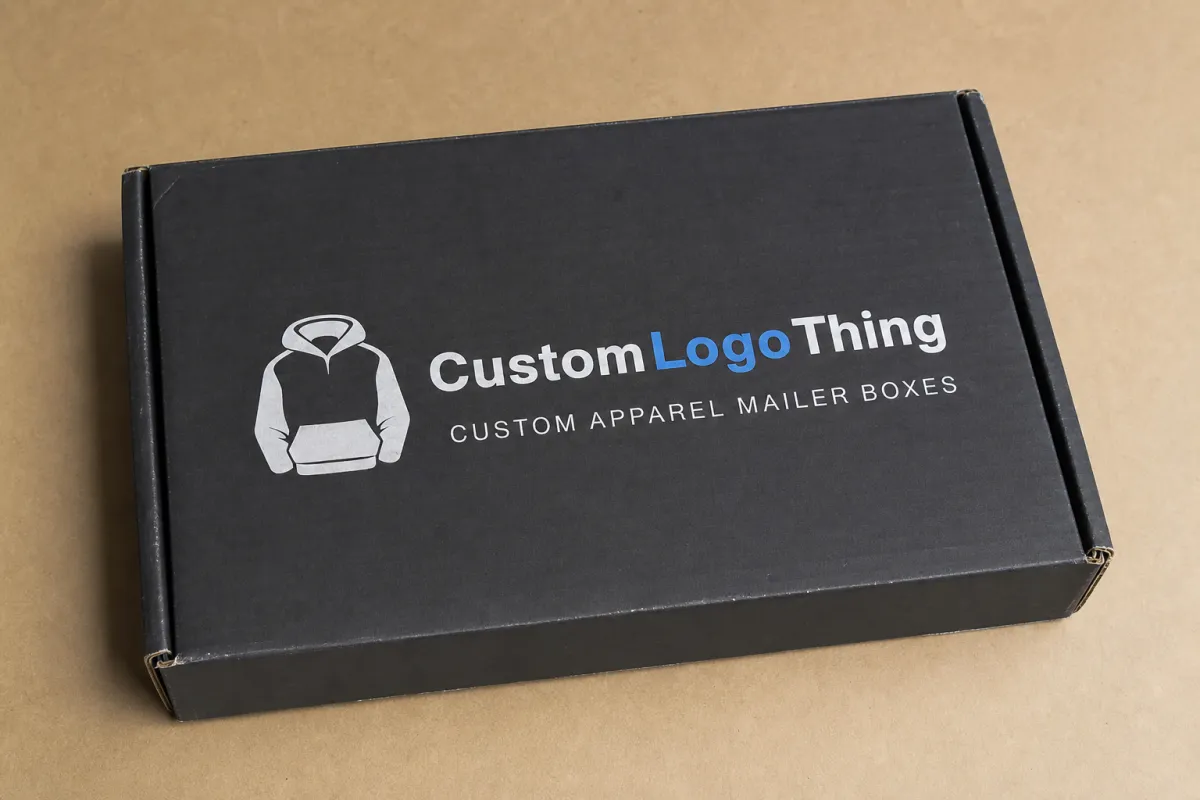
The first quote looks clean because it usually gives one number: price per box. That number matters, but only if the specs behind it are identical. In practice, custom apparel mailer boxes price moves faster from artwork, finishing, and freight than from the cardboard itself. One supplier can look cheap on paper and still bury you in plate fees, die-cut charges, proof costs, or a freight bill that makes the quote useless.
Apparel changes the rules. Folded tees are forgiving. Hoodies are not. Socks and small accessories fit in tighter cartons, while a bundled subscription kit needs more interior room and better crush resistance. Once the footprint grows, board usage rises, pallet density drops, and shipping cost follows. Sometimes the box itself is fine. The pallet math is the real problem.
The smarter comparison is landed cost. That includes the production quote, sampling, freight, setup, and any add-ons tied to fulfillment. A carton that saves $0.12 per unit but adds $180 in freight and another week in delays is not a win. It is a cheap number with an expensive personality.
Customers also do not separate the box from the brand. They see the fit, the closure, the print, and the surface finish as one thing. A crushed corner, scuffed coating, or muddy logo becomes part of the complaint. That is why apparel mailer box pricing is tied to performance as much as material usage.
If two quotes look wildly different, check the basics first: dimensions, flute grade, print method, finish, and delivery terms. Most quote gaps are hiding one of those.
Think of the quote like a spec sheet, not a fortune cookie. Same size. Same board. Same print method. Same finish. Same destination. Once those line up, the price means something. Before that, it is mostly decoration.
Product Details: What You Are Actually Buying
A custom apparel mailer box is usually a self-locking corrugated carton built for e-commerce, subscription programs, or retail-ready presentation. Most styles use a tuck-in closure or locking front panel so the box packs fast without tape. That matters on the fulfillment line. Faster packing lowers labor cost, and labor cost is part of the packaging bill whether anyone wants to admit it or not.
These boxes show up everywhere in apparel. DTC brands use them for tees, hoodies, activewear, and accessories. Influencer kits use them because presentation matters. Retail teams use them for limited drops, event packs, and VIP mailers. Subscription brands use them because the packaging becomes part of the routine. Every version needs the same balance: good looks, decent strength, and enough shipping durability to survive the trip.
Branding choices change both the look and the quote. A basic version might use one-color logo print on kraft board. A higher-end version might include full-color exterior print, interior graphics, soft-touch coating, debossing, or foil accents. Those upgrades are not free candy. Full-coverage graphics need more ink or a different press setup. Interior print adds coverage and registration pressure. Specialty finishes add labor and drying time. The price follows the work.
Accessory choices matter too. Tissue paper, branded stickers, cardboard inserts, paper wrap, and protective sleeves can improve presentation. They can also raise unit cost, especially when the insert needs a custom die-cut shape. A plain insert is modest. A nested insert built to hold multiple SKUs can add material, tooling, and labor. Fancy is rarely cheap. Shocking, I know.
The right spec starts with the shipping scenario. Is the box being used for a one-time unboxing moment? Is it sitting in a warehouse before fulfillment? Is it moving through parcel networks or staying inside a controlled retail supply chain? The answer changes the build. A launch-kit mailer is not automatically right for daily replenishment. Custom Printed Boxes can look beautiful, but the best one is the one that fits the job without wasting material.
If you are still comparing formats, it helps to look beyond cartons. For some soft goods, especially lighter or lower-profile SKUs, a quality pouch may be the smarter move. Review our Custom Poly Mailers for lighter apparel shipments, and compare that against the broader range of Custom Packaging Products before you lock in a structure.
Specifications That Influence Performance and Cost
Dimensions are the first lever. Oversized cartons waste board, waste pallet space, and often trigger higher parcel charges because shipping leans on dimensional weight. Undersized cartons create their own mess. Garments get crushed. Folds look sloppy. Packers start overstuffing boxes like the dimensions were a dare. That leads to returns, ugly unboxing photos, and extra customer service work. A box that fits the fold style usually beats a box that just looks tidy on a spreadsheet.
Board grade comes next. For many apparel programs, E-flute corrugated is enough for lighter garments and premium presentation. It is thinner, cleaner-looking, and easy to fold and store. For heavier packs, such as hoodies, multi-piece bundles, or orders that need more crush resistance, B-flute or a stronger single-wall structure can make more sense. Double-wall is usually overkill for apparel unless the shipment is unusually heavy or the route is rough. Stronger board costs more. Damaged product costs more too.
Print specs can swing the price hard. A one-color logo on one panel is a very different animal from full-wrap CMYK across exterior and interior surfaces. Spot colors, fine line art, and high ink coverage can add prepress work. Depending on the production method, setup or plate charges may also show up. Digital printing can reduce some of those fees, but the unit rate may climb. Flexographic printing can be efficient at scale, though it tends to reward larger quantities and simpler artwork. The right method depends on volume, design complexity, and whether you need the next reorder to match the first one.
Finishes are another cost lever. Matte gives a restrained, premium look. Gloss can pop on shelf or in a photo. Aqueous coating adds protection without the bulk of a heavier laminate. Soft-touch lamination has the tactile appeal fashion brands like, but it usually costs more and can scuff if the box gets roughed up in transit. Specialty textures and embossing look great when they support the brand story. If they do not, they are just expensive ornament.
Sustainability choices can change the quote too. Recycled content, FSC-certified board, and recyclable construction are common requests for branded packaging tied to consumer-facing claims. If certification matters, ask whether the paper or board is sourced under FSC standards at fsc.org. If your team is also sorting through recovery language, EPA guidance helps keep the discussion grounded in actual material recovery instead of vague green claims. The point is not to collect labels. The point is to match the material to the brand promise and the supply chain.
Transit testing deserves a real conversation. A box can look perfect on a bench and still fail after compression, vibration, or repeated drops. Ask whether the design has been checked against common protocols such as ISTA 3A or ASTM D4169. The International Safe Transit Association publishes widely used test methods at ista.org. That kind of validation does not remove all risk, but it cuts down on guesswork.
There is also a practical reason to care about testing even for stylish apparel packaging: returns and replacement shipments get expensive fast. A dented corner on a folded tee is not the same as a damaged glass jar, but it still creates repack labor, customer service noise, and brand damage. The box needs to survive the route you actually use, not the best-case route everyone hopes for.
Pricing, MOQ, and Quote Breakdown
The quote should be split into separate parts: unit cost, setup, sampling, freight, and extras such as inserts or special handling. Once those pieces are separated, the custom apparel mailer boxes price becomes easier to compare across suppliers. A quote that looks higher at the carton level may still be cheaper overall if it comes with better freight terms or fewer add-on charges.
MOQ, or minimum order quantity, is where the curve shows up. Smaller runs usually carry a higher per-box cost because setup time, prepress, and production prep are spread across fewer units. Larger quantities spread those fixed costs more efficiently, so unit pricing often improves as the order grows. Bigger is not automatically smarter, though. Slow inventory turns can create storage cost, cash flow strain, and obsolete packaging if branding changes later.
That last part matters more than most people expect. Apparel collections change fast. A season can end before you finish using a large box run, and the next launch may need a new logo lockup or color palette. If your brand refresh is likely within six months, a slightly higher unit price on a smaller run can be cheaper than parking thousands of boxes in the corner and hoping they still fit the next campaign.
Here is a practical way to read common price bands. These are directional ranges, not universal quotes, because box size, board grade, decoration, and shipping destination can move the number a lot. Still, the pattern holds.
| Order Type | Typical Use | Approx. Unit Price Range | What Usually Drives the Cost |
|---|---|---|---|
| Plain kraft mailer with light branding | Replenishment tees, socks, simple DTC packing | $0.45-$0.85 | Smaller size, basic print, minimal finish |
| Full-color exterior print | Fashion drops, subscription apparel, influencer kits | $0.85-$1.65 | CMYK coverage, tighter print registration, better presentation |
| Premium finish with interior print | Launch kits, gift sets, retail-ready unboxing | $1.50-$3.25 | Soft-touch or specialty coating, additional ink coverage, extra labor |
| Larger repeat order with the same spec | Ongoing fulfillment programs | $0.30-$0.95 | Setup spread across higher volume, lower per-unit production cost |
That table leaves out one ugly surprise: freight. A carton ships flat, but it still takes up cubic space on a pallet, and cube drives cost. A small size increase can change pallet count. Parcel fulfillment can do the same thing through dimensional weight. Two packages with similar board cost can land at very different totals once shipping is added.
Hidden cost traps deserve attention. Rush production can add a premium. Artwork revisions can stretch the schedule and trigger extra prepress work. Split shipments often cost more than one consolidated delivery. Custom inserts can turn a straightforward box into a multi-part assembly. A special matte film or foil accent should also show up in the price. None of this is unusual. The mistake is assuming the first number already includes it all.
Use a clean comparison framework. Ask every supplier to quote the same size, the same board grade, the same print coverage, the same finish, the same quantity, and the same delivery term. Then compare totals, not just the carton line. That is the only way to tell whether one custom printed box is truly a better buy than another.
If a quote leaves out dimensions, board grade, print method, finish, quantity, or destination, it is not a final buying decision. It is a sketch.
Process and Timeline: From Artwork to Delivery
A realistic timeline starts with the inquiry. The cleaner the brief, the fewer the delays. A good request includes carton dimensions, apparel type, artwork direction, quantity, and ship-to destination. From there, the supplier should check whether the box style makes sense for the product and whether the spec needs a tweak to improve fit or trim cost. This early review is where a lot of budget surprises get killed before they multiply.
After the quote comes dieline setup or design adaptation. If the artwork team already has a dieline, things move faster. If not, the supplier or packaging designer needs to create one that matches the dimensions and closure style. Proof approval comes next. Digital proofs are quick and useful for layout, color placement, and copy. Physical samples take longer, but they are worth it for premium apparel packaging, multi-item kits, or any order where fit and finish matter more than speed.
Lead times depend on complexity. Straightforward jobs with standard print and no special finishes can often move through production in about 12 to 15 business days after proof approval. More complex orders, especially those with interior print, specialty coating, or custom inserts, may need 15 to 25 business days or longer depending on quantity and line schedule. Rush orders may be possible, but they usually narrow finish options and push the price up. If the launch date matters, say it early. Suppliers cannot plan around a date they do not know exists.
Samples protect margin later. A digital proof shows placement. A physical prototype confirms folding behavior, carton closure, and actual fit around the apparel. For a box that will be mailed, dropped, and stacked, the sample can expose problems that are invisible on a screen. Too much internal movement makes the product look sloppy when opened. A closure panel that is too tight after print and coating is another classic headache. Fixing that early is cheap. Fixing it after production starts is not.
For inventory planning, think in handoff dates, not just production dates. A carton can finish on time and still miss the launch if it lands after warehouse receiving windows or if the fulfillment center needs time to process incoming pallets. That is another reason landed cost matters. Delays do not just affect shipping. They can create overtime, split receiving, or emergency replenishment at a higher cost.
One more practical point: the approval chain matters. If marketing, operations, and procurement each review the box separately, timelines get longer. The faster path is to align on size, finish, and quantity before artwork goes too far. That keeps the quote stable and reduces the odds of redoing a dieline after everyone else has already signed off.
Why Choose Us for Custom Apparel Mailer Boxes
Custom Logo Things is a sourcing partner first. That matters because apparel brands do not need a canned answer. They need a box spec that respects appearance, durability, and cost all at once. A good packaging partner should not push the largest structure or the most expensive finish by default. The smarter move is to fit the package to the product and the channel, then quote the job with enough detail that the buyer can see exactly what is driving the number.
Transparent quoting helps. When the carton dimensions, board grade, print coverage, finish, and quantity are spelled out clearly, there is less room for surprise charges later. That matters even more for teams managing branded packaging across multiple collections or fulfillment programs. A clean spec also makes reorders easier to plan. Reorder planning is where a lot of packaging budgets quietly disappear.
Consistency matters just as much as price. Apparel brands rarely want one batch of boxes to look a little different from the next batch. If the logo shifts, the board changes, or the finish looks off, customers notice. Production control is part of the product. It protects the brand identity and keeps presentation steady across launches, seasonal releases, and replenishment runs.
We support different buying stages too. Some brands need short runs for a new drop or a small test. Others need repeat production tied to a fulfillment program. Both are valid. Both deserve quoting that reflects the actual use case. The goal is not to sell the same carton to everyone. The goal is to give buyers a packaging path that can grow from a few hundred units to a larger production schedule without forcing them to buy capacity they do not need.
For comparison shopping, it helps to look at the full packaging mix. A box may be the right call for premium presentation, while a poly mailer may be the smarter cost move for lightweight garments or returns workflows. You can review the broader range under Custom Packaging Products and compare structure options before locking the spec. That kind of comparison is where real savings show up, because the best packaging decision is usually the one that fits the job with the fewest compromises.
Communication matters too. Fast responses, clear proofs, and practical guidance on finish, board, and timeline remove a lot of friction from the buying process. The result is not just a better quote. It is a better order. Different thing entirely.
Next Steps: How to Request an Accurate Quote
If you want an accurate quote, start with the basics and be specific. Send the folded apparel dimensions or the product type, the quantity you need, the print idea, the finish preference, the shipping zip code, and the target delivery date. If the box will hold more than one item, list the bundle contents. If you have a dieline, include it. If you do not, say so. A supplier can still help, but precise input makes the quote much cleaner.
Ask for at least two or three quantity tiers. That gives you a real view of how the custom apparel mailer boxes price changes as volume moves up. Sometimes the jump from 1,000 units to 2,500 units is small. Sometimes it is dramatic because the setup cost gets spread across more cartons. Seeing the tiers side by side makes it easier to choose between budget control and inventory efficiency.
Request a proof or sample if the packaging has to fit premium apparel, a launch kit, or any shipment where unboxing presentation matters. That small step reduces the chance of expensive mistakes later. It also helps you judge whether the carton feels right in hand, which a render cannot tell you. A sample can show whether the closure is too loose, the print is too dark, or the box needs one more millimeter of headspace for the fold style you are using.
Compare total landed cost before you buy. A low carton rate is not the full story if freight, rush fees, inserts, or extra revisions push the order over budget. Ask for a complete comparison, then decide from the whole picture. If your team is choosing between a presentation box and a lighter mailer format, that comparison is usually where the answer shows up.
The practical takeaway is simple: lock the spec, compare landed cost, and sample the box before you approve a run. That is how you get a custom apparel mailer boxes price that is useful instead of decorative. Send the right inputs once, and you stop paying for guesses.
What affects custom apparel mailer boxes price the most?
Box size and board grade usually move the number fastest because they change material usage and shipping volume. Print coverage, special finishes, and inserts can add cost quickly, especially on smaller runs. Quantity matters as well, because setup costs get spread across more units as the order grows.
How does MOQ change the custom apparel mailer boxes price?
Lower MOQs usually carry a higher per-box rate because setup and production prep are divided across fewer cartons. Higher quantities often unlock better unit pricing, but only if the specs stay the same. Always compare the total order value, not just the unit rate, when evaluating MOQ tiers.
Can I get a sample before placing a bulk order?
Yes, many buyers request a digital proof or a physical sample before production. A sample helps confirm size, print placement, closure behavior, and fit for the apparel being packed. Sampling can add time and cost, but it reduces the risk of expensive mistakes later.
How long does production usually take?
Timeline depends on artwork approval, finish complexity, order size, and shipping method. Simple jobs move faster than orders with specialty coatings, inserts, or custom structures. Rush orders may be possible, but they often raise the overall cost and limit finish options.
What information do I need to get an accurate quote?
Provide box dimensions, quantity, print requirements, material preference, and shipping destination. Share the apparel type or fold style so the supplier can confirm the right fit. If you have a launch date, include it early so the quote reflects realistic production timing and returns a realistic custom apparel mailer boxes price without guesswork.

