Buyer Fit Snapshot
| Best fit | Custom Biodegradable Poly Mailers for Ecommerce Brands projects where brand print, material claims, artwork control, MOQ, and repeat-order consistency need to be specified before quoting. |
|---|---|
| Quote inputs | Share finished size, material target, print colors, finish, packing count, annual reorder estimate, ship-to region, and any compliance wording. |
| Proofing check | Approve dieline scale, logo placement, barcode or warning zones, color tolerance, closure strength, and carton packing before bulk production. |
| Main risk | Vague material claims, crowded artwork, missing packing details, or unclear freight terms can make a low unit price expensive after revisions. |
Fast answer: Custom Biodegradable Poly Mailers for Ecommerce Brands should be specified like a repeatable production item. The safest quote records material, print method, finish, artwork proof, packing count, and reorder notes in one written spec.
Production checks before approval
Compare the actual filled-product size with the drawing, then confirm tolerance on folds, seals, hang holes, label areas, and retail display edges. Reserve space for logos, QR codes, warning copy, and material claims before decorative graphics fill the panel.
Quote comparison points
Review material grade, print process, finish, sampling route, tooling charges, carton quantity, and freight assumptions side by side. A quote is only useful when the supplier can repeat the same color, closure quality, and packing count on the next order.
Most shoppers notice the mailer before they notice the product. I’ve seen it in warehouse audits in Los Angeles, on customer unboxing videos from Brooklyn, and in a client meeting in Ho Chi Minh City where the founder held up two nearly identical shirts and spent five minutes talking about the bag, not the fabric. That’s why custom Biodegradable Poly Mailers ecommerce brands choose are not “just shipping supplies.” They sit inside branded packaging, shape package branding, and act as the first physical proof that your company cares about the details. If your bag lands right, the customer notices before they even touch the product.
Packaging gets underestimated because it disappears fast. Fine. But while it lasts, it affects postage, damage rates, perceived sustainability, and repeat purchase behavior all at once. With Custom Biodegradable Poly mailers ecommerce teams can add logo printing, tighter sizing, and a cleaner unboxing without jumping straight to heavier formats like many forms of custom printed boxes or labor-heavy retail packaging. I’ve watched brands cut pack-out time from 42 seconds to 31 seconds per order just by switching from oversized cartons to well-fitted mailers.
There’s a catch. “Biodegradable,” “compostable,” “recycled,” and “recyclable” are not the same thing, and mixing them up is one of the quickest ways to create trust problems. I’ve sat in supplier negotiations in Shenzhen where a brand wanted a greener claim but couldn’t explain how the material would break down, under what conditions, or in which market. That conversation gets expensive after the order is placed. Not before. I remember one founder staring at me like I had personally invented composting paperwork. I wish I hadn’t been right, honestly.
What Are Custom Biodegradable Poly Mailers for Ecommerce?
Put simply, custom Biodegradable Poly Mailers ecommerce brands use are plastic-based shipping bags built to degrade faster than standard poly mailers under specific disposal conditions. They still feel like poly mailers because they need to protect goods in transit, resist scuffing, and stay light. The difference sits in the formulation: additives, blends, or material systems designed to accelerate breakdown when the package reaches the right environment. A common spec I’ve seen from factories in Guangdong is a 2.5 mil film with a biodegradable additive package, but the exact construction varies by supplier and target market.
“Custom” means the mailer is built around the brand, not the other way around. That can include logo printing, Pantone-matched colors, product-category messaging, tear strips, tamper-evident seals, dual adhesive strips for returns, or a size profile built around one SKU family. On a Shenzhen facility visit, I watched a 2-color flexo run for a DTC apparel brand where the difference between a generic bag and a custom one was a 6 mm logo shift. Small change. Big visual payoff. The bag suddenly looked intentional on camera. The factory manager was weirdly proud of that shift, and honestly, so was I.
The ecommerce use case is straightforward. Lightweight items like T-shirts, socks, beauty samples, scarves, accessories, and some soft home goods ship well in mailers because the bag is thin, quick to pack, and cheaper to move than rigid formats. I’ve seen brands switch from oversized cartons to Custom Biodegradable Poly Mailers Ecommerce setups and cut void space by 30% to 40% on the pack line. That matters when labor is measured in seconds and postage is measured in grams. In a 10,000-order month, shaving even $0.06 per shipment is real money, not a cute spreadsheet exercise.
Set the terminology carefully:
- Biodegradable means the material can break down by biological processes, but the rate and conditions vary widely.
- Compostable means it should break down into non-toxic components under defined composting conditions, often industrial rather than backyard.
- Recycled means the material contains recovered content.
- Recyclable means the packaging can enter a recycling stream, but only if local facilities accept it.
That distinction matters because customers often assume a green label means simple disposal. It rarely is. If your Custom Biodegradable Poly Mailers ecommerce supplier cannot explain the exact standard, the breakdown environment, and any certification behind the claim, I would pause before approving artwork. For standards and terminology, I often point brands to the EPA recycling guidance and to industry references such as The Association for Packaging and Processing Technologies. A supplier in Dongguan once sent me a “biodegradable” spec sheet that was six pages of marketing and zero pages of test data. That is not a spec sheet. That is fan fiction.
Why does this packaging choice matter? Because shipping efficiency, perceived sustainability, and repeat purchase behavior are tied together more often than brands admit. A mailer that arrives intact, looks on-brand, and supports a clear disposal message can help a customer feel the purchase was thought through. That feeling is not fluffy. I’ve watched it show up in review language, especially for beauty and apparel. Customers absolutely remember a package that feels like somebody cared. They also remember when the logo rubs off in transit. They really do.
How Custom Biodegradable Poly Mailers Work in Shipping
The structure of custom biodegradable poly mailers ecommerce suppliers offer is usually a layered film system. One layer may provide printability, another gives strength, and another contains the additive package that changes how the material breaks down. The goal is not to make the bag weak. The goal is to keep the bag functional during handling, conveyor friction, drops, and moisture exposure, then alter its end-of-life behavior under the intended conditions. A typical production spec might use a 2.75 mil film with a 60-micron seal zone, but the exact numbers depend on your product weight and carrier route.
In factory terms, that balance is everything. I’ve stood beside a production line in Ningbo where a bag looked perfect in a sample book but failed during a 1.2-meter drop test because the seal edge was too narrow. The bags reached the customer, yes, but the side seam split during parcel sorting. That kind of failure does not show up in a polished mockup. It shows up when a customer opens the parcel and sighs. Which is a terrible sound, by the way.
Customization shows up in a few ways. Flexographic printing is common for larger runs because it is fast and cost-effective per unit once plates are made. Digital printing fits shorter runs or more artwork variation, though the unit cost is often higher. Surface treatment matters too; if the film is not prepared correctly, ink adhesion drops, colors scuff, and logos look muddy after rubbing against other parcels in transit. A standard 1-color flexo run might be quoted at $0.15 per unit for 5,000 pieces, while a 4-color digital version for the same bag could be closer to $0.24 per unit.
Size is not a minor decision. Oversized mailers waste film, increase the air-to-product ratio, and can push postage up if the final parcel dimensions cross a carrier threshold. Undersized mailers create wrinkling, stress at the seams, and higher puncture risk. A good fit is one of the simplest ways to improve both product packaging performance and pack-out speed. I’ve seen entire shipping teams move faster just because they stopped wrestling with bag sizes that clearly belonged to another decade. When a warehouse in New Jersey dropped from a 14 x 19 inch bag to a 10 x 13 inch bag for folded tees, their pack table stopped looking like a crime scene.
I often compare standard poly mailers and custom biodegradable poly mailers ecommerce buyers choose like this: the protection profile can be very similar for water resistance and general tear resistance, but the environmental claim and disposal story differ. That difference does not automatically make one better. It makes them different tools. One is a utility knife. The other is a cleaner story with a real spec sheet behind it.
“We expected the mailer to be the cheapest line item,” one DTC founder told me after a trial run. “Instead, it turned out to be the thing our customers commented on most.”
Before scaling, testing matters. Ask for seal integrity checks, puncture resistance data, and transit simulation results. If you ship through multiple carriers, use rough handling tests, compression checks, and vibration exposure. ISTA testing protocols are a sensible reference point here; the ISTA standards page is worth reviewing if you want your packaging team and supplier speaking the same language. Less guesswork. Fewer expensive surprises. Everyone wins, which is rare enough to mention. A good supplier can usually provide a test report within 3 to 5 business days after sample approval.
Custom Biodegradable Poly Mailers Ecommerce: Cost, Pricing, and Performance
Pricing for custom biodegradable poly mailers ecommerce programs is shaped by a few obvious variables and a few sneaky ones. Material type, thickness, print colors, order quantity, and setup fees all move the number. Freight, sampling, storage, and wastage can make the true cost feel very different from the quote sheet. A factory in Jiaxing might quote the same bag at $0.14 per unit for 10,000 pieces and $0.19 per unit for 3,000 pieces, simply because the fixed setup cost gets spread differently.
I’ve seen a brand celebrate a low unit price of $0.11 and then get surprised by $380 in freight, $120 in sampling, and a 7% overrun because the first production batch needed rework. That’s why I tell clients to ask for total landed cost, not just per-piece pricing. The cheapest quotation is not always the cheapest order. It’s usually the one with the best disguise. If you want the real number, ask for EXW, FOB, and delivered pricing side by side. The gap can be bigger than you think.
Here is a practical comparison based on typical market behavior. Exact pricing varies by film spec, print coverage, and region, but these ranges help anchor the discussion.
| Mailer Type | Typical Unit Cost | Durability | Sustainability Claim | Best For |
|---|---|---|---|---|
| Standard poly mailer | $0.08–$0.16 | High tear resistance, water resistant | Usually recyclable only in limited streams | Low-cost apparel and accessories |
| Custom biodegradable poly mailers ecommerce | $0.12–$0.28 | Comparable to standard for many light goods | Depends on material certification and disposal conditions | Brands needing lighter packaging with a greener message |
| Paper mailer | $0.18–$0.40 | Good for dry, non-fragile items; weaker when wet | Often recyclable, sometimes with fiber-content claims | Brands prioritizing paper-based presentation |
| Mailing carton / lightweight box | $0.25–$0.60 | Excellent crush protection | Often recyclable; may contain recycled fiber | Fragile goods and premium unboxing |
Order quantity matters because setup cost gets spread across more units. A 5,000-piece run may land at $0.18 per unit for a simple 2-color print, while a 25,000-piece order might drop closer to $0.13 if the same structure is used. Bigger orders mean more cash tied up and more warehouse space. Smaller brands feel that pinch fast. I’ve watched founders do the math on a whiteboard and go silent for a full thirty seconds. That silence tells you everything. If your cash flow is tight, even a 2-cent swing matters across 12,000 orders.
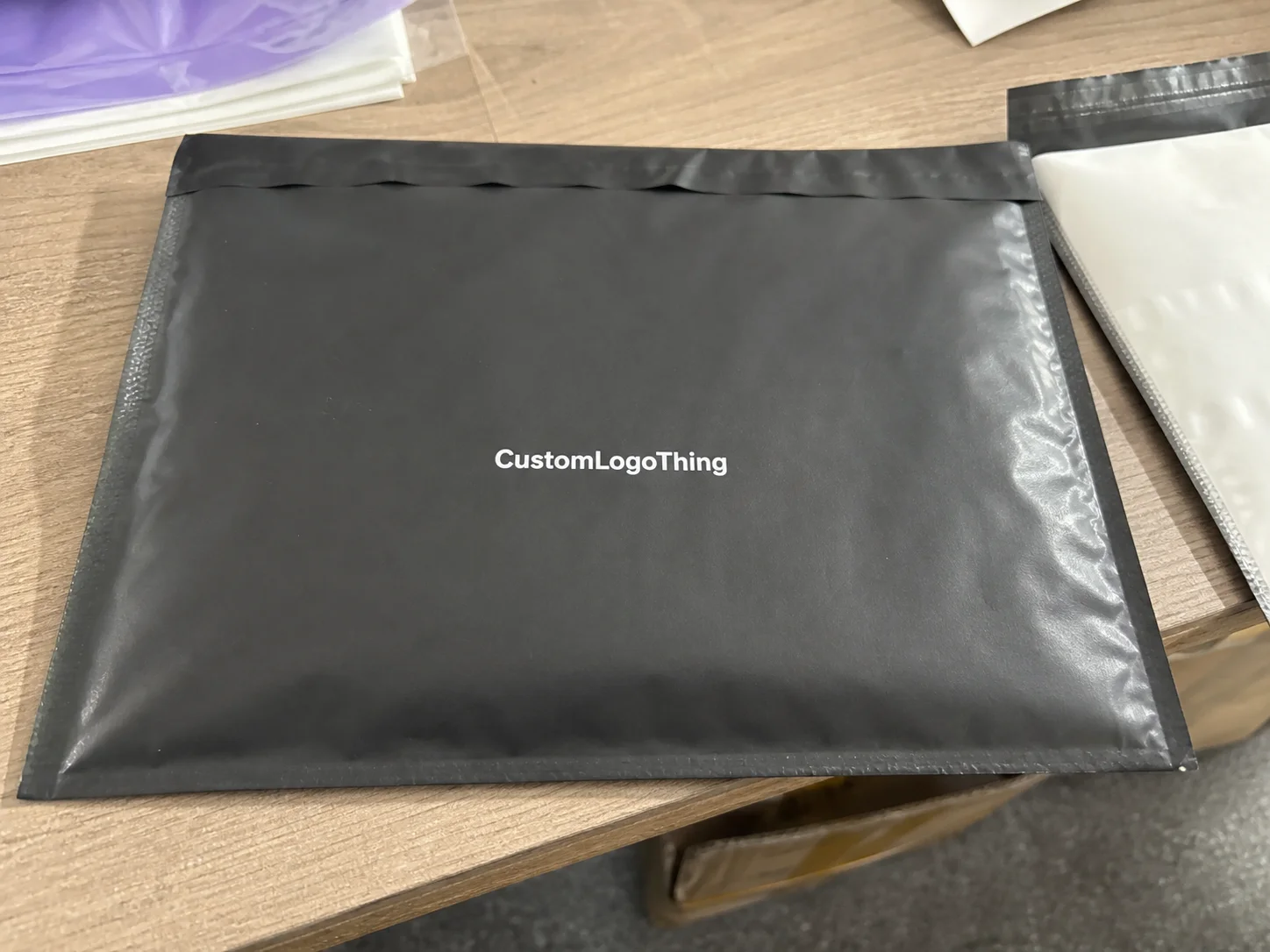
Print complexity is another lever. One strong logo and one tagline can look cleaner and cost less than a four-color print with gradients. Special finishes can also add cost. If your branding strategy is already strong, a restrained mailer often performs better than a crowded one. That is especially true in ecommerce, where the package may be seen for 3 seconds, not 30. I’ve seen matte black plus white ink outperform a busy full-color bag simply because it photographed better at 9 a.m. in a bright apartment.
Shipping and warehousing can tilt the economics too. A lighter mailer may save postage; a bulkier custom format may increase pallet space and handling time. If you are using a 3-sided gusset or extra-thick film, make sure the improved feel justifies the extra cube. I once saw a brand choose a thicker spec purely because it looked “premium,” only to discover their monthly postage jumped by enough to erase the packaging upgrade. The marketing team called it “an investment.” Finance called it something else. They were both looking at the same invoice from different planets.
Comparing custom biodegradable poly mailers ecommerce options against paper mailers and standard poly mailers, the right choice usually comes down to product behavior. Paper can be excellent for some categories, but if the parcel might get wet or scuffed, a film mailer still has a practical edge. I am not saying paper is bad. I am saying the environment it travels through should guide the decision, not the mood board. The mood board, charming as it may be, does not pay shipping invoices.
Ask for these five things before approving a quote:
- Material spec and thickness in microns or mils.
- Print method and number of colors.
- MOQ and over/under-run allowance.
- Tooling, plates, or setup charges.
- Freight terms and sample cost.
Step-by-Step Process and Timeline for Ordering
The cleanest way to buy custom biodegradable poly mailers ecommerce brands can use is to start with the product, not the print. What are you shipping? How sharp are the edges? How much compression can the item handle? Does the customer need to return it? Those answers drive everything from film thickness to closure style. A soft cotton tee and a boxed serum do not need the same bag, no matter how pretty the mockup looks.
Step one is audience and product fit. Apparel usually ships differently from cosmetics, and cosmetics behave differently from soft home goods. A 300 gsm knit tee may be fine in a 2.5 mil mailer, while a boxed serum could need a different structure or extra internal protection. The wrong assumption can cause bent corners, split seams, or a rushed reorder. I’ve seen brands make one “simple” choice and then spend the next month putting out fires like it was a hobby. That hobby usually costs more than the packaging did.
Step two is selecting size, thickness, and closure. For returns-heavy categories, dual adhesive strips are worth discussing. They can save a second outer bag on return shipments, which helps both cost and waste. If your support team is constantly explaining how to reseal parcels, the closure design probably needs work. A double-seal mailer can be worth the extra $0.01 to $0.02 per unit if your return rate is above 12%.
Step three is samples and transit tests. I never recommend skipping this. Ask for at least two sample types if possible: one baseline and one production-intent version. Run them through a drop test, moisture exposure, and a handling test with real packers. If the ink rubs off after contact with corrugate dust or conveyor belts, you want to Know Before You buy 20,000 units. In a real factory, sample approval to production handoff usually takes 12 to 15 business days after proof approval, assuming the film is in stock.
Step four is artwork and compliance review. Prepare vector files, confirm color references, and pressure-test any sustainability language. If you say “biodegradable,” the supplier should back that up with a material explanation or certification details. Be careful about implying backyard compostability if the product needs industrial composting. That is where customer complaints become public. And public complaints have a nasty habit of getting copied into screenshots forever. I’ve seen one bad claim survive longer on Reddit than the campaign that paid for it.
Here is a practical timeline for a first-time order of custom biodegradable poly mailers ecommerce brands often place:
- Brief and quoting: 2–4 business days.
- Sample development: 5–10 business days.
- Artwork revisions and proof approval: 2–6 business days.
- Production: 10–18 business days after approval.
- Freight and delivery: 3–15 business days depending on origin and destination.
For first orders, 4 to 6 weeks total is a realistic planning window if everything moves well. Reorders can be faster, often 2 to 3 weeks, because the tooling already exists and the artwork is locked. Delays usually happen in three places: slow proof approval, material backorders, and print queue congestion. If your supplier is based in Guangzhou and your warehouse is in Dallas, add a little breathing room for ocean or air transit. Nobody enjoys paying premium freight because a launch date was planned on optimism.
One client meeting stands out. A beauty brand wanted a launch tied to a seasonal promo, but their final artwork file arrived in RGB instead of CMYK and one claim on the back panel needed legal review. The whole timeline slipped 9 days. The bags were fine. The admin was not. That is why procurement checklists exist. Paperwork, the silent villain. Very glamorous.
Use this order-prep checklist before contacting a supplier for custom biodegradable poly mailers ecommerce packaging:
- Top-selling SKUs and dimensions
- Target unit cost
- Desired mailer size range
- Logo files and brand color codes
- Claim language for sustainability statements
- Required quantity and reorder frequency
- Return workflow if applicable
If you also need other packaging pieces, it helps to align the mailer with broader Custom Packaging Products and make sure your mailers fit your overall packaging design system. That keeps the unboxing story coherent, rather than feeling like three vendors designed the brand separately. I’ve walked into too many warehouses in Taipei where the outer bag, tissue paper, and label were clearly strangers.
Common Mistakes Ecommerce Brands Make With Biodegradable Mailers
The first mistake is overclaiming. A supplier says “biodegradable,” the brand hears “environmentally responsible,” and the website copy turns into a legal gray area. That’s risky. Claims need evidence, especially if the bag only degrades under industrial composting or controlled conditions. If you cannot explain the disposal route in one sentence, your customers probably cannot either. A label that says “green” and a spec sheet that says “industrial conditions only” are not the same message.
The second mistake is choosing on appearance alone. I get it. A matte green bag with crisp white print looks great on a mood board. But I have seen attractive mailers fail puncture tests because the film spec was too light for a product with metal zippers. Beauty matters, but shipping math matters more. A gorgeous failure is still a failure. In one case, a brand in Melbourne picked a 2.0 mil film for denim shorts. The first carton of samples came back with corner splits. Pretty bag. Bad idea.
The third mistake is ordering one universal size and hoping it fits everything. It rarely does. Too much void space means wasted material and sloppy presentation. Too little room means compressed products, wrinkled apparel, and returns from buyers who expected better. A small set of sizes almost always beats a single catch-all format. Three sizes can cover 80% of orders far better than one oversized bag pretending to be versatile.
Skipping sample tests is another expensive shortcut. One client approved a production run without checking the seal strip under warm warehouse conditions. In summer, the adhesive got tacky too early, and the team lost time with bags sticking together in stacks. That error was avoidable with a 20-minute test on the actual packing line. We did the same test later with a fan, a heat gun, and a stack of 500 bags in a warehouse in Bangkok. Guess what? The bags told the truth.
There is also the customer journey problem. If the mailer is hard to open, tears in the wrong place, or cannot be resealed for a return, people notice. They may not write a review about the adhesive strip, but they absolutely feel it. That feeling shapes whether the brand seems thoughtful or cheap. A customer fighting a stuck seam at 11 p.m. is not thinking, “Wow, what a premium experience.” They’re thinking, “Who approved this thing?”
Finally, many companies assume disposal rules are uniform across markets. They are not. A customer in California may see one set of labeling expectations, while a customer in the UK or Australia sees another. The same packaging can trigger different assumptions. That’s why verified, region-appropriate language matters for custom biodegradable poly mailers ecommerce shipments. If you sell in Germany, the wording may need to be more specific than it does in Texas.
“Our returns dropped slightly after we added a second adhesive strip,” a subscription apparel operator told me. “But the bigger change was fewer customer emails about how to send items back.”
If you want to reduce these mistakes, compare your supplier claims against industry references such as FSC for fiber-based components and ISTA for transit testing. The FSC site is useful when your packaging system includes paper inserts, labels, or mixed-material components that need responsible sourcing language. I’ve also asked suppliers in Dongguan for SGS or third-party lab reports before I let a claim see daylight. Saves arguments later.
Expert Tips for Better Branding and Lower Waste
The best custom biodegradable poly mailers ecommerce programs I have seen are rarely the flashiest. They are the most deliberate. One strong logo placement at the top third of the bag often works better than printing every inch. Your mailer should be remembered, not shouted over. A 120 mm logo zone on a 400 mm bag can be enough if the rest of the design is disciplined.
Use minimal branding with a distinct point of view. A clean logo, a short message, and a consistent color can build recognition faster than a crowded bag full of iconography. I’ve seen this work especially well for wellness brands and apparel labels where the package becomes part of the “brand fingerprint” customers post online. People love a package they can photograph without squinting. A lot of “premium” is really just clarity plus decent lighting.
Match thickness to product category. Do not default to the thickest film because it feels safer. A 2.5 mil film might be fine for soft goods, while a slightly heavier spec may be needed for accessories with corners or zippers. Choosing the right gauge is a cost decision and a waste decision at the same time. If your supplier in Shenzhen recommends 3.0 mil for leggings and 2.25 mil for tees, they are probably thinking about puncture risk, not just padding the quote.
Standardize a small number of sizes. Three sizes usually beat seven. That reduces stock keeping headaches, simplifies purchasing, and keeps pack stations faster. In a warehouse audit last year, I saw a brand cut pick-and-pack mistakes by 18% after reducing mailer SKUs from six to three. Not glamorous, sure. It still saved money every week. It also freed up one shelf bay, which the ops manager celebrated like they’d won a trophy.
Return-friendly features can be smart in categories with high exchange rates. Dual adhesive strips, easy-tear notches, and clear return labeling can reduce support tickets. For fashion, that is often worth the tiny amount of extra material. For low-return categories, keep it simpler. If your return rate is 14% and you ship 8,000 orders a month, a better closure design can save real labor.
Use inserts or QR codes only when they are useful. A short insert explaining material choice and disposal guidance is more effective than a dense sustainability manifesto nobody reads. This is where packaging design, product packaging, and retail packaging all intersect: the message has to be clear in under 10 seconds. One line, one QR code, one purpose. That’s plenty.
If your volume is high enough, A/B test packaging. Try two print layouts, two shades, or two mailer structures and measure repeat rate, review sentiment, and return behavior. Sometimes the quieter option wins. Sometimes the bold one does. Data beats guesswork here. I’d rather look at a 90-day review trend from 5,000 orders than argue about whether “forest green” feels more sustainable than “sage.”
One of the smartest moves I’ve seen is pairing custom biodegradable poly mailers ecommerce orders with a simple internal sustainability note for customer service. That way, everyone on the team can answer the same question the same way. The message stays consistent, and that consistency is a quiet form of trust. It also stops your CS team from freelancing claims at 7 p.m. on a Friday.
What to Do Next Before You Place an Order
Start with your top-selling SKUs. Lay them out by dimension and weight, then group them into size bands. If the majority of your orders fit within two or three range profiles, you are already halfway to a cleaner packaging decision. That exercise usually takes 30 minutes and saves weeks of second-guessing. I’ve done it with founders on warehouse floors in Austin and Singapore, and the “aha” moment always comes when the product pile becomes a sizing plan.
Set a packaging budget ceiling. Not a wish. A ceiling. Decide what you want to spend per unit on custom biodegradable poly mailers ecommerce buyers can sustain without hurting margin. If your product margin is $18 and your shipping packaging eats $0.40 instead of $0.18, you need to understand what that means across 10,000 orders. That difference is $2,200 over the year if you ship 10,000 units, and nobody likes discovering that late.
Collect your artwork files in vector format, your brand colors, and your sustainability language. If there is a legal review step, build that in now. Waiting until the proof stage is how orders stall. Suppliers move faster when the brief is complete. A clean AI, EPS, or PDF file saves days. An old JPEG pulled from a website header saves no one.
Ask for sample packs from at least two suppliers. Compare not just print quality, but feel, seal performance, and how the bag behaves after handling. A sample should not just look right. It should act right. If it sounds flimsy when crumpled, your customers may feel that too. I always tell brands to test samples with actual packers, not only managers. Managers are polite. Packers are honest.
Run a simple test plan before you approve production:
- Drop test with packed product.
- Moisture exposure or light rain simulation.
- Packing-line handling test with at least 20 units.
- Open-and-close test if returns are expected.
- Print rub test against corrugated cartons.
Document the decision criteria. Keep a one-page note that records size, thickness, print method, supplier, unit cost, and claim language. That makes reorders easier and protects consistency if procurement changes hands later. I have seen brands lose months simply because no one could remember why a particular bag was approved. A note saved in a shared drive in Chicago is boring. It is also gold.
And if you are still comparing materials, browse your broader packaging options alongside Custom Poly Mailers so you can judge the biodegradable version against the rest of your shipping mix rather than in isolation. That comparison usually clarifies what is truly worth paying for. I’ve seen brands pick the wrong option because they compared it to nothing. Nothing is a terrible benchmark.
My final opinion is simple: custom biodegradable poly mailers ecommerce brands choose should be judged by more than a green claim or a pretty mockup. They should fit the product, the budget, the warehouse, and the customer’s expectation of what a smart brand feels like in the hand.
If you get the structure right, custom biodegradable poly mailers ecommerce can reduce waste, strengthen package branding, and ship as efficiently as the best standard mailers. If you get it wrong, you end up paying for aesthetics, confusion, and returns. I’d rather help a brand buy fewer, better bags than a warehouse full of expensive mistakes. That’s the whole point, really.
FAQs
Are custom biodegradable poly mailers for ecommerce actually better than regular poly mailers?
They can be a better fit when your brand wants reduced environmental impact claims plus lightweight shipping. That said, performance still has to pass practical tests such as seal strength, puncture resistance, and transit durability. The best choice depends on your product, your budget, and how customers dispose of packaging in your markets. If your goods ship from a factory in Shenzhen to customers in the UK, the label language and disposal story matter just as much as the film itself.
How much do custom biodegradable poly mailers for ecommerce usually cost?
Price depends on size, thickness, print complexity, and order quantity. Smaller runs usually cost more per unit, while larger orders lower unit price but require more storage and more cash upfront. For example, a 5,000-piece run can land near $0.15 per unit for a simple 1-color design, while a 20,000-piece order may drop closer to $0.12 per unit. Ask for total landed cost, including freight, sampling, setup, and waste allowance, so the number reflects reality rather than a headline quote.
What is the typical production timeline for custom biodegradable poly mailers ecommerce orders?
Most orders move through quoting, sampling, artwork approval, production, and shipping. Delays often happen when sample revisions take longer than expected or if materials are backordered. For a first order, build in extra time because proofing usually takes longer than a reorder. A realistic timeline is 12 to 15 business days from proof approval to production completion, plus 3 to 15 business days for freight depending on the origin and destination.
What should I check before approving a biodegradable mailer sample?
Check seal quality, tear resistance, print clarity, and whether the size fits your product without excess space. Confirm that the sustainability claim language matches the actual material and disposal conditions. If your operation uses returns, test how easy the mailer is to open and reseal. I also recommend a simple rub test against corrugated cartons and a drop test from 1.2 meters, because that is where weak seams show up fast.
Can custom biodegradable poly mailers for ecommerce be used for all products?
No. They work best for lightweight, non-fragile items like apparel, soft goods, and small accessories. Fragile or heavy products may need cushioning or a different structure entirely. Product weight, sharp edges, and moisture sensitivity should guide the final choice. A folded T-shirt in a 2.5 mil mailer is one thing; a glass bottle in a mailer with no padding is a headache waiting to happen.