A $35 art book with a rubbed dust jacket becomes a markdown item quickly. A signed first printing with a scuffed corner may not sell at full price at all. That is why bookstore Clear Poly Bags unit cost deserves attention beyond the unit price. The bag is a small line item. Damage, replacement copies, labor, and returns are not.
For a standard hardcover, a plain clear bag often falls around $0.05 to $0.18 per unit, depending on size, film, thickness, and order volume. Replace one damaged premium title at $22 wholesale and the savings from shaving a few cents off the bag disappear. That tradeoff is most obvious with signed copies, collector editions, comics, magazines, and bundled book kits handled multiple times before sale.
The right purchase is rarely the absolute cheapest bag on the quote. It is the bag that fits the book correctly, protects it through handling, and does not slow down staff.
Why a damaged dust jacket can cost more than the bag that prevents it
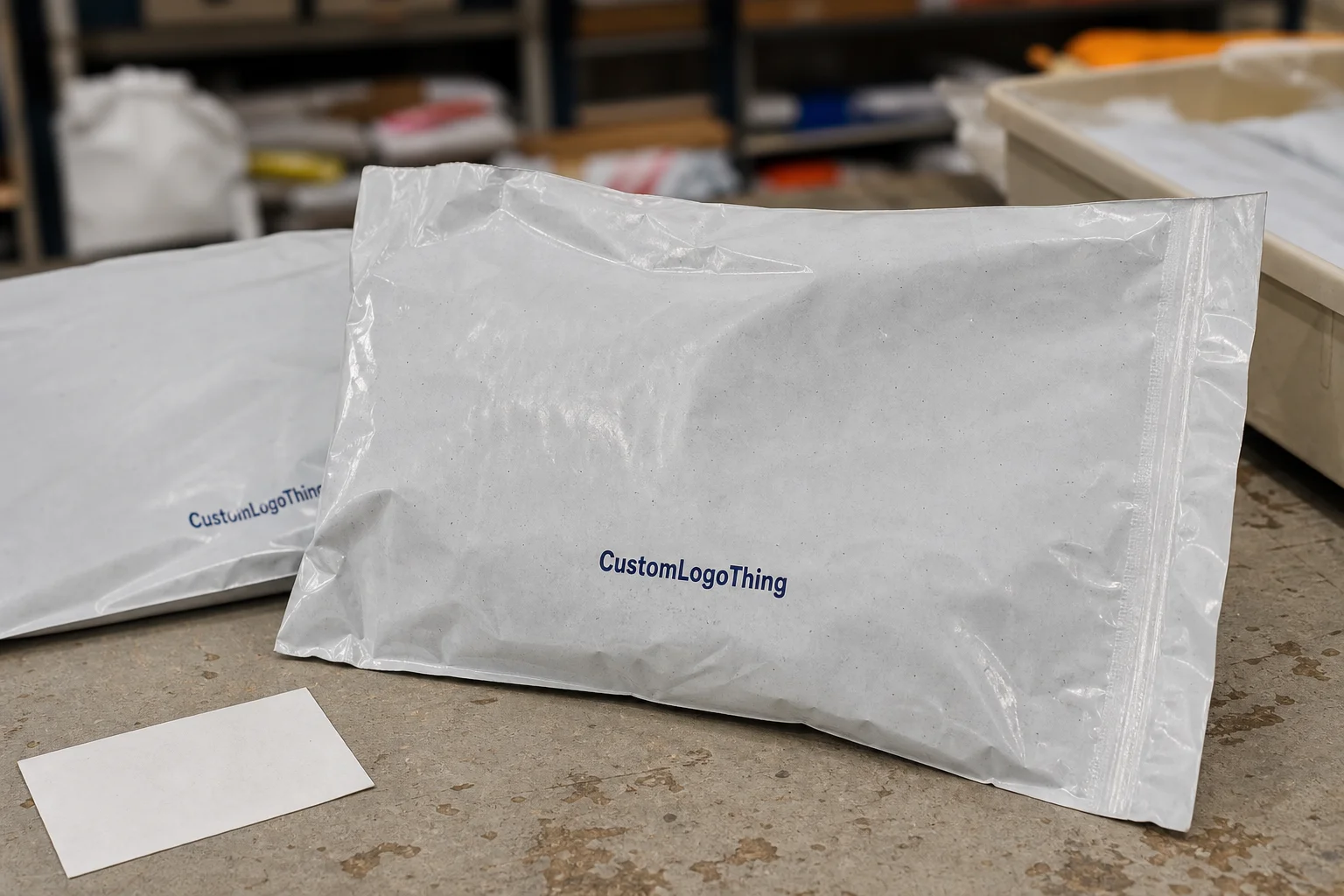
Bookstores sell condition almost as much as content. A bent board corner on a children’s hardcover, a scratched jacket on a design title, or a fingerprinted signed copy can trigger a markdown of 10% to 40%. On collectible inventory, the hit can be worse. A clear protective bag is usually cheap insurance against a visible loss.
| Scenario | Typical bag cost per piece | Potential loss if one book is damaged | What usually matters more |
|---|---|---|---|
| Short run, 1,000 plain stock bags | $0.10-$0.18 | $8-$30+ wholesale value | Availability and fit |
| Mid run, 5,000 bags | $0.06-$0.12 | $8-$50+ including labor to replace | Cost per piece and packing speed |
| Bulk run, 25,000+ bags | $0.04-$0.08 | $8-$50+ plus returns risk | Bulk pricing and carton efficiency |
Include labor in the math. If staff need to pull a damaged copy, inspect it, update stock, re-bag a replacement, and handle a return or claim, the few cents saved on packaging disappears quickly.
Clear poly bags also solve practical handling issues. Staff can see the cover, signed plate, insert card, or barcode without reopening the package. The bag adds a light barrier against dust and incidental moisture, keeps multipart bundles together, and can make display tables look more uniform.
Standardization helps as well. If one fitted size works across a title family or event program, packing gets faster and training gets easier. For stores packing books with accessories or gifts, it can also help to compare the bag choice against broader Custom Packaging Products so the full pack system works together.
Which clear poly bag format fits bookstore inventory best
Not all clear bags behave the same way on a shelf or at a packing bench. The best format depends on how the book will be displayed, handled, and shipped.
Common formats bookstores use
- Flap seal bags: common for signed copies, giftable sets, and cleaner retail presentation.
- Open-ended sleeves: useful for short-term storage, backroom protection, or fast insertion when closure is unnecessary.
- Resealable adhesive strip bags: better for repeated access, subscription kits, staff handling, or packs that may be opened and reclosed.
- Suffocation-warning variants: often needed for broader retail compliance, especially where children’s items or general merchandise rules apply.
Format affects labor as much as appearance. A flap bag may look better on display, but if staff need to reopen it for events or personalization, resealable adhesive usually makes more sense. Open sleeves are fast and cheap for storage, but they do less during shipping or customer browsing.
Material choice changes the result too. Buyers often compare higher-clarity polypropylene-style films with softer polyethylene films. The first usually looks crisper and glossier, which helps cover art under retail lighting. The second is more forgiving in bulk handling and can feel less brittle during insertion, but it usually does not present as well. Customer-facing books often justify better clarity; backroom protection often does not.
Closure style also affects usability. Permanent adhesive gives a tidy finish but is inconvenient if the bag must be reopened. Resealable strips add function, though they usually add some cost. Flap length matters too: too short looks awkward, too long slows handling and adds excess film cost.
If staff can scan barcodes or verify inserts through the film, order accuracy improves during events and seasonal rushes.
Specifications that change performance: size, gauge, clarity, and seal style
Most buying problems start with vague specs. “Need clear bags for books” is not enough to get an accurate quote or a good first sample.
Bag dimensions should account for book width, height, spine depth, flap allowance, and insertion tolerance. Miss any of those and the bag may pack slowly, wrinkle badly, split at the seams, or look cheap on the shelf.
How to size a bag correctly
Measure the actual packed item, not just the catalog trim size. Include the thickest spine in the SKU range, any belly band, insert card, or promotional add-on. A practical allowance is often around 0.25 to 0.75 inch in width, plus enough length for the full book height and flap if needed. Thick hardcovers and bundled kits need more tolerance than slim trade paperbacks.
Oversized bags are not safer. They let the book slide around, wrinkle on display, and waste film. Undersized bags are worse because corners catch during insertion and seams get stressed.
Gauge and film thickness
Thickness may be listed in mil or gauge depending on the supplier, so confirm the actual conversion instead of assuming quotes use the same standard. For light shelf protection, thinner film can work. For collectible hardcovers, square-corner art books, or bundles going into shipping cartons, heavier film generally holds up better.
- Lighter film: suitable for dust control, display, and low-handling use.
- Mid-range film: practical for general bookstore use, signed copies, and moderate shipping exposure.
- Heavier film: better for boxed sets, bundles, repeated handling, or sharper corners.
Edge profile matters as much as weight. A square hardcover corner can puncture thin film faster than a heavier paperback with rounded edges.
Seal style and optical quality
Side weld construction can give a cleaner face and works well for flatter items. Bottom weld bags may offer easier loading or different usable capacity depending on the design. Ask how weld style affects true internal dimensions, because quoted width and length do not always equal the same packable space.
Optical quality matters in bookstores. If the film is hazy, cloudy, heavily wrinkled, or too reflective under store lights, it can undermine a premium cover. Ask about clarity, haze, gloss, and wrinkle tendency if the bag will be customer-facing.
Before requesting pricing, gather these basics:
- Book trim size range and thickest spine
- Whether the bag is for one SKU or mixed use
- Closure preference
- Display, storage, or shipping application
- Estimated annual volume, not just the first purchase order
Bookstore clear poly bags unit cost: pricing drivers, MOQ, and quote logic
Bookstore clear poly Bags Unit Cost is driven by several variables at once, which is why weak quote comparisons cause confusion.
Main cost drivers usually include:
- Dimensions: larger bags use more film and reduce carton efficiency.
- Material type: clearer, stiffer films often cost more than basic flexible films.
- Film thickness: more material raises piece price but may reduce damage and rework.
- Closure style: resealable strips, extended flaps, and specialty seals add conversion cost.
- Print or plain stock: warning text, logos, or instructions can trigger setup and plate costs.
- Packaging method: inner packs, labeling, and case counts affect handling cost.
- Order quantity: larger runs usually lower cost per piece.
For plain stock-size bags, small orders cost more per unit because the supplier is breaking standard inventory or converting less efficiently. Around 5,000 pieces, pricing often becomes more competitive. At 25,000 pieces and up, landed economics usually improve further if you have the storage space and turnover to justify it.
Custom sizes change the picture. First orders may include tooling or setup charges, especially if the bag is printed or outside normal stock dimensions. But if a stock bag is too loose, too tight, or slow to pack, a custom size can lower total cost over time by reducing waste and labor.
| Quote factor | Stock size bags | Custom size bags | Buyer implication |
|---|---|---|---|
| Lead time | Usually faster | Usually longer | Stock helps urgent launches |
| Setup charges | Low or none | More likely | Custom needs repeat volume to pay back |
| Fit accuracy | May be loose or tight | Closer to the actual SKU range | Custom can improve presentation and speed |
| Cost per piece | Often better for smaller orders | Often better at repeat volume | Annual usage changes the answer |
Freight is where quote comparisons often fall apart. Bags are light, but carton count, case pack, and pallet density still matter. If one supplier packs 1,000 per carton and another packs 500, inbound freight and warehouse handling will not be equivalent. Ask for case-pack quantity, carton dimensions, gross weight, and shipping origin.
A cleaner RFQ includes:
- Exact usable dimensions
- Film type and target thickness
- Plain or printed specification
- Closure style
- Quantity tiers such as 2,500, 5,000, and 10,000
- Use case: shelf, event, storage, or shipping
- Delivery ZIP code
Stores shipping direct-to-consumer should also look at how the inner bag works with outer packaging such as Custom Poly Mailers. Good packaging decisions usually happen at the system level.
Production process and lead time from quote approval to delivery
If the bags are tied to a launch date, signing event, holiday set, or subscription program, lead time can become the main constraint.
The normal sequence looks like this:
- Inquiry with dimensions and use case
- Specification review
- Quote issued
- Sample review or stock check
- Artwork review if printed
- Approval
- Production
- Packing and shipment
- Receiving at destination
Plain stock bags can move quickly if inventory is available. Custom sizes and printed warning text usually take longer because conversion, proofing, and scheduling are involved. Lead time also shifts based on run size, freight mode, and season.
Delays usually come from incomplete dimensions, unclear flap requirements, late proof approvals, or freight bottlenecks after production. For collectible books, unusual trim sizes, boxed sets, or subscription kits, pre-production samples are worth the time. Sample cost is minor compared with a bad fit across thousands of units.
Rush orders are possible, but expedited freight raises landed cost and may limit material or sizing options.
Planning rule: start with the in-hands date, then subtract receiving time, transit buffer, production time, and approval time. What remains is the latest safe date to request pricing and samples.
For transit testing, it also helps to review general transport guidance from ISTA. The bag protects the book surface, not the whole shipment by itself.
Common buying mistakes that raise returns, labor time, or total packaging spend
The expensive mistakes are usually simple ones repeated across many orders.
Mistake one: buying by width and height only. Books have spine depth, and spine depth changes fit more than many buyers expect.
Mistake two: choosing film that is too thin for the actual handling level. A bag that survives backroom storage may fail during event traffic or e-commerce fulfillment.
Mistake three: ordering oversized bags because extra room feels safer. Usually it just means more wrinkles, more sliding, and worse shelf presentation.
Mistake four: comparing quotes without matching material, thickness, closure style, tolerance, and case-pack assumptions.
Mistake five: buying the wrong quantity. Too much stock ties up space and cash. Too little creates rushed replenishment, higher freight, and fewer options.
Mistake six: missing compliance details. If the pack enters broader retail channels, warning text, barcode visibility, and retail readiness can matter. If secondary paper packaging is also part of the program, chain-of-custody standards from FSC may be relevant on the paper side.
A short pre-PO check prevents most of this:
- Width, height, spine, and flap allowance confirmed
- Film type and thickness approved
- Closure style defined clearly
- Plain versus printed details locked
- Quantity breaks reviewed against MOQ efficiency
- Case-pack and freight assumptions confirmed
- Sample tested if fit or appearance matters
How to place the right order fast: samples, spec sheet, and next-step checklist
If speed matters, the fastest route is a complete spec sheet up front.
Prepare these details before sending an RFQ:
- Largest book dimensions and thickest spine
- Target quantity tiers, ideally three breaks
- Use case: shelf display, event signing, storage, or e-commerce shipment
- Preferred film type and thickness range
- Closure style
- Printed warning text or branding requirements
- Ship-to location
Ask for multiple quantity breaks. That shows the real pricing curve and helps separate a reasonable MOQ from volume you do not need. Many buyers find that 5,000 pieces is only modestly more expensive than 2,500, while much larger jumps only make sense if annual usage is stable and storage is available.
Request samples for signed books, limited editions, boxed sets, and bundled merchandise. Evaluate clarity, wrinkle behavior, loading speed, seam strength, and how the packed item looks under actual store lighting.
The simplest buying sequence looks like this:
- Measure the largest or most difficult SKU accurately
- Identify the highest-risk handling application
- Check whether a stock size fits cleanly without excess slack
- If not, request custom sizing with full specs
- Compare quantity tiers, lead time, carton pack, and landed cost
- Approve samples if the title is premium or customer-facing
Bookstore clear poly bags unit cost should be judged against fit, speed, damage reduction, and landed cost, not by piece price alone.
FAQ
How is bookstore clear poly bags unit cost calculated?
It is usually based on dimensions, film type, thickness, closure style, print requirements, and total quantity. Freight, carton pack, and whether the bag is stock or custom can change landed cost more than buyers expect. A reliable quote needs complete specs and a delivery location.
What MOQ should I expect for custom clear poly bags for bookstores?
MOQ depends on size, plain versus printed construction, and the production route. Stock sizes usually allow lower starting volumes. Custom sizes often require higher minimums so setup and conversion costs can be spread across the run. Ask for several quantity breaks instead of one headline price.
What thickness is best for bookstore book bags?
There is no universal answer. Light film can work for basic shelf protection. Mid-range film is common for signed copies and general store use. Heavier film makes more sense for sharp-cornered hardcovers, bundles, and repeated handling. Test with the actual packed book, not just the nominal size.
Are stock sizes or custom sizes better for bookstore clear bag pricing?
Stock sizes are usually faster and often more economical on smaller orders. Custom sizes can lower total cost if stock bags fit poorly, waste film, or slow down packing. The right choice depends on annual volume, fit tolerance, and whether the package is customer-facing.
How long does it take to receive clear poly bags for a bookstore order?
Lead time depends on stock availability, customization, proof approval speed, production capacity, and freight method. Plain stock orders usually move faster than custom or printed runs. If the bags are tied to an event or launch, build in time for sample review and receiving instead of planning to the production date alone.


