Custom birthday labels look like a small detail until you watch what happens when the package is opened. A plain kids’ tee can feel like a standard stock item, then feel like a gift-ready piece the moment the label, tag, or wrap tells the buyer this order was assembled for a birthday. That shift is the whole point. It changes the first read, and first reads carry more weight than most packaging teams expect.
From a buying and production standpoint, these labels do three jobs at once. They identify the product, support the brand presentation, and shorten the amount of time it takes for the customer to understand what they are holding. That matters for gift sets, seasonal launches, party favors, and direct-to-consumer parcels where the box or bag has to do some of the selling before the product is even unfolded.
The best label programs are not built on decoration alone. They are built on fit: fit with the product, fit with the packaging surface, fit with the shipping method, and fit with the budget. A birthday label that looks attractive on a screen but lifts at the edge, smears in transit, or gets crowded by too much copy is not really doing its job.
Why Birthday Labels Change the Whole First Impression
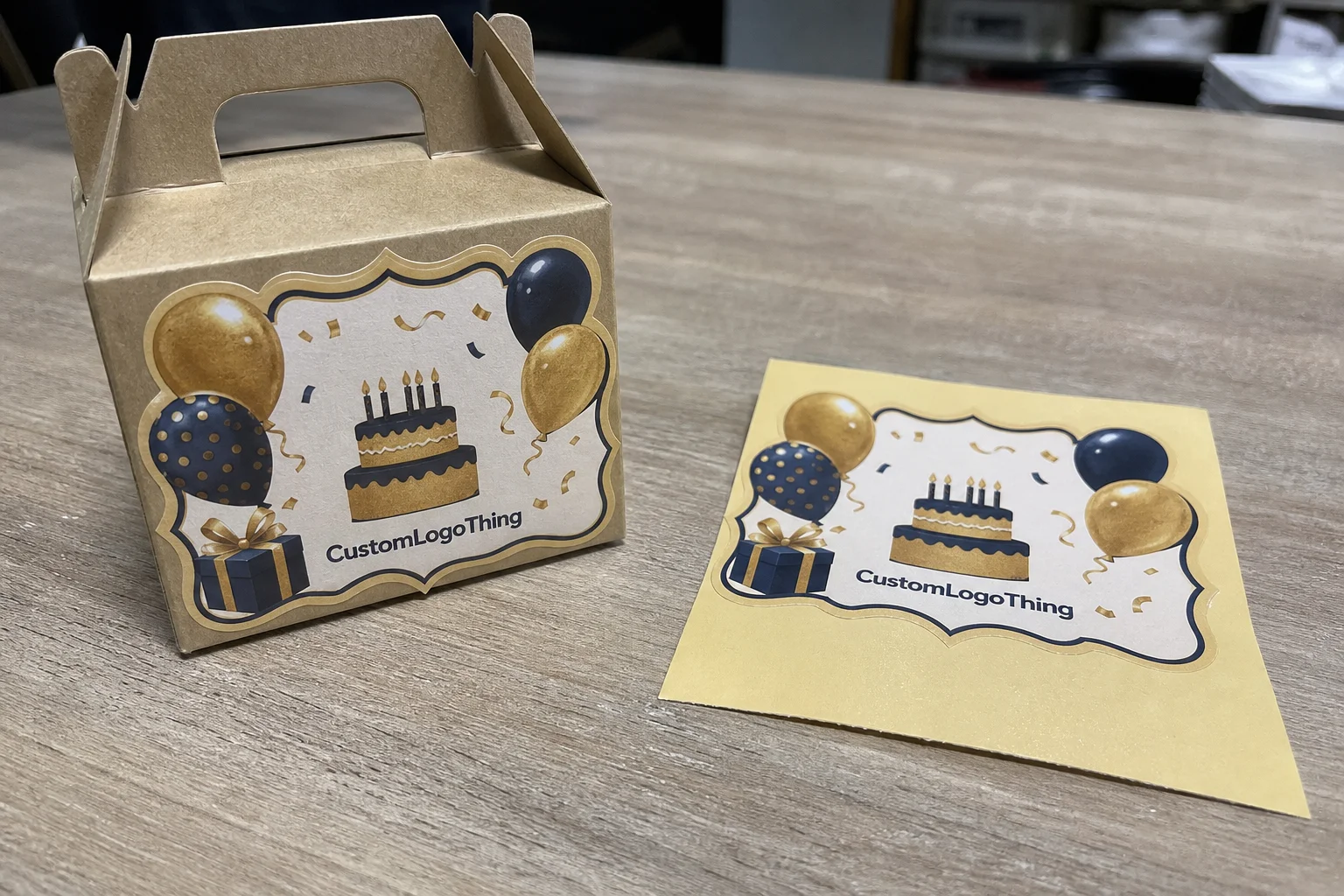
Open a generic garment and you get a garment. Open the same piece with a birthday-specific label and you get a giftable item with a clear occasion attached to it. That sounds simple, but it reflects how buyers actually evaluate packaging. They do not separate the product from the presentation; they read both at once. If the package communicates “birthday” immediately, the order feels more intentional and more finished.
In practice, custom birthday labels can appear on apparel tags, poly bags, header cards, gift wraps, inserts, and folded presentation sets. Some carry a simple age marker or celebratory message. Others include a name line, a collection name, a short brand mark, or a design cue that ties the whole order together. Used well, the label becomes part of the retail packaging language rather than a sticker added at the end.
For brands, the value is not just visual. A well-designed label can improve sorting during fulfillment, separate birthday runs from standard inventory, and make it easier for a packing team to spot the right SKU quickly. That is especially helpful when the same garment or item is sold in multiple formats. The label becomes a low-cost control point as much as a design element.
Birthday packaging also lives at the intersection of emotion and speed. Buyers want to know instantly that the item suits the occasion, but they do not want to spend time decoding a crowded layout. Strong labels solve that problem by keeping the message short, legible, and coordinated with the rest of the package. When they do that well, the box or bag feels more expensive than the raw materials would suggest.
- Boutique drops that need a gift-ready presentation
- Party favors and event merchandise
- Seasonal apparel tied to birthdays or age milestones
- Giftable basics sold with folded or wrapped presentation
- DTC parcels that need a quick and unmistakable packaging cue
If you already use Custom Labels & Tags, birthday versions usually extend an existing system rather than create a new one. The useful mindset is straightforward: a label is not only a design choice. It is a production choice that affects cost, lead time, fulfillment, and how the order feels when the customer opens it.
Practical rule: if the label helps the customer understand the gift faster, it is doing useful work. If it adds visual clutter without improving the read, it is probably too much.
Production Steps and Turnaround: From Proof to Delivery
The production path is usually simple on paper and more delicate in execution. It begins with artwork intake, then proofing, then material selection, print setup, finishing, inspection, packing, and shipping. A straightforward label can move quickly through that sequence. A label with variable names, specialty adhesive, tight registration, or a custom cut shape will take longer, even if the artwork itself is not complicated. Printing is only one part of the schedule.
A realistic timeline often starts with artwork review in 1 to 2 business days. Proof approval may take another 1 to 3 days depending on revision count and how quickly the buyer responds. Standard production often lands in the 5 to 10 business day range, with transit added afterward. Larger runs, specialty materials, or multiple versions can extend the clock. Those delays are usually tied to setup and handling, not because the job is “slow.”
The delays that catch buyers off guard tend to be ordinary ones: low-resolution files, missing bleed, unclear cut lines, or late artwork changes after proof approval. If the labels need to coordinate with custom printed boxes, inserts, or a launch kit, one missed approval can stall the entire packaging schedule. The bottleneck is often coordination rather than printing.
Lead time also changes with quantity. Small runs may fit neatly into an existing schedule, while large runs can require more drying time, more finishing passes, or extra QA. If the job uses multiple SKU versions or special adhesives, each variation adds a handling step. That is normal. It is also why a production calendar is more useful than a single vague deadline. Ask for proof, production, and transit dates separately so launch planning is based on actual milestones.
Custom Birthday Labels Cost: Pricing Drivers and MOQ
Pricing for custom birthday labels is easy to misunderstand if the discussion starts and ends with unit price. The real cost depends on quantity, size, material, print method, adhesive type, finish, and whether the design needs variable names or multiple versions. A simple one-color label on paper stock will not price like a laminated synthetic label with a custom die cut and personalized data. The spec matters more than the headline number.
The unit-cost curve is predictable. As quantity rises, the price per label usually falls because setup cost is spread across more pieces. That does not mean the biggest order is always the right decision. If you are testing a new birthday theme, a smaller run limits risk. If the label will support a repeat seasonal SKU, a larger run may make sense because it lowers the future cost of reordering and reduces the need to repeat setup work.
MOQ, or minimum order quantity, is useful because it frames the test-versus-stock decision. A low MOQ helps when you are validating a new look, checking response from customers, or managing a one-time event. A higher MOQ can be better for a stable style that will reorder through the year. The wrong MOQ is usually the one that forces you into excess inventory or repeated tiny reprints.
Here is a practical way to think about the common ranges buyers see:
| Order type | Typical unit cost | Best for | Main trade-off |
|---|---|---|---|
| Short run, simple print | $0.18-$0.35 per unit | Testing a new birthday concept or a small event batch | Higher setup cost per piece |
| Mid-volume, standard finish | $0.09-$0.22 per unit | Giftable basics, boutique replenishment, repeat drops | More inventory on hand |
| Higher volume, specialty finish | $0.06-$0.16 per unit | Established seasonal or evergreen birthday SKUs | Longer lead time and more upfront spend |
Those ranges are useful for planning, not promises. Freight, location, and spec complexity move the final number. Add-ons can also change the quote: rush service, special die cutting, proof rounds, custom packing, and outbound shipping all count. That is why landed cost matters more than the line-item unit price. A lower quote can become the more expensive option once freight and extra handling are added in.
If birthday labels are part of a larger packaging purchase, compare them inside the full stack rather than in isolation. A label that costs a few cents more can still improve margin if it raises gift appeal enough to support a better selling price or reduce the need for extra inserts. That is often how the math works in actual retail packaging decisions.
For buyers pairing labels with Custom Packaging Products, the useful question is not just what the label costs, but how it interacts with mailer cartons, tissue, inserts, and the unboxing sequence. The cheapest label is not always the best value if it weakens the presentation or fails in transit.
Materials, Adhesives, and Finishes That Survive Wear
Material choice affects both appearance and performance. Paper-based labels work well for short-term presentation and lower-cost runs. Synthetic film stocks hold up better in transit, storage, and repeat handling. Textile-safe options matter when the label touches apparel directly or needs to sit against folded fabric without leaving residue or deforming at the edges. There is no single best material; there is only the best match for the use case.
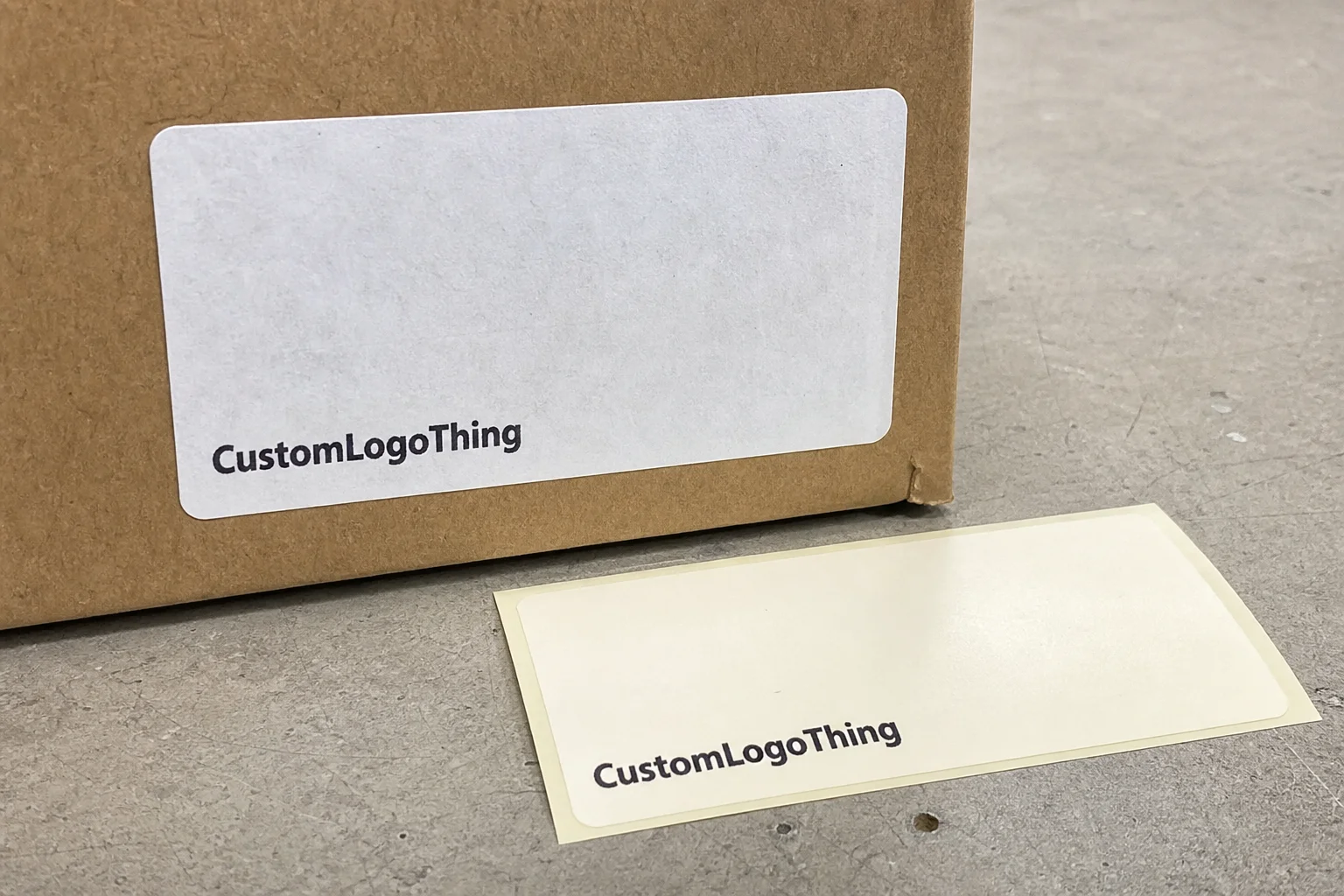
Adhesive selection is often where a label program succeeds or fails. A removable adhesive behaves very differently from a permanent one, and low-tack adhesive sits in its own category. A label that stays perfectly in place on a smooth poly bag may peel from textured kraft or grip too aggressively on a coated box. That is why a sample test on the actual surface is not a luxury. It is a basic production check.
Finishes change the tone of the piece. Matte gives a softer read and usually helps legibility. Gloss adds brightness and makes saturated color feel more energetic. Soft-touch can signal a premium package, though it is not always necessary for a birthday item aimed at children. Clear laminates improve moisture resistance and surface durability, which matters if the package will be stacked, mailed, or handled multiple times before the customer opens it.
For packages that have to survive fulfillment, durability should be treated as part of the design brief. A label that looks great under studio lighting but scuffs in transit can pull down the entire presentation. If the package sits on a shelf or in a retail display, paper stock and standard finishes may be enough. If it moves through a warehouse, a synthetic construction and stronger adhesive are usually safer.
Two external references are worth keeping in mind. ISTA testing gives buyers a framework for understanding transit stress, while FSC certification can matter if your brand wants responsibly sourced paper. See ISTA and FSC for the underlying standards. If sustainability matters, ask for substrate origin details instead of assuming all paper labels are equivalent.
Common material matches by use case
- Paper label: short-term presentation, lower-cost gifting, low abrasion
- Synthetic film: better moisture resistance, handling, and shelf life
- Low-tack adhesive: temporary placement on packaging or garment-safe applications
- Permanent adhesive: stronger hold on boxes, bags, and smoother retail packaging
The strongest buyers tend to evaluate materials as a performance question first and a style question second. A label can be visually strong and still fail if the adhesive lifts at the fold or the finish scuffs during packing. Customers notice those failures quickly because they read them as packaging quality problems, not printing details.
A Practical Ordering Workflow for Clean Results
The cleanest orders usually begin with a clear brief. Define the label size, exact text, brand elements, color targets, intended surface, and attachment method. If the label goes on apparel, note whether it will sit on a fold, a hang tag, a poly bag, or a sewn-in position. Those details save a lot of back-and-forth because they remove the guesswork from the first proof.
Artwork review is the next point where buyers can reduce risk. Confirm resolution, spelling, safe margins, dielines, and file format before submission. Vector files such as AI, EPS, or a print-ready PDF usually reduce problems, especially if the labels have crisp edges or small type. If the printer asks for bleed, outlines, or cut lines, include them. That keeps the proof closer to what will actually run on press.
Proof approval deserves a checklist, not a quick glance. If the label is for a birthday product, verify the name, age reference, punctuation, spelling, and brand mark. One wrong character can create a full reprint. In small runs, that mistake is expensive enough. In larger runs, it can disrupt the rest of the packaging schedule.
A simple workflow keeps the job moving:
- Write the label brief.
- Confirm the final artwork version.
- Approve the proof only after a line-by-line check.
- Run a sample or pilot batch.
- Scale once the fit and presentation are confirmed.
That sample step is not only for cautious buyers. It is how you verify adhesion, color, fold presentation, and compatibility with the garment or box surface. You are testing the label inside the real packaging system rather than judging it in isolation, which is the only way to know whether it will hold up after packing, shipping, and opening.
Keep a reorder record as well. Save the approved file, material spec, adhesive type, finish, and any notes from the supplier. A well-documented label is easier to repeat, faster to reorder, and less likely to drift over time. That matters if the label has to coordinate with other product packaging elements such as inserts, tissue, or mailers.
Common Mistakes That Lead to Reprints or Weak Presentation
The most common mistake is designing for a screen instead of the actual label size. On a monitor, small type can look perfectly readable. On a folded tee or a gift bag, the same type may disappear or look crowded. Color can shift too. A pale pastel that looks cheerful on a laptop may wash out on matte stock or under store lighting.
Cut tolerances cause another recurring problem. If bleed or safe area is ignored, the final label can look off-center or cramped even if the artwork itself is attractive. Buyers often blame print quality when the real issue is layout discipline. A good supplier should flag that, but the buyer still needs to review the proof carefully.
Adhesive mismatch is a classic packaging failure. A label that looks fine on paper may peel from coated boxes or struggle on textured surfaces. That is why sample testing matters. You cannot judge performance from a PDF. You need to know how the label behaves on the actual material, with the actual handling, in the actual environment it will meet in the field.
Copy overload is another trap. Birthday labels need a fast read. The customer should understand the message in a second or less. When the label tries to say too much, it stops feeling like a label and starts looking like a flyer. Shorter is usually stronger, especially in branded packaging where the rest of the box or garment already carries much of the visual load.
One more thing buyers sometimes overlook is how the label behaves after packing. A finish that looks fine in a still image may scuff against tissue, smudge when stacked, or curl at the corner if the carton sits warm for too long. If the order is meant to be mailed, the test should include transit stress, not just a desk-side check.
For a broader packaging context, the EPA’s waste and materials guidance can help if your team wants to reduce excess packaging or improve material choices. See EPA packaging and materials resources for general references around disposal, source reduction, and material efficiency. It is not a label spec, but it can support a smarter materials conversation.
Best practice: if the label is supposed to elevate the gift, the presentation has to survive packing, shipping, and opening. A label that fails in transit becomes a complaint before it becomes a brand moment.
Next Steps: Test, Approve, and Scale a Smarter Run
The smartest next move is to audit your current label format and decide where custom birthday labels can add the most value. Start with one use case. Maybe it is kids’ apparel gift sets. Maybe it is party merchandise. Maybe it is a seasonal bundle that needs a stronger emotional cue. Tight scope usually leads to better specs and fewer mistakes.
From there, order a small sample run or proof pack. Verify color, adhesion, and presentation before you commit to volume. Ask for a quote that separates setup, unit cost, finishing, and shipping so you can compare suppliers on total landed cost. That keeps the decision grounded in real margin rather than in a single attractive number.
It also helps to build a simple approval checklist for future orders. Include size, material, finish, adhesive, artwork version, and delivery date. If the label belongs to a broader package, note how it interacts with tissue, inserts, bags, or custom printed boxes. The label should support the package, not compete with it.
Restraint usually wins on the first run. A label that matches the packaging job it has to do will often outperform a fancier spec that is harder to produce, harder to apply, or more likely to fail in transit. Start with the simplest version that still gives the right emotional signal, then repeat the winning setup on the next batch of custom birthday labels.
FAQs
How much do custom birthday labels usually cost per order?
Pricing depends mostly on quantity, size, material, finish, and whether the design needs custom artwork or variable data. Small runs usually cost more per label; larger runs tend to lower the unit price but require more upfront spend.
What file format should I send for custom birthday labels?
Vector files like AI, EPS, or a print-ready PDF are usually the safest starting point because they keep edges sharp and scale cleanly. Include bleed, cut lines, and outlined fonts if the supplier requests them so the proof matches production more closely.
How long does production and shipping typically take?
Most timelines depend on proof approval, material availability, and queue position, not just print speed. Ask for separate lead times for proofing, production, and transit so launch dates are realistic.
Which materials work best for clothing labels?
Choose a material that matches how the label will be used: fold-in display labels, sewn-in textile labels, or temporary packaging labels all need different constructions. If the label will touch fabric, test adhesion and removal on the actual garment surface before ordering in volume.
What should I prepare before requesting a quote?
Prepare the label size, quantity, artwork, material preference, adhesive needs, finish, and delivery deadline. If you can, include a sample image of the final package or garment so the vendor can recommend the right construction.