custom reusable plastic bags are not just thicker versions of a checkout bag. In practice, they sit at the intersection of packaging, merchandising, and brand memory. A bag that can be carried more than once does more than protect a purchase on the way to the car; it keeps working after the sale, showing up in offices, kitchens, gyms, and return trips to the store.
That repeat use is the reason buyers treat this item differently from a basic carryout bag. The details matter: film type, thickness, handle construction, print method, and the way the artwork behaves once the bag gets folded, stuffed, or rubbed against other items. A spec that looks fine on paper can feel flimsy in hand, and a bag that feels premium in a sample can still fail if the seams, handle welds, or ink coverage are not matched to the real load.
"If a reusable bag tears early, the branding does not look premium. It looks like a mistake that travels."
Why custom reusable plastic bags work in real retail operations
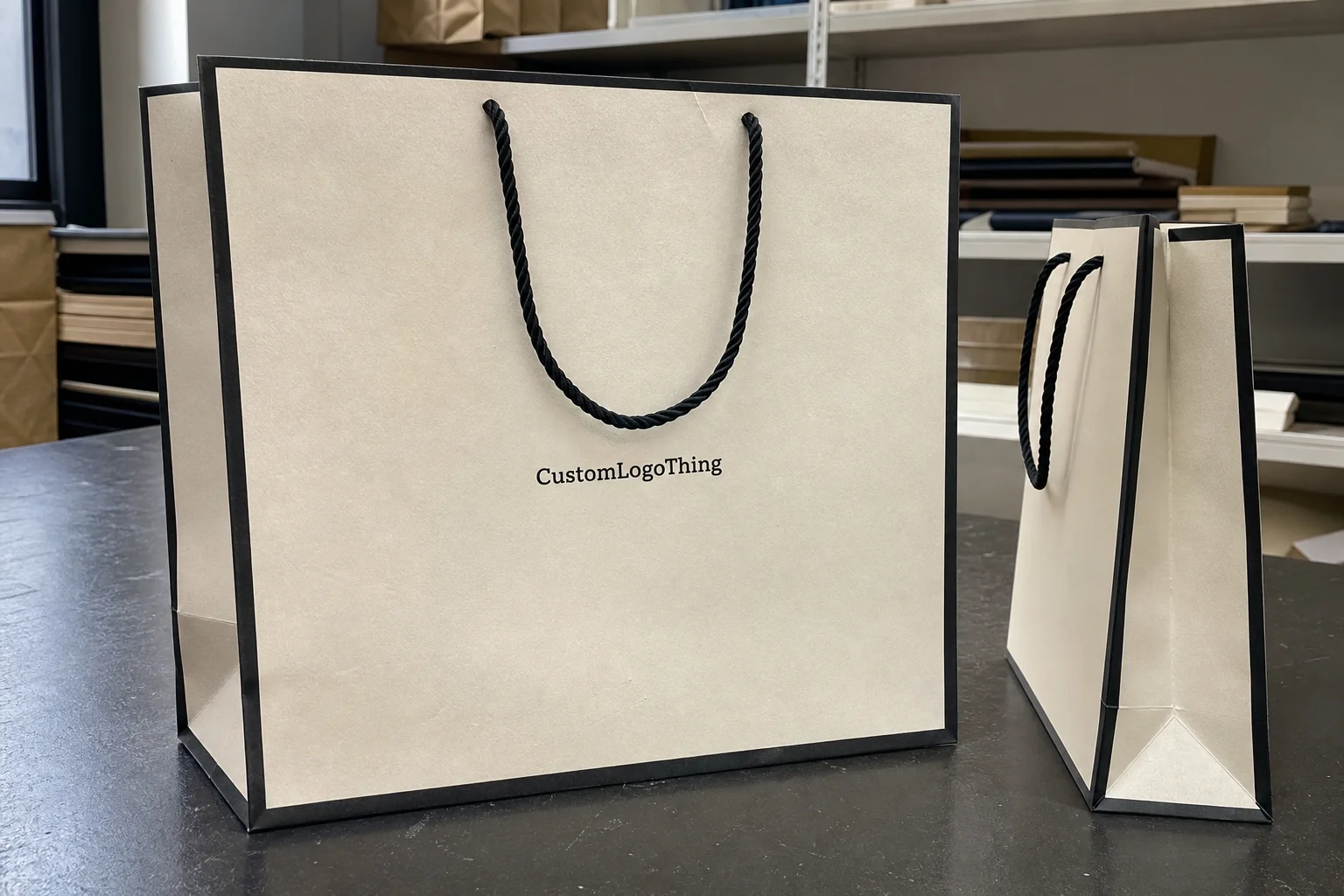
The value of a reusable bag is simple: it stays in circulation longer. A one-trip bag leaves with the purchase and disappears. A better-built bag gets used again, which means the logo keeps earning impressions without another media spend. That is one reason custom reusable plastic bags have become a practical option for retailers that want packaging to do more than simply move items from point A to point B.
The real distinction is not just thickness. A reusable bag needs enough film strength to resist stretching, seams that tolerate repeated loading, and handles that remain comfortable when the bag is full. If the handles dig into the hand or the body sags badly, customers stop reusing it. At that point, the bag is technically reusable but functionally disposable.
Different retail environments demand different structures. Apparel bags usually need a smoother hand feel and cleaner print presentation. Grocery and mixed-item retail bags need more load tolerance and better handling of weight distribution. Takeout and gift packaging can sit somewhere in the middle, but they still need enough integrity to survive carry, storage, and a second use without looking worn out.
There is also a branding reason to get the spec right. A bag that keeps its shape and color reads as intentional. A bag that wrinkles heavily, prints too lightly, or collapses under modest weight weakens the rest of the packaging program. For teams that care about brand consistency, the bag should feel like part of the same system as the label, carton, and insert, not a separate budget line item chosen at the last minute.
For broader packaging programs, the same discipline applies across formats. Teams that buy Custom Packaging Products often get better results when the bag is designed alongside the rest of the retail packaging rather than after the rest of the system is already approved.
Materials guidance from sources such as EPA guidance on materials and waste reduction and transit-testing references from ISTA can help frame the durability and logistics side of the decision. Those references are broader than bags, but the core questions are the same: how much abuse will the package see, and what failure point can the program tolerate?
Materials, handles, and printing that hold up
Material choice sets the tone immediately. LDPE tends to feel softer and smoother in the hand, which gives it a more premium feel in retail. HDPE is lighter and usually more cost-efficient, but it can feel crisp and less substantial. Co-extruded films are used when buyers want a balance of strength, appearance, and print performance. Each choice has a different feel, and customers notice that difference the moment they pick up the bag.
Thickness matters, but it should be read in context. A 2.5 to 3 mil bag may be enough for light apparel, paper goods, or lower-weight carryouts. Once the contents become heavier or the bag is expected to be reused often, 3.5 to 4.5 mil is usually more realistic. Thicker is not automatically better. A bag can be overbuilt for the job and still disappoint if the handle style or dimensions are wrong.
Handle design affects comfort and durability more than many buyers expect. Die-cut handles are common and economical. Loop handles are more comfortable over longer distances. Reinforced patch handles spread stress better, which helps when the bag carries denser items. Soft-loop handles feel premium and are better for repeated carrying, though they usually add cost and require more planning in production.
Printing is where design ambition meets manufacturing reality. Flexographic printing is the most common method for larger runs because it is efficient, consistent, and suitable for simple brand graphics. One to three spot colors is often enough to create a strong result. As the number of colors rises, so do the setup requirements, registration risk, and chance of small visual shifts on flexible film. Fine gradients and detailed photography can be done in some cases, but they are usually harder to control and rarely necessary for a retail bag.
| Bag option | Typical feel | Common use | Approximate strength / cost profile |
|---|---|---|---|
| HDPE, 1.5-2.5 mil | Crisper, lighter | Carryout, lighter goods | Lower material cost; less premium hand feel |
| LDPE, 2.5-3 mil | Softer, smoother | Apparel, gift packaging | Moderate strength; often a mid-range cost |
| Co-ex blended film, 3-4.5 mil | Balanced, more substantial | Repeated reuse, heavier retail items | Higher cost; stronger durability and better presentation |
| Reinforced loop handle bag | Comfortable in hand | Multi-item retail orders | Higher unit price, better carry experience |
For buyers who are trying to compare options across suppliers, it helps to ask for the exact mil thickness, not just a general description like "heavy duty." Film can vary more than the label suggests, and a small difference in gauge can change both the feel and the failure point. It also helps to understand whether the film is single-layer or co-extruded, because that affects both strength and print behavior.
Testing concepts from ASTM methods and transit standards from ISTA are useful here. Not every bag order needs lab-level validation, but the thinking is the same: if the bag will carry a larger basket, be reused often, or represent a flagship location, the structure should be checked against actual use rather than assumed.
Pricing, MOQ, and what changes the quote
Cost usually comes down to five things: material, thickness, size, handle style, and print complexity. Quantity matters just as much, because setup costs are spread across the run. That is why a short order can look expensive per unit even if the bag itself is simple.
A one-color bag in the 5,000-piece range may land in a completely different price band from a larger order with multiple print colors, a reinforced handle, or a custom shape. Buyers often focus on unit price, then get surprised by plates, setup, freight, or rush charges. Those extras matter more than many first-time buyers expect, especially on heavier film where shipping weight can affect the landed cost in a meaningful way.
MOQ is not a penalty; it is the reality of production economics. Suppliers set minimums because materials, setup, testing, and press time all carry a floor cost. If the order is small, the unit price rises. That is normal. The right question is not whether there is an MOQ, but whether the MOQ fits the rollout plan.
Artwork complexity has a direct effect on quote level. A clean logo with one or two colors is easier to print and easier to keep consistent. Dense layouts, multiple spot colors, or artwork that depends on subtle gradients increase the chance of registration issues and usually add cost. In many retail programs, a restrained design performs better because it is easier to produce and easier to read once the bag is in use.
A practical planning range helps buyers read quotes without overreacting to the first number they see:
- Small test run: Highest unit cost because setup is spread across few bags.
- Mid-volume retail order: Often the best balance between cost, flexibility, and production efficiency.
- Large recurring order: Best for lower landed cost and consistent branding over time.
Before approving a quote, the buyer should ask a few direct questions:
- What is the exact material and mil thickness?
- What is the MOQ, and can it be adjusted?
- How many print colors are included?
- Are plates, dies, or setup charges separate?
- How is freight calculated, and what packaging format is used?
If the packaging program already includes custom cartons, inserts, or in-store presentation materials, compare the bag quote against the same landed-cost logic used for the rest of the packaging. A low unit price can hide a high freight bill, and a slightly higher base price can still win if the production run is cleaner and the shipping setup is simpler.
Process and timeline: from artwork to delivery
The production sequence is straightforward, but most delays happen before the press starts. The normal order is: choose the spec, prepare artwork, approve a proof, create plates or setup, print, finish, pack, and ship. A clean approval cycle keeps everything moving. Missing dimensions, low-resolution artwork, or late design changes tend to slow things down more than the actual manufacturing does.
Lead time depends on complexity and volume. A standard one-color order with a common size and handle style generally moves faster than a custom shape with multiple print colors and tight color matching. Larger quantities also take longer because printing, cooling, inspection, and packing all scale with volume. For planning purposes, many standard orders land in the low double-digit business day range after proof approval, though the real number depends on supplier capacity and freight method.
Buyers can speed the process by sending the information that actually matters:
- Bag dimensions or the size of the products it must hold.
- Estimated load, even if it is based on typical items rather than a lab test.
- Artwork files in the best available format.
- Desired bag color and print colors.
- Ship-to location and required delivery date.
Proofing deserves more attention than it often gets. A digital proof confirms layout, but it does not always show how ink will look on the final film or how a handle placement will affect the visual balance. For launch orders or high-visibility locations, a physical sample or production proof is worth the time. It helps catch color drift, overfilled artwork, or handle issues before the full run ships.
Planning for transit matters too. A reorder that looks simple on paper can become inconvenient if it arrives too close to a store opening or seasonal promotion. Build in time for revisions and freight. A one-week delay in artwork approval can create a much larger delay downstream if the bags are tied to a retail event or a coordinated packaging launch.
How to spec the right bag
Start with the use case. Grocery, apparel, trade show, takeout, and gift packaging all ask different things of a bag. A grocery order needs better load support. An apparel bag can prioritize print clarity and a smoother finish. A takeout bag may need to be economical because it will be distributed often and used once or twice, even if the intent is reuse.
After that, size should be based on the actual products, not on a generic template. Measure the most common purchase, not the largest possible one. The goal is to give the contents enough room without leaving the bag awkwardly oversized. A bag that is too large can flop, wrinkle, and feel less premium than a smaller one that fits properly.
Then choose thickness and handle style together. Those two decisions define how the bag behaves in hand. A thicker film without the right handle can still feel uncomfortable. A comfortable handle on a flimsy body does not solve the durability problem. The best spec is the one that balances these choices against the actual carry load and reuse expectation.
Artwork should be matched to the print method, not the other way around. Flexible film rewards clean shapes, strong contrast, and text that stays legible at a glance. If a brand color is critical, ask how color matching is handled on the chosen substrate. Plastic is not paperboard, and a design that looks perfect in a digital mockup can print flatter or darker than expected.
A simple checklist keeps the process grounded:
- Confirm what the bag must carry.
- Choose the smallest practical size that still fits comfortably.
- Set thickness based on weight and reuse expectation.
- Pick a handle style that matches the carry distance.
- Approve artwork that prints cleanly at scale.
Sample review is worth the effort. Even without a full test lab, a physical sample will tell you a lot about hand feel, stiffness, print visibility, and whether the handles sit where customers naturally expect them. That kind of practical check is often more useful than a long spec sheet, because the end user never sees the spec sheet. They feel the bag in one hand while carrying something else in the other.
Mistakes that make a reusable bag feel disposable
The first problem is using film that is too thin for the job. Thin bags stretch, seams split, and handles fail under ordinary use. Once that happens, the customer stops treating the bag as a reusable item, and the brand loses the very value it paid for.
The second problem is trying to put too much on the bag. Dense artwork, too many colors, and tiny text make the design harder to print and harder to read. A cleaner layout usually looks better from a distance and costs less to produce. That is a useful tradeoff to remember, especially when the bag is supposed to support brand recognition rather than carry a lot of copy.
The third problem is ignoring how the bag will be handled. A spec that works in a backroom handoff may fail in the field, where customers carry mixed weights, fold the bag, or stuff it into a trunk. A reusable bag should be evaluated under the conditions it will actually see, not under idealized handling.
The fourth problem is operational. Teams sometimes forget about storage space, reorder timing, or seasonal spikes. A large run can occupy more room than expected, and rushed freight can erase the savings from a lower unit price. A packaging program stays healthier when the buy, the schedule, and the storage plan are aligned before the order is placed.
Most of all, do not treat the bag as a disposable commodity. It may be a simple product, but it plays a visible role in the retail experience. If it lasts, the brand gets more impressions. If it fails, the failure is visible too.
Buying advice that actually saves money
Use design restraint where it helps. A strong logo, good contrast, and a clean layout usually outperform a busy design that tries to say everything at once. Many of the most effective retail bags are memorable because they are easy to read and durable enough to keep circulating.
Ask for a production proof on strategic orders. That is especially useful for launches, flagship locations, and events where the bag will be seen widely. A proof can reveal issues with print density, registration, or handle placement before those issues become a full-run problem.
Compare the total landed cost, not just the per-bag quote. Freight, packaging format, setup charges, and delivery timing all affect the real budget. Two quotes that look close on paper can land very differently once shipping and production details are included.
Keep a standard spec on file for repeats. That saves time, reduces back-and-forth, and helps preserve consistency across seasons. Retailers do this with cartons, inserts, and other packaging for a reason: repeated specs are easier to reorder, easier to quality-check, and easier to keep aligned with the brand.
For buyers evaluating custom reusable plastic bags against other packaging formats, the main point is simple. The bag should be specified with the same care as the rest of the packaging system. Material, handle style, print method, quantity, and deadline are not minor details. They are the choices that determine whether the bag feels like part of the brand or like an afterthought.
What makes custom reusable plastic bags different from standard plastic shopping bags?
They are usually made with thicker film, stronger seams, and more durable handle construction. The goal is repeated use, not a single trip from the register to the car. The branding also has to survive folding, carrying, and storage.
How do I estimate the right size for custom reusable plastic bags?
Base the size on the actual products the bag must hold. Measure height, width, and depth, then leave enough room for comfortable loading without making the bag oversized. If the contents vary, use the most common basket or purchase pattern as the reference.
What affects the price of custom reusable plastic bags the most?
Material type, thickness, bag size, handle style, and print complexity drive most of the cost. Quantity also matters because setup costs get spread across more pieces. Freight and rush timing can change the landed cost more than buyers expect.
How long does production usually take?
Lead time depends on the artwork, proof approval speed, order size, and current production queue. Straightforward orders move faster. Complex printing or larger quantities usually take longer, and delays often happen before the press run rather than during it.
Should I ask for a sample before placing an order?
Yes, for launch orders, flagship locations, and any bag that needs to represent the brand in public. A sample or production proof helps confirm color, handle feel, print placement, and overall balance before the full run is committed.


