Buyer Fit Snapshot
| Best fit | Custom Bottle Carrier Bags projects where brand print, material claims, artwork control, MOQ, and repeat-order consistency need to be specified before quoting. |
|---|---|
| Quote inputs | Share finished size, material target, print colors, finish, packing count, annual reorder estimate, ship-to region, and any compliance wording. |
| Proofing check | Approve dieline scale, logo placement, barcode or warning zones, color tolerance, closure strength, and carton packing before bulk production. |
| Main risk | Vague material claims, crowded artwork, missing packing details, or unclear freight terms can make a low unit price expensive after revisions. |
Fast answer: Custom Bottle Carrier Bags: Film, Print, MOQ, and Carton Packing should be specified like a repeatable production item. The safest quote records material, print method, finish, artwork proof, packing count, and reorder notes in one written spec.
Production checks before approval
Compare the actual filled-product size with the drawing, then confirm tolerance on folds, seals, hang holes, label areas, and retail display edges. Reserve space for logos, QR codes, warning copy, and material claims before decorative graphics fill the panel.
Quote comparison points
Review material grade, print process, finish, sampling route, tooling charges, carton quantity, and freight assumptions side by side. A quote is only useful when the supplier can repeat the same color, closure quality, and packing count on the next order.
Custom Bottle Carrier bags do a lot more than move a bottle from shelf to hand. They have to keep the bottle upright, protect the neck and base, carry the weight without twisting, and still present the product in a way that feels deliberate. That is where brands sometimes get surprised: the bottle may look beautiful, but if the carrier is too soft, too loose, or too plain, the whole package can feel unfinished.
That handoff matters. For a packaging buyer, custom bottle carrier bags sit right at the point where product packaging, retail packaging, and package branding meet the real world. They may be used for wine, spirits, olive oil, cold brew, specialty sauces, or gift sets, and the structure should follow the actual bottle shape instead of the nominal fill volume on the label. I have seen more than one sample look perfect on a flat proof and then feel awkward once the bottle was inside; paper does not forgive guessing.
If you are comparing options across Custom Packaging Products, bottle carriers are best treated as a structural packaging choice, not only a print choice. Board grade, handle style, divider layout, and finishing all affect how the carrier performs, how it looks on the shelf, and how much it costs to produce. That is true whether you are packing one premium bottle or a two-bottle set that has to travel a little farther in a customer’s hand.
What Custom Bottle Carrier Bags Actually Are
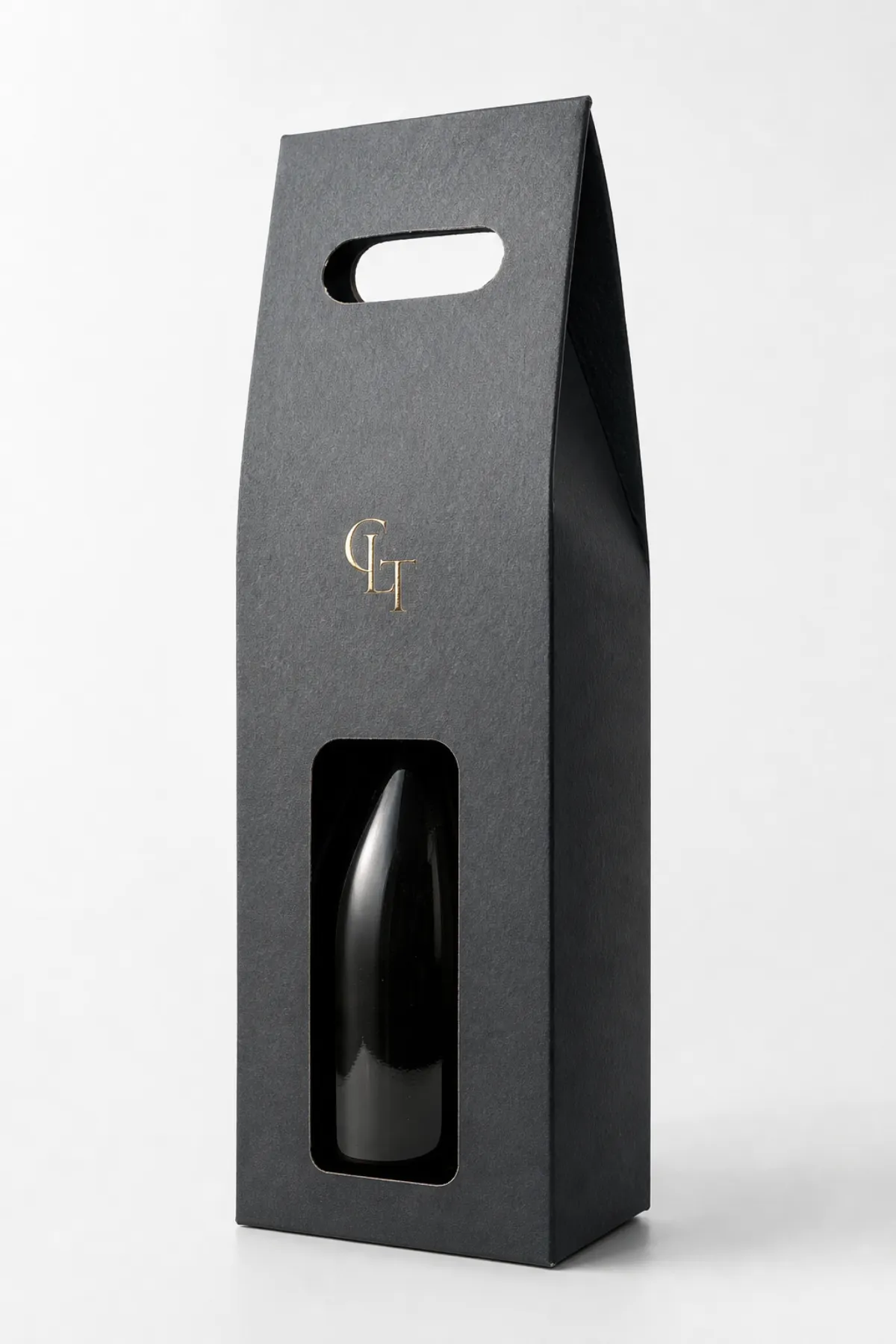
custom bottle carrier bags are purpose-built carriers made to hold one or more bottles securely while still giving the product a clean, branded presentation. They are not just small shopping bags with a logo. A true bottle carrier is built around weight distribution, bottle geometry, and carry comfort, because a bottle behaves very differently from folded apparel, a carton of brochures, or a stack of lightweight goods.
At the simplest level, the carrier is a folded paperboard or kraft structure with a handle and a bottle-sized cavity. More developed versions include internal dividers, locking tabs, reinforced handles, or a corrugated insert that keeps the bottle from shifting during transport. For multi-bottle sets, those internal supports are not a decorative extra; they are what keep the bottles from clashing against each other every time the customer takes a step, bumps a curb, or sets the carrier down a little too quickly.
Material choice usually starts with bottle weight and brand position. Paperboard can work well for lighter single-bottle presentations, especially when the brand wants crisp print quality and a polished retail look. Kraft board is often chosen for a more natural, earthy feel, and it can suit beverage brands that want to signal sustainability without making the carrier look weak. Corrugated board, especially in thinner flutes, adds stiffness and is often the safer choice for heavier glass bottles or two-bottle carriers.
There is also a real difference between a carrier that looks good flat and one that survives a loaded bottle in the hand. A render may show a neat logo panel and a polished handle, but the carrier still has to hold the bottle neck, shoulder, and base in balance. If the bottle sits too high, the package feels top-heavy and swings. If the base pocket is too shallow, the bottle starts to bounce. If the handle is not reinforced, the flex shows immediately. That is one of those details nobody notices when it is done well, but everybody notices when it is not.
That is why custom bottle carrier bags are usually designed for a specific use case: shelf carryout, gifting, tasting room pickup, event distribution, or premium presentation. The right answer depends on bottle size, bottle count, retail environment, branding goals, and budget. A carrier for a single 750 ml wine bottle is a very different build from a two-bottle gift set or a compact carrier for specialty sauces.
From a packaging design standpoint, the carrier is one of the most visible pieces of the product journey. It is often the first thing a customer touches after paying, so the finish, print placement, and handle feel all affect how the brand is remembered. That is one reason many teams treat custom bottle carrier bags as part of a larger branded packaging system rather than as a separate add-on.
Common material and structure choices include:
- Paperboard for crisp print, lighter weights, and premium presentation.
- Kraft board for a natural look and a simple recycled-content story.
- Corrugated board for added stiffness and better carry strength.
- Specialty paper wraps for richer texture and finish options.
- Internal supports such as dividers, tabs, or inserts for multi-bottle stability.
The mistake I see most often is treating every bottle carrier as the same product with different graphics. The structure is the product. Print only gives it voice.
How Custom Bottle Carrier Bags Work in Packaging
The logic behind custom bottle carrier bags is simple, though the details are where the work happens. A good carrier cradles the bottle from the bottom while controlling the neck and shoulder at the top, so the load stays centered instead of hanging from the handle area alone. If the bottle is allowed to swing, the customer feels every step, and that movement puts stress on seams, folds, and handle cutouts.
That is why inserts and partitions matter so much in multi-bottle builds. A divider keeps bottles from clanking together, which protects the glass and protects the customer’s sense of quality. Even when the product inside is low-risk, the sound of bottles knocking around can make the carrier feel cheap. For gift sets, tasting kits, and seasonal promotions, that small detail can change the way the package is received.
Handle style is another structural choice that changes how the carrier works in the hand. Die-cut handles are common, economical, and clean-looking, but they need proper reinforcement around the cutout area. Rope handles feel more premium and can improve comfort on heavier loads, though they add cost and assembly complexity. Folded paper handles can work well for lighter bottles and natural-finish presentations, especially when the brand wants a restrained look without metal eyelets or mixed materials.
The carrier usually moves through a predictable flow: filling, closing, retail display, checkout, transport, and gifting or delivery. That sounds straightforward, but each stage creates its own demands. On the shelf, the bag needs to stand or lie neatly without collapsing. At checkout, the handle should be easy to grip. During transport, the bottom panel and side walls need enough stiffness to resist tipping. At gifting, print and finish become part of the product’s emotional value.
custom bottle carrier bags are often the first physical touchpoint in that sequence, which gives them unusual branding power. A matte-coated paperboard carrier with restrained typography can look more premium than a bag covered in loud graphics. A thoughtful logo panel, a tight fold line, and a reinforced handle zone can communicate care before the customer even sees the bottle itself. That is the quiet credibility good branding builds.
A carrier can look perfect on a flat proof and still fail in the hand if the bottle center of gravity sits too high or the handle reinforcement is too light.
For transit-heavy programs, some teams also look at ISTA testing standards to understand how the full package behaves under drop, vibration, and handling stress. That is not always necessary for every retail carrier, but it becomes more relevant once the product is being shipped in bulk or handed off through several distribution points.
custom bottle carrier bags should also be considered alongside the rest of the pack. If the bottle uses a shrink sleeve, embossed neck label, or tall closure, the carrier opening needs enough room without forcing the bottle sideways. If you already use Custom Packaging Products for other launches, the cleanest results usually come from matching the carrier construction to the rest of the line instead of forcing one generic format to fit everything.
Good carriers move naturally from utility to presentation. That is the goal. The customer should not have to think about why the bag feels stable; they should simply feel that it does.
Custom Bottle Carrier Bags: Cost, Pricing, and MOQ
Price on custom bottle carrier bags is shaped by more than print coverage, though print is usually the first line item buyers ask about. Board weight, material type, handle construction, insert complexity, finish choices, and the number of bottles per carrier all move the number up or down. A simple single-bottle carrier with one-color print and a die-cut handle can sit in a very different price bracket from a rigid-looking carrier with a reinforced insert, multiple print colors, and specialty coating.
Quantity matters because setup work has to be spread across the run. Dieline preparation, platen setup, die cutting, gluing, and make-ready all take labor whether you order 500 pieces or 50,000. That means unit cost usually drops as order size rises, even if the raw material cost stays close to the same. For many buyers, the real question is not “What is the cheapest option?” but “What quantity gives me the best balance of cost, presentation, and inventory risk?”
MOQ, or minimum order quantity, is usually tied to the manufacturing method and the sourcing logic behind the board or insert. If the carrier uses custom tooling, specialized inserts, or a unique handle system, the MOQ tends to be higher. That is not a sales tactic; it is a consequence of setup costs and material yield. Lower MOQ can be useful for a launch, a seasonal bottle, a tasting room promotion, or a pilot run where the brand is still learning how customers respond to the package.
There are also hidden cost variables that buyers sometimes miss. Freight can matter a lot, especially if the carrier ships pre-built rather than flat. Assembly labor matters if the factory has to fold or glue a more complex structure before packing. Protective outer cartons matter if the carriers are delicate or printed with a finish that can scuff. Even the way the carriers are bundled for warehouse handling can affect the final landed cost.
For clearer quoting, ask for a breakdown that separates tooling, unit price, finishing, sample cost, and freight. That makes it much easier to compare suppliers on a true apples-to-apples basis. Without that separation, one quote may look lower simply because it excludes setup or uses a lighter board that will not hold up in real use. A buyer can get fooled by the headline number pretty easily if the comparison is not structured the same way on both sides.
| Carrier Type | Best Use | Typical MOQ | Approx. Unit Cost | Notes |
|---|---|---|---|---|
| Paperboard single-bottle carrier | Retail takeaway, lightweight bottles, clean presentation | 500-1,000 pcs | $0.45-$0.95 | Good print quality, but carry strength depends on board weight and reinforcement |
| Kraft board carrier | Natural or eco-leaning branding, everyday retail use | 1,000 pcs | $0.30-$0.70 | Often a cost-effective choice for simpler custom bottle carrier bags |
| Corrugated multi-bottle carrier | Two-bottle or gift set applications, heavier glass | 500-1,000 pcs | $0.90-$2.50 | Stronger structure, better for load balance and protection |
| Premium wrapped carrier | Gift programs, seasonal launches, high-end presentation | 1,000 pcs | $1.20-$3.50 | Can feel polished, but finishing steps increase cost and lead time |
Those numbers are working ranges, not a fixed rate card. The final quote for custom bottle carrier bags depends on exact bottle dimensions, artwork coverage, insert style, and shipping destination. Heavier bottles may need a thicker board or a different insert depth, and that can change both material and labor cost.
From a packaging buyer’s perspective, it helps to think in terms of use cases. A single-bottle promotional carrier used for a one-week event should not be specified the same way as a long-term retail package that will be restocked every month. The first one can sometimes tolerate a simpler build. The second one needs repeatable performance, especially if the brand wants to keep its retail packaging consistent across locations.
custom bottle carrier bags are also easier to budget when you know how the order will be filled. Flat-packed carriers may save freight and warehouse space, but they can shift labor to your team. Pre-built carriers can reduce assembly time, but the shipping carton becomes larger and more expensive. The right answer depends on where the work should sit in your operation.
If sustainability is part of the buying decision, ask whether the structure can use FSC-certified board or a recyclable single-material layout. The FSC system is a useful reference point when you want to verify responsible sourcing claims, though the label only matters if the full chain of custody is in place. A carrier that is technically recyclable but built from too many mixed components may be harder for the end user to dispose of cleanly. That kind of honesty matters, because a green claim that falls apart under inspection helps no one.
There is nothing wrong with paying more for a better carrier if the product justifies it. What matters is that the cost matches the role the carrier plays in the customer experience.
Production Steps, Timeline, and Lead Time
The production path for custom bottle carrier bags is usually more predictable than buyers expect, but only if the dimensions are right from the start. The standard sequence begins with a brief, then moves into bottle measurement, dieline creation, artwork placement, proofing, sampling, approval, production, quality checks, packing, and shipping. If any step is rushed or based on incomplete information, the schedule can slip in ways that are frustrating but avoidable.
The first trap is incomplete bottle data. A supplier needs more than the nominal volume on the label. They need overall height, body diameter, shoulder shape, neck length, closure style, and any unusual taper or embossing that affects fit. If those measurements are guessed instead of confirmed, the first sample may arrive too tight, too loose, or visually awkward. That is a very common failure point, and it is avoidable with a tape measure and an actual bottle in hand.
Artwork can slow things down as well. The most common issues are incorrect bleed, logo placement that crosses a fold line, small type that gets lost near a handle cutout, and print elements that interfere with the bottle opening. If the carrier has a curved panel or a window, the print zones must be checked carefully. A good dieline is not only a technical drawing; it is the map that keeps design from fighting the structure.
Sample lead time and production lead time are not the same thing. A simple prototype may be turned around faster because it does not require a full run or full finishing sequence. The full order has its own cadence: material sourcing, tooling, cutting, folding, gluing, drying, and final packing all take time. More complex custom bottle carrier bags with inserts, heavier board, or premium finishes usually need extra validation before the first full shipment is released.
As a practical planning range, many simple programs move from proof approval to shipment in about 12-15 business days, while more involved structures can take 20 business days or more, especially if a sample round is needed. Freight time sits on top of that. If the project is tied to a launch date, build in a buffer rather than assuming the carrier will arrive on the most optimistic day. Hitting the date matters, but so does getting a carrier That Actually Works in the hand.
The cleanest way to keep a launch on track is simple:
- Finalize bottle dimensions early.
- Approve the dieline before artwork is locked.
- Review the sample in hand, not only on screen.
- Return proof comments quickly.
- Allow time for freight, especially if the order is traveling internationally.
That sequence sounds basic, but it protects the schedule far better than trying to compress everything at the end. If the carrier is part of a seasonal rollout or retail promotion, the date pressure can tempt teams to skip testing. That is usually how a good design becomes an expensive reprint.
custom bottle carrier bags that use premium laminated finishes, foil, embossing, or specialty paper wraps deserve even more planning time. Those details can be beautiful, but they also create extra setup and inspection steps. The finish has to survive folding and handling, and the adhesive or coating cannot weaken the structure. If a decorative finish starts cracking at the fold, the whole piece loses credibility fast.
For brands that want to compare packaging performance more formally, transport validation methods such as ASTM-style drop checks or standardized handling tests can help separate a nice-looking prototype from a carrier that will stand up to real distribution. Not every order needs formal lab testing, but the bigger the shipment and the more fragile the bottle, the more useful that discipline becomes.
Common Mistakes When Ordering Bottle Carrier Bags
The most expensive mistakes usually start with sizing. A buyer looks at bottle volume, assumes the bottle is “standard,” and then orders custom bottle carrier bags based on that assumption. In reality, height, shoulder shape, base diameter, and closure style all affect fit. Two bottles with the same nominal fill volume can need very different carrier dimensions if one has a tall neck and the other has a wider shoulder.
Another common mistake is ignoring moisture. If the carrier will be used for chilled beverages, cold-chain handoff, or any environment where condensation is likely, low-grade board can soften faster than expected. That affects both carry strength and the feel of the carrier in the hand. A damp bottom panel or wet handle area can make an otherwise good design feel unreliable very quickly.
Artwork approval is another trap. Some teams lock the graphic before they have the exact print zones, fold lines, and handle interference mapped out. That is risky. The logo may look centered on a flat proof and still land too close to a crease once the carrier is folded. When that happens, the package can still function, but it no longer feels intentional. In branded packaging, that small offset matters more than many buyers expect.
The strongest-looking mockup is not always the strongest carrier. If the board grade, handle zone, or insert depth is wrong, the design can fail long before the graphics run out of ink.
It is also easy to confuse display strength with carry strength. A carrier can stand up well in a merch display and still flex badly once a bottle is loaded and lifted by the handle. Those are two different stresses. The display view tells you something about shelf presentation; the carry test tells you whether the carrier can survive a real handoff. Both matter, but they are not interchangeable.
Skipping a physical sample is probably the biggest avoidable mistake. A screen proof cannot tell you whether the bottle rattles, whether the opening pinches the label, or whether the loaded carrier feels top-heavy. An in-hand test reveals the balance point, handle comfort, and perceived quality in a way that no PDF ever can. If the carrier is meant for retail sale or premium gifting, that sample is cheap insurance.
custom bottle carrier bags are sometimes treated as a low-risk accessory because they are smaller than cartons or shipper boxes. That is a mistake. Small packaging still carries structural consequences, and the customer notices them quickly. If the bottom panel collapses, the handle cuts into the hand, or the bottle leans at a strange angle, the whole experience feels unfinished.
Another issue is underestimating how much the carrier says about the brand itself. A loose structure with crowded graphics often reads as rushed, while a clean carrier with the right board weight and restrained typography feels more confident. This is one of the places where packaging design and function meet directly.
For more formal packaging planning, the broader packaging trade often references technical guidance from organizations such as the Packaging School and testing guidance from ISTA. Those resources help keep the conversation focused on performance, not only appearance.
Expert Tips for Better Fit, Strength, and Branding
The most reliable way to get better results from custom bottle carrier bags is to test with the actual bottle, not a placeholder. That sounds obvious, yet it is where many projects go sideways. A generic cylinder may be close in diameter and still miss the shoulder angle, the neck height, or the label wrap. Once the real bottle is inside, those small differences show up immediately.
Think about the end use before you choose materials or finishes. Retail takeaway calls for different priorities than a tasting room handout or a corporate gift. A trade show carrier may need to be light and cost-conscious. A retail gift carrier may justify heavier board, a better handle, and more print coverage. A premium presentation piece may need soft-touch lamination, foil, or embossing, but only if those details support the brand story instead of cluttering it.
Strong visual restraint often looks more premium than a crowded surface. That is true in custom bottle carrier bags just as much as it is in custom printed boxes. A clear logo panel, good spacing, and one or two thoughtful brand colors can communicate confidence without shouting. The more functional the structure, the more valuable it is to keep the graphics disciplined.
There are also small engineering choices that pay off in a big way. Reinforced handle zones reduce tear risk. Proper tab engagement prevents sidewall drift. The right insert depth keeps the base seated without making the bottle impossible to remove. Even a few millimeters can change the way the carrier feels in the hand. That kind of detail is what separates decent packaging from packaging that feels deliberately made.
custom bottle carrier bags can also support sustainability goals if the construction stays practical. Single-material board is usually easier to recycle than a carrier built from mixed layers, plastic windows, metallic foils, and heavy coatings. FSC-certified board can help with sourcing credibility, and simpler construction often means less waste in both production and disposal. If the brand wants an environmental story, the story should be grounded in the structure, not only printed on the side.
One more practical tip: keep your supplier conversation specific. Instead of asking for “a nicer carrier,” explain the bottle weight, the expected use environment, whether the carrier will be filled by hand or by machine, and how the product will be handed to the customer. That gives the factory a much better chance of recommending the right construction the first time. Vague briefs tend to create vague samples, and then everybody burns time fixing things that should have been clear up front.
If you need to align bottle carriers with other retail touchpoints, it can help to review the broader line of Custom Packaging Products so the logo treatment, color palette, and structural feel stay consistent across the customer journey. Consistency is one of the quietest, strongest forms of branding.
And if you want a quick field test, here is a simple one I like:
- Load the carrier with the actual bottle.
- Lift it by the handle and hold it for 30 seconds.
- Set it down and check whether it leans or bows.
- Walk 10 to 15 steps and listen for movement.
- Look for scuffing, label pinch, or handle stress marks.
If it passes that test, you are usually close to a strong final build. If it fails, the problem is almost always structural, not graphic.
Next Steps for Custom Bottle Carrier Bags
If you are ready to source custom bottle carrier bags, start with the bottle itself. Measure the exact height, body diameter, shoulder shape, closure type, and total weight of the filled bottle. Then decide how many bottles each carrier needs to hold, where the product will be used, and whether the carrier needs to feel promotional, premium, or purely functional.
Once those basics are set, gather the brand assets that influence the quote: logo files, color references, finish preferences, and any requirements for recyclable materials or FSC-certified board. The cleaner the brief, the more accurate the dieline and pricing will be. That also shortens the back-and-forth that often delays packaging projects for no good reason.
Then request a sample and look at it in hand. Check the fit, the balance, the visual spacing, and the ease of carry. Compare the sample against the price, the MOQ, and the timeline so you are not judging the carrier on appearance alone. A beautiful carrier that is late or too costly for the program is still the wrong carrier.
A simple internal checklist can help the team move faster:
- Size - exact bottle dimensions and bottle count.
- Material - paperboard, kraft, corrugated, or premium wrap.
- Strength - expected weight and carry distance.
- Branding - logo placement, finish, and print coverage.
- Budget - target unit price plus freight and setup.
- Timing - sample date, approval date, and launch date.
That list may look basic, but it keeps the project honest. In packaging, clarity saves money.
custom bottle carrier bags work best when protection, presentation, and production practicality are designed together from the beginning. If you do that, the carrier feels like part of the bottle rather than an afterthought attached at the end. That is usually what good retail packaging is supposed to do.
For brands building a broader packaging system, the carrier should be specified alongside the rest of the line so the structure, finish, and print treatment all pull in the same direction. That way the bottle, the carrier, and the shelf presentation all feel like they belong to the same family.
FAQ
What sizes do custom bottle carrier bags usually come in?
They are usually sized around the actual bottle dimensions, not just the label volume, so height, shoulder width, and base diameter all matter. Single-bottle, two-bottle, and multi-bottle formats are common, and each one needs different internal support and handle strength. A supplier should build the dieline around the exact bottle sample so the carrier feels stable instead of loose or overcompressed.
What materials work best for custom bottle carrier bags?
Paperboard, kraft board, and corrugated board are common choices, with the right option depending on weight, premium feel, and shipping conditions. Heavier glass bottles usually need stronger board or added inserts, while lightweight bottles can often use a simpler structure. If the carrier will face moisture or cold-chain use, material selection should account for stiffness loss and surface durability.
How much do custom bottle carrier bags cost?
Pricing depends on quantity, board thickness, print complexity, finishes, handle type, and whether inserts or dividers are included. Tooling and setup costs can raise the first order, while larger quantities usually improve unit cost. Ask for a detailed quote that separates production, finishing, and freight so you can compare suppliers accurately.
What lead time should I expect for custom bottle carrier bags?
Lead time varies based on whether you need a sample first, how complex the structure is, and how quickly approvals are returned. Simple carriers can move faster than premium or multi-bottle builds, especially when special finishes or custom inserts are involved. Build in extra time for shipping and any artwork revisions so the project does not slip before launch.
Are custom bottle carrier bags recyclable?
Many are recyclable if they are made from single-material paperboard and avoid plastic windows, foil-heavy finishes, or mixed-material construction. Recyclability depends on the full structure, including adhesives, coatings, and inserts, so simpler designs are often easier to recover. If sustainability matters, ask the supplier to recommend a structure that meets both performance and disposal goals.
Start with the real bottle, not the mockup: measure it, decide how it will be carried, and then choose the board, handle, and insert around that use case. That one step usually saves the most time, the most money, and a whole lot of second-guessing later.

