Buyer Fit Snapshot
| Best fit | Custom Box Dividers Wholesale projects where brand print, material claims, artwork control, MOQ, and repeat-order consistency need to be specified before quoting. |
|---|---|
| Quote inputs | Share finished size, material target, print colors, finish, packing count, annual reorder estimate, ship-to region, and any compliance wording. |
| Proofing check | Approve dieline scale, logo placement, barcode or warning zones, color tolerance, closure strength, and carton packing before bulk production. |
| Main risk | Vague material claims, crowded artwork, missing packing details, or unclear freight terms can make a low unit price expensive after revisions. |
Fast answer: Custom Box Dividers Wholesale: Pricing, Specs, and Fit should be specified like a repeatable production item. The safest quote records material, print method, finish, artwork proof, packing count, and reorder notes in one written spec.
Production checks before approval
Compare the actual filled-product size with the drawing, then confirm tolerance on folds, seals, hang holes, label areas, and retail display edges. Reserve space for logos, QR codes, warning copy, and material claims before decorative graphics fill the panel.
Quote comparison points
Review material grade, print process, finish, sampling route, tooling charges, carton quantity, and freight assumptions side by side. A quote is only useful when the supplier can repeat the same color, closure quality, and packing count on the next order.
A single loose bottle can scuff a label, crush a corner, or turn a clean pack-out into a rework job. I've seen that happen more times than I care to count. That is why custom box dividers wholesale matters in real packaging work. It keeps products separated, cuts down on handling mistakes, and gives the carton a tighter, more controlled feel from the first hand-packed unit to the last pallet rolling out the dock.
For buyers who handle shipping cartons, retail kits, or branded packaging programs, the divider is not some minor add-on. It is part of the packaging structure. A well-built insert can lower breakage, reduce the time spent nudging products into place, and improve the presentation inside Custom Printed Boxes or plain transit cartons. That is the gap between a box that just holds product and a box that helps the line move without drama.
Comparing custom box dividers wholesale options takes more than a quick price check. Product shape, weight, fragility, shipping distance, and packing method all matter. The smartest purchase is the one that protects the product, fits the workflow, and does not hand the pack team a fresh headache every shift. Anything less is just cheap on paper.
Custom Box Dividers Wholesale for Safer, Faster Pack-Outs
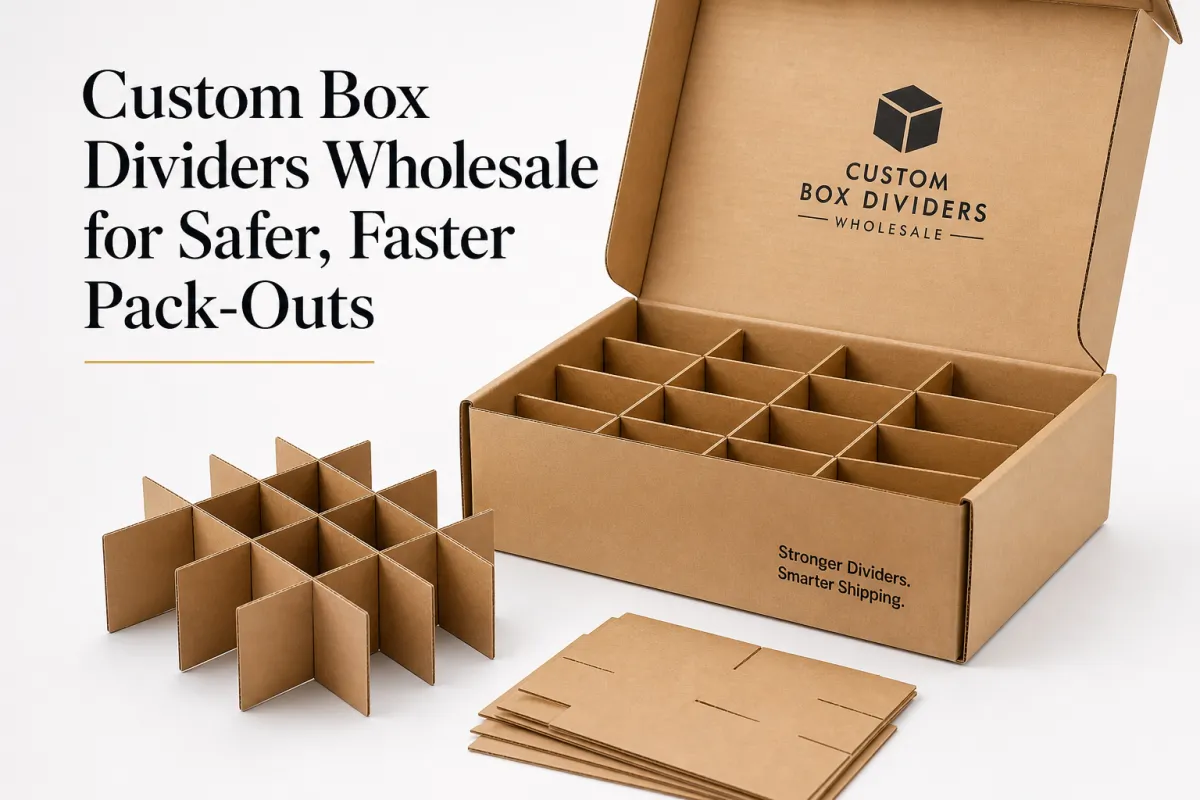
A typical pack-out can fall apart fast. One glass jar bumps another. A candle tin dents its lid. A cosmetic bottle rubs against a printed surface and leaves a mark that looks harmless until the customer opens the box. Custom box dividers wholesale solves that problem in a very plain way: separate the units, control movement, give each item its own slot in the carton.
That separation pays off in more than one place. Damage reduction is obvious. Labor savings usually show up right behind it. A pack line that spends less time repositioning items, stuffing in filler, or checking odd gaps tends to run faster and with less noise. For high-volume programs, that can mean the difference between a clean shift and a shift that never quite catches up. A bad insert quietly burns money. People notice once the damage reports land.
Custom box dividers wholesale works especially well for products that are fragile, polished, or sold in sets. Glass bottles, cosmetics, beverage kits, candles, electronics accessories, and multi-item retail packaging all benefit from items staying upright and separated. Even when the items are not especially delicate, dividers help with package branding because the carton opens in a tidy, repeatable way. That kind of order matters. A box with a neat interior feels intentional instead of improvised.
There is a quality-control angle too. With a divider system in place, packers can verify counts and placement faster. That matters for subscription kits, gift sets, promotional bundles, and seasonal product packaging where one missing piece can trigger a return or a customer complaint. In that sense, custom box dividers wholesale is not only about protection. It is also about keeping the operation under control.
The short version is simple: better organization, better protection, better presentation. If those three things matter to your line, custom box dividers wholesale deserves a serious look before you lock in a carton style or a fill material that only solves half the problem.
"The best divider is the one the crew stops thinking about. If it fits right, loads fast, and holds the product where it should be, the line usually tells you immediately."
For buyers building a larger program, the divider decision often connects to Wholesale Programs and broader sourcing across Custom Packaging Products. Once the insert is right, the carton, label, and outer shipper tend to behave better as a system.
Custom Box Dividers Wholesale: Material and Style Options
The first material question in custom box dividers wholesale is blunt: does the insert need to survive shipping stress, or is it mostly there for organization and presentation? The answer usually points toward corrugated board, chipboard, paperboard, or a specialty insert design.
Corrugated board is the workhorse choice for heavier products and longer transit routes. It brings better crush resistance and holds up when cartons get stacked. For glass, beverage packs, and mixed kits with weight variation, corrugated partitions usually give the best structural comfort. Chipboard and heavier paperboard make more sense for lighter products, premium presentation, and retail packaging where the insert stays visible and the load is modest. Those materials can look cleaner inside the carton, especially when paired with branded packaging or printed sleeves. I usually tell buyers not to overbuild this part unless the route really demands it. Extra board sounds safe, but it can become wasted cost pretty fast.
Custom box dividers wholesale also covers style choices that matter just as much as material. Cross dividers are common because they create cells quickly and work well for square or round items. Tab-lock inserts can speed up assembly and help the divider stay aligned without extra tape or glue. Die-cut partitions fit irregular footprints or products that need a tighter hold. Layered trays and compartment grids are worth a look for kits that stack in tiers or need separation across both vertical and horizontal axes.
Product shape changes the build more than many buyers expect. Round bottles usually need more tolerance at the corners of each cell, while square jars can use a more efficient grid layout. Tall tubes need depth control so they do not tip. Irregular components, like pumps, applicators, and accessory sets, often need a mix of cutouts and tighter board caliper selection. A good custom box dividers wholesale program does not force one layout on every product. It matches the insert to the footprint.
Finishing matters too. Brown kraft surfaces work well for natural, utilitarian packaging design. White-lined board gives a cleaner look inside custom printed boxes. Print-ready surfaces help when the divider is part of the brand reveal. Moisture-resistant or food-safe options should be chosen where the application calls for them. For food and beverage work, buyers should confirm compliance expectations early instead of assuming a standard board covers every use case. It usually does not.
There is no single best style. The right answer depends on product weight, stack pressure, and how the box moves through packing, warehousing, and transit. That is why custom box dividers wholesale starts as a specification discussion and only later turns into a price discussion.
| Divider Type | Best For | Typical Wholesale Range | Notes |
|---|---|---|---|
| Corrugated partitions | Fragile or heavier items | $0.18-$0.42 per set at 5,000 pcs | Good crush resistance, reliable for shipping cartons |
| Chipboard inserts | Lighter retail packaging | $0.10-$0.24 per set at 5,000 pcs | Cleaner presentation, lower material weight |
| Die-cut specialty inserts | Irregular or premium products | $0.25-$0.70 per set at 5,000 pcs | Higher tooling and setup needs, tighter fit |
| Layered trays or grids | Kits and multi-item sets | $0.22-$0.60 per set at 5,000 pcs | Useful for repeated placements and structured presentation |
Those ranges stay broad on purpose. Custom box dividers wholesale pricing moves with board grade, cell count, print coverage, and whether the project needs samples, tooling, or special finishing. A simple one-color divider for a stable carton can price very differently from a die-cut insert with tight tolerances and a premium surface. If a quote looks too neat, I usually ask a second round of questions. There is almost always a catch hiding somewhere.
Specifications: Measuring, Fit, and Structural Requirements
The most common mistake in custom box dividers wholesale is measuring the outside carton instead of the usable interior. The correct sequence is straightforward: measure the inside length, width, and depth of the box, then measure each product footprint, then decide how much clearance is needed for smooth insertion without too much movement. That last part matters more than people think. Too tight, and the crew fights the insert. Too loose, and the product shifts in transit.
Cell count is the next decision. A divider with six cells behaves differently from one with twelve cells, even if the outside carton is the same. More cells mean more structural walls and more control, but they also use more board and may slow assembly. In custom box dividers wholesale, the right answer is often the simplest structure that still prevents product contact and supports the stack load above it.
Board thickness, flute direction, and compression strength all deserve attention. A divider that looks fine on a flat table can fail once cartons stack on a pallet or face temperature swings during transit. For shipping programs, buyers often ask for material recommendations based on load and route conditions, then verify the result with a sample run. That is smart. It avoids paying for overbuilt board where a lighter spec would do, and it avoids underbuilding where the product truly needs more support.
Custom box dividers wholesale also needs a tolerance conversation. For retail presentation, the divider can be snug enough to keep the product centered and upright, but not so tight that packers have to force each item into place. For shipping stability, a controlled amount of friction usually beats a loose fit. If the package uses printed outer boxes, inserts, or branded packaging, the visual alignment should be checked during approval, not after production is done and everyone is suddenly surprised.
Another point that deserves more attention is line compatibility. If the operation uses hand packing, the insert needs to be intuitive and quick to load. If the line is semi-automated, the divider should fold or pop into place consistently. If the program uses kit assembly, the insert should support repeatable placement without turning into a bottleneck. In a busy plant, an insert that saves three seconds per unit can matter more than a slightly lower board cost. That is how the math actually works.
For quality validation, it helps to review industry references such as ISTA packaging test methods and material standards from organizations like the FSC when sustainability claims matter. Those references do not replace product-specific testing, but they keep the conversation anchored in real performance instead of guesswork. I always prefer a sample that gets a little beat up on the bench to a quote that looks pretty and then falls apart in transit.
For custom box dividers wholesale, the best measurement package usually includes inside box dimensions, product dimensions, a photo of the packed arrangement, and a short note about shipping conditions. That little bit of detail can save several revision cycles later.
Custom Box Dividers Wholesale Pricing and MOQ
Custom box dividers wholesale pricing comes from a handful of variables buyers can actually control once they understand them. Material grade is one. Divider complexity is another. Number of cells, print requirements, coating, and finishing all move the number. Then there is quantity, which often has the biggest effect because setup costs spread out as volume rises.
For a buyer comparing programs, it helps to think in tiers. A simple divider set for a stable carton at a larger quantity may land in the lower end of the range because the design is straightforward and the production run is efficient. A more complex insert for fragile products, especially one that needs a die-cut shape or a special caliper, will cost more per unit. That is normal. Custom box dividers wholesale is not a commodity item in the same way a plain shipping carton is. Geometry and fit can swing the economics fast.
Setup and tooling can be worth the expense if the result saves labor and lowers claims. I have seen buyers chase the cheapest unit price, then find out the lower-cost insert increases damage or slows pack-out enough to wipe out the savings. That is why the real buying metric is total landed cost. Include freight, assembly time, storage footprint, and the cost of returns or replacements. A divider that costs a bit more but removes rework often pays for itself faster than expected.
Minimum order quantity varies by structure, material, and whether the insert is part of a recurring program or a one-off launch. For simple repeat work, MOQ may be relatively approachable. For highly customized custom box dividers wholesale projects, especially ones with new tooling or tight registration, the floor can be higher because the setup has to make sense for the production line. Buyers planning a short run should ask directly whether the supplier can support a pilot quantity, then compare that with the cost of holding excess inventory.
Here is a practical way to judge a quote:
- Compare the unit price at your real order quantity, not a convenient best-case tier.
- Ask whether the price includes sampling, tooling, and packaging for shipment.
- Check whether the insert is quoted assembled, flat, or in a semi-folded state.
- Estimate labor savings from faster loading and fewer damaged units.
- Review freight impact, because a larger, heavier insert can change shipping cost.
That list looks basic because it is. Basic is good. It keeps a lot of bad purchases off the books. Custom box dividers wholesale is one of those categories where the cheapest quote can become the most expensive choice after the program hits the floor.
For many buyers, the best starting point is to pair a divider project with a broader look at Custom Packaging Products, then see how the insert fits into the rest of the carton system. If the box, insert, and outer shipper all line up, the line usually runs with fewer surprises.
Process and Timeline for Custom Box Dividers Wholesale Orders
The order process for custom box dividers wholesale should start with clear input. A buyer should send the inside carton dimensions, product dimensions, quantity, and the use case: shipping, retail presentation, or both. If there are compliance issues, food contact concerns, moisture exposure, or special print needs, those should go in from the start. The more complete the brief, the cleaner the quote.
Once the project is scoped, the sample stage earns its keep. A physical prototype lets the buyer test fit, check insertion speed, and confirm that the board performs the way the line needs it to. For fragile products or unusual shapes, this is where problems show up early. Custom box dividers wholesale often looks perfect in a drawing, then shows a clearance issue the moment the actual product goes into the insert. A sample prevents that kind of mess.
After approval, the job moves into engineering review or prepress, depending on the build. Then production starts, followed by inspection, packing, and shipping. Straightforward repeat orders can move faster than fully custom projects because the supplier already has the working spec and may not need new tooling. More intricate custom box dividers wholesale programs can take longer, especially if multiple revisions are needed or the insert has to align with a new box style.
A realistic planning window for a simple repeat order is often measured in business days after approval, while a more complex custom run may need extra time for sampling and sign-off. That is not a delay. It is normal production discipline. Buyers launching a seasonal kit, a subscription program, or a new retail line should build in time for proofing, freight, and last-minute corrections. If the packaging has to line up with a marketing launch, the divider schedule should be set early instead of getting shoved to the end.
Here is a useful timeline framework:
- Inquiry and quote review.
- Specification check and sample request.
- Prototype approval and revision, if needed.
- Production scheduling and material allocation.
- Manufacturing, inspection, and pack-out.
- Freight booking and delivery planning.
That sequence keeps the project organized and helps the buyer avoid rushed decisions. In practice, custom box dividers wholesale works best when the buyer knows the target launch date, the required quantity, and the acceptable tolerance for fit. Clear goals almost always produce better packaging decisions.
One more detail matters here: storage. Flat divider stock can take less room than fully assembled inserts, but the exact footprint depends on the style. If the operation has limited warehouse space, that should be discussed before production. A smart supplier will help balance storage needs against line speed, which is exactly how custom box dividers wholesale should be handled.
Why Choose Custom Logo Things for Custom Packaging
Custom Logo Things is a practical fit for buyers who want custom box dividers wholesale support without the usual runaround. The focus should stay on fit, consistency, and dependable supply, because that is what protects the product and keeps the packing line moving. Good packaging partners do not just quote a part number. They help interpret the carton size, the product shape, and the transit conditions that shape the final insert.
Technical guidance matters more than glossy language. A strong partner should be able to talk through board grades, cell layout, compression behavior, and whether a divider should be optimized for shipping or presentation. That matters even more for brands using branded packaging or premium retail packaging, where the inside of the box is part of the customer experience. If the insert looks sloppy, the whole package feels less considered. Fair or not, customers notice.
Custom box dividers wholesale also benefits from responsive coordination. Buyers often need a quote, then a sample, then a revision, then a final order confirmation. Every handoff opens a door for delay. A supplier that handles quoting and production with discipline reduces those delays and gives the buyer a cleaner path from concept to purchase. That is not hype. It is how projects avoid getting stuck in the middle and forgotten on somebody's desk.
Another reason buyers stay with a reliable source is consistency across repeat runs. Once a divider specification is approved, the next order should match the approved version closely enough that the crew can keep loading product without retraining. That consistency matters for multi-SKU programs, seasonal drops, and private label kits where package branding has to stay aligned from one shipment to the next.
Custom Logo Things can support that kind of program thinking across Wholesale Programs and broader Custom Packaging Products. The right partner should understand that a divider is part of the larger system, not an isolated piece. A box, insert, label, and outer shipper all influence how the product looks and behaves once it leaves the dock.
For buyers who care about documentation, sourcing clarity, and material choices, the best path is usually a straightforward one: send the dimensions, request a fit review, and compare the proposed build against your damage history and labor constraints. That is the honest way to evaluate custom box dividers wholesale. It keeps the conversation grounded in performance, not wishful thinking.
Custom box dividers wholesale should make the packaging operation calmer. Less movement. Less breakage. Less repacking. More predictable output. That is the kind of result a packaging professional can actually stand behind.
Next Steps Before You Order Custom Box Dividers Wholesale
Before you place a custom box dividers wholesale order, gather the details that will shape the quote. Measure the inside carton dimensions, list each product size, count the compartments needed, and note whether the insert must support shipping, retail presentation, or both. If the products are fragile, irregular, or high value, say so directly. Those facts change the structure and the board choice.
It also helps to send reference material. A carton sample, product photos, a sketch of the packed layout, and your target quantity can shorten the quoting process and improve the accuracy of the first proposal. If you already know the preferred board type or the finish you want, include that too. Custom box dividers wholesale works best when the supplier has enough context to think like the pack line, not just like a spec sheet.
If the project is sensitive, request a sample or prototype before full production. That matters especially for products with odd shapes, tight insertion tolerances, or a premium unboxing requirement. A few minutes spent checking fit now can prevent expensive fixes later. Buyers usually save more by catching a tolerance issue early than they ever save by shaving a little off the material cost.
From there, compare the quote against your real needs: MOQ, lead time, freight, storage, and the labor needed to assemble or load the insert. If the numbers make sense, move forward. If not, revise the spec and try again. That is a normal part of smart procurement. Custom box dividers wholesale should not feel like a gamble.
If you are ready to move, send a clear request for custom box dividers wholesale with your carton size, product dimensions, quantity, and target timeline. The more specific your brief, the faster the quote can match your actual packaging requirements. Once you have the right spec, the right divider pays you back in cleaner pack-outs, better protection, and a more consistent result every time the box closes. The practical takeaway is simple: measure the inside carton, map the product layout, and test one prototype Before You Buy in volume. That one step prevents most of the expensive surprises.
What do I need to request a quote for custom box dividers wholesale?
Provide the inside carton dimensions, product dimensions, quantity, and whether the divider is for shipping, retail presentation, or both. Include any special needs such as food contact, moisture resistance, print, or compatibility with a specific folding carton style. For custom box dividers wholesale, those details are usually enough to get the first quote pointed in the right direction.
How do I choose the right material for wholesale box dividers?
Use stronger corrugated or heavier board for fragile or stacked products, and lighter paperboard when the insert is mainly for organization or presentation. Match the material to product weight, transit conditions, and how much compression the insert must handle. If you are comparing custom box dividers wholesale options, ask for a recommendation based on the carton load and the shipping method.
Can custom box dividers wholesale orders be made to fit irregular products?
Yes, but irregular products usually need more precise measurements, a prototype, and sometimes a die-cut or specialty partition design. The best results come from sharing sample units or detailed dimensions so the compartment fit does not rely on guesswork. In many custom box dividers wholesale projects, the sample stage is what turns an uncertain fit into a dependable one.
What usually changes the price the most on custom box dividers wholesale?
Material grade, divider complexity, number of cells, and order quantity are the biggest pricing drivers. Print, specialty coatings, tight tolerances, and rush timing can also raise the total cost. If you want a cleaner comparison on custom box dividers wholesale, ask for pricing at your actual annual usage, not only at the lowest possible unit tier.
How long does production usually take for custom box dividers wholesale?
Lead time depends on design complexity, sampling needs, and order volume, but a straightforward repeat order is usually faster than a fully custom insert. The safest planning method is to confirm artwork or sample approval, then build in extra time for freight and any revisions. For custom box dividers wholesale, the schedule is best treated as part of the packaging plan, not an afterthought.

