Custom Camp Labels: Buyer's Guide to Specs, Pricing, and Durability
One unlabeled laundry bin is all it takes. By the first weekend, towels, sweatshirts, sleeping bags, and water bottles can drift into a lost-and-found pile that staff has to sort by hand, which is exactly why custom camp labels matter. They keep gear moving back to the right camper, cabin, or program without turning every return item into a detective case.
That value goes beyond names on fabric. Labels help camps identify uniforms, duffels, bedding, backpacks, cabin gear, and program supplies, and they can also support size tracking, allergy notes, and return logistics. The real buying question is not whether labels are useful. It is which label type fits the item, how hard the item will be washed, and how much information actually belongs on the label.
Why camp labels solve messy gear fast
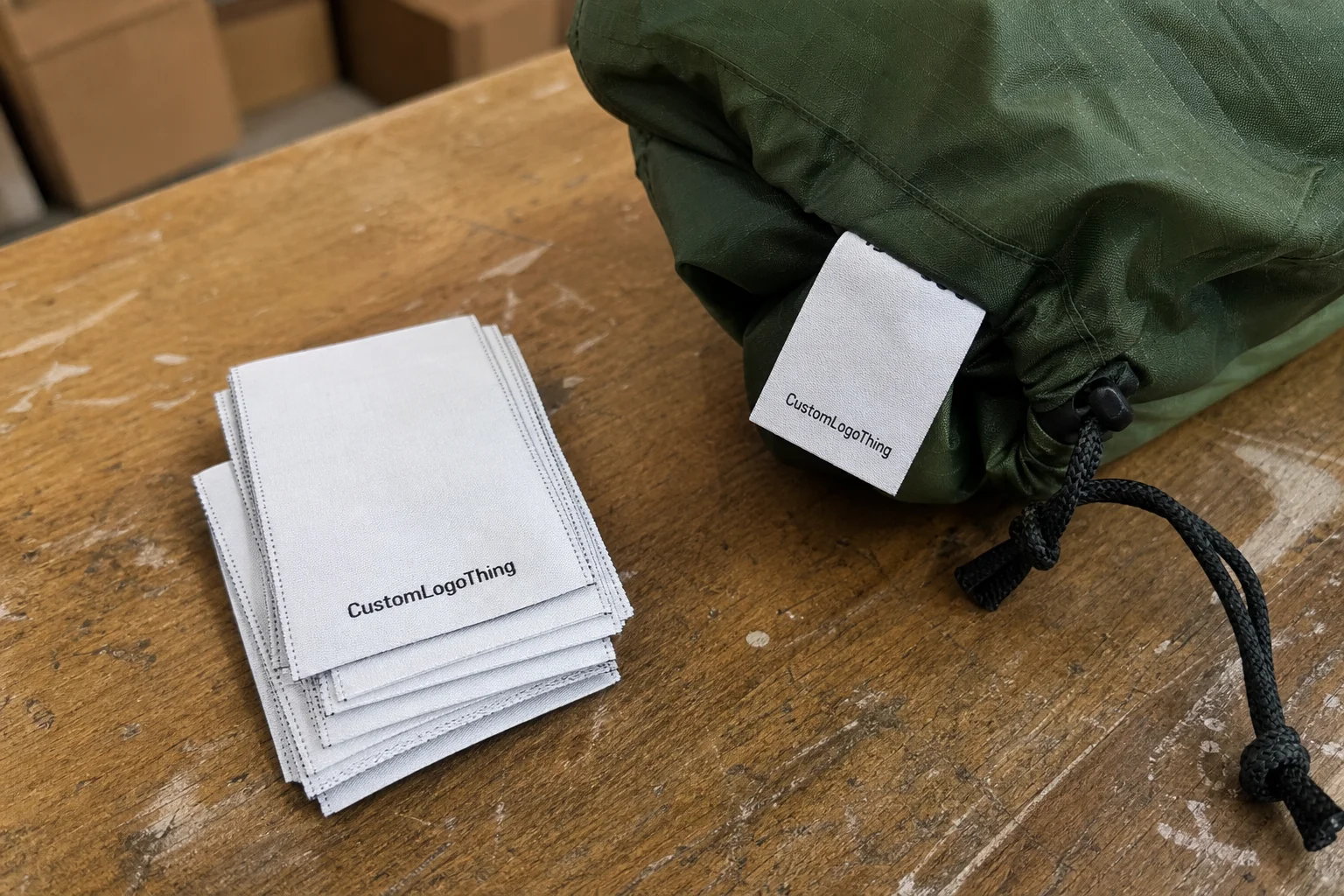
Camp gear gets handled roughly. Kids stuff clothing into the wrong bunk drawer, laundry runs hot, and some item always comes back without a clear owner. A good labeling system cuts through that mess because it makes ownership visible before the item disappears into a pile.
The best label is usually the one that does one job cleanly. On a shirt, that might mean a camper name and cabin number. On a gear bag, it might mean a logo, group name, and a short identifier. On a bedding bundle, it may only need a name and room or cabin. More text can help until the label becomes too crowded to read, and then the extra information works against the goal.
Buyers often think about these labels the same way they think about Custom Labels & Tags for packaging or merchandising: the right format depends on the surface, the amount of handling, and the expected lifespan. A label inside a tee shirt collar faces a different environment than one on a duffel handle or sleeping bag flap.
If the camp already organizes welcome kits, store items, or branded supplies, the label system should fit that broader workflow. Camps that already use organized Custom Packaging Products usually make better decisions here because they think in terms of sorting, distribution, and repeat use instead of decoration alone.
“A camp label only works if staff can read it quickly and trust it after repeated washing. If it peels, curls, or needs explanation, it is already failing.”
The practical buyer checklist is simple:
- Will the label be sewn in, ironed on, printed directly, or attached to a non-fabric item?
- Will it face hot wash cycles, tumble drying, abrasion, moisture, or outdoor exposure?
- Does it need names only, or do you also need cabin numbers, size, phone numbers, allergy notes, or a logo?
Those answers narrow the field quickly. A small woven tag may be perfect for a sweatshirt, while a printed label with more room can be better for a gear bag or bedding set. The mistake is trying to make one format solve every item in the program.
How they are made and attached
There are several ways to make custom camp labels, and the attachment method matters as much as the artwork. Woven labels are the classic choice for a crisp, durable finish. Printed labels are better when you need more data or lower unit cost. Heat-transfer labels give garments a softer hand feel and avoid seam bulk. Sew-in labels, iron-on labels, and stick-on labels each solve a different problem, but they are not interchangeable.
For shirts and uniforms, inside-neck placement is usually the cleanest option. It keeps the label visible without rubbing against skin. On outerwear, visibility matters more, so a side seam or pocket area may be better. For duffels, tote bags, and sleeping bags, a sewn label or a stronger adhesive option makes more sense because those items are dragged, stacked, and compressed more often than clothing.
Here is the comparison buyers usually need before requesting quotes:
| Label type | Best use | Durability | Typical cost impact |
|---|---|---|---|
| Woven | Uniforms, blankets, long-life gear | Very high | Higher setup, strong value at volume |
| Printed | Multi-field IDs, medium-run orders | High if the base material is right | Usually mid-range |
| Heat-transfer | Garments with a soft feel and low bulk | High when applied correctly | Moderate |
| Iron-on | Faster application on clothing | Good, but depends on heat and pressure | Often lower for smaller runs |
| Stick-on | Temporary or non-fabric items | Lower on washed items | Low, but limited use case |
Text content needs discipline. A label should usually carry the camper name, cabin or group, and maybe size. Add a phone number only if the camp has a real process for off-site returns. Allergy notes can be useful on bedding tags or transport bags, but they should be handled consistently and only if the camp has a policy for reading and acting on them. Every extra field consumes space, and space is the one thing label buyers always underestimate.
For sourcing cues and related standards, camps that want paper or packaging components tied to responsible forestry can look at organizations like the FSC. For broader packaging education, the Packaging School is a useful reference point. A label is small, but the decisions behind it still benefit from a systems mindset.
Materials, durability, and size choices
Camp gear takes a beating. Labels have to survive repeated washing, dryer heat, sunscreen, dirt, moisture, and the rough handling that comes with a busy session. If a supplier cannot explain how the label material holds up after normal wash and dry cycles, that is a warning sign. It is not a minor spec. It is the core requirement.
Polyester woven tape is a strong option for sew-in labels because it resists fraying and holds detail well. Satin is softer and works for garments where comfort matters, though it is not always the best choice for high-abrasion use. For printed labels, the film or fabric base needs to stay legible after laundering, not just look good on a proof. Heat-transfer graphics can perform well on cotton and blends if application settings are correct, but poor heat, pressure, or dwell time is a common failure point.
Size matters more than most buyers expect. A label that reads clearly in a mockup can turn into clutter once the order is cut down to fit a narrow seam. Long camper names, double surnames, and cabin references can compress the layout fast. The fix is not always a bigger label. Sometimes shorter copy, a cleaner font, or a split-line layout gives better results without changing the material.
Readability starts with contrast. Dark text on a light background is usually the safest choice. After a few wash cycles, softened fabric and fading can reduce visibility, so high contrast helps the label stay useful longer. Thin fonts, decorative scripts, and low-contrast color combinations look polished on screen and fail in real laundry conditions. Cute is not the same thing as legible.
Edge finish matters too. A label with rough edges, weak stitching allowance, or poor lamination can curl, fray, or disappear into a seam after a few washes. Ask for finished dimensions, not just artwork size. If the label is going onto a jacket liner, blanket edge, or fleece item, confirm whether the fold style or backing changes the usable face area.
For camps with broader sustainability goals, the presentation layer can still be cleaner. FSC-certified paper inserts or packaging sleeves may make sense when labels are bundled with welcome kits or retail-style merchandise. That does not change the performance of the label itself, but it keeps the overall package more controlled and easier to distribute.
Cost, pricing, MOQ, and quote variables
Pricing depends on method, quantity, artwork complexity, and finish. There is no honest single number that covers every job, because a 500-piece sewn label order and a 5,000-piece printed order are different production problems. Buyers still need realistic ranges for budgeting, though, especially before camp season commitments are locked.
For custom camp labels, a small run may land around $0.20 to $0.60 per label for simple printed or iron-on options, depending on size and color count. Woven or specialty sew-in labels often move higher, commonly around $0.35 to $0.90 per unit at smaller quantities. At larger volumes, unit pricing can drop significantly if the design stays simple and the artwork is approved without revision churn. Multiple versions raise the total quickly, so version control matters.
MOQ means minimum order quantity, or the smallest run a supplier can produce efficiently. Some print methods support lower MOQs because setup is lighter. Woven labels and specialty finishes often require a higher minimum because loom setup or production prep has to be spread across the run. If you are testing a new camp program, ask for tiered pricing so you can compare a small pilot with a full-season order.
These variables usually move the quote:
- Quantity tier
- Number of print colors
- Material choice
- Attachment method
- Packaging or bundling requirements
- Artwork cleanup or redraw work
- Rush production or split shipping
There are also the costs people forget until the invoice arrives. Sampling can add time and sometimes cost. Freight matters, especially when the order has to arrive by a fixed camp date. Setup fees may apply for custom artwork, new size charts, or multiple roster-specific versions. If you are comparing suppliers, ask whether proofing, a physical sample, and standard shipping are included or billed separately.
Label pricing also makes more sense when viewed alongside the rest of the camp's supply plan. If the camp is buying branded packaging, merch sleeves, or welcome-kit components, the label budget should sit inside that larger system instead of being treated as a random add-on. Operations teams already know this: one small printed item can create cost elsewhere if the workflow is not sorted out early.
Production process, lead time, and turnaround
The order flow is straightforward if the buyer provides clean information. First comes the request, then the proof, then sample approval if needed, then production, quality check, and shipping. Every step can move quickly or stall depending on how complete the artwork and order data are.
A standard timeline for custom camp labels is often 10 to 15 business days after proof approval for simpler runs. More complex jobs, multi-version orders, and stitched constructions can run longer. Rush orders can compress the schedule, but they also reduce room for correction and usually increase cost. During peak season, assume the supplier has a queue rather than empty capacity.
The most common delays are predictable:
- Artwork is missing a name list, font choice, or size specification.
- The buyer takes too long to approve the proof.
- The camp changes quantity after production has already been scheduled.
- The supplier has to rebuild the layout because the text is too long for the chosen size.
Back-planning solves most of that. If labels are needed for orientation, issue day, or camp check-in, work backward from that date and keep a cushion in the schedule. Two weeks can be enough for a simple order, but three weeks is safer. Add more time if you need samples, multiple approval rounds, or split delivery to different locations. Paying rush freight because a roster was late is an avoidable expense.
For Orders That Ship with uniforms or other camp kits, the same kind of discipline used in distribution testing can help. Packaging standards like those referenced by ISTA are useful because they remind buyers to think about handling, transit, and pack integrity, not just the printed face of the label. If the order is being bundled into kits, ask how the supplier will count, pack, and identify each version before shipment.
A final proof image or production photo before dispatch is a sensible request for important orders. That is basic risk control, not paranoia. It catches the kind of issue that costs more to fix after shipping than it would have cost to catch earlier.
Common mistakes that make labels fail
The failures are usually ordinary, which is why they repeat. Low-contrast text is one of the biggest. A label can look balanced on screen and then disappear on a dark garment or in a dim cabin. Small type is another frequent mistake. If the label needs to be read from arm’s length after repeated washing, the font size is too small or the copy is too long.
Attachment choice causes a fair number of problems as well. Stick-on labels are not a reliable answer for fabric items that go through wash cycles. Iron-on labels can work, but only if heat, pressure, and dwell time are applied correctly. Sew-in labels take more labor, yet they remain the safer option for items that will be reused across multiple sessions and handed down from one camper to another.
Placement matters more than most people expect. A label sewn into a high-friction seam, positioned next to a zipper, or placed where the item folds constantly will wear out faster than the same label in a calmer location. On blankets and sleeping bags, avoid compressed or dragged edges. On outerwear, keep clear of straps, Velcro, and other abrasion points.
Other misses are easy to prevent:
- No wash test before full production
- No final size check against the actual garment or gear
- No sample approval on the first run
- No locked roster, size list, or cabin data before ordering
The cleanest orders usually come from buyers who treat labels like a system, not decoration. That means matching the spec to the garment list, the storage plan, and the distribution process. If the camp is also using Custom Printed Boxes, merch sleeves, or other branded packaging, the label should feel like part of the same organized workflow instead of a late add-on.
What to finalize before you place the order
Before you place the order, lock the basics. Confirm quantity by item type, not just a total number. A camp order often includes clothing, bags, blankets, and bedding, and each may need a different label size or attachment method. Confirm placement too. Inside collar, side seam, bag handle, and blanket corner are not interchangeable choices.
Have artwork files ready in the right format. Clean vector art is best for logos, and text layouts should be high resolution or properly set in the file. If the supplier is setting up multiple versions, use a clear naming convention. Color specs should be written down rather than interpreted from a screenshot. If the camp has brand standards, send them. If not, provide a swatch reference or a close visual benchmark.
Ask for a proof. If time allows, ask for a physical sample as well. That is the simplest way to catch scale issues, contrast problems, stitch placement, and attachment concerns before the whole order is committed. For larger runs, request a packing plan so distribution at camp is easy. One labeled pouch per cabin, one bundle per age group, or one kit per camper is easier to manage than loose bulk inventory.
A solid pre-order checklist should include:
- Item types and label placement
- Exact quantities by version
- Artwork files and color specs
- Proof approval contact
- Need-by date and ship-to address
- Packaging or bundle instructions
If you want the order to stay predictable, confirm the specs, quantity, proof approval, and ship date in writing. That is the point where custom camp labels stop being a loose idea and become a production job with real constraints. Clear instructions save money, and they save staff from sorting through a mountain of mystery gear later.
What are custom camp labels used for besides uniforms?
They are useful for towels, bedding, duffels, backpacks, water bottles, and cabin gear that tends to get mixed up quickly. They help camps track ownership, reduce lost-and-found volume, and cut replacement costs during long sessions.
How durable are custom camp labels after repeated washing?
Sew-in and woven options usually hold up best under hot wash and dryer cycles. Printed or iron-on versions can still perform well, but they depend on the right material choice and proper application.
What is a normal MOQ for custom camp labels?
MOQ varies by method, but printed labels usually allow lower runs than woven or specialty finishes. Ask for tiered pricing so you can compare a small test order with a full camp-wide production run.
Are sew-in or iron-on camp labels better for uniforms?
Sew-in labels are the safer choice for heavy laundering, hand-me-downs, and long-season use. Iron-on labels are faster to apply and work for smaller runs, but only if the application heat and pressure are correct.
How far ahead should I order custom camp labels?
Plan on at least three weeks before you need them, and longer if you need samples or multiple approval rounds. Add extra buffer for peak season, international shipping, or any order that needs artwork cleanup before production starts.


