Custom cosmetic bags look straightforward until you have to spec one. Then the details start mattering fast: how the zipper runs, whether the pouch stands up, whether the artwork survives sealing, and whether the bag still feels decent after the third or fourth use. A good pouch does more than carry product. It changes how people judge the product inside.
That is the main reason buyers should treat the pouch as part of the package, not a leftover accessory. Shape, closure, material, print method, and finish all affect usability, shelf presence, and cost. If those choices are aligned with the actual use case, the bag feels intentional. If they are not, the whole set can look cheap even when the contents are strong.
There is also a practical side that gets missed in mockups. A bag that opens cleanly, seals properly, and holds its shape is easier to fill, easier to ship, and more likely to be reused. That repeat use is where the brand value shows up again.
Why custom cosmetic bags do more than hold product
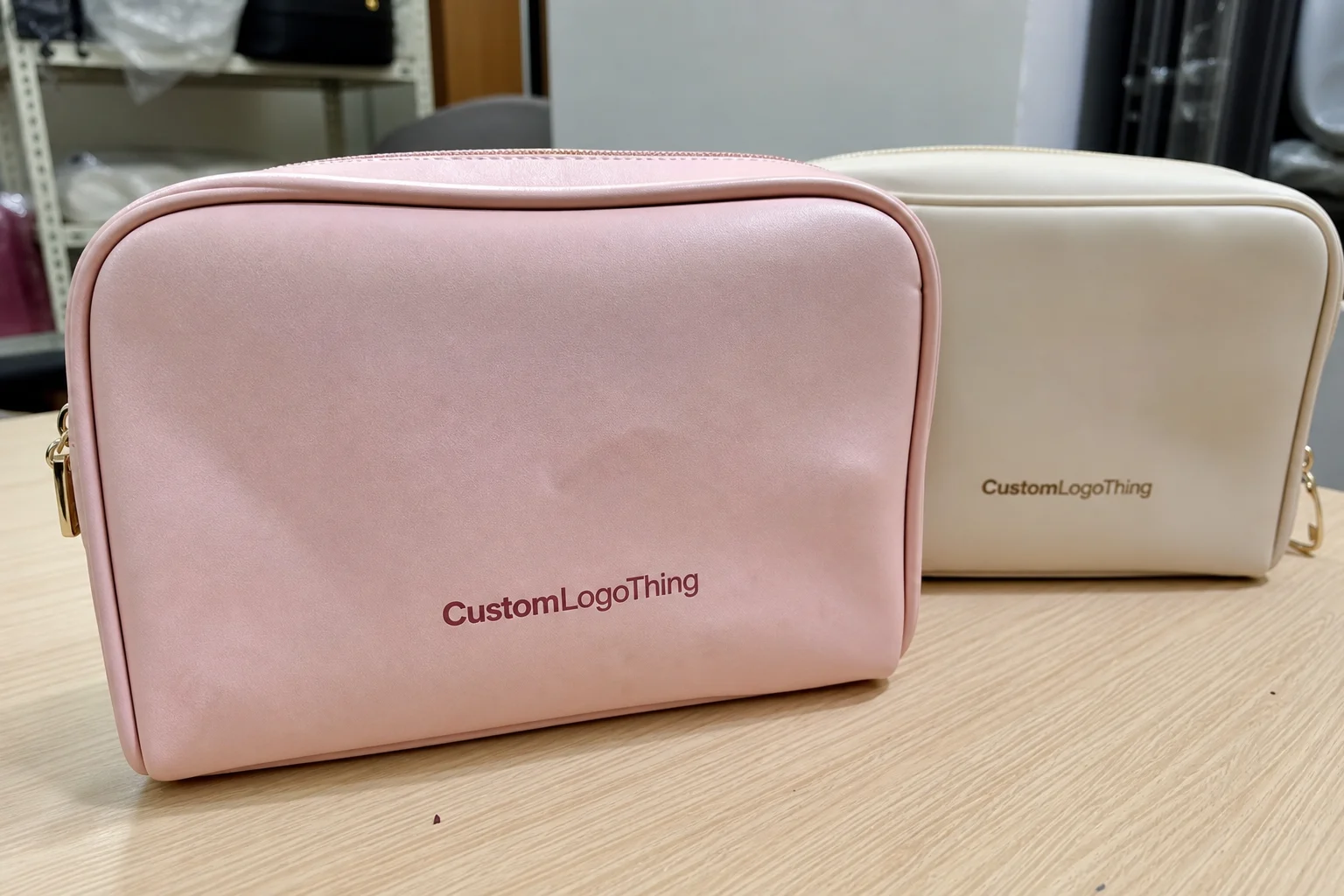
A cosmetic pouch is often the first physical packaging a customer handles, especially in gift sets, travel kits, subscription boxes, and retail bundles. If it feels flimsy, the set reads as lower value. If it feels solid and finishes cleanly, the same contents suddenly look more considered. The bag is doing visual work before anyone even opens it.
That is why custom cosmetic bags are useful beyond simple containment. They support brand visibility, protect small items from scuffs and leaks, and can be reused as travel storage. That last point matters. A pouch that stays in a handbag, gym bag, or carry-on keeps the logo in circulation long after the first purchase.
Formats vary more than many buyers expect. Clear PVC and EVA pouches are common when visibility matters and the brand wants a clean retail look. Opaque PE, TPU, and fabric-backed options work better when the goal is a more polished or giftable presentation. Flat pouches keep costs down. Gusseted or boxy styles create usable volume. Zippers are the standard because they hold up under repeated use, but snap tops and press closures still appear in promotional runs where the bag is meant to be temporary.
A tiny spec change can swing the whole experience. A better zipper pull, a slightly deeper gusset, or a less cloudy film often matters more to the end user than one extra ink color.
One common mistake is treating all pouch styles like basic promo bags. They are not the same thing. A giveaway pouch may only need to be functional and cheap. A retail-ready cosmetic bag usually needs sharper edges, more consistent seals, cleaner registration, and better material appearance. Those differences show up in the quote, the production method, and the finished feel.
If the pouch sits inside a larger packaging system, it should match the rest of the line. A bag that clashes with other Custom Packaging Products can break the visual hierarchy. A coordinated pouch can strengthen the overall product packaging mix without taking over the design.
How the bag structure, materials, and decoration work
Most cosmetic bags are made from three core decisions: body material, closure, and construction method. The body may be a single film, a laminated composite, or a fabric-backed surface. The closure is usually a zipper, though temporary retail formats sometimes use adhesive or snap-style tops. Construction can be welded, stitched, laminated, or a hybrid of those methods depending on the look and the intended use.
Material choice drives nearly everything else. PVC is popular for clear visibility and a firmer hand feel, though buyers should still check the intended market and any compliance expectations. PE is softer and usually more economical, but it often looks more utilitarian. EVA sits in a useful middle ground with a cleaner appearance and a bit more structure. TPU tends to feel more premium and flexible, which is useful when the bag is meant to be reused often. Fabric-backed styles are a different lane entirely; they bring warmth, texture, and more retail presence.
Thickness matters too. For film-based pouches, buyers often compare material gauges in the roughly 0.15 mm to 0.30 mm range, though the right spec depends on the bag size and the amount of support needed. Too thin, and the pouch wrinkles, clouds, or feels disposable in the wrong way. Too thick, and it becomes stiff, harder to fold, and more expensive to ship.
Decoration is where the branding payoff usually happens. Screen print is still a reliable option for bold logos and limited color counts. Digital print helps when the artwork is more detailed or variable. Foil stamping can sharpen the premium feel, but it increases setup complexity and can slow production. Debossing works well on compatible surfaces when the design should feel understated. Labels, woven tabs, and patch applications are useful when the base material is not ideal for direct printing. Decoration should fit the construction, not fight it.
Leak-prone or wet-use environments need more scrutiny. A pouch for bath products, travel toiletries, or makeup items that may spill should resist clouding, seepage, and zipper failure. Sealed edges and cleaner welds matter more than decorative extras in those cases. If the bag is meant to be reused, it also needs to survive opening and closing over time without the track pulling apart or the film splitting near stress points.
Buyers usually get the best results when they think in terms of use cases:
- Clear film favors visibility and retail display.
- Opaque or fabric-backed materials favor a softer, more elevated look.
- Welded edges usually fit film-based bags.
- Stitched construction is more common on fabric styles and reads more giftable.
- Zippers are the better choice when the pouch is meant for repeated use.
Key factors that shape cost and pricing
Price usually comes down to the same few variables: material, size, print complexity, closure style, finish, and quantity. A small flat pouch in a basic clear film with a single-color logo will almost always cost less than a larger gusseted bag with a custom zipper, full-surface artwork, and a specialty finish. That is not hidden markup. It is more material, more setup, and more handling.
MOQ affects the math because fixed setup costs get spread across the run. If a supplier needs to prepare a cutting pattern, print screen, heat-sealing setup, or packaging line, those costs happen whether the order is 1,000 units or 10,000. Smaller runs usually raise the unit price. Larger runs lower it, but only if the buyer actually needs the volume and can store it properly.
Sampling fees, mold or die charges, and proof rounds can also move the total. A quote with a low unit price but heavy front-end charges may be more expensive than a slightly higher all-in offer. That is why buyers should compare the full landed picture, not just the sticker number per bag. The cheapest quote on paper is often the one missing the zipper upgrade or the second inspection step.
Print coverage matters as well. A small logo on one panel is easier and faster than full wraparound art. More coverage means more ink, tighter registration, and a higher chance of visible defects. Multi-panel designs add another layer of complexity because seams, folds, and zipper tape all affect alignment. If the artwork crosses those areas, the supplier has less room to hide mistakes.
For a practical reference, the table below shows broad pricing directions for a mid-sized run of around 5,000 pieces. Actual numbers will shift based on region, material availability, and the exact spec.
| Bag Style | Typical Material | Decoration | Relative Unit Cost | Buyer Notes |
|---|---|---|---|---|
| Basic flat pouch | PE or light EVA | 1-color print | $0.18-$0.28 | Best for giveaways and simple kits |
| Retail clear zip bag | PVC or EVA | 2-color print, standard zipper | $0.28-$0.45 | Good visibility, moderate shelf appeal |
| Gusseted travel pouch | TPU or thicker EVA | Full logo print, stronger zipper | $0.45-$0.78 | Better for repeated use and premium sets |
| Fabric-backed cosmetic bag | Laminated fabric or coated textile | Label, foil, or deboss | $0.65-$1.20+ | Higher-end retail and gift packaging |
The other thing that affects value is what the quote actually includes. Does it cover inner inserts, polybagging, cartons, and final inspection? Are there charges for color matching, extra proof rounds, or special packing instructions? Are dimensions measured as finished size or cut size? Two quotes can look close and still represent very different levels of finished quality.
For brands that are already managing a larger packaging program, the pouch should be priced in context. A bag may look expensive next to a folding carton, but if it needs to function as a reusable travel item and carry the brand for months, the extra cost can be justified. Cheap is not the same as efficient.
If the discussion includes paper components or sustainability claims, third-party references help keep the conversation grounded. The FSC framework is relevant when fiber-based parts are involved, while the EPA recycling guidance is useful for separating marketing language from how materials are typically handled after use. That does not solve the whole question, but it reduces guesswork.
Process and turnaround: from concept to shipment
A clean production process usually follows the same sequence. The buyer sends a brief with dimensions, quantity, artwork, and use case. The supplier checks the material and construction options. Then comes a proof or sample, approval, manufacturing, inspection, and packing for shipment. If any one of those steps is vague, the timeline stretches.
The fastest projects are the ones with clear input. Provide finished dimensions, not just a rough size estimate. State whether the bag needs a flat profile, a gusset, or a box shape. Send artwork in vector format when possible, and use Pantone references if color consistency matters. If the pouch might contact liquids, lotions, or skin-care items, say that early. It changes the conversation about seals and material behavior.
Lead time depends on complexity, but a realistic range for simple custom cosmetic bags is often 12-15 business days after proof approval. Specialty materials, heavier print coverage, extra finishing, or a second sample round can push that longer. Shipping time is separate. Buyers who only ask about factory production time often end up surprised when transit is added on top.
There is a simple way to reduce delays: lock the size and function first. If the structure keeps changing, artwork approval slows down. If the print keeps changing, the sample cycle drags. A stable brief cuts the back-and-forth. It is not glamorous, but it works.
Inspection deserves real attention. Check zipper movement, seam alignment, print clarity, edge sealing, and any haze or warping in the material. For shipments that need to survive standard distribution channels, packaging tests based on ISTA methods can be useful. Cosmetic bags are lightweight, which makes people assume they are fragile in a minor way. Then they get packed, squeezed, bent, stacked, and tossed around like everything else.
How to choose the right spec for custom cosmetic bags
Start with the contents, not the pouch. What will it carry? How much room does that product need? Will the customer reuse the bag, or is it a one-time presentation piece? A travel set for shampoo and lotion needs different structure than a compact makeup pouch or a gift-with-purchase insert. If the bag is mainly for display, clarity and print treatment matter more. If it is meant for repeated travel use, durability and closure quality deserve more weight.
A straightforward selection process keeps the project manageable:
- Define the contents and fill volume.
- Choose the use environment: retail shelf, travel kit, subscription box, or promo giveaway.
- Set the size with room for loading and closure clearance.
- Pick a material based on clarity, softness, and durability.
- Choose the closure and decoration method.
- Confirm whether the pouch should be disposable, reusable, or display-ready.
For travel kits and amenity sets, buyers usually want visibility and easy cleaning. Clear EVA or TPU works well because the contents are easy to inspect and the pouch feels less disposable. For luxury gift sets, opaque or fabric-backed options are often better because they give the packaging more presence and hide the visual clutter of the contents. For promotional items, lighter construction can be enough as long as the pouch opens smoothly and the branding is readable.
The best spec balances three things: appearance, protection, and budget. Push all three to the maximum and the bag often becomes overbuilt. That is wasted cost if the pouch is only meant to be used once. Underbuild it, and the customer notices immediately. A zipper that drags, a seam that opens too easily, or a film that wrinkles badly will hurt the presentation more than it saves.
Think about the pouch as part of the larger retail packaging story. If the product already uses Custom Printed Boxes, inserts, and labels, the bag should support that hierarchy instead of competing with it. It does not need to be ornate. It does need to feel deliberate. That is usually enough.
Common mistakes buyers make before ordering
Undersizing is the most common mistake. Buyers estimate dimensions from the product alone and forget seam allowances, zipper placement, and loading space. A bag can look large enough in a spreadsheet and still be annoying in real use because the opening is too tight or the gusset steals the usable room. Finished size matters more than guesswork.
Another frequent issue is artwork that ignores construction. Logos placed too close to seams can distort after heat sealing or stitching. Heavy background art can look uneven at the edges. If the design crosses panels, confirm where the zipper tape, folds, and seam lines land before approving the file. That one review step prevents a lot of rework.
Quote requests often fail because they are too vague. If you do not specify closure type, print count, finish, material preference, and packing requirements, suppliers will fill in the blanks differently. Then the numbers are no longer comparable. One quote may look cheaper simply because it assumes a lighter film, a lower-grade zipper, or no final packaging.
Digital mockups can also mislead. Color, opacity, and gloss level often shift in production, especially on clear film. A white logo that looks bright on a screen may appear slightly translucent on the actual pouch. A glossy film may pick up fingerprints and scuffs faster than expected. For premium retail programs, a physical sample is better than guessing from an image.
Compliance and product-contact concerns should not be an afterthought. Even if the pouch is not holding cosmetics directly, it may sit around liquids, travel bottles, or skin-care items that leak. Ask what material documentation is available, whether any restricted substances apply, and how the bags will be packed for shipment. Those details matter more than a polished mockup.
Next steps to request quotes and compare samples
The quickest way to get useful quotes is to send a complete spec sheet. Include target dimensions, quantity, material preference, closure type, print files, color targets, and delivery date. If the pouch has to coordinate with existing branded packaging, say that clearly. A supplier can only price what the brief actually describes.
Ask for at least three quote levels. One should reflect the budget version, one should match the target production spec, and one should push the finish slightly higher. That comparison makes the tradeoffs visible. It is a better buying method than chasing the lowest number and discovering later that the quote left out the detail you actually needed.
For any pouch carrying premium retail value, holding liquids, or needing precise color matching, order a sample or pre-production proof. A physical sample tells you more than a table of specs. You can test zipper feel, inspect seam quality, judge opacity, and check whether the bag fits the rest of the line.
When comparing vendors, use the same brief for all of them. That keeps the quotes honest. One supplier may include a stronger zipper or more careful finishing, while another may price a lighter build that will not perform as well. Once the inputs match, the value gap becomes much easier to see.
My practical rule is simple: compare one budget option, one target spec, and one higher-finish sample before placing the order. That gives a clearer view of the tradeoffs between appearance, protection, and cost. For custom cosmetic bags, the best choice is usually the one that fits the product, the brand, and the actual use case, not the one that only looks good in a mockup.
What are the best materials for custom cosmetic bags?
PVC, PE, EVA, TPU, and fabric-backed options are all common. The right choice depends on clarity, flexibility, durability, and the level of finish you want. Clearer films work well when visibility matters. Opaque or fabric-backed options usually feel more premium and hide contents better.
How much do custom cosmetic bags usually cost?
Pricing depends on size, material, print coverage, closure style, finish, and order quantity. For a mid-sized run, simple pouches can sit under thirty cents each, while premium fabric-backed styles can move above a dollar. The only meaningful comparison is between quotes built on the same spec.
What is a typical MOQ for custom cosmetic bags?
MOQ varies by construction and material. Simple film pouches usually allow lower minimums than highly customized retail bags. Smaller runs almost always raise the unit price because setup costs are spread across fewer pieces.
How long does production usually take?
Simple orders are often possible in about 12-15 business days after proof approval. More complex builds, specialty finishes, or extra sample rounds can extend that timeline. Shipping time is separate and should be planned into the schedule from the start.
What information should I send for an accurate quote on custom cosmetic bags?
Send dimensions, quantity, material preference, closure type, decoration method, artwork files, color guidance, and the desired delivery date. If the pouch must coordinate with other packaging, include that too. Clear input leads to cleaner quotes and fewer revisions.