Cheapest Custom Stickers for Bulk Orders That Ship Fast
A brand can waste more money chasing the Cheapest Custom Stickers than it saves on the quote. The pattern is familiar: a product launch needs 2,000 logo stickers for mailers, jars, cartons, or retail bags, then someone compares five prices without matching size, adhesive, finish, format, proofing, or shipping speed.
That is how a “cheap” order becomes expensive. A $0.04 sticker that curls off a kraft mailer before delivery is not cheaper than a $0.07 sticker that stays flat through packing, handling, and transit. For bulk sticker orders, the real target is not the lowest number in the unit-price column. It is the lowest cost per usable, applied sticker.
Good sticker buying is less glamorous than good sticker design. It comes down to material yield, application surface, order quantity, print method, packing format, and proof discipline. The buyer who controls those details usually beats the buyer who keeps asking suppliers to “do it cheaper.”
Why cheap sticker pricing depends on the right format
The fastest way to lower sticker cost is usually not hard negotiation. It is choosing a format the press, cutter, and packing process can repeat without friction. Standard circles, rectangles, squares, ovals, and rounded-corner labels tend to price better because they use material efficiently and require fewer production adjustments.
Consider a coffee roaster ordering 5,000 front-of-bag stickers for a seasonal blend. A 3-inch custom die-cut silhouette may look distinctive, but a 2.5-inch circle could deliver nearly the same shelf impact while reducing material use, cut complexity, and packing labor. If the sticker goes on a flat pouch, that format change may save more than another half-cent discount from a second supplier.
Cheap sticker pricing usually comes from repeatable specifications: one material, one finish, one cut style, and artwork that is ready for production. It should not come from weak adhesive, muddy print, poor color control, or liners so small that the packing team loses time peeling each piece. Those “savings” only move the cost to another part of the operation.
Buyer rule: compare sticker quotes by the applied result, not just the unit price. A failed label creates rework, repacking, replacement shipments, and customer complaints.
For branded packaging, a sticker often does the job of a printed box at a lower commitment level. That is sensible for seasonal products, pilot runs, subscription boxes, short campaigns, and SKU tests. But the sticker still has to survive its job. Dry folding cartons need one performance level. Refrigerated bottles need another. Shipping cartons require a different face stock and adhesive profile again.
Most quote mistakes start with the surface. Corrugated board, matte pouches, glass, coated paperboard, compostable mailers, and plastic jars do not behave the same. Some surfaces absorb adhesive. Some resist it. Some are dusty, waxy, textured, chilled, curved, or handled with oils from production. The lowest quote only works if the format fits the surface, the packing line, and the expected handling.
Materials and finishes that keep sticker costs down
Material choice is where the price curve starts. Paper-style stocks are often the lowest-cost option for indoor, dry, short-life use. They make sense for retail boxes, event handouts, thank-you seals, bakery cartons, inserts, and product packaging that will not face moisture, abrasion, oil, or long outdoor exposure.
Film-based stocks such as BOPP and vinyl usually cost more, but they resist water, oils, scuffing, and frequent handling better than paper. That premium can be justified for bottles, cosmetics, refrigerated food packaging, bath products, outdoor giveaways, and shipping labels exposed to rougher conditions. Paying extra for durability you do not need is wasteful. Under-buying durability is worse because failure happens after the order has already been packed, shipped, or handed to the customer.
Adhesive deserves the same attention as the face stock. A general-purpose permanent adhesive may work well on coated boxes and smooth jars. Textured mailers, recycled board, cold-fill containers, or flexible pouches may need a stronger or more specialized adhesive. Removable adhesives can be useful for temporary promotions, but they are a poor fit for tamper seals, carton closures, or product labels that must stay put.
Finish can move the quote more than buyers expect. Matte and gloss coatings are common budget finishes. Soft-touch, foil, spot UV, holographic films, textured coatings, and specialty laminates add cost through extra materials, slower production, or added finishing steps. On a 500-piece order, the difference may feel small. On 20,000 pieces, a specialty finish can add hundreds of dollars.
| Sticker Option | Typical Use | Cost Position | Practical Watchout |
|---|---|---|---|
| Paper sticker with gloss or matte finish | Dry boxes, retail packaging, inserts, event giveaways | Lowest to low | Not ideal for moisture, oils, abrasion, or heavy handling |
| BOPP label stock | Food jars, bottles, cosmetics, handled product packaging | Mid-range | Needs the right adhesive for curved, chilled, or oily surfaces |
| Vinyl sticker | Outdoor use, laptops, equipment, durable branding | Mid to high | Can be over-specified for simple carton seals or inserts |
| Clear stock with white ink | Premium bottles, glass jars, transparent packaging | Higher | White ink adds setup, proofing, and print-control needs |
Format matters too. Kiss-cut stickers on sheets work well for handout packs and small-batch application. Rolls usually suit higher-volume packing because they feed faster, stack cleanly, and take less bench space. Individual die-cut singles look polished for giveaways, but they add handling and packing cost. If your team is applying 10,000 stickers to custom packaging products, roll format may reduce labor even if the printed sticker price looks similar.
For sustainability claims or certified paper programs, verify the chain-of-custody requirement before quoting. The Forest Stewardship Council publishes guidance on FSC certification, but not every sticker stock or supplier workflow qualifies automatically. Certification adds value only if the documentation supports the claim being printed or marketed.
Sizes, shapes, and print specs that change the quote
Sticker dimensions often matter more than design complexity. A clean one-color logo at 4 inches can cost more than a full-color 2-inch design because it uses more stock and reduces the number of pieces that fit on a sheet or web. Material yield is blunt arithmetic.
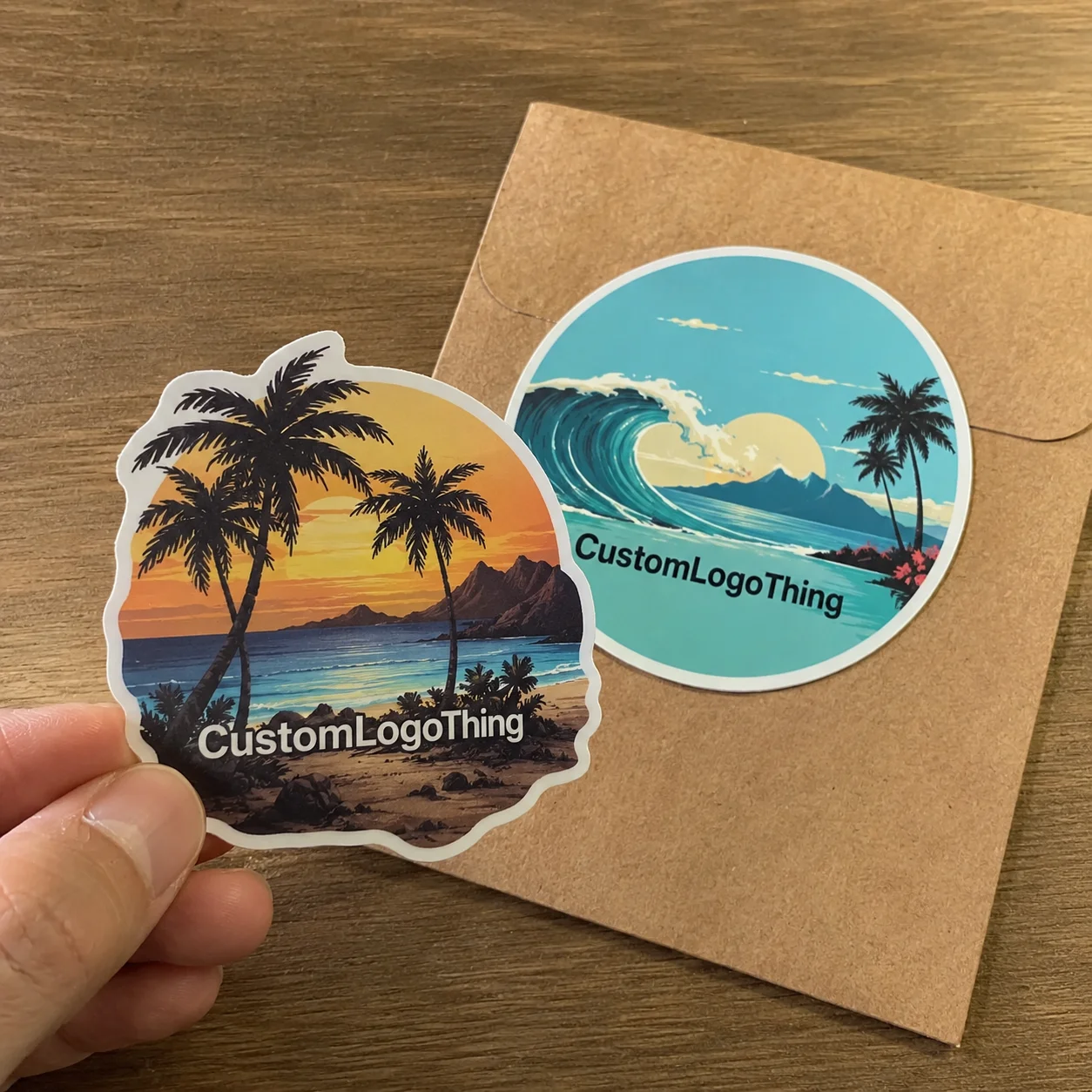
Shape has the same effect. Squares, rectangles, circles, and ovals are predictable. Rounded corners reduce lifting on cartons and mailers, which can improve performance during packing. Intricate die-cut outlines look appealing, but they increase waste, slow cutting, and make weeding more delicate. For the cheapest custom stickers that still look professional, start with a standard shape before paying for a custom contour.
Print coverage also affects pricing. Heavy flood coats use more ink and may need tighter drying or curing control. White ink on clear stock adds another print layer. Metallic foil, transparent substrates, and high-opacity color matching can be worthwhile for premium package branding, but they are rarely the lowest-cost path.
- Most economical sizes: small to medium labels that fit efficiently on stock, often 1.5 to 3 inches for logo stickers.
- Most predictable shapes: circles, rectangles, squares, ovals, and rounded-corner labels.
- Common cost adders: white ink, foil, clear stock, custom contour cutting, specialty lamination, and individual packing.
- Common file issues: missing bleed, low-resolution images, unoutlined fonts, inconsistent artboards, and unclear cut lines.
Prepress delays are a quiet cost. A supplier may not charge a formal file-fix fee, but proof revisions can push a fast order out by two or three business days. Send vector artwork when possible, usually AI, EPS, or press-ready PDF. Include 0.125 inch bleed if the print runs to the edge, keep key text inside the safe area, and mark the cut line clearly.
Color expectations should be settled before the order moves to proof. CMYK output is common for economical sticker printing, especially for full-color artwork. Pantone matching or tighter brand-color control can add time and cost. A small carton seal may not justify strict spot-color matching. A cosmetics label sitting beside custom printed boxes might. The budget decision depends on where the sticker appears and how closely it will be compared to other packaging elements.
Also check the liner and spacing. Stickers packed too close together can slow hand application. Labels wound in the wrong direction can frustrate an applicator or dispenser. A low unit price is not much help if the line operator has to rotate every piece before applying it.
Pricing, MOQ, and unit cost breakpoints
Minimum order quantity is not just a supplier preference. It protects production efficiency. Every order carries setup work: quoting, file review, proofing, material pull, press setup, cutting, packing, and shipping paperwork. On 250 stickers, those fixed steps are spread across very few pieces. On 5,000 stickers, the same setup cost becomes much smaller per unit.
As a practical planning range, a simple 2-inch paper logo sticker might price around $0.10 to $0.22 each at low quantities, then drop toward $0.03 to $0.08 each at higher bulk volumes, depending on material, finish, packing format, and freight. Film labels, clear stock, or specialty finishes can run higher. These are not universal prices. They are useful bands for spotting quotes that are unusually high, suspiciously low, or missing a major cost.
Ask for two or three quantities. A buyer requesting 3,000 stickers may find that 5,000 pieces costs only 20% more overall while lowering unit cost by 25% or more. Another buyer may discover that jumping from 10,000 to 15,000 saves almost nothing because the order has already passed the main efficiency break. Data beats guessing.
| Bulk Quantity | Typical Unit Cost Pattern | Best Fit | Buying Advice |
|---|---|---|---|
| 250-500 pieces | Highest unit cost | Testing artwork, small events, micro launches | Keep specs basic and avoid premium finishes |
| 1,000-2,500 pieces | Moderate unit cost | First product run, market test, seasonal packaging | Compare paper versus film only if durability matters |
| 5,000-10,000 pieces | Better bulk value | Retail packaging, mailers, subscription boxes | Ask for roll and sheet pricing if applying by hand |
| 25,000+ pieces | Lowest unit cost potential | Repeat packaging programs and steady reorders | Lock specs and confirm storage conditions before overbuying |
The cleanest quote comparison includes six matched variables: size, material, finish, quantity, proofing, and delivery format. Add freight and rush fees before choosing. A quote at $0.045 per sticker can lose to a $0.055 quote if shipping is twice as high or if the cheaper supplier packs singles when you need rolls.
Freight is easy to underestimate. Stickers are light, but rolls, cores, cartons, protective packing, and multi-box shipments still add cost. Split shipments to several locations can change the landed price again. If the order is time-sensitive, compare the total delivered cost rather than the print price alone.
For buyers ordering labels, hang tags, or carton seals together, it may be cheaper to consolidate specifications through Custom Labels & Tags instead of quoting each item in isolation. Shared materials and coordinated proofing can reduce avoidable admin time, especially when several packaging pieces use the same finish or brand-color expectations.
Industry packaging tests such as ISTA transit procedures are not sticker-specific purchasing rules, but they remind buyers that packaging is judged after movement, compression, vibration, and handling. The International Safe Transit Association is a useful reference point for thinking beyond the print table. If the sticker is part of the shipping presentation, it has to survive the shipping environment.
Production steps, turnaround, and proof approval
Fast sticker orders depend less on urgency and more on clean sequence control. The usual flow is simple: request a quote, submit artwork, review the digital proof, approve size and material, print, finish, pack, and ship. Each step can move quickly. Each step can also stall.
Typical standard production for simple bulk stickers often runs about 5 to 10 business days after proof approval, with shipping time added separately. Rush production may shorten that window, but only if the material is available and the artwork is ready. If the file needs rebuilding, rush fees mostly buy pressure, not certainty.
The biggest timeline drivers are predictable. Proof revisions can add one or two business days per round. Specialty materials may need sourcing time. High-volume queues can affect press scheduling. Destination shipping speed can add more time than production itself, especially for bulky roll cartons or multi-location deliveries.
- Confirm the exact sticker size before art is finalized.
- Send vector artwork with fonts outlined and cut lines marked.
- Choose material based on the surface: paperboard, glass, plastic, mailer, or corrugated carton.
- Approve the proof within the same business day if the details are correct.
- Ask whether the order ships on rolls, sheets, or individual pieces.
From a packaging buyer’s point of view, proof approval is the control point. Check spelling, logo scale, bleed, cut alignment, color expectations, quantity, finish, and roll or sheet instructions. Do not approve a proof while assuming the supplier will “know what you meant.” Production teams follow the approved proof because that is the contract in miniature.
Quality control should be practical, not ceremonial. For bulk orders, check that the finished size matches the proof, the cut line is centered, the surface finish is correct, the adhesive releases cleanly from the liner, and the print is not scuffed, banded, or visibly off-color. If the sticker is going on a specific substrate, test a few pieces on that exact material before full application. A clean sample on a desk tells you less than a sticker pressed onto the actual pouch, jar, mailer, or carton.
Rush service is useful for a trade show, launch date, or stockout. It is not always the best buy. If the order includes clear stock, white ink, and a custom die-cut shape, rushing may increase the invoice without removing the slowest technical steps. For low-cost stickers that ship fast, keep the specification boring and the files clean. Boring is often profitable.
How to keep reorder pricing predictable
Sticker costs become easier to control after the first run if the buyer treats the approved specification as an asset. Keep one size, one material, one finish, one cut line, and one file version for repeat orders. That discipline reduces proofing questions and protects pricing from small changes that reset production assumptions.
For brands restocking product packaging, subscription boxes, or event merch, consistency matters. A 2.5-inch matte paper circle ordered every month is easier to price than a rotating mix of sizes, finishes, and contour cuts. Suppliers can quote faster, buyers can forecast inventory more accurately, and packing teams know how the sticker behaves on the surface.
Store the practical details somewhere your team can find them: finished size, material name, adhesive type if known, finish, roll direction if applicable, core size for rolls, approved artwork file, and last order quantity. That may sound administrative. It prevents expensive confusion.
Supplier traits matter as much as press capability. Clear quoting, fast prepress checks, direct questions about application surface, and support for repeat runs all reduce waste. The cheapest supplier on a first order is not always the lowest-cost partner over six reorders if communication is slow or specifications keep drifting.
Package branding programs often grow in layers. A startup might begin with plain cartons and logo stickers, then add printed inserts, custom mailers, or custom printed boxes later. Keeping sticker specs stable gives the brand a reliable cost-control tool while the broader packaging system develops.
There is also an inventory caution. Buying 50,000 stickers at a low unit cost looks smart until an ingredient statement, QR code, address, promotional date, or compliance note changes. For purely decorative logo stickers, larger runs are safer. For regulatory or product-specific labels, buy closer to the reorder rhythm unless the copy is locked.
How to quote and order with fewer cost surprises
Before requesting a quote, gather the four details that drive pricing fastest: size, shape, quantity, and intended surface. Add finish, material preference, and delivery format if you already know them. If you do not, describe the use case plainly. “Logo sticker for dry kraft mailers” is more useful than “cheap sticker.”
Ask for at least two quantities. Three is better. A useful spread might be 2,500, 5,000, and 10,000 pieces. That shows where the unit cost drops enough to justify a larger order, and where the savings flatten. For transactional buying, that one step often reveals the true budget option.
Then check the proof carefully. Look at bleed, cut lines, color, orientation, quantity, finish, and any roll or sheet instruction. A 60-second proof review can prevent days of delay. It can also stop a full bulk order from printing with the wrong logo version.
- For dry retail boxes: start with paper stock, matte or gloss finish, and a standard shape.
- For bottles or jars: consider BOPP or film stock, especially if moisture or oils are likely.
- For giveaways: balance individual presentation against the added packing cost.
- For shipping cartons: test adhesion on the actual corrugated or mailer surface before scaling.
Custom Logo Things can help buyers compare the practical trade-offs: standard versus custom shape, paper versus film, sheet versus roll, and short run versus bulk reorder. The point is not to strip quality down until the sticker barely works. The point is to remove unnecessary cost while keeping the sticker fit for its job.
Use the checklist before buying: confirm the surface, choose a standard format where possible, compare quantity breaks, review landed cost, and approve a clean proof. That is how buyers secure the cheapest custom stickers for their actual use case, not just the lowest headline price.
FAQ
What makes the cheapest custom stickers actually affordable?
The cheapest custom stickers are affordable because the full specification is efficient, not because quality is ignored. Choose a standard shape and size, order enough pieces to spread setup cost, and match the material to the surface and environment. A dry paperboard box does not need the same stock as a refrigerated bottle.
Which custom sticker material is usually the lowest cost?
Basic paper-style sticker stock is usually the lowest-cost option for indoor, short-use packaging, including boxes, bags, inserts, and event handouts. Vinyl or BOPP costs more, but it performs better around moisture, oils, handling, curved containers, and shipping exposure. The right low-cost material depends on where the sticker will be applied.
How does MOQ affect cheap custom sticker pricing?
MOQ affects pricing because setup work is spread across the order quantity. Low quantities carry a higher unit cost, while larger runs often lower the per-sticker price once production becomes more efficient. Ask for pricing at two or three quantities so you can see the real breakpoints instead of guessing.
How fast can cheap custom stickers be produced?
Turnaround depends on artwork readiness, material choice, proof approval speed, production queue, and shipping location. Standard sizes, common materials, and same-day proof approval usually move faster than specialty coatings, custom die cuts, clear stock, or white ink. Rush service can help, but it may raise total cost.
What files should I send for the cheapest custom sticker quote?
Send vector artwork when possible, plus the exact size, shape, quantity, finish preference, application surface, and whether you need rolls, sheets, or individual pieces. Clean files reduce proof revisions, keep the quote accurate, and help the order move into production faster.