Buyer Fit Snapshot
| Best fit | Custom Candle Tin Packaging with Label projects where brand print, material claims, artwork control, MOQ, and repeat-order consistency need to be specified before quoting. |
|---|---|
| Quote inputs | Share finished size, material target, print colors, finish, packing count, annual reorder estimate, ship-to region, and any compliance wording. |
| Proofing check | Approve dieline scale, logo placement, barcode or warning zones, color tolerance, closure strength, and carton packing before bulk production. |
| Main risk | Vague material claims, crowded artwork, missing packing details, or unclear freight terms can make a low unit price expensive after revisions. |
Fast answer: Custom Candle Tin Packaging with Label: Artwork Proof, Packing Count, and Landed Cost should be specified like a repeatable production item. The safest quote records material, print method, finish, artwork proof, packing count, and reorder notes in one written spec.
Production checks before approval
Compare the actual filled-product size with the drawing, then confirm tolerance on folds, seals, hang holes, label areas, and retail display edges. Reserve space for logos, QR codes, warning copy, and material claims before decorative graphics fill the panel.
Quote comparison points
Review material grade, print process, finish, sampling route, tooling charges, carton quantity, and freight assumptions side by side. A quote is only useful when the supplier can repeat the same color, closure quality, and packing count on the next order.
A candle can look expensive or forgettable before anyone even lights it, and Custom Candle Tin Packaging with label is usually what decides which way the customer leans. The wax formula may be excellent, the scent throw may be dialed in, and the burn may be clean, but if the tin, label stock, and finish feel cheap, the product still reads cheap. That's the part people hate to hear. It is also the part that moves product.
I have seen brands spend weeks fine-tuning scent notes and then approve a label that fights the lid seam, curls at the edge, or buries the scent name under decorative clutter. The candle does not recover from that. Good custom candle tin packaging with label is not about making the tin flashy. It is about making the package feel intentional, readable, and worth the shelf space.
From a buyer's point of view, the tin is doing several jobs at once: protecting the wax, carrying the brand, surviving shipping, and still looking clean after being handled by retail staff, warehouse teams, and customers who absolutely will rotate it in their hands. A well-built custom candle tin packaging with label system makes those jobs work together instead of competing. That means the label size, adhesive, typography, and compliance text all need to fit the container and the sales channel. Otherwise the package starts acting like a bad intern. Lots of activity, not much help.
If you are comparing branded packaging options for candles, tins sit in a sweet spot. They are lighter than glass, easier to ship than ceramic, and usually friendlier to travel sets, seasonal collections, and discovery kits. They also pair well with Custom Labels & Tags and, for brands building a larger system, with Custom Packaging Products that extend the same visual language across boxes, inserts, and shippers. Done well, custom candle tin packaging with label becomes part of the brand architecture, not just a metal can with a sticker on it.
What Does Custom Candle Tin Packaging With Label Actually Include?
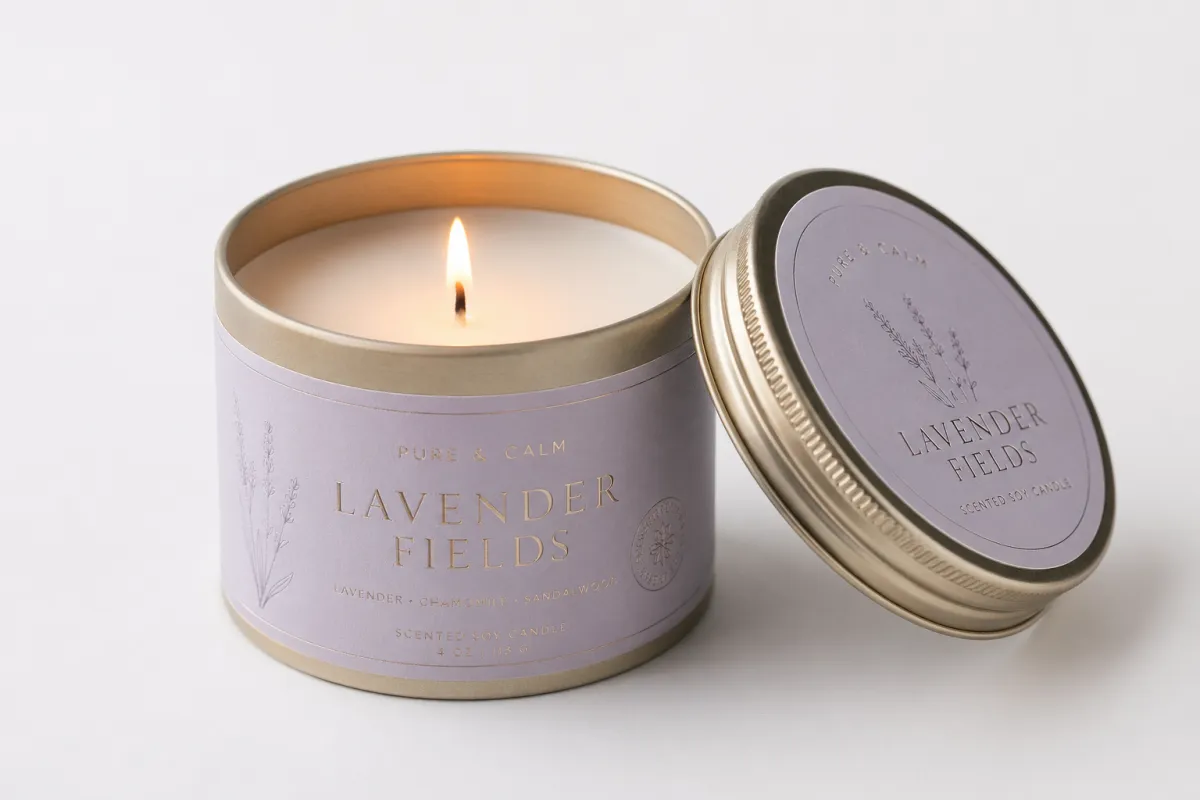
custom candle tin packaging with label usually starts with a simple structure: a metal tin, a candle fill, and a pressure-sensitive label or wrap that carries the brand story, scent name, safety copy, and any barcode or SKU data. Simple, yes. Easy, no. The smaller the package footprint, the more every millimeter matters. A carton gives the design room to breathe. A tin forces the label to earn its place.
The most common setup uses a round tin or shallow metal jar with a peel-and-stick label on the face or lid. Some brands use a front panel only. Others add a top label, a bottom label, or a narrow wrap that gives the package a more finished feel. In custom candle tin packaging with label, that label is not an accessory. It is the main visual surface. If the material curls, the print looks muddy, or the type is too small, the whole product reads as lower value even if the candle itself is excellent. A tin does not magically become premium because the mockup had a nice shadow.
That is why tins are often chosen for travel candles, gift sets, seasonal drops, and retail packaging that needs to be light, durable, and space efficient. A tin can be stacked, tucked into a mailer, or displayed in tight shelving without the breakage risk that comes with glass. For a brand testing a new scent range, custom candle tin packaging with label also keeps inventory flexible, because the tin body can stay consistent while the label changes from one fragrance to the next.
There is also a practical branding advantage here. Because the surface area is compact, the label has to be disciplined. That pushes better typography, cleaner hierarchy, and more deliberate finish choices. I have seen many candle lines improve simply by tightening the package design: fewer competing fonts, a clearer scent family system, and a label stock that looked good under warm retail lighting. In that sense, custom candle tin packaging with label rewards restraint. That is not a sexy answer, but it is the right one.
It helps to think of the package as one system rather than separate parts. The tin profile, wax color, wick placement, scent story, and label layout all shape how the final product feels in hand. When those decisions are coordinated, custom candle tin packaging with label looks deliberate; when they are not, even a good print file can feel disconnected from the product. That is the difference between a candle that blends into the shelf and one that gets a second look.
Secondary packaging can help too, especially for gift sets and e-commerce shipments. A sleeve, tuck box, or simple carton can protect the tin during transit while extending the same visual language across the line. The important thing is not to overbuild just because it sounds premium. With custom candle tin packaging with label, the best solution is usually the one that protects the product, stays readable, and supports the price point without dragging in extra complexity.
How Custom Candle Tin Packaging With Label Works From Artwork to Shelf
In practice, custom candle tin packaging with label starts long before printing. The tin body, closure style, fill weight, and label placement should be planned together so the branding lands where the eye naturally looks. A small round tin might only give you a modest front face, while a wide tin can accommodate a larger graphic, a scent name, and warning text without feeling cramped. If the packaging system is not mapped early, the artwork gets forced to fit after the fact, and that is when legibility starts to fall apart.
The label configuration usually falls into a few practical formats. A front-only label keeps the look clean and minimal. A wrap label can carry more copy and give the product a fuller branded appearance. A top label works well when the tin lid is the primary shelf-facing surface. Some projects use a coordinated multi-panel layout so the front, side, and base each handle a different job, from scent identity to legal text. In custom candle tin packaging with label, the smartest format is the one that matches how the candle will be viewed in real retail conditions, not only in a mockup.
Artwork setup matters more than people expect. Dielines define the printable area, bleed protects the edge from trimming errors, and safe zones keep text from creeping too close to the cut line. Barcode placement needs its own discipline, especially if the candle is going into stores with scanning requirements. A beautiful label can still fail if the UPC is placed on a curved seam, the warning copy is too small, or the branding is centered in a way that fights the tin seam. custom candle tin packaging with label works best when the label is treated like a technical drawing first and a decorative piece second. That is also where candle label printing gets either expensive or boring, depending on how much planning happened up front.
Adhesive selection matters just as much as artwork. Tins can see heat during shipping, friction in warehouse handling, and occasional exposure to fragrance oils or wax residue. A label that looks perfect on day one may lift at the edge if the adhesive is not matched to the substrate and the storage environment. That is especially true for small runs where labels are applied by hand and the process varies slightly from unit to unit. With custom candle tin packaging with label, the face stock and the adhesive are a pair; choosing one without the other is a common mistake.
Retail performance is the final test. If the candle is sitting on a shelf, the label needs to read from a distance of three to five feet. Up close, it should feel tactile and precise, with print edges that do not fuzz out and finishes that reinforce the scent story. A linen-textured paper can suggest warmth and craft. A film label can suggest moisture resistance and durability. Matte can feel calm and modern; gloss can feel sharper and more assertive. The package passes when the tin and label look like they were designed together, which is the standard every custom candle tin packaging with label project should aim for.
One useful way to check the setup is to compare it against the real shelf environment. Warm retail lighting changes how color reads. Warehouse handling tests the edges. Shipping vibration tests the adhesive. If the candle is part of a line that also includes Custom Printed Boxes, then the label should echo the same hierarchy and color family so the entire product packaging system feels intentional. That consistency is what turns one candle into a collection.
If the label cannot survive handling, storage, and shelf display, it does not matter how good the render looked on screen.
For brands that want to sanity-check a transit plan, third-party testing standards can be helpful. The ISTA methods are often used to simulate shipping stress, and they are a good reminder that packaging is not just a design exercise. It is a working system. That perspective matters in custom candle tin packaging with label, because a package that looks beautiful but fails in transit will cost more than it saves.
Key Factors That Shape Fit, Finish, and Brand Perception
Label fit begins with the tin profile. A short round tin gives you a compact, premium look and often suits travel sizes or gift sets, but it leaves less room for copy. A deeper tin may feel more substantial in the hand and can support a larger label panel. A shallow tin can create a sleek, modern presentation, though it sometimes demands stricter typography because the branding surface is narrower. In custom candle tin packaging with label, the container shape decides how much design freedom you actually have.
Material choice is the next big lever. Basic paper labels can work well when the project needs a lower entry cost and a clean print surface. BOPP film labels are a smart choice when moisture resistance, fragrance exposure, or edge durability matters. Textured stocks can elevate a giftable line, but they are not the best fit for every run because they can make small type harder to read. Specialty finishes add personality, yet they should be used carefully. A candle tin is small, so too much texture or shine can crowd the design quickly. That balance is a recurring challenge in custom candle tin packaging with label.
Print and finish decisions shape perceived value faster than most brands expect. Matte feels softer and more restrained. Gloss reflects light and can make colors pop. Soft-touch lamination can make the package feel more premium in hand, but it is not the right answer for every candle line. Metallic ink or foil accents can help a logo stand out, though they should be used where they support the hierarchy rather than take it over. I have seen candle packaging lose clarity because the finish competed with the scent name. A good custom candle tin packaging with label design should be easy to read first and attractive second, not the other way around.
Scent, wax color, and transparency matter too. A highly colored wax or strong fragrance profile often looks better with a more restrained label system, because the product itself already has a lot of sensory presence. If the tin is meant to feel calm and spa-like, the package should avoid visual noise. If it is meant for holiday gifting, a richer palette may be appropriate. The label and the candle should tell the same story. That is one of the simplest ways to strengthen package branding without making the design busy.
Compliance is where aesthetics have to make room for reality. Candle labels often need warning statements, burn instructions, ingredient or material details, and a barcode. Regulations vary by market, and a package built for one region can be wrong for another. A label that ignores those needs can force the design into a last-minute squeeze, which rarely ends well. In custom candle tin packaging with label, the trick is to reserve clean space for required text early so the front-facing branding does not get sacrificed later.
Responsible sourcing can also influence material choices. If your label or secondary packaging uses paper or board, asking about FSC certification is a sensible step, especially for brands positioning themselves around sustainability. The FSC system is not a magic fix, but it does give buyers a clearer path when they want traceable paper-based materials. For candle brands that care about branded packaging and environmental messaging, that conversation belongs in the first round of packaging design, not after the artwork is approved.
Here is a practical comparison of common label approaches used in custom candle tin packaging with label projects:
| Label Option | Best Use | Typical Strengths | Tradeoffs | Relative Cost at Scale |
|---|---|---|---|---|
| Paper label | Short runs, artisan look, low to mid budget | Good print detail, easy to source, familiar feel | Less moisture resistance, edge wear can show faster | Low |
| BOPP film label | Shipping, handling, fragrance-rich environments | Durable, moisture resistant, stable edges | Less natural texture, can feel more utilitarian | Low to medium |
| Textured specialty stock | Gift sets, boutique retail, premium positioning | Strong tactile appeal, elevated shelf presence | Can soften small type, usually costs more | Medium to high |
| Foil or metallic accent label | Seasonal launches, luxury lines, feature SKUs | High visual impact, strong brand emphasis | Can overwhelm a small tin if overused | High |
The important part is not picking the fanciest option. It is choosing the option that matches the candle's job in the market. A simple travel candle should not carry a label system built for a luxury hamper, and a premium gift tin should not look like it was printed for a discount bin. That alignment is the real measure of strong custom candle tin packaging with label, and it is where packaging design starts to pay off.
Custom Candle Tin Packaging With Label Pricing: What Changes the Budget
custom candle tin packaging with label pricing usually comes down to five things: the tin itself, the label stock, the print process, the finish level, and the quantity ordered. Standard tins in common sizes are usually less expensive than custom-molded or custom-colored metal components. Labels with one or two spot colors cost less than full-color, high-coverage artwork. Add specialty finishes, and the cost moves up again. That is normal. What surprises many first-time buyers is how quickly the small details add up when a candle line has several scent variants.
The unit price usually improves as the order grows because setup costs get spread over more pieces. A project at 1,000 units can feel noticeably different from the same project at 5,000 or 10,000 units, even if the artwork does not change. That is why custom candle tin packaging with label should be planned with a quantity strategy in mind. If you know the line will expand into more scents, it can make sense to consolidate common elements so the base package stays efficient while only the variable label panels change.
Artwork complexity also changes the budget. Multiple SKUs, precise color matching, and layered finishes all add production time. A simple, well-built label system can be cost-effective without looking plain. A crowded system that uses too many effects can become expensive and harder to reproduce consistently. The safest approach is to spend money where customers actually feel it: the first touch point, the logo, the main scent name, and the parts of the package that need to survive handling. That is often the smartest use of budget in custom candle tin packaging with label.
Some costs are easy to see, and some are not. Proofing rounds, file cleanup, freight, inserts, and compliance updates can move the total if they are not planned early. If a warning statement changes after artwork is already laid out, the label may need a redesign. If a barcode size is wrong, the file may need another round of correction. If the shipment is going to a fulfillment center instead of a warehouse, the carton count and pallet configuration may also affect cost. Those are small details individually, but they matter in custom candle tin packaging with label because candles are often sold in multiple scent variants and small errors get multiplied across the line.
For a practical budgeting lens, I usually suggest this order of priority: protect label adhesion, protect readability, protect the logo, then add decoration only after those basics are handled. A candle tin that keeps its label flat, scans correctly, and looks cohesive on shelf will usually outperform a more elaborate package that is hard to read or easy to damage. That is the discipline behind strong custom candle tin packaging with label; it is not about spending the most, but about spending where the package can actually return value.
Here is a simple way to think about where the money usually goes in custom candle tin packaging with label projects:
- Tin size and finish: Standard shapes and finishes usually cost less than specialty profiles or custom coating.
- Label stock: Paper is usually the most economical, while textured or film materials increase durability or premium feel.
- Print coverage: Heavy ink coverage, metallic elements, and multiple spot colors raise production complexity.
- Order quantity: Larger runs usually lower unit cost because setup is spread across more pieces.
- Version control: Multiple scents, seasonal editions, or language variants add file management and proofing time.
As a rule of thumb, a straightforward project using standard tins and a durable label can stay fairly lean, while a more premium branded packaging program with special finishes, inserts, or coordinated Custom Printed Boxes will move into a higher budget band. That does not make it worse. It just means the package should earn the spend through shelf impact, durability, or a better retail story.
The Process and Timeline for Custom Candle Tin Packaging With Label
A clean custom candle tin packaging with label project usually follows a fairly predictable path: brief, size selection, artwork layout, proof review, sample approval, production, packing, and shipment. The sequence sounds simple, but the timeline depends heavily on how quickly the first decisions are locked in. If the candle size is still changing while the label is being designed, the project slows down. If the warning copy is not finalized, proofing takes longer. If colors are still being debated, sampling may need an extra round.
Early decisions create momentum. When the tin dimensions, fill weight, label placement, and scent naming system are settled before design work starts, the artwork can be built around real dimensions instead of estimates. That is one of the fastest ways to reduce friction in custom candle tin packaging with label. A designer can only build a clean file if the technical information is stable. Change the structure too late, and the layout has to be reworked from the ground up.
Sampling is where digital assumptions get tested. A file may look balanced on a screen and still fail once it wraps a real tin. Curved surfaces affect how the label reads. Gloss levels can look different under actual light. Small fonts can become harder to read at distance. A physical sample reveals those issues before production locks them in. In custom candle tin packaging with label, that sample is often the cheapest insurance the project has. If you can only spare budget for one extra step, make it the sample.
Typical timeline pinch points are easy to spot if you have managed enough packaging programs. Artwork revisions take time, especially if multiple stakeholders are involved. Color proof approval can stall if the brand wants exact Pantone matching. Material availability can shift if a special stock or adhesive is backordered. For a simple private-label candle tin, the timeline might move faster. For a fully custom branded line with multiple scent versions, expect more lead time because every variation needs its own check.
The most efficient runs are the ones where production decisions are not made in a vacuum. If the tin will be sold in a retail environment, test the label under bright light. If it will ship in subscription boxes, test how the lid scuffs against inserts. If it will sit in warm storage, make sure the adhesive choice is appropriate. That practical testing mindset is what keeps custom candle tin packaging with label from becoming an expensive do-over.
For a realistic planning window, many candle packaging projects move best when the buyer can allow time for proofing and sample review before the production run begins. I would rather see a brand spend a few extra days resolving fit and warning copy than rush into a print job with a label that is technically wrong. Candles are a high-visual product. Once the tins are printed and labeled, the cost of correcting a mistake is usually far higher than the cost of catching it early.
When you are building the launch calendar, it also helps to think about the rest of the packaging chain. If the tin is going into an outer box, the box dimensions, inserts, and shipper plan should be aligned before print approval. If you need a matching range of Custom Labels & Tags for accessories or tester kits, that should be scheduled alongside the tin work rather than after it. Good timing turns custom candle tin packaging with label into a manageable workflow instead of a pile of emergency fixes.
Common Mistakes With Custom Candle Tin Packaging With Label
The first mistake is choosing a label size before the actual tin dimensions are confirmed. Even a small measurement difference can throw off alignment and make the package look crooked or cramped. With custom candle tin packaging with label, the tin should lead the label, not the other way around. That sounds obvious, but it is one of the most common ways projects lose polish.
The second mistake is underestimating adhesive and stock performance. A label that lifts at the corner, bubbles on the seam, or scuffs during transit sends the wrong message immediately. Candles are often handled more than people expect, especially in gift stores and subscription fulfillment environments. If the package is going to warm shelves, shipping vibration, or warehouse stacking, the material choice needs to reflect that reality. In custom candle tin packaging with label, a weak label can make the entire line feel fragile.
The third mistake is overdesigning the front panel. Too many fonts, decorative borders, or competing color blocks can make the candle hard to read from a distance. The brand name loses strength when everything is trying to be the hero. A stronger approach is to build a clear hierarchy: brand, scent, size, then supporting details. That hierarchy helps both retail packaging and e-commerce photography, because the candle reads cleanly in both environments. Good custom candle tin packaging with label should improve recognition, not create visual noise.
The fourth mistake is leaving compliance text for the final stage. Burn instructions, warning copy, ingredient or material notes, and barcodes all need space. If they are added late, the layout often becomes a squeeze job, and the front design suffers. I have seen otherwise strong packaging lose its balance because the required copy had nowhere to go. The fix is simple: reserve the space early and treat that text as part of the design system. That habit pays off in custom candle tin packaging with label every time.
The fifth mistake is skipping a physical sample. Flat artwork cannot show how the label sits on the curve of the tin, how the finish reflects warehouse lighting, or how the package feels when someone picks it up with one hand. If a brand is serious about launch quality, a sample should always be part of the process. It catches things a PDF never will. In my experience, custom candle tin packaging with label improves dramatically once the team has handled a real sample and made decisions from that point forward.
There is also a broader planning mistake that shows up when brands treat each product as a one-off. A better approach is to build a system that can stretch across the line. That can mean one core label template with color changes for scents, or a coordinated package branding family that also includes custom printed boxes for gift sets. The more repeatable the system, the easier it is to launch new fragrances without rebuilding the whole package each time. That is efficient, and it also keeps the brand identity stronger across product packaging.
Here is a short preflight list I would use before approving custom candle tin packaging with label for print:
- Confirm the tin dimensions and lid style with a physical measurement, not a guess.
- Check the label stock and adhesive against heat, friction, and fragrance exposure.
- Review the artwork at actual size so small text does not disappear.
- Place the barcode and warning copy before finalizing decorative elements.
- Approve a sample under normal lighting before production starts.
Expert Tips and Next Steps for a Better Candle Tin Launch
Start with the end use. A candle meant for gifting should feel a little more refined, while a candle meant for travel can stay lighter and more straightforward. A subscription candle may need to photograph well from multiple angles, while a retail candle has to be legible from several feet away and durable enough to handle repeated touch. That end-use thinking keeps custom candle tin packaging with label aligned with the way the product will actually move through the market.
Build one core system that can flex across multiple scents. That might mean fixed logo placement, fixed warning copy positioning, and a controlled set of scent colors. The variable parts can then change without breaking the whole design. A line with six fragrances should feel like a family, not six unrelated products. That is a strong packaging design habit, and it makes future launches easier. In custom candle tin packaging with label, repeatable structure is often more valuable than one-off decoration.
Check the design under real conditions. Warm indoor light can soften whites and dull cool colors. Bright retail lighting can make metallics look louder than expected. Warehouse handling can scuff corners and reveal whether the finish is too delicate. When the candle lives in those environments, the label has to hold up there too. This is also where a good proof and sample process pays off, because custom candle tin packaging with label can look very different once the tin is in your hand instead of on a monitor.
If your line is growing, think about the whole packaging system now, not later. The candle tin, the outer carton, the insert, and any accessory labels should speak the same visual language. That does not mean every component has to match exactly. It means the hierarchy, color logic, and finish decisions should feel related. For brands expanding beyond tins into Custom Packaging Products, consistency across the line can strengthen shelf recognition and make the collection feel more intentional.
One practical way to keep the project on track is to use a simple approval checklist. Confirm the dimensions, verify the content, review the sample, and sign off on the finish before the run starts. That may sound basic, but it prevents the most common production delays. A candle launch does not need to be complicated. It needs to be controlled. That is especially true with custom candle tin packaging with label, where small errors are easy to repeat across many units if they are not caught early.
My advice is straightforward: measure the tin, lock the label dimensions, request a sample, compare finish options, and confirm the production timeline before placing the first order. If you do those steps in order, custom candle tin packaging with label becomes a repeatable process instead of a gamble. You will get a cleaner shelf presence, fewer surprises in production, and a candle package that feels like it belongs to a real brand rather than a rushed test run.
When the project is ready, keep the focus on the details that matter most: adhesion, readability, finish, and consistency. Those four things decide whether custom candle tin packaging with label helps the product sell or merely holds the wax. Done carefully, it can make a modest candle feel premium, strengthen brand recall, and support the broader retail packaging strategy without forcing the budget into unnecessary extras. That is the kind of packaging work that pays off again and again. Measure first, approve a physical sample, and print only after the label has survived the same light, handling, and shelf conditions the customer will see.
What size is best for custom candle tin packaging with label?
Choose the tin size based on burn time, wax fill weight, and how much label space you need for branding and safety text. A wider tin usually gives you more room for a larger face label, while a compact tin can feel more travel-friendly and premium if the layout stays clean. For custom candle tin packaging with label, size should support both shelf presence and practical copy space.
What label material works best for candle tins with heat exposure?
A moisture-resistant label stock or film label is usually a better choice than basic paper if the tin may face heat, fragrance oils, or shipping friction. Adhesive quality matters just as much as face stock, because a label that curls at the edges can make the package look tired before it reaches the customer. In custom candle tin packaging with label, the best label is the one that stays flat and readable in real conditions.
How much does custom candle tin packaging with label cost?
Cost depends on tin size, print method, label material, finish level, order quantity, and how much customization the project needs. Larger runs usually lower the per-unit price because setup costs are spread over more pieces, while small runs tend to carry a higher unit cost. For custom candle tin packaging with label, the budget is usually driven more by complexity and quantity than by one single feature.
How long does custom candle tin packaging with label take to produce?
Timelines vary by artwork readiness, sample approval, material availability, and total order size. Projects move faster when the dieline, warning copy, and artwork are finalized early and only minor revisions are needed. In many cases, custom candle tin packaging with label slows down not because printing is difficult, but because the project is still changing after design has already started.
Can I use one label design across multiple candle scents?
Yes, a shared design system with consistent branding and scent-specific color or naming can keep the line cohesive while still helping customers tell fragrances apart. The key is to keep the variable parts easy to swap so updates do not require a full redesign each time. That approach makes custom candle tin packaging with label easier to scale across a whole collection.

