A custom champagne label has a short job description and a high bar. It has to signal value in a glance, survive cold service, and still look intentional after condensation, transit, and handling. Three seconds is generous. On a crowded shelf or a gift table, the bottle often gets less.
That makes label work less decorative than many buyers expect. Typography, finish, and spacing do not just affect style; they shape how the bottle is perceived before the cork is even touched. A clean label can lift an ordinary bottle. A cluttered one can make a good product look like a rushed promotion.
The practical side matters just as much. A label is not a flat graphic in a vacuum. It is an adhesive system attached to glass, and the bottle will be chilled, carried, and opened in environments that punish weak materials. If the surface lifts or smears, the package loses credibility before the wine has a chance to speak for itself.
What a custom champagne label changes before the bottle is opened
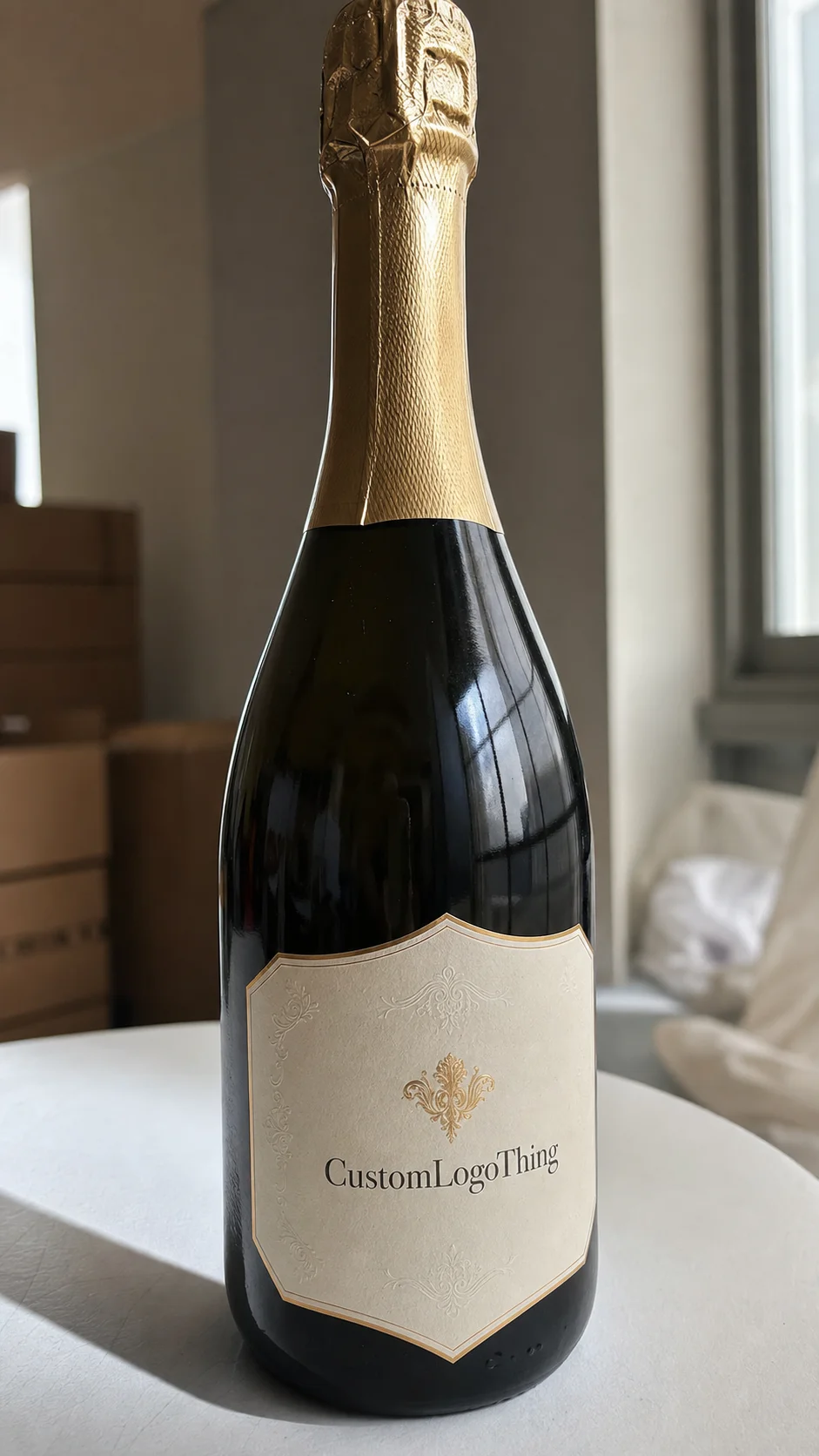
People judge a bottle before they pour it. They read shape, glass color, contrast, finish, and how much open space the design leaves behind. That is where a custom champagne label does its real work. It turns a bottle into a signal: premium, festive, restrained, modern, giftable, or cheap-looking. There is no neutral zone.
The speed of that judgment is easy to underestimate. Most buyers do not consciously analyze line weight or kerning, but they register whether the bottle feels balanced. Heavy foil can suggest ceremony. Dense copy can make the label feel promotional. A sparse layout can feel expensive if the spacing is disciplined and the typography earns the white space.
For the brand owner, the label is part of the selling mechanism, not a decorative afterthought. It has to fit the use case: wedding gifting, retail shelf placement, corporate events, seasonal releases, or private-label programs. The strongest versions establish hierarchy quickly. Brand first. Variant second. Support copy last.
That is also why a label should be considered alongside the rest of the pack. If the bottle is going into coordinated retail packaging, the label, carton, and insert should all share a visual logic. Many buyers pair Custom Labels & Tags with other Custom Packaging Products so the bottle does not look disconnected from the shipper or gift box.
One useful comparison: a strong bottle label works like a storefront sign seen from across the street. People are not reading every word. They are deciding whether the thing in front of them feels worth their attention. If that first read fails, the rest of the package has to overperform.
How the bottle, chill, and service affect label performance
Not every champagne bottle behaves the same way. Smooth glass gives more room for error. Tight curves, textured surfaces, embossing, and narrow front panels reduce that room quickly. Once the shape changes, the label design and adhesive strategy have to change with it.
Cold service is the real test. Champagne is frequently refrigerated, placed in ice buckets, or handled in chilled storage. That means the adhesive has to bond to clean glass and keep its grip while condensation forms. A label that looks fine on a dry table can start to lift at the corners after a short period in wet service.
Buyers sometimes approve a label based on a screen mockup and assume the rest will be routine. The actual environment is less forgiving. There is moisture, low light, quick handling, napkins, bucket rims, and fingers touching every edge. The design also has to stay legible under warm event lighting and fluorescent retail lighting, which reveal weak contrast fast.
Shipping adds another layer. Bottles rub against cartons, inserts, dividers, and sometimes each other. A label that holds during refrigeration but scuffs during transit is still a problem. For launch runs, the entire route matters: print room, packing line, warehouse, truck, receiving dock, shelf, bucket, and table. Test thinking borrowed from ISTA is useful because it puts handling and vibration in the same frame as appearance.
In practical terms, a usable champagne label should do three things:
- Stay flat with no edge lift after application.
- Remain readable after condensation or ice-bucket exposure.
- Keep the design centered and intact after handling.
If it only passes the dry-room test, it is not ready. Cold service reveals the weak link quickly.
Materials, finish, and adhesive choices that decide durability
Material selection shapes appearance, durability, and price at the same time. For champagne labels, the common choices usually fall into three groups: paper stocks, synthetic films, and specialty materials.
Paper stocks are often the most economical choice, especially for shorter runs or event-focused orders. They can look excellent with good print quality, but they are less forgiving in wet conditions. Synthetic films such as BOPP or PET handle condensation better and tend to hold their shape more reliably. Textured papers can add a premium feel, but they need careful adhesive and finish selection to avoid performance issues.
Finish changes the bottle’s personality almost as much as the stock does. Matte reads as controlled and understated. Gloss adds color density and catches shelf lighting. Soft-touch feels muted and premium, though it can show fingerprints or scuffing if the bottle is handled often. Foil accents, embossed effects, and clear labels all push the visual language in different directions.
Adhesive choice is where a lot of first runs go wrong. A standard permanent adhesive may be fine for a room-temperature display, but a cold-temperature or freezer-grade adhesive is the safer option for refrigerated use. Hand application can tolerate a little repositionability. Automated application needs a consistent initial grab with no slipping.
If the label uses paper and the brand has sustainability goals, sourcing matters too. Some buyers want FSC-certified paper because it fits a broader packaging story. That does not replace performance requirements, but it does matter for brands that need the material choice to support the message. The framework at FSC is a practical reference point.
Here is the tradeoff in plain terms: better-looking finishes usually cost more to produce, and they create more points where things can go wrong. Gold foil, dense black coverage, tight registration, custom die-cut shapes, and specialty coatings all add visual value. They also raise the risk of waste if the spec is not controlled.
| Option | Typical use | Approx. unit cost at 5,000 | Durability note |
|---|---|---|---|
| Paper label with matte finish | Event gifting, lighter retail use | $0.18-$0.28 | Good appearance, weaker in heavy condensation |
| Synthetic film with gloss finish | Chilled retail display, frequent handling | $0.24-$0.38 | Strong moisture resistance, good edge stability |
| Premium textured stock with foil | Luxury branding, special releases | $0.36-$0.62 | High visual impact, needs tighter print control |
| Clear film with selective print | Modern labels, glass-forward look | $0.30-$0.52 | Stylish, but surface prep and alignment matter more |
The best choice is not automatically the most premium-looking one. It is the one that matches the bottle, the handling conditions, and the budget without creating a production problem later.
Step by step: size, artwork, proof, and order setup
Start with the bottle, not the artwork. Measure the usable label panel, the curvature of the shoulder, and the flat area available between seams or embossed glass detail. A design that feels balanced on a rectangle can fail on a narrow or curved bottle surface.
Then decide how the label should behave visually. A centered front panel creates a cleaner look. A wraparound design gives more room for copy. Leaving visible glass can make the package feel more upscale. Each approach changes the scale of the logo, the amount of copy, and the amount of white space needed to keep the label from feeling crowded.
Artwork setup needs discipline. Confirm the brand hierarchy before proofing starts. Lock the logo files, define color expectations, and check bleed and trim. If there is legal copy, a vintage note, a QR code, or a barcode, place it early. Trying to add it late usually creates spacing issues and delays.
The proof is where many buyers move too fast. Check punctuation, line breaks, foil placement, and the way the label will read at arm’s length. That distance matters on a shelf and even more at an event, where the bottle is seen briefly and often under imperfect lighting. Small type can look neat in a file and disappear on glass.
Order setup should include a decision about sample quantity. A short test run is worth the extra time if the bottle is unusual or the labels will be applied in a cold environment. For brands building a broader launch kit, the label should sit comfortably beside the rest of the branded packaging, including cartons, inserts, and custom printed boxes.
A label that survives a flat proof but curls in ice water was never ready for service.
That is a harsh rule, but it is the right one. Proofs sell the idea. Samples prove the reality.
Cost, pricing, and MOQ: what changes unit cost
Pricing for a custom champagne label comes down to a small set of variables: material, size, finish, print method, quantity, and whether the label needs special adhesive or nonstandard cutting. The quote is not just ink on stock. It is the sum of the production decisions behind it.
Quantity has the biggest effect on unit cost. A small order carries setup costs across fewer pieces, so the per-label price rises quickly. A larger run spreads those costs out and usually lowers the unit price, but only if the spec stays stable. If you expect to reorder, keep the approved version tight so the next run does not require new adjustments.
There are less obvious cost drivers too. Multiple versions of the same label, variable data, rushed proof cycles, specialty foils, and custom die shapes all add complexity. A simple-looking design can cost more than a busier one if the print has to stay perfectly aligned across metallic areas or tight type.
For a first order, landed cost matters more than unit price alone. Shipping, proof revisions, spoilage allowance, and the risk of reprint should all be part of the decision. A cheaper label on paper can become the expensive option if it fails during application or does not hold in cold service.
Useful way to frame it:
- Low complexity, higher quantity: better unit economics.
- High complexity, lower quantity: more design flexibility, more risk.
- Rush timing: usually raises cost without improving the outcome.
For many buyers, the sweet spot is a controlled first run large enough to test the market but not so large that a spec mistake becomes a storage problem. That is standard thinking in beverage and retail packaging.
Production steps and turnaround: from proof to delivery
The production path is straightforward, but it only stays predictable when the inputs are clean. The sequence usually looks like this: file check, proof creation, proof approval, material selection, printing, finishing, die-cutting, inspection, and packing. If one step is unclear, the schedule stretches fast.
Most delays come from avoidable issues. Missing artwork elements, late copy changes, unclear color references, and wrong bottle dimensions are the usual culprits. Specialty finishes add time because foil, texture, and coating often require extra setup or tighter quality control.
Standard lead time is not the same thing as rushed lead time. A normal run can move efficiently if the art is final and the stock is available. Faster schedules usually narrow the finish options and leave less room for proof iteration. That can work, but only if the design is already locked and the buyer understands the tradeoff.
For launches, weddings, and retail programs, build time for sample review and application testing. Transit time matters too. A label can print on schedule and still miss the event if shipping or receiving buffers are too tight. The best buyers ask a more complete question: how long does the full path take from approved proof to applied label?
For a controlled run, a typical expectation is often 12 to 15 business days from proof approval, though material availability, finish complexity, and shipping distance can move that number. Faster is possible. Slower is also possible. The spec decides the range more than the calendar does.
Common mistakes, expert checks, and next steps for your first run
The most common mistake is overloading the label. Too much text, too many type sizes, and too little breathing room make the bottle feel less expensive even when the material is good. The second mistake is ignoring condensation. A label that looks polished on a dry sample can disappoint the moment the bottle goes into ice.
Another problem is choosing a finish for the mockup instead of the actual use case. Soft-touch can look excellent in a render, but it is not always the best answer if the bottle will be touched often. Clear labels can feel modern, but they expose alignment issues. Foil can elevate the bottle, but only if the registration is precise and the typography can carry it.
Before approving a first run, test one label on a chilled bottle. Leave it for 24 hours if possible. Check edge lift, wrinkling, and any loss of print clarity after moisture exposure. Then inspect the bottle under the lighting where it will actually live. Retail packaging is judged in a different environment than a design file on a monitor.
Good first orders usually include a buffer. Extra labels protect against spoilage, late additions, or application mistakes. Keep the approved spec on file so the next reorder does not depend on memory or a half-finished email thread. That matters even more if the label needs to align with the rest of the packaging system, including other product packaging components.
If you are preparing a quote request, gather four things before you send it: bottle measurements, label dimensions, quantity, and finish preference. Add the use case too. Retail shelf, chilled service, event gifting, and shipping all affect the recommendation. The more specific the brief, the more useful the pricing and timing will be.
For a first order, the goal is not perfection on paper. It is a label that looks right, runs cleanly, and survives the way the bottle will actually be used. That is the real job of a custom champagne label.
What makes a custom champagne label different from a regular bottle label?
It usually needs stronger wet performance because champagne is often chilled or served in ice. The design also has to read as premium at a glance, which puts more pressure on typography, finish, and spacing than a standard label.
How do I choose the right material for a custom champagne label?
Start with the use case: retail display, weddings, gifting, or frequent refrigeration. Pick a stock and adhesive that can handle condensation without curling, lifting, or losing print clarity.
What affects the price of custom champagne label printing most?
Quantity, finish complexity, material choice, and label size usually have the biggest effect on unit cost. Rush timing, revisions, and specialty effects can raise the quote even if the design looks simple.
How long does it usually take to produce custom champagne labels?
Lead time depends on proof approval, print method, finishing steps, and shipping distance. Fast turnaround is possible, but it usually requires locked artwork and fewer custom production variables.
What information should I send for an accurate custom champagne label quote?
Send bottle measurements, label dimensions, quantity, finish preference, and the target application environment. Include artwork files or at least a clear spec sheet so pricing and timing reflect the real production setup.