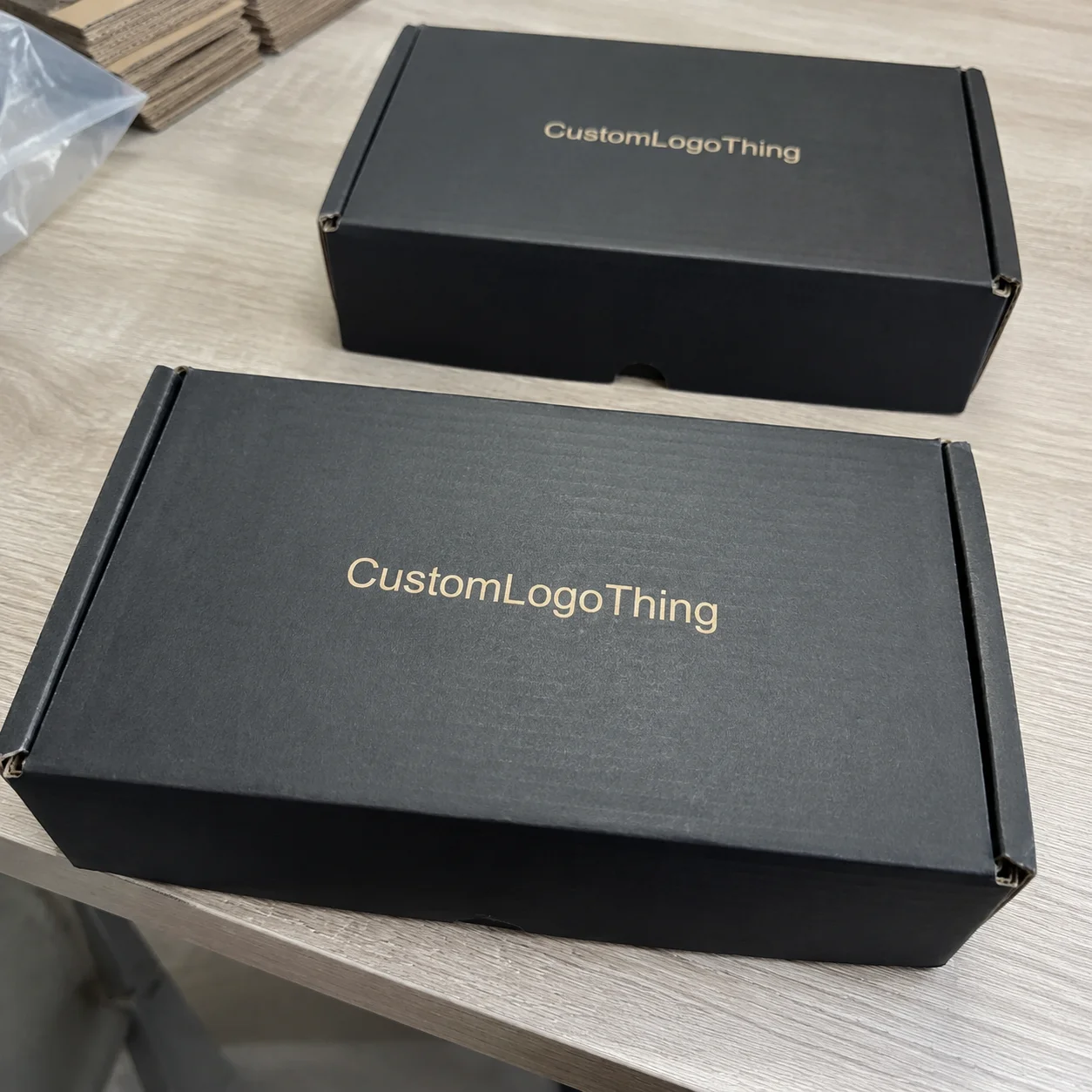
Buyer Fit Snapshot
| Best fit | Custom Chipboard Packaging Mailer Boxes projects where brand print, material claims, artwork control, MOQ, and repeat-order consistency need to be specified before quoting. |
|---|---|
| Quote inputs | Share finished size, material target, print colors, finish, packing count, annual reorder estimate, ship-to region, and any compliance wording. |
| Proofing check | Approve dieline scale, logo placement, barcode or warning zones, color tolerance, closure strength, and carton packing before bulk production. |
| Main risk | Vague material claims, crowded artwork, missing packing details, or unclear freight terms can make a low unit price expensive after revisions. |
Fast answer: Custom Chipboard Packaging Mailer Boxes: Board, Finish, Dieline, and Unit Cost should be specified like a repeatable production item. The safest quote records material, print method, finish, artwork proof, packing count, and reorder notes in one written spec.
Production checks before approval
Compare the actual filled-product size with the drawing, then confirm tolerance on folds, seals, hang holes, label areas, and retail display edges. Reserve space for logos, QR codes, warning copy, and material claims before decorative graphics fill the panel.
Quote comparison points
Review material grade, print process, finish, sampling route, tooling charges, carton quantity, and freight assumptions side by side. A quote is only useful when the supplier can repeat the same color, closure quality, and packing count on the next order.
On one of my first factory walks in Dongguan, Guangdong, I watched a line of custom chipboard packaging mailer boxes go from flat sheets to finished branded packaging in a matter of minutes. What struck me most was how many people still think a mailer box is just a shipping shell. It is not. Not even close. A well-built chipboard mailer can protect a serum kit, present a luxury candle set, and carry the brand story all at once. That is why I’ve spent so many years helping clients Choose the Right product packaging instead of the prettiest sample. Pretty samples are nice. Pretty samples that collapse in transit are just expensive disappointment, especially when you paid $0.28 per unit for 3,000 pieces and still need to reprint the lids.
That’s the heart of custom chipboard packaging mailer boxes: they’re built to fit the product, carry the graphics, and hold up through handling, while still feeling polished enough for retail packaging, subscription kits, and direct-to-consumer shipments. If you’ve ever compared a flimsy stock carton to a thoughtfully engineered chipboard mailer with a tight tuck, crisp score lines, and a clean reveal, you already know the difference in package branding. A lot of brands underestimate how fast customers judge the box before they ever touch the product inside. That judgment happens in about three seconds the moment the package lands on a kitchen table in Chicago or a studio apartment in Brooklyn.
Overview: What Custom Chipboard Packaging Mailer Boxes Are
Custom chipboard packaging mailer boxes are paperboard-based boxes made to a specific product size, print design, and shipping need. They sit in that middle ground between lightweight folding cartons and heavier corrugated shippers: stronger and more presentation-ready than a simple folding carton, but usually lighter and more print-friendly than a traditional corrugated box. That middle ground is exactly why they show up so often in packaging projects where both presentation and logistics matter, especially for brands shipping from Shenzhen, Dongguan, or Ningbo into the U.S. and EU markets.
Here’s the simplest way I explain it to buyers. Chipboard is the smooth, printable paperboard you often see in premium custom printed boxes, cosmetics cartons, and retail sleeves. A common spec is 350gsm C1S artboard for smaller mailers or 400gsm CCNB when you want a slightly sturdier feel. Corrugated board has flutes for impact resistance and is better for rougher transit conditions. A rigid set-up box uses thick grayboard wrapped with printed paper and is closer to luxury gift packaging. Custom chipboard packaging mailer boxes usually live between those categories, depending on board thickness, closure style, and whether inserts are added. In other words: not too flimsy, not too dramatic, just useful in the way good packaging should be.
In a skincare plant I visited near Guangzhou, the marketing team originally wanted a heavy rigid box for every kit. Once we measured the shelf life, shipping route, and unit economics, a printed chipboard mailer with a molded pulp insert made more sense. The box still looked premium on arrival, but it cut the package weight by 38% and saved roughly $0.64 per shipment in air freight on a 2,000-unit launch. That kind of decision is common in packaging design, especially when you want strong product packaging without overbuilding it. I remember the marketing manager saying, “But rigid feels nicer.” Sure. So does a marble countertop. Doesn’t mean you need one in a parcel shipment.
Common uses for custom chipboard packaging mailer boxes include cosmetics, apparel, supplements, stationery sets, influencer kits, subscription boxes, and promotional shipments. They’re especially useful when the unboxing experience matters because the customer opens the outer mailer and immediately sees finished print, structured compartments, or a branded inner panel rather than plain kraft void space. A 250 x 180 x 80 mm mailer with an inside-printed lid can turn a basic 12 oz gift set into something people actually photograph, which is half the battle in ecommerce and wholesale retail.
A lot of brands underestimate how much these boxes influence perception. A 14 oz apparel shipment in a plain mailer feels like logistics; the same shipment in well-designed custom chipboard packaging mailer boxes feels like a branded moment. That matters for repeat purchase, social sharing, and the overall sense of package branding. People rarely post a boring box. They post the one that made them feel like someone actually cared, usually the one with a crisp matte finish and a foil logo that cost only $0.07 more per unit at 5,000 pieces.
How Custom Chipboard Packaging Mailer Boxes Work
The anatomy of custom chipboard packaging mailer boxes starts with the board grade. Depending on the product, you might see 12pt, 14pt, 16pt, 18pt, or even thicker paperboard, and each one changes stiffness, fold memory, and crush resistance. The panels are die-cut and scored so the box can be folded consistently, while the closures, tabs, or locks keep the structure closed during handling and transit. A 16pt board might be fine for a 180 g skincare kit, while a 20pt board or laminated 350gsm artboard is more appropriate for a heavier 900 g candle set. It sounds simple on paper. It is not always simple on the production line, because a millimeter off at the die stage can haunt you later like a bad supplier email thread.
On the factory floor, the weak points are usually predictable: the score lines near the front tuck, the glue seam, the edges of the top flap, and any location where a heavy insert pushes outward. I’ve seen perfectly printed custom chipboard packaging mailer boxes fail not because the artwork was wrong, but because the product weight sat too far from the center and stressed one corner during parcel sortation. That is one of those frustrating factory truths nobody wants to hear until the corner crushes, the customer complains, and suddenly everyone is “reviewing the structure.” In one case in Foshan, a 1.1 kg fragrance kit looked flawless in final art but failed a 1-meter drop test on the third edge because the insert was 2 mm too shallow.
The manufacturing flow usually follows a clear path. First comes sheet selection, then die-cutting, scoring, and print, followed by finishing, gluing, inspection, and packing. If the job includes specialty work like embossing, foil, or spot UV, those steps come after print and before final assembly. In a plant with a decent rotary die line and a well-tuned folder-gluer, a straightforward run can move quickly; a more decorative order with multi-step finishing will move slower, and that’s normal. For a 5,000-piece order in Shenzhen, a plain matte mailer might be completed in 10 to 12 business days after proof approval, while a foil-stamped version with a custom insert can take 15 to 18 business days. Factory timelines do not care about your launch deck. They care about setup time, curing time, and whether someone approved the art with the wrong dieline version. Yes, that happens more than it should.
Custom sizing is where these boxes earn their keep. A box built around the actual product dimensions reduces internal movement, lowers the need for excess void fill, and gives you a cleaner opening experience. For delicate items such as glass dropper bottles or ceramic candles, tight fit matters just as much as the outer print because the best-looking box in the world won’t help if the item rattles around inside. I’d rather see a smart, slightly restrained fit than a beautiful box acting like a maraca, especially on a 250 x 250 x 90 mm mailer that ships with one molded pulp tray instead of a loose folded paper insert.
Closure style is another choice that affects both function and branding. Tuck closures are common and economical, friction-fit designs can feel neat and secure, tab locks add extra retention, and magnetic closures sit more in the premium zone where the tactile feel matters. For custom chipboard packaging mailer boxes, I usually recommend choosing the closure based on transit path, product weight, and how often the box will be opened rather than on looks alone. A closure that looks elegant but pops open in shipping is not elegant. It’s just dramatic, and drama is expensive when you have 8,000 units going through a warehouse in Savannah.
Branding performance changes dramatically with finish. Matte lamination gives a calm, modern look. Gloss amplifies color contrast. Soft-touch lamination feels velvety and is popular in premium product packaging. Foil stamping adds brightness, embossing adds depth, and spot UV creates contrast on logos or patterns. I’ve watched a simple white-and-black chipboard mailer become a far more memorable branded packaging piece after only a small gold foil logo was added to the lid. Sometimes that one small detail is enough. Sometimes it is the whole point, especially when the added finishing cost is only $0.12 to $0.18 per unit at 2,000 pieces in a Guangzhou production run.
“The best mailer isn’t the heaviest one. It’s the one that fits the product, survives the route, and still looks intentional when the customer opens it.”
Key Factors That Affect Custom Chipboard Packaging Mailer Boxes
Board thickness is one of the first variables I ask about when quoting custom chipboard packaging mailer boxes. A lighter board can work beautifully for apparel, stationery, or small cosmetic kits, while a heavier board improves panel stiffness and adds crush resistance for premium presentation or moderate shipping abuse. In practical terms, that might mean a 14pt board for a lightweight mailer and an 18pt structure when the box needs a firmer feel and a better edge profile. If the box has to survive a rough shipping route from Yiwu to Los Angeles, I would rather go a touch heavier and sleep at night.
Print method also matters. Offset printing is usually the first choice for larger quantities and fine color control, while digital printing can make sense for smaller runs, test launches, or variable artwork. If the design includes heavy coverage, metallic accents, or several finishing passes, the production route changes again. This is where good packaging design saves money because you’re not forcing a complex aesthetic into the wrong process. I’ve seen brands fall in love with a five-color, full-coverage mockup only to discover they asked for it on a budget that clearly belonged to a napkin. At 1,000 units, digital might price out around $0.95 each; at 10,000 units, offset can drop closer to $0.19 to $0.27 each depending on coverage and insert style.
Sustainability is a real decision point, not just a marketing line. Many custom chipboard packaging mailer boxes can be made with recyclable paperboard, FSC-certified materials, and soy-based inks, and those details matter if your brand is trying to Reduce Packaging Waste while keeping presentation strong. Coatings should also be reviewed carefully, because some high-gloss films or mixed-material laminations can make recycling harder depending on the local stream. For reference on packaging sustainability and waste considerations, I often point buyers to the EPA recycling resources and to paper certification guidance from FSC. If you want a practical spec, ask for FSC-certified 350gsm C1S artboard with water-based varnish instead of a heavy plastic laminate.
Pricing usually comes down to a few predictable drivers: quantity, board grade, print coverage, tooling, finishing, inserts, and shipping dimensions. A quote for 5,000 custom chipboard packaging mailer boxes with a single-color print, no insert, and a standard matte coating can land very differently from a 1,000-unit order with foil, embossing, and a custom die-cut insert. One quote I reviewed for a wellness brand came in at roughly $0.15 per unit for 5,000 pieces for a simple structure with no insert, while the same box with a printed insert and soft-touch finish was closer to $0.42 per unit; the difference was entirely in the add-ons, not the basic structure. Freight can add another $0.03 to $0.08 per unit depending on carton count and destination, which is why the cheapest unit price is often the most misleading number in the room.
To make the tradeoffs easier to compare, here’s a simple breakdown I often use in client meetings:
| Option | Best For | Typical Cost Impact | Practical Notes |
|---|---|---|---|
| Light board, basic print | Apparel, stationery, lightweight kits | Lowest | Fastest to produce; best when shipping stress is modest; often 12pt to 14pt board |
| Mid-weight board, matte finish | Cosmetics, supplements, DTC mailers | Moderate | Good balance of structure and cost for most custom chipboard packaging mailer boxes; common with 16pt board or 350gsm stock |
| Heavier board, inserts, soft-touch | Premium kits, gift sets, influencer boxes | Higher | Better presentation and fit, but longer lead time and higher freight weight; often 18pt board plus molded pulp or EVA insert |
| Specialty finishes plus custom tooling | Luxury retail packaging | Highest | Strong brand impact, though not always necessary for every launch; foil, emboss, and spot UV can add $0.10 to $0.30 per unit |
There’s also a tradeoff between aesthetics, durability, lead time, and budget, and I’ve seen people ignore that balance at their own expense. A flashy box can look amazing on a sales deck, but if it adds two weeks to the schedule and forces a freight class jump, it may not be the right answer for a first run of custom chipboard packaging mailer boxes. Sometimes a cleaner structure with one signature finish is the smarter move. Sometimes restraint is the best branding decision in the room, even if nobody wants to clap for it, especially if you need launch inventory in 14 business days instead of 28.
Custom Chipboard Packaging Mailer Boxes: Step-by-Step Process and Timeline
The workflow for custom chipboard packaging mailer boxes usually starts with discovery. That’s the point where the supplier learns what the product is, how it ships, how it is displayed, and what the customer should feel when opening it. I tell buyers to come prepared with product dimensions, a sample if possible, target quantity, target launch date, and a realistic budget range because those five things shape nearly every structural decision that follows. If you show up with only “we want it premium,” I can already feel the supplier sweating, usually in a factory meeting room in Dongguan with a stack of sample boards and a calculator that has seen better days.
Next comes dieline development. If the box is truly custom, the dieline should be sized around the product and closure style, not guessed from a similar carton. A good packaging engineer will account for board thickness, score allowance, insert clearance, and the way the flaps fold under pressure. For custom chipboard packaging mailer boxes, this step is where a lot of future problems get prevented, because a clean dieline makes every later stage easier. Bad dielines are like bad maps. You can still end up somewhere, but it is rarely where you meant to go. A 1.5 mm adjustment on the front tuck can be the difference between a satisfying snap and a lid that bulges.
How long do custom chipboard packaging mailer boxes take to produce?
After that, most projects move into structural sampling. A white sample or unprinted mock-up shows the physical fit, closure behavior, and how the product sits inside. Then comes artwork setup, proofing, and any color corrections before production starts. If the order includes specialty coatings, complex artwork, or multiple insert components, I’ve seen the approval process stretch a little longer because each additional element creates one more point where someone wants a revision. And then another revision. And then a revision to the revision, which is basically the packaging industry’s favorite hobby. A straightforward proof cycle may take 2 to 3 business days, while a printed prototype with foil or embossing often needs 4 to 6 business days before everyone signs off.
Typical timing varies, but a rough schedule for custom chipboard packaging mailer boxes might look like this: 2 to 4 business days for initial concept and quote review, 3 to 7 business days for dieline and sample work, 2 to 5 business days for artwork proofing, and 10 to 18 business days for production depending on quantity and finish. If you add custom inserts, foil, or a multi-pass coating, that can push the timeline further. A realistic end-to-end timeline is usually 12 to 15 business days from proof approval for a simple 5,000-piece run in Shenzhen, and 18 to 25 business days for a more complex premium build. The honest answer is that factory schedules move in blocks, not magic, and every change after approval usually resets some part of the line plan.
Buyers often ask what type of sample they should request, and the answer depends on risk. A flat proof checks print layout and panel placement. A structural sample checks fold and fit. A white sample checks the physical geometry without print. A printed prototype checks nearly everything, including color feel, finish, and brand presentation. For premium custom chipboard packaging mailer boxes, I almost always recommend some form of structural sample before full production because the cost of one revision is usually far lower than the cost of 5,000 misfit cartons. If a sample costs $35 to $85 and saves a $1,200 rework, that’s not “extra.” That’s cheap insurance.
One of my clearest memories is a subscription brand meeting where the buyer insisted the insert “looked fine” on screen. We made a white sample in the Shenzhen facility, dropped in the actual product, and found the lid pinched the top corner by 1.5 mm. That tiny gap would have caused crushed corners across the entire shipment. We adjusted the insert depth that afternoon, and the final run went out cleanly. That’s why I respect samples so much; they catch the mistakes that renderings can’t. Screen mockups are helpful. Real cardboard is the truth serum, especially when the product is a 480 g candle set with a rigid glass jar and a tight shoulder.
If you want to understand the broader standards that support package testing and shipping performance, the ISTA site is a solid reference point for transit testing practices. For any brand selling at scale, that kind of reference matters because the box has to work in the real world, not just on a mood board, and a 1.2-meter drop test in a lab in Suzhou says more than a glossy rendering ever will.
Common Mistakes When Ordering Custom Chipboard Packaging Mailer Boxes
The biggest mistake I see is sizing the box to the product on paper but forgetting the insert, clearance, or closure tolerance. A box that measures exactly to the product can actually be too tight once you add a tray, foam cutout, or folded tissue wrap. With custom chipboard packaging mailer boxes, even 2 mm can matter, especially if the lid is meant to tuck in smoothly rather than force closed. Tiny error, big problem. Packaging has a nasty sense of humor that way, and the worst part is that the problem usually shows up after 2,000 units have already been printed in Shanghai.
Artwork mistakes are just as common. People often design across every visible surface without respecting bleed, score lines, flap wraps, or the location where the box folds during assembly. On a small-format mailer, a logo that looks perfectly centered in the PDF may land awkwardly over a score, and that can make the final result look off by a surprising amount. This is one place where packaging design discipline beats pure creativity. Fancy graphics cannot rescue bad fold awareness. If the dieline says the flap wraps 18 mm, design for 18 mm, not your feelings.
Durability mistakes usually come from selecting a board that feels nice in the hand but can’t survive the route. I’ve seen elegant-looking custom chipboard packaging mailer boxes buckle because the board was too light and the parcel travelled through automatic sortation with pressure from neighboring cartons. If the box is shipping through long parcel networks, the build must match the abuse level, not just the display target. The box may not be going to war, but it should at least survive the mailroom, a 15-km ride on a conveyor system, and a wet loading dock in January.
Skipping the sample is probably the most expensive shortcut of all. When buyers skip a proof, they often discover color shift, closure misalignment, or insert interference after the order is already in production. By then, the only options are rework, scrap, or living with the mistake. In my experience, a day spent on samples saves a week of regret. I have never once heard someone say, “Wow, I’m glad we skipped the sample and guessed.” That sentence does not exist in a healthy procurement department.
Budget errors happen when people compare quotes without checking board grade, finish, included tooling, or whether inserts are part of the price. Two offers for custom chipboard packaging mailer boxes may look close at first glance, yet one may include FSC paperboard and custom die tooling while the other excludes freight, insert creation, and prepress correction. That’s not an apples-to-apples comparison, even if the unit price looks attractive. It is packaging math with a disguise on, and the disguise is usually a cheap-looking PDF with a beautiful header.
Expert Tips for Better Custom Chipboard Packaging Mailer Boxes
I always advise brands to design around the unboxing path, not just the outer lid. The customer opens the top, sees the first panel, then the insert, then the product reveal, and each moment can carry brand cues. With custom chipboard packaging mailer boxes, inside printing, tab placement, and insert color can shape the experience almost as much as the outside artwork. I’ve seen a plain exterior turn into a memorable experience simply because the inside lid had a clever message and the insert color matched the product. That kind of detail sticks, especially when the lid opens to a 280 x 190 mm interior panel with a one-line message printed in black on kraft.
Test the product weight and transit behavior before approving the structure. A 300 g skincare kit behaves very differently from a 1.2 kg accessory set, even if the exterior dimensions are similar. When I worked with a supplement client shipping glass jars from Suzhou to Texas, we ran a basic drop sequence and found that the lid fluttered under side pressure, so we adjusted the tab geometry rather than adding more ink or more decoration. That saved money and improved the box. I’d rather solve a structural issue with cardboard intelligence than bury it under nicer printing, particularly when a 3 mm tab extension fixes the problem for less than $0.02 per unit.
It’s usually smarter to choose one or two high-impact finishes than to stack every option available. A matte base with foil logo or a soft-touch surface with spot UV can look excellent without making the box heavy on cost or production risk. For most custom chipboard packaging mailer boxes, restraint produces a cleaner brand feel than over-accessorizing the structure. Too much finish can start to look like the box is trying too hard. Nobody likes that box, and nobody wants to pay an extra $0.21 per unit just to make the lid shinier.
Another practical tip: keep dimensions consistent across a product line if you can. I’ve seen brands use six nearly identical mailer sizes, which creates storage headaches, inventory confusion, and slower packing at the table. If you can consolidate to two or three standard footprints, your packaging operation becomes easier to manage, and reorders are much more predictable. Your warehouse team will also stop giving you that look, which is frankly a bonus. A 220 x 160 x 70 mm size for one line and a 280 x 200 x 90 mm size for another usually beats six almost-identical versions that all arrive on different pallets from Dongguan.
Finally, always ask how the board behaves in humidity, during creasing, and at glue application. Seasonal changes matter more than many buyers realize. In a humid warehouse in Guangzhou, a light board can soften slightly, which affects scoring and fold memory. In a dry winter environment in Denver or Chicago, glue and fiber response can change too. That’s not a reason to avoid custom chipboard packaging mailer boxes; it’s a reason to specify them carefully and test them in conditions similar to where they’ll actually be packed and stored. Packaging lives in the real world, not in a perfect showroom, and real warehouses run anywhere from 35% to 75% humidity depending on the month.
If you’re comparing related formats, it can also help to review other Custom Packaging Products and, for lighter direct-mail programs, look at Custom Poly Mailers as a complementary shipping option.
What to Do Next Before Ordering Custom Chipboard Packaging Mailer Boxes
Before you place an order for custom chipboard packaging mailer boxes, measure the product, define the shipping route, decide on the visual style, and settle on a quantity range that makes sense for the launch. Those four choices will shape nearly every other decision, from board grade to print coverage to the kind of insert you need. Skip those, and you’re basically asking your supplier to read your mind. That ends badly, usually after someone in Ningbo has already set up a print run based on the wrong size.
I recommend building a short packaging brief with exact product dimensions, unit weight, artwork files, target audience, and budget. That brief makes quoting much more accurate and keeps supplier conversations grounded in numbers rather than assumptions. If you want fair comparisons between vendors, ask each one to quote the same structure, same finish, and same insert spec so you can compare apples to apples. Otherwise, the “cheaper” quote usually just hid something in the fine print. Funny how that works. A good brief can also cut email back-and-forth from 12 messages to 3.
For fragile, premium, or subscription packaging, request a structural sample or prototype before full production. It’s the cheapest insurance you can buy in packaging. I’ve seen plenty of cases where a prototype exposed a closure issue, a flap length problem, or an insert tolerance that would have wrecked the final run of custom chipboard packaging mailer boxes. If the sample costs $50 and the correction prevents a $1,500 scrap event, the math is not subtle.
When you review a quote, look at every line: board stock, print method, finishing, insert type, lead time, and freight. Ask whether tooling is included. Ask whether prepress correction is included. Ask whether the quote assumes a standard carton count or a custom shipper. Those questions may feel tedious, but they’re how experienced buyers avoid surprises. For a rough packaging strategy benchmark, I also encourage clients to read trade resources from the Packaging School and industry associations because good buying decisions are easier when you understand the production language. A vendor in Shenzhen, Guangzhou, or Xiamen will always respect a buyer who knows the difference between print cost and tooling cost.
My final practical reminder is simple: confirm dimensions, insert fit, and shipping expectations before approving custom chipboard packaging mailer boxes for production. If those three things are right, the rest of the process usually falls into place much more cleanly, and the finished box has a much better chance of looking intentional, performing well, and supporting your brand the way you wanted from the start. And if something still feels off, trust that instinct. I have fixed enough “almost right” boxes to know they are usually wrong in expensive ways, sometimes by only 1 or 2 mm, which is all it takes to ruin a clean pack-out line.
FAQ
Are custom chipboard packaging mailer boxes strong enough for shipping?
Yes, for many products they are strong enough when the board grade, closure style, and product fit are matched to the transit conditions. They work especially well for lightweight to moderately heavy items, premium kits, and retail-ready shipments. For heavier or more fragile products, the structure may need inserts, reinforcement, or a different board spec such as 18pt board or 350gsm C1S artboard with a reinforced insert tray.
What affects the price of custom chipboard packaging mailer boxes the most?
Quantity is usually the biggest driver because setup costs are spread across more units at higher volumes. Other major factors include board thickness, print coverage, special finishes, inserts, and whether the design needs custom tooling. Shipping size and packing method can also affect total cost more than buyers expect, and a $0.05 change in freight per unit can matter a lot on a 20,000-piece order.
How long does it take to make custom chipboard packaging mailer boxes?
The timeline depends on artwork readiness, sample approval, production complexity, and finishing requirements. Simple designs move faster, while printed prototypes, specialty coatings, or custom inserts add time. Having final dimensions and print files ready early helps avoid delays, and a typical production run in Dongguan or Shenzhen often takes 12 to 15 business days from proof approval for a standard order.
What products work best with custom chipboard packaging mailer boxes?
They are a strong fit for cosmetics, skincare, apparel, accessories, subscription products, stationery, and promotional gift kits. They are especially useful when presentation matters as much as protection. Products with sharp edges, high weight, or extreme fragility may need extra structural support, such as molded pulp, EVA, or a thicker chipboard insert to keep movement under 2 mm.
Can custom chipboard packaging mailer boxes be eco-friendly?
Yes, they can be made with recyclable paperboard, FSC-certified materials, and inks that support more sustainable packaging goals. The finish and coating choice matters because some treatments can affect recyclability. Reducing unnecessary material and designing the right-fit box also improves sustainability, especially if you use FSC-certified stock from suppliers in Guangdong and choose water-based varnish instead of plastic lamination.
Custom chipboard packaging mailer boxes reward careful thinking: the right board, the right fit, the right finish, and the right production plan can give you a box that protects the product, elevates the brand, and keeps the operation practical. From my years on factory floors in Dongguan, Shenzhen, Guangzhou, and Foshan, I can tell you the most successful orders are rarely the fanciest; they’re the ones where the structure, print, and shipping reality all line up from the start. So before you approve the run, lock the dimensions, sample the fit, and test the route. That’s the boring work that saves money, and boring is underrated. Boring ships on time.