Custom Clothing Labels for fitness brands do a lot more than identify a garment. They sit against skin, move with stretch fabric, survive repeated washing, and still have to look clean once the product is folded, packed, and handled by customers. That combination of comfort, durability, and presentation is why label selection deserves the same attention as fabric choice, stitching, and packaging.
For a buyer, the label is part of the product experience. It may need to carry size information, care details, brand identity, or compliance text without adding scratchiness or bulk. On a compression legging, a training tee, and a heavyweight hoodie, the best construction is not the same. The garment type, placement, wash environment, and launch timeline all shape the right decision.
That is also why label planning should happen early. If the label is being coordinated with swing tags, inserts, or shipping cartons, the visual system should feel deliberate from the start instead of patched together later. A strong fitness brand usually shows consistency across every touchpoint, and the label is one of the most physical touchpoints in the whole package.
Custom Clothing Labels for Fitness Brands: Why Details Matter
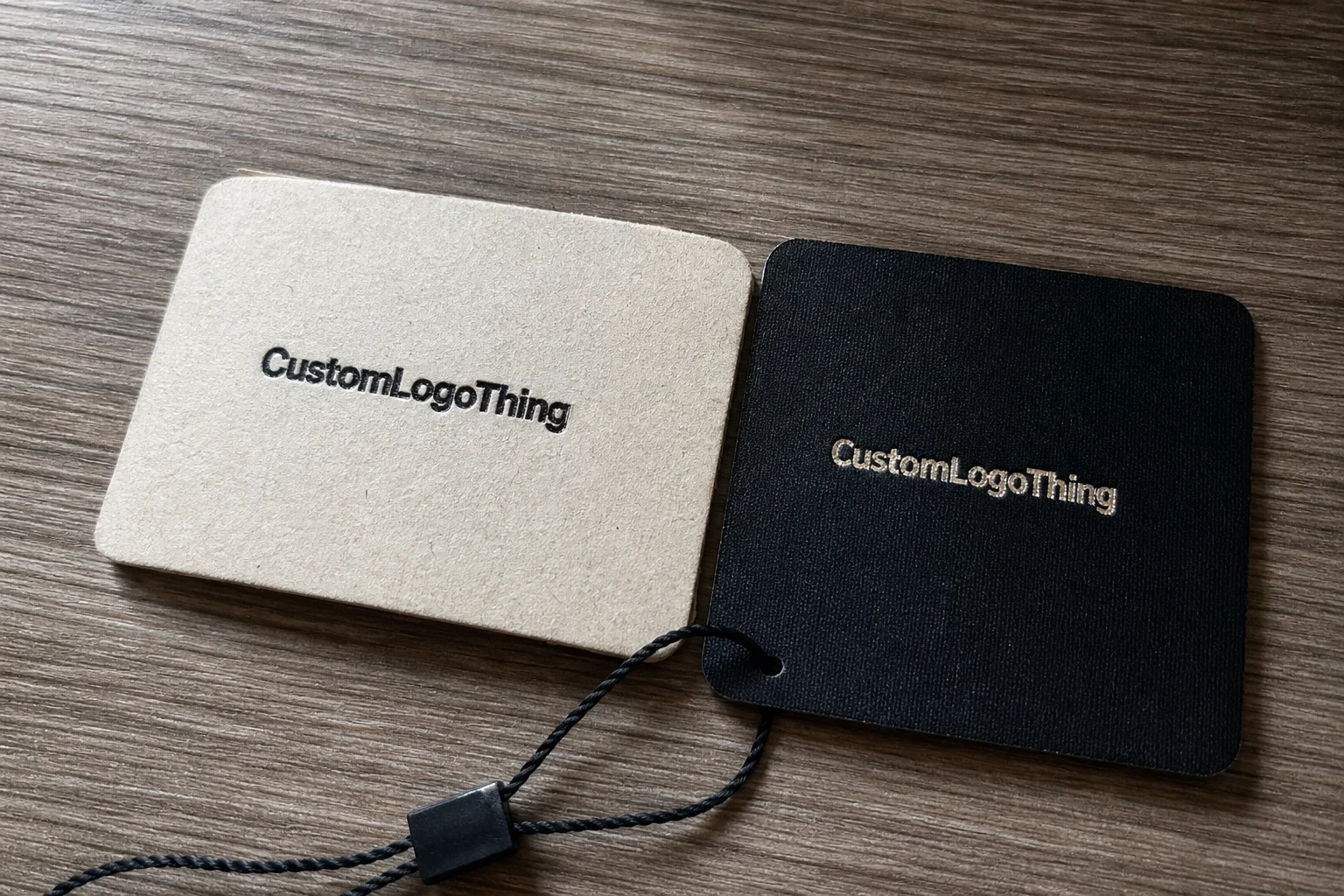
The first thing customers notice about activewear is usually the fit or the fabric. The second thing they notice is often the label, especially if it scratches, twists, or digs in during movement. That is a small detail with a large effect. A technically strong garment can still feel unfinished if the label feels cheap or intrusive.
Fitness apparel lives under conditions that casual apparel does not. Sweat changes how materials feel. Compression changes how seams behave. Repeated laundering breaks down weak inks, low-grade adhesives, and poorly finished edges. A label that looks clean on a digital proof can still fail once it starts curling at a waistband or rubbing against a shoulder blade during training.
The practical question is not just whether the label looks good. It is whether it can do three jobs at once: identify the garment, support the brand, and stay comfortable through wear and wash cycles. If one of those pieces is missing, the product usually feels compromised even if the rest of the construction is sound.
Placement matters as much as construction. A neck label on a loose hoodie behaves differently from a side-seam label on a fitted tee. A waistband label on leggings has to move with high stretch recovery and low bulk. That is why one label style rarely fits an entire activewear line. Buyers who treat the label as a garment-specific component usually get better results on the first run.
The best label for fitness apparel is the one that stays readable, stays attached, and stays out of the way.
Which Label Materials Hold Up in Sweat and Wash Cycles
There is no universal label material that works for every product in a fitness line. The right choice depends on where the label sits, how much the garment stretches, and how much text or branding has to fit on it. A label for a soft lounge set is not automatically right for a high-compression training piece.
Woven labels are a common choice for hoodies, joggers, and outer layers because they offer a polished look and strong wash durability. They hold detail well as long as the artwork is not overly fine. The tradeoff is feel. Depending on thread density, fold style, and edge finish, woven labels can feel more noticeable than printed or transfer options, especially on garments worn close to skin.
Printed satin labels are softer and more flexible. They work well for inner-neck placement on tees, lighter activewear, and care information that needs more text than a woven label can comfortably hold. The main risk is longevity if the print system, ink adhesion, or washing conditions are not tested properly. Fine type and low-contrast artwork can blur faster than expected if the spec is too aggressive.
Heat-transfer labels are often the most practical choice for performance garments because they remove seam bulk almost entirely. That matters on leggings, sports bras, fitted tops, and other pieces where even a small edge can be noticeable during movement. They can be very comfortable, but only if the substrate, artwork, and application temperature are all matched correctly. A transfer that is too rigid may crack. One that is not fully cured can peel early or leave a tacky edge.
Silicone or rubber patches create a more technical, sport-forward look and are usually best suited to exterior branding. They are common on outerwear, bags, caps, and heavyweight tops where a slightly raised finish feels intentional. They are durable, but they are not the softest option against skin, so they are usually a poor fit for internal identification on close-fitting garments.
There is also the matter of composition. Some buyers assume the label is only a branding decision, but the spec often includes fiber content, size, care instructions, origin information, or other market-specific details. If the label has to carry all of that, the layout must stay readable at a practical size. Overcrowding is usually the first mistake, because text that looks tidy in a proof can become unreadable after folding, stretching, and washing.
The table below gives a useful starting point for comparing the main options.
| Label Type | Best Use | Comfort | Durability | Typical Budget Range at 5,000 Units |
|---|---|---|---|---|
| Woven label | Hoodies, joggers, outer layers | Medium | High | $0.06-$0.16 each |
| Printed satin label | Tees, light activewear, care info | High | Medium to high | $0.05-$0.14 each |
| Heat-transfer label | Compression pieces, sports bras, leggings | Very high | High if spec is right | $0.08-$0.22 each |
| Silicone or rubber patch | Exterior branding, outerwear, accessories | Low to medium | Very high | $0.18-$0.45 each |
These numbers are directional, not universal. Region, finishing method, label size, color count, and order quantity can move the price up or down quickly. The quote only becomes useful once the label spec is clear.
For buyers who are also thinking about shipment stress and storage conditions, industry testing references can help frame the discussion. Standards from the ISTA are useful for packaging and transit considerations, while the EPA Sustainable Materials Management resources can help brands evaluate waste reduction goals alongside material choices. Those references will not choose the label for you, but they can sharpen the spec conversation before production starts.
Pricing, MOQ, and Unit Cost Drivers for Fitness Labels
Label pricing is shaped by the things a buyer can actually control: material, size, color count, finishing, attachment method, and order volume. A simple one-color woven label at scale is usually inexpensive. A small-run heat-transfer label with several colors, a precise placement requirement, and extra sampling will cost more per unit. That is normal. The important part is reading the quote with the full spec in view.
MOQ changes the math quickly. Once setup, proofing, and production preparation are spread across a larger quantity, the unit price drops. Smaller orders carry a heavier setup burden, so a brand ordering 500 labels will almost always pay more per piece than a brand ordering 5,000. The economics are not mysterious; they just need to be seen clearly before inventory decisions are made.
It helps to think in landed cost rather than quote cost. The real number includes sample charges, setup fees, freight, possible customs delay, and any relabeling labor if the first version is wrong. If the labels are part of a larger packaging program, the total launch budget should include hangtags, cartons, and other branded components so the line does not look affordable on paper but expensive in practice.
One reason fitness brands get surprised is that the label price itself is often small compared with the cost of getting it wrong. A label that scratches, fades, or peels creates customer complaints, returns, and rework. Paying slightly more for a spec that holds up well is usually cheaper than sending out replacements or absorbing the damage of a weak first impression.
When requesting pricing, ask for several quantity tiers instead of one number. A quote at 1,000 units, 5,000 units, and 10,000 units shows how much flexibility the budget really has. It also makes it easier to decide whether to test the market with a smaller run or commit to a larger order that lowers unit cost.
The main cost drivers are easy to track once you know where to look:
| Cost Driver | Why It Changes Price | Buyer Control |
|---|---|---|
| Material choice | Different substrates, inks, and adhesives have different production costs | High |
| Label size | Larger labels use more material and may require more labor | High |
| Color count | More colors often mean more setup and tighter matching | High |
| Attachment method | Sew-in, heat-apply, and patch styles require different finishing | High |
| Order quantity | Fixed setup costs are spread over fewer or more units | High |
| Shipping | Lead time, freight class, and destination affect landed cost | Medium |
Production Steps and Turnaround Timeline from Proof to Delivery
A clear production process matters because fitness labels do not have much room for error. A good supplier should move through artwork review, proofing, sample approval, production, finishing, packing, and shipping in a sequence the buyer can follow. If those steps feel vague or compressed, the risk usually shows up later in quality or timing.
Timelines vary with complexity, but a practical schedule often looks like this: proof review in one to two business days, sampling in five to ten business days if a physical sample is needed, production in roughly ten to fifteen business days after approval, and shipping after that. Simple specs can move faster. More technical label constructions, especially those tied to stretch garments or strict color matching, need more breathing room.
The delays that cause the most trouble are predictable. Artwork revisions slow approval. Color matching takes longer if the label has to coordinate with a specific Pantone or with a garment shade that is already hard to match. Approval lag is common when several people need to sign off on the same proof. Freight, consolidation, and customs can also move the final delivery date even if production stays on schedule.
A proof is the least expensive place to fix a mistake. After production starts, every correction gets more expensive.
For that reason, launch schedules should be built around the label, not around wishful timing. If a brand needs labels for a retail drop, a team rollout, or a campaign launch, the schedule should include room for a sample wash test and a second review if the first sample reveals a problem. A rushed label order can undermine an otherwise well-built product line.
Ask for a timeline in writing that covers proof turnaround, sample turnaround if needed, production lead time, ship date, and any known bottleneck. That gives the buyer a realistic view of where the schedule can slip. It is much easier to protect the launch date when the risky steps are visible early.
How to Order Labels for a Fitness Apparel Line
Start with the garment spec. The supplier needs to know the fabric type, stretch level, placement area, wash expectations, and whether the label must carry size or care information. A label for a cotton tee is not the same as a label for a brushed nylon legging, and a hoodie label does not behave like a label on a compression top.
Then choose the construction. Once the garment requirement is clear, the rest of the label spec becomes easier to define: woven, printed satin, heat-transfer, or patch style; dimensions; fold type; attachment method; edge finish; and color count. At that stage, the quote starts to reflect reality instead of guesswork.
Artwork should be clean vector art whenever possible. Small labels are not forgiving. Thin lines disappear, tiny text blurs, and low-contrast details can vanish after wear and washing. If the logo has fine detail, check how it reads at the actual finished size, not the oversized version on a screen. A mark that looks sharp at artwork scale can become muddy once it is reduced to a practical label size.
Before the full run is released, ask for a sample or pilot batch and test it on the actual garment. Stretch it. Wash it. Wear it under movement. If the label scratches, curls, twists, or loses readability, fix the spec before committing volume. That is far cheaper than discovering the issue after thousands of units are packed.
For brands producing a broader apparel system, keep the label spec aligned with the rest of the presentation. Typography, finish level, and tone should be consistent across labels, tags, and packaging so the brand feels intentional rather than assembled from separate parts. A label is small, but it still needs to fit the larger product story.
One practical habit helps more than people expect: keep a single specification sheet with the approved dimensions, material, placement, artwork version, and reorder notes. Once the details are scattered across email threads, consistency starts to drift. A controlled spec document protects future runs and makes reorders much easier to manage.
Common Mistakes That Make Activewear Labels Fail
The first mistake is choosing by appearance alone. A label can look excellent in a mockup and still feel wrong on the body. Activewear moves constantly, so comfort needs to be tested in motion. If a runner, lifter, or cyclist notices the label quickly, the label has already lost the job it was supposed to do.
Another frequent problem is overloading a small label with too much information. Dense text, weak hierarchy, and crowded layout choices often survive in design files but fail in real use. The print may be technically correct and still be hard to read after a few washes. If care copy has to be included, prioritize clarity over visual cleverness.
Stretch behavior causes a different kind of failure. Waistbands, compression zones, and high-motion seams can distort a logo if the label was never tested under tension. This is especially true for heat-transfer and printed constructions. A label that looks fine when flat may react badly once the garment is pulled, folded, and worn repeatedly.
Placement errors are just as costly. A label can fold over a seam, sit in a friction point, or twist around a curved surface and become irritating even if the material choice is right. Flat mockups do not show that behavior. Live-garment placement checks are worth the time because they reveal problems that artwork reviews cannot.
Compliance is another area where shortcuts create risk. If the garment needs fiber content, origin information, or care instructions, those details need to be planned early instead of squeezed in later. Market rules vary, and the label spec should be built to fit the intended sales channel. A line sold through retail often needs tighter documentation than a small made-to-order release.
Finally, do not assume one label solution will work across every SKU. A relaxed tee, a fitted crop top, and a heavyweight hoodie have different comfort and attachment needs. Good buyers treat the label as part of the garment engineering, not a universal add-on.
Expert Tips for a Cleaner First Run
Start with the core SKUs instead of the whole collection. Testing one or two hero styles gives you real-world feedback on comfort, durability, and appearance without putting the entire launch at risk. If the label performs well on those key pieces, the rest of the range becomes much easier to spec with confidence.
Request a physical sample or a pilot run, then wash it several times before approving volume. One wash cycle does not tell you much. Three to five cycles are more useful because they show how the label handles edge wear, heat, softness, and readability over time. That test often catches issues the proof could never reveal.
Keep measurement, placement, and color references tight. A label may be only a few centimeters wide, but small differences matter. If the placement shifts by even a small amount on a fitted garment, the wearer may feel it immediately. Reorders are cleaner when the approved spec is specific enough that nobody has to interpret it later.
Build a reorder trigger based on inventory, not urgency. Labels store well, and the cost of carrying a modest buffer is usually lower than the cost of a rushed replacement order. Once the brand understands how quickly labels move through the production cycle, the whole process becomes more controlled.
For fitness brands ordering Custom Clothing Labels for fitness brands, the best first run usually comes from simple artwork, realistic testing, and a brief that includes garment type, placement, quantity tiers, and target delivery date. That is the difference between a label order that supports the launch and one that turns into a correction project halfway through production.
What material is best for custom clothing labels for fitness brands?
Woven labels are a solid choice for durability and a polished look, especially on hoodies and outer layers. Heat-transfer or printed labels are usually better for performance garments that sit close to skin, where softness and low bulk matter more than texture.
How much do fitness brand clothing labels usually cost?
Price depends on size, material, color count, finishing, and order quantity. Smaller runs usually have a higher unit price because setup costs are spread across fewer pieces. To budget properly, include proofing, samples, and freight instead of looking only at the per-label number.
How long does production take for custom labels for activewear?
A practical timeline often includes proof review in one to two business days, sample production in five to ten business days if needed, and production in about ten to fifteen business days after approval. Shipping time is separate, and rush orders still need careful proof sign-off.
Can custom clothing labels handle sweat, stretch, and repeated washing?
Yes, if the label construction and attachment method match the garment. The safest approach is to test the actual label on the actual fabric, then wash and wear it before approving a full production run. That is the only way to know how it behaves in real use.
What should I include when requesting a quote for a fitness label order?
Send the garment type, label size, placement, artwork, quantity tiers, and target delivery date. If the label needs care text or compliance details, include those early so the quote reflects the real spec rather than a rough estimate.


