Buyer Fit Snapshot
| Best fit | packaging buyers who need clearer specs, stronger internal paths, and repeatable quote decisions where brand print, material, artwork control, and repeat-order consistency matter. |
|---|---|
| Quote inputs | Share finished size, material target, print colors, finish, packing count, annual reorder estimate, and delivery region. |
| Proofing check | Approve dieline scale, logo placement, barcode or warning zones, color tolerance, and any recyclable or compostable wording before bulk production. |
| Main risk | Vague material claims, crowded artwork, or missing packing details can create delays even when the unit price looks attractive. |
Fast answer: Custom CMYK Printed Boxes: How They Work, Cost & Timelines should be specified like a repeatable production item. The safest quote includes material, print method, finish, artwork proof, carton packing, and reorder notes in one written spec.
What to confirm before approving the packaging proof
Check the product dimensions against the actual filled item, not only the sales mockup. Ask for tolerance on folds, seals, hang holes, label areas, and retail display edges. If the package carries a logo, QR code, warning copy, or legal claim, reserve that space before decorative graphics fill the panel.
How to compare quotes without losing quality
Compare board or film grade, print process, finish, sampling route, tooling charges, carton quantity, and freight assumptions side by side. A lower quote is only useful if the supplier can repeat the same color, closure quality, and packing count on the next order.
Custom CMYK printed boxes are one of the most practical ways to turn plain board into packaging that does real work for a brand. They can carry color, typography, photography, and pattern without demanding specialty inks for every little detail, which keeps production more manageable and often more affordable. The catch is that good print depends on good decisions long before the press starts running. File setup, stock selection, coating, and finishing all shape the final result, and each one can lift a box or flatten it.
Many buyers treat print as if it were a single choice, then wonder why the sample feels different from the mockup. Custom CMYK printed boxes are not just about putting artwork on a carton; they are about how ink behaves on a specific material, under a specific coating, with a specific press setup. The same file can look bright on one board and dull on another. A slight shift in stock, drying, or finish changes the entire impression, sometimes more than the artwork itself.
For product packaging, the real goal is rarely decoration alone. The box has to support package branding, survive handling and shipping, fit the budget, and still look worth opening under retail lights or on a doorstep. That is why custom cmyk printed boxes deserve a workflow that is deliberate from the start, not a guess bolted together at the end.
What follows breaks down how custom cmyk printed boxes are made, what drives the finished look, how timing usually works, and where pricing actually comes from. If you are comparing suppliers or sorting through quotes, the details here should make the conversation clearer and the bad surprises less likely. Packaging is easier to buy when the moving parts are visible.
What Custom CMYK Printed Boxes Really Are
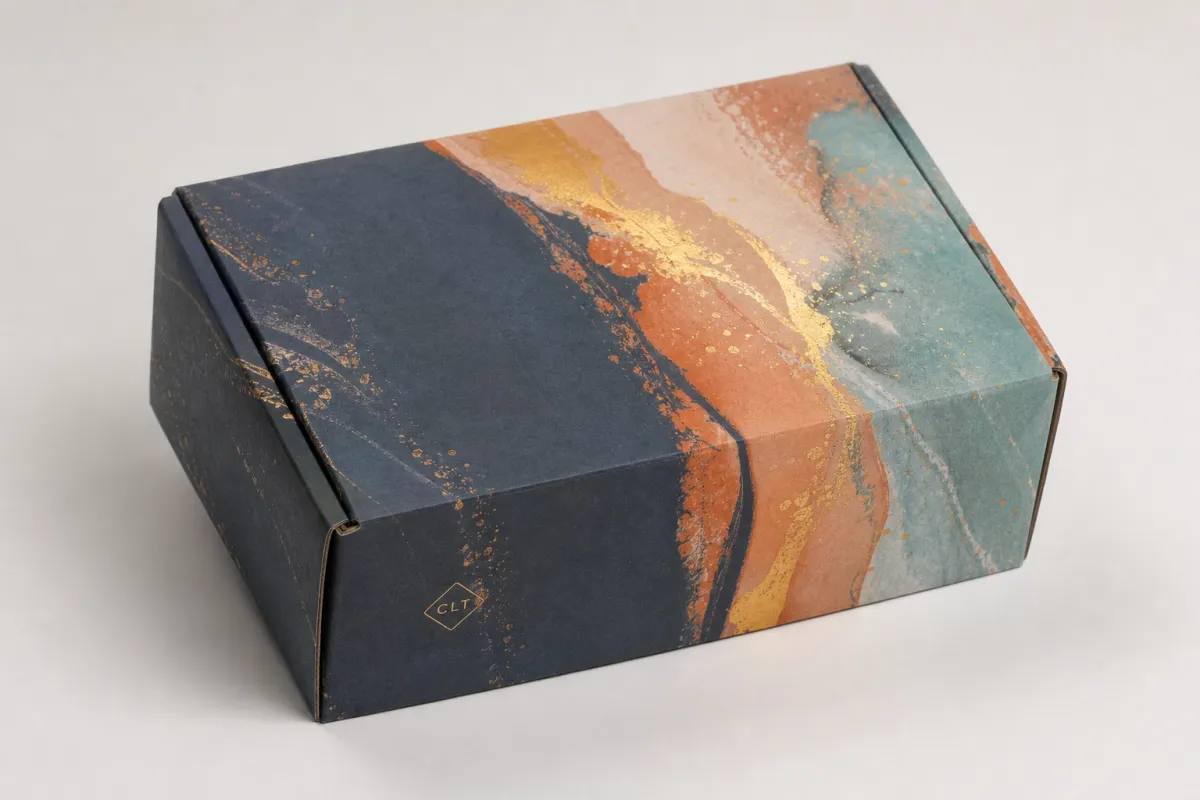
Custom cmyk printed boxes are printed with the four-color process: cyan, magenta, yellow, and black. Those four inks are broken into tiny dots, and those dots blend in the eye from normal viewing distance to create images, gradients, logos, patterns, and fine text. It is the standard way to get full-color packaging without mixing a separate ink for every shade in the artwork.
That process is the reason custom cmyk printed boxes show up in so many categories, from cosmetics and supplements to subscription mailers and retail sleeves. They can be produced quickly, adapted to a wide range of artwork, and scaled more easily than a setup built around spot colors alone. For a lot of brands, they sit in the useful middle ground between plain packaging and high-cost specialty decoration.
The material under the print matters just as much as the ink. A coated paperboard will accept dots differently than an uncoated board, and corrugated stock brings its own texture and absorption pattern. That means the same artwork can read crisp on one box and slightly muted on another. When a photo loses detail or a logo softens, the problem is often the board, not the design file.
From a buyer’s angle, custom cmyk printed boxes matter because packaging is part of the product experience. The box helps the item sell, helps it travel, and helps it feel like it belongs on the shelf. Good packaging design matches the print method to the job instead of forcing the job to fit the print method.
custom cmyk printed boxes also make life easier for brands that carry several SKUs. Once the structural setup is set, artwork changes are usually much simpler than they are with more specialized decoration methods. Seasonal launches, flavor variants, size changes, and limited editions all become easier to manage when the print system is built with flexibility in mind. That kind of flexibility saves time, and time always finds its way back onto the invoice.
A box does more than hold a product. It protects it, presents it, and speaks for it before anyone opens the flap. When the print feels weak, the entire package loses weight in the customer’s mind.
If you want to see the structures that pair well with this print method, take a look at Custom Packaging Products. The box style shapes the print strategy more than most buyers expect.
For standards and material guidance, the packaging industry keeps useful reference points at packaging.org, and chain-of-custody questions often point brands toward FSC. Those references matter when sustainability claims, sourcing, or certification language need to be accurate.
How Custom CMYK Printed Boxes Are Printed and Matched
The workflow for custom cmyk printed boxes starts in the artwork file, which needs to be built in CMYK rather than RGB. That sounds basic, yet it is one of the most common places where expectations drift away from print reality. Screens build color with light. Printing builds color with pigment. The blue that looks electric on a monitor may have no direct ink equivalent, and the press will not invent one out of goodwill.
Prepress is where the file gets checked for separations, bleed, resolution, and safe areas. On custom cmyk printed boxes, this step catches the mistakes that turn into expensive reprints later. A missing bleed can leave a thin white edge at trim. A low-resolution logo can look soft instead of clean. Tiny reversed text can fill in or break apart. Those problems are small on a screen and obvious on a carton.
Once the file is approved, production usually moves through digital printing or offset printing. Digital printing suits shorter runs, quick turnarounds, and jobs with frequent artwork changes. Offset printing usually becomes the stronger choice when quantities climb, color consistency matters, and coverage is heavy. Both routes can produce excellent custom cmyk printed boxes, but they behave differently enough that the wrong choice can raise cost without improving quality.
Color matching deserves a careful eye. A digital proof shows whether the layout is right and whether the artwork behaves correctly on the template. A physical proof shows how the ink, coating, and board interact. A press check shows how the live run is landing. Those are three different checkpoints, and custom cmyk printed boxes often need all three to keep the final result honest.
The box structure changes the outcome as well. Flat cartons, mailers, Rigid Setup Boxes, and corrugated shippers all respond differently to print and finishing. Scores can crack coating. Fold lines can stress ink. Rough recycled boards can soften the artwork. Even if the same file is used, the physical form of the box can shift the final impression enough to matter.
A simple rule helps here: the more the box has to look premium, the more pressure you should put on proofing. custom cmyk printed boxes for a shipping carton can allow a little more variation than a luxury beauty carton sitting on a bright shelf. One box mostly needs to arrive intact. The other needs to persuade someone to pick it up.
Matching can be controlled, but never perfectly eliminated. Paper mills vary. Ink batches vary. Press settings drift a little. That is normal. The real aim is to narrow the variation so much that the customer never notices it. In packaging, “close enough” sounds convenient until the reorder lands two shades off.
I have seen a dark charcoal slide green under cool LED lighting, and I have watched a clean white box pick up a faint cream tone because the board had a warmer cast than the sample. Small differences like that do not sound dramatic, but they change how a brand feels in the hand. That is why you want to view packaging in the light where it will actually be sold or shipped, not only under a design studio lamp.
Key Factors That Change Color, Finish, and Shelf Impact
The finished look of custom cmyk printed boxes usually comes down to four things: stock, coating, ink coverage, and finishing. Shift one and the box changes. Shift all four and the packaging can feel like a different product entirely. That kind of change can work beautifully when it is planned, and it can become a headache when it is accidental.
Stock choice matters far more than many buyers expect. Coated paperboard tends to hold fine detail and cleaner color on custom cmyk printed boxes. Uncoated stock absorbs more ink, which often makes color feel softer and less saturated. Corrugated material brings structure and shipping strength, and it can be the right call for certain retail and ecommerce boxes, but the surface texture can reduce how sharp an illustration or type treatment appears.
Coating changes both protection and perception. Gloss coating usually makes color pop more strongly and gives custom cmyk printed boxes a brighter retail presence. Matte coating feels more restrained and can read as more premium in the hand, though it may soften contrast a little. Soft-touch finishes add a velvety feel that fits beauty, wellness, and gift packaging especially well, as long as the texture suits the brand rather than fighting it. Used well, soft-touch feels inviting; used poorly, it can kinda mute all the energy in the artwork.
Ink coverage is a quiet cost driver that many buyers underestimate. A box covered edge to edge in saturated artwork looks striking, but it can increase press complexity and raise the chance of scuffing or drying issues depending on the process. Deep black backgrounds, dense gradients, and full photo panels all need better control than a mostly white layout with a single logo panel. Minimal artwork is not automatically cheap, but it is often easier to keep consistent.
Finishing is where a packaging project can gain a lot of presence without changing the entire design. Spot UV on a logo creates contrast without forcing a full redesign. Foil adds a metallic accent when used with restraint. Embossing and debossing bring tactile depth that customers feel before they think about it. On custom cmyk printed boxes, those details should support the artwork, not crowd it.
Some colors need extra care. Skin tones, deep blues, dark greens, and bright neon tones are more sensitive to calibration. Small reversed type on dark backgrounds can disappear if the press drifts only slightly. If those elements carry brand weight, they need to be tested early. Fixing them after approval takes longer, costs more, and rarely feels elegant.
Shelf impact should be judged in context, not in isolation. A box that looks refined in a sample room may dull down under fluorescent retail lighting. A carton that pops on a monitor may feel too loud in person. That is why side-by-side checks matter so much for custom cmyk printed boxes: one sample in daylight, one under retail lighting, and one next to a competing product will usually tell the truth faster than a render.
| Print Option | Typical MOQ | Ballpark Unit Cost | Best For | Tradeoff |
|---|---|---|---|---|
| Digital printing | 250-2,000 units | $0.65-$1.40 | Short runs, fast artwork changes, multiple SKUs | Higher unit cost at scale |
| Offset printing | 2,000-20,000+ units | $0.18-$0.55 | Large runs, consistent color, richer coverage | More setup and proofing |
| Litho-laminated corrugated | 1,000-10,000 units | $0.85-$2.10 | Retail display, stronger structure, premium shipping boxes | Higher complexity and freight weight |
Those figures are a practical starting point for custom cmyk printed boxes, not a fixed rule. Size, board grade, finish, print coverage, and freight all move the number. Even so, a realistic range is more useful than the usual vague answer. Packaging pricing is not mysterious; it just contains many moving parts that need to be visible at the same time.
Custom CMYK Printed Boxes: Process and Timeline
The production path for custom cmyk printed boxes looks simple on paper and a little more unpredictable once the job is in motion. It usually runs through artwork review, dieline confirmation, proofing, print setup, production, drying or curing, cutting, gluing, packing, and freight. Miss one stage and the schedule starts to slide. Packaging timelines rarely fail in a dramatic way; they drift one delay at a time.
Artwork review is often the first point where time gets lost. If the file is not final, the supplier has to stop and ask for confirmation. If the dieline does not match the actual carton size, somebody needs to redraw or recheck it. If fonts are not outlined or images are too low-resolution, the job circles back to design. For custom cmyk printed boxes, a clean file saves days. A messy one spends them.
Proofing depends on how much risk the job carries. A basic digital proof for custom cmyk printed boxes can move quickly, sometimes within a day or two once the file is ready. A physical proof adds time, and a press proof adds more, but those steps are usually worth it if color matters, the box uses a heavy finish, or the run is expensive enough that nobody wants surprises. If the carton is going to sit in front of customers, that extra time can save a very costly do-over.
Production speed is affected by run length and finishing complexity. A straightforward digital order can move from approval to ship date in roughly one to two weeks, while a larger offset job often needs two to four weeks, sometimes longer if the board is unusual or the finish is more involved. Add embossing, foil, or insert work and the calendar stretches. Freight can add its own delays, especially if the boxes are moving across borders or need palletization.
Drying and curing deserve more attention than they usually get. Inks may look dry to the touch before they are fully stable. If the job is folded, stacked, or packed too early, scuffing or set-off can show up later. That is one of those unglamorous details that separates a smooth production run from a box that arrives with faint marks nobody budgeted for.
If timing is tight, ask for the schedule in stages rather than as one single ship date. That way, if the proof takes longer or the freight booking shifts, the delay is visible early. Clear timing is not just a nicety; it keeps product launches from getting shoved around at the last minute.
Custom CMYK Printed Boxes: Cost, Pricing, and MOQ Drivers
Pricing for custom cmyk printed boxes is built from several parts, and the order of those parts matters. Quantity drives setup efficiency. Board choice drives material cost. Printing method drives labor and press time. Finish drives both materials and handling. Freight can quietly become the final nudge that makes one quote look better than another.
Minimum order quantity, or MOQ, is usually tied to production method and setup work. Digital print can support lower quantities because the setup is lighter. Offset and litho-laminated jobs usually want more units because the press setup takes longer and the economics make more sense once the run gets larger. That is why two suppliers can quote very different minimums for what appears to be the same box.
Customization also shapes the quote. A standard mailer with one-color internal print is a different animal from a multi-panel retail carton with full bleed art, a matte finish, and a foil logo. Add a custom insert, and the order becomes another step more involved. None of that is unusual, but it does mean the cheapest quote is often the one that quietly left out half the work.
There is also a practical truth buyers learn pretty fast: the box cost is only part of the decision. A slightly higher unit price may be worth it if the packaging improves shelf visibility, reduces damage in transit, or speeds up repurchasing. I have seen a lower-cost board save pennies and then cost more through returns because the pack looked good but handled poorly. That tradeoff is real.
For planning purposes, it helps to think of pricing in layers:
- the structural style of the box
- the board grade and print surface
- the number of colors and image coverage
- the finish and any tactile effects
- the quantity, packing method, and freight route
That breakdown makes custom cmyk printed boxes easier to compare across suppliers because it exposes what is actually being priced. If two quotes are far apart, ask which layer is different before assuming one vendor is simply cheaper. Sometimes the answer is better process. Sometimes it is thinner board. Sometimes it is missing detail, and that is the kind of bargain that tends to cost more later.
Common Mistakes When Ordering Custom CMYK Printed Boxes
The first mistake is designing in RGB and hoping the press will sort it out. It will not. CMYK conversion can shift color, compress certain blues and greens, and darken artwork in ways that are hard to predict without proofing. If color identity matters, build and check the file in the correct space from the start.
The second mistake is approving a digital mockup as if it were a finished sample. A render is useful for layout, but it does not show how coating, ink, or board will behave. Custom cmyk printed boxes need real-world testing if the brand is sensitive to color or texture.
The third mistake is ignoring the role of board. A design can be perfectly composed and still fall flat on the wrong stock. Uncoated board can make a brand feel earthier or more natural, which is fine if that is the goal, but it can also drain contrast from sharp graphics. If the box is supposed to look clean and refined, the substrate needs to support that feeling.
The fourth mistake is packing too much into the artwork. Dense backgrounds, tiny text, multiple image treatments, and several embellishments can clutter the result. Print can handle a lot, but it does not always improve from having more thrown at it. A calmer layout often reads stronger, especially on custom cmyk printed boxes that are viewed for only a second or two on a shelf.
The fifth mistake is skipping a written color target. Even a simple target such as a reference sample, an approved proof, or a note about acceptable variation gives everyone something to compare against. Without that, color approval turns into memory, and memory is a shaky tool when boxes are arriving from a press and need to match a previous run.
The last mistake is forgetting the use case. A shipping carton and a front-facing retail carton are not playing the same role. One needs toughness and consistency. The other needs presence. If the packaging brief does not say which outcome matters most, the project can drift toward a compromise that satisfies nobody.
Expert Tips and Next Steps for Custom CMYK Printed Boxes
If the box is meant for retail, choose the final lighting environment before you approve color. If it is meant for ecommerce, test the print after handling and packing, not just as a flat sample. If the packaging will carry several SKU versions, lock the structure first and let the graphics flex around it. That order keeps the project from wobbling all over the place.
Ask for a physical sample whenever the order includes a premium finish, a critical brand color, or a board that has not been used before. A sample can reveal things the spec sheet never will: sheen level, fiber show-through, fold stress, and how the carton behaves in the hand. That is not overcautious. It is just smart production.
One more thing: approve under practical conditions, not ideal ones. Put the proof under the kind of light the box will actually see. Hold it beside the product it will protect. Fold it, if folding is part of the structure. If the pack is gonna be opened by customers on camera, check the inside print too, because unboxing reveals everything that the outside leaves hidden.
For brands trying to keep the process grounded, the best next step is simple: write down the box style, target quantity, finish, and acceptable color range before final artwork is released. That single note cuts down confusion more than another round of guesswork ever will. After that, compare the proof against the real packaging use case, not just against the render. That is the practical way to get custom cmyk printed boxes that look right, ship right, and do not create a late-stage headache.
FAQ
Can custom cmyk printed boxes match Pantone colors exactly?
Not always. CMYK can reproduce many brand colors well, but some Pantone shades, especially bright oranges, vivid blues, and certain greens, may shift in process printing. If the match is critical, ask for a proof and set a tolerance before production starts.
What stock works best for custom cmyk printed boxes?
There is no single best stock. Coated paperboard usually gives the sharpest color and fine detail, uncoated stock gives a softer, more natural look, and corrugated board is better for strength and shipping. The right choice depends on whether the box is mostly selling, protecting, or both.
Are custom cmyk printed boxes good for small runs?
Yes, especially with digital printing. Small runs are useful for launches, seasonal packaging, and multi-SKU programs. The unit price is usually higher than a large offset run, but the setup is lighter and the turnaround can be faster.
How do I keep color consistent across reorders?
Save the approved file, keep the same board and finish, and document the print conditions that were accepted on the first run. A physical master sample helps too. Reorders drift when the spec drifts, so the more exact the reference, the better the repeatability.
Do finishes change the print result on custom cmyk printed boxes?
Yes. Gloss can brighten color, matte can soften contrast, and soft-touch can mute some artwork while adding a premium hand feel. Spot UV, foil, embossing, and debossing also change how the box reads in person, so they should be planned with the artwork instead of added as an afterthought.
What should I confirm before placing an order?
Confirm the dieline, final dimensions, board grade, print method, coating, quantity, and shipping plan. Then ask for the proof type you actually need. If the box has to look exact, do not skip the physical sample. That one step saves a lot of guessing later.

