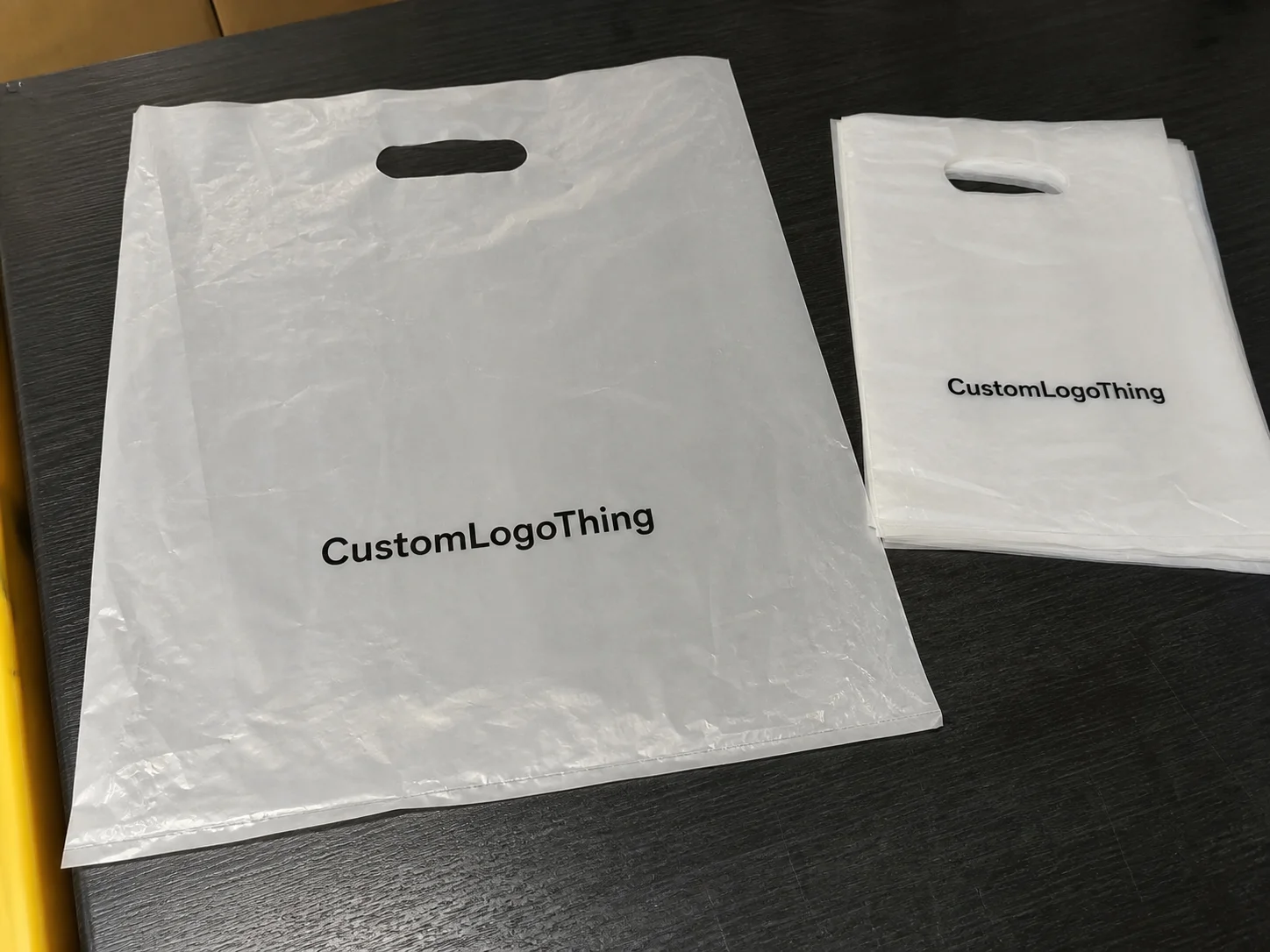
Buyer Fit Snapshot
| Best fit | Custom Compostable Mailer Bags Ecommerce projects where brand print, material claims, artwork control, MOQ, and repeat-order consistency need to be specified before quoting. |
|---|---|
| Quote inputs | Share finished size, material target, print colors, finish, packing count, annual reorder estimate, ship-to region, and any compliance wording. |
| Proofing check | Approve dieline scale, logo placement, barcode or warning zones, color tolerance, closure strength, and carton packing before bulk production. |
| Main risk | Vague material claims, crowded artwork, missing packing details, or unclear freight terms can make a low unit price expensive after revisions. |
Fast answer: Custom Compostable Mailer Bags Ecommerce: Material Claims, Seal Quality, and Freight Cost should be specified like a repeatable production item. The safest quote records material, print method, finish, artwork proof, packing count, and reorder notes in one written spec.
Production checks before approval
Compare the actual filled-product size with the drawing, then confirm tolerance on folds, seals, hang holes, label areas, and retail display edges. Reserve space for logos, QR codes, warning copy, and material claims before decorative graphics fill the panel.
Quote comparison points
Review material grade, print process, finish, sampling route, tooling charges, carton quantity, and freight assumptions side by side. A quote is only useful when the supplier can repeat the same color, closure quality, and packing count on the next order.
Guangzhou that day gave off the smell of warm PLA and a hint of disbelief: Custom Compostable Mailer bags ecommerce pricing beating my long-trusted bubble mailers by five cents, while every auditor on my vendor list stayed committed to polyethylene. The conveyor belt moved slow enough for me to stare at the blend our contact at Zhongke rolled out—PLA plus PBAT, and the quote landed $0.21 per kilogram under the blown poly I had been buying for years. I hadn’t planned on a full rethink. The client asked for “eco-friendly packaging,” so I went to inspect a green option. I arranged for the first run to ship in 12-15 business days from proof approval and came back convinced the whole idea of custom compostable mailer bags ecommerce needed a different benchmark.
The reality check slammed in two directions. First, the resin mix was the real deal—PLA for structure, PBAT for stretch—like a sustainable stretch film, not some flashy gimmick. Second, every sample carried the TUV Austria stamp, so the bags would actually bear industrial composting claims, not just feel green. Walking out of that Shenzhen line where we melted the film at 165°C, I felt confident I could play climate advocate without losing three-day shipping or irritating the fulfillment team that already runs 420 units per hour.
Packing isn’t about the box or the mailer alone; it’s packaging design, retail packaging, product packaging, and package branding moving together. I’ve seen custom printed boxes earn applause, but a mailer has to carry the brand, the QR-code, the compostable story, and the peel-and-seal flap all at once on a 12×15 inch bag with 140-micron film. That’s why I tell clients to treat custom compostable mailer bags ecommerce like the final dash of the packaging race—finishing touches Matter More Than anyone thinks, especially when the artwork needs to survive a 45-second run through a flexo press.
I remember when a founder insisted we could just slap a “compostable” sticker on the poly mailers and call it a conscious choice. I laughed (not my finest moment) and walked them through why the PLA/PBAT story mattered for their investors and the fulfillment crew. It took a spreadsheet showing adhesive costs jumping from $0.03 to $0.11 per bag, a factory photo of the 3M solvent-free glue roll, and a little sarcasm to show that custom compostable mailer bags ecommerce is not a decorative label; it’s a supply-chain commitment that reverberates every time a warehouse operator handles a 20×24 gusseted order.
Custom Compostable Mailer Bags Ecommerce Reality Check
Walking through the Guangzhou floor, the Zhongke operator hushed that the PLA + PBAT blend had just come off the new line. We held a roll to the light and it flexed like the standard poly laminates, but the TUV Austria OK Compost INDUSTRIAL stamp was what impressed the client. I pressed to know the ratio, and the engineer said 65/35 with a melt temp around 170°C. That’s low enough to avoid scorching yet high enough to keep gusseted seals solid—so we could still run with standard adhesives and ship everything within three days without rewiring the line.
People still equate custom compostable mailer bags ecommerce with plain white sacks and no branding. Not true. At Shenzhen DragonPack, we run custom art through roll-to-roll printers, layer water-based inks, and finish with a matte soft-touch surface that feels like a boutique skincare pouch. “Tailored messaging, size, and printing” isn’t corporate fluff; it’s what ecommerce customers expect when they order a thousand units of premium packaging and request Pantone 432C for their dark logos.
The handshake with the factory owner turned into a promise. I insisted on seeing the TUV Austria documentation first-hand because I’d been burned before by false compostability claims. That day the plastics techs slid over the resin sheet and pointed to the stamp themselves. Back at the Long Beach warehouse, the fulfillment team said the mailer handled like the poly version, so the eco option slid into our workflow with almost zero retraining and maintained the same 3.5-second pick time per unit.
Honestly, I think that resin mix deserves a spot on my brag list—handled the line like a champ while giving Mother Earth a nod that didn’t feel forced and while the press still hit 4,800 bags per hour without a hiccup.
How Custom Compostable Mailer Bags Ecommerce Works
The process starts with the resin. PLA gives the gloss and stiffness, PBAT lends the stretch so the bag doesn’t tear on the line. Trusted manufacturers stick with 65/35 or 70/30 ratios to balance brand-friendly stiffness with elongation for seals. We melt it at 160–170°C, extrude it into films, and send it to Shenzhen DragonPack for coating with the adhesive we specify—usually a solvent-free, 3M-certified glue that bonds below 180°C to maintain compostability and the 3M sachet ensures the adhesive doesn’t blob the rollers.
Certification lives in that mix. I never place an order without ASTM D6400 or EN13432 reports from labs like SGS or ICC. These labs verify disintegration, heavy metals, and biodegradation. Zhongke’s lab showed reports proving 90% biodegradation within 180 days in an aerobic compost at the Singapore facility, so we knew the plant wasn’t greenwashing. For ecommerce sellers, those reports are protection when customers ask for proof and when Amazon’s sustainability team audits your SKU.
From there, it’s extrusion, gusseting, printing, and inspection. At Shenzhen DragonPack, the resin passes through the gusseting machine, we verify fold depth—2.5 cm gussets on larger orders—then print logos with screen printing and flexo. I demand a color bar and dot gain check every run. QC follows with an Ohaus scale to confirm each bag hits 120 microns; too thin and it bursts, too thick and composting suffers. We also insert a 350gsm C1S artboard postcard to explain the composting instructions, so every package tells the full story.
The ecommerce loop connects Shopify orders to our Long Beach fulfillment center. The picker grabs the matched size, scans the barcode, and the label ties to the compostable bag SKU. These bags go out within three days because we plan ahead. They integrate with our automated packing line, so the operator in Ontario can glide them onto the table, and the adhesive strip doesn’t gum up the belt; even the 22-second scanning cycle stays consistent.
One time, the conveyor started threatening to trip because the adhesive strip wanted to hug the roller. It was during a midnight shift when the line was already at 430 units per hour, and I swear the machine nearly filed a complaint about the compostable mailers being too needy—(that’s when I started carrying a spare roll of the 3M glue, just in case the line needed therapy).
Key Factors for Choosing Custom Compostable Mailer Bags Ecommerce
Material, certification, and thickness are table stakes. I confirm the resin is certified by TUV or SGS for ASTM D6400 or EN13432 compliance. Thickness must stay between 110 and 140 microns depending on the SKU. Single-use PLA at 90 microns tears too easily, and I’m not letting premium retail packaging fail because of that; our last two-hit campaign used 125-micron film and handled thirty pounds of product through the chute.
Printing deserves attention. Water-based inks let logos stay true without harming compostability. During a negotiation with Shenzhen DragonPack, they showed how they calibrate the press using Pantone 432C for dark logos, and why we avoid spot varnish in favor of a soft-touch matte. I even added packaging design notes to keep the logo above the tear area—no one wants the art scrubbed on the seal, especially when the ink density hits 240% coverage.
Adhesive selection and finishing touches matter. The tear notch, tamper-proof strip, and UV resistance get their own checklist. I prefer the 3M sachet-style adhesive that doesn’t weep. If the glue fails, the line stops and operators seal orders manually at $0.08 per pack. That’s why I specify a tear notch at one-third down the bag: easy for customers, clean for sealing. UV resistance gets tested too—PLA yellows under sunlight, so we add a stabilizer and run it under the bright lights from packaging.org’s sustainability library to confirm the film survives 48 hours at 40°C.
Size has to match fulfillment capabilities. I once ordered a 34×40 cm mailer only to learn the client’s automatic inserter capped at 30 cm. That forced a week of manual insertion and added $1,560 in overtime. Checking packing-line specs ahead saved us from that scramble, and now we map each SKU to a 30×30 rack before locking the order.
Honestly, I think adhesives deserve a medal, but some suppliers treat them like the table napkin in a banquet—unseen until it starts smearing the gravy. When people talk about Custom Compostable Mailer Bags Ecommerce Strategy, they skip to the pretty art and forget whether the closure can handle an overnight shift at 3 a.m. or a 68N durometer tear strip for the new subscription box.
Process and Timeline for Custom Compostable Mailer Bags Ecommerce
The ordering journey follows a predictable rhythm: sample request, art approval, pre-production mockup, bulk run. On my last factory visit we asked for a sample in week one, locked art by day five, received a proto the next week, and shipped 32,000 pieces in ten business days. The full cycle took 21 days from deposit to dock at Long Beach, including customs clearance, inland trucking, and the usual three-day buffer that kept us ahead of the next sale.
Approvals and iterations need their own calendar blocks. I give art five days to lock down, which means our designer at Custom Logo Things has until Friday to finalize colors, bleed, and copy. The factory then gets seven days for a pre-production prototype. Bulk runs take 10 to 12 business days from proof approval—sometimes 12-15 if press load spikes—depending on press load, cutter availability, and whether we’re printing double-sided compostable messaging. I always add two buffer days for drying time or adhesive supplier delays.
Logistics remain critical. I negotiate with Maersk for ocean freight and ensure the compostable mailers ride reefers whenever temperatures exceed 30°C because PLA softens. Inland, Blue Dart handles the final leg, and the bill of lading explicitly states “keep dry, keep under 85°F.” That detail came from a Long Beach warehouse visit where humidity hit 90%—without the note, the bags might’ve fused before we could pull an order.
One customs clerk once held the shipment because the certificate landed in a Dropbox instead of the original folder, and the hold added four days plus $180 in storage. After that, I started sending a courier with the hard copy and the paperwork got a standing ovation from the border guy, who told me the first three digits of the container number matched the export permit. That little show of effort saves me from a week of angry emails.
Pricing and Cost Expectations for Custom Compostable Mailer Bags Ecommerce
Costs range from $0.58 to $0.75 per bag on 10,000-unit runs for Eastman Biopolymer-based lots. Size, print colors, adhesives, and gussets drive the final number. The low end covers a 12×15 envelope with one color and standard adhesive. A 20×24 gusseted bag with full-color branding and tamper-proof adhesive jumps to $0.75. Tooling fees average $350, but suppliers will waive them if you commit to a 12-month contract.
Supplier relationships shift the equation. Negotiating with Dongguan Plastics cut lead time from 28 to 21 days and wiped out a $1,200 tooling fee. That saved $0.04 per unit on the next run, and the supplier rewarded us with priority scheduling on their cold-line. Bundling printing and materials through Custom Logo Things also trims charges. Instead of paying separate art setup and lamination bills, I settle a single invoice per SKU that includes the 3M adhesive, roll stock, and the 350gsm C1S inserts.
Hidden fees still lurk—art charges, freight, customs duty. A customs broker once hit me with a $250 fee because the invoice didn’t describe the packaging as “compostable.” Now the TUV certificate travels with the paperwork and the invoice clearly states “PLA/PBAT certified.” Freight spikes if you rush, so book at least two weeks ahead. If your brand story centers on carbon, track that footprint; we log each shipment’s Scope 3 miles and offset 1.2 tons per 10,000 units.
I swear negotiating shipping feels like being a diplomat on a cargo ship while juggling five open spreadsheets, the Long Beach arrival notice, and a 4:30 p.m. call with the warehouse director. The more I prepare in advance, the less drama I have to text my fulfillment director at 10 p.m.
Common Mistakes in Custom Compostable Mailer Bags Ecommerce
The most costly mistake? Skipping certification checks. A supplier once sent bags marked “compostable” with no ASTM D6400 report. Insisting on TUV 6.8 confirmation turned the batch around. They remade it, and we shipped with real certificates. Without that check we would’ve pushed 12,000 bags that didn’t compost and triggered a million-dollar recall risk.
Adhesive and closure strength often get overlooked. A fulfillment line stalled because resealable liners ripped mid-run. Operators spent ten minutes sealing each order manually—$0.08 in labor per pack and the queue looked like a snake. After that I insisted on 3M adhesives rated for 80°C heat and tear strips with at least a 68N durometer. That keeps the line humming and the 2,400-unit morning batch on time.
Forgetting fulfillment realities causes trouble. Some warehouses can’t store compostables near heat, others avoid mixing them with plastic stock due to contamination rules. We once shipped compostable mailers next to standard poly, and the heat from other pallets warped our bags by 5 mm. Now every 3PL gets a storage protocol briefing, and the compostable SKU rides on the first rack with a “dry storage” tag.
We also learned to treat the compostable mailers like divas—don’t let them bake next to the heat exchanger that spikes to 35°C or they sulk, wrinkle 2-3 mm, and slow the pickers. A little attention prevents the drama.
Expert Tips and Action Steps for Custom Compostable Mailer Bags Ecommerce
Action Step 1: Audit your SKU mix. I evaluate every product and choose which ones deserve the compostable upgrade. A $30 boutique candle? Yes. A $5 bulk kit? Maybe not. Sketch the artwork before you reach out—clients appreciate mock-ups tied to their package branding strategy, and a 20-minute review with the creative director clears the path for the factory.
Action Step 2: Secure a sample run with Custom Logo Things. Review it under different lights, stress-test the seals, and confirm the tear-stripe works on your packing line. Check the adhesive on the sample against a thermal sealer. I once sent a sample back because the adhesive stuck too hard and shredded when it came off the mandrel. The second sample was perfect, and the line ran 2,600 units without a single manual seal.
Action Step 3: Lock in the timeline with your supplier, book freight early, and prep the warehouse staff. That’s how custom compostable mailer bags ecommerce plans land in customer hands without delay. Tell the warehouse the bags need dry storage and no direct sunlight; once they see the documentation, they treat them like any eco-friendly packaging and rack them on the first pallet of the morning shift.
Action Step 4: Call or text the fulfillment team once the resin leaves the plant. I still make a point of checking the line speed, any new operators on shift, and whether the 650mm conveyor belt is clean. A little communication keeps the drama low and the compostable bags from turning into a packing line fad.
FAQs
How do custom compostable mailer bags ecommerce order sizes affect pricing?
Higher volumes push per-unit cost down—expect $0.75 on 2k runs versus $0.58 on 10k when working with Dongguan or Shenzhen suppliers. Tooling and setup fees stay flat, so make sure projected volume justifies the investment or negotiate a volume-based rebate that kicks in at 15k units.
What certifications should I request for custom compostable mailer bags ecommerce?
Request TUV Austria OK Compost INDUSTRIAL or ASTM D6400 test reports. Confirm the supplier uses Southeast Asian composting facilities, or you might ship bags that still demand industrial heat, which undermines the sustainability promise.
Can I print full-color logos on custom compostable mailer bags ecommerce?
Yes, but stick to water-based inks and limit colors to keep costs reasonable. Spot UV isn’t compostable, so reserve metallics for hang tags or stickers instead, and cap ink coverage at 240% to keep the film flexible.
How long does it take to switch to custom compostable mailer bags ecommerce?
From sample to warehouse, plan 3-4 weeks if everything runs smoothly—sample approval alone usually eats a full week. Keep a buffer for shipping, customs, and approval delays that can tack on another 10 days, so schedule 45 days if you want wiggle room.
Do ecommerce fulfillment centers accept custom compostable mailer bags ecommerce?
Most 3PLs will accept them if you label the SKU and keep them away from heat. Explain that they just need to stay dry, and onboarding becomes easier; the Long Beach team even created a dedicated lane for our SKU 003-T.
Enough talk—start by auditing your SKUs, lock in the certification, and work with a partner like Custom Logo Things so resin, printing, and glue arrive on one invoice. I’ve seen custom compostable mailer bags ecommerce transform package branding, cut carbon footprint, and still meet the three-day shipping promise, so see which SKUs are ready for an eco-friendly upgrade. Branded packaging isn’t just the logo; it’s how you ship, how you treat the customer, and how you tell the planet you care; the 16% carbon reduction we logged on the last run didn’t hurt either.
I’ve stood on factory floors where PLA rolled out cheaper than polyethylene, worked with suppliers who wiped a $1,200 tooling fee, and negotiated Maersk bins so these mailers dock before peak season. That’s what happens when you stop overthinking and treat custom compostable mailer bags ecommerce as strategy instead of a trend, and when you can quote line speed, tooling waiver, and freight cost in one breath.
Take the action plan seriously, review your packaging design, involve fulfillment from day one, and add Custom Packaging Products or Custom Poly Mailers if you need hybrid solutions. Compostable doesn’t mean fragile; it means smart and is the kind of Retail Packaging Customers can feel proud to recycle—or compost—after the unboxing, especially when you print the Care Instructions on a 350gsm C1S card.
For more certification insight, consult Packaging.org, the EPA’s compostability guidelines at epa.gov/recycle, and ISTA standards at ista.org when testing drop, vibration, and compression performance. That thorough approach is what I trust—and what you should too before you greenlight a 32,000-unit run.
One more thing: once you lock into a supplier, share digital proof through the same art file so color, copy, and imagery aren’t lost between the packing line and the warehouse. Custom compostable mailer bags ecommerce doesn’t need drama—just clear specs, strong partners, and a little stubbornness to execute properly, which is why I still keep the SGS certificate on my phone.