Buyer Fit Snapshot
| Best fit | Custom Corrugated Mailer Pricing projects where brand print, material claims, artwork control, MOQ, and repeat-order consistency need to be specified before quoting. |
|---|---|
| Quote inputs | Share finished size, material target, print colors, finish, packing count, annual reorder estimate, ship-to region, and any compliance wording. |
| Proofing check | Approve dieline scale, logo placement, barcode or warning zones, color tolerance, closure strength, and carton packing before bulk production. |
| Main risk | Vague material claims, crowded artwork, missing packing details, or unclear freight terms can make a low unit price expensive after revisions. |
Fast answer: Custom Corrugated Mailer Pricing: What Affects Cost should be specified like a repeatable production item. The safest quote records material, print method, finish, artwork proof, packing count, and reorder notes in one written spec.
Production checks before approval
Compare the actual filled-product size with the drawing, then confirm tolerance on folds, seals, hang holes, label areas, and retail display edges. Reserve space for logos, QR codes, warning copy, and material claims before decorative graphics fill the panel.
Quote comparison points
Review material grade, print process, finish, sampling route, tooling charges, carton quantity, and freight assumptions side by side. A quote is only useful when the supplier can repeat the same color, closure quality, and packing count on the next order.
What Custom Corrugated Mailer Pricing Really Means
Custom corrugated mailer pricing can look tidy on a quote sheet, yet the number often shifts once the board grade, print coverage, insert complexity, and freight are all in view. I’ve watched buyers get excited over a low unit price for a 6" x 4" x 2" mailer, only to see the total rise after a B-flute upgrade, a two-color logo, and a custom insert were added. That usually isn’t bait-and-switch; more often, the first number covered the blank box and left out the real package.
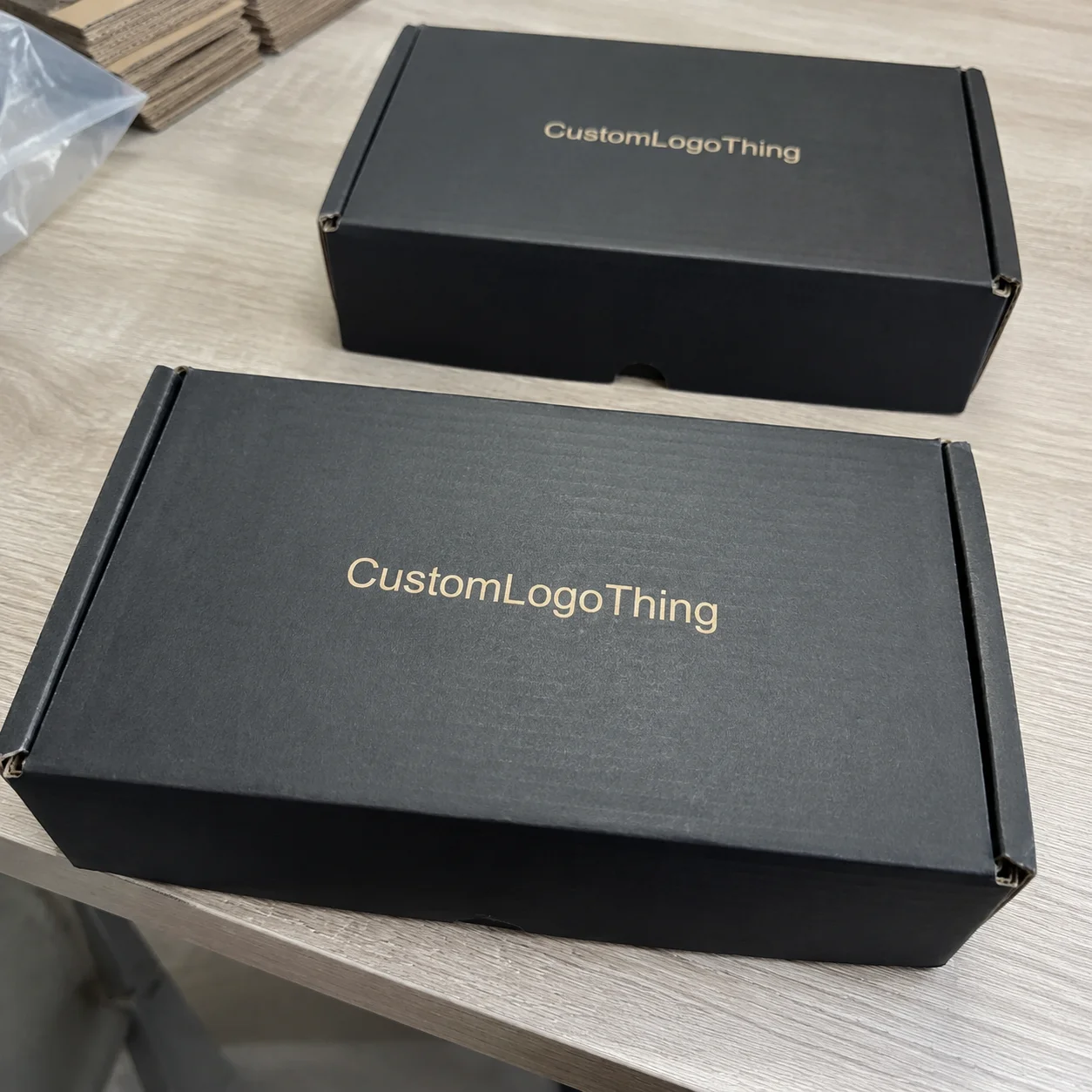
A custom corrugated mailer is a die-cut shipping or presentation box made from corrugated fiberboard, usually built for one product family rather than a generic stock size. That separates it from stock mailers, rigid boxes, and folding cartons, and it changes the cost structure in a very direct way. Stock mailers are mass-produced in common dimensions, while custom corrugated mailer pricing reflects the die, board, print, and converting work needed for your specific design. Two mailers can share the same outside dimensions and still carry very different costs if one uses E-flute with light print and the other uses C-flute, a reinforced dust flap, and a soft-touch top coat.
Buyers often get tripped up because they compare a plain brown shipper to a branded package and expect the numbers to behave the same way. They don’t. The cost is usually built from material, tooling, print, converting, and shipping, not a single flat box price, and that matters even more in custom corrugated mailer pricing. If crush resistance, shelf appeal, and pack-out speed are part of the brief, the cheapest quote rarely ends up being the best value.
“The lowest price I ever saw on paper became the most expensive box on the dock once freight and rework were added,” a buyer told me during a packaging review in a Midwest fulfillment center.
I’ve heard versions of that story in client meetings from Atlanta to Anaheim. One beauty brand wanted a Premium Unboxing Experience for a 3-piece skincare set, and the first quote looked reasonable until we added a molded pulp insert, full-panel print, and a heavier liner for ship-by-mail testing under ISTA drop procedures. The final custom corrugated mailer pricing was higher, yes, but the damage rate fell sharply, and that saved more money than the box increase cost.
How Custom Corrugated Mailers Are Made
The production flow starts with paper selection, where a mill supplies linerboard and medium that are then corrugated into single-wall or double-wall board. From there, the sheet moves through converting steps like slitting, scoring, slotting, die cutting, printing, gluing, and finishing. Each step carries its own labor and setup cost, which is why custom corrugated mailer pricing is never just about the footprint of the box. On a busy line, a 16" x 10" mailer can be straightforward if it is a standard telescope-style design, but the same size with locking tabs and interior tuck features can require more handling and slower output.
At a plant I visited in Shenzhen, the foreman showed me how line speed changed the economics by the minute. A straight-run flexo job with one-color kraft printing could move fast, but once the crew swapped to a tighter registration job with a bright white liner and a die-cut mailer with multiple scores, the converting line had to slow down to keep tear-out clean. That one decision affected waste, labor, and the final custom corrugated mailer pricing more than the buyer expected. Factory floors do not care about sales language; they care about board grade, die wear, and how cleanly the blank folds at 90 degrees.
Printing method matters too. Flexographic printing is common for corrugated because it is efficient for repeat graphics and logos, while digital print can help with shorter runs or variable artwork. A simple one-color logo on the outside panels is cheaper than a full coverage CMYK layout, and specialty finishes like aqueous coating, varnish, or embossing add more cost and more processing time. Buyers often underestimate how much the print method changes custom corrugated mailer pricing, especially when the design moves from “nice and clean” to “we want the whole box to feel like retail packaging.”
Insert and partition work can add another layer. If a mailer holds bottles, jars, or electronics, the inside may need locking tabs, chipboard dividers, or E-flute inserts that hold product at fixed spacing. That means extra die complexity, more assembly labor, and sometimes a longer sampling cycle before final approval. I’ve seen a simple mailer quote jump by 18% once a client asked for a two-compartment insert to stop product rattle during parcel transit.
A typical project timeline often looks like this: 2 to 5 business days for structural review, 3 to 7 business days for prototype or sample preparation, 1 to 3 days for customer approval, 8 to 15 business days for production depending on quantity, and then freight. If artwork is not final, that schedule stretches quickly. Suppliers who understand custom corrugated mailer pricing will usually ask for dimensions, product weight, ship method, and print expectations before they give a firm number.
Custom Corrugated Mailer Pricing Factors That Drive Cost
Board choice is usually the first major driver. E-flute gives a finer print surface and a thinner profile, which works well for lighter retail packaging and presentation mailers. B-flute offers better cushioning and is common for Shipping Boxes That need more crush resistance. C-flute is thicker still, and double-wall options add even more strength for heavier contents. Recycled content, liner color, and burst strength can all shift custom corrugated mailer pricing by a noticeable margin, especially when the spec calls for higher stacking performance or rougher parcel handling.
Size and structural design matter just as much. Bigger blanks consume more board, which is obvious, but intricate self-locking styles, crash-lock bottoms, or custom tuck features also increase converting time. A 12" x 9" mailer with a basic roll-end design may be cheaper than a smaller but highly engineered mailer that needs multiple knives and deeper score control. I once sat through a meeting where a client wanted to shave cost on a subscription box, yet the version they favored had eight more fold points than the simpler alternative. That extra geometry pushed custom corrugated mailer pricing up, even though the outside dimensions barely changed.
Print coverage is another major lever. One-color branding on one or two panels can be economical, while full-wrap artwork, flood coats, metallic inks, or specialty finishes usually raise the total. If your goal is package branding, a focused graphic strategy often works better than printing every square inch. The same is true for branded packaging used in e-commerce or retail packaging; sometimes a sharp logo, a strong inside print message, and a clean kraft exterior deliver more impact than a busy full-surface design.
Order quantity changes everything. Setup costs for plates, dies, and machine changeovers do not disappear because the run is small, so unit pricing falls as volume rises. A 1,000-piece run can look expensive on a per-unit basis, while 10,000 pieces often spreads the setup out enough to improve the economics. That is why custom corrugated mailer pricing often makes more sense when buyers forecast 2 or 3 replenishment cycles instead of judging one purchase order in isolation.
Shipping and warehousing can quietly dominate the budget. Corrugated is bulky, and dimensional freight charges can surprise first-time buyers who are used to dense consumer goods. A case of flat mailers may palletize efficiently, but oversized or tall stacks can trigger higher freight class, more truck space, or extra warehouse handling. I’ve seen a shipping estimate add 12% to the landed cost simply because the pallet count was not planned around the carton pack size. If you are comparing custom corrugated mailer pricing, always ask whether the quote includes FOB origin, delivery, pallet counts, and carton pack quantities.
For sourcing and sustainability checks, I also recommend reviewing The Packaging School and industry resources from PMMI, EPA guidance on paper and paperboard recovery, and FSC certification information if recycled or certified fiber is part of your brief. These references help buyers understand how material choices and recovery claims fit into a broader packaging program.
How Do You Estimate Custom Corrugated Mailer Pricing?
Start with use case. Is this mailer for direct shipping, subscription fulfillment, premium presentation, or a hybrid job that needs both protection and brand theater? That single answer changes the structure, print, and finish choices, which then changes custom corrugated mailer pricing. A mailer built for 1 lb cosmetics behaves very differently from one holding a 6 lb electronics kit, and the board spec should reflect the actual load, not a guess.
Next, define dimensions from the product, not from a wish list. Measure the item itself, then add room for inserts, tissue, dunnage, and any closure clearance. If your product is 8.25" x 5.5" x 2.0", and you plan to include a foam or pulp insert with 0.25" clearance on all sides, the blank size needs to reflect that real geometry. This is where many first-time buyers misread custom corrugated mailer pricing; a quote on a “small mailer” is meaningless until the internal fit is known.
Then choose performance requirements. Do you need stacking strength on a retail shelf, drop protection under ISTA 3A, moisture resistance for humid transit lanes, or just a clean look for a subscription box? If the package must survive parcel systems, ask the supplier whether the design has been tested to relevant ISTA methods or whether the board selection is based on experience and estimated load. For broader packaging and performance guidance, the International Safe Transit Association is a solid place to start.
Now ask for quotes using the same specs. This sounds basic, but I still see buyers send three different drawing sets and then wonder why custom corrugated mailer pricing varies by 30% or more. Use the same dimensions, board grade, print count, finish, quantity, and freight assumptions across every supplier. If one quote includes a sample and another does not, write that down. If one includes assembly while another is print-only, note it. Apples to apples saves a lot of wasted back-and-forth.
Finally, review prototypes before committing to production, especially if this is your first program or the contents are fragile. A prototype can reveal a loose closure, a too-tight insert, or a print placement issue that would be expensive to fix on a 5,000-piece run. I’ve had a client in medical accessories save nearly a full production cycle because the prototype showed that the product was scuffing against the inside flap. That one sample protected both the budget and the launch schedule, and it made the final custom corrugated mailer pricing easier to justify internally.
Common Pricing Mistakes Buyers Make
The first mistake is comparing a plain stock mailer to a fully custom printed structure without matching the spec. A stock 8" x 6" mailer from a catalog is not the same thing as a custom die-cut box with a logo, inside print, and insert pockets. If you are reviewing custom corrugated mailer pricing, make sure the style, board, print, and finishing details are actually equivalent.
The second mistake is ignoring setup charges. Plates, dies, tooling, sample prep, and first-article inspections can be a significant part of the project, especially on smaller runs. I’ve seen buyers focus on a unit price of $0.42 and miss $380 in tooling and $120 in samples, which changes the real economics fast. A quote that hides those costs is not necessarily bad, but it is incomplete.
Another common error is over-specifying. I respect caution, but I also see people order heavier board than they need or choose a complicated closure because they assume “stronger” automatically means “better.” Not always. The right board grade is the one that protects the product, supports the shipping method, and does not waste material. Smart custom corrugated mailer pricing comes from matching the structure to the actual job, not from padding every line item.
Damage rates are often left out of the math too. A cheaper mailer that fails in transit can cost more than a higher-grade option if returns, replacements, and customer service time are included. I remember a client selling specialty candles who saved a few cents per unit on lighter board, then lost money replacing cracked jars and refunding complaints. The true cost of packaging includes the cost of failure, and that should always be part of custom corrugated mailer pricing.
Do not forget logistics details. Carton pack quantities, pallet count, and freight class should be confirmed before you approve the order. If a supplier quotes 250 units per carton but your warehouse wants 100, the handling cost changes. If the pallet pattern wastes space, shipping goes up. Small details, yes, but they make a difference in the final landed number.
Expert Tips to Lower Costs Without Sacrificing Quality
Standardize a few mailer sizes instead of building a unique box for every SKU. I’ve seen companies cut package complexity dramatically by narrowing their catalog to two or three structures that fit 80% of the product line. That usually improves forecast accuracy and makes custom corrugated mailer pricing more favorable because the runs get longer and the setup gets reused.
Limit print coverage to the panels that matter most. A strong front panel, a tasteful inside message, and one clean side panel can carry most of the branding load without paying for full-coverage graphics. If your goal is product packaging That Feels Premium, good structure and clean ink placement often do more than extra square inches of print. A lot of brands overbuy ink when they should be investing in better structure and better board selection.
Ask about alternate flute profiles or liner combinations. Sometimes a B-flute with a better outer liner gives the protection you need at lower cost than a thicker board with no real performance benefit. I’ve also seen recycled liners perform well in e-commerce mailers when the design is tested properly. The key is not to guess; it is to ask the converter which options meet the ship test and what that does to custom corrugated mailer pricing.
Design for efficient nesting and palletization. A mailer that packs flat, stacks tightly, and cuts cleanly on the die-cutting table can save board waste and shipping space. That matters in large production runs, and it matters even more if you store inventory for multiple months. From the factory side, efficient blank layout and smart panel sizing usually translate into better throughput and fewer surprises in the final quote.
Plan reorders around demand instead of rushing every replenishment. Rush jobs create overtime, priority scheduling, and sometimes premium freight. If you can forecast 60 to 90 days out, you will usually get better economics and cleaner custom corrugated mailer pricing. I’ve negotiated enough paper and board orders to tell you this: calm schedules cost less than panic schedules, every time.
What to Do Next Before Requesting Quotes
Gather your product dimensions, target ship method, expected order quantity, and branding requirements before you send anything to a supplier. If you already know the product weight, board preference, and whether you need inside printing, include those details too. The more complete the brief, the more reliable the custom corrugated mailer pricing will be.
Create a simple comparison sheet with columns for board grade, print method, finish, tooling, sample Cost, Lead Time, and freight terms. I like this because it stops teams from judging quotes by the headline number alone. A quote with a $0.09 higher unit price may actually be cheaper once setup and shipping are included, and that is often the difference between a good buy and a bad one.
Ask the supplier for a structural recommendation, not only a price. A good packaging partner should be able to explain whether your box should be E-flute, B-flute, or a heavier single-wall build, and why. If they can’t explain the tradeoffs in plain language, that is a warning sign. The best custom corrugated mailer pricing conversations feel like technical problem solving, not just buying a commodity.
Request a sample or prototype for fragile, premium, or first-time packaging programs. A prototype is a small cost compared with a full order failure, especially if the box will carry glass, electronics, cosmetics, or gift sets. I’ve seen one prototype save a company weeks of returns and a very awkward client apology. That kind of insurance is worth paying for.
If your team is also looking at other formats, it can help to compare mailers with Custom Shipping Boxes, explore Custom Packaging Products, or evaluate lighter transit options like Custom Poly Mailers. Sometimes the right answer is not corrugated at all, and the right packaging design depends on the product, the route, and the brand story you want to tell.
Here’s my honest take: the smartest buyers treat custom corrugated mailer pricing as a specification exercise, not a shopping exercise. When you define the board, print, structure, and freight correctly, the quotes make sense, the samples tell the truth, and the final package does its job without draining margin.
The practical next step is simple: build one clean spec sheet, get at least two apples-to-apples quotes, and insist on a prototype before you lock the run. That’s the shortest path to pricing That Actually Holds up once the boxes reach the dock.
FAQ
What affects custom corrugated mailer pricing the most?
Board grade, size, print coverage, order quantity, and structural complexity usually have the biggest impact. Freight and tooling can also be significant, especially for small runs or oversized mailers.
Why do two custom corrugated mailer quotes look so different?
One supplier may be quoting different board strength, print method, or included setup costs. Always compare the exact same dimensions, material specs, and finishing details before judging price.
How can I lower custom corrugated mailer cost without changing the look too much?
Reduce print coverage, simplify the die-cut shape, or standardize to one or two sizes. Choosing the right flute and liner combo can also cut cost while preserving protection.
What is the typical process and timeline for a custom mailer order?
Most projects move from spec review to design, prototype approval, tooling, production, and freight. Lead time depends on artwork readiness, sample approval speed, and factory schedule availability.
Should I ask for a sample before approving pricing?
Yes, especially for premium, fragile, or first-time packaging programs where fit and presentation matter. A prototype can reveal issues that would be expensive to fix after production starts.