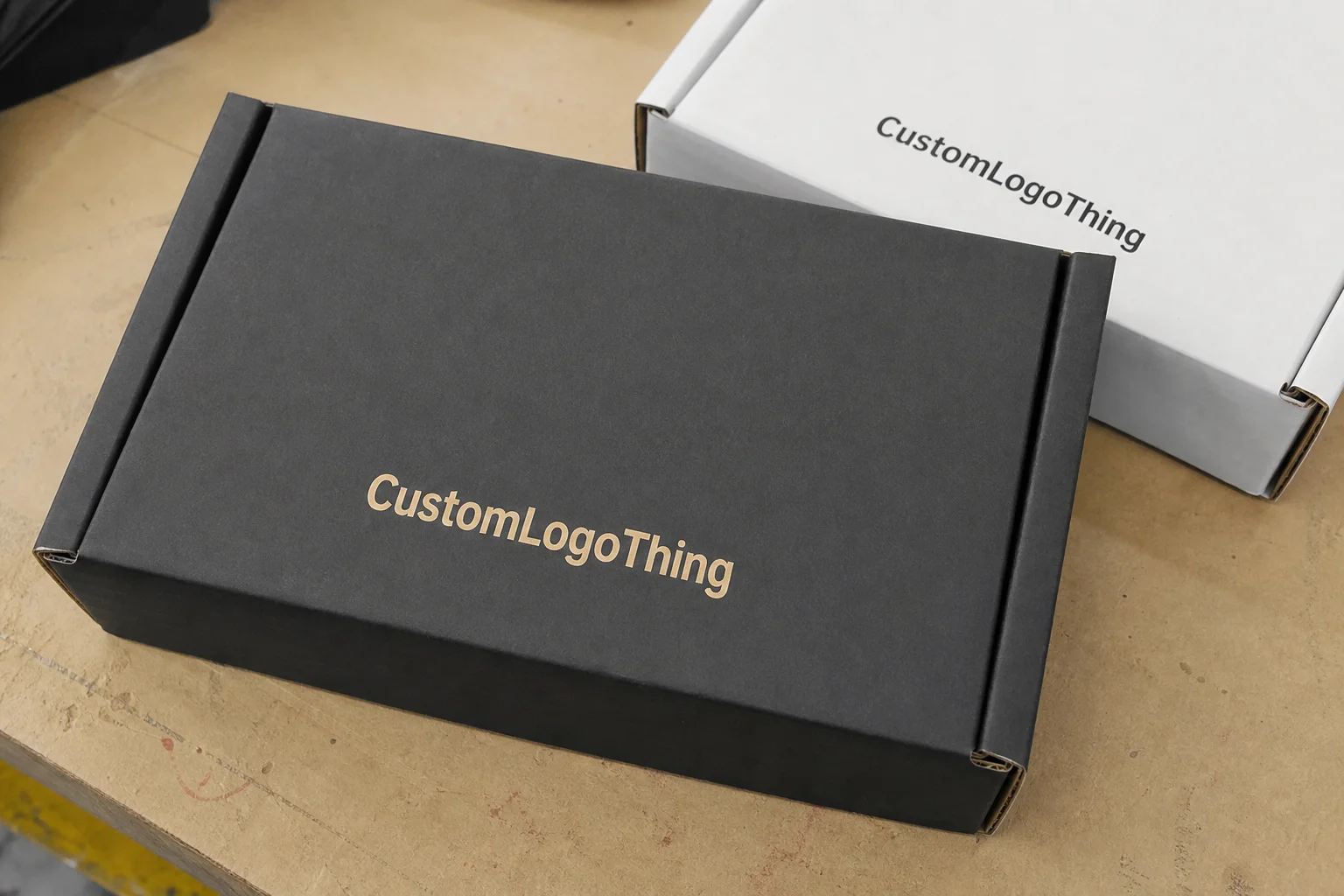
When a customer opens a package and the product arrives scuffed, crushed, or swimming in filler, the packaging has already failed. That is the practical value of custom corrugated mailing boxes: they are built around the item, tuned for shipping stress, and shaped to make the unboxing feel deliberate instead of improvised.
For flat-packed goods, cosmetics, books, subscription kits, and many direct-to-consumer shipments, the difference between a generic carton and a purpose-built mailer shows up quickly. There is less movement inside the box, fewer damage claims, less wasted space, and often a lower total packaging cost once void fill, dimensional weight, and repacks are counted honestly.
Buyers sometimes focus only on the unit price of the box itself. That misses the larger equation. A well-designed mailer can reduce labor at pack-out, protect the product better in transit, and hold a cleaner presentation at the door. Those benefits matter even more when a product ships repeatedly and margins are tight.
Why corrugated mailers outperform ordinary shipping cartons
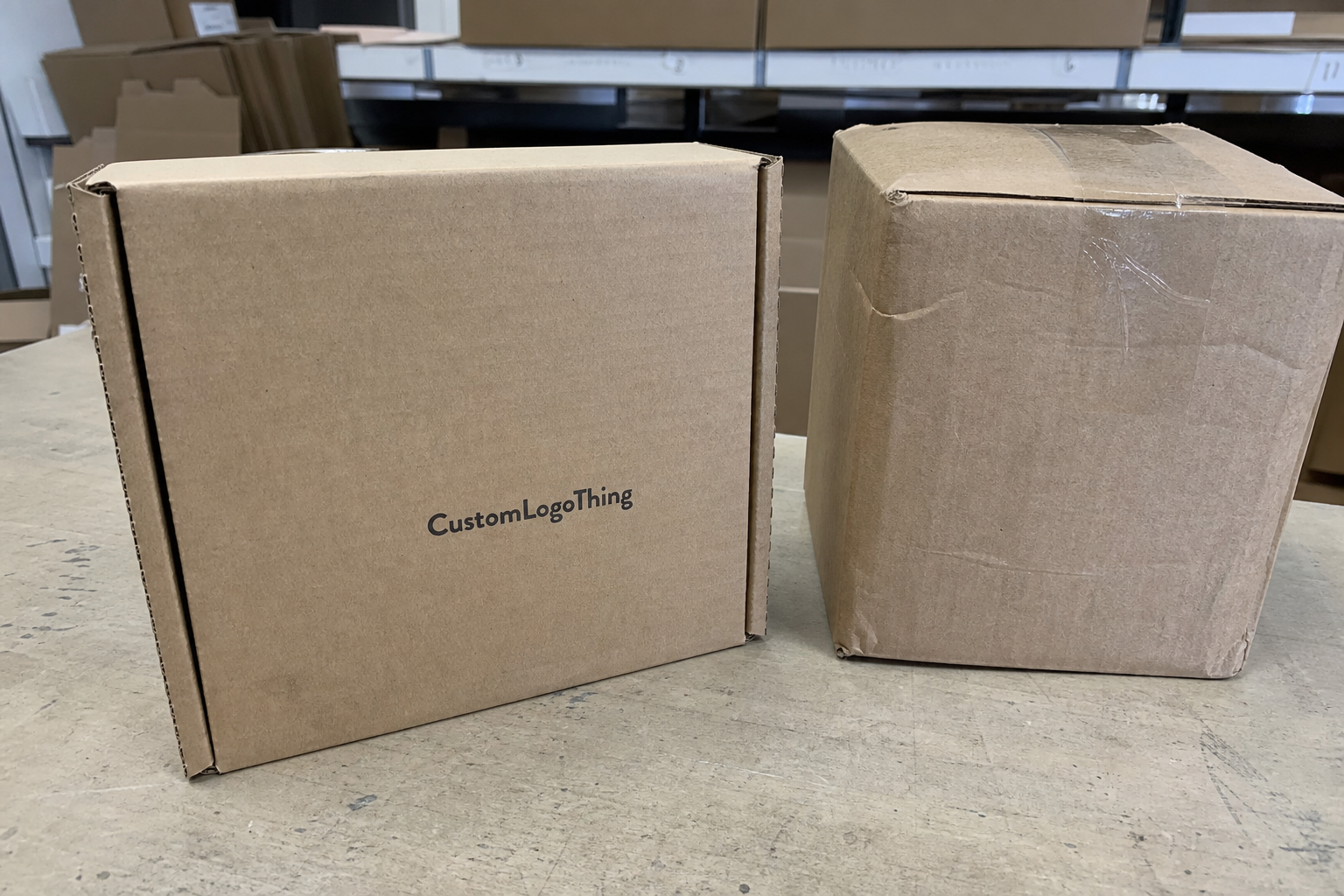
Corrugated mailers are not just smaller shipping boxes. They are engineered containers made from linerboard and fluting, which gives them stiffness, cushioning, and better crush resistance than a plain folding carton. A folding carton is usually a retail presentation shell. A rigid box is a premium package with thick paperboard walls. A corrugated mailer sits between those formats, designed for shipping first and presentation second.
The difference is in the board structure. Single-wall corrugated board is common for lightweight items, while double-wall construction supports heavier or more fragile products. E-flute is often chosen for slimmer mailers because it gives a smoother print surface and a neater profile. B-flute adds wall strength and tends to perform better when the contents have more weight or when stacking pressure is a concern.
That structure matters in real handling conditions, not just in theory. Boxes move through conveyors, get stacked on pallets, ride in trucks, and take the occasional drop at the door. If the board is too light, corners crush and closures spring open. If the board is oversized, the package wastes material and invites movement inside. Good packaging starts with matching the board to the product, not assuming thicker is always safer.
Think of it like a jacket. Off-the-rack works for some people, but a custom fit closes better at the shoulders, hangs correctly, and does not bunch where it should not. Custom corrugated mailing boxes work the same way. A better fit means less filler, less rattling, and fewer chances for the contents to shift during last-mile handling.
There is also a financial side that often gets underestimated. A box that fits closely can reduce dimensional weight charges, especially on lightweight products shipped in oversized cartons. It can cut the amount of void fill needed to stabilize the contents. It can also reduce returns caused by damage. None of that feels dramatic in a sample room, but on a live fulfillment line it changes the numbers fast.
“If the box needs extra filler just to feel secure, the size or structure is probably wrong.”
How the box structure and print options work
Corrugated board starts with three basic parts: an outer liner, an inner liner, and the fluting sandwiched between them. The liners provide surface strength and printability; the flutes provide cushioning and compression resistance. The exact combination determines how the box feels in hand, how it closes, and how it stands up under load.
Mailers also come in different closure styles. A tuck-top mailer folds quickly and keeps a neat profile. Front-lock designs add security for products that will be handled repeatedly. Auto-lock bottoms help when the contents are heavier or when pack-out speed matters. Self-seal styles reduce tape use, which can be useful on busy fulfillment lines where every second matters.
Printing choices vary by budget and branding goal. Single-color flexographic print is usually the most economical option for simple logos, line art, and shipping marks. CMYK digital print offers more freedom for graphics, gradients, and richer artwork, though it usually costs more. Some brands print only on the exterior. Others add internal messaging or design elements for a more polished reveal. Inside printing is attractive, but it should be used intentionally because it adds cost and may limit material choices.
The dieline is the blueprint behind the package. It defines folds, scores, flaps, closures, and glue areas so the carton can be produced cleanly on a machine. A good dieline accounts for board thickness, closure tolerances, and any insert or partition that will sit inside the box. A bad dieline may look fine on a screen and still fail in the hand, especially where folds interfere with artwork or where a product fit is tighter than expected.
Insert compatibility deserves more attention than many buyers give it. Paperboard partitions, molded pulp trays, foam, and kraft paper padding each change how the box performs. They also change the perceived value of the shipment. A subscription kit packed in a snug mailer with a paper insert feels more considered than the same kit rattling around in a larger carton with loose fill.
Structure also affects labor. A box that opens cleanly, folds predictably, and closes without fighting the contents can save time on every order. That sounds small until volume grows. At 1,000 orders a week, even a few seconds per pack-out becomes a meaningful labor cost. Poorly designed packaging tends to show up as tape waste, rework, and frustrated packers long before it becomes a formal complaint.
For brands comparing formats, the decision is not always between a mailer and a shipper. Sometimes the choice is between speed, presentation, and protection. A corrugated mailer can do two of those jobs well and cover the third adequately, which is why it often becomes the default for products that need a polished yet practical package.
Cost, pricing, and MOQ: what drives unit cost
Unit cost is shaped by more than box size. Board grade, flute type, print coverage, finish, quantity, and insert complexity all move the number. For a small one-color mailer, pricing might land around $0.45-$0.95 per unit at low volumes. At 5,000 pieces, the same style can drop materially, depending on the material and print method. Add heavy ink coverage, specialty coatings, or custom inserts, and the quote changes quickly.
Smaller runs cost more because setup gets spread across fewer units. Plates, tooling, proofing, and machine adjustment are fixed costs, and those costs do not disappear just because the order is small. Larger orders dilute them. They can also improve material efficiency, which is another reason the per-box price usually falls as volume rises.
Stock boxes can look cheaper at first glance because they avoid custom tooling. That comparison can be misleading. If a generic carton needs extra void fill, takes longer to pack, or produces more damage in transit, the apparent savings shrink fast. Total packaging cost includes labor, freight, returns, and inventory handling, not just the printed quote. In many programs, custom corrugated mailing boxes are the better buy once those hidden costs are included.
MOQ should be treated as a planning tool, not a penalty. The right order quantity depends on storage space, reorder frequency, SKU stability, and seasonal demand. A lower MOQ may be the better choice for a limited-edition launch or a seasonal retail package because it reduces obsolescence. A higher quantity can make sense for a steady monthly subscription box because the design is unlikely to change quickly.
Buyers should also ask what is excluded from the quote. Freight can be meaningful if the boxes are bulky. Proofing may be separate. Revisions after approval can create waste and delay. Inserts, coatings, and special finishing can add cost if they are not spelled out at the beginning. Quotes are easiest to compare when every supplier is pricing the same structure, same print method, and same delivery assumptions.
| Order scenario | Typical unit price direction | Best use case | Main tradeoff |
|---|---|---|---|
| 250 units | Highest | Test launch, pilot, seasonal SKU | Higher per-box cost |
| 500 units | Moderate-high | Small recurring program | Still setup-heavy |
| 1,000 units | Moderate | Growing DTC brand | Storage becomes more relevant |
| 5,000 units | Lower | Stable high-volume shipper | Cash tied up in inventory |
Production steps and lead time from dieline to delivery
Most orders follow the same broad path: brief, sizing, dieline creation, artwork approval, proofing, production, finishing, and shipping. The projects that run smoothly usually start with a clear first brief. If the carton has to fit a sleeved product, an insert, a barcode label, and a specific carrier threshold, that needs to be stated up front. Ambiguity at the start tends to become revision later.
Lead time depends on print complexity, board availability, finishing choices, and plant capacity. A straightforward mailer may be ready in about 12-15 business days after proof approval. Add detailed artwork, specialty coating, or unusual stock, and the timeline stretches. Sampling often comes before full production, so launch schedules should account for that step rather than squeezing it in afterward.
The most common delays are predictable: late artwork changes, missing barcode requirements, unclear internal dimensions, and approval bottlenecks between marketing and operations. None of those sounds dramatic, but each one can push the schedule by days. A single dieline revision can affect print setup, finishing, and freight timing.
Rush orders are possible, but they are not free. Faster schedules can raise cost, limit finish options, or narrow the available board grades. Sometimes the tradeoff is inventory flexibility. A rush order may solve a deadline, but it may not be the best long-term match for the product if the box needs to be used again in the next run.
Build buffer time into the plan. Include transit, receiving, and internal quality checks before launch. A box that arrives on time but fails inspection is not really on time. That distinction matters more than most buying teams admit, especially when packaging is tied to a product release or a subscription ship date.
Key specs to confirm before you approve the order
Internal dimensions are the first thing to confirm. External size is not enough. The product has to fit after inserts, sleeves, tissue, or protective wrap are added. A millimeter can matter, especially on tight tuck-top mailers where closure pressure affects how the carton behaves in shipping and during packing.
Strength specs should be understood in plain terms. Board grade tells you the base material. Edge crush resistance and burst-related measures tell you how the carton behaves under stacking and handling. If the item is light and stable, over-specifying board can raise cost without much real benefit. If the item is dense, sharp-edged, or fragile, more reinforcement may be worth paying for. There is no universal formula.
Branding specs matter too. Print safe zones keep logos from being cut by folds. Ink limits affect how colors sit on kraft stock, where dark tones often look different than they do on coated white board. Barcode legibility matters if the package will be scanned. Finishes can affect recyclability and cost, so if sustainability is part of the brief, ask what each coating does to the final carton rather than assuming every embellishment is harmless.
Testing with real packed samples is the strongest approval check available. Mockups show proportion. Samples show reality. They reveal whether the lid catches, whether the insert shifts, and whether the product rattles under a shake test. That kind of proof is more useful than a polished render because it exposes the way the box behaves once it carries weight.
Shipping performance should be part of the approval criteria. The box has to survive stacking, vibration, drops, and conveyor handling. A mailer that looks great on a desk but opens in transit is not successful packaging. Most buyers know that instinctively, yet many approvals still lean on appearance first and stress performance second.
- Internal dimensions and product clearance
- Board grade and flute type
- Print safe zones and barcode placement
- Insert fit and pack-out method
- Transit performance under handling and stacking
For buyers comparing formats, it can help to review broader packaging options too, including Custom Packaging Products, Custom Shipping Boxes, and lighter-weight formats like Custom Poly Mailers. The best choice depends on weight, protection needs, and how much presentation matters at unboxing.
Common mistakes when ordering mailer boxes
The most common mistake is measuring the product instead of the packed product. Once tissue, inserts, sleeves, or protective wrap are added, the dimensions change. Boxes that are too tight can crush corners or slow the pack line. Boxes that are too loose create movement and reduce protection. Both problems show up quickly once the first shipment leaves the warehouse.
Another frequent error is over-specifying board strength. Buyers sometimes assume thicker is automatically safer. That is not always true. For lightweight items, a heavier board can add cost and weight without improving real-world performance. Better fit and sensible internal support often matter more than raw thickness.
Artwork approval before dieline confirmation is another expensive trap. If the print layout is locked before the carton geometry is final, logos can land too close to folds, text can get clipped, and whole runs may need rework. That is especially painful on custom printed boxes with full-coverage art, where even small adjustments can force a new proof.
Ignoring the fulfillment workflow creates hidden labor cost. If packers need to pre-fold awkward flaps, hunt for tape, or keep adjusting inserts, the packaging is draining time. A small efficiency loss per order can erase the savings from a lower-cost carton. Package branding should not slow the warehouse to a crawl.
Color mismatch is its own issue. Brown kraft board does not reproduce color the same way coated white board does. Expecting a bright pastel on kraft without adjusting the artwork is a common reason for disappointment. The better approach is to design for the substrate rather than assuming all board surfaces behave the same.
Here is a simple rule that holds up in practice: if the box needs tape, filler, or repeated rework just to close correctly, the spec is probably wrong. A good mailer closes cleanly, protects the item, and keeps the process simple. That is the point of a well-made mailer box, and it is the reason buyers keep returning to corrugated rather than chasing the cheapest carton on paper.
Expert tips for better fit, branding, and sustainability
Start with shipping economics. Box dimensions should sit close to product size and carrier thresholds so dimensional charges stay under control. A slightly smaller mailer can save more than a cheaper print method ever will, especially on higher-volume programs where postage and labor compound together.
For branding, restrained print often looks sharper than heavy decoration. Kraft stock with one or two carefully placed colors can feel modern and deliberate. That does not mean plain. It means controlled. Buyers chasing a premium appearance sometimes miss that cleaner design often reads more expensive than crowded graphics, especially once the box is handled and opened.
Reuse is underrated. A sturdy mailer that customers keep for returns or storage extends brand visibility without extra spend. It also helps the packaging work harder than a single delivery moment. Not every box will be reused, of course, but the ones that are can continue carrying the brand after the first shipment is finished.
Sustainability is not always about the greenest-sounding finish. Fewer materials, better fit, and less damage can outperform a fancier claim if the goal is lower total waste. The EPA’s packaging and materials guidance is a useful reference point for that broader waste-reduction mindset: EPA Sustainable Materials Management.
Pilot runs are often the smartest move. This is especially true for subscription launches, seasonal drops, and influencer-led campaigns where order volumes can shift quickly. A pilot reveals whether the box packs efficiently, protects the item, and delivers the reaction you want before you commit to a larger order.
When comparing corrugated mailers with another format, ask what the package must do first. Protection? Presentation? Returns? All three? A well-designed mailer can often handle both protection and presentation without extra layers, which is why many brands use it as a default rather than an afterthought.
Next steps for choosing the right custom mailer
Start with a short checklist. Measure the packed product. Define the shipping method. Estimate monthly volume. Write down the branding goal. If you do those four things before requesting quotes, the conversation becomes clearer and the pricing becomes easier to compare.
Ask for two or three quote options that vary by board type, quantity, and print coverage. Side-by-side comparison exposes the real tradeoffs. You may find that the middle option gives the best balance of protection, appearance, and unit cost. Or you may discover that the cheapest version creates hidden labor on the pack line.
Always request a physical sample or prototype before full production. Digital mockups are useful, but they do not show tuck tension, fold accuracy, or how the board behaves under load. If the box is tied to a launch, sample approval should be treated as a milestone rather than a formality.
Build a launch calendar that includes proofing time, production time, transit time, and internal receiving. Then add a cushion. A few days of buffer can absorb a supplier delay, a freight issue, or an internal approval hiccup. That is not conservative for its own sake. It is practical risk management.
Finally, rank the actual packaging pain points. Is the issue damage, labor, cost, or presentation? Usually it is not all four at once. Once the real problem is clear, the right mailer spec becomes much easier to choose. That is the real value of custom corrugated mailing boxes: they are not just containers. They are a fit, cost, and branding decision rolled into one.
For buyers who want a framework for durability standards and transit testing, the International Safe Transit Association offers useful test-method context at ISTA. That kind of reference helps when a packaging spec has to be explained internally with more than instinct.
What size should custom corrugated mailing boxes be for my product?
Measure the product after it is packed with any inserts, sleeves, or tissue, not just the item itself. Leave enough clearance to prevent compression, but not so much that the item shifts during transit. Confirm internal dimensions before approving the dieline.
How much do custom corrugated mailing boxes usually cost?
Price depends on board grade, size, print coverage, quantity, and any finishing or inserts. Small runs usually cost more per box, while larger orders reduce unit cost. Freight, sampling, and artwork changes can also affect the final total.
What is the typical turnaround time for custom mailer boxes?
Timing varies based on artwork approval, tooling, print complexity, and material availability. Sampling usually adds time before full production begins. Build buffer time into launch plans so boxes arrive before product inventory is ready.
Are corrugated mailing boxes strong enough for shipping fragile items?
Yes, if the board grade, flute type, and internal protection are matched to the product weight and fragility. Fragile items often benefit from inserts or partitions to prevent movement. Testing with packed samples is the best way to verify performance.
How can I make custom corrugated mailing boxes look premium without raising cost too much?
Use smart sizing, limited-color print, and clean branding instead of heavy decoration. Consider kraft stock with restrained graphics for a polished, modern appearance. Focus on fit and structure first; presentation improves when the box closes neatly and protects the contents well.