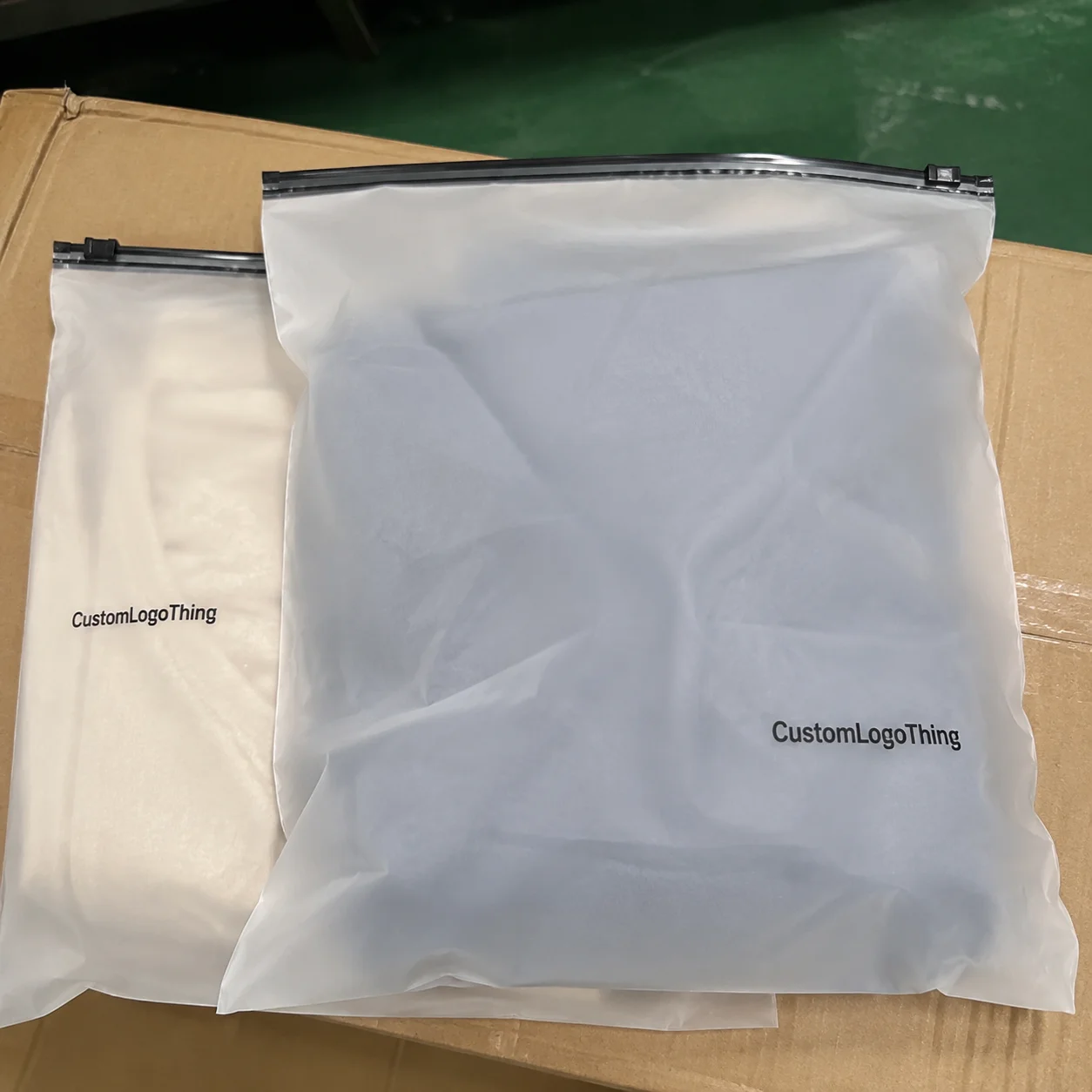
Custom zipper bags for clothes: what makes them worth specifying carefully
Custom zipper bags for clothes are not complicated on paper, but the details matter more than most buyers expect. A folded shirt, sweater, or uniform only looks protected if the bag fits properly, the zipper closes without fighting the material, and the film holds its shape through packing, storage, and shipping. If any one of those parts is off, the packaging starts working against the garment instead of protecting it.
That is why a good garment bag is never just a clear sleeve with a closure added later. It is a small packaging system with a specific job: keep clothing clean, keep it organized, and present it in a way that supports the brand. For retail packaging, warehouse storage, seasonal wardrobe packing, and e-commerce fulfillment, that job changes enough that the spec should be written with care.
Buyers usually focus first on print. That is understandable, but the structure does more of the real work. Size, film thickness, zipper profile, seal quality, and the way the garment is folded all affect whether the bag feels practical or flimsy. The best results come from treating the bag as part of the product workflow, not as a last-minute supply item.
Why custom zipper bags for clothes beat standard poly bags
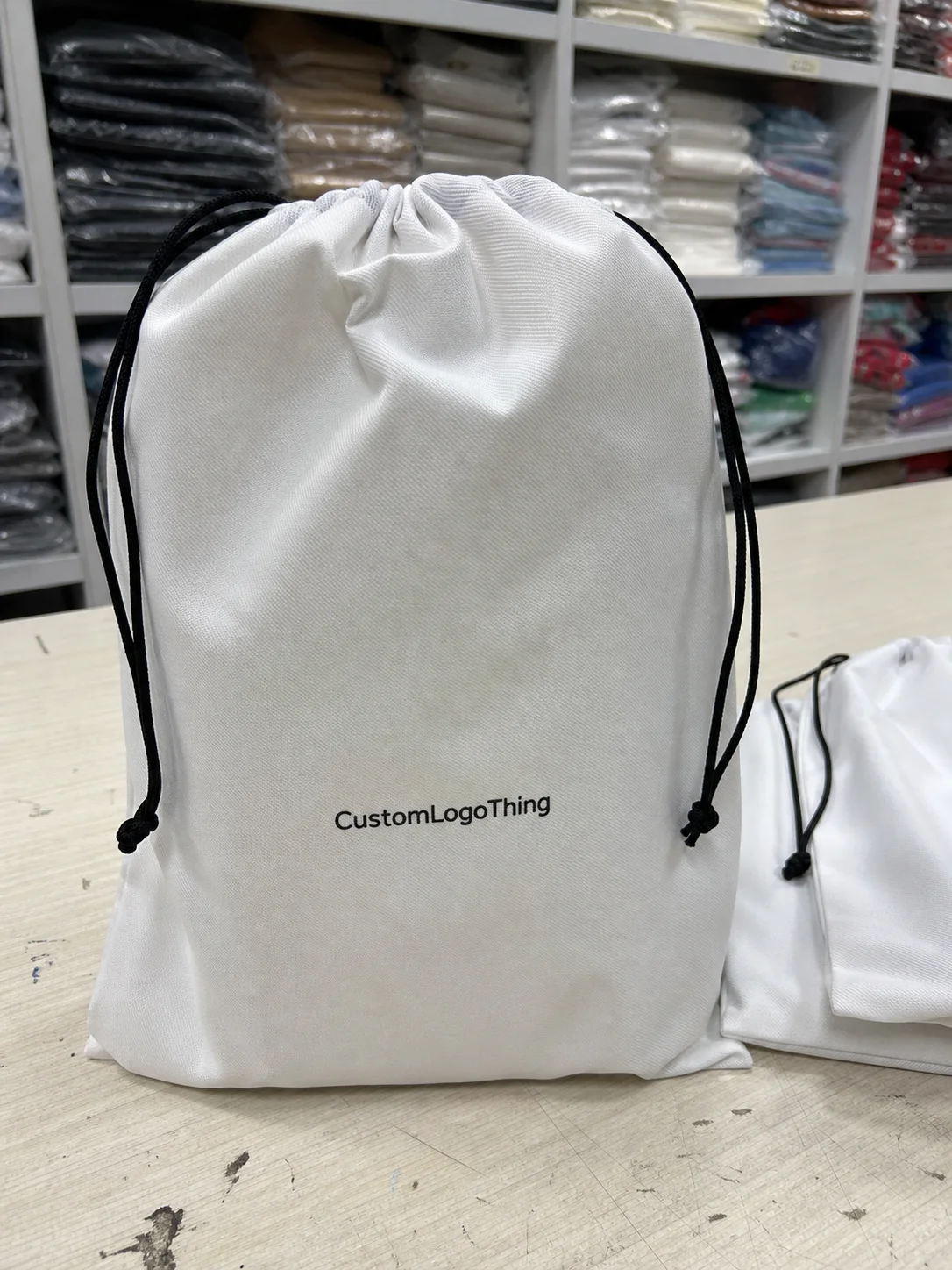
A standard open poly bag covers a garment, and that is about where its usefulness ends. A zipper bag adds repeated access, better dust protection, and a cleaner way to store or re-pack the item after opening. That matters for products that move through more than one stage of handling. A shirt might be folded at the factory, checked at receiving, opened on a retail table, then packed again for a return or for off-season storage. A closure that can be opened and reclosed without tearing gives the packaging a longer useful life.
There is also a presentation advantage that is easy to underestimate. A flat, well-sized bag reads as intentional. It helps the folded garment stay centered and makes the package look orderly on a shelf, in a drawer, or in a shipping carton. Oversized bags create slack, and slack makes the product look less controlled. Thin bags wrinkle quickly and can make even a well-folded item look tired.
For buyers comparing options, the practical difference usually shows up in three places:
- Less dust and surface scuffing during storage and transit.
- Better fit and more stable stacking for folded apparel.
- Cleaner reopening for inspection, resale, or seasonal reuse.
That is why custom zipper bags for clothes are common in apparel programs that need both order and repeat handling. The bag is not replacing the garment’s packaging system; it is improving it. In many cases, the extra closure is what makes the package usable beyond the first opening.
The best packaging often disappears into the workflow. It fits the garment, closes without fuss, and still looks composed after several rounds of handling.
For brands, that can also support product branding without adding unnecessary complexity. A logo printed on a bag that fits badly will never feel as strong as a simpler bag that holds the fold well and opens cleanly. The structure has to earn the branding.
How the zipper, film, and seal work together
Three parts determine whether the bag behaves well in use: the zipper, the film, and the seal. They have to work together. If the zipper is strong but the film is too soft, the package collapses. If the film is thick but the closure is awkward, people stop trusting the bag. If the seal is weak, the whole package feels unfinished even when the print looks good.
Clear polyethylene remains the most common starting point because it is flexible, economical, and easy to convert. It gives enough visibility for folded apparel while keeping cost under control. For a more premium feel, buyers often move to thicker film, frosted film, or a material blend that improves stiffness and puncture resistance. The right choice depends on whether the bag is being used for simple storage, retail presentation, or repeated access.
Zipper style matters more than it first appears. A single-track zipper works well for lighter packs and straightforward storage. A double-track profile can feel more secure and easier to reseal tightly, especially if the bag will be opened many times. Some closures open with less force, which is useful for retail staff or customers. Others hold more firmly, which helps with shipping and long-term storage. If the zipper is too stiff, people struggle with it; if it is too loose, they assume the bag will fail.
Film behavior also changes with the garment itself. Knitwear, pressed shirts, and folded sets usually benefit from enough body to keep the front panel flat. A flimsy film tends to collapse against fabric, which makes the pack look rough even before it is opened. For garments that snag easily or attract lint, frostier surfaces or anti-static properties can be worth the added cost.
For general packaging references, Packaging School / packaging.org is a useful reference point for terminology and basic material context. For shipment stress and handling checks, many buyers look at ISTA test methods so they can judge how well a pack may hold up during vibration, stacking, and drops.
That kind of testing discipline is not overkill if the bag is part of a shipping program. A package that looks fine on a proof can still fail in transit if the zipper pops open under pressure or the film scuffs easily against other cartons. The structure has to match the actual handling environment.
Cost, pricing, MOQ, and unit cost
Pricing is usually driven by a few variables that sound simple but change the quote quickly: size, film thickness, zipper style, print complexity, and order quantity. A larger bag uses more material. A thicker bag uses more resin and usually feels better in hand. More print coverage means more setup and more chance of color matching issues. Even a small adjustment in width or height can affect yield across a production run.
MOQ plays a large role in the final unit price. Lower quantities carry a higher per-bag cost because setup, proofing, and waste are spread across fewer pieces. Larger orders improve unit economics, but they also require stronger confidence in the spec. If the bag is being sourced alongside broader product packaging, it helps to decide early whether the zipper bag is the main presentation layer or just one component in a larger packaging stack.
| Option | Typical use | Approx. unit cost | Tradeoff |
|---|---|---|---|
| Stock clear zipper bag | Basic storage or simple apparel packing | $0.08-$0.18 | Lowest cost, limited size and branding choices |
| Custom printed zipper bag | Retail packaging and branded apparel presentation | $0.15-$0.35 | Better presentation, higher setup and print cost |
| Heavy-gauge premium zipper bag | Knits, denim, sets, or reusable storage | $0.22-$0.50 | More material cost, but stronger feel and better reuse value |
Those numbers are working ranges, not fixed offers. Freight, sample charges, custom tooling, and packaging configuration can move the landed cost quickly. A 3,000-piece order and a 30,000-piece order are not just different in scale; they are different jobs from a sourcing standpoint. The bigger run usually rewards a tighter spec and a more stable forecast.
The cleanest budgeting question is not “What is the cheapest bag?” It is “What is the lowest cost that still protects the garment and supports the presentation?” In practice, a slightly heavier film and a reliable zipper often save money by reducing damaged packs, rework, or returns. That is especially true for premium apparel, repeated-use storage, and products that spend time in a warehouse before they reach the customer.
If sustainability targets are part of the brief, keep the claims precise. Paper components such as cartons or inserts can involve FSC-certified material, but that does not automatically apply to the plastic bag itself. Clear boundaries matter more than vague environmental language.
Production steps and timeline
The production path is straightforward if the information is complete at the start. First comes the garment measurement and use case. Then the supplier reviews size, film, zipper profile, artwork, and any special finishing details. After that comes a sample or prototype, which is where most dimensional mistakes are caught before the run begins.
Most delays happen in the same few places: artwork corrections, sample approval, and sourcing a nonstandard film or zipper specification. Fine details in a logo can also slow things down if the print area is too small or if the artwork sits too close to a fold or seal line. Simple orders move faster because there is less room for interpretation.
A realistic timeline for a standard custom run is often 12-15 business days after proof approval. More complex printed jobs, special thickness requests, or custom zipper profiles usually take longer. If the order needs exact color matching, a specific finish, or extra testing, the schedule should include that time up front instead of trying to recover it later.
- Confirm garment dimensions, folded size, and intended use.
- Choose the bag width, height, and zipper style.
- Review print layout, panel placement, and color count.
- Approve the sample for fit, closure strength, and clarity.
- Release the full production run after final sign-off.
- Inspect the finished bags before shipping or warehouse use.
Suppliers quote faster and with fewer revisions when they receive complete information early. Quantity, target thickness, print coverage, whether the bag will hang or lie flat, and whether the package will be reopened many times all help shape the production plan. That information is not paperwork. It is the spec.
Choosing size, gauge, and zipper style
Size is the first place packaging goes wrong. A bag that is too tight slows packing and can crease the garment as it is inserted. A bag that is too large lets the folded item drift around, which hurts presentation and creates instability when bags are stacked. The best fit is usually neither snug nor loose. It should feel intentional.
For lightweight tees and simple folded basics, a moderate film thickness is often enough. For sweaters, denim, or more substantial retail packs, more body helps the bag hold its shape. In practical terms, thickness is not only about puncture resistance. It also affects how the front panel stays flat for branding and whether the package continues to look clean after it has been handled several times.
Zipper style should match the person who will open the bag. If the customer opens it once and stores the garment afterward, ease of use matters most. If warehouse teams, store staff, or consumers will reopen the bag multiple times, durability becomes more important. That is the same logic used when choosing closures for other packaging formats: the hardware has to suit the use case, not just the artwork.
Useful options include tear notches, hanging holes, gussets, and clear windows. Tear notches make opening easier. Hanging holes work well for peg display or retail hooks. Gussets help with bulkier garments and give the bag more volume. Each feature adds cost and complexity, so each one should solve a real handling problem rather than being included because it sounds useful on a spec sheet.
One habit saves a lot of trouble: measure the folded garment, not the flat one. A folded size tells the truth about the final volume, and that is what the bag has to contain. If the garment is packed inside a carton before bagging, the carton dimensions should be included as well so the bag does not have to absorb the mismatch later.
Common mistakes that reduce performance
The first mistake is choosing a film that is too thin. It can lower the quote, but the bag usually feels weak, wrinkles too easily, and tears sooner at the zipper edge or corner. If the packaging is part of the selling job, that weakness shows fast.
The second mistake is poor sizing. Oversized bags let folded clothing slide and shift, which hurts the look of the package and can destabilize stacks. Tight bags create friction during packing and slow the team down. Either way, the result is more handling time and a worse end-user experience.
Artwork placement causes problems more often than buyers expect. A logo that looks sharp on a screen can disappear once the bag is folded, stacked, or hung under bright lighting. Small logos, low-contrast artwork, or graphics placed too close to seams can become unreadable in the warehouse or on the shelf. Good branding is not only about color; it is also about placement and visibility.
There are handling issues too. Overfilling the bag stresses the zipper. Storing bags in damp areas can make the package feel less fresh. Choosing the wrong closure for repeated opening and closing leads to zipper fatigue. If the bags are part of a retail packaging program, the packaging team should think through how staff will fill, close, stack, and reopen them instead of assuming the design will behave perfectly on its own.
For mixed-material packaging systems, FSC can still matter on the paper components even if the bag itself is plastic. The main risk points remain film quality, closure performance, and fit. That is where the spec needs to be honest and specific.
Locking the spec before you order
The easiest way to move forward is to start with the folded garment, then decide how the bag will be used, and only after that choose the finish and print. Storage bags, retail presentation bags, and shipping bags live in different performance bands. A single generic spec rarely serves all three well.
Request a sample before committing to the full run. That step catches the most expensive mistakes: a bag that is too small, a zipper that feels too stiff, print that reads too faintly, or film that looks clear but feels weak in the hand. A sample is not a formality. It is the point where the spec proves itself or gets corrected.
A practical checklist should include final dimensions, thickness, zipper style, print coverage, quantity, expected unit cost, and any special handling needs. If the bags are part of a larger branded packaging program, keep the visual language aligned so the garment bag, carton, and insert feel like one system instead of separate purchases.
For buyers balancing presentation and cost, the most reliable starting point is usually a clear bag with enough thickness to hold its shape, a zipper that closes consistently, and print placed where it still reads after folding and stacking. That specification works well for warehouse storage, boutique packaging, and standard apparel fulfillment. It is not the flashiest option, but it tends to be the one that performs with the fewest surprises.
FAQ
What size custom zipper bags for clothes should I choose for folded T-shirts?
Measure the folded shirt first, then allow enough room for a clean slide-in fit without leaving a lot of empty space. A slightly tailored bag usually looks better than an oversized one that lets the shirt drift around.
Are custom zipper bags for clothes reusable for storage and shipping?
Yes, if the zipper and film are built for repeated opening and closing. They work well for closets, returns, and seasonal storage. For shipping, choose a stronger film gauge and test whether the closure stays secure under stacking and handling.
What affects the price of custom zipper bags for clothes the most?
Size, thickness, zipper style, and print complexity usually drive the price first. MOQ, setup work, sample requirements, and freight can change the landed cost more than buyers expect, especially on small runs.
How long does production usually take for custom zipper bags for clothes?
Simple orders move faster when artwork is final and the dimensions are standard. Custom sizes, special finishes, and exact zipper profiles add time. Sample approval, printing, and inspection are the stages most likely to affect the final schedule.
Do custom zipper bags for clothes help with moisture and dust protection?
They help most when the film is thick enough and the zipper closes consistently. For delicate garments, consider clarity, film quality, and whether the bag needs more barrier performance or anti-static behavior.