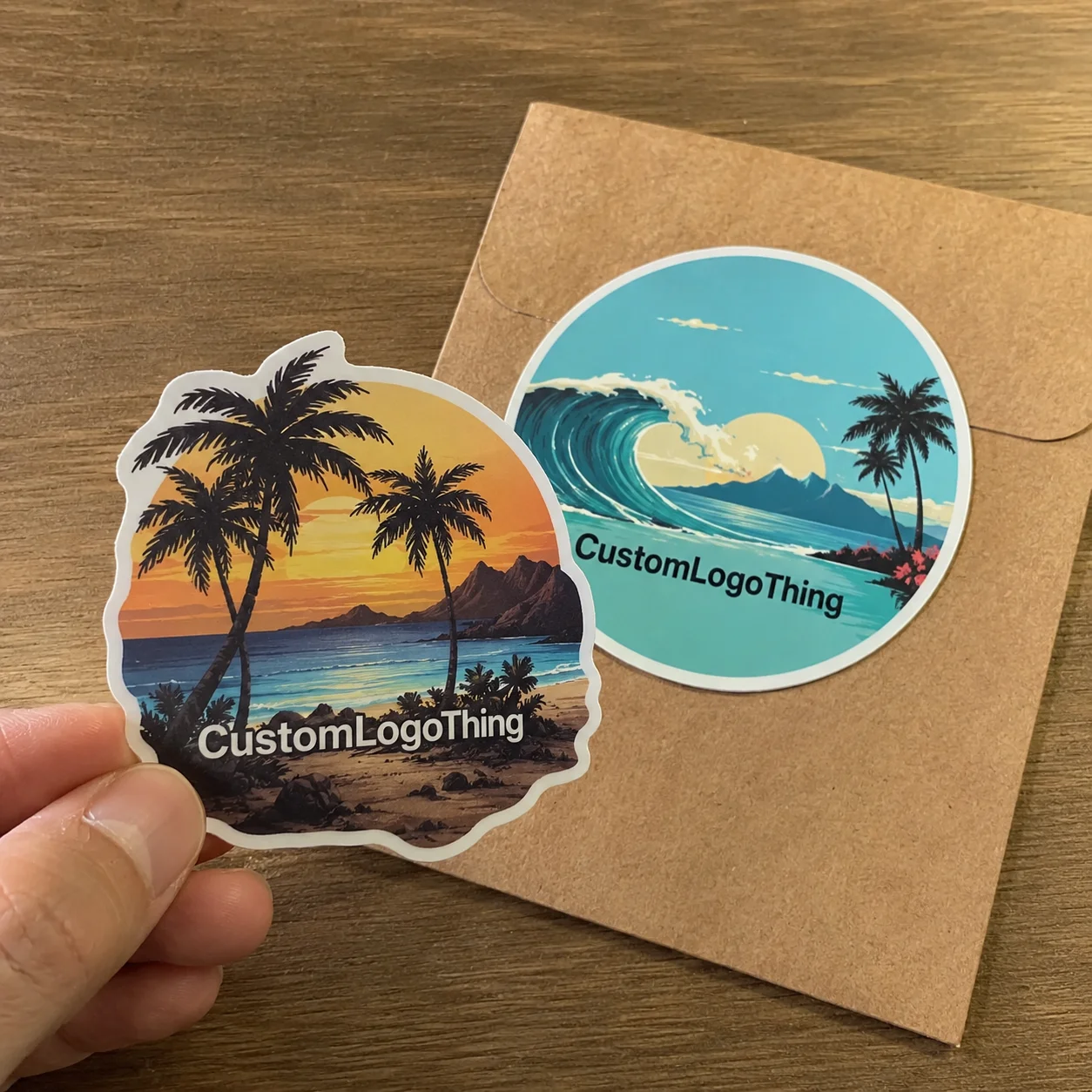
A sticker’s shape often gets noticed before the artwork does. That is the quiet advantage of custom cutout stickers: on a crowded retail shelf, a shipping mailer, a laptop, a water bottle, an event table, or a product insert, the outline can do as much branding work as the printed logo.
After enough production runs, the pattern is easy to spot. Buyers think they are ordering “a sticker.” The supplier is actually making a small printed product with material, adhesive, ink, finish, cut path, packing format, and tolerance decisions stacked together. Get those details right, and the sticker feels deliberate. Miss one or two, and the piece may still look fine on screen but peel badly, scuff early, or cost more than it should.
What Custom Cutout Stickers Are and Where They Work Best
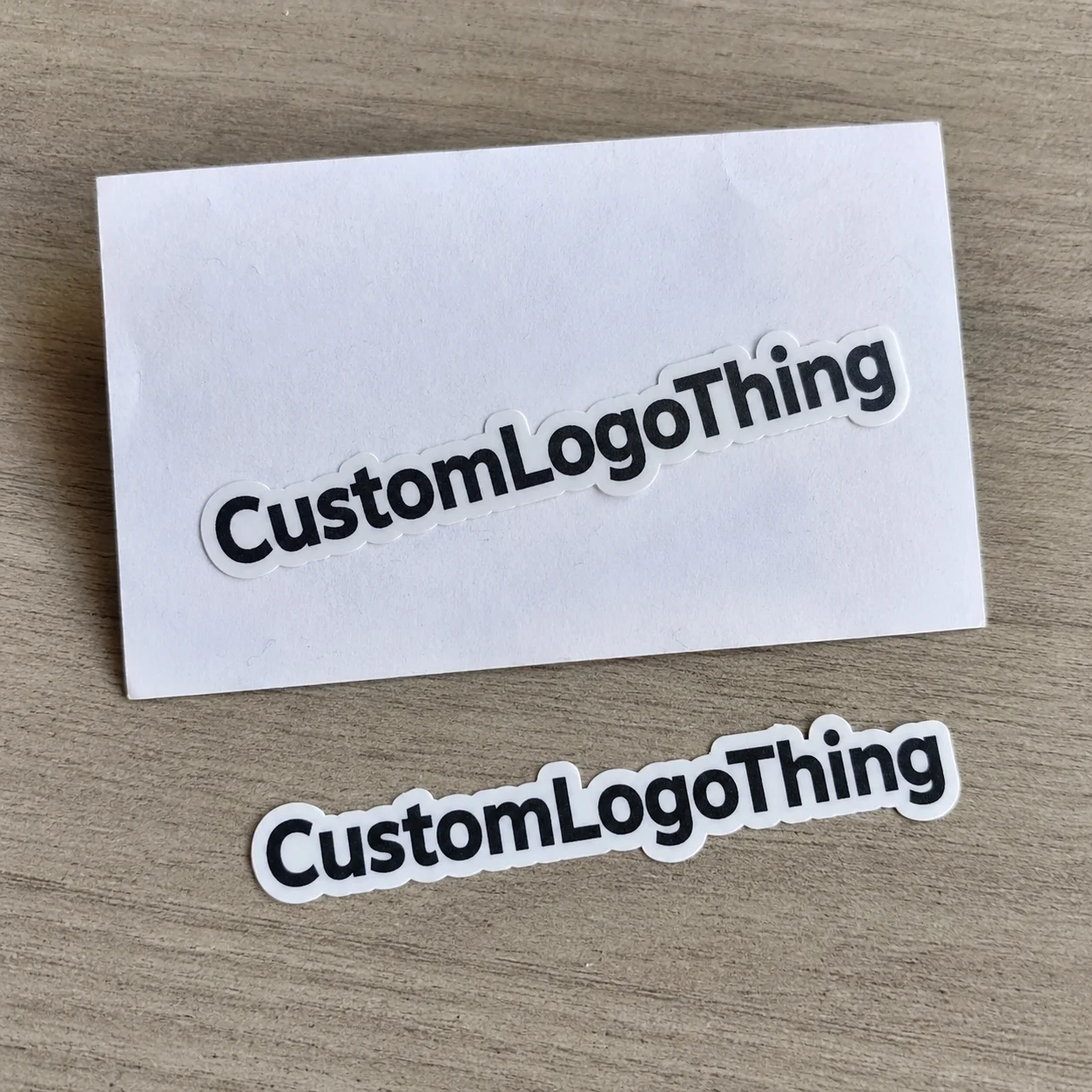
Custom cutout stickers are printed stickers trimmed to a specific shape around a design instead of finished as a standard square, circle, or rectangle. The shape might follow a logo, mascot, wordmark, product silhouette, badge border, illustrated character, or decorative frame. That trim is what gives the sticker its punch. It turns a flat graphic into something closer to a branded object.
The terminology gets messy, even among suppliers. A kiss-cut sticker has the sticker layer cut to shape while the backing paper stays larger, which makes it easier to peel and safer for delicate designs. A die-cut sticker often means both the sticker and backing are cut to the same outer shape, creating a clean handout piece. A contour-cut sticker usually refers to the path following the artwork outline. A full cutout sticker is buyer-friendly language for a sticker shaped around the design rather than sitting inside a rectangle.
That shape is not only aesthetic. It affects material yield, packing, peelability, edge strength, inspection time, and sometimes the final unit cost. A rounded logo mark may run efficiently. A spiky mascot with thin arms, tiny gaps, and several interior cuts may need slower cutting, more waste removal, and closer inspection.
Common uses include brand giveaways, retail packaging seals, small-batch product labels, subscription box inserts, event swag, creator merch, promotional bundles, and package branding accents. They also pair well with Custom Labels & Tags when a brand wants the main product label to stay practical while the cutout sticker adds personality.
Practical rule: if customers will handle the sticker before applying it, peelability and edge strength matter almost as much as artwork quality.
How the Cut Line, Print File, and Adhesive Work Together
The basic production logic is simple. Artwork prints on the chosen stock. A cutting path tells the machine where to trim, much like a dieline on a folding carton or display insert. Finished quality depends on how cleanly the print file, cut line, material, and adhesive work together.
The cut line should be a vector path, usually placed on a separate layer and offset slightly from the artwork. That offset gives the blade or cutting tool a little breathing room, so it does not nick lettering, crop an illustration, or leave awkward slivers along the edge. For many sticker jobs, a border of about 1/16 inch to 1/8 inch works well, though the right amount depends on size, artwork detail, and production equipment.
Bleed and safe area do different jobs. Bleed means the artwork extends beyond the final trim edge, so normal cutting variation does not expose unprinted stock. Safe area means important text, logos, faces, QR codes, and product claims stay far enough inside the edge to avoid being clipped. Thin script lettering, tiny character tails, and sharp star points are frequent trouble spots. They look crisp in a PDF. Once cut into vinyl or paper, they can become weak little hooks.
Material choice should follow the application. White vinyl is the workhorse: strong color, good opacity, and general durability. Clear film works for windows, bottles, and designs that need a printed-on effect, but it may require white ink under the artwork so colors do not disappear on dark surfaces. Paper sticker stock is usually best for dry indoor use, short-term packaging, and budget-sensitive projects. Finishes can include gloss, matte, holographic effects, or soft-touch style laminates when available.
Adhesive is the part buyers often underestimate. Permanent adhesive is common for packaging, branding, and merch. Removable adhesive is better for short-term promotions or surfaces where clean removal matters. Stronger adhesive may be needed for textured paperboard, slightly curved bottles, cold-fill environments, or frequently handled items. Not every adhesive performs the same on kraft mailers, coated cartons, glass jars, aluminum cans, or powder-coated water bottles.
Stickers also need to fit the larger packaging system. A cutout logo on a mailer behaves differently from one applied to refrigerated glass, a candle dust cover, or a rigid retail box. If the sticker is part of a broader launch involving cartons, inserts, labels, or Custom Packaging Products, share those dimensions early. Proportion mistakes are easier to fix during proofing than after thousands of pieces are packed.
Key Specs That Change Durability, Feel, and Shelf Impact
Size controls more than visibility. A 2-inch sticker can be perfect for a laptop corner or package seal, but it may not hold small type, detailed illustration, or complex edge cuts. A 3-inch to 4-inch sticker gives more room for logos, mascots, QR codes, and layered artwork. It also changes packing count, shipping weight, material usage, and handout cost.
Finish changes the tone. Gloss adds saturation and a bright retail feel. Matte looks calmer and often reads more premium, especially for skincare, coffee, stationery, wellness, and boutique packaging. Clear stock creates a printed-on effect when the surface color is part of the design. Specialty finishes can pull attention from across a table, but they work best with simpler artwork. Holographic stock behind tiny type turns noisy fast.
Lamination or coating protects the ink surface from scuffs, moisture, and handling. For stickers used on bottles, shipping materials, laptops, coolers, or outdoor items, a film-based stock with protective laminate usually performs better than uncoated paper. That does not make paper inferior. Paper can be exactly right for candle dust covers, bakery packaging, dry retail packaging, envelope seals, or short-term promotional stickers where tactile feel and cost matter more than water resistance.
Edge complexity deserves a hard look. Rounded contours are easier to handle and generally more durable. Tiny spikes, deep notches, narrow bridges, and hairline connections can lift, tear, or be difficult to weed during production. If a shape has a thin bridge under 1/16 inch, it may technically cut, but it may not survive peeling, packing, or customer use. That does not make the design impossible. It does make the design worth revising before quoting a large run.
Color needs practical expectations. Screens are backlit; printed stickers are not. If a job needs close brand color matching, provide Pantone references or printed samples where possible. On clear stock, white ink underlays may be needed behind logos or type. Without white ink, yellow, red, and light blue can look weak on glass, dark bottles, or colored packaging.
| Spec Choice | Best Use | Buyer Watchout |
|---|---|---|
| White vinyl with gloss laminate | Giveaways, laptops, bottles, outdoor-friendly branding | Can feel bright or sporty rather than soft or premium |
| White vinyl with matte laminate | Retail packaging, creator merch, premium inserts | May reduce perceived color punch compared with gloss |
| Clear film with white ink | Glass jars, windows, bottles, transparent packaging | Needs careful proofing so transparent areas behave as expected |
| Paper sticker stock | Indoor labels, seals, dry product packaging | Not ideal for wet, chilled, or high-abrasion use |
Packing format matters more than it appears on a quote sheet. Individually cut singles are easy to hand out at events or drop into orders. Sheets are efficient for multiple small designs or sticker packs. Rolls may be better for label-style application, especially if staff will apply hundreds or thousands of pieces to product packaging during fulfillment. A sticker packed the wrong way can slow the entire packing table.
Pricing, MOQ, and Unit Cost Factors to Know Before You Quote
Sticker pricing is shaped by setup, material, print area, cut complexity, finish, quantity, and packing format. It is not just width times height. Two stickers may both measure 3 inches, but a simple oval on white vinyl and a detailed contour-cut mascot on clear film with white ink can land in very different price bands.
Quantity has a major effect on unit cost. Small runs carry more setup and file-prep cost per piece. Larger orders spread proofing time, machine setup, cutting setup, and finishing across more stickers. As a rough planning range, a simple 3-inch vinyl sticker might land around $0.45 to $1.20 each at a few hundred pieces. At 5,000 pieces, common vinyl singles may fall closer to $0.12 to $0.35 each, depending on size, finish, packing, and delivery timing. Specialty materials, multiple designs, and tight deadlines push that number upward.
MOQ, or minimum order quantity, depends on printing method, material roll width, finishing process, and whether the order is singles, sheets, or rolls. Digital production can suit smaller runs. Specialty finishes, custom roll formats, certain laminates, or white ink layers may require higher minimums. A supplier may accept 100 pieces for a basic white vinyl single but require 500 or 1,000 pieces for a more specialized construction.
Complex contour cuts can raise cost because they slow cutting speed, increase waste, require careful weeding, or need extra quality checks around delicate shapes. Interior cutouts add labor. A donut-shaped logo, a badge with small holes, or lettering with open counters can all be produced, but each detail should earn its place.
Before requesting a quote for custom cutout stickers, prepare the details that actually drive cost: finished size, quantity, material, finish, indoor or outdoor use, individual pieces or sheets, number of designs, and target delivery date. If the sticker must hold up on refrigerated glass bottles, say that early. If the piece is a two-day event giveaway, say that too. Good specs prevent expensive assumptions.
If the target price is tight, do not start by weakening the artwork or accepting a material that does not match the use case. First, simplify the cut line, combine designs on sheets, adjust the size slightly to fit material layouts, choose a standard white vinyl or paper stock, or reduce the number of versions. A 10% size reduction can save more than expected across thousands of pieces, especially when it improves nesting on the sheet or roll.
Process and Timeline: From Artwork Review to Finished Stickers
A typical order flow is straightforward: Request a Quote, share artwork and specs, receive file review notes, approve a digital proof, move into production, complete quality checks, then pack and ship. The jobs that move cleanly usually have two things in common: clear application details and artwork that is close to production-ready.
Artwork review is where the technical catches appear. The production team checks file type, resolution, color mode, cut path, bleed, safe area, small text, and whether the proposed shape can be cut cleanly. Vector files such as AI, EPS, or production-ready PDF files are preferred for logos and cut paths. High-resolution raster art can work for some designs. A 600-pixel image pulled from a website will usually print soft once enlarged.
Proofing is the buyer’s best checkpoint. Review the size, spelling, edge shape, color expectations, white ink areas on clear stock, and artwork placement before production starts. If the sticker must seal a box flap, fit a jar lid, cover a barcode, or align with Custom Printed Boxes, measure the actual surface and compare it against the proof. A beautiful sticker that is 1/4 inch too large is still a problem.
Production usually includes printing on the chosen stock, applying laminate or finish if needed, cutting to shape, removing excess material when required, sorting, counting, and packing. Quality checks often look for registration drift, scuffed laminate, incomplete cuts, lifting edges, color consistency, and count accuracy. For rolls, unwind direction and core size may also need confirmation if the stickers feed through a label applicator.
Timelines depend on proof approval speed, order quantity, specialty material availability, finishing requirements, number of designs, sampling needs, and shipping distance. A simple repeat order may move quickly. A first-time order with clear film, white ink, matte laminate, five designs, and a retail launch date needs more breathing room. Many standard sticker orders are planned in the range of several business days after proof approval. More involved jobs can require one to three weeks plus transit.
For event deadlines, retail launches, or color-sensitive branded packaging, build in extra time. If the sticker must match a carton, pouch, or label already in production, ask for a proof or sample before committing to the full run. Color and fit are much easier to adjust before the job reaches the cutting table.
Common Artwork and Ordering Mistakes That Cause Delays
The most common file mistake is sending low-resolution artwork pulled from a website, screenshot, or social platform. It may look fine on a phone, then print soft or jagged at sticker size. Logos should be vector whenever possible. If raster artwork is unavoidable, use high-resolution files at final print size, preferably 300 dpi or higher for detailed images.
Missing bleed is another reliable delay. Without bleed, normal production tolerance can create a thin white edge or trim into the artwork. The same goes for an overly tight cut line. If the blade path hugs the design too closely, small variations become visible. A clean offset border usually looks more intentional and produces more consistently.
Some shapes are clever digitally but frustrating physically. Very thin bridges, needle-sharp points, tiny interior cutouts, and deeply nested curves can weaken the sticker or slow production. The issue is not only whether the machine can cut the shape. The better question is whether real people can peel, apply, pack, and use the sticker without tearing it.
Text can cause trouble too. Small type, thin scripts, low-contrast colors, and lettering too close to the edge reduce readability after cutting and handling. As a general guide, tiny disclaimer-style type does not belong on most custom shaped stickers unless the sticker is large enough and the print method can hold it cleanly. Keep the main message bold.
Ordering mistakes are just as common as artwork mistakes. Buyers sometimes choose a material before confirming the application surface, skip proof review because they are in a hurry, underestimate quantity, or forget to confirm whether stickers arrive as singles, sheets, or rolls. That last detail matters. A handout sticker and a production label may look similar, but they are packed for different workflows.
Most of these issues are preventable. Ask the manufacturer to review the cut path, material choice, and packing format before production. If sustainability claims are part of the package branding, be careful with wording and material assumptions; resources from groups such as the Forest Stewardship Council and the EPA recycling program can help teams understand paper sourcing and recycling language more responsibly.
Next Steps for Ordering Cutout Stickers With Confidence
Start with the application surface. Is the sticker going on coated paperboard, kraft mailer stock, glass, plastic, metal, a laptop, a water bottle, or a refrigerated container? Then measure the available space and decide whether the sticker is for packaging, merch, sealing, labeling, promotion, or customer giveaway.
Gather the artwork in vector format when possible. Include brand color references, finish preferences, and examples of edge shapes you like. If the sticker is part of a larger retail packaging system, share the related packaging design files or dimensions so the proportions make sense together. A 3-inch mascot sticker may be perfect for merch but overpower a small cosmetic carton.
Define must-haves versus flexible specs. Must-haves might include exact size, outdoor durability, removable adhesive, clear film, matte finish, freezer resistance, or a fixed delivery deadline. Flexible specs might include a slight size adjustment, a simpler border, sheet packing instead of singles, or a standard material substitution. That flexibility can save cost and time without weakening the finished piece.
Request a sample or review the proof carefully for specialty finishes, curved containers, refrigerated environments, color-sensitive branding, or stickers that must fit a very specific surface. For high-volume label-style use, confirm roll direction, liner type, core size, and application method. For handouts, confirm whether the backing is easy to peel and whether the finished pieces will stack, bag, or bundle cleanly.
Send one clear quote request with size, quantity, material preference, finish, usage environment, packing format, number of designs, and target arrival date. That single message gives the estimator enough information to recommend the right construction instead of guessing. It also reduces back-and-forth, which is often where production schedules get squeezed.
Custom cutout stickers can turn artwork into a tactile branded piece that people hold, peel, place, and remember. The strongest orders are not the most complicated ones. They are the ones with clean files, clear specs, realistic material choices, and an approved cut path before production begins.
FAQ
What is the difference between custom cutout stickers and die-cut stickers?
Custom cutout stickers is a broad buyer-friendly term for stickers trimmed to a custom shape. Die-cut stickers often means the sticker and backing are both cut to the same shape. Kiss-cut versions keep the shaped sticker on a larger backing sheet, which can make peeling easier for small or detailed designs. The best choice depends on presentation, handout use, application speed, and how delicate the shape is.
How do I set up artwork for contour cut stickers?
Use high-resolution or vector artwork and include a separate vector cut line around the design. Add bleed beyond the trim edge and keep text, logos, and important details inside a safe area. Avoid extremely thin points, tiny gaps, and complex interior cuts unless the manufacturer confirms they can be produced cleanly.
Are cutout logo stickers waterproof?
They can be water-resistant or waterproof depending on the material, ink system, laminate, and adhesive selected. Vinyl or film-based stickers with protective laminate are typically better for bottles, coolers, outdoor gear, and handled surfaces than uncoated paper. For wet, refrigerated, or outdoor use, confirm the exact surface and exposure conditions before ordering.
What affects the cost of custom shaped stickers the most?
Quantity, finished size, material, finish, cut complexity, number of designs, and packing format are the biggest cost drivers. Complex shapes may take longer to cut and weed, which can increase labor and waste. Unit cost usually improves at higher quantities because setup and proofing time are spread across more pieces.
How long does it take to produce custom cutout decals or stickers?
Timeline depends on artwork readiness, proof approval speed, order quantity, material availability, finishing, and shipping method. Simple repeat orders usually move faster than first-time orders with new files or specialty materials. For events or product launches, allow extra time for proofing, revisions, production, quality checks, and transit.