Buyer Fit Snapshot
| Best fit | Custom Debossed Boxes Wholesale for Premium Packaging projects where brand print, material claims, artwork control, MOQ, and repeat-order consistency need to be specified before quoting. |
|---|---|
| Quote inputs | Share finished size, material target, print colors, finish, packing count, annual reorder estimate, ship-to region, and any compliance wording. |
| Proofing check | Approve dieline scale, logo placement, barcode or warning zones, color tolerance, closure strength, and carton packing before bulk production. |
| Main risk | Vague material claims, crowded artwork, missing packing details, or unclear freight terms can make a low unit price expensive after revisions. |
Fast answer: Custom Debossed Boxes Wholesale for Premium Packaging should be specified like a repeatable production item. The safest quote records material, print method, finish, artwork proof, packing count, and reorder notes in one written spec.
Production checks before approval
Compare the actual filled-product size with the drawing, then confirm tolerance on folds, seals, hang holes, label areas, and retail display edges. Reserve space for logos, QR codes, warning copy, and material claims before decorative graphics fill the panel.
Quote comparison points
Review material grade, print process, finish, sampling route, tooling charges, carton quantity, and freight assumptions side by side. A quote is only useful when the supplier can repeat the same color, closure quality, and packing count on the next order.
Custom Debossed Boxes Wholesale for Premium Packaging
Custom debossed boxes wholesale gets attention without shouting for it. That is the point. The logo sinks into the surface. The light catches the edge. The box feels intentional instead of rushed, which is a pretty good signal in packaging and a very bad one for brands that want to look cheap.
Most buyers care about three things: appearance, touch, and cost. Custom debossed boxes wholesale can handle all three if the structure, board, and artwork are chosen with some discipline. You get a tactile brand cue, a cleaner presentation, and a format that can scale across recurring orders without forcing a redesign every time the product line shifts.
For brands comparing branded packaging options, debossing sits in a smart middle lane. It looks premium. It does not scream for attention. And it gives the customer something physical to remember, which is where a lot of packaging wins or loses the sale.
Why custom debossed boxes wholesale still wins attention
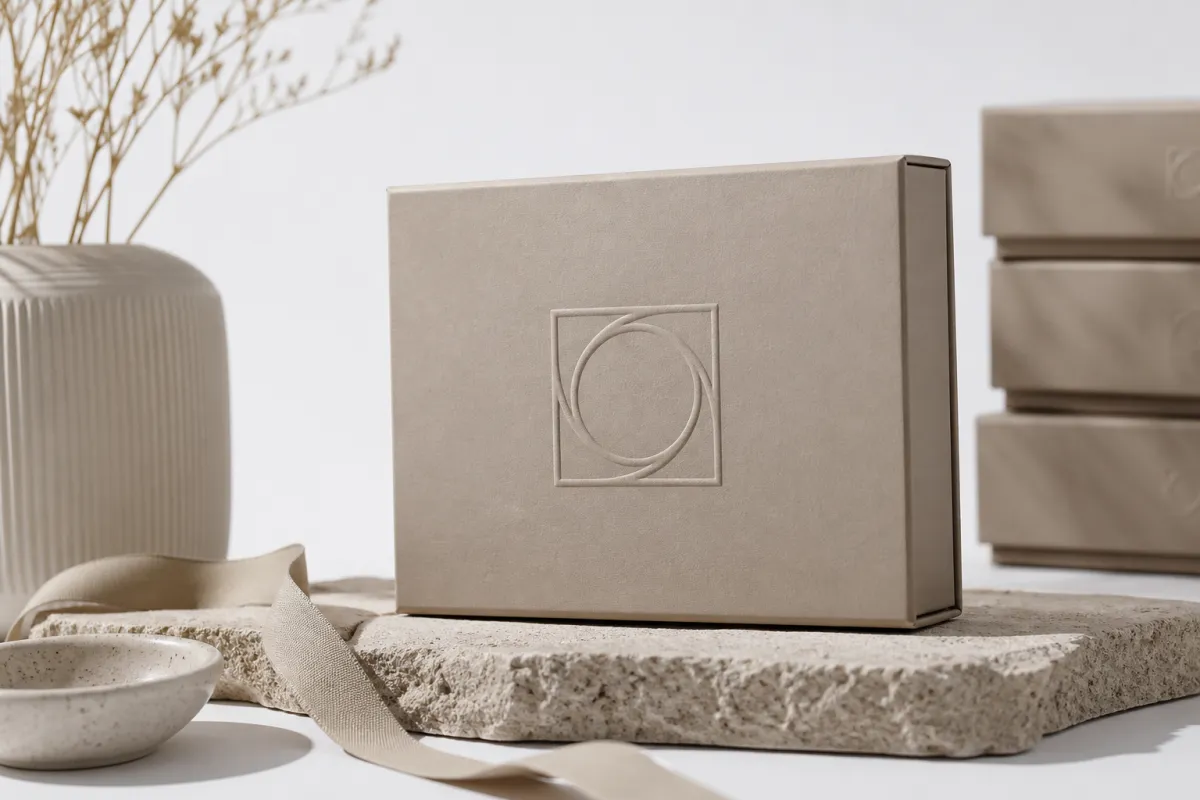
People touch packaging before they read it. I’ve watched buyers pick up a sample, run a thumb across the lid, and decide in three seconds whether the box feels expensive. That tiny motion says more than a paragraph of marketing copy ever will. A glossy print can look fine on screen. Once the box is in hand, it can disappear. With custom debossed boxes wholesale, the mark is physical. It stays visible under changing light and it keeps the brand present even when the print is minimal.
That matters for cosmetics, subscription kits, apparel sets, and gift packaging. Those categories benefit from restraint. The customer opens the box, feels the board, and gets a premium cue immediately. A debossed mark supports the package branding instead of competing with it. That is a better use of space than stuffing every panel with graphics just because the blank area made someone nervous.
Wholesale changes the equation too. A lot of brands are not ordering a single display box. They are juggling seasonal drops, size changes, retail orders, and promo bundles. Custom debossed boxes wholesale lets you keep the same tactile cue across multiple SKUs, which cuts down on inconsistency and keeps the unit cost from wandering into ridiculous territory.
There is a real difference between visual decoration and tactile branding. Full-color artwork can say a lot. Once the box is in hand, it does not always add much. Debossing does. It gives the packaging a physical memory. People may forget the ink color. They remember the feel. Kinda annoying for people who want everything to be obvious, but effective.
A good deboss is not about making the deepest mark possible. It is about control. Clean edges. Consistent pressure. A result that looks expensive without looking overworked.
For brands comparing custom printed boxes with tactile finishes, custom debossed boxes wholesale often wins where presentation matters more than loud graphics. That includes direct-to-consumer shipping, luxury gifting, retail packaging, and launch programs where the box has to look calm and premium from a few feet away.
Durability matters too. A debossed logo can hold up better than fragile surface decoration when the board and finish are chosen well. If the box has to move through warehousing, freight, and retail handling, the construction matters as much as the look. That is the part people miss when the sample looks perfect on a desk and then gets chewed up in transit.
In real buying terms, custom debossed boxes wholesale is both a branding decision and an operations decision. The question is not “Does it look nice?” The real question is whether it still looks right after 500 units, or 50,000, and whether the cost still leaves room for margin.
Custom debossed boxes wholesale: box styles and materials
Not every box format handles a deboss the same way. Board density, wrap finish, closure style, and structure all change how the impression reads. If you are ordering custom debossed boxes wholesale, start with the box style before you obsess over the logo. That order saves time and avoids the kind of sample revision cycle that turns a simple job into a headache.
Rigid setup boxes
Rigid boxes are the classic premium option. They hold shape well, feel substantial in the hand, and usually give the cleanest deboss result because the wrapped board stays stable under pressure. For luxury kits, fragrance, jewelry, and gift sets, custom debossed boxes wholesale on rigid construction is a common choice when presentation matters more than price pressure.
The tradeoff is cost. Rigid boxes use more labor and usually carry higher tooling and assembly charges. They also take up more storage space, which matters if you are ordering by the pallet. The payoff shows up the second someone picks one up. It feels like a purchase, not a shipping container.
Folding cartons
Folding cartons are lighter, cheaper, and easier to ship flat. They fit beauty, supplements, accessories, and small retail items well. If the deboss lands on a panel with enough support, custom debossed boxes wholesale can still look crisp on this format. You just need to respect board thickness and avoid pushing delicate detail into material that is too thin.
For high-volume product packaging, cartons make sense when the product already has an inner tray or bottle structure. They are not as dramatic as rigid boxes, but they are efficient. Efficiency wins a lot of packaging decisions because the fantasy of “best possible” packaging usually falls apart when the invoice arrives.
Mailer boxes
Mailer boxes are a strong fit for e-commerce and subscription programs. They ship flat, close securely, and give you a decent canvas for debossing on the lid. If you want custom debossed boxes wholesale for an unboxing moment that still has to survive transit, a mailer often gives the best mix of form and function.
Mailers also pair well with inserts, tissue, and smaller print runs. That makes them useful for seasonal campaigns and packaging refreshes. A matte lid with a debossed mark can look more premium than a much more expensive full-print design if the composition is clean.
Sleeves and nested packaging
Sleeves work well when you already have a base package and want to add tactile branding without replacing the whole structure. They show up around trays, inner cartons, and assembled kits. The deboss sits on the sleeve, which gives you flexibility and keeps custom debossed boxes wholesale from turning into a full redesign every time the product changes.
That format still needs tight sizing. Too loose and it feels cheap. Too tight and it scuffs during insertion. Simple idea. Easy to get wrong if the measurements are sloppy.
Material choice matters just as much as structure. Mid-weight SBS, C1S artboard, and chipboard wrapped in specialty paper behave differently under pressure. Softer paper wraps usually show a cleaner impression, while heavily textured stocks can soften detail. Soft-touch lamination can make custom debossed boxes wholesale feel even more premium, but it also changes how the deboss edges read.
If responsible sourcing matters, ask for FSC-certified paper options and check the chain-of-custody details instead of assuming every green label means the same thing. The standards on FSC explain why that distinction matters.
Shipping-heavy programs need transit testing before the format gets locked. A beautiful deboss means very little if the corners crush before the box reaches the customer. The packaging has to work in real handling, not just in a mockup photo. If your supply chain includes long-distance freight, reviewing ISTA test methods is a practical move.
Brands comparing retail packaging options should also think about the load the box carries. A cosmetic kit with a light inner tray has different needs from an apparel box with folded garments or a gift set with inserts. The right custom debossed boxes wholesale spec starts with product weight, not the mood board.
Deboss depth, artwork limits, and production specifications
Deboss depth sounds simple. It is not. Go too shallow and the mark disappears under lighting. Go too deep and the board can crush, distort, or lose edge sharpness. For custom debossed boxes wholesale, the right depth depends on the board, the wrap, and the artwork. More pressure is not better by default. That mistake shows up fast when someone only judges the sample under perfect studio lighting.
Clean logo debossing on wrapped rigid board usually lands in a moderate impression range that stays readable without tearing the paper fibers. Thin cartons need a lighter touch. Fine lines and tiny spacing leave less room for error. Bigger shapes and simple letterforms usually perform better because the board can carry the impression without collapsing detail.
Artwork files should be vector-based. AI, EPS, or properly prepared PDF files with clean line work are the right starting point. Raster logos are a headache. They are not a production file. Minimum type size matters too, especially on custom debossed boxes wholesale where the impression has to stay legible after lamination, wrapping, and die cutting. Tiny serif text can look elegant on screen and turn into mush on paper. That is not a mystery. It is just physics wearing a nicer shirt.
Keep the design simple. Debossing rewards restraint. Thick strokes, bold initials, geometric icons, and short wordmarks usually perform better than crowded emblems. If the logo uses multiple thin outlines, ask for a simplified deboss version. The goal is not to cram every detail into the board. The goal is to create a strong tactile cue that survives production.
What to lock before quoting
Before any supplier gives you a meaningful quote for custom debossed boxes wholesale, you need the basics locked down:
- Box dimensions - length, width, and height with product tolerances.
- Board thickness - enough to support the impression without crush.
- Surface finish - matte, soft-touch, textured paper, or coated stock.
- Deboss placement - lid center, corner, side panel, sleeve face, or inside panel.
- Insert style - foam, paperboard, molded pulp, or none.
- Print coverage - plain wrap, one-color wrap, full print, or mixed finish.
Logo placement changes more than appearance. Anything near a fold, glued seam, or box edge can distort under pressure. If the deboss crosses a structural line, the image may stretch or break. Good packaging design starts with the dieline, not after it.
Custom debossed boxes wholesale usually looks best when the mark sits on a flat panel with enough margin on all sides. Centered lid placement is common because it is easy to see and easy to keep consistent. Side placement can work too, but only if the structure gives the press a stable surface and the customer can notice it during unboxing.
Approval samples should be checked like a buyer, not a fan. Look at alignment, depth consistency, edge crush, and the way light moves across the deboss. A sample can look perfect in photos and still be off by a few millimeters in person. That difference gets annoying after 10,000 boxes.
Here is the short version: custom debossed boxes wholesale rewards clear artwork, stable materials, and conservative detail. If the design survives a hard look under bright light, it will probably survive production. If it only works when blurred on a screen, it is not ready.
Custom debossed boxes wholesale pricing, MOQ, and cost drivers
Pricing for custom debossed boxes wholesale is not mysterious, even if some suppliers try to make it sound like a secret ritual. Buyers pay for structure, board, finish, tooling, labor, and freight. The more complex the box, the more those buckets matter. If you want a clean budget, ask for line-item pricing instead of one vague total with a shiny render attached.
MOQ changes the math fast. A tooling charge spread across 300 rigid boxes looks very different from the same charge spread across 5,000 cartons. That is why smaller runs cost more per unit. It is not a trick. It is setup math. Fewer boxes means each one carries more of the startup cost.
For custom debossed boxes wholesale, these ranges are useful starting points, not fixed quotes:
| Box style | Typical MOQ | Approx. unit price | Common use | Cost notes |
|---|---|---|---|---|
| Folding carton with one deboss | 1,000-2,000 | $0.45-$1.10 | Beauty, accessories, light retail packaging | Lower setup cost, best when artwork is simple |
| Mailer box with debossed lid | 250-1,000 | $1.10-$2.40 | Subscription, e-commerce, gifting | Higher board use, good for unboxing and shipping |
| Rigid setup box with wrapped deboss | 300-1,000 | $2.80-$8.50 | Luxury sets, premium product packaging, corporate gifting | Most tactile impact, higher labor and finishing cost |
Those numbers move with paper selection, insert style, order size, print coverage, and freight destination. A plain wrapped rigid box with one deboss is not the same as a magnetic closure box with foil, soft-touch lamination, and a die-cut insert. Pretending they are comparable wastes time.
Here are the biggest cost drivers to watch in custom debossed boxes wholesale:
- Tooling - a single deboss plate is simpler than multi-location tooling.
- Print coverage - one-color wrap costs less than a fully printed surface.
- Finish choice - matte and soft-touch usually add cost over basic coating.
- Dieline complexity - more folds, windows, or closures mean more labor.
- Insert requirements - custom inserts push price up fast.
- Quantity - more units generally lowers the per-box rate.
There are three practical buying moves. First, choose the lowest unit cost and accept a simpler finish. Second, split the line and use custom debossed boxes wholesale on the hero SKU while keeping the rest of the assortment simpler. Third, go all-in on premium packaging for launch or gifting, then simplify once the market proves itself. That last option shows up a lot with brands that watch margins closely but still care about shelf impact.
If you want a quote that is actually useful, ask for this in writing: unit price by quantity break, tooling fee, sample fee, freight estimate, and lead time. A supplier that cannot separate those pieces is not giving you a quote. It is giving you a guess with a logo on top.
From artwork approval to delivery: process and timeline
The ordering process should feel structured, not chaotic. For custom debossed boxes wholesale, a clean workflow usually runs like this: request quote, share specs, confirm structure, approve dieline, review artwork, approve sample, then move into production. Skip a step and the delay usually shows up later, right when it costs the most.
- Quote request - provide box dimensions, quantity, finish, and target date.
- Spec review - confirm board, wrap, closure, inserts, and deboss placement.
- Dieline approval - lock the structure before artwork changes begin.
- Artwork setup - convert logo files, adjust line weights, and position the deboss mark.
- Sampling - check the physical sample, not just the rendering.
- Production - move into the wholesale run after final approval.
Delays tend to show up in the same places. Artwork arrives in low resolution. The buyer changes dimensions after the dieline is approved. Someone decides the deboss should move three millimeters after the sample is already made. Those are small changes on paper and expensive changes in production.
Realistic timeline ranges help keep launch plans honest. A basic custom debossed boxes wholesale order may take around 12-18 business days after artwork approval if the structure is simple and the materials are available. Sampling can add a week or more, depending on complexity. Rigid boxes and specialty finishes often need longer because the assembly and finishing steps are more involved. International freight can add another layer of waiting if the boxes are not shipping locally.
There is one distinction buyers miss all the time: a digital mockup is not a production sample. A mockup shows intent. A sample shows reality. The sample tells you whether the board crushes, whether the finish changes the impression, and whether the logo placement still works after the box is assembled.
If a supplier says the sample and the final run will “look basically the same,” ask for the spec sheet anyway. “Basically” is not a measurement.
For product launches, build buffer time into the calendar. Holiday retail deadlines, influencer shipping windows, and distributor intake dates do not care about your revision schedule. Even a strong custom debossed boxes wholesale plan gets messy if the timeline is too tight. Buyers with experience plan backward from the delivery date, not forward from the quote date.
Good packaging design also includes contingency thinking. If the first sample shows the deboss is too shallow, do you have time to revise it? If the insert dimension is off by a few millimeters, is there still a window for correction? Those questions sound boring until they save a launch.
Why choose us for custom debossed boxes wholesale
The point of working with a packaging partner is not to make the process fancy. It is to make the result repeatable. Custom debossed boxes wholesale should come back with consistent depth, clean tooling, reliable color control, and a finish that looks premium in person instead of only under studio lights.
Experienced manufacturers save buyers from revision loops and ugly surprises. Spec checks happen earlier. Artwork issues get caught before the run. Material recommendations match the structure instead of whatever stock someone wants to clear out this week. That saves money. It also saves the kind of frustration that makes a launch drag on longer than it should.
Honest guidance matters. If a rigid box is too much for your product, say so. If a folding carton will not hold the deboss cleanly, say that too. Custom debossed boxes wholesale works best when the format fits the product and the budget, not when someone forces the most expensive option into every job.
For brands building broader product packaging systems, it helps to have a partner that can support different formats without turning every order into a new experiment. Browse our Custom Packaging Products if you want to compare box structures side by side, or look through our Wholesale Programs if you are planning recurring volume and need a clearer buying path.
Consistency across custom printed boxes, inserts, sleeves, and presentation packaging also matters. A brand that uses one finish tone, one imprint style, and one reliable print standard looks more organized on the shelf. Customers may not say it out loud, but they notice when packaging feels coordinated instead of patched together.
We focus on execution. That means the deboss lands where the dieline says it will, the board supports the impression, and the wholesale run holds that standard across the order. No drama. No mystery. Just packaging that does its job.
Next steps before you place your order
If you are serious about custom debossed boxes wholesale, start with the basics. Measure the product properly. Decide whether you need a mailer, folding carton, rigid box, or sleeve. Choose the finish before you request quotes. And send logo files that are actually production-ready instead of a screenshot someone pulled from a phone.
A useful buying checklist looks like this:
- Confirm the box style and final dimensions.
- Choose the deboss location and keep it away from folds and seams.
- Decide whether you need inserts, magnetic closure, ribbon, or none.
- Request pricing at multiple quantities so you can see the cost curve.
- Ask for sample timing, production lead time, and freight estimates.
- Verify reprint policy and approval stages before you pay.
Compare at least two sample structures if the order size matters. A rigid box with a soft-touch wrap and a simple deboss may feel very different from a mailer with a matte finish and a similar impression. That side-by-side check helps buyers judge tactile quality, closure strength, and how the brand reads in the hand, not just on a monitor.
Ask for a pricing sheet that separates tooling, unit cost, sample cost, and shipping. That one request removes a lot of nonsense from the process. It also makes it easier to compare suppliers without pretending every quote is the same thing in a different font.
For timeline planning, give yourself buffer. If the boxes need to sit in warehouse stock before a launch, treat freight and revision time as real constraints. If the order is part of a retail rollout, check intake deadlines early. If the boxes are crossing borders, assume paperwork will slow things down at least once. Custom debossed boxes wholesale works best when the schedule is realistic from day one.
The practical takeaway is simple: lock the structure first, keep the deboss design restrained, and ask for line-item pricing before you approve anything. Do that, and custom debossed boxes wholesale gives you tactile premium packaging without the usual production drama. The box should carry the brand. Not the other way around.
Frequently Asked Questions
What is the minimum order for custom debossed boxes wholesale?
MOQ depends on the box style, material, and whether tooling is needed. Rigid boxes usually need higher minimums than simple folding cartons because the setup takes more labor. Ask for a price break at several quantities so you can compare small-run and scale economics before you commit to custom debossed boxes wholesale.
How much do custom debossed boxes wholesale usually cost?
Pricing is driven by structure, board grade, finish, deboss tooling, and order volume. A simple carton with one debossed logo costs less than a rigid box with inserts and specialty paper. Request a line-item quote so you can see where the money actually goes in custom debossed boxes wholesale.
Which materials work best for a clean deboss?
Softer paper wraps and mid-weight boards usually show the sharpest impression. Heavy textured stocks can look premium, but very rough surfaces may soften fine detail. The best material depends on the box structure and the level of detail in your artwork, especially for custom debossed boxes wholesale runs where consistency matters.
Can I combine debossing with foil or embossing?
Yes, but each finish adds setup complexity and can raise the unit price. Keep the design simple so the deboss, foil, or emboss does not fight for space on the box. Test the combination on a sample before approving the full production run for custom debossed boxes wholesale.
How long does a wholesale debossed box order take?
Timing usually includes quote approval, artwork checks, sampling, production, and shipping. Simple jobs move faster; custom structures, revisions, and specialty finishes add time. Build extra buffer if the boxes need to arrive before a launch, trade show, or retail deadline, because custom debossed boxes wholesale is only fast when the spec is already locked.

