Buyer Fit Snapshot
| Best fit | Custom Diffuser Packaging Boxes projects where brand print, material claims, artwork control, MOQ, and repeat-order consistency need to be specified before quoting. |
|---|---|
| Quote inputs | Share finished size, material target, print colors, finish, packing count, annual reorder estimate, ship-to region, and any compliance wording. |
| Proofing check | Approve dieline scale, logo placement, barcode or warning zones, color tolerance, closure strength, and carton packing before bulk production. |
| Main risk | Vague material claims, crowded artwork, missing packing details, or unclear freight terms can make a low unit price expensive after revisions. |
Fast answer: Custom Diffuser Packaging Boxes: Structure, Print Proof, Packing, and Reorder Risk should be specified like a repeatable production item. The safest quote records material, print method, finish, artwork proof, packing count, and reorder notes in one written spec.
Production checks before approval
Compare the actual filled-product size with the drawing, then confirm tolerance on folds, seals, hang holes, label areas, and retail display edges. Reserve space for logos, QR codes, warning copy, and material claims before decorative graphics fill the panel.
Quote comparison points
Review material grade, print process, finish, sampling route, tooling charges, carton quantity, and freight assumptions side by side. A quote is only useful when the supplier can repeat the same color, closure quality, and packing count on the next order.
A reed diffuser can feel refined on a shelf and still be one dent away from trouble once it leaves the store. The carton does not get much grace from a courier belt, a warehouse stack, or a rushed retail associate, so the package has to do real work. That is why custom diffuser packaging boxes matter so much. They protect the glass, frame the first impression, and quietly tell the buyer whether the brand is careful or careless before the bottle is even touched. For teams comparing Custom Packaging Products, the box is never just a shell; it becomes part of the fragrance experience because the unboxing sets the tone for strength, quality, and value.
From a packaging buyer's point of view, the best custom diffuser packaging boxes do three jobs at once. They keep the bottle and reeds stable, they carry the brand's visual language, and they hold up through storage, shipping, and retail handling without making the product feel overbuilt or wasteful. That balance is where smart packaging design earns its keep, and it is also where a lot of launches either stay on budget or wander off track.
Custom Diffuser Packaging Boxes: What They Are and Why They Matter
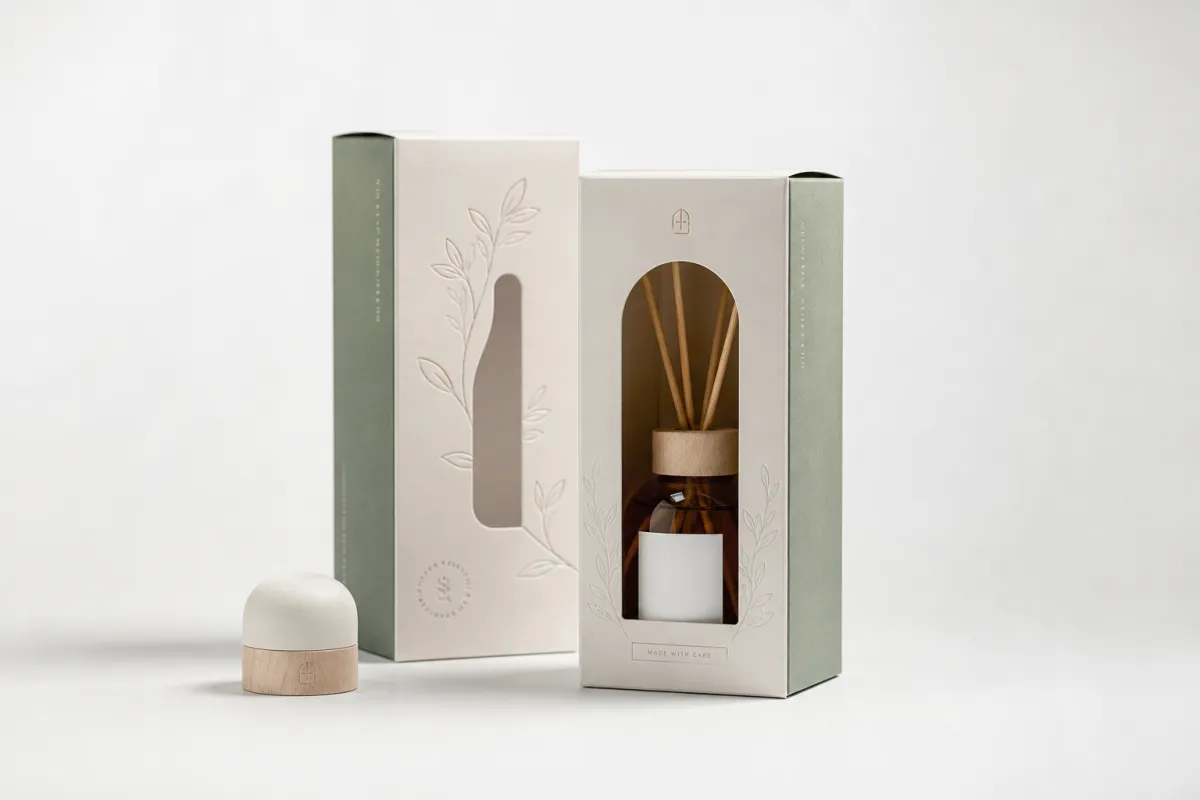
In practical terms, custom diffuser packaging boxes are the cartons, sleeves, rigid setups, inserts, and mailer-style packs built around reed diffusers and related fragrance kits. A simple version might be a printed folding carton with a paperboard insert. A more premium version could be a rigid box wrapped in specialty paper with a molded pulp or die-cut insert, plus a neck lock that keeps the glass bottle from shifting. For direct-to-consumer shipments, the same product may also need a corrugated outer shipper so the retail box arrives clean and intact.
That detail gets overlooked more often than it should. Custom diffuser packaging boxes are not decoration first. They are a protection system with a branding layer on top. The product inside often includes a glass bottle, a closure, reeds, fragrance oil, and sometimes a cap or gift add-on. Any movement inside the box can lead to scuffing, cracked necks, oil leaks, or a box that feels loose and inexpensive in the hand. If the box feels flimsy, perceived value drops before the customer even smells the diffuser.
Fragrance is unusually sensitive to packaging cues. Buyers are not just purchasing a container. They are buying atmosphere, mood, and confidence in the scent experience. That means custom diffuser packaging boxes have to communicate calm, cleanliness, and polish while still being practical. If the product is spa-like, the box should feel airy and controlled. If the brand is earthy, the materials can feel warmer and more tactile. If the line is luxury, the construction needs to feel precise and deliberate.
I have seen otherwise strong scent launches stumble because the carton looked like an afterthought. A 100 ml diffuser in a cracked, overprinted box can feel generic even if the fragrance blend is excellent. The same bottle in well-fitted custom diffuser packaging boxes can look like a premium home accessory. That is where package branding does real work: the box gives the brand promise a visible shape.
Retail and e-commerce add their own pressure. Store buyers do not want boxes that collapse on the shelf, and online teams do not want returns tied to broken glass. The real job of custom diffuser packaging boxes is to balance shelf appeal, breakage prevention, brand storytelling, and retail compliance without feeling padded or excessive. Good product packaging makes those tradeoffs look easy, but the structure behind it is usually very deliberate.
A better box does not just look expensive; it earns the right to protect the fragrance inside.
If you are evaluating custom diffuser packaging boxes for a launch, start with the conditions the package will actually face. Does it need to survive pallet stacking? Will it sit in a boutique gift aisle? Is it going into subscription kits, direct shipping, or both? Those answers guide everything from board choice to insert style to print finish, and they help prevent the common mistake of designing for photos instead of handling.
How Custom Diffuser Packaging Boxes Work in Storage, Shipping, and Retail
Custom diffuser packaging boxes have a life cycle, and the box has to perform at every stage. In the factory, the product is packed quickly and consistently. In warehousing, cartons may sit stacked in cases or on pallets for days or weeks. During transit, vibration and compression put stress on corners, inserts, and closures. On the shelf, the package has to hold its shape and present cleanly. At the point of sale, it needs to open with enough ease to feel premium, but not so loosely that the contents rattle around.
The internal fit carries a lot of the engineering load. A snug cavity, a well-cut insert, or a partitioned layout keeps the bottle from moving, which reduces scuffs and helps prevent breakage. For a reed diffuser set, I usually want the bottle, reeds, and any accessory pieces to have defined homes inside the box. That keeps the presentation orderly and makes the product feel more considered. It also helps when the closure is tall, the bottle has rounded shoulders, or the reed bundle needs a separate channel so the tips do not bend.
Different structures behave differently under pressure. Paperboard works well for lightweight retail cartons, but it can crush sooner than corrugated if a shipper is rough with the pallet. Corrugated board absorbs more abuse and is often the smarter choice for mailer-style custom diffuser packaging boxes that go straight to consumers. Rigid board, on the other hand, feels premium and resists deformation well, but it adds cost and weight. The structure should match the channel, not just the aesthetic.
Printed surfaces matter more than many buyers expect. A matte carton with crisp registration and controlled contrast can look calm and expensive. A glossy box may show fingerprints and scuffs more easily, especially on darker colors. Soft-touch coatings can feel elegant in hand, but they can pick up wear if the line is handled heavily. The retail shelf is not a controlled studio; it is a place where cartons get shifted, stacked, and touched. Strong retail packaging is built with that reality in mind.
For e-commerce, the engineering requirements tighten up. A boutique retail box might only need to survive shelf movement and occasional handling, but direct shipping adds drops, corner impacts, and package compression in transit. That is where outer shippers, inserts, and tighter internal tolerances become important. If the fragrance set is sold online, I often recommend testing the retail pack inside a corrugated shipper rather than assuming the inner carton alone will do enough. For shipping test guidance, the ISTA test standards are a practical starting point, especially when a brand wants to reduce damage claims without overpacking.
Brand experience sits inside the mechanics too. If the box opens too stiffly, it can feel frustrating. If it opens too loosely, it can feel cheap. Custom diffuser packaging boxes need a closure that feels controlled, a surface that looks clean, and an insert that presents the bottle in a stable way. That is a lot to ask of one package, which is why good custom printed boxes are really the product of structure, graphics, and handling behavior working together.
For brands that want to understand packaging categories more broadly, industry references from the Institute of Packaging Professionals are useful because they cover structure, testing, and material selection in a way that helps buyers make better decisions. That matters when your custom diffuser packaging boxes have to do more than look attractive.
Cost and Pricing Factors for Custom Diffuser Packaging Boxes
Pricing for custom diffuser packaging boxes depends on a handful of variables that interact more than people expect. Material grade, box style, print coverage, finishing, insert complexity, dimensions, and order quantity all affect the final unit price. A small shift in one of those areas can change the whole quote, especially when the order is below a full production sweet spot. That is why I always tell buyers to compare the package as a system, not just the box shell alone.
MOQ matters because setup costs do not shrink much just because the order is small. Plates, dies, sample preparation, and machine changeovers still have to happen. If you order 1,000 units, those fixed costs get spread across fewer boxes. If you order 10,000 units, the per-unit price often improves sharply. For that reason, custom diffuser packaging boxes are usually much easier to price sensibly when the order plan is clear from the start, including whether the launch is a limited drop or a permanent SKU.
Here is a practical way to think about common options. The numbers below are broad ranges because coverage, region, and spec changes can swing quotes in real production, but they are useful for planning a launch budget.
| Box Style | Typical Use | Approx. Unit Cost at 5,000 Units | Strength | Premium Look |
|---|---|---|---|---|
| Folding carton with paperboard insert | Retail shelf packs, entry-level fragrance sets | $0.28-$0.55 | Moderate | Moderate |
| Corrugated mailer with printed wrap | E-commerce shipping, subscription boxes | $0.65-$1.20 | High | Moderate |
| Rigid setup box with specialty wrap | Luxury gifting, boutique retail, premium sets | $1.20-$3.50 | High | High |
| Rigid box with foil, embossing, custom insert | Gift sets and prestige launches | $2.20-$5.50 | High | Very high |
The table makes one thing clear: a lower box price is not always the better business decision. If a cheaper structure causes breakage, replacement shipments, or refund requests, the real cost climbs quickly. That is especially true for glass-heavy fragrance products. Custom diffuser packaging boxes should be judged against damage reduction, brand impact, and launch volume, not against unit price alone.
Printing choices shape cost as well. A full flood of dark ink on a large surface often costs more than a restrained two-color design. Foil stamping, embossing, debossing, spot UV, and textured wraps each add labor or materials. None of those finishes is wrong, but they should earn their place. A small luxury cue can be enough. In many cases, a clean structure with one premium detail looks better than a box loaded with effects that fight each other. That is especially true for branded packaging where the scent itself is supposed to feel refined, not noisy.
If you want to control spend without making the box feel thin, focus on what the customer notices first. A crisp dieline, solid print registration, and a well-fitted insert often deliver more value than piling on finishes. For some brands, a folding carton with soft-touch lamination and one foil line can create the right shelf signal. For others, a rigid box with minimal graphics but precise construction is the better fit. The smartest custom diffuser packaging boxes are not always the most decorated ones; they are the ones that match the brand promise and the channel economics.
Launch math matters too. If a brand sells 20,000 units a year, spending an extra $0.40 per box may be perfectly reasonable if it reduces damage and supports a higher retail price. If the product is a short seasonal run, the calculus changes. That is why pricing conversations should include sales volume, retail target, and shipping method from the beginning. A good vendor can often suggest structural changes that lower cost without making the custom diffuser packaging boxes look downgraded.
Production Process and Timeline for Custom Diffuser Packaging Boxes
The production process for custom diffuser packaging boxes usually starts with the brief, not the artwork. The clearer the brief, the fewer surprises later. A good brief includes bottle dimensions, neck style, reed count, closure type, whether the product needs a tray or partition, and how the item will ship. If the diffuser set includes a mini sample, instruction card, or gift note, those pieces need to be in the layout from the start. Changing the internal layout after the dieline is set can cost time and money.
Once the structure is defined, the team moves into dieline selection and sampling. This is where the physical shape of the box gets tested against the product. A sample should show you how the bottle sits, whether the closure clears the top panel, whether the reeds bend, and how easy the box is to open and close. For custom diffuser packaging boxes, fit is not a small detail. A box that is slightly too loose can rattle in transit, while a box that is too tight can slow packing and frustrate customers.
After the sample looks right, artwork and proofing begin. This is where color targets, barcode placement, warning text, ingredient language, and logo alignment need to be checked carefully. Fragrance packaging often includes compliance details such as flammable-liquid warnings, recycling marks, or local labeling rules, depending on the market. If the box uses a coated finish, the ink can shift slightly, so it is worth confirming color on the actual substrate rather than trusting a screen image. That is one of those practical packaging design steps that saves headaches later.
Design time, manufacturing time, and transit time are not the same thing, and buyers who separate them tend to plan better. Design and proofing might take a few days or a few weeks depending on how many revisions are needed. Manufacturing for a simple folding carton can move quickly once approvals are final. More complex custom diffuser packaging boxes with rigid construction, specialty papers, or custom inserts take longer. Then there is freight, which can add a few more days or more depending on route and carrier.
A realistic schedule for a straightforward carton run often looks like this: brief and dieline review, 3D mockup or sample, 1-2 rounds of revisions, final proof approval, production, inspection, and shipment. If the box uses foil stamping, embossing, or a custom insert tool, add more time. If the run is tied to a seasonal launch, build margin into the schedule because factory capacity can tighten quickly. In practice, the riskiest delays usually come from artwork changes after approval, not from the machine itself.
For brands that want to validate performance beyond visual approval, it is wise to ask for transport tests aligned with ISTA methods or comparable internal protocols. Even a basic drop and vibration check can reveal whether the insert, glue, or closure needs adjustment. That is especially useful for fragrance sets that travel through parcel networks. Strong custom diffuser packaging boxes are built with that reality in mind from day one.
When a schedule is tight, the fastest path is usually the cleanest path. Clear specs, final artwork, and a known order quantity help the production team move without stop-start delays. If you are comparing custom packaging options, keep in mind that simpler structures tend to sample faster than complex premium builds. That does not mean you have to settle for plain packaging. It just means the closer your brief is to the final use case, the fewer surprises you will face once the first sample arrives.
Choosing Materials, Inserts, and Finishes for Custom Diffuser Packaging Boxes
Material choice changes how custom diffuser packaging boxes feel, perform, and cost. Paperboard is the workhorse for retail cartons because it prints well and keeps the package light. Corrugated board is better when protection matters more, especially for e-commerce or shipping-ready packs. Rigid board gives a more substantial feel and helps premium gifts hold their shape, but it carries more cost and usually needs a wrap paper or printed cover stock. The right choice depends on whether the box is meant to sit on a shelf, move through parcel networks, or create a gift experience.
Inside the box, inserts do a lot of quiet work. A well-cut insert can hold a diffuser bottle upright, separate reeds, keep a cap from scraping the sidewall, and create a cleaner reveal when the package is opened. Paperboard inserts are cost-effective and easy to print. Molded pulp brings a more natural feel and can fit sustainability goals. Foam can offer strong cushioning, but it is not always the best choice for fragrance brands that want a more eco-aware appearance. The insert should match the bottle shape, reed bundle placement, and any accessory compartments so the set feels intentional rather than improvised.
Finishes are where the emotional tone comes through. Matte lamination usually reads calm and modern. Soft-touch coating adds a velvety hand feel that many buyers associate with premium goods. Foil stamping can highlight a logo, a scent name, or a simple border without overwhelming the panel. Embossing and debossing add depth, while spot UV can create contrast on a logo or pattern. Textured wraps give rigid boxes a more tactile, crafted quality. With custom diffuser packaging boxes, the best finish is the one that supports the fragrance story instead of competing with it.
That story matters. A fresh linen scent might call for clean white space, cool neutrals, and restrained typography. An amber or oud-inspired line may benefit from deeper colors, warmer paper textures, and a more dramatic unboxing sequence. A minimalist home fragrance brand may prefer a small logo, plenty of breathing room, and an insert that disappears visually. This is where branded packaging becomes more than logo placement; it becomes a language the customer can feel.
Sustainability should be considered at the material-selection stage, not as an afterthought. Recycled content, FSC-certified board, water-based inks, and right-sized structures can all reduce waste. The FSC standard is a useful benchmark if the brand wants documented sourcing for paper-based components. In the fragrance category, sustainability is not just about checking a box. It affects how buyers perceive the brand's values, and those perceptions can carry real weight in retail and online reviews.
It is also worth being honest about tradeoffs. A soft-touch box can look beautiful, but it may show scuffs faster than a simpler matte box. A foil-heavy design can feel luxurious, but it can push the price beyond what the margin can support. A molded insert can be environmentally appealing, but it may require more testing to ensure it protects a thin-neck bottle properly. The best custom diffuser packaging boxes usually come from a clear ranking of priorities: protection first, then presentation, then cost, then sustainability targets, unless the brand strategy says otherwise.
For a practical spec checklist, I like to compare material, insert, and finish choices side by side before artwork is approved. That helps the team see where the value is going and where a small adjustment could save money. Sometimes switching from a fully wrapped rigid setup to a high-quality folding carton with one premium detail can keep the same visual effect while lowering cost and shipping weight. Other times, the premium box is justified because the product price and retail channel demand it. There is no single right answer, but there is always a right answer for a specific launch.
Common Mistakes to Avoid with Custom Diffuser Packaging Boxes
One of the biggest mistakes with custom diffuser packaging boxes is designing only for the unboxing moment and ignoring transit durability. A box can look stunning on a mockup and still fail when a parcel gets dropped on a corner or stacked under heavier cartons. Glass diffuser bottles do not forgive much movement. If the insert is weak, the cavity is oversized, or the closure is exposed, the shipping risk goes up fast. A good package should feel as stable in a delivery truck as it does in a boutique display.
Sizing errors create another common problem. Brands sometimes measure the bottle and forget the cap, the reed bundle, the top label, or the extra accessory card. That leaves too little room in the cavity or too much space, both of which create trouble. Oversized cavities let the bottle move. Undersized ones create fit issues and slow down packing. The same problem shows up with custom diffuser packaging boxes that do not account for how the product is actually assembled on the line. Small dimensional misses can become expensive when multiplied across a full run.
Graphics can work against the product too. Too much text, low-contrast color choices, or busy imagery can make a premium diffuser feel generic. If the typography is hard to read or the fragrance name gets lost, shoppers may assume the product itself is less refined. On shelf, clarity matters. In e-commerce thumbnails, clarity matters even more. That is why good custom printed boxes usually favor a disciplined layout over visual clutter.
Finish selection can be tricky as well. Some finishes look elegant in a sample room but wear badly in real handling. Dark matte surfaces can show fingerprints. High-gloss panels can reveal scuffs. Deep foil areas can pick up scratches if cartons rub in transit. That does not mean those finishes should be avoided, only that they should be chosen with the distribution channel in mind. If the box is going through a lot of hands, more durable surfaces may outperform more delicate ones, even if the delicate ones photograph better.
Another common error is skipping production samples. I understand the temptation, especially when the schedule is tight and the artwork looks finished on screen. A sample can reveal things that no file preview will show, such as a slightly loose insert, a top flap that opens too aggressively, or a barcode that lands too close to a fold. For custom diffuser packaging boxes, that single sample can save an entire run from being compromised.
Brands also sometimes forget that the box should match the scent position. A luxury fragrance wrapped in a box that looks overly busy creates tension. A simple, clean scent wrapped in a heavy, ornate structure can feel mismatched. The package should support the story, not fight it. That is one reason package branding deserves the same attention as bottle design, labels, and scent naming. The box is part of the promise.
Finally, there is the mistake of underestimating handling realities. Warehouses want efficient packing. Retailers want easy display. E-commerce teams want fewer returns. Customers want a satisfying first impression. If the custom diffuser packaging boxes do not serve all of those needs in the right order, the packaging can become a source of friction instead of value. The right approach is usually simple: define the main job first, then build the structure, then layer on visual details that help the product sell.
Expert Tips and Next Steps for Custom Diffuser Packaging Boxes
If you are starting from zero, define the packaging job in order of priority. Is protection the top concern? Shelf appeal? Shipping strength? Premium gifting? Custom diffuser packaging boxes work best when the brief is clear about which of those matters most. A box cannot be everything at the same intensity without becoming expensive or awkward, so ranking the goals keeps the design honest.
I also recommend building a simple sample checklist before final approval. Include bottle dimensions, closure height, reed count, insert fit, barcode placement, warning copy, color targets, and the shipping method. If the product is going through parcel networks, note whether the carton has to survive a drop test or a compression test. That list makes it much easier to compare samples and spot where a custom diffuser packaging boxes program might drift off spec.
Ask for a prototype or comp sample before approving production, especially if the box uses inserts, specialty coatings, or tight tolerances. This is the stage where a small issue is cheap to fix. It is also the stage where a brand can decide whether a finish feels too slick, too dull, or just right. A well-made comp sample often tells you more about the final product than a digital proof ever will. For teams comparing Custom Packaging Products, this is where the practical value becomes obvious.
Work backward from the retail date. That simple habit protects the launch calendar. If the product needs artwork approval, sample review, revisions, production, inspection, and freight, each step deserves breathing room. When the schedule gets squeezed, the risk usually lands on the custom diffuser packaging boxes rather than on the fragrance formula, which is why packaging planning should start early instead of becoming the last task before launch.
There is a better way to think about price too. Do not ask only what the box costs per unit. Ask what the box costs when a shipment breaks, when a retailer rejects a presentation sample, or when a premium gift set looks too cheap next to the fragrance inside. Sometimes the cheapest carton is the most expensive decision in the long run. Sometimes a slightly higher-cost structure lowers returns and lifts perceived value enough to justify itself many times over.
When brands get this right, the box feels easy. The bottle sits firmly. The print looks deliberate. The finish supports the scent story. The carton survives transport. The customer feels the quality before the bottle is even opened. That is the point of custom diffuser packaging boxes: they turn protection, presentation, and brand value into one package that makes sense in the hand, on the shelf, and in the shipping stream.
If you are ready to compare specs, request mockups, or pressure-test a new format, start with the product dimensions, the channel, and the budget, then choose custom diffuser packaging boxes that match the fragrance, the timeline, and the real conditions the package will face. The fastest path is usually to lock the bottle measurements, choose the shipping lane, and ask for a sample that can be handled, dropped, and opened instead of only admired on a screen.
What size should custom diffuser packaging boxes be for a standard reed diffuser set?
Measure the bottle, cap, reeds, and any accessory packaging first, then add just enough clearance for safe insertion and removal. A snug insert or cavity keeps the bottle from shifting during shipping or on retail shelves. If the diffuser includes a gift wrap, sample vial, or extra reeds, build those into the internal layout before you finalize the dieline.
How much do custom diffuser packaging boxes usually cost?
Unit cost depends mainly on material, box style, print coverage, finishes, inserts, and order quantity. Rigid boxes and specialty finishes usually cost more than folding cartons, but they can support a stronger premium position. The best quote is the one that balances price with damage reduction, branding impact, and launch volume.
What is the typical turnaround time for custom diffuser packaging boxes?
Turnaround depends on sampling, artwork approval, material availability, and production complexity. Simple cartons can move faster than boxes with custom inserts, foil, embossing, or complex structures. Build in time for proofing and revisions so the final run does not get delayed by avoidable artwork or fit issues.
Which materials work best for custom diffuser packaging boxes?
Paperboard works well for retail cartons, corrugated is better for shipping protection, and rigid board suits premium presentation. The best material choice depends on how the product will be sold, stored, and shipped. If sustainability matters, ask about recycled content, FSC options, and right-sized structures that reduce waste.
How do I make custom diffuser packaging boxes feel more premium without overspending?
Use one or two high-impact details, such as matte coating, foil accents, or embossing, instead of layering every finish at once. Keep the structure clean and precise, because good fit and sharp print often look more premium than heavy decoration. Choose materials and finishes that match the fragrance story so the packaging feels intentional, not overworked.

