Custom Drawstring Bags: Pricing, Specs, and Turnaround
Custom Drawstring Bags are simple on paper and easy to specify badly. The bag has to fit the item, close cleanly, print clearly, and survive handling without looking cheap. If those basics are right, the bag supports the product. If they are wrong, the packaging becomes the problem.
For teams comparing Custom Packaging Products, drawstring bags often solve a practical mix of presentation, protection, and reuse. They can bundle small items, reduce loose fill, and give the buyer something useful after opening. The right build depends on material, size, closure, decoration, and quantity, not on artwork alone.
Why Custom Drawstring Bags Do More Than Hold Product
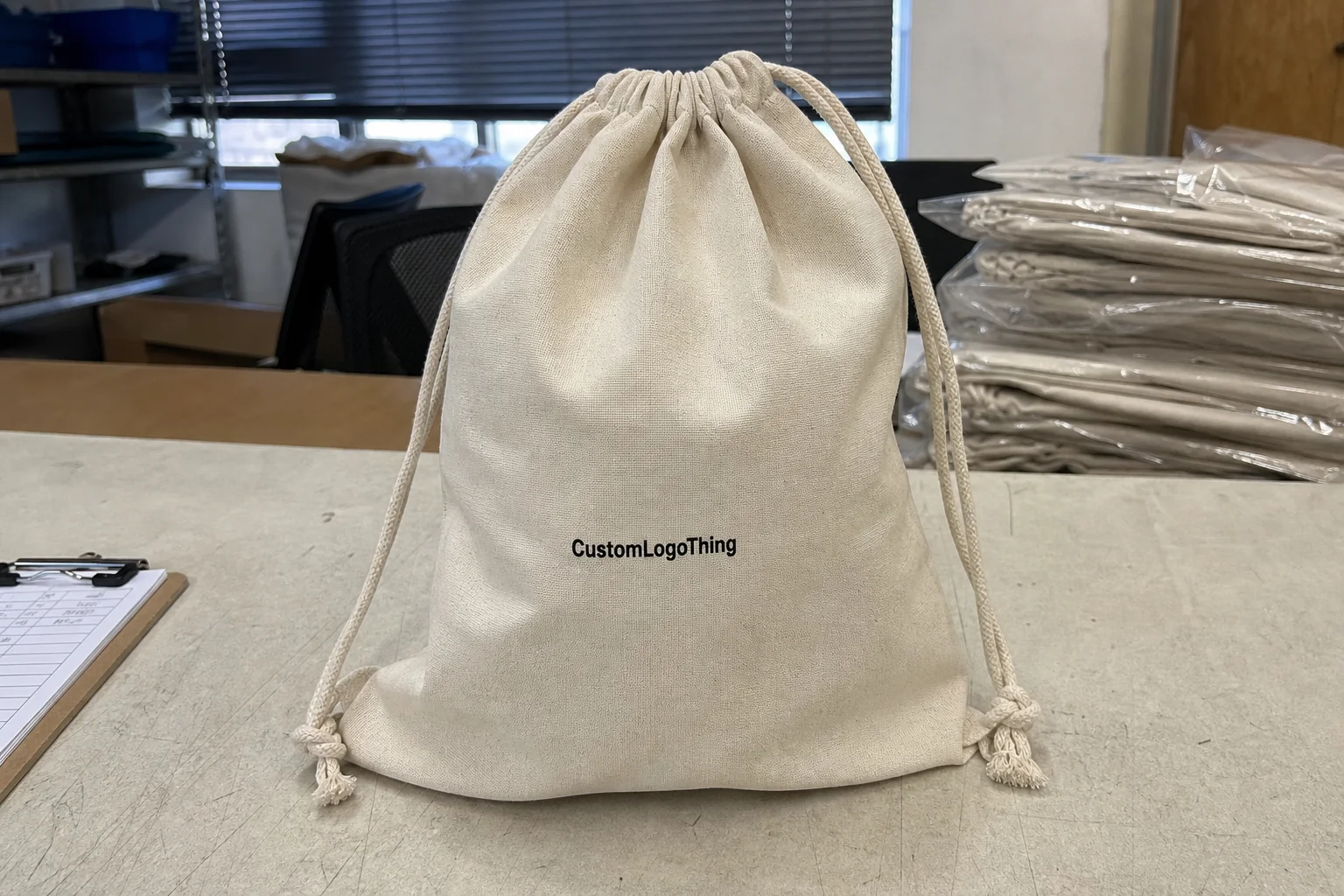
Drawstring bags are popular because they package the item neatly and keep working after the sale. That reuse can extend brand exposure at a relatively low unit cost. They are especially useful for compact, repeatable packs such as beauty samples, accessories, event kits, hospitality items, and light retail bundles.
A cinch closure changes how the product feels in hand. It keeps contents together, avoids the loose look of an oversized pouch, and makes a kit seem more deliberate. That matters when the bag is used for gifting, promotions, or small retail packaging where first impression still counts.
The limit is that a bag can look good in a proof and still perform poorly in use. If the seams pull, the opening is too narrow, or the cord feels flimsy, the customer notices immediately. A reusable bag also gets judged on comfort and durability, not just on logo placement.
The best drawstring bag is the one that still works after packing, shipping, opening, and reuse.
Materials, Closures, and Print Methods That Shape Performance
Material choice drives hand feel, durability, print clarity, and price. Common options include non-woven polypropylene, cotton, canvas, polyester, and blended constructions. Non-woven PP is usually the low-cost option for promotional runs. Cotton gives a softer, more natural presentation. Canvas adds more body. Polyester is a practical choice when durability and color consistency matter more than a natural texture.
Typical weights vary by material and use. Non-woven PP often falls around 80-120 gsm, cotton commonly starts around 6 oz, and canvas can go heavier when the bag needs more structure. Polyester is often described by denier, such as 210D or 300D, which is more useful than vague terms like "heavy-duty."
Closure style affects both usability and wear. Standard braided cord is common and economical. A better polyester cord resists fraying and feels stronger in use. Ribbon ties can work for gift packaging but are usually less suitable for heavier loads. Grommet reinforcement reduces wear at the opening where the cord moves repeatedly.
Print method should match the material and artwork. Screen printing is the usual choice for bold logos and limited color counts. Heat transfer can handle more detail but changes the hand feel. Digital decoration is useful for multicolor artwork, while woven labels or sewn patches fit premium cotton and canvas bags better than heavy ink coverage.
For sustainability claims, keep wording precise. FSC certification applies to paper components such as hang tags, inserts, and cartons, not to every textile bag. If the program includes paper packaging, verify it through FSC rather than making broad claims. If the bag will travel through a distribution network, ask whether the construction was considered against handling stress, not just a desk sample. Packaging teams often reference test protocols from ISTA when the item will be boxed, stacked, or shipped through multiple channels.
Inspection should cover seam alignment, stitch density, cord pull resistance, print registration, and basic rub or adhesion checks. If the bag is reusable, ask for a sample that has been packed and closed several times. A fresh sample can hide problems that show up immediately in actual use.
Sizing and Load Requirements for the Right Build
Start size selection with the product, not the catalog. Measure the widest and tallest points, note any edges or hard corners, and add just enough room for easy insertion and removal. A good fit usually means the item sits naturally inside the bag rather than forcing the fabric into awkward folds.
Gusset depth matters more than many buyers expect. A flat bag works for folders, apparel, or slim accessories, but a bottle or boxed kit often needs more depth so the seams are not forced open. Cord placement also matters. If the opening is too narrow, the top bunches unevenly and the closure feels awkward even when the artwork is correct.
Load requirements should be defined early. A giveaway bag may only need to hold a few ounces, while a retail presentation bag may need to carry one to two pounds without stretching or distorting. That difference changes the fabric weight, seam allowance, cord diameter, and sometimes the opening reinforcement.
Think of the build in three checks: fit, closure, and carry. Fit means the item enters without force. Closure means the top cinches evenly and stays shut. Carry means the bag still feels secure after repeated handling. If any one of those fails, the packaging loses value.
Cost, MOQ, and Quote Drivers You Need to Price In
Pricing is usually driven by five things: material, size, print coverage, construction complexity, and quantity. A small non-woven run with one-color print will usually cost less than a cotton or canvas bag with multiple print positions, reinforced openings, or custom cord details. More customization means more labor, more setup, and more chances for the quote to move.
MOQ has a direct effect on unit cost. Smaller runs carry more setup per bag, so the price per unit rises faster than many buyers expect. A simple order of 500 pieces may cost noticeably more per unit than 3,000 or 5,000 pieces, even when the bag looks identical on paper.
| Material | Typical unit cost tendency | Feel and appearance | Best fit |
|---|---|---|---|
| Non-woven polypropylene | $0.18-$0.40 at medium volumes | Light, practical, clean for simple logos | Promotional packaging, event kits, giveaway items |
| Polyester | $0.22-$0.48 at medium volumes | Durable, consistent color, easy to handle | Sport accessories, utility kits, repeat-use bags |
| Cotton | $0.35-$0.85 at medium volumes | Natural hand feel, more retail-ready | Gift sets, wellness brands, premium product packaging |
| Canvas | $0.55-$1.20 at medium volumes | Structured, heavier, stronger presentation | Higher-end retail packaging and reusable bags |
The table is only a starting point. Print colors, logo size, gusset shape, cord upgrades, hem style, packaging requirements, sampling, freight, and color matching can all move the final landed cost. Ask vendors to quote against the same spec sheet so you are comparing like for like.
Production Steps and Turnaround Timeline
The usual production flow is quote confirmation, artwork review, proof approval, material prep, printing, assembly, quality check, and shipment. If the order is simple and the artwork is final, the process moves quickly. If there are revisions, missing files, or unclear color targets, the schedule slows before production starts.
Artwork is one of the most common bottlenecks. Low-resolution files, unoutlined fonts, vague Pantone targets, and incorrect print-area assumptions can trigger extra rounds of review. A logo that looks fine on screen can become a problem once it is mapped to a curved bag panel or narrow front face.
Typical turnaround for Custom Drawstring Bags often lands around 12-15 business days after proof approval for standard materials and straightforward decoration. Special fabric, multiple print positions, woven labels, or added finishing can extend the schedule. Build in time for approvals and freight, and ask early whether partial shipments are realistic.
Shipment planning matters as much as production. Air shipping can help on urgent orders, but it raises landed cost quickly. Ocean freight is more economical for larger quantities, but only works when the timeline allows it. If inserts, outer cartons, or printed sleeves are part of the launch, the slowest component should define the release date.
Common Mistakes That Cause Weak Bags or Slow Orders
The first mistake is guessing on size. Buyers sometimes choose a dimension that sounds close enough, then discover the product only fits if the bag stretches or bulges awkwardly. That leads to poor presentation and a closure that works harder than intended.
The second mistake is under-specifying the structure. Thin cord, weak seams, and light fabric can create failure points even if the bag looks attractive in a proof. A bag that handles a sample pack well may fail when loaded with a heavier retail set.
The third mistake is leaving artwork ambiguity unresolved. Missing font outlines, incorrect color targets, low-resolution logos, and artwork that does not match the print window can all stall the order. Once production has started, correction gets expensive quickly.
If the proof is rushed, the order usually pays for it later. The cheapest mistake is the one caught before print starts.
Skipping a sample can also backfire. Handle length, seam placement, print position, and closure feel are easier to correct before production than after thousands of units are finished. Another common miss is ignoring how the bag will be closed by actual users. If the cord is too short, too slick, or too thin for gloved hands, the bag can be technically correct and still feel frustrating.
Expert Tips and Next Steps for a Cleaner First Order
Start with a one-page spec sheet. Include dimensions, material, closure type, print method, artwork count, quantity, and target delivery date. That single sheet does more to speed quoting than a long email thread because everyone is working from the same details.
Ask for a sample or a detailed proof if the bag will be used for retail packaging, gifting, or any situation where presentation matters. In those cases, the finish matters as much as the function. A mockup can hide a lot, while a physical sample usually exposes problems immediately.
Keep the final file package organized for reorders. Save the approved artwork, the confirmed color callout, the material spec, the closure details, and any notes about print placement. That habit saves time later and reduces the risk of accidental changes on the next run. It also helps with package branding consistency across different product launches.
Check the things that are easy to verify: stitch alignment, cord length, hem quality, logo sharpness, and whether the printed area sits where the product actually needs it. If a bag is meant to be reused, test it as a user would: fill it, close it, carry it, open it, and close it again.
The cleanest buying process is simple: define the use case, lock the specs, compare like-for-like quotes, and move ahead only when the build matches the product and the timeline. For teams building a broader kit, reviewing Custom Packaging Products alongside the bag spec helps keep the insert, outer carton, and presentation layer aligned.
What materials are best for custom drawstring bags?
Choose the material based on use. Non-woven polypropylene works well for lightweight promotional packaging, cotton or canvas gives a more premium feel, and polyester is a practical choice when durability matters. The fabric weight should match the load so the bag keeps its shape and does not feel flimsy in use.
How do I choose the right size for custom drawstring bags?
Measure the product first, then add enough room for easy insertion, removal, and closure without leaving the bag oversized. If the item has an awkward shape, check gusset depth and seam stress rather than relying on width alone. A physical sample is the safest way to confirm the fit.
What affects custom drawstring bags pricing the most?
Size, material, print complexity, and order quantity usually have the biggest impact on unit cost. Setup, sampling, freight, and rush timing can also change the final number even when the bag design looks simple.
How long does production usually take for custom drawstring bags?
Turnaround depends on the style, decoration method, and how quickly proofs are approved. Standard runs often take about 12-15 business days after proof approval, but you should add time for artwork revisions, sampling, peak-season load, and shipping.
What artwork files work best for custom drawstring bags?
Vector files are usually best because they keep edges sharp and scale cleanly for print or embroidery-style decoration. If you only have a raster file, send the highest-resolution version available and confirm the print area before approval so the design is not stretched or cropped unexpectedly.

