Custom Egg Carton Labels: What They Need to Survive
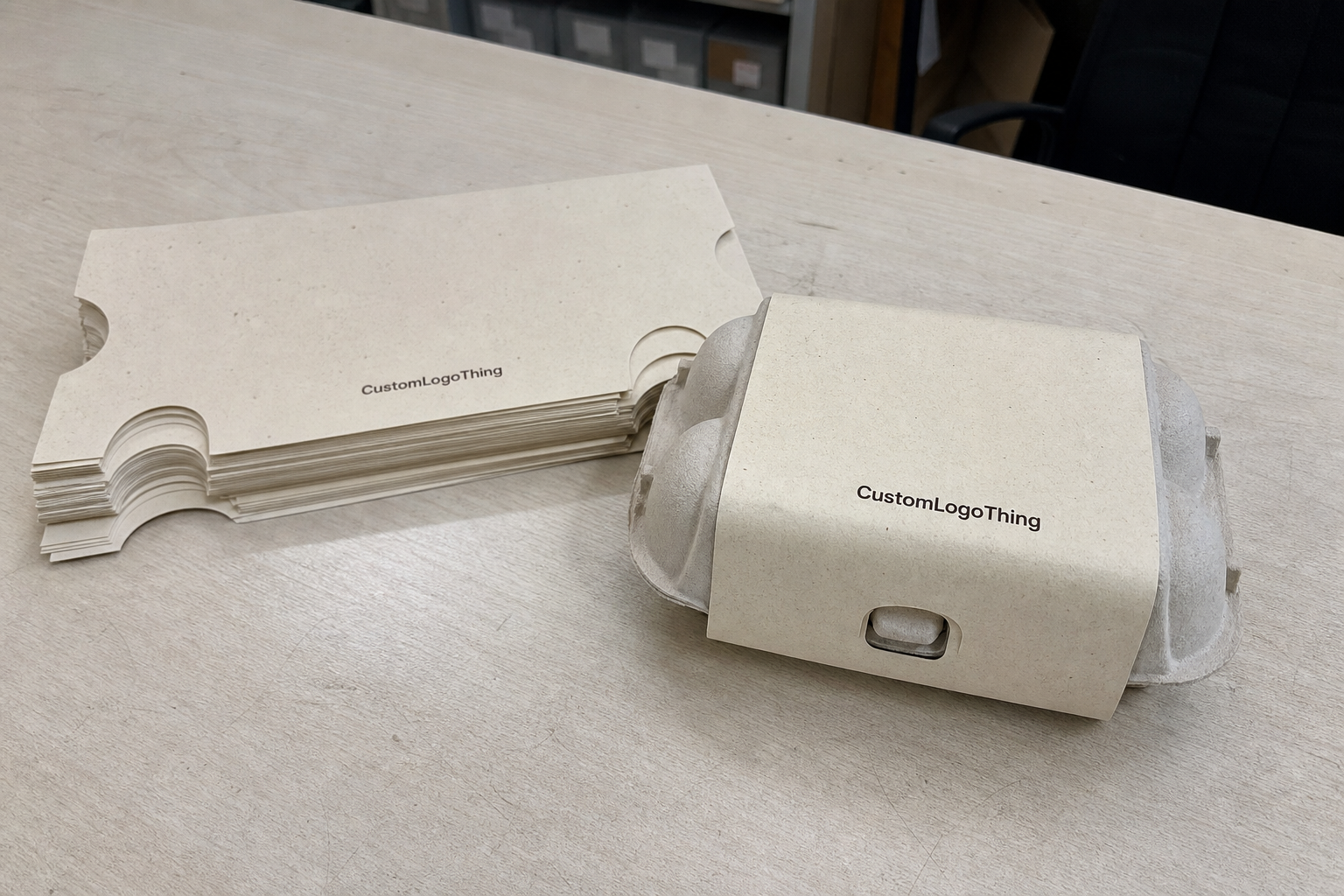
The first surprise for many buyers is that custom egg carton labels usually fail because of the carton surface, not because the artwork is wrong. Texture, dust, cold storage, and stacking pressure do more damage than a poor color choice ever will, and those conditions should shape the spec from the first quote request.
Recycled fiber cartons, molded pulp cartons, and coated paperboard cartons all behave differently. A label that holds perfectly on a smooth paperboard lid may begin lifting on a rough molded pulp carton within days if the adhesive is too light or the face stock is too stiff for the surface.
That matters because egg cartons serve more than one purpose. Some are sold through grocery retail, some move in farm-direct channels in smaller lots, and some support seasonal promotions or private-label egg brands that need the carton to stand out quickly. In those cases, the carton is part of package branding, not just a container.
From a buyer’s point of view, this is a packaging specification decision. The label has to work with the carton surface, the cold chain, the print area, and the way the pack will be handled in real conditions. If those details are matched well, the label looks clean and stays put. If they are guessed, the reprint bill usually arrives later than the mistake.
“A good egg carton label is boring in the best way. It stays flat, stays readable, and keeps the brand looking intentional after handling, chilling, and stacking.”
That is why experienced buyers treat custom egg carton labels as a material spec, not a decoration order. The right stock, adhesive, and placement choices make a bigger difference than most first-time shoppers expect.
Materials, Adhesives, and Finishes That Stick Cleanly
Label material should match the carton surface because porosity and roughness change how the adhesive wets out. On molded pulp, a paper label with a stronger tack adhesive often performs better than a slick film if the surface is dusty or uneven. On coated board, buyers have more room to choose a smoother face stock with a cleaner print image.
Here is the practical breakdown most teams compare:
- Paper labels – natural look, lower cost, good for recycled fiber cartons.
- Coated paper labels – sharper print, better image pop, moderate scuff resistance.
- Film labels – better moisture resistance and durability, but they can feel less rustic if that appearance matters.
Adhesive choice matters just as much. A permanent adhesive is usually the safest option for cartons that will sit in refrigerated storage, because it is designed to stay down after application. A removable adhesive can help when labels need to be repositioned during packing, but it usually gives up some long-term grip. A high-tack adhesive is often the right move for rough, porous cartons, though it reduces the ability to lift and reset the label if placement is off.
Finish changes both appearance and handling. A matte finish reduces glare and helps barcodes or QR codes scan more predictably under bright store lighting. Gloss adds shine and can make color fields look richer. Soft-touch feels premium, but on egg cartons it only makes sense when the brand wants a more upscale retail presentation and the carton surface is smooth enough to avoid obvious edge wear.
Placement should be planned before the order is approved. The best zone is usually the flattest area on the lid or front panel, with enough margin to avoid folds, ribs, hinge lines, and vent openings. If a label crosses a flex point, it will eventually show it.
For buyers building a broader product packaging system, it can help to coordinate labels with Custom Labels & Tags and other Custom Packaging Products so the carton, shipping pack, and shelf presentation feel like one family.
| Option | Best For | Tradeoff | Typical Impact on Cost |
|---|---|---|---|
| Paper label + permanent adhesive | Recycled fiber cartons, natural branding | Less moisture resistance | Lowest |
| Coated paper + high-tack adhesive | Retail cartons, better shelf image | Higher material cost | Moderate |
| Film label + premium adhesive | Cold storage, abrasion, condensation risk | Less rustic appearance | Higher |
Cost, Pricing, and MOQ for Custom Runs
Pricing for custom egg carton labels depends on more than print count. The main drivers are quantity, label size, shape complexity, material, adhesive type, finish, and whether the job needs die-cutting or variable data. A simple rectangle on paper stock costs less to produce than a custom shape with a metallic finish and serial numbers.
MOQ changes the math quickly. Smaller runs often look expensive because setup, prepress, proofing, and press calibration are spread across fewer units. A 5,000-piece order might land around $0.18-$0.28 per label depending on coverage and finishing, while a 25,000-piece order can drop on a unit basis because fixed costs are absorbed better. That range is not a promise; it is the kind of spread buyers usually see when they compare apples to apples.
One common mistake is comparing quotes only by the printed label line. A fair quote should show whether it includes setup, dieline creation, proof revisions, plates if needed, packing, and shipping. If one supplier bundles those items and another does not, the lower number can be misleading.
For small brands, a short-run order can be the right move even when the unit price is higher. It reduces inventory risk, lets the team test adhesion on the actual carton, and avoids getting stuck with outdated legal copy or a seasonal design that no longer fits the line. Larger buyers usually get better value only after the spec is stable and repeatable.
Here is a practical quote checklist that saves time:
- Carton dimensions and usable label area
- Application method: hand-applied, semi-auto, or machine-applied
- Artwork files and brand color references
- Target quantity and reorder expectation
- Cold storage, humidity, or condensation exposure
- Barcode or QR code requirements
Buyers planning a broader branded packaging program should also ask how the egg carton label relates to the rest of the pack. If the carton color, shipping case, and shelf label clash, the branding can feel disjointed even when each individual piece prints correctly.
For reference, sustainability or paper sourcing claims should be checked against recognized standards such as FSC. If your team is comparing substrate options or recycled content claims, the Forest Stewardship Council is a useful place to verify what the certification actually covers.
Ordering Process, Proofs, and Lead Time
The cleanest orders usually follow the same path: gather carton specs, share artwork, confirm stock and adhesive, then review the digital proof before production starts. That sounds simple, but the job gets easier only when the buyer sends accurate measurements and a clear understanding of how the label will be applied.
A physical carton sample helps more than people expect. If the label must cross near a seam, clear a fold, or sit on a slightly curved panel, a sample tells you immediately whether the fit is generous enough or too tight. A flat dieline alone cannot show how the carton flexes when packed, stacked, and handled.
Lead time usually breaks into stages:
- Prepress — artwork review, dieline check, and file corrections.
- Proof approval — digital proof sent for signoff, sometimes with a revised color target.
- Printing and finishing — press run, die-cutting, and any coating or lamination.
- Packing and shipping — counting, boxing, and transit to the final dock.
For simple runs, a typical turnaround is often 12-15 business days from proof approval. If the job needs custom dies, matched brand colors, or unusual packaging requirements, the schedule can stretch. Rush work is possible in some cases, but only when the artwork is production-ready and the spec is already locked down. Otherwise, the rush just moves the delay earlier in the process.
Proofing deserves more attention than many buyers give it. A digital proof can confirm layout, copy, and die line placement, but it cannot fully predict how a white ink layer will sit on kraft stock or how a matte varnish will affect scan contrast. For that reason, buyers who are sensitive to color or barcode performance should ask for a sample or press-check-style confirmation whenever the quantity and timeline justify it.
For buyers who want to understand broader print standards, the ISTA site is a useful resource when packaging will be shipped, stacked, or tested for transit damage. Even though egg carton labels are small, the carton they sit on still lives in a supply chain.
Step-by-Step Guide to Specifying a Print-Ready Label
If you want the label to print right the first time, start with the usable flat area, not the overall carton size. Measure the exact panel where the label will sit, then map the folds, vents, hinge lines, brand marks, barcode zone, and any required legal text. That is the part many teams skip, and it is usually where the trouble starts.
Choose the size with room to breathe
Leave a margin at the edges. Oversized artwork often wrinkles or lifts when the carton flexes, especially on molded pulp. In practice, a label that is slightly smaller and centered well will look more intentional than one that tries to cover every inch of the panel.
Most production teams prefer a little extra clearance over a perfect edge-to-edge fit, because cartons are not rigid cartons in the corrugated sense; they are molded, compressed, and handled by hand. A millimeter or two of forgiveness can make the difference between a neat presentation and a label that catches on the lid seam every time the carton is opened.
Build the artwork for print, not screen
Use the correct bleed, safe area, resolution, and color mode. For offset or digital print, 300 dpi is the usual baseline for images, and spot colors should be called out clearly if brand consistency is sensitive. If a barcode or QR code must scan in-store, keep contrast high and avoid placing it too close to edges or textured folds.
Small text deserves special attention. Fine copy that looks crisp on a monitor can fill in on uncoated stock or disappear against a busy background. If nutrition text, grade marks, or farm details matter, give them more breathing room than a typical promotional label would get.
Confirm the application method
Hand-applied labels can tolerate a little more forgiveness in placement, while machine-applied labels need tighter tolerances on liner release, label spacing, and edge cut accuracy. If the carton will be labeled in line, tell the supplier that up front. That single detail changes the spec more than people realize.
Machine application also changes the acceptable label format. Roll direction, gap spacing, unwind direction, and core size can all affect whether the label runs cleanly on the line or starts stopping the operator every few hundred pieces. Those details are easy to overlook in a first order and expensive to ignore later.
Test on the actual carton stock
A prototype on the real carton is the safest way to validate appearance and adhesion. Something that looks perfect on a monitor can behave very differently on rough board, especially when the label has a large solid color field or a narrow border that shows any misalignment immediately.
If your brand is also building custom printed boxes for other product lines, keep the layout logic consistent. Repeated visual cues help the entire shelf set feel connected, which supports both recognition and trust.
Common Mistakes That Cause Peeling, Wrinkles, or Misreads
The classic adhesive mismatch is still the number one problem. A label that works well on smooth board can fail quickly on dusty recycled fiber or on cartons stored in a cool, damp room. That is especially true when the carton surface has loose fiber or manufacturing dust that keeps the adhesive from biting cleanly.
Humidity and refrigeration change label behavior in ways buyers underestimate. Cold rooms can make some adhesives feel weaker during application, then condensation can attack the bond later. On the other hand, warm packing rooms can create curl or early edge lift if the label is applied before the carton and label have acclimated.
Another frequent problem is placing critical artwork across seams, ridges, or hinge lines. Once a carton is folded and reopened, the stress point can distort text, logos, and scan codes. I have seen otherwise solid-looking jobs become hard to use simply because the design crossed the one spot it should have avoided.
Low contrast is just as costly. Tiny type, crowded nutrition panels, and barcode zones squeezed into a corner make the carton hard to read and harder to trust. A label does not need to shout, but it does need clear hierarchy. On retail packaging, clarity usually sells faster than decoration.
Overprinting too much information onto a small label is another common trap. A carton can only carry so many priorities before the design starts to feel cramped, and cramped labels are more likely to get misread by customers or scanned badly at checkout. If the carton already prints some information directly on the board, the label should complement that system instead of repeating everything.
If you want a quick quality check, compare your proof against these three questions:
- Will the label stay flat after refrigeration?
- Does the artwork avoid fold lines and flex points?
- Can the barcode or QR code scan with a normal in-store reader?
For environmental claims tied to paper sourcing or recycled content, check guidance from the EPA when relevant. Buyers often assume any “eco” statement is interchangeable, but compliance language is more exact than that.
Expert Tips and Next Steps Before You Place the Order
If you are placing your first run of custom egg carton labels, order a sample round or short pilot run before scaling up. That one step tells you whether the adhesive grips the carton, whether the finish reads the way you expected, and whether the label still looks good after handling and storage. It is a small spend compared with a full reprint.
Also, check the label under the real conditions it will face. A label that looks clean in a warm office can behave differently in a cold room, during shipping, or after a carton has been stacked for a few days. The best test window is short, but it should include the actual environment.
Before you place the order, align the artwork with the business goal. Are you trying to improve sell-through on shelf, create a cleaner premium look, support farm branding, or track lots internally? The answer affects the material, layout, and finish. A premium matte label can help a boutique egg brand. A tougher coated stock might be better if the pack is handled a lot. Neither choice is right in the abstract.
Keep an eye on practical production limits, too. Very dark solids show handling marks more easily, metallics raise cost without helping readability, and ultra-thin borders tend to reveal slight placement variation. Sometimes the cleanest result is the one that makes fewer graphic demands on a small carton.
Here is the shortest path to a clean order:
- Measure the carton and identify the label zone.
- Choose the surface: lid, front panel, or another flat area.
- Collect artwork, barcode files, and brand references.
- Request a proof and review the dieline carefully.
- Confirm stock, adhesive, finish, and quantity before production.
Do that, and custom egg carton labels usually print right the first time, which is exactly what buyers want: less trial and error, fewer rejected cartons, and a cleaner brand presence on shelf and in transit.
FAQ
What material works best for custom egg carton labels on recycled fiber cartons?
A label with a strong tack adhesive usually performs better on rough, porous recycled fiber because it can grab the texture instead of sitting loosely on top. A matte or uncoated paper stock often looks natural on fiber cartons, while a coated stock can add durability if moisture or scuffing is a concern. The best choice depends on the carton surface, storage conditions, and how much shelf polish the brand wants.
How much do custom egg carton labels usually cost per order?
Price usually depends on quantity, label size, shape complexity, material, finish, and whether the run needs special die-cutting or setup work. Smaller orders carry a higher unit cost because proofing and production setup are spread across fewer labels. A useful quote should show what is included, such as setup, proofs, and shipping, so buyers can compare offers accurately.
What is the typical turnaround for custom egg carton labels?
Turnaround usually starts with proof approval, then moves into print, finishing, packing, and shipping, so the approval step has a direct effect on delivery date. Simple runs move faster than jobs that need custom dies, color matching, or revised artwork. Rush timing is possible in some cases, but only if the spec is already locked down and the artwork is production ready.
Can custom egg carton labels stick to textured or molded pulp cartons?
Yes, but the adhesive has to match the carton surface, because rough molded pulp behaves very differently from smooth coated board. A sample test is important since texture, dust, and compression can change how well the edge seals and how long the bond lasts. Testing the exact carton stock is the safest way to avoid peeling or edge lift after packing.
What should I send for a fast proof on custom egg carton labels?
Send carton dimensions, the label placement area, artwork files, target quantity, and any requirements tied to moisture, refrigeration, or barcode scanning. If possible, include a sample carton or a photo of the print area so the proof can reflect real-world fit instead of an approximate guess. Clear instructions up front reduce revisions and usually shorten the path from quote to production.