What custom favor stickers actually are—and why they do outsized work
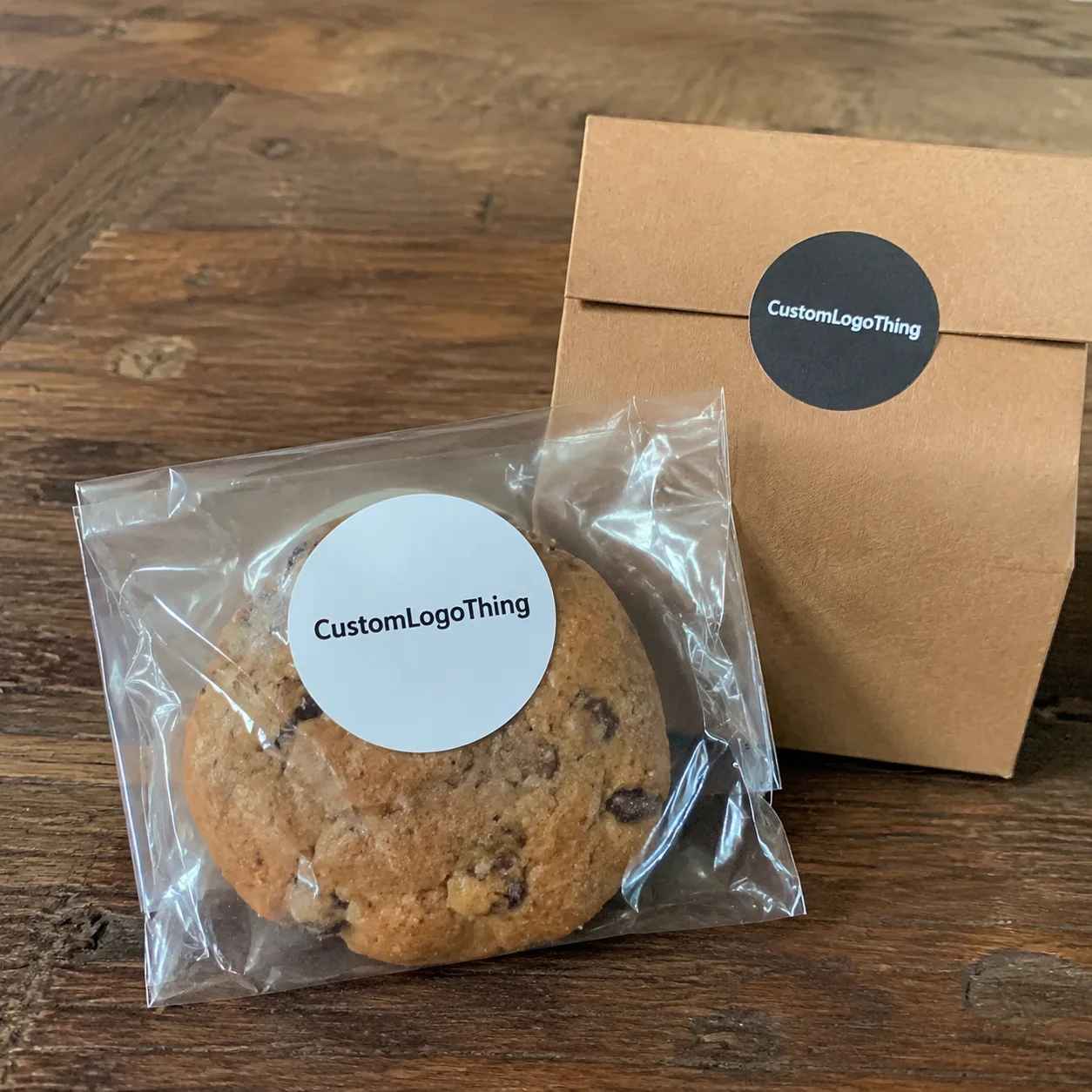
Custom Favor Stickers are small printed labels used to seal, decorate, or personalize party favors, gift bags, jars, boxes, and envelopes. They can be plain, ornate, understated, or bright, but their job is usually the same: make a small package feel finished instead of improvised.
That sounds simple, yet the effect is easy to underestimate until you see it on a table. A plain favor bag looks like packaging. Add a properly sized sticker and the same bag suddenly feels planned, coordinated, and tied to the event. For weddings, showers, birthdays, corporate gatherings, holiday gifts, and fundraisers, that little shift matters because the favor is often the last physical detail a guest touches before leaving.
These stickers also sit at the intersection of decoration and production. Some are pure presentation pieces. Others are doing real work as seals, closures, or identifying labels. A decorative sticker might only need to look good on a lid. A seal sticker needs the right adhesive and enough surface contact to hold a bag shut. A label used on jars or retail-style packaging may need larger type, more breathing room, or better durability. Buyers run into problems when they assume every round sticker behaves the same way. It does not.
From a presentation standpoint, the value is in first impression, theme cohesion, and photo readiness. If favors are displayed on a table, they will be photographed. If they are photographed, they become part of the event memory. Small graphics carry more visual weight than people expect, which is why custom favor stickers are often one of the highest-return items in a low-cost package presentation.
There is also a practical side to size and layout. A sticker that is too small can make a design look faint or accidental. One that is too large can overpower the container and make the whole favor feel clumsy. The sweet spot usually comes from matching the label to the object, not from forcing one artwork size across every package in the room.
How custom favor stickers work in real use
The basic workflow is straightforward: choose a size and shape, upload artwork, approve a proof, Print, and Apply the stickers to the favors. The part that makes or breaks the result is usually the proof stage. That is where a 2-inch sticker becomes a clean finishing touch or turns into a cramped blur with text no one can read.
Material choice matters more than many buyers expect. Paper stickers are usually the lower-cost option for dry, indoor use. They work well on envelopes, wrapped candy, bakery boxes, and favor bags that will be handled once or twice. Waterproof film or vinyl is the better choice for jars, chilled items, and anything likely to face condensation, friction, or repeated handling. If the favor will sit in a warm room and be opened later, paper is often enough. If it may be near ice buckets or cold drinks, choose a more durable stock.
Adhesive strength affects both the assembly experience and the final presentation. A sticker that peels too easily slows down packing and may lift at the edges. One that grips too aggressively can wrinkle thin paper or grab before the placement is aligned. For high-volume event assembly, moderate tack is usually the most forgiving. You want secure, not a wrestling match with a roll of labels while people wait for the table to be finished.
The surface matters just as much as the sticker itself. Smooth glass, coated boxes, matte paper bags, and flexible plastic all behave differently. Curved jars can cause labels to bridge or crease. Soft paper stock can wrinkle if the adhesive is too strong. Slick surfaces often need a stronger adhesive than plain kraft paper. Good sticker production accounts for that friction instead of pretending all packaging behaves alike.
For buyers, the useful preparation list is short: logo or monogram, event wording, color preferences, quantity, deadline, and the exact container measurements if the sticker needs to fit a specific spot. If the order is part of a broader packaging set, it helps to think about the label alongside the box, bag, or wrap so the pieces feel like they belong together. A sticker that looks polished on its own can still clash if the rest of the materials are off.
Cost, pricing, and MOQ: what changes the quote
Pricing for custom favor stickers is driven by quantity, size, shape complexity, material, finish, and whether the design uses a simple one-color layout or a full-color print with specialty effects. Quantity has the biggest impact on unit price. Once setup costs are spread across a larger run, the per-piece cost drops quickly. Small orders do the opposite, which is why a tiny job can feel surprisingly expensive even when the actual sticker is simple.
In practical terms, buyers usually see three broad pricing bands:
| Tier | Typical Use | Approximate Unit Cost | What You Usually Get |
|---|---|---|---|
| Budget | Small indoor favors, simple seals | $0.05-$0.12 | Paper stock, basic shapes, straightforward print |
| Mid-range | Weddings, showers, branded events | $0.12-$0.25 | Better adhesive, cleaner finish options, stronger presentation |
| Premium | Moisture exposure, custom die-cuts, specialty look | $0.25-$0.60+ | Vinyl or specialty stock, custom cutting, upgraded finish |
Those are working ranges, not fixed price points. A small paper seal is not the same job as a die-cut sticker on waterproof film with gloss lamination. MOQ matters too. For larger events, minimums may be easy to meet. For a birthday party with only a few dozen favors, low-volume pricing can rise fast. That is normal setup economics, not a pricing error.
Special finishes add cost in predictable ways. Matte and gloss are usually the most accessible options. Soft-touch, foil, clear film, and precision die-cutting tend to push the quote higher. Rush production can also change the math, especially when the schedule leaves little room for proof revisions or reprints. If you are comparing quotes, make sure the size, stock, finish, and quantity are identical across vendors. Otherwise, the numbers will not be telling you the same story.
One more practical note: the least expensive option is not always the least expensive choice. A label that lifts at the edges, prints too faintly, or arrives late can cost more in labor and replacement than a slightly better stock would have from the start. Price matters, but so does the cost of fixing a poor result.
Process and timeline: from proof to delivery
The production path usually runs through artwork prep, proofing, revisions, print setup, production, finishing, and shipping. In theory, that sequence is simple. In practice, the timeline is only as clean as the file you send and the speed with which you approve the proof.
For simpler orders, production can often move in about 3-7 business days after proof approval. More complex jobs, higher quantities, specialty materials, or Custom Die Cuts may need closer to 10-15 business days. Shipping adds its own clock on top of that. Rush options may exist, but they rarely remove the need for clear artwork and final wording. They just compress the window and make mistakes more expensive.
Proofs are where most avoidable problems get caught. Check spelling, event dates, cut lines, bleed, and the spacing around the text. If the design feels crowded on the proof, it will feel more crowded in print. If the type looks tiny on screen, it will not improve when it is reduced to actual sticker size. Press operators can print what is approved, but they should not be expected to rescue a file that was never ready.
“The fastest order is the one with final artwork, clear measurements, and a realistic deadline. Everything else adds delay.”
Timeline problems usually come from the same few places: incomplete files, last-minute edits, and shipping distance. A buyer who sends a screenshot of a logo and asks for delivery by the weekend is asking for a lot from a process that depends on setup, calibration, and physical output. The safest way to keep a project on track is to leave room for one proof round and a buffer for shipping. That buffer is much cheaper than emergency production.
If the favors are part of a larger event build, coordinate the label timeline with the rest of the packaging order. Boxes, tags, tissue, and inserts often have their own production windows. When those pieces are not aligned, one finished item ends up waiting on another, and the whole setup feels rushed even if each individual piece is fine.
Choosing the right size, shape, and finish
Sticker size should follow the container, not the other way around. That sounds obvious, but it is one of the most common ways a good design gets weakened. A beautiful monogram on a label that is too small turns into a speck. A huge sticker on a tiny favor bag makes the package feel crowded. Measure the actual surface area first, then fit the design to it.
Round, square, rectangle, and custom die-cut shapes each have a different use case. Round stickers are common for lids, seals, and monograms because they feel tidy and balanced. Squares work well for a more modern, structured look. Rectangles are useful when the wording needs a little more room. Custom die-cuts make sense when the silhouette is part of the identity, like a crest, a product outline, or an icon that should not be boxed into a standard shape.
Finish changes both the look and the way the sticker reads in photos. Matte softens reflections and tends to look elegant on muted palettes. Gloss makes colors feel brighter and often suits playful or high-contrast designs. Clear film can look excellent on glass or transparent packaging, but only when the artwork has enough contrast to stand out. Soft-touch feels premium, though it may be more finish than a simple favor needs unless the rest of the presentation is already in that range.
Placement matters as much as finish. Some labels work best centered on a lid. Others do better as a corner accent, a bag seal, or a wraparound strip. The right choice depends on how the favor is opened and what part of the package you want to emphasize. If the label is supposed to be read from across a room, simplicity wins. If it is supposed to feel like a subtle signature, less ink and more space usually look better.
One useful rule: choose the simplest shape that still supports the design. A custom cut can be beautiful, but it is not automatically better than a clean circle or square. Straightforward shapes are often faster to apply, easier to align, and less likely to look fussy once the favors are assembled.
Common mistakes buyers make
The first mistake is over-detailing the artwork. Thin fonts, hairline borders, and tiny script are risky on small formats. At 1.5 to 2 inches wide, a sticker needs breathing room. If too much is packed into the design, the result can look muddy even when the file looks sharp on a monitor.
The second mistake is skipping the measurement step. A favor box is not the same as a jar lid. A bag seal is not the same as a wraparound label. Measure the real surface where the sticker will sit, then size it with enough margin for placement and handling. Guessing usually leads to Labels That Look either stingy or oversized.
Another problem is choosing the wrong material for the surface. Paper stock is fine for dry indoor use, but it can struggle on cold, humid, or oily packaging. Vinyl or stronger adhesive can be a better fit for chilled jars, glass, or slick plastic. If the favors will be handled repeatedly, the material should be chosen for durability rather than appearance alone.
File setup mistakes are also common: missing bleed, low resolution, tight safe areas, and color expectations that do not translate well to print. Many of these issues can be caught in proofing, but they are easier to fix before the artwork is approved. Timing creates its own mistakes too. Leaving labels until the last minute usually raises costs and reduces flexibility, which is exactly when buyers need both.
There is a final category that is less obvious but just as important: mismatched expectations. Some buyers want the sticker to act as the entire visual system, the closure, the label, and the centerpiece. That is too much for a small format. A good favor sticker supports the package. It does not have to explain the whole event by itself.
Expert tips for better-looking stickers
Use one strong focal point. A monogram, event name, date, or clean icon is usually enough. If the sticker has to be read at a glance, every extra word lowers clarity. The best custom favor stickers tend to be the ones that feel immediate and easy to understand.
Match finish to the favor material. Matte works well for soft, elegant packaging and quieter color palettes. Gloss suits brighter graphics and bolder designs. Clear can look polished on glass or transparent wrap, but only if the artwork has sufficient contrast. On white paper packaging, clear film can disappear more than buyers expect.
When the order is large or time-sensitive, ask for a digital proof and, if possible, a sample before full production. That small step helps catch sizing issues, contrast problems, and adhesive behavior before the entire run is printed. It is especially useful when the sticker is part of a broader presentation that includes other printed materials, because a label that looks right alone can still feel off next to boxes, tags, or tissue.
- Plan the sticker around the package, not the other way around.
- Keep a small overage for waste, testing, and last-minute additions.
- Ask for quantity pricing at several breakpoints before committing.
- Use high-resolution artwork with clean contrast and enough breathing room.
- Choose the simplest shape that supports the design.
If you are comparing suppliers, look at what is actually included: proofing, cut precision, finish options, shipping speed, and reprint policy. Those details matter more than the headline price. A cheap quote with weak support often becomes expensive the moment the deadline gets tight.
Next steps for ordering the right stickers
Start with the container. Measure the favor box, jar, bag, or envelope and decide exactly where the sticker will sit. Then estimate the total quantity, including a few extras for test application, damage, and inevitable mistakes. That small amount of planning saves time later.
Gather the artwork, wording, color preferences, and deadline before requesting quotes. If the favors will face moisture, cold, or heavy handling, compare at least two material and finish options. Paper may be enough. Film or vinyl may be the safer choice. The right answer depends on how the favors will actually be used, not on what sounds premium in a product description.
Confirm turnaround time, shipping time, and reprint policy before approving the order. A supplier that prints quickly but ships slowly is still slow from your point of view. Build a buffer into the schedule so there is room for a proof correction or a replacement run if needed.
Well-made custom favor stickers do a quiet but important job: they make the favor look intentional, coordinated, and finished without crowding the rest of the presentation. Measure first. Proof carefully. Order early enough to avoid rushed decisions. That is usually what separates a clean result from a frustrating one.
What size are custom favor stickers usually best for small party favors?
Common sweet spots are around 2 inches for seals and 2.5 to 3 inches for larger favor boxes or jars. The best size depends on the package shape, not just the artwork. Measure the actual surface area first so the sticker does not look tiny or crowd the container.
How much do custom favor stickers cost per piece?
Unit cost drops as quantity goes up, while small orders usually cost more per sticker. Material, finish, and die-cut shape can move pricing up or down. Ask for quotes at a few quantity tiers so you can compare real cost differences.
How long does production usually take for custom favor stickers?
Standard production is often a few business days to about two weeks, depending on complexity and quantity. Proof approval, artwork changes, and shipping time can extend the total timeline. Rush options may be available, but they usually cost more.
What artwork works best on custom favor stickers?
Simple logos, names, dates, and bold icons print best at small sizes. Tiny text, thin lines, and busy illustrations can lose clarity. High-resolution files with clean contrast make proofing and printing much easier.
Can custom favor stickers stick to glass, plastic, or paper favors?
Yes, but the right adhesive and material matter a lot. Paper labels work well for dry indoor use, while stronger adhesives or vinyl are better for slick or chilled surfaces. Test the sticker on the actual packaging if the favor will face moisture, cold, or handling.


