What custom food tissue paper actually does for packaging
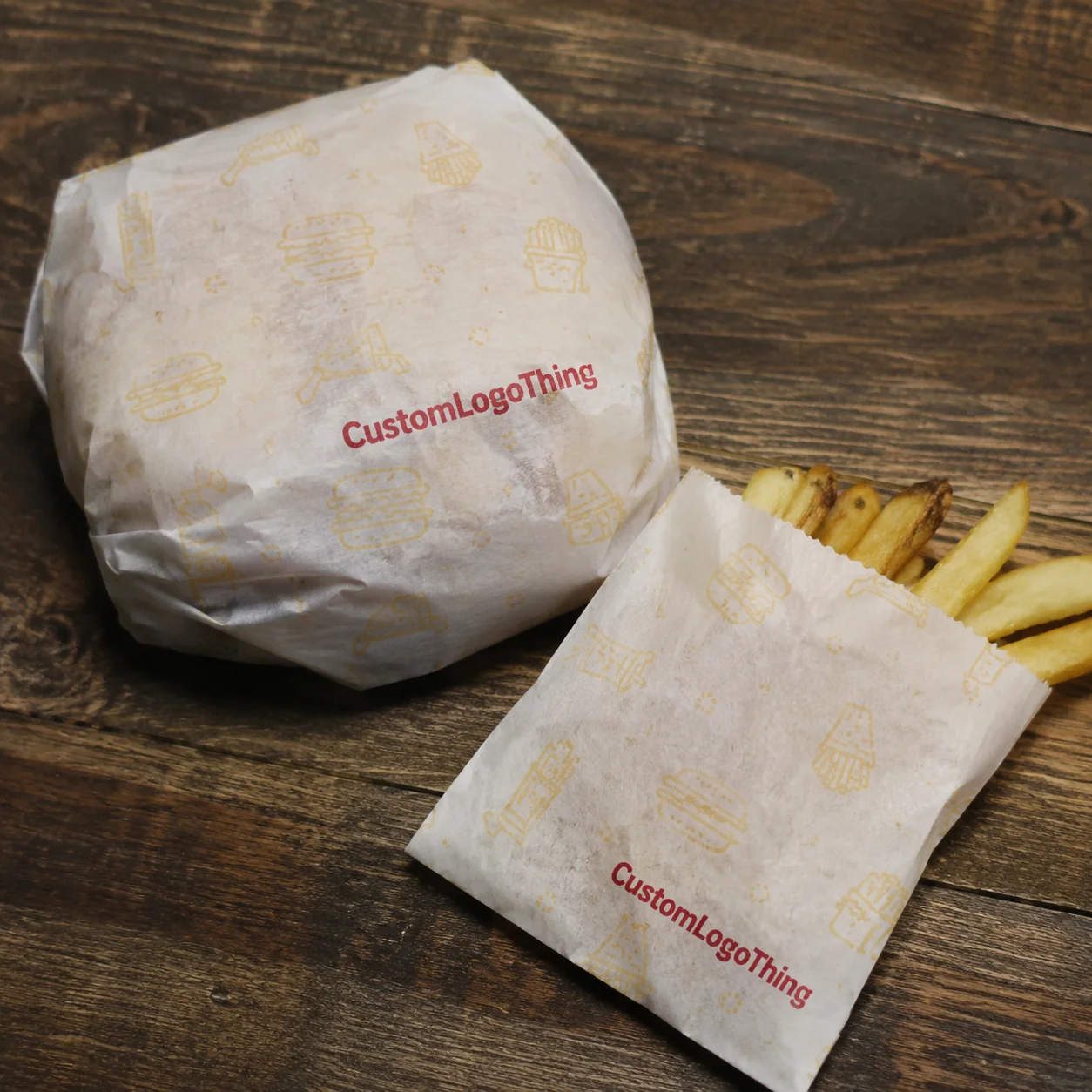
Custom food tissue paper does more than decorate a package. It wraps sandwiches, separates pastries, lines trays, and keeps grease from bleeding into the outer box or bag. In food service, that kind of protection matters just as much as the branding, because a clean package is part of the product experience the customer notices before the first bite.
One of the most common mistakes buyers make is assuming any nice-looking tissue will work. Decorative tissue and food-use tissue are not interchangeable just because they both fold easily and take ink well. Once a sheet has to touch a ready-to-eat item, absorb moisture, or sit against oil, the material has to be chosen for performance rather than appearance alone.
For cafes, bakeries, deli counters, and gift food brands, tissue does three jobs at once. It adds branding, it makes handling cleaner, and it supports the package without adding much cost per order. That is why a plain kraft box wrapped with a printed sheet can feel more finished than a box that is technically more expensive but visually unconsidered. The packaging seems intentional, and that small signal changes how the food is perceived.
The best result usually comes from restraint. A sheet does not need to be loud to be effective, and it certainly does not need to be overloaded with graphics to feel branded. For most operations, the right custom food tissue paper is the one that holds up in service, folds neatly, and looks consistent from one order to the next.
How the print and material process works
The production process is simpler than many first-time buyers expect, but each step has a cost or quality impact. It starts with artwork setup, where the printer checks the repeat size, bleed, safe zones, and logo placement. After that, the print method is matched to the design and quantity. Then the sheets are printed, cut, counted, packed, and shipped. If any of those pieces are poorly defined, the final result usually shows it.
Print method influences both look and price. One-color printing is often the cleanest and most economical option for custom food tissue paper. Two-color or spot-color printing gives more personality without pushing the job into a premium bracket too quickly. Full-color printing can look sharp, but it tends to be less forgiving on thin tissue stock, especially when the design uses gradients, small text, or fine detail. Exact color matching also deserves attention, because ink on tissue rarely behaves exactly like ink on coated paper.
Material choice matters just as much as the artwork. Tissue weight, opacity, and grease resistance all affect how the sheet performs once it reaches the kitchen or display case. A lighter sheet can feel elegant and fold easily, but it may show print-through or tear sooner. A slightly heavier sheet usually handles better in food service and tends to have a more dependable hand feel. If the food is oily or warm, grease resistance becomes part of the specification rather than a nice extra.
Artwork limitations are where many projects go off track. Very small type can blur. Fine lines can break up. Repeating patterns need enough spacing so the design still looks deliberate once the sheet is folded around a sandwich or tucked into a pastry box. A tissue pattern should survive motion, handling, and imperfect trimming. That is not a flaw in the material; it is the reality of printing on something thin and flexible.
For brands that already use custom printed boxes, labels, or takeaway bags, the tissue should sit inside the same visual system. The logo treatment, color family, and print density should feel related across the packaging set. When those pieces align, the brand feels planned instead of assembled in pieces.
| Option | Best for | Typical effect | Quote impact |
|---|---|---|---|
| One-color repeat logo | Bakery bags, deli wrap, cafe liners | Clean, readable, easy to reproduce | Usually lowest |
| Two- to spot-color design | Mid-range branded packaging | More depth without overcomplicating production | Moderate increase |
| Full-color artwork | Retail gifting, premium launches | Higher visual detail and stronger shelf presence | Highest |
| Heavy print coverage | Bold package branding | Stronger visual presence, less airy feel | Often higher due to ink usage |
For compliance and handling, buyers should ask whether the tissue is specified for the intended use and whether food-contact documentation is available where needed. That is especially important when the sheet will touch ready-to-eat food or sit near greasy items. Industry references from organizations such as Packaging Consortium resources can help buyers understand common food-packaging expectations, while local regulations still govern the final decision.
Custom food tissue paper cost, MOQ, and quote factors
Pricing for custom food tissue paper comes down to a few practical variables: sheet size, paper weight, number of print colors, ink coverage, and quantity. A quote for 5,000 sheets can look very different from a quote for 20,000 sheets even when the artwork is unchanged, because the setup work is spread over fewer or more units. Smaller runs almost always cost more per sheet. Larger runs usually bring the unit price down in a noticeable way.
That basic pricing structure matters because many buyers judge the order only by the per-sheet number. If the tissue is for a seasonal launch, a limited gift box, or a small-format test, a higher unit price may still make sense if it prevents extra inventory from sitting unused. For everyday service, the calculation changes. A few cents per sheet may not sound dramatic, but across thousands of orders it adds up quickly.
In practice, short-run orders often fall somewhere around $0.08-$0.25 per sheet, depending on size, quantity, and print complexity, while larger runs can move lower. Premium paper grades, heavy print coverage, or unusual sheet dimensions can push the price up. If a quote seems far below that range, check what was included. Paper weight, packing format, and setup fees are often the first things hidden behind a low headline number.
To get a useful quote, have the basic specifications ready:
- Sheet dimensions
- Estimated quantity
- Number of ink colors
- Food use case: bakery, sandwich, deli, retail gift, or takeaway
- Whether grease resistance is required
- Packaging format: sheets, ream packs, or boxed units
MOQ varies by print method and supplier, but the minimum usually reflects the fact that custom production has fixed setup costs. That is not a penalty; it is the economics of making a unique printed item. A small cafe may be able to justify a low-volume run if the tissue is part of a launch or seasonal menu. A high-volume sandwich shop will usually want a larger order so the unit economics make sense over time. Ordering too little can force a reprint sooner than expected. Ordering too much can tie up cash and storage space for months.
Custom food tissue paper quotes also change when the design uses dense coverage, precise Pantone matching, or a nonstandard sheet size. A simple repeating logo on a standard sheet is easier to price than a full-background pattern with tight registration. If you are comparing options, ask for two versions: one practical and one premium. The difference between them usually makes the tradeoffs obvious.
Step-by-step: ordering, proofing, and production timeline
The ordering process should be predictable. Start with the product brief: what food is being wrapped, how the tissue will be used, what size is needed, and what kind of presentation the brand wants. Then submit the logo file and any layout instructions. Vector artwork is usually the safest format because it scales cleanly. A screenshot is not enough, even if it looks fine on a laptop.
Next comes the digital proof. This is where the supplier shows the repeat, layout, color placement, and sheet dimensions before production starts. Review it at actual size, not just as a quick visual check. Spelling, spacing, repeat alignment, and safe zones all need attention. If the tissue will be folded around food or tucked into a box, the design has to work after handling, not just on a flat proof.
Turnaround depends on artwork readiness, order size, and the production queue. A standard run often takes 10-15 business days after proof approval, though rush service may be available for simpler jobs. More complicated artwork, custom finishes, or larger quantities can extend that timeline. Shipping adds another layer, especially when the order is crossing regions or has to coordinate with a launch date.
The process usually looks like this:
- Quote request and spec review
- Artwork submission
- Digital proof creation
- Buyer approval
- Production and cutting
- Packing and shipment
Approval is the point where the clock really starts. Not when the quote is requested, and not when the logo is first sent. Once the proof is approved, revisions become expensive. One round of changes is normal. Multiple rounds usually mean the project brief was incomplete from the start.
If the tissue is part of a larger packaging system that needs to survive shipping, compression, or repeated handling, it helps to think beyond the sheet itself. Packaging testing standards from groups such as ISTA can be useful when the paper sits inside a box or mailer that also has to perform well in transit.
Choosing size, finish, and print coverage that fit the food
Start with the food, not the logo. A sandwich wrap needs a different sheet size than a pastry liner or a retail gift insert. Smaller sheets usually work for cookies, individual bakery items, and folded presentation layers. Larger sheets make more sense for deli trays, boxed sandwiches, or layered packaging inside custom printed boxes. If a sheet is too small, it looks cramped and does not cover well. If it is too large, you are paying for paper that never gets used fully.
Finish is a functional choice that often gets described as a style choice. A lighter, more breathable sheet can feel softer and look cleaner around delicate bakery items. A stronger sheet gives better hold and is less likely to wrinkle badly during packing. If the food is oily, choose material that is clearly intended for grease resistance. For dry products or presentation-focused use, appearance can take a slightly bigger role. The point is not to make tissue look luxurious for its own sake. The point is to make it useful and decent-looking.
Print coverage changes the tone of the packaging. A subtle repeating logo often feels more refined than a crowded sheet with graphics pushed across every inch. Heavy ink coverage can create a stronger visual impression, but it can also make the tissue feel less breathable and less restrained. For many brands, a border print or a sparse repeat works better than an all-over pattern. The tissue should support the food, not compete with it.
A useful way to think about fit is by application:
- Bakery boxes: medium-sheet tissue, light repeat, moderate opacity
- Sandwich wraps: larger sheets, grease resistance, simple logo repeat
- Deli trays: wider format, durable sheet, strong print contrast
- Retail gifts: cleaner print, softer visual pattern, presentation-focused finish
Subtle branding usually ages better than aggressive branding. A well-spaced logo repeat or border print tends to stay readable when the tissue is folded, crumpled, or tucked into the corner of a box. Buyers who care about package branding usually want the paper to feel like part of the system. The tissue should reinforce the product, not distract from it.
Common mistakes buyers make with food tissue orders
The easiest mistake is choosing decorative tissue that is not suited to actual food use. A sheet can look fine in a sample and still perform poorly once it meets grease, steam, or repeated handling. The second mistake is sending artwork that is too detailed for the material. Thin lines, tiny type, and low-contrast colors often disappear on tissue, especially after folding. If the logo depends on delicate detail, simplify it before print.
Another common issue is misjudging quantity. Underordering leads to reprints and, sometimes, slightly different production batches that are not ideal for consistency. Overordering ties up budget and storage. Neither one is appealing once the invoice arrives. The better approach is to look at monthly usage, seasonal swings, and whether the same tissue can work across more than one menu item or packaging format.
Price-only buying is another trap. A cheaper sheet that wrinkles badly, smudges, or tears too easily ends up costing more in wasted time and weaker presentation. That becomes obvious in service, where staff need packaging that works quickly and consistently. Customers may not know why a package feels less polished, but they notice the difference immediately.
A few failure points show up again and again:
- Choosing the wrong paper weight for oily foods
- Using a repeat pattern that crowds the logo
- Ignoring safe zones and bleed during artwork setup
- Ordering without a proof approval process
- Assuming all suppliers use the same food-contact specs
Expert tips for better branding and smoother reorders
Design for repeatability from the beginning. Keep one master file with the approved colors, sheet size, repeat pattern, and version notes. That may sound tedious, but it prevents a surprising amount of confusion later. If you reorder six months from now, you want the next batch to match the first one without a search through old folders for the file named something like final-v7-really-final.
Save a sample sheet and write the specifications on it. Sheet dimensions, paper weight, print method, and Pantone references if you used them should all be easy to find. Standardizing the file and sample trail makes future orders easier to confirm, especially when the tissue is part of a larger set of branded packaging pieces.
Testing the sheet on the actual product is one of the smartest things a buyer can do. Wrap the real sandwich. Line the real bakery box. Fold the tissue the way staff will use it during service. That test reveals more than a flat proof ever will. Simple, high-contrast artwork usually looks better in real use than a busy design that depends on perfect presentation.
“The best tissue order is the one that disappears into the workflow: it fits the product, prints cleanly, and keeps up with service.”
If the tissue has to sit inside a broader branding system, keep the visual language consistent across boxes, bags, labels, and wraps. The logo treatment, spacing, and color family should feel related, not competing. Good packaging rarely begs for attention. It earns it by working well and looking coherent.
FAQ
What is custom food tissue paper used for in packaging?
It wraps or separates food while adding branding to bakery boxes, deli trays, takeaway bags, and Retail Gift Packaging. It also helps create a cleaner presentation and can reduce direct contact between food and the outer package.
Is custom food tissue paper safe for direct food contact?
Only use tissue that is specified for the intended food-contact application. Ask for material and compliance details before ordering if the paper will touch greasy or ready-to-eat foods.
How much does custom food tissue paper usually cost?
Cost depends on sheet size, print colors, paper grade, and quantity. Larger orders lower unit cost, while short runs and heavy ink coverage usually cost more per sheet.
What is the usual turnaround time for custom printed tissue paper?
Timeline typically includes proof approval, production, packing, and shipping. Standard runs often take 10-15 business days after proof approval, though artwork complexity and quantity can extend that window.
What should I prepare before requesting a quote for custom food tissue paper?
Have your logo file, sheet dimensions, estimated quantity, and print color preferences ready. Also share how the tissue will be used so the supplier can recommend the right material and finish.