A small accessories brand can spend more on empty space than on packaging. Put 500 bracelets, soap bars, wax melts, or gift cards into oversized rigid boxes, and the costs start multiplying: warehouse cube, shipping cartons, void fill, slower packing, and staff time spent making a loose product look intentional. That is the practical reason many retail buyers order pillow boxes wholesale. The curved folding carton gives lightweight products a gift-ready shape without the storage burden of bulky setup boxes.
The buyer is not purchasing a novelty silhouette. The buyer is purchasing a structure that ships flat, assembles quickly, reduces packaging weight, and makes a low-ticket product feel finished on a shelf or inside an order. The commercial case is simple: match the box to the product, keep the specification disciplined, and avoid paying for strength or finishes the item does not need.
Why Pillow Boxes Wholesale Solve a Real Retail Math Problem
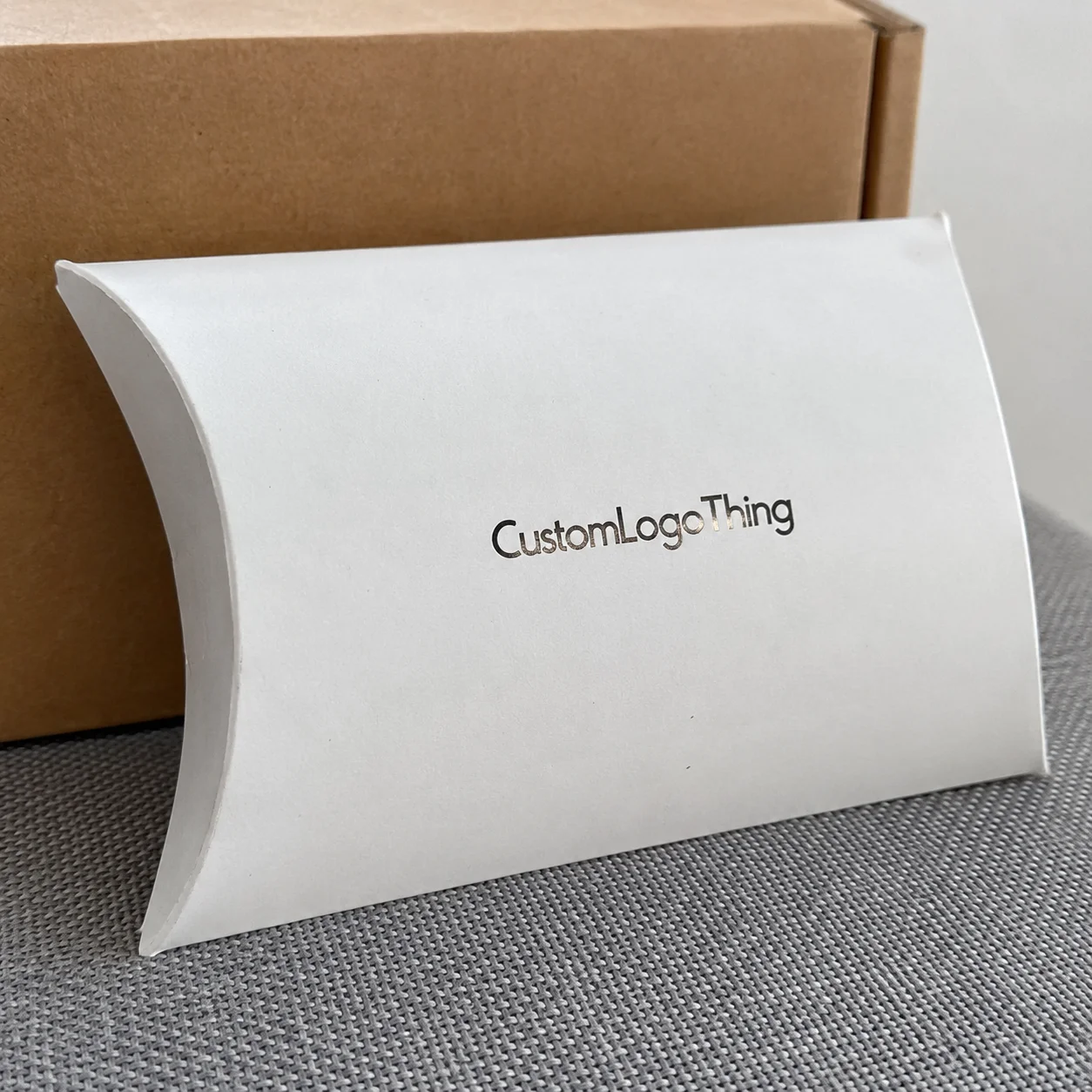
Retail packaging becomes a design decision only after the math works. A rigid gift box may look excellent, but if the product weighs 2 ounces and the box is mostly air, the buyer is paying extra for board, freight, storage, and slower fulfillment. Pillow cartons approach the problem differently. They store flat, pop into shape with hand pressure, and use curved end flaps rather than a separate lid and base.
In practice, custom pillow boxes are strongest for small, lightweight items: jewelry, soaps, candies, apparel accessories, cosmetics samples, gift cards, votive candles, promotional kits, hair clips, USB drives, and event favors. A common retail run may use 300gsm to 400gsm paperboard, depending on size and product weight. Very small favors can sometimes use lighter stock. Cosmetics bundles, dense candies, or heavier accessories usually need more stiffness so the curved panels do not bow.
The savings are not only in the unit price. Flat-packed bulk pillow packaging can reduce backroom clutter because hundreds of cartons can sit in a shallow shipper until needed. Assembly is quick enough for seasonal packing. A packer presses the sides, folds one curved flap, loads the product, and closes the opposite end. That matters when 1,000 holiday units must be packed in two days, not spread across two quiet weeks.
Packaging buyer reality: the cheapest box is not always the lowest-cost package. If staff must tape weak flaps, replace crushed cartons, or repack orders, a few cents saved per unit can disappear in labor.
There are limits. Pillow boxes are presentation cartons, not crush-resistant shipping containers for heavy glass, fragile electronics, or products that need rigid protection. Those items usually need inserts, corrugated mailers, protective cartons, or a different structure. Used correctly, Wholesale Gift Boxes in a pillow format make small products easier to store, faster to pack, and more appealing at checkout.
Product Details Buyers Should Confirm Before Ordering
A pillow box is a folding carton with curved tuck flaps on both ends. It is produced from a flat dieline, printed, die-cut, scored, and shipped flat in most wholesale orders. The packer presses the long sides inward, creating the familiar rounded shape. Simple on the packing table. Less simple in production.
The details behind that shape decide whether the order works smoothly on a retail counter or causes problems in fulfillment. Retailers usually care about shelf appeal and brand consistency. Subscription brands care about packing speed and repeatability. Event planners want uniform presentation across 250, 500, or 2,000 guest favors. E-commerce sellers want lightweight branded packaging that can sit inside a padded mailer or corrugated shipper. These use cases look similar, but they push different decisions on board grade, coating, closure strength, and finish.
Material choice is the first checkpoint. SBS paperboard gives a bright white surface for full-color graphics, clean skin tones, and more predictable brand color. Kraft stock suits natural soaps, candles, organic snacks, and handmade goods where the brown paper look supports the product story. CCNB can be cost-effective for promotional or budget-sensitive runs, though buyers should review the print surface and reverse side carefully. Specialty papers add texture, pearl effects, metallic finishes, or premium tactile cues, but they also change cost, lead time, and sometimes fold behavior.
Customization can be restrained or elaborate. Common options include CMYK printing, PMS color matching, foil stamping, embossing, debossing, spot UV, matte lamination, gloss lamination, soft-touch finish, window cutouts, ribbon holes, hang tabs, and custom die-cut shapes. Buyers comparing related packaging structures can review Custom Packaging Products before locking the carton style.
Closure matters more than many buyers expect. Tuck flaps are efficient for light products, but heavier items may need adhesive dots, sleeves, belly bands, or internal trays. If the product shifts inside the cavity, the finished box can bulge on one side or open during handling. Before requesting a quote, send product dimensions, product weight, desired finish, order quantity, shipping destination, deadline, and any retail compliance needs such as barcode placement or hang-tab requirements.
Size, Board, Printing, and Finish Specifications
Pillow box sizing is less forgiving than it looks. The flat dieline does not equal the usable product cavity. Curved panels take up internal space, and the flaps need enough overlap to close without crushing the item. Buyers should provide actual product length, width, height, weight, and packing orientation. If the product includes tissue, a card, a ribbon, a sample pouch, or a bundled accessory, measure the packed product, not only the bare item.
For light products under roughly 100 grams, thinner paperboard may work. For cosmetics, candles, dense candies, or bundled accessories, heavier stock is often safer. A typical custom retail pillow carton may fall around 300gsm to 450gsm, though the right choice depends on span, curvature, grain direction, finish, and the amount of flex a brand will tolerate. Large pillow boxes need more stiffness than small favor boxes because the curved panels carry a longer unsupported span.
Specification review should cover internal fit tolerance, flap overlap, score strength, grain direction, print-safe area, bleed, coating compatibility, and display requirements. Does the box need to stand in a bin? Hang from a peg? Sit inside a subscription mailer? Survive a retail associate opening and closing the flap several times? Each answer changes the risk profile.
| Specification Choice | Best Fit | Typical Cost Impact | Buyer Watchout |
|---|---|---|---|
| SBS paperboard, 350gsm | Retail cosmetics, jewelry, bright printed graphics | Moderate | Confirm scuff resistance if using dark ink coverage |
| Kraft paperboard, 300gsm to 400gsm | Natural soaps, candles, organic gifts, handmade products | Low to moderate | White ink and pale colors may need special handling |
| Digital printing | Short runs, samples, launch testing | Higher per unit at low volume | Color matching may be less exact than offset |
| Offset printing | Larger wholesale quantities and premium retail graphics | Lower per unit at scale | Setup costs make tiny runs less efficient |
| Foil, embossing, or spot UV | Gift packaging, holiday collections, premium kits | Moderate to high | Registration and added production steps affect timeline |
Printing method should follow order size and brand expectations. Digital printing is useful for sampling, small batches, and design testing. Offset printing is stronger for larger Custom Printed Pillow boxes, tighter color control, and premium finishes. Standards such as ASTM test methods for paper and paperboard properties, along with distribution testing protocols from ISTA, are useful reference points when packaging must survive defined handling conditions.
Finishes create trade-offs. Matte looks refined but can show scuffs, especially on black, charcoal, forest green, or deep navy artwork. Gloss makes colors pop but may feel too commercial for natural products. Soft-touch feels premium and photographs well, but it increases unit cost and can mark if handled roughly. Uncoated kraft supports an earthy brand position, though color vibrancy is lower than on coated white board.
One more detail is easy to miss: score quality. The curved fold is the whole structure. If the board cracks at the score, the package looks cheap before anyone reads the logo. If the score is too weak, the carton fights the packer and springs open. The cheapest board can become expensive if it fails in the fold.
Pricing, MOQ, and Unit Cost Drivers
Wholesale pillow box pricing depends on quantity, size, board grade, print coverage, finish, die complexity, window material, foil or embossing, carton packing method, and shipping destination. Two boxes that look similar online can price very differently once the specification is real. A small kraft box with one-color printing and no coating is not the same cost structure as a full-color SBS carton with soft-touch lamination, foil, and a PET window.
MOQ logic is not arbitrary. Custom printed orders carry fixed costs before the first finished box is packed: dieline preparation, prepress review, print setup, plate or calibration work, finishing setup, die-cutting setup, quality checks, and packing. A 500-piece order may be reasonable for a launch or market test. A 2,500-piece or 5,000-piece order often lowers the unit cost because setup is spread across more cartons.
As a practical benchmark, simple small pillow cartons may land in a broad range such as $0.18 to $0.45 per unit at several thousand pieces. Premium finishes, larger sizes, short runs, window patching, specialty papers, or rush schedules can push the unit price higher. Freight and material markets also matter. No responsible supplier should quote a serious order without dimensions, artwork status, quantity tiers, material preference, coating, embellishments, delivery address, and deadline.
Cost control does not have to produce cheap-looking packaging. Standardize dimensions across several SKUs. Limit foil or spot UV to one focal area rather than covering the entire panel. Use one-color printing on kraft for natural products. Order by seasonal forecast instead of emergency replenishment. Choose flat-packed delivery unless there is a strong reason to receive assembled cartons.
Custom Logo Things supports buyers who want to compare quantity breaks and practical production choices through Wholesale Programs. The best quote is not always the lowest unit price. It is the quote that balances presentation, durability, reorder consistency, and landed cost.
Process and Timeline From Dieline to Delivery
The ordering process should be clear before artwork begins. A typical custom pillow box order moves through consultation, specification review, dieline creation, artwork placement, proofing, optional sampling, production approval, printing, finishing, die-cutting, gluing if required, flat packing, quality inspection, and shipping. Miss one approval point, and the schedule can slip.
Buyers can shorten lead time by doing the unglamorous work early. Provide vector artwork. Confirm Pantone colors before proofing. Approve the dieline quickly. Avoid changing from matte to soft-touch after prepress work has started. Decide whether the quantity is 1,000, 2,500, or 5,000 before the quote is finalized. Small delays compound because printing and finishing slots are scheduled around approved specifications.
Sampling options vary. Digital mockups are fastest and useful for checking general layout. Flat proofs help verify artwork placement, barcode location, panel orientation, and bleed. Physical pre-production samples are best when fit, board feel, window placement, foil registration, or premium finishes matter. For a high-visibility retail launch, a physical sample can prevent a costly production surprise. For a simple promotional favor, a digital proof may be enough.
Timeline depends on artwork readiness, production volume, finish complexity, and shipping destination. Simple unprinted or digitally printed runs move faster. Custom dies, foil stamping, window patching, embossing, specialty coatings, and physical sampling add production steps. Freight planning should include carton count, delivery location, customs if applicable, and retail launch dates.
Flat-packed pillow boxes reduce shipping volume compared with assembled boxes, but they still need protection. Paperboard does not like moisture, pallet crush, or rough handling. If cartons arrive warped or dented, the packer inherits the problem. Once the first run is approved, build a reorder calendar. Repeat orders usually move faster because the dieline, artwork, material, and finish specifications are already locked, although seasonal demand spikes can still stretch schedules.
Quality Checks That Prevent Retail and Fulfillment Problems
Quality control is risk reduction. A slightly weak score line can look minor at the plant and become expensive when store staff must tape flaps during a launch. A window that shifts 2 millimeters can expose the wrong part of a product. A dark matte box with poor scuff resistance can arrive looking handled before it reaches the shelf.
Inspection should include accurate dimensions, clean die cuts, strong score lines, flap alignment, color consistency, coating adhesion, foil registration, window placement, and carton packing condition. The goal is not perfection as an abstract idea. The goal is consistent packaging that works at retail speed.
Fit testing deserves its own discipline. Test the actual item, not a similar product from the same category. A soap bar wrapped in paper may fit. The same soap bar with a belly band and ingredient card may strain the curved flaps. A necklace on a card may slide cleanly into the cavity. Add a polishing cloth, and the box may bulge. Small changes matter because the pillow structure relies on curved tension.
Brand consistency also has a measurable side. Logo placement should match the approved proof. PMS targets should be checked against realistic print tolerances. Coating expectations should be confirmed before production, especially if the brand uses soft-touch, matte, or gloss across multiple packaging formats. Buyers with sustainability requirements may also want to review paper sourcing options through the Forest Stewardship Council or request FSC-related documentation where available.
Shipping method should be decided early. Pillow boxes can look premium, but most are not designed as standalone protective mailers. E-commerce brands should decide whether the finished box goes inside a mailer, corrugated carton, padded envelope, or protective insert. Custom Logo Things helps buyers choose material, proof artwork, review finish options, and plan bulk production so the package is neither overbuilt nor underperforming.
Action Steps Before You Request a Custom Quote
Good quotes start with good inputs. Measure the product. Weigh it. Decide whether it will hang, sit on a counter, ship inside a mailer, or be handed out at an event. Choose a target quantity and ask for tiered pricing. Collect artwork files, ideally vector logo files and editable design assets. Identify must-have finishes and nice-to-have upgrades before the supplier builds the estimate.
Match the package to the business goal. Use kraft and one-color print for budget-conscious natural products. Use full-color SBS for retail visibility. Add foil or embossing for gifting, holiday collections, or premium kits. Choose window cutouts when product visibility drives conversion, but remember that window patching adds material, setup, and another quality checkpoint.
Ask direct questions before approval:
- What board thickness supports my product weight and box span?
- Will the order ship flat, glued, or partially assembled?
- Can I review a dieline before artwork approval?
- Which finish changes the lead time or unit cost most?
- What is the estimated landed cost, including freight?
- Should this box ship inside a mailer, carton, or padded envelope?
Requesting one quantity gives one data point. Requesting three quantity breaks shows the real buying curve. A 1,000-piece run may protect cash flow. A 2,500-piece run may lower the unit price enough to justify storage. A 5,000-piece run may make sense if the product is proven and reorder timing is predictable. The right answer depends on sales velocity, warehouse space, and launch risk.
To move quickly, send Custom Logo Things your product dimensions, product weight, artwork, quantity range, material preference, finish choices, delivery address, and deadline. That information allows the team to price pillow boxes wholesale around the actual product, not guesswork, and helps identify which decisions affect cost, timing, and box performance before production begins.
FAQ
What is the usual MOQ for custom pillow boxes in bulk?
MOQ depends on size, material, printing method, and finish. Custom printed wholesale runs generally need enough quantity to justify setup, proofing, printing, die-cutting, and quality checks. Buyers should request tiered pricing at several quantities because the meaningful unit-cost drop may appear at 1,000, 2,500, or 5,000 pieces depending on the specification.
How do I get an accurate quote for pillow boxes wholesale?
Provide product dimensions, product weight, box quantity, artwork files, material preference, coating or finish choices, delivery location, and deadline. If you are unsure about the size, send the product measurements and packing orientation so the dieline can be built around the actual item.
Are wholesale pillow boxes strong enough for shipping?
Pillow boxes are usually presentation packaging, not standalone protective mailers for fragile or heavy products. For e-commerce shipping, they often work best inside a mailer, corrugated carton, padded envelope, or with an insert depending on item weight, fragility, and fulfillment method.
Can I order pillow gift boxes with foil, windows, or ribbons?
Yes. Common upgrades include foil stamping, embossing, debossing, spot UV, window cutouts, ribbon holes, belly bands, matte coating, gloss coating, and soft-touch lamination. Each upgrade can affect unit cost and production time, so finishes should be confirmed before final proof approval.
How long does custom pillow box production take?
Timeline depends on artwork readiness, sampling needs, quantity, printing method, finish complexity, and shipping destination. Simple orders move faster, while custom dies, premium coatings, foil stamping, window patching, and physical samples add steps before delivery. For the cleanest schedule, approve the dieline and artwork early, confirm finishes before proofing, and plan reorders before inventory becomes urgent.