Custom Funny Stickers Work Best When the Joke Survives the Print
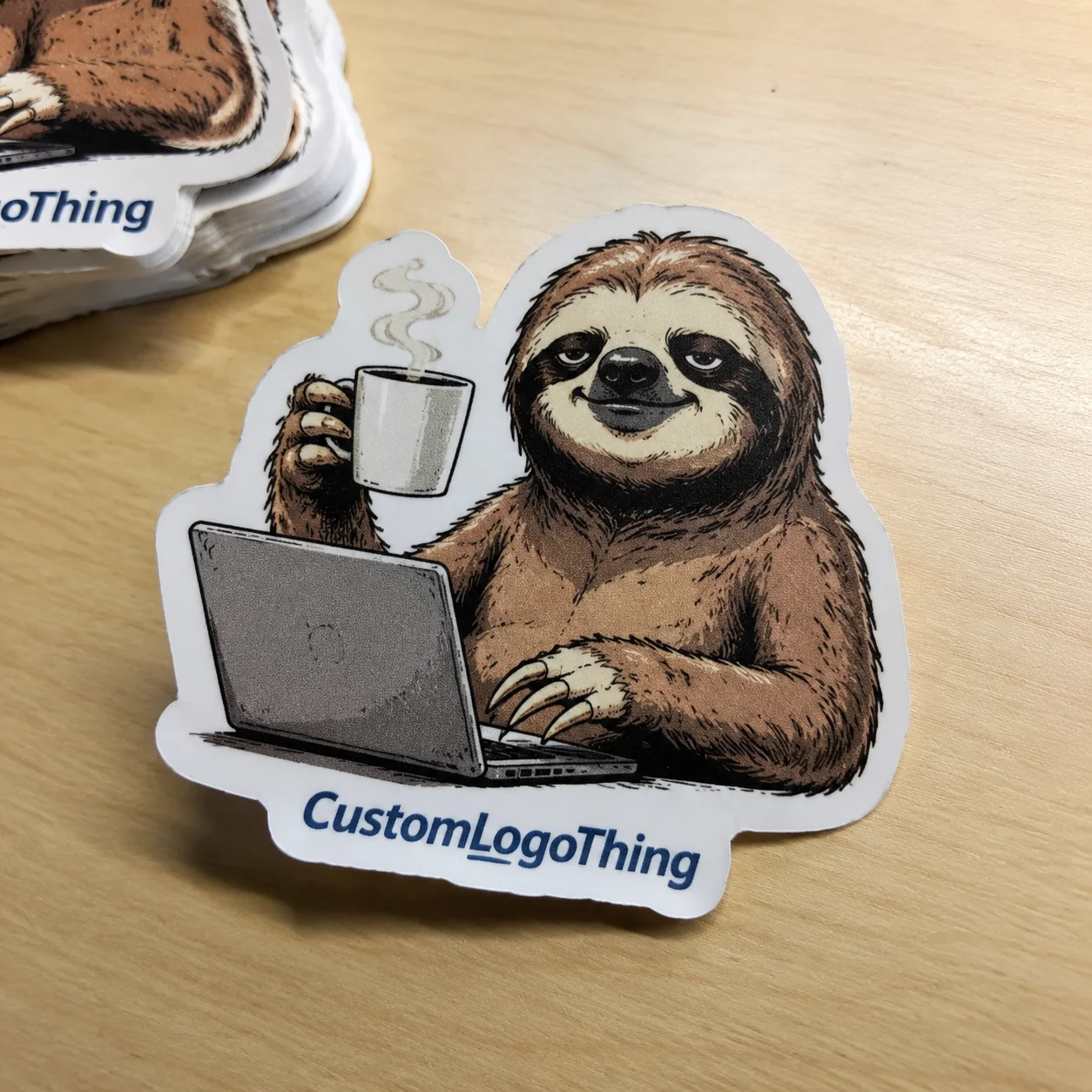
A sticker can be hilarious on a phone screen and unreadable once printed at two inches. Tiny punchlines are where good jokes go to die. That is why custom funny stickers need more than a decent gag and a quick export from a design app.
The job is simple on paper: make people laugh without making the sticker look cheap. In production, that means type size, print resolution, adhesive choice, finish, cut tolerance, and surface use all matter. Human beings do not want to squint at packaging like they are reading medicine side effects.
Custom funny stickers are printed adhesive labels, decals, or die-cut pieces built around humor. They may use meme-style artwork, brand jokes, mascots, inside references, parody-style slogans, sarcastic one-liners, character expressions, or customer-facing gags added to product packaging. Some are throw-in freebies. Some seal tissue paper. Some sit on laptops for three years and quietly outperform a paid ad. Funny how that works.
The use case changes the spec. Stickers for Packaging inserts do not need the same durability as waterproof vinyl decals for water bottles. Event stickers may only need to last through a weekend. Retail merch should feel solid enough that someone would pay $3 to $6 for a small pack. Shipping box stickers need fast readability. Sticker sheets can carry several small jokes. Bumper-style decals need weather resistance, UV protection, and adhesive that does not quit after two rainstorms.
Humor does not replace production basics. Readable type, clean artwork, durable material, correct adhesive, and a finish that matches the use case still decide whether the final sticker feels intentional or like someone printed a screenshot on office labels. The joke gets attention. The spec sheet keeps that attention from turning into complaints.
Practical rule: if the punchline cannot be read at actual printed size from about three feet away, it is decoration, not communication.
How Funny Sticker Printing Actually Works
The normal production path is not mysterious. You prepare the artwork, choose the size, pick the material, select the print method, choose a finish, define the cut style, review the proof, approve production, and wait for packing and shipping. Skip one of those steps and the sticker gods collect their fee. Usually in reprints.
Digital printing is common for short runs, multiple designs, and lower minimum quantities. It works well for funny sticker projects with five jokes, ten mascot faces, or rotating seasonal references. Flexographic printing, screen-style printing, or specialty production may make sense for larger quantities, spot colors, thick ink effects, metallic looks, or specific durability needs. The catch is volume. Setup costs are real, despite what optimistic buyers want to believe.
Format changes the whole job. Kiss-cut sheets keep the backing sheet intact and make peeling easier. Die-cut singles follow the outline of the artwork and feel more custom. Roll stickers are efficient for product labeling and fulfillment workflows. Sticker packs work well for retail packaging and community drops. Labels for Jars, mailers, and boxes usually prioritize fast application and clean edges. Waterproof vinyl decals are better for laptops, bottles, coolers, cars, and outdoor surfaces.
Cut lines and bleed are boring until they ruin the order. The cut line shows where the machine cuts. Bleed extends artwork beyond that cut so tiny shifts do not leave awkward white edges. A safe zone keeps words, faces, borders, and punchlines away from the blade. For many sticker jobs, a 0.125-inch bleed and a similar inside safety margin are a smart starting point, though your supplier may ask for something slightly different.
Finishes change the tone of the joke. Matte feels dry, premium, and sarcastic. Gloss makes bright cartoons and loud slogans pop. Holographic stock is chaos in sticker form, which can be perfect for absurd humor or festival merch. Clear material works for windows, minimalist product packaging, or labels that need the container color to show through. Soft-touch laminate can feel great, but it is rarely worth the surcharge for disposable inserts.
A supplier should provide a digital proof before printing. Check size, cut path, bleed, spelling, color notes, quantity, material, finish, and packing requirements. Approving a bad proof and acting shocked later is not a production strategy.
Key Specs That Decide Whether the Sticker Looks Sharp or Cheap
Start with size. A one-word joke or simple icon can work at 1.5 to 2 inches. A sticker with a punchline, mascot, brand name, and small illustration usually needs 2.5 to 4 inches. If the sticker is meant for retail merch, 3 inches is often a comfortable baseline. If it has to be read on a shipping box from a few feet away, go larger or cut the copy.
Shape matters too. Circles are friendly, economical, and easy to apply. Rectangles fit text-heavy jokes better and waste less material on sheets or rolls. Die-cut shapes feel more custom because they follow the artwork, but tiny cut details can slow production and raise cost. Sticker sheets are underrated for humor because they let you group multiple expressions, small punchlines, and brand icons without forcing every joke to carry the whole design.
Material choice is the next big decision. Paper stickers are budget-friendly for dry indoor use, branded packaging, mailer inserts, bakery boxes, thank-you labels, and short-term promotions. White vinyl costs more but gives better durability for laptops, bottles, helmets, outdoor use, and anything handled often. Clear film is useful for windows and minimal labels, but low-contrast art can disappear on dark surfaces. Metallic and holographic materials are fun, not subtle. Use them when loud is the point.
Adhesive is not one-size-fits-all. Standard permanent adhesive works for most cartons, mailers, product labels, and basic package branding. Removable adhesive is better for temporary promos, event badges, and surfaces where residue would annoy people. Freezer-grade adhesive is the safer call for frozen food, cold-chain products, and chilled packaging. High-tack adhesive helps on rough corrugated, textured paper, low-energy plastics, or recycled board with inconsistent fibers.
Artwork quality is where many sticker orders quietly fall apart. Vector files such as AI, EPS, or clean PDF are ideal for logos, type, and flat graphics. High-resolution PNG files can work if they are sized correctly, usually 300 dpi at final print size. Screenshots, compressed meme grabs, and tiny web images usually cannot be rescued. They print exactly as ugly as supplied. Printing is honest that way.
Color needs contrast. Bright jokes need separation between text and background. Black type on dark purple art is a rookie move. Thin white type on a busy rainbow background is another. If brand consistency matters, ask about PMS matching or color targets, especially for logos used across Custom Packaging Products, labels, mailers, and custom printed boxes. Digital CMYK can get close for many jobs, but exact color matching depends on material, finish, ink system, and budget.
| Spec Choice | Best Use | Watch For |
|---|---|---|
| 1.5 to 2 inch size | Icons, one-word jokes, small inserts | Too small for punchlines or mascots |
| 2.5 to 4 inch size | Packaging jokes, merch, sticker packs | Higher unit cost than tiny labels |
| Paper stock | Dry indoor packaging and short-term use | Poor fit for drinkware or outdoor surfaces |
| White vinyl | Laptops, bottles, gear, outdoor decals | Costs more than paper |
| Holographic or metallic | Merch drops, loud jokes, limited editions | Can reduce readability if art is busy |
Cost, Pricing, MOQ, and Unit Cost Tradeoffs
Sticker pricing is driven by size, material, quantity, number of designs, cut complexity, finish, proofing requirements, packing style, and shipping speed. That is why “How much are stickers?” is cute. It is also useless. A 2-inch paper circle on a roll and a 4-inch waterproof holographic die-cut decal are not the same product just because both stick to things.
As a broad buying range, small paper stickers in higher volumes may land around $0.03 to $0.12 per piece, depending on size, print coverage, and roll or sheet format. Custom die-Cut Vinyl Stickers often sit closer to $0.18 to $0.65 each at mid-range quantities. Specialty finishes such as holographic, clear, metallic, heavy laminate, or weatherproof construction can push higher, especially under 500 pieces. These are practical ranges, not promises. Quotes depend on the actual spec.
MOQ behavior can surprise buyers. Some digital runs can start around 50 to 100 pieces, depending on the supplier and format. Better unit costs usually begin showing up around 250, 500, 1,000, and higher. Ordering 100 custom funny stickers may feel safer, but ordering 500 can sometimes cut the unit price sharply because file setup, proofing, and machine time are spread across more pieces.
Multi-design pricing has its own trap. Five jokes at 100 each may cost more than one joke at 500, even if the total quantity is the same. Each version needs file prep, proofing, layout attention, sometimes separate cutting, and possibly separate packing. If you are building a sticker pack, ask whether the quote is based on total pieces, designs per sheet, or individually cut stickers placed into a bag.
Add-ons change quotes fast. Individual backing cards, barcode labels, retail bags, custom sticker sheets, hang holes, specialty laminate, rush production, split shipping, and kitting into boxes all add handling. For retail packaging, you may also need UPC placement, country-of-origin marking, warning copy for small parts if relevant, and consistent pack counts. Boring? Yes. Cheaper than fixing it after printing? Also yes.
| Order Type | Typical Quantity | Practical Unit Range | Good Fit |
|---|---|---|---|
| Paper packaging labels | 500 to 5,000+ | $0.03 to $0.12 | Boxes, bags, tissue seals, dry indoor use |
| Digital die-cut vinyl | 100 to 1,000 | $0.18 to $0.65 | Giveaways, laptops, bottles, merch |
| Sticker sheets | 100 to 2,000 | $0.45 to $1.50 per sheet | Multiple jokes, mascot expressions, retail packs |
| Specialty finish decals | 250 to 2,500 | $0.35 to $1.25+ | Holographic, clear, metallic, outdoor use |
For sustainability and waste planning, ask whether the supplier can gang designs, reduce oversized backing waste, or recommend a standard size that runs more efficiently. The EPA waste management hierarchy is a useful reminder: reducing waste at the source beats pretending every bad reorder is fine because the material is recyclable.
Process, Timeline, and Turnaround from Idea to Delivery
A realistic timeline starts with concept and artwork prep. Then comes the quote request, proof review, proof approval, production, quality check, packing, and shipping. Simple digital jobs can move quickly once artwork is clean. Custom shapes, specialty materials, large orders, individual retail packs, or color-critical jobs add time because they add decisions and handling.
For straightforward sticker orders, allow one to three business days for quoting and proofing. Production may take several business days after approval, depending on quantity, material, and shop load. Shipping adds its own clock. Ground shipping across a short distance is not the same as sending cartons across the country during peak season. Wild concept, I know.
The production clock usually starts after final proof approval, not when a buyer first sends a blurry logo and says, “Can you make this pop?” If the file needs cleanup, the size is missing, or the material is undecided, the job is not really in production. It is still in the land of vague hope.
Common delays include missing bleed, low-resolution artwork, unclear size specs, late approvals, changed quantities, unpaid invoices, material substitutions, holiday congestion, and split shipping instructions sent after packing has started. If the sticker is part of a product launch, trade show, subscription box, influencer kit, holiday mailer, or retail drop, build in a buffer. Missing the date turns the sticker into a souvenir of poor planning.
Ask your supplier for a production ship date and a delivery estimate separately. Production turnaround and carrier transit are related, but they are not the same thing. If a quote says five business days for production, that does not mean the cartons appear on your receiving dock in five business days. Carriers still get a vote.
For larger packaging programs, align sticker timing with cartons, inserts, and Custom Labels & Tags. A funny seal that arrives two days after the product packaging has already shipped to a fulfillment center is not helpful. Coordinate the full packaging design schedule, not just the sticker file.
Common Design and Ordering Mistakes That Kill the Joke
The most common mistake is too much text. A funny sticker is not a legal disclaimer with googly eyes. If your design needs three sentences of setup, it probably belongs on a card, insert, or social post. Stickers reward short copy: one strong line, one visual punch, one obvious reaction.
Weak contrast is another killer. If the punchline blends into the background, nobody is going to squint politely at your packaging. Test the design in grayscale. Shrink it to final size. Print it on office paper. Tape it to a box and step back three feet. That ugly little test catches more problems than a gorgeous zoomed-in mockup ever will.
Copyright issues deserve a real warning. Original meme-style jokes are usually safer than using copyrighted characters, celebrity faces, stolen artwork, or trademarked slogans. If custom funny stickers are being sold as retail products or used in paid promotions, legal risk rises. Parody can be complicated, and “but everyone on the internet uses it” is not a legal strategy. Ask an attorney if the design depends on someone else’s protected work.
Overcomplicated die-cuts look clever on screen and annoying in production. Jagged outlines, tiny limbs, hairline details, deep notches, and strange negative spaces can cause peeling issues or rough-looking edges. A 0.08-inch gap may look fine at 500% zoom, but it can become a fragile little tooth on the finished sticker. Clean silhouettes usually win.
Poor material matching creates avoidable complaints. Paper stickers on drinkware will fail. Removable adhesive on rough corrugated boxes may lift. Indoor labels used on outdoor gear will fade, peel, or both. If the sticker has to survive moisture, abrasion, sunlight, refrigeration, or repeated handling, say so before quoting. Good suppliers can recommend material and laminate options, but they cannot read minds. Shame, really. That would save everyone email.
Skipping a physical sample is risky for larger orders. A digital proof can confirm layout, size, and spelling, but it cannot fully show tactile finish, adhesive grip, opacity, or how a color behaves on clear film. For orders where color, finish, adhesive strength, or retail appearance matters, request a sample or short pre-production run. It costs more upfront. It can save thousands of bad pieces.
Proofread the joke like money depends on it, because it does. A typo in a joke is still funny, just not in the way the buyer wanted. Have one person check spelling, one person check specs, and one person check whether the joke still makes sense to someone outside your internal Slack channel.
What to Confirm Before You Request a Quote
Before asking for a quote, decide the sticker’s real job. Is it supposed to sell a product, decorate packaging, reward customers, create shareable merch, support an event, or add personality to shipments? A sticker that seals tissue paper has different specs than a sticker meant for a skateboard, cooler, or retail peg hook.
Prepare the basics before the first request. Final artwork, desired size, quantity, material, finish, shape, use case, delivery deadline, and packaging needs should all be included. If you are unsure about size, send two or three options. A supplier can usually explain the cost and readability differences quickly when the specs are clear.
- Artwork: vector AI, EPS, or PDF preferred; 300 dpi PNG can work for raster art.
- Size: include width and height in inches, not just “small” or “normal.”
- Quantity: ask for price breaks at 250, 500, 1,000, and 2,500 if budget allows.
- Material: paper for dry indoor use, vinyl for durable merch and handled surfaces.
- Finish: matte, gloss, clear, holographic, soft-touch, or laminate as needed.
- Deadline: include both the event date and the date you need stickers in hand.
Narrow the design to one clear joke or visual idea per sticker. If you have several jokes, use a sheet format or a sticker pack instead of cramming everything into one sad little badge. For packaging design, a small funny seal can work beautifully beside cleaner product information. For product packaging, the sticker should add personality without fighting the label, box artwork, or compliance copy.
Ask for proof details, production lead time, shipping estimate, material recommendations, and whether the quoted price includes setup, cutting, and standard proofing. If the stickers are part of retail packaging, ask about pack counts, backing cards, barcode labels, carton quantities, and whether the supplier can keep pieces clean enough for direct sale. Dust, scuffs, and crooked bagging do not scream premium.
If fiber sourcing matters in your broader packaging program, the Forest Stewardship Council is a useful reference for certified paper and board materials. For transit testing on larger packed goods, ISTA standards can help frame how Products and Packaging should survive distribution. Stickers are small, but they usually ride along with bigger packaging decisions.
Send clean specs, approve proofs carefully, and order enough quantity to make the unit cost sensible. That is how custom funny stickers move from “fun idea” to something people actually keep, share, and stick somewhere visible.
FAQ
What size should funny custom stickers be?
For simple icons or one-word jokes, 1.5 to 2 inches can work. For punchlines, mascots, or packaging stickers, 2.5 to 4 inches is usually safer. If the sticker needs to be read from a few feet away, print a paper test at actual size before ordering.
Are custom funny stickers waterproof?
They can be waterproof if you choose vinyl or another water-resistant material with the right laminate. Paper stickers are better for dry indoor packaging and short-term use. For bottles, coolers, laptops, or outdoor use, ask for waterproof or weather-resistant vinyl.
How much do custom joke stickers usually cost?
Cost depends on size, material, quantity, finish, cut style, and number of designs. Higher quantities usually lower the unit cost because setup and proofing are spread across more stickers. Specialty finishes like holographic, clear, metallic, or heavy-duty laminate cost more than standard paper or white vinyl.
Can I print meme stickers for my brand?
Original meme-style jokes are usually safer than using copyrighted characters, celebrity images, or trademarked phrases. If the design uses someone else’s protected artwork or branding, get permission before printing. For retail sales, be more cautious because legal risk rises when the stickers are sold as products.
How long does it take to order custom humorous stickers?
Simple jobs can move quickly after artwork approval, but timing depends on proofing, production load, material availability, and shipping. The production clock usually starts after the final proof is approved. For launches, events, or subscription boxes, build in extra buffer instead of relying on rush shipping to save the day.


