If you are comparing suppliers, a Custom Garment Polybags sample cost guide should do more than list fees. It should help you avoid the expensive mistake of approving the wrong bag and then repeating that mistake across a full production run. A sample that costs a little more can protect you from print misalignment, weak seals, poor clarity, or a film that behaves badly on the packing line. Serious buyers treat sampling as a risk check, not a formality.
From a packaging buyer’s point of view, sample pricing tells you how much control a supplier really has over material, tooling, and proofing. It also shows whether they can turn a spec sheet into a bag that works in retail packaging, transit, and warehouse handling. The numbers matter, but so does the process behind them.
Why sample cost matters before you place a bulk polybag order
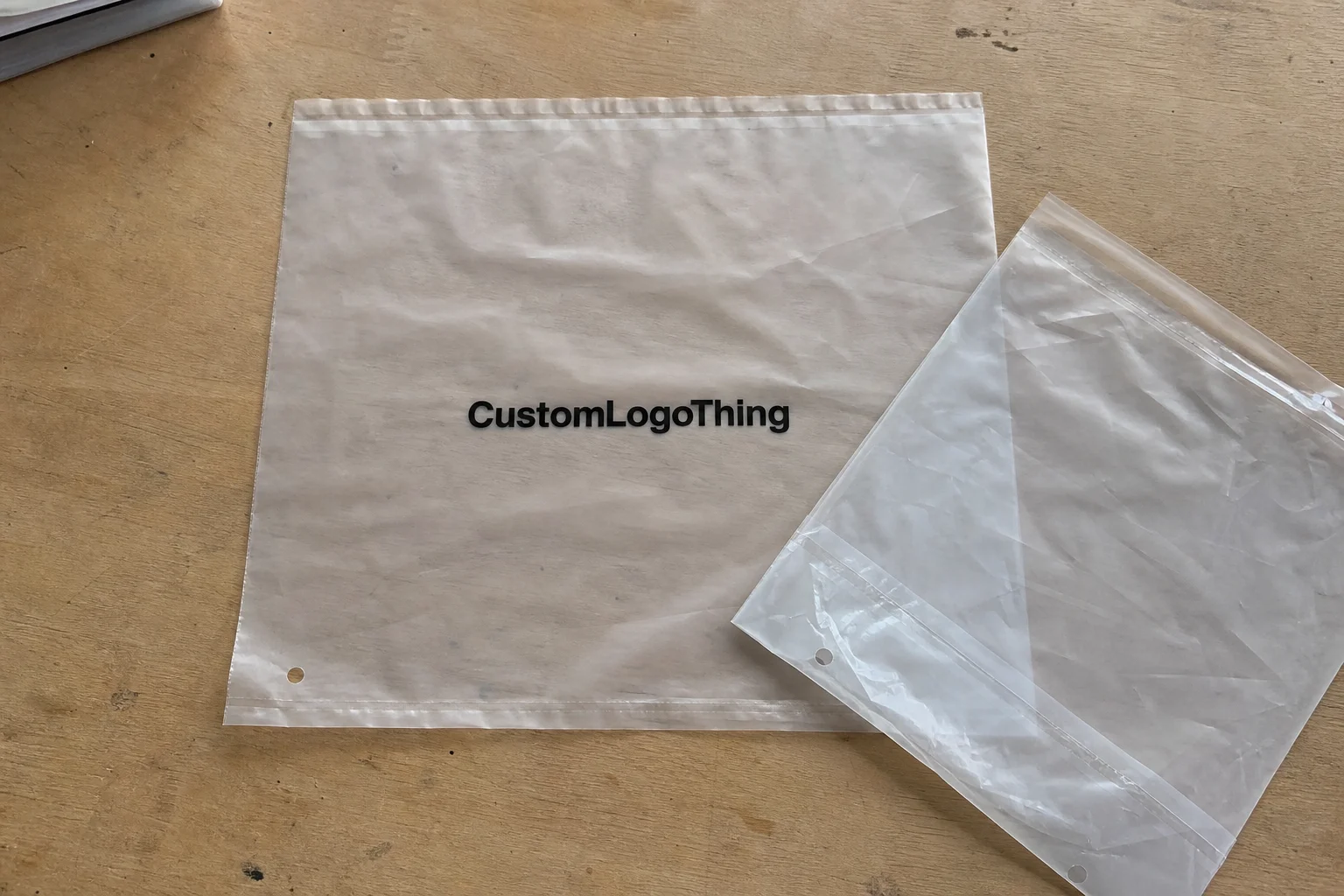
A low sample fee can become expensive if it hides the wrong thickness, an off-center logo, or a closure that does not work with folded apparel. Buyers sometimes fixate on the sample price and ignore the cost of rework. That is the wrong comparison. A sample is a filter, and good filters save money.
For apparel brands, packers, and private-label sellers, the sample stage is where problems are caught before they turn into chargebacks, delayed deliveries, and wasted film. A few dollars spent on prototype validation often prevents hundreds or thousands in scrap. If the bag sits inside a branded packaging program, the visual standard matters as much as the material spec.
The key point is simple: the sample may be a tiny share of the final order value, yet it can prevent a full production mistake. That matters even more if the bag is part of a broader packaging system that includes Custom Packaging Products or other branded components. One mismatch can throw off the whole presentation.
Buyer reality: the useful question is not “How low can the sample fee go?” It is “What exactly does the sample include, and will that fee be credited back if I place the production order?”
That question should be asked early and in writing, because sample policies vary. Some suppliers deduct the sample charge from the first bulk invoice after order confirmation. Others treat it as a standalone service. Either way, the sample cost should be a controlled expense, not a surprise line item.
If your team is making decisions across product packaging, packaging design, and retail packaging, the sample is the place to align everyone. It gives merchandising, operations, and sourcing the same physical reference. That reduces debate later and keeps revisions from multiplying.
Polybag formats, film options, and print details that change the sample
Not all garment polybags behave the same way. A flat bag for folded T-shirts is a very different job from a resealable bag for premium knitwear or a gusseted bag for bulkier outerwear. The format changes how the bag sits, closes, stacks, and displays on shelf.
Film choice changes the sample too. LDPE is softer and often clearer in apparel use. HDPE is lighter and usually crinklier, with a more matte look. Co-extruded films can improve strength and seal performance, especially when buyers want a tighter balance between clarity and puncture resistance. For garment polybags, that balance matters more than many first-time buyers expect.
Thickness deserves real attention. A thinner film can reduce cost, but it may wrinkle more, stretch differently at the seal, or feel too fragile during packing. Thicker film can look better and hold shape more consistently, yet it may raise material cost and sometimes create a stiffer hand feel than the brand wants. A sample should let you test that trade-off before a larger run locks it in.
Printing is where sample complexity rises quickly. A single-color logo on one face is straightforward. Add white ink, multiple colors, barcode placement, fine warning text, or tight registration, and the sample becomes more demanding. More setup, more proofing, more room for error. The same is true for suffocation warnings, recycling marks, or retailer-specific copy.
Functional details also affect sample cost and approval time:
- Flap adhesive for self-seal retail use
- Hang holes for display and warehouse handling
- Vent holes to reduce trapped air in packed garments
- Tear notches for cleaner opening by consumers
- Anti-static additives for certain synthetic apparel applications
Digital proofing is useful, but it does not replace a physical sample when size, film feel, seal behavior, or appearance on a folded garment matters. If you are evaluating shelf presentation or trying to match the look of Custom Poly Mailers across your shipping and retail packaging, a real sample is usually the better move.
For compliance, buyers often ask about standards. If the bag is used for consumer retail, suffocation warning text should be checked against retailer rules and local requirements. For transport validation, packaging engineers may look toward ISTA test methods for distribution performance. For environmental claims or recycled content, paper-based certifications such as FSC do not replace plastic film evaluation; those are separate issues. Useful references include ISTA and the EPA for broader packaging and recycling context.
Specifications buyers should lock down before requesting a quote
Accurate quotes start with complete specifications. If the supplier has to guess at dimensions or print coverage, the quote will move. That creates delays, and it usually creates friction later.
At minimum, send these details:
- Width and length of the bag
- Gusset depth, if applicable
- Thickness in microns or mils
- Film type and color
- Print coverage and number of colors
- Closure style: open top, adhesive flap, zipper, or header
- Compliance text, recycling marks, and barcode zones
Garment type matters more than some buyers realize. A lightweight T-shirt may fit comfortably in a thinner bag, while denim, fleece, or outerwear often needs more width, more gusset, or a heavier gauge film. If the bag is too tight, operators slow down. If it is too loose, the presentation looks sloppy and the stack shifts in transit.
Presentation details matter too. Is the garment folded spine-first or flat? Is the opening at the top or side? Does the bag need to show a folded collar, size label, or hang tag? These choices affect the sample because they change the way the finished bag looks on the actual packed item.
One practical move is to prepare a single spec sheet before contacting suppliers. That reduces back-and-forth, keeps revisions to a minimum, and cuts down on quote variance. It also helps you compare like-for-like pricing instead of mixing different assumptions into one decision.
For buyers managing broader package branding, the same discipline applies across custom printed boxes, inserts, and polybags. If one spec is loose, the whole program becomes harder to control.
Custom garment polybags sample cost guide: pricing, MOQ, and what drives the quote
Now to the part most buyers want first: the money. A Custom Garment Polybags sample cost guide always comes back to three drivers: setup method, material choice, and print complexity. Those are the levers suppliers use to build the quote.
Sample pricing usually falls into a few buckets:
| Sample type | Typical cost behavior | Best use case |
|---|---|---|
| Stock sample | Low cost or free | Checking general film feel, size, or closure style |
| Digital mockup | Often low cost or included | Early artwork review and placement confirmation |
| Custom physical prototype | Paid setup fee | Validating print, seal, dimensions, and retail appearance |
| Refundable sample | Charge credited after order | When the supplier applies the fee to production after MOQ |
MOQ matters because low-volume samples carry more overhead per unit. A prototype run of a few pieces has to absorb artwork prep, machine setup, and material loss across very few bags. That is why a custom sample can look expensive on a per-piece basis even when it is reasonable from a production standpoint.
As a working range, a simple custom sample may sit in the low tens of dollars, while a printed prototype with specialty film, multiple revisions, or rush handling can move higher. The real question is not whether the sample is cheap. It is whether the sample cost is proportionate to the risk you are removing.
Watch the extras. Rush samples, extra revisions, special testing, unique film sourcing, or multiple artwork versions can add cost quickly. Ask for itemized pricing so you can see what part is sample fee, what part is tooling or setup, and what part may be credited back on the first production order.
One higher-quality sample can be cheaper than approving the wrong spec and remaking the run. That is the comparison serious buyers use. It is especially true if the bag supports a premium retail packaging strategy or if your team is coordinating branded packaging across several product lines.
Helpful supplier questions:
- Is the sample fee refundable or credited to production?
- Does the quote include shipping?
- Are tooling or plate charges separate?
- How many revisions are included?
- What MOQ triggers credit eligibility?
Buyers should also ask about the sampling method itself. A digital proof can be enough for layout decisions, but a physical sample is the only way to check film clarity, seal strength, noise level, static behavior, and how the bag handles after folding. Those details affect operations more than many teams expect.
Production steps, timeline, and lead time from sample request to approval
Sampling follows a fairly predictable path, but buyers often compress the internal approval part and then blame the supplier for the delay. In practice, the process works best when each step is clearly owned.
Here is the usual flow:
- Submit brief and specifications
- Review dimensions, film, and print requirements
- Confirm sample cost and shipping terms
- Approve artwork proof
- Produce the physical sample or digital mockup
- Inspect for size, print accuracy, and seal quality
- Ship sample to the buyer for sign-off
Digital mockups are faster than physical samples. They are useful for confirming text placement, logo proportions, and overall layout. But if you need to validate fold fit, transparency, or how the bag presents on a finished garment, you need a real sample in hand.
Lead time extends when the project includes custom printing plates, tight color matching, specialty films, or repeated artwork changes. A straightforward request can move relatively quickly. A complex printed sample with multiple approvals may take significantly longer. Buyers should plan for that rather than assume every prototype follows the same schedule.
In many packaging programs, the internal delay is the hidden problem. Sales wants fast approval. Operations wants a pack-line test. Compliance wants warning copy checked. Procurement wants the best unit cost. If those teams are not aligned, the sample sits.
Build in approval time before you need production. That is especially true if your brand also manages custom printed boxes or other product packaging elements that must match the same visual language. One master sign-off reduces confusion later.
Important: do not start final production until the sample is signed off in writing. A verbal “looks fine” is not enough when the bag affects retail presentation, shipping behavior, and warehouse handling.
How we reduce risk, control unit cost, and protect your packaging spec
Good suppliers do more than quote a number. They help keep the specification stable. That is where real value sits, not in vague promises, but in repeatable output.
A disciplined sampling process helps reduce waste, avoids overordering, and protects the presentation that buyers worked to build. It also supports more predictable unit cost at scale because the production run is based on a verified spec rather than an approximation.
The best support usually includes:
- Spec review before quoting
- Artwork checks for placement and legibility
- Material recommendations based on garment weight and presentation
- Pre-production validation against the approved sample
- Quality checkpoints for gauge consistency, print alignment, seal integrity, and dimensions
For buyers, this matters because a small deviation in film thickness or print registration can change how a bag looks and performs. One lot may pass through the packing line cleanly. Another may stick, split, or wrinkle enough to slow operations. That is not a cosmetic issue; it is a labor issue.
Experienced suppliers also help buyers think beyond the sample itself. If the target MOQ is high, the sample should reflect the production method as closely as possible. If the order is smaller, the supplier may recommend a different setup route to keep costs manageable. That kind of guidance can materially improve the final quote.
Honestly, the lowest sample price is not always the smartest offer. The better question is whether the supplier can reproduce the approved spec at the target volume without drifting on size, print, or seal quality.
Quality control should focus on measurable checks, not impressions alone. Confirm bag width and length against the tolerance window, inspect seal uniformity, verify warning text legibility, and test whether the bag opens and closes the way the packing line expects. If the sample is going to touch retail shelves, check glare, clarity, and how the printed area looks under normal store lighting. Those small observations often reveal issues that a PDF proof will never show.
Next steps: request the right sample and move to production with confidence
If you want a clean quote, send the supplier a complete package: bag dimensions, garment type, artwork file, compliance text, target MOQ, and shipping destination. That gives them enough information to price the sample and estimate the production unit cost at your target volume.
Ask for two numbers upfront: the sample cost and the likely production cost once you hit MOQ. That simple request helps you compare suppliers on more than one axis. A low sample fee with a high production unit cost is not a good deal. Neither is a cheap bag that creates pack-line problems.
Request a physical sample if the bag will be visible on shelf, if film clarity matters, or if seal strength affects handling. If the bag is mostly an internal pack component, a digital proof may be enough for the first step. But the closer the bag gets to the customer-facing side of retail packaging, the more valuable the physical sample becomes.
Approve one master spec sheet before any revisions are made. That keeps the process tight and prevents multiple versions from floating around your team. It also makes final sign-off much easier.
For buyers comparing branded packaging options, the smartest move is straightforward: check the sample against your packing line, retail standards, and budget, then confirm production only after sign-off. That is the practical way to use the Custom Garment Polybags sample cost guide as a decision tool, not just a pricing reference.
How much does a custom garment polybag sample usually cost?
Cost depends on material, print complexity, and whether the sample is digital or physical. Simple stock samples can be low-cost or free, while custom printed prototypes usually include a setup fee. Ask whether the sample fee is refundable or credited toward production.
What information do I need to get an accurate sample quote?
Provide dimensions, thickness, film type, print details, and the garment category. Include compliance text, artwork files, target quantity, and delivery location. A complete spec sheet reduces revisions and quote changes.
Does sample cost count toward the final production order?
Sometimes yes, sometimes no, depending on the supplier's policy. Many suppliers credit the sample fee back after order confirmation or at a set MOQ. Always confirm the credit terms in writing before paying.
How long does it take to receive a custom polybag sample?
Digital proofs are usually faster than physical samples. Lead time increases with custom printing, special film, and artwork revisions. Build in extra time if your team needs internal approval before production.
Can I order a sample before meeting MOQ?
Yes, many suppliers offer low-volume samples or prototype runs before bulk production. Expect a higher unit price on small quantities because setup costs are spread across fewer pieces. Use the sample to verify size, print quality, and seal performance before committing.


