Hang Tags

Custom Hang Tags for Clothing China Factory: Buyer Guide

✍️ Sarah Chen πŸ“… May 27, 2026 πŸ“– 12 min read πŸ“Š 2,499 words
Custom Hang Tags for Clothing China Factory: Buyer Guide

Ordering Custom Hang Tags for clothing china factory sourcing looks simple until the first quote changes with paper stock, finish, attachment, packing, and artwork readiness. A tag is often the first physical touchpoint for a garment. If it curls, prints badly, or feels flimsy, the product looks cheaper before anyone handles the fabric.

Hang tags sit inside the larger system of branded packaging, product packaging, and package branding. The tag has to print cleanly, hold its shape, survive handling, and arrive in a format the warehouse can use without extra sorting.

What custom hang tags do for clothing brands, and why factory sourcing changes the cost picture
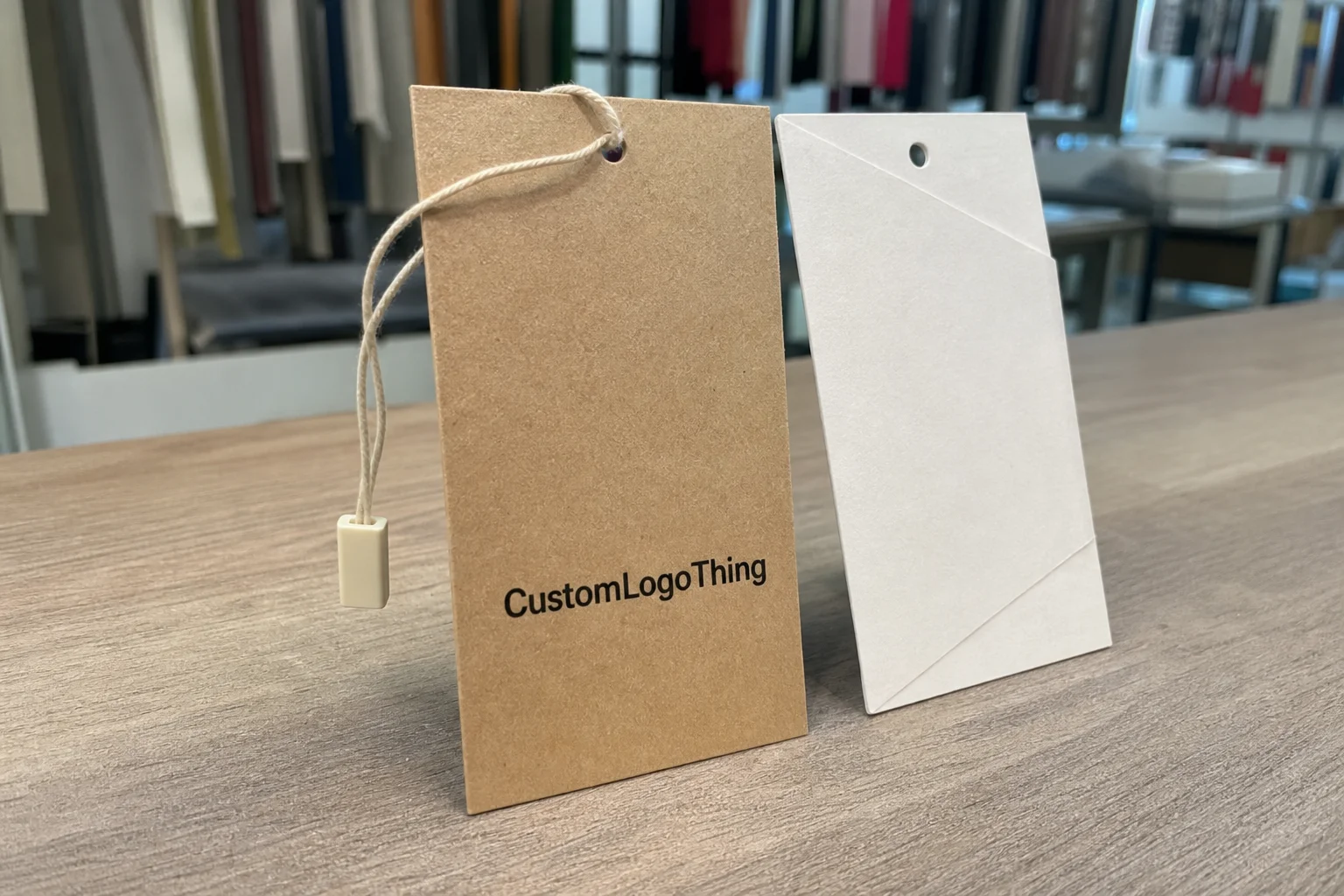
What custom hang tags do for clothing brands, and why factory sourcing changes the game - CustomLogoThing packaging example

A hang tag does more than carry a logo. It can show price, SKU, barcode, brand story, care notes, and retail compliance details. It also frames the product before the customer ever sees a stitch, so stock quality and print accuracy matter.

Factory sourcing in China usually gives more material options, more finishing combinations, and better pricing at scale. One supplier can often handle printing, die cutting, foil stamping, embossing, hole punching, stringing, and packing in a controlled production chain. That reduces the chance of one vendor blaming another when something goes wrong.

Cost changes fast when the spec changes. Standard coated paper is usually cheaper than textured board, a basic rectangle is cheaper than a custom die cut, and finishing adds setup and waste. Local print shops can still make sense for a few hundred simple tags, but larger runs and repeat reorders usually benefit from factory production.

Cheap tags become expensive when they curl in transit, smear under handling, or arrive with the hole in the wrong place. Reprinting usually costs more than choosing the right spec the first time.

Brands often pair hang tags with Custom Labels & Tags and broader Custom Packaging Products so the garment, insert, and retail box feel like one system instead of separate purchases.

How the factory process works from artwork to packed cartons

The workflow is straightforward on paper: inquiry, quote, proof, production, inspection, and shipping. In practice, the quality of your input determines how smooth the job is. Clear specs save more time than any follow-up email can recover.

The usual sequence looks like this:

  1. Inquiry β€” Send quantity, size, stock, finish, attachment style, and destination.
  2. Quote β€” The factory prices setup, materials, printing, finishing, and packing.
  3. Dieline check β€” They confirm trim size, bleed, safe area, and hole placement.
  4. Proofing β€” You review a digital proof, and for higher-risk jobs, a physical sample.
  5. Production β€” Printing, coating, cutting, punching, and finishing happen in sequence.
  6. QC and packing β€” Counts are checked, bundles are packed, cartons are labeled.
  7. Shipping β€” Air, sea, or courier is selected based on urgency and volume.

The best quotes come from the cleanest inputs. Send vector logo files if possible, exact dimensions, quantity, paper preference, finish, Pantone references if color matters, attachment style, and packing requirements. If the supplier has to guess between two sizes or two paper types, the conversation slows down immediately.

Proofing matters. A digital proof is enough for layout, copy, and cut line placement. A physical sample is better when color accuracy, foil shine, embossing depth, or paper texture affect the buying decision. A bright screen cannot show how a soft-touch finish behaves under light.

Special finishes add time. Foil stamping, embossing, soft-touch lamination, spot UV, and custom shapes need extra setup or separate passes. The more layers you add, the more the job depends on QC. Packing details matter too, especially if the tags are going to a warehouse or fulfillment center. Flat-packed tags in sleeves or banded bundles are easier to count than loose cartons.

Cost, pricing, and MOQ factors that actually move the number

Hang tag pricing is mainly setup cost, material cost, finishing cost, and packing cost. Quantity changes the unit price because setup gets spread over more pieces. That is why 10,000 pieces often look much cheaper per unit than 500 pieces, even when the design is identical.

The main cost drivers are predictable:

  • Paper stock β€” Standard coated paper is usually cheaper than cotton paper, recycled board, heavy textured stock, or specialty kraft.
  • Print coverage β€” One-sided printing costs less than two-sided printing, especially if the back carries variable information.
  • Finishes β€” Foil, embossing, debossing, matte lamination, spot UV, and edge painting all add cost.
  • Shape β€” A standard rectangle is cheaper than a custom die-cut silhouette.
  • Attachment β€” Cotton string, elastic loop, satin cord, plastic seals, and pre-threading change labor.
  • Packing format β€” Bulk packed, banded, sleeved, or individually bagged do not cost the same.
  • Shipping method β€” Air freight, sea freight, and courier create very different landed costs.

For planning, simple printed tags often land around $0.03-$0.08 per unit at higher volumes such as 10,000 pieces, depending on size, paper, and coverage. Mid-range tags with better stock or light finishing often sit around $0.08-$0.18 per unit. Premium tags with foil, embossing, special shapes, or heavier finishing can run $0.18-$0.45+, especially at lower quantities. If a quote falls outside those bands, check the spec line by line before judging it.

Tag type Typical unit price Common MOQ Best for
Simple printed paper tag $0.03-$0.08 500-1,000+ Basic apparel runs, budget retail packaging
Mid-range laminated tag $0.08-$0.18 1,000-3,000+ Branded packaging with a cleaner premium feel
Foil-stamped or embossed tag $0.18-$0.45+ 2,000-5,000+ Hero products, fashion drops, higher-margin lines

MOQ is tied to setup time, material usage, and waste. Even a small order needs plates, die cutting, machine adjustment, and QC. If you request a tiny run, expect a higher unit price or fewer finish options. Hidden costs also matter: plate or die fees, sample charges, freight surcharges, special packing, and rework can shift the total quickly.

Step-by-step production steps to get cleaner quotes and fewer delays

Good quoting starts with a clean spec sheet, not a casual message about β€œsomething premium.” The supplier needs dimensions, quantity, stock, thickness, finish, color requirements, hole details, and attachment style. The clearer the input, the less back-and-forth later.

Sending the same spec set to every factory is the easiest way to compare pricing fairly. Otherwise you are not comparing quotes; you are comparing different interpretations of the same idea. That is where projects drift.

What a clean spec sheet should include

  • Exact dimensions in mm or inches
  • Paper stock and thickness, such as 350gsm C1S or 400gsm textured board
  • Print colors and Pantone references if color matching matters
  • Front and back content
  • Finish type, such as matte lamination, soft-touch, foil, or embossing
  • Hole shape, position, and reinforcement if needed
  • Attachment style and string length
  • Packing method and carton count preferences

Approve the dieline before final artwork if possible. That keeps text inside the safe area and avoids cut errors. A lot of problems come from designing too close to the edge and then losing a logo corner or a legal line in trim.

Finish compatibility matters. Dark stocks can mute certain inks, fine serif text can disappear on textured board, and metallic effects need the right process to stay sharp. A design that works on screen can look muddy in print if the stock and finish work against it.

Lock packing instructions before production starts. Say whether tags should be bulk packed, banded in bundles of 50 or 100, sleeved, or boxed by SKU. If carton labels or pallet instructions are needed, include them early. Late changes are one of the easiest ways to create delay.

For brands also ordering custom printed boxes or other product packaging items, align the hang tag design with the rest of the line so the retail presentation feels consistent.

Lead time, turnaround, and shipping realities for clothing brands

Realistic timelines are usually more useful than marketing claims. Quoting often takes 1-3 business days if the specifications are clear. Sampling commonly takes 3-7 business days. Production often runs 7-20 business days, depending on quantity, complexity, and the factory queue.

Special dies, foil stamping, embossing, heavy quantities, tight color matching, and peak-season workloads extend the schedule. That is normal. It is not automatically a warning sign.

Shipping adds another layer. Air freight is faster but more expensive. Sea freight lowers landed cost at higher volumes but adds transit time, port handling, and more opportunities for delay. Customs clearance can also add days depending on destination and documentation. If a launch date is fixed, buffer time is not optional.

Finalize hang tag specs before garment production wraps. Otherwise packaging becomes the bottleneck and the launch waits on paper goods.

For packaging standards and material references, ISTA is useful for transit testing guidance, and FSC is a common reference for responsibly sourced paper. If sustainability claims matter, use documentation that can be verified.

Common mistakes brands make when ordering hang tags from China

The first mistake is bad artwork. Low-resolution files, unoutlined fonts, missing bleed, and fuzzy logos create avoidable rework. The second mistake is choosing a size before checking readability. Tiny legal copy on a tiny tag is still tiny.

Material and finish combinations cause another round of problems. Thin stock with heavy lamination can curl. Dark paper with the wrong print method can look flat. Textured stock can make fine type harder to read. Buyers sometimes approve the proof and then dislike the physical result because the design and material did not work together.

Attachment details are skipped more often than they should be. String length, knot style, hole reinforcement, and pre-threading all affect appearance and labor. If the tags must arrive already attached for retail use, say so clearly. Loose tags and pre-threaded tags are not interchangeable products.

Another common error is skipping a physical proof on premium jobs. That is how foil tone, paper texture, and edge quality become surprises. If the job matters and the margin allows it, a sample is usually cheaper than reprinting thousands of units.

Expert tips for better specs, lower waste, and a smoother reorder

Use one master spec sheet for every reorder. It sounds dull because it is, but it prevents wrong dimensions, wrong hole positions, and wrong packing formats when the next production run starts.

Avoid adding premium finishes simply because they are available. Foil, embossing, and spot UV are tools, not automatic upgrades. Use them where they support the product story, such as a hero SKU or seasonal release, and keep the rest of the line simpler.

Keep the tag structure as consistent as possible across the SKU range. One size for most items. One hole position. One attachment style. Reserve special versions for launches, collaborations, or higher-margin products. That keeps print runs efficient and reorders easier.

Ask for packed-count photos or a sample carton photo before shipment. It takes little time and can prevent missing-piece disputes later. If the factory can show bundle counts, carton labels, and packing method, receiving becomes much easier on your side.

For sustainability-minded brands, choose paper with a real sourcing claim and ask for supporting documents if needed. FSC-certified paper is easier to defend than vague β€œeco-friendly” language that means little. If you want broader packaging references, the Packaging Association provides useful industry context.

What to do before you request a factory quote

Before requesting pricing, gather the essentials: quantity, tag size, stock preference, finish, attachment style, shipping destination, and target budget. Add a reference photo if you have one. A supplier can quote faster when they are not guessing at the finish level or construction.

Get artwork into vector format and note any colors that need exact matching. If the brand uses Pantone standards, include them. If the tags must coordinate with custom printed boxes or other retail packaging, say so. The factory should understand the full visual system, not just the tag by itself.

Decide whether you need a sample, a digital proof, or both. A simple repeatable tag may only need a proof. A premium tag with foil, embossing, or unusual stock usually deserves a sample. The more expensive the mistake would be, the more sensible the sample becomes.

Compare two or three suppliers on more than price. Look at how clearly they answer questions, how clean the proof is, whether the quote is itemized, and whether they explain packing. A vague total usually means extra charges are hiding somewhere in the job.

One clean request is better than five scattered ones. Ask for a detailed quote, a realistic production timeline, and a packing description. That is how you reduce delays, avoid surprises, and get a tag that supports the product instead of undercutting it.

FAQ

How much do custom hang tags for clothing from a China factory cost?

Simple printed paper tags are usually the lowest-cost option, while foil, embossing, and specialty stocks raise the price quickly. Quantity has a major effect because setup gets spread across more pieces. Shipping, attachment type, and packing format can change the landed cost more than first-time buyers expect.

What is the usual MOQ for custom clothing hang tags from China?

MOQ depends on size, stock, and finishing, but many factories prefer a few hundred to a few thousand pieces. More complex tags often need higher MOQs because the setup cost is harder to absorb. If you need a very small run, expect a higher unit price or fewer finishing choices.

How long does production usually take for custom hang tags?

Quoting can take 1-3 business days if the specifications are clear. Sampling often takes about 3-7 business days, and production commonly ranges from 7-20 business days. Special finishes, heavy quantities, and shipping method can extend the full timeline.

What files should I send for custom hang tag artwork?

Send vector files when possible, such as AI, EPS, or PDF with outlined fonts. Include exact size, bleed, and safe area instructions if you have them. If color matching matters, provide Pantone references or a clear print standard.

Should I ask for a sample before placing a full order?

Yes, especially if the tag uses premium finishes, exact color matching, or a new supplier. A sample helps confirm stock feel, print quality, hole placement, and overall presentation. For repeat orders of a proven spec, a proof may be enough if the factory has already demonstrated control.

If you want cleaner pricing, fewer delays, and fewer surprises, treat the hang tag as part of the product rather than an afterthought. That is the real advantage of managing factory production well: better control, better consistency, and a tag that supports the brand instead of weakening it.

Get Your Quote in 24 Hours
Contact Us Free Consultation

Warning: file_put_contents(/www/wwwroot/customlogothing.com/storage/cache/blog/412893c1cf8e11388faf59529503116b.html): Failed to open stream: Permission denied in /www/wwwroot/customlogothing.com/inc/blog/PageCache.php on line 20


