Skincare buyers tend to approve a hang tag from a screen, then discover the real problem after fulfillment. The mockup looks crisp. The first carton does not. Corners soften, coating scuffs, strings tangle, and the tag that looked like a premium detail suddenly reads as a shipping casualty.
That gap is why Custom Hang Tags for skincare launches shipping durability checklist planning matters. A tag does not need to survive a laboratory challenge to matter, but it does need to survive the ordinary violence of box pressure, vibration, handling, and humidity. If it only looks good before pack-out, it is not finished yet.
There is also a budget consequence. Reprints on a 1,000-piece run hurt. Reprints on a 10,000-piece launch can distort the entire calendar. A weak spec is usually cheaper on paper and more expensive in practice.
Why skincare hang tags fail in transit before a customer ever sees them
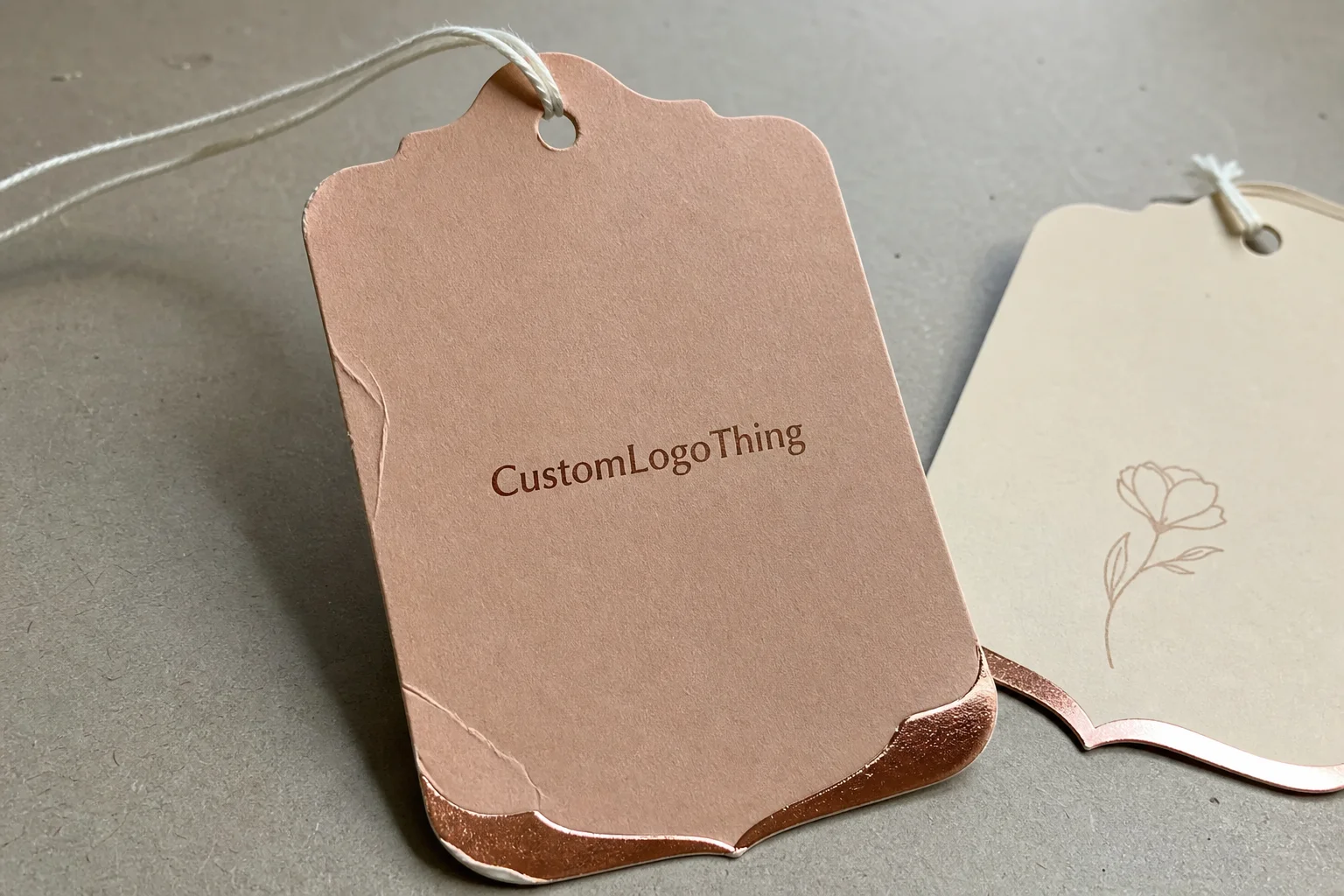
Most damage happens inside the carton, not on the shelf. Tags rub against jars, pumps, insert cards, tissue, and corrugated walls. The first sign is usually faint burnishing on dark ink coverage or a corner that starts to whiten. After that, a few more bumps in transit turn minor wear into visible damage.
Humidity is the other quiet culprit. Skincare shipments often include liquid formulas, sample vials, or products packed soon after filling. Paperboard does not need to get wet to move. A short period in warm, damp air can cause edge curl, waviness, or a softening around the punch hole. That is especially common on tags stored in unconditioned warehouses before dispatch.
Compression matters more than most teams expect. If a tag sits flush against a carton wall or under another item with weight above it, the stock can crease at the fold or distort at the corners. Add abrasion from movement, and the finish starts to look dull long before the customer opens the box.
For brands building around Custom Labels & Tags or a broader set of Custom Packaging Products, the lesson is straightforward: a tag is part of the shipment system, not a separate design exercise. The spec should account for the route it will actually travel.
“A tag can be beautifully designed and still fail the packaging test if the board, coating, and pack-out were chosen as separate decisions.”
That is the part many first-time launch teams miss. They optimize for appearance, then discover that appearance is the easiest requirement to satisfy.
How custom hang tags for skincare launches handle moisture, abrasion, and box pressure
The durability chain begins with substrate strength, then moves through print adhesion, coating, and hole reinforcement. Break one link and the whole tag becomes vulnerable. A digital proof can show color accuracy, but it cannot tell you whether the surface will scuff when it touches a coated carton wall for three days.
For most skincare launches, 14pt to 18pt cardstock is the practical starting range. Thinner stock can print well but bends too easily in pack-out. Thicker stock resists curling and usually holds a cleaner edge after shipping. For premium kits, 16pt often lands in the middle of cost, rigidity, and print quality. If the tag needs to be writable, uncoated stock may still be the right choice, but it gives up some abrasion resistance.
Coating choice changes more than appearance. Aqueous coating is the most common low-friction option because it adds some rub resistance without adding much cost. Matte coating hides handling marks better than gloss, while gloss boosts color saturation but tends to reveal scratches and pressure marks sooner. Lamination gives stronger protection, yet it also raises cost and can change the tactile feel enough to affect brand perception. Soft-touch lamination, in particular, looks elegant but can show corner wear faster than many buyers expect.
Hole placement deserves more attention than it usually gets. If the punch sits too close to the edge, the stock may tear during tie-off or vibration. A reinforced eyelet, a thicker punch area, or a more generous margin around the hole can prevent failure. It sounds minor until a carton opens with split tags and loose cords.
Fastener selection also has a practical side. Cotton string feels handcrafted, but it can fuzz, knot, or loosen during repeated movement. Synthetic cord holds shape better in transit. Plastic fasteners are fast to apply, but they are not always right for a premium presentation. The “best” choice is the one that stays tidy through warehousing, shipping, and unboxing.
Suppliers worth listening to can usually explain how they evaluate rub resistance, edge integrity, and carton pressure. Some rely on internal handling checks. Others reference distribution simulation approaches from organizations such as ISTA. A formal lab test is not required for every launch, but the method should be real, not vague.
Material, coating, and finish choices that change durability and shelf appeal
Skincare is tactile by nature. Buyers notice finish, thickness, and edge quality almost immediately. That creates a useful tension: the surface that feels luxurious is not always the one that ships best.
Soft-touch lamination is the classic example. It can make a tag feel expensive in hand, but it also shows fingerprints and scuffing more readily when cartons are tightly packed. Matte aqueous finishes are less dramatic, yet they typically hide wear better and are easier to live with in multi-touch fulfillment environments. Gloss makes colors pop, but it tends to expose scratches and pressure marks. Spot UV can add contrast, though it also makes wear more visible when the rest of the tag has been rubbed down.
For harsher distribution, tear-resistant synthetic stock can be worth the higher material cost. It is not the right answer for every skincare line, but it performs well where humidity, repeated handling, or long-distance shipping are part of the route. Recycled paperboard can also work if sustainability messaging matters, though the coating and weight need to be chosen carefully to avoid sacrificing structure. If you need a sourcing reference for environmental claims, FSC is one of the more familiar frameworks buyers use when discussing responsible materials.
The role of the tag should drive the material decision. A decorative swing tag has different requirements from an ingredient card, a price-bearing retail tag, or a promo insert tied to a gift set. If the tag needs to carry small text, the coating must not create glare. If it needs to be written on, the surface cannot be too slick. If it must survive cross-country shipping, surface beauty alone is not enough.
| Option | Typical use | Durability in transit | Approximate unit cost at 5,000 pcs |
|---|---|---|---|
| 14pt coated cardstock with aqueous coating | Standard skincare launch tags | Good rub resistance, moderate rigidity | $0.12-$0.20 |
| 16pt-18pt cardstock with matte or soft-touch lamination | Premium branded packaging and gift sets | Better stiffness, better shelf presentation, edge wear still possible | $0.18-$0.32 |
| Synthetic stock with reinforced punch | Long-distance shipping or humid lanes | Very strong against moisture and tearing | $0.28-$0.55 |
| Uncoated cardstock | Writable tags, ingredient notes, retail use | Lowest smear resistance, best writeability | $0.10-$0.18 |
Those numbers are only directional. Print coverage, die complexity, finishing steps, and packing labor can move pricing noticeably. Still, the table gives a buyer a better starting point than a vague “pricing depends on the order.”
Material choices also change when tags sit near other packaging components. A tag that performs well in isolation may behave differently inside custom printed boxes, especially if it is pressed against a coated wall or a textured insert. Packaging design and shipping design stop being separate conversations once the launch is packed.
Production steps and lead time: from proof to packed cartons
Clean production planning matters more than clever artwork. The normal sequence is artwork intake, dieline review, proofing, sample approval if needed, print production, finishing, inspection, and carton packing. If one step is rushed or skipped, the schedule usually pays for it later.
Artwork issues create the most avoidable delays. Missing dielines, low-resolution logos, tiny ingredient copy, and QR codes that have not been tested at size can all trigger another proof round. Finish changes after approval do the same thing. So do last-minute copy edits, especially when regulatory language is involved. A “simple” tag order can easily add a week if too many details are still moving.
Lead time depends on the spec, but a realistic range for straightforward cardstock tags is often 10-15 business days after proof approval. Add lamination, foil, specialty die cuts, or a preproduction sample, and the timeline can drift toward 15-20 business days. If the launch depends on retailer arrival windows or influencer kits, buffer time should be built into the schedule from the start.
Buyers usually benefit from a basic timing map:
- Artwork and dieline review: 1-3 business days if the files are clean.
- Digital proof approval: 1-2 days, longer if multiple teams review the copy.
- Sample or preproduction check: 3-7 business days depending on the spec.
- Print and finish: 4-10 business days for standard work.
- Inspection and pack-out: 1-3 business days.
That is a planning template, not a guarantee. The slowest realistic path is usually the one worth building around.
Pack-out details matter too. Flat-packed tags behave differently from tags packed with string attached. If the supplier also handles Custom Shipping Boxes or other transit components, it helps to align the full structure rather than treating the tag as an isolated purchase.
Cost, MOQ, and unit cost tradeoffs for launch budgets
Hang tag pricing is a stack of small decisions. Quantity, stock weight, print coverage, finishing, die cutting, stringing, packing, and sample requirements all affect the final number. A simple one-color tag on standard stock can be inexpensive. A shaped, laminated, foil-stamped tag with reinforced holes will not be.
MOQ is where many small brands feel the pressure first. A first launch may only need 1,000 tags, but setup and tooling can make the per-unit price feel disproportionate. At higher quantities, the same setup costs are spread across more pieces, so the unit price falls. The design does not change; the economics do.
For budgeting, these ranges are a useful reference:
| Order size | Typical per-tag cost | Notes |
|---|---|---|
| 1,000 pieces | $0.25-$0.60 | Setup costs weigh heavily; specialty finishes push higher |
| 5,000 pieces | $0.10-$0.32 | Common sweet spot for launch programs |
| 10,000+ pieces | $0.08-$0.22 | Better unit economics, especially for standard shapes |
There are practical ways to reduce cost without weakening durability. Standard rectangles and squares are cheaper than custom contours. Fewer specialty finishes reduce setup risk. Simpler string or fastener choices cut labor. If a foil accent is not doing real work for the brand, it is often the first detail worth removing.
That restraint is easier said than done. Branding teams often want one more finish because the proof looks flat. In production, the difference between polished and overworked can be surprisingly small. A cleaner tag with better stock and better coating often performs better and costs less than a heavily decorated one.
Small brands sometimes compare hang tags with full package upgrades such as custom printed boxes. That comparison is useful because it forces prioritization. If the launch budget only supports one visibly premium element, the piece the customer handles first usually deserves the attention. For many skincare launches, that is the hang tag.
Common mistakes that make premium hang tags look damaged on arrival
Some of the worst arrivals come from specs that were technically fine but packed badly. Others come from gorgeous tags that were never realistic for the shipping environment.
One common mistake is oversized dark coverage. Deep navy, charcoal, and black tags look rich in a proof and can look worn after just a few bumps. Scuffs show fast on dense color fields. Another problem is weak hole placement. If the punch is too near the edge, the tag can split under string tension or vibration. A third issue is delicate finishes that crack at the corners or crease line once the tag is bent.
Packaging mistakes are just as common. Loose tags inside a carton rub against jars, pumps, or other printed components. If the tags are not separated from adjacent items, the surfaces can mark each other. Soft-touch finishes in particular can pick up a dull patch where they sit against another coated surface for too long.
A simple transit simulation usually exposes these problems before production. Use the actual carton, the actual filler, and the actual attachment method. Then check the packed unit four ways:
- Vibration: move or shake the carton for a few minutes.
- Stacking: place weight above it to mimic warehouse pressure.
- Humidity exposure: hold it in a warmer, damp environment briefly.
- Open-close handling: unbox and repack it twice.
If the tag curls, bends, splits, or shows finish damage, the spec is not ready. That is far cheaper to learn before a full run than after cartons are already on the dock.
More often than people admit, the failure is not the print quality. It is the relationship between the tag and the rest of the pack-out. The tag may be strong enough; the surrounding materials may be the weak point.
Next steps: build a shipping durability checklist before you place the order
A launch checklist saves money, time, and reputation. Start with the stock: thickness, coating, and whether the finish needs rub resistance or more tactile appeal. Then confirm hole placement, corner style, and attachment method. Finally, decide whether the tag travels alone or inside a bundled kit where it will sit against other packaging materials.
Transit conditions should guide the spec. A local pop-up, a regional retail program, and a cross-country ecommerce launch do not face the same wear. Humidity, warehouse dwell time, and carton density all change the durability target. A tag for a small event may not need the same structure as one that sits in fulfillment for two weeks before shipping.
Ask for a sample or preproduction proof built with the actual materials. Test it inside the final carton with the actual filler. If the surface marks, the edges curl, or the punch weakens, update the spec before the full order runs. That is where Custom Hang Tags for skincare launches shipping durability checklist thinking becomes useful instead of theoretical.
A practical buyer checklist usually includes the following:
- Confirm stock thickness and surface coating.
- Check hole placement and reinforcement.
- Match finish choice to shipping distance and handling.
- Test the tag inside the final carton structure.
- Verify the tag survives vibration, stacking, and humidity.
- Lock artwork before final proof approval.
- Request pricing at multiple quantities to compare MOQ effects.
If the goal is a launch that looks polished from warehouse to doorstep, the tag cannot be treated as decoration. It is part of the shipping system. Treat it that way, and you reduce reprints, missed dates, and the awkward moment when a premium product arrives looking less premium than intended.
How durable do custom hang tags for skincare launches need to be for shipping?
They should resist scuffing, edge curl, and moisture exposure through pack-out, transit, and unboxing. A carton test is usually more useful than judging the tag from a flat digital proof. If the tag loses shape or finish in a short handling test, the spec needs strengthening before production.
What material is best for custom hang tags for skincare launches shipping in kits or boxes?
Heavier cardstock works well for most launches because it balances print quality, rigidity, and cost. Choose coated stock when you need better rub resistance, or uncoated stock when writing space matters more. For harsher distribution, ask about reinforced punch areas or synthetic stock options.
How much do custom hang tags for skincare launches usually cost?
Unit price depends on quantity, stock weight, finish, cutting complexity, and packing requirements. Small orders usually carry a higher per-tag cost because setup and tooling are spread across fewer pieces. Standard shapes and simpler finishes are the fastest way to control price without sacrificing core durability.
What is the typical turnaround for custom skincare hang tags?
Turnaround depends on proof approval, finishing complexity, and whether a sample is required before the full run. Artwork issues and last-minute changes are the most common causes of schedule slip. A clean file and a final spec sign-off usually shorten the path from quote to carton.
What MOQ should I expect for a skincare hang tag order?
MOQ varies by print method and finish, but smaller launch runs often face a higher unit cost. If the order is tight, standard sizes and fewer special effects usually make the minimum easier to hit. Ask for pricing at multiple quantities so you can compare launch budget against future replenishment needs.


