Custom Hats with Hang Tags: Smart Buyer Ordering Guide
Custom Hats with Hang Tags: The Small Detail Buyers Notice First
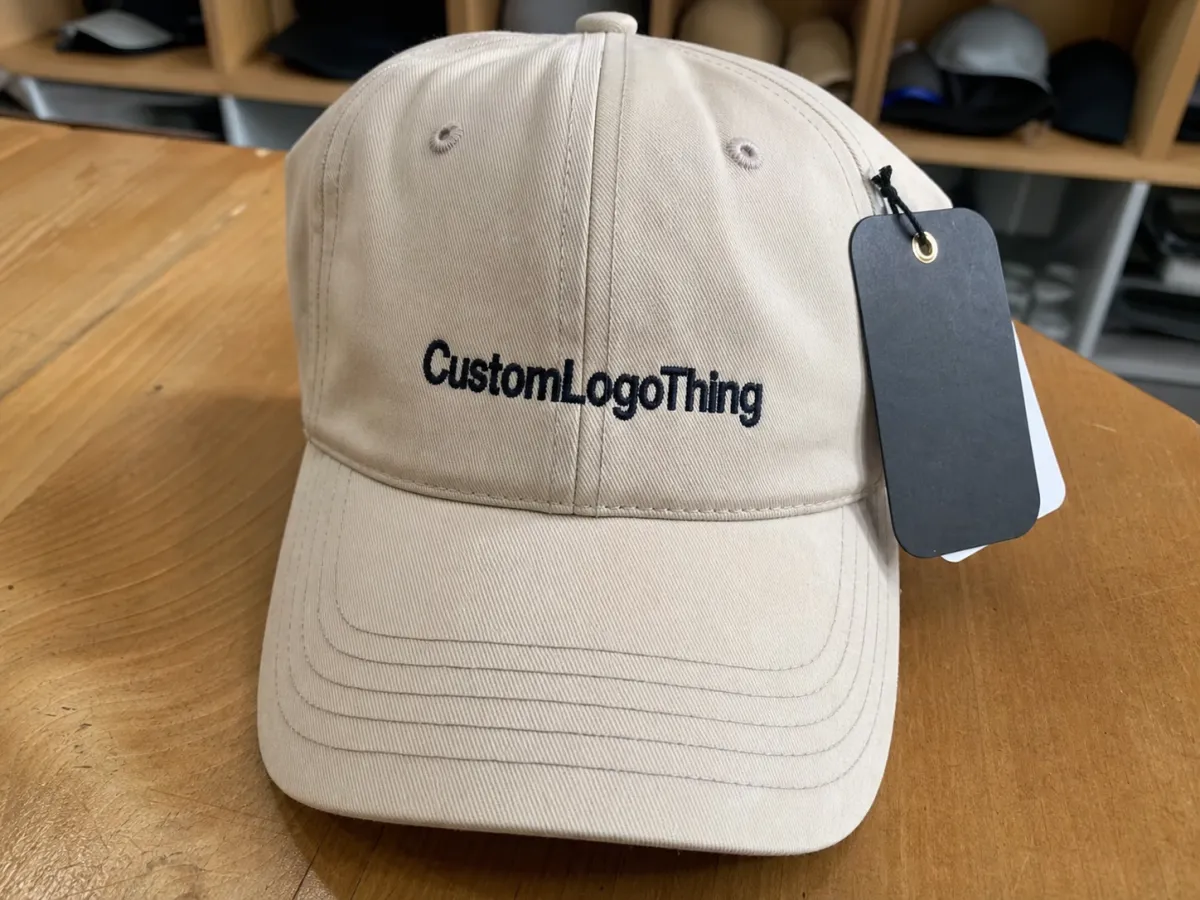
A shopper picks up two similar caps. One is just a hat. The other explains the fabric, fit, price, brand promise, care details, and scan code before anyone on the sales floor says a word. That is the practical value of custom hats with hang tags: the tag works like a compact sales card attached to the product.
The scale is almost funny. A paper tag may weigh less than a gram, yet it can carry the information that turns a decorated cap into a retail-ready item. Cotton twill or recycled polyester. Wool blend or performance mesh. Structured crown or soft low profile. Snapback, strapback, fitted, adjustable, one size. A hang tag can name the collection, show the SKU, display the retail price, and send the buyer to a product page through a QR code.
By custom hats, I mean branded caps, beanies, bucket hats, visors, snapbacks, rope hats, truckers, and other headwear decorated with embroidery, woven patches, leather patches, rubber patches, screen print, heat transfer, labels, or trim. Add a printed hang tag attached by cotton string, elastic cord, plastic loop, ribbon, ball chain, safety pin, or a similar fastener, and the item starts acting like packaged merchandise rather than loose apparel.
That shift matters on brewery shelves, golf tournament tables, college stores, corporate gifting programs, influencer drops, streetwear releases, hospitality uniform rollouts, resort shops, and wholesale racks. Hats are worn later. First, they are touched, compared, scanned, priced, and judged quickly.
From a buyer's perspective, hat tags sit between product packaging, apparel labeling, and inventory control. They are not decoration alone. They manage information. And information often separates a hat that feels finished from one that feels like leftover stock.
The sharper question is simple: what should the tag accomplish before the customer removes it? The answer shapes the design, material, attachment method, cost, production timing, carton sorting, and quality-control checklist.
How Hat Hang Tags Work From Branding to Barcode
A hang tag has two jobs. The visible job is brand communication. The less glamorous job is operational control. The best tags handle both without making the customer feel as if they are reading a shipping label.
The front side usually carries the logo, collection name, product name, short brand line, or a visual cue that matches the hat. The back handles the harder-working information: fiber content, fit, care instruction, UPC, QR code, SKU, price, website, social handle, country of origin if needed, and sometimes a documented material claim. Folded tags are useful when the brand message and the retail data should not fight for the same square inch.
In the warehouse, tags help teams separate colorways, pull the correct SKU, scan inventory, and ship orders without guessing. A black snapback with white embroidery and a navy snapback with white embroidery can look almost identical under bad lighting. A clear tag with a color name and item code prevents a small visual difference from becoming a fulfillment error.
Formats vary more than many buyers expect. Single-card tags are economical and clean. Folded booklet tags create room for care copy, campaign language, or multiple languages. Die-cut shapes make the tag memorable, though they usually add tooling cost and increase the chance of bent corners in packing. Kraft paper feels tactile and natural. Laminated card resists scuffing. Recycled paperboard can support a responsible packaging story if the sourcing claim is documented.
- Single-card tags: suitable for events, budget retail, and logo-first presentation.
- Folded tags: useful for care details, brand story, QR content, or multilingual copy.
- Die-cut tags: distinctive, but more sensitive to tooling cost, waste, and packing damage.
- Kraft or uncoated tags: natural feel for breweries, outdoor brands, ranch-style caps, and heritage collections.
- Laminated or soft-touch tags: better scuff resistance and a more polished feel for higher retail price points.
Attachment choice changes perceived value fast. Cotton string and elastic cord usually feel more premium than plastic swift tacks. Ball chain suits streetwear, motorsport, outdoor gear, and collector-style drops. Ribbon can work for gift sets and corporate boxes. Safety pins can look intentional on some fashion pieces, but they can snag fabric or scratch trim when placed carelessly.
Placement deserves more attention than it gets. Tags may attach through the rear snap opening, size label, internal woven label loop, side seam, zipper pull on specialty headwear, or a small added loop. Avoid punching through delicate knits, leather patches, foam fronts, performance panels, or any spot that distorts the crown. A good tag survives shipping, merchandising, handling, and customer inspection without tearing off or making the hat look cheap.
Key Specs That Decide Whether the Tag Looks Premium or Disposable
The cheapest-looking part of a product is often the first part a customer touches. That should make buyers suspicious of thin, floppy tags attached to otherwise well-made hats.
Paper thickness gives the first signal. A 14 pt card can work for high-volume promotional caps. A 16 pt or 18 pt card feels sturdier in hand. Heavier board, duplex stock, or mounted paper can push the tag into premium territory, though it raises cost and may require a larger hole or stronger cord. For a boutique cap retailing around $28-$45, a tag that feels like office paper creates the wrong comparison.
Finish changes both appearance and function. Matte coatings reduce glare and feel restrained. Gloss coatings make color sharper, but they can interfere with barcode scanning if the code is small, low contrast, or placed near a fold. Soft-touch lamination creates a velvety surface often used on premium packaging. Spot UV can make a logo catch light. Foil stamping adds shine. Embossing and debossing add texture, but they need enough board thickness to look crisp rather than bruised.
Size is a tradeoff. A 1.5 x 2.5 inch tag is tidy, but it may not hold a UPC, QR code, care copy, and material claim without shrinking the type too far. A 2 x 3.5 inch tag gives more breathing room. Oversized tags can overwhelm low-profile dad caps and small beanies, especially if they swing across the front logo on a rack.
Color accuracy also needs a sober review. Full-color CMYK printing may not match embroidery thread, silicone patch color, leather tone, or woven label yarn exactly. If brand color is critical, provide Pantone references and approve proofs carefully. The same logo can look warmer on uncoated kraft stock, sharper on coated C1S artboard, and slightly muted under soft-touch lamination.
| Tag Option | Typical Use | Approximate Added Cost Range | Buyer Watchout |
|---|---|---|---|
| Flat 14 pt paper tag with string | Promo caps, event hats, basic retail | $0.08-$0.18 per unit at mid-volume | Can feel light beside premium embroidery |
| 16-18 pt matte or gloss tag | Retail caps, brewery merch, golf hats | $0.14-$0.30 per unit | Check barcode scanability on coated surfaces |
| Folded tag with QR and UPC | Private-label apparel and wholesale programs | $0.22-$0.45 per unit | Needs careful folding, hole placement, and copy control |
| Die-cut or foil-stamped tag | Streetwear drops and premium gift sets | $0.35-$0.80+ per unit | Tooling, foil area, and waste can change pricing quickly |
Durability depends on where the hats will be sold. Outdoor markets, warehouse clubs, trade shows, and event tables usually need stronger attachments than controlled boutique displays. A tag that tears off in carton handling is no longer packaging. It is loose paper in a box.
Sustainability claims require discipline. Recycled stock, FSC-certified paper, soy-based ink, water-based coatings, and plastic-free attachment loops are useful details, but they should be documented. The Forest Stewardship Council provides chain-of-custody certification standards that buyers can reference when paper sourcing is part of the product story.
Buyer callout: If the hat has a premium patch, dense embroidery, specialty fabric, or a retail price above typical promo merchandise, the tag stock should feel deliberate. A weak tag makes the entire item feel less considered.
Process and Timeline: From Artwork Approval to Tagged Hats
Production is two jobs running in parallel: making the hats and making the tags. Then both streams have to meet for attachment, quality control, packing, and shipping. That synchronization is where many orders lose time.
A typical order starts with hat selection. Stock blank or custom-cut sewn cap? Structured or unstructured? Six-panel, five-panel, rope hat, visor, beanie, bucket hat, performance cap, or trucker? Decoration comes next: embroidery, woven patch, leather patch, rubber patch, sublimation, screen print, or heat transfer. The tag design then has to carry the right mix of logo, product name, SKU, barcode, QR code, care copy, price, material details, and compliance language.
For straightforward custom hats with hang tags using stock blanks and flat printed cards, a realistic production window may be about 12-20 business days after proof approval, assuming materials are available and the order does not require unusual sorting. More complex projects take longer. Custom-manufactured caps, specialty patches, folded tags, foil stamping, individual polybagging, retailer-specific labels, carton sorting, and pre-shipment inspection can push schedules into the 25-45 business day range before transit.
The bottlenecks are rarely dramatic. Missing vector logos. Unapproved thread colors. Late barcode data. Price placement still undecided. QR codes supplied as low-resolution screenshots. Tag copy rewritten after hat production has started. One delayed spreadsheet can hold an entire tagged-hat program hostage.
Proofing needs two layers. Digital proofs catch layout issues: logo scale, bleed, safe margins, spelling, SKU placement, barcode position, and QR destination. Physical samples reveal what a PDF cannot: stiffness, string length, hole-punch alignment, finish glare, tag swing, and whether the attachment point makes the cap awkward to try on.
Quality control should look beyond the front embroidery. Check logo position, thread color, patch placement, tag spelling, barcode scanability, QR destination, hole location, cord security, carton labeling, and SKU separation. For retail orders, scanning sample codes under store-like lighting is not excessive. It is basic risk control.
Industry packaging tests such as ISTA procedures apply more directly to full shipping systems than to a single tag, but the principle still matters: the finished product must survive its route. The International Safe Transit Association is a useful reference for buyers thinking beyond decoration and into distribution performance.
Build buffer time around launch dates, trade shows, retail ship windows, and seasonal campaigns. Hats and paper tags often move through different workflows. The cheapest calendar assumption is usually the one that creates the most expensive scramble.
Cost and Pricing Factors That Change the Unit Cost
Total pricing is shaped by the hat, decoration, hang tag, attachment labor, packing method, and freight. Buyers sometimes compare only the hat unit price, then discover the lower quote excluded tag attachment, barcode setup, carton sorting, or inspection.
Hat variables come first. A basic cotton twill dad cap is priced differently from a structured snapback, performance mesh trucker, washed canvas bucket hat, brushed chino cap, wool blend flat brim, or rib-knit beanie. Fabric, crown structure, closure, panel count, brim type, color availability, and whether the blanks are stock or custom-made all move the number.
Decoration can shift the quote even faster. Embroidery pricing depends on stitch count, thread changes, and placement. Woven patches require patch production and application. Leather patches may involve debossing, laser engraving, sewing, or adhesive backing. Rubber patches need mold setup. Multiple placements, such as front embroidery plus side logo, add labor and quality-control points.
Hang tag variables include stock weight, number of printed sides, flat versus folded construction, coating, foil, embossing, die cutting, barcode printing, string type, and attachment method. A simple flat tag may add less than twenty cents at practical volume. A folded, foil-stamped, soft-touch tag with elastic cord and manual attachment can add several times that.
Minimum order quantity behavior is blunt. Low quantities carry higher setup and unit costs because artwork prep, machine setup, die creation, plate charges, sampling, and labor are spread across fewer pieces. At 100 pieces, a custom tag can feel expensive. At 5,000 pieces, the same specification may be a sensible retail packaging investment.
For an accurate quote, provide quantity, hat style, decoration method, decoration size, thread or patch details, tag dimensions, paper stock, finish, attachment type, barcode needs, packing style, destination, and deadline. If some decisions are still open, separate what is fixed from what is flexible. A supplier can often protect budget by adjusting tag finish, cord type, or pack-out method without weakening the finished presentation.
Custom Logo Things also offers related Custom Labels & Tags for buyers who want consistent hang tags, stickers, garment labels, and package branding across more than one product line.
The best pricing conversation is not “How cheap can this be?” It is “What level of retail polish do we need, and which specs actually support that goal?” That question protects margin and reduces operational surprises.
Step-by-Step Ordering Guide for Branded Hat Tags
Ordering custom hats with hang tags gets easier when decisions happen in the right sequence. Start with the hat, not the tag. A structured snapback, soft dad cap, bucket hat, knit beanie, trucker cap, and visor all display tags differently.
- Choose the hat category first. Crown shape, fabric, closure, and decoration area determine where a tag can attach without damaging the product.
- Define the sales environment. Online fulfillment, retail racks, event tables, corporate gift boxes, and wholesale cartons need different tag information and packing instructions.
- Write the tag copy before designing. Include brand statement, product name, material, care instruction, retail price, QR destination, SKU, barcode, and compliance details if required.
- Select size, shape, stock, finish, and attachment. Match the tag to the hat fabric and buyer experience. A kraft tag on a washed cotton brewery cap can feel right; the same tag may look flat beside a metallic streetwear patch.
- Prepare proper artwork files. Supply vector logos, bleed, safe margins, high-resolution QR codes, barcode files, and Pantone references if color match is critical.
- Request a proof or pre-production sample. Check readability, string length, hole placement, finish, scan performance, and how the tag sits on the displayed hat.
- Approve only after checking data. Confirm spelling, price, SKU, barcode, carton labels, retail requirements, and ship date.
- Inspect arrival by sampling cartons. Pull from different colors, sizes, or styles rather than checking only the first box.
One practical test: print the tag copy at actual size before approval. If the care text is hard to read on office paper, it will not become easier after coating, punching, tying, packing, and shipping.
If the hats are part of a larger merch or launch program, coordinate them with Custom Packaging Products such as mailer boxes, tissue, stickers, inserts, or printed boxes. Matching every surface is not always necessary. Matching the logic is. A rugged outdoor cap can use a kraft tag and plain carton insert. A premium resort cap may need a smoother card, quieter typography, and cleaner pack-out.
Common Mistakes That Make Tagged Hats Feel Unfinished
The mistakes are small. The effect is not. A buyer may not consciously think, “That hang tag is too thin for a premium cap,” but the mismatch registers.
- Designing the tag too late: Rushed copy leads to awkward placement, missing barcodes, weak claims, or attachment methods that fight the finished hat.
- Choosing a tag that is too small: QR codes, UPCs, care copy, and sustainability language need space. Crowded tags look untrustworthy.
- Using thin stock on premium hats: A dense embroidered logo or specialty patch deserves a tag with enough weight to support the perceived value.
- Skipping barcode testing: A beautiful coated tag fails operationally if scanners cannot read it under retail lighting.
- Attaching in the wrong place: Poor placement can distort the crown, snag knit fibers, scratch leather patches, or make try-on uncomfortable.
- Treating colorways as one SKU: Fulfillment errors multiply when hats are sold in several colors, closures, sizes, or collections.
- Making vague sustainability claims: Buyers and retailers increasingly scrutinize packaging language. Evidence matters.
- Ignoring pack-out instructions: Tagged hats can arrive crushed, tangled, or separated from the correct cartons if packing is treated as an afterthought.
The barcode issue appears often. Gloss coating, low contrast, curved placement, or reduced size can turn a valid code into a scanning headache. Test before production, not after 2,000 tags are tied to hats.
String length creates its own quiet problems. Too short, and the tag pulls against the hat. Too long, and it swings across the logo or tangles in cartons. Many retail caps work well with a 4-6 inch loop, but that depends on attachment point, tag size, and display method.
Copy can also go wrong. A tag does not need to tell the full origin story of a brand unless the product and channel support that kind of reading. On a crowded merch table, a short material callout, fit note, price, and scan code may do more work than a dense paragraph of brand language.
Checks to Make Before You Request Samples or Place an Order
Before requesting samples, create a one-page specification sheet. Keep it plain: hat style, quantity, decoration method, tag size, tag material, finish, attachment type, barcode needs, packing method, destination, and deadline. That single page prevents a surprising amount of confusion.
Gather assets before contacting a manufacturer. You will need logo files, brand colors, tag copy, SKU list, QR destination, retail price, care language, shipping address, and any retailer requirements. If the hats are going into stores, ask whether the retailer requires a specific barcode size, price position, or carton label format.
Decide which choices are fixed and which are flexible. The launch date may be nonnegotiable. The tag finish, cord type, or paper thickness may have room to move. That distinction gives the production team a chance to recommend a better balance between price, presentation, and timing.
Ask for both a hat proof and a tag proof, then review them together. A tag can look good alone and still feel wrong once attached to a low-profile cap. A cap can look excellent and still feel unfinished if the tag copy is crowded or the attachment looks cheap.
Request photos or samples showing the attachment point, string length, how the tag hangs, and how the finished cap will be packed. For higher-value retail programs, ask about carton labeling, SKU separation, and pre-shipment inspection. These details are not glamorous. They are the difference between organized product packaging and a sorting problem on arrival.
Use a final approval checklist: spelling, logo placement, color, tag thickness, barcode scanability, QR destination, attachment strength, carton labels, and delivery date. Custom hats with hang tags work best when product story, retail data, and production details are treated as one system rather than three separate tasks.
FAQ
What information should I put on hang tags for custom hats?
Include your logo, product name, hat style, material or care details, price if needed, SKU or barcode, QR code, website, and a short brand message. Keep the front visually simple and move operational details such as UPC, care copy, and SKU data to the back or inside fold. If the hats are for retail, confirm whether the store requires a specific barcode size, price placement, or carton labeling.
Do custom hats with hang tags cost much more than hats alone?
They usually add cost through tag printing, materials, finishing, attachment hardware, and labor, but the increase depends heavily on quantity and tag complexity. A flat paper tag with string is more economical than a die-cut, foil-stamped, folded, or specialty-coated tag. The tag can also reduce operational friction by carrying pricing, SKU, and scan data that would otherwise require separate labeling.
What is the best attachment method for branded hat hang tags?
Cotton string or elastic cord works well for many retail caps because it feels more premium than plastic and is easy to remove. Plastic swift tacks are efficient for high-volume budget runs but can look less refined and may damage delicate materials if placed poorly. Ball chain, ribbon, or safety-pin attachments can work for specialty drops, streetwear, or gift packaging when they match the brand style.
How long does it take to produce custom caps with hang tags?
The timeline depends on hat availability, decoration method, tag printing, proof approvals, attachment labor, and shipping distance. Stock hats with simple printed tags are generally faster than fully custom hats with patches, folded tags, foil finishes, and individual retail packing. Artwork delays, missing barcode data, and late approval are among the most common reasons production schedules slip.
Can I use QR codes or barcodes on custom hat tags?
Yes, but the tag must be large enough, the print contrast must be strong, and the code should be tested before bulk production. QR codes can link to product pages, care instructions, authenticity checks, campaign videos, or wholesale reorder forms. Retail barcodes should be supplied in the correct format and checked against the retailer's scanning and placement requirements.


