Most subscription merch gets judged in about three seconds. Harsh? Absolutely. Still, anyone who has handled a monthly box program knows the moment: the member opens the package, scans the contents, and decides almost immediately whether the item feels useful, collectible, or like another promotional extra.
They decide fast.
Logo patches for subscription merch can help a hat pass that test because the decoration adds texture, shape, and a retail-style focal point before the wearer even adjusts the closure. Why settle for a cap that reads like throwaway swag when a patch can make the same logo feel intentional?
A patch gives the logo a defined home on the cap. Instead of floating across fabric as a flat print, the mark has an edge, a surface, and a bit of weight. For subscription programs, that matters because hats need to photograph well, ship without looking crushed, and feel worth keeping across a broad member base with different tastes.
Why Logo Patches for Subscription Merch Make Hats Feel Worth Keeping
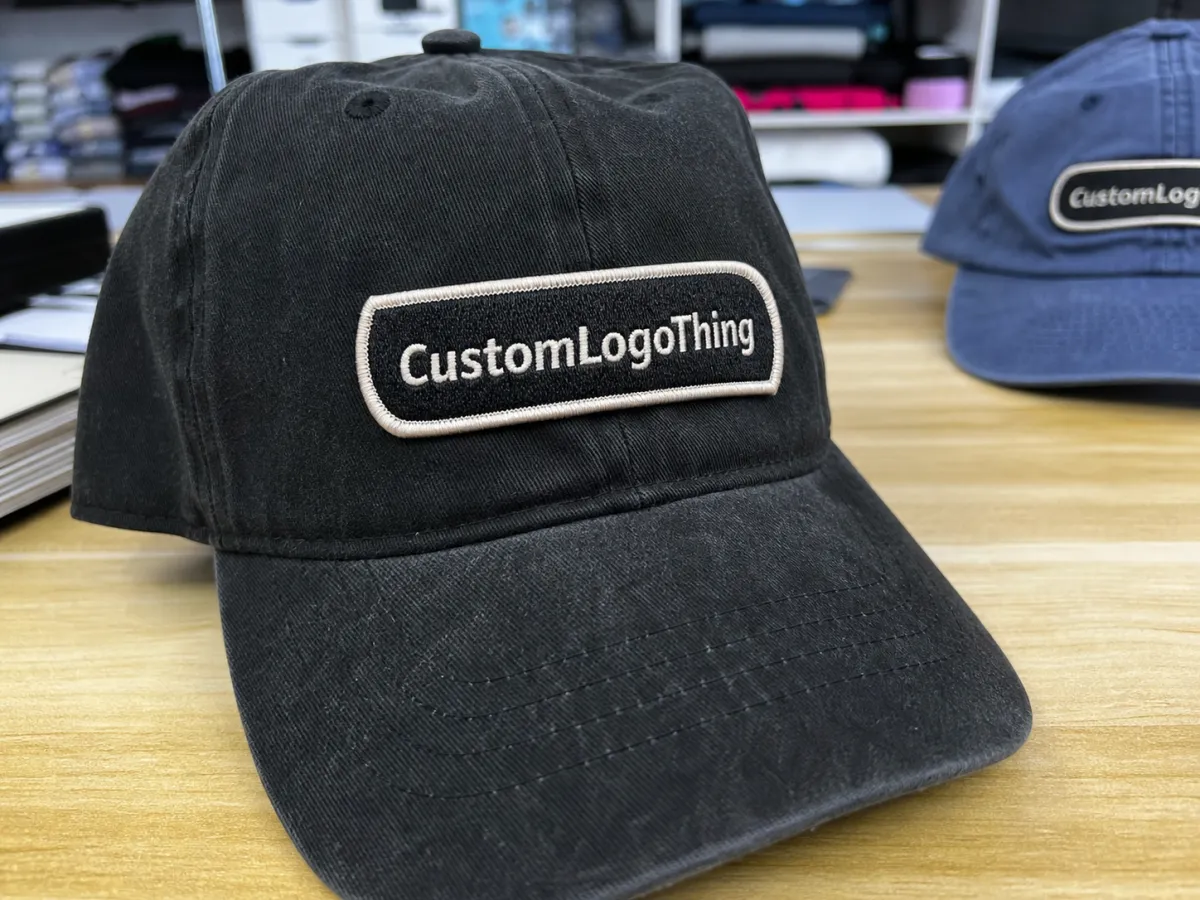
A flat printed logo on a bargain cap can work for a one-day event, but it often reads as a promo item. A patch hat usually feels more deliberate. Even a simple 2.25-inch woven patch on a structured trucker cap can look more finished than an oversized print that follows every ripple in the fabric or starts cracking after repeated wear.
Hats are also practical for subscription buyers because they avoid the sizing problem that makes shirts, hoodies, and jackets harder to forecast. One adjustable cap can cover most recipients. That does not make ordering effortless, but it removes the small-medium-large-extra-large breakdown that can turn a simple merch idea into a spreadsheet with too many assumptions.
Patches help tune the brand tone. A fishing box might use a PVC patch because it handles sweat, rain, and rough storage better than many fabric decorations. A coffee club might choose a leatherette patch with a debossed mark because the warmer texture matches a lifestyle product. A streetwear or collectibles program may lean toward a woven patch with tight lines, sharp contrast, and a custom shape. The same logo can feel cheap or premium depending on the patch material, hat structure, placement, and color pairing.
Compared with screen printing, patches usually hold a cleaner edge and create a stronger focal point on the crown. Compared with direct embroidery, patches can preserve more complex artwork because the design is produced on a separate surface before it is attached to the hat. That separation gives the buyer more control over shape, border, material, and sometimes color accuracy, although it does not remove the normal limits of small-format decoration.
The main patch types are easy to separate once the end use is clear:
- Woven patches: best for fine detail, small text, modern logos, and compact badge designs.
- Embroidered patches: classic texture, strong durability, and a better fit for bold shapes than tiny lettering.
- PVC patches: flexible rubber-like finish, weather resistance, and a rugged feel for outdoor, fitness, fishing, and tactical merch.
- Leatherette patches: warm lifestyle finish, often used for coffee, ranch, outdoors, golf, and heritage-style programs.
- Sublimated patches: useful for full-color illustrations, gradients, and artwork that cannot be reduced to thread colors.
The real buying decision is not simply whether to use a patch. It is how the patch affects the hat style, attachment method, minimum order quantity, production schedule, packaging, and final unit cost. Treat those pieces as one product system, not separate decisions made in different email threads.
How Patch Hats Work From Artwork to Finished Subscription Box
The production path looks simple from a distance: choose the hat, choose the patch, prepare the artwork, approve a proof, make the patches, attach them to the hats, inspect, pack, and ship. Most problems start when buyers assume the patch and the hat are produced in one single step. They usually are not.
The patch is often made separately and then applied to the finished cap. That matters because the patch material and hat fabric need to cooperate. A woven patch may sew cleanly onto a cotton twill dad hat. A PVC patch may require a specific stitch path, edge design, or heat-compatible backing. A leatherette patch can look excellent on a curved crown, but only if the size, thickness, and flexibility suit the cap structure.
Attachment method has a direct effect on durability and appearance:
- Sewn-on patches: the safest durability choice for most caps, especially hats expected to survive regular wear.
- Heat-applied patches: clean and efficient on compatible materials, but fabric type, pressure, heat, and dwell time all matter.
- Adhesive-backed patches: useful for limited applications, but not the first choice for hats meant to last.
- Hook-and-loop patches: best for tactical, outdoor, uniform, or interchangeable patch programs.
For placement, the front crown is the safest subscription-box choice. It photographs well, creates an obvious brand moment, and works across structured caps, truckers, and many performance hats. Side-panel patches can look sharp for quieter brands. Back arch patches are subtle and often better as a secondary decoration. Beanies usually need a centered cuff patch, soft woven label, or flexible leatherette patch because the surface stretches and shifts during wear.
Artwork needs restraint. Patch designs should use simplified lines, strong contrast, adequate border space, and lettering that remains readable at the final size. A tiny QR code, a long tagline, or a distressed texture may look clever on a screen and turn into a smudge on a 2-inch patch. Production art is not the place to preserve every detail if those details will not survive the material.
Rule of thumb: if the logo cannot be understood from roughly 3 feet away on a 2-inch patch, simplify it before production. Members are not inspecting the hat with a jeweler’s loupe.
Vector artwork such as AI, EPS, or SVG is preferred because it gives the production team clean shapes and scalable paths to work from. A high-resolution PNG can sometimes be used, especially for sublimation or reference, but screenshots and low-resolution web graphics should be treated as placeholders, not final files.
Patch Materials, Hat Styles, and Specs That Change the Result
Material choice changes the feel of logo patches for subscription merch. It affects detail, stiffness, wash behavior, perceived value, and even how the finished cap sits on the head. The patch may be small, but it has a strong opinion about the rest of the product.
Woven patches are often the best option for clean logos with small details. They use tightly woven threads on a flatter surface, so they can hold thin lines and compact lettering better than traditional embroidery. If the artwork includes a modern wordmark, fine icon, or small badge layout, woven is usually the practical starting point. Typical front patch sizes fall around 2 to 2.75 inches wide, though a tall shield shape and a wide rectangle behave differently on the same crown.
Embroidered patches bring the familiar texture many people associate with classic caps, outdoor clubs, sports merch, and nostalgic brand drops. They are durable and tactile, but detail has limits. Very small text can fill in, especially below roughly 0.18 inch letter height, and thin lines may close up depending on thread, stitch density, and backing. Embroidery looks best with strong silhouettes, thick borders, and fewer colors competing for space.
PVC and rubber patches cost more, but they create a dimensional, rugged appearance. They suit fitness boxes, fishing clubs, tactical gear, streetwear, outdoor kits, and products exposed to sweat, rain, mud, or glove compartments. Do you want a patch that fades into the background, or one that reads like it was made to take abuse and still look sharp?
Leatherette patches usually aim in a different direction. They soften the look, add warmth, and pair well with workwear-inspired or lifestyle brands. Coffee roasters, ranch goods, golf programs, and heritage merchandise often use them because the material makes the hat feel a little more elevated without becoming precious.
Sublimated patches serve a specific need. They handle gradients, full-color art, and illustration-heavy graphics that would be impractical in thread or molded rubber. They are useful when the design matters more than the tactile finish, especially in promotional subscription drops that need a brighter, more graphic look.
Hat structure matters just as much as the patch. Structured caps give the patch a firmer base and usually preserve shape better in shipment. Unstructured dad hats feel softer and more relaxed, but the front panel may slump if the patch is too stiff or too large. Trucker caps add mesh backs and often work well with bold front patches because the contrast between materials makes the logo stand out.
Curved bills and flat bills change the visual balance too. A flat bill can make the patch read more streetwear-forward. A curved bill feels more classic and retail-friendly. Neither is automatically better, but the choice should match the brand voice and the subscription audience.
Cost, Pricing, MOQ, and Unit Cost Drivers for Patch Hats
Pricing is shaped by a few predictable inputs. Patch type, patch size, hat style, decoration method, order quantity, setup fees, and packaging all affect the final number. Skip one of those variables, and the quote can look accurate until production starts.
MOQ is usually the first constraint buyers notice. Patches often have their own minimum, and hats may have a separate minimum depending on style or vendor. That means a low-volume subscription drop can become expensive quickly if the hat and patch are sourced from different production lines or require separate setup. Small orders also limit negotiation leverage, so every design decision matters more.
Simple designs usually cost less. One-color woven patches, standard cap colors, and straightforward front placement keep tooling and production time down. More complex artwork, custom cut shapes, specialty backings, and mixed-material builds raise costs because each step adds labor or machine time. Custom shape dies are a classic example: they can make the patch feel premium, but they are not free.
Color count matters in different ways depending on the patch type. Woven and sublimated patches can often support more colors without dramatic jumps, while embroidered and PVC pieces can become more expensive as the design asks for greater precision or more production complexity. The practical question is not how many colors the brand wants. It is how many colors the patch needs to communicate clearly.
Shipping and packaging also influence unit cost, especially for subscription merch. A hat that ships flat in a mailer may cost less to fulfill than one packed in a rigid box or nested with other items that require protection. If the hat is meant to arrive as a premium reveal piece, the packaging may be part of the product economics rather than an afterthought.
Ask for pricing in layers. First, request the hat with the patch attached. Then ask for the patch as a standalone item if you also plan to use it elsewhere. That comparison can reveal whether the hat is absorbing too much of the decoration cost or whether the bundle is actually the better value.
Process, Timeline, and Lead Time Before Your Merch Drop
Lead time is where many subscription programs get squeezed. A hat can look simple, but patch production, sample approval, decoration, packing, and freight all take time. That calendar can move faster than the buyer expects and slower than the launch date allows.
Expect a sequence, not a shortcut. Artwork cleanup comes first. Then the vendor creates a proof. After approval, the patch is produced, the hat is decorated, and the finished goods are inspected. If the order includes custom shape cutting, special backing, or sample revisions, each step adds days and sometimes weeks.
Rush orders are possible in some cases, but they often narrow the available material choices. They can also increase cost, reduce proofing time, and create more risk if the artwork is not production-ready. A subscriber box should feel polished, not hurried.
For planning purposes, build in buffer time before the drop date. Freight delays, artwork revisions, and back-and-forth on specs are common. The safest assumption is that the first date you are given is the optimistic one, not the guaranteed one.
Samples matter here. A digital proof can confirm layout, but it cannot tell you how a patch will sit on a curved crown or how a cap will photograph under natural light. Physical samples catch those surprises before thousands of units are packed and sealed.
Step-by-Step Ordering Guide for Subscription Merch Buyers
Start with the audience. Are you selling to outdoors customers, coffee fans, collectors, athletes, or a mixed membership base? That answer should guide the hat style and patch material before anything else. A good product feels inevitable once you know who is supposed to wear it.
Next, define the use case. Is the hat a premium member gift, a limited-edition drop, a resale item, or a seasonal bonus? The use case determines how much finish and durability you need. It also sets the tone for the patch design, because an incentive item can be louder than a loyalty piece.
Then prepare the artwork. Remove tiny details that will not reproduce cleanly. Tighten spacing. Keep the silhouette readable. If the logo only works when zoomed in on a monitor, it probably needs another pass before it touches a patch.
After that, choose the decoration method. Sewn-on patches are reliable. Heat-applied options are cleaner when materials cooperate. Hook-and-loop makes sense for tactical or reusable systems. The attachment method should follow the product, not fight it.
Once the specs are set, request a proof and a sample if the schedule allows. Proofs are about accuracy; samples are about reality. Both can save the program from expensive disappointment.
Finally, confirm packaging and carton counts. Subscription teams often think in customer units, while factories think in production units. Those two numbers are not always the same, and alignment there prevents a lot of late-stage friction.
Common Mistakes That Make Patch Hats Look Cheap
The first mistake is over-detailing the patch. Tiny text, thin outlines, and crowded symbols can make even a strong logo look muddy. If the patch needs a magnifying glass, the design has already lost the room.
The second mistake is mismatching patch and hat. A rugged PVC patch on a very soft, flimsy cap can feel visually disconnected. A warm leatherette patch on a hyper-sport hat can do the same thing in reverse. The components need a shared language.
The third mistake is ignoring placement. Too high, too low, or too small, and the patch stops feeling intentional. Centering is not flashy, but it is usually safe for a reason.
The fourth mistake is treating color as decoration instead of communication. Too many colors can cheapen the look if they do not support the logo hierarchy. Good patch design uses color to clarify, not clutter.
The fifth mistake is skipping physical review. A mockup can hide waviness, stiffness, or a poor match between thread sheen and fabric texture. Real materials expose those problems immediately.
Next Steps: Specs to Prepare Before You Request a Quote
Before you request pricing, gather the basics. You will move faster if you can answer the hat style, patch type, patch size, logo file format, target quantity, and due date in one message.
It also helps to include the decoration position, preferred colorway, and whether you need packaging support. The more precise the brief, the fewer rounds of correction you will need.
For many buyers, the smartest move is to compare two or three patch options on the same cap style. That side-by-side view makes the value tradeoff obvious. It also turns the decision from abstract to visible.
Ask for a recommendation if you are unsure. A good vendor should be able to tell you when woven is better than embroidery, when PVC is worth the premium, and when the hat itself needs a different structure to support the patch.
Want a quick starting point? Send the logo, the desired hat style, the quantity, and the date you need the boxes ready. That is enough to begin a useful conversation.
FAQ
Are patch hats better than embroidered hats? Not always. Patch hats are often better when you want more logo clarity, stronger texture, or a more retail-like finish, while direct embroidery can still be the right choice for simpler marks or lower-complexity programs.
Can patches be added to any hat? Not every hat, no. The fabric, curvature, and construction all affect whether a patch will attach cleanly and look balanced.
What patch type is most durable? Sewn-on patches usually offer the most reliable long-term hold, especially for hats that will be worn often and washed carefully.
Do patch hats increase subscription box value? They can, because a well-made patch adds perceived finish and makes the hat feel more intentional than a plain promo cap. The real effect depends on material choice, placement, and overall product quality.


