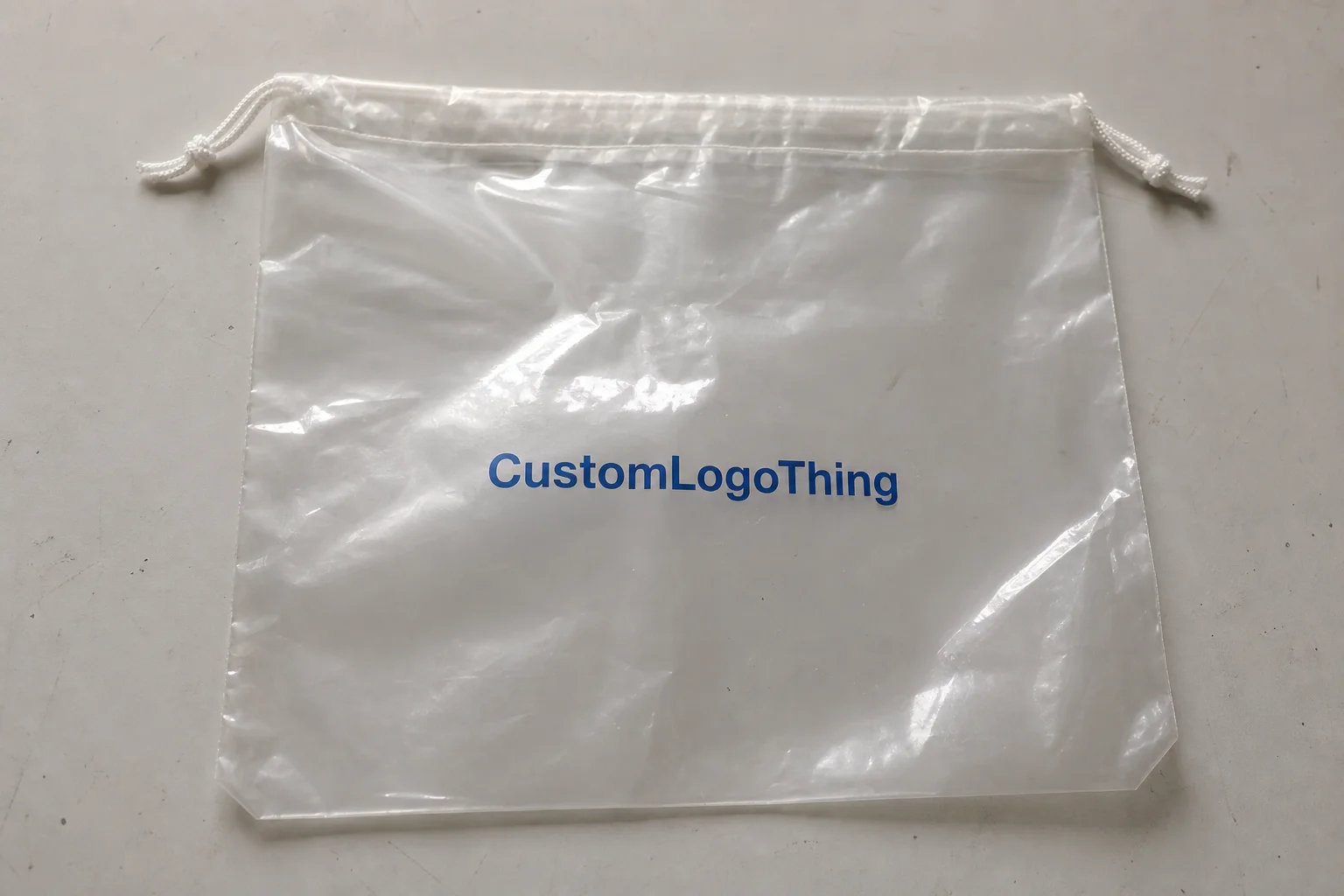
Two Clear Zipper Bags can look almost identical on a buyer’s desk. Fill them, ship them, hang them on a peg, or scan them at checkout, and the differences start to show. One lies flat, closes cleanly, and lets the product carry the sale. The other wrinkles at the zipper, clouds under warehouse handling, or makes the barcode harder to read than it should be.
That is why choosing a clear zipper bags Private Label Supplier is not the same as buying a generic plastic sleeve. The right supplier understands film behavior, closure performance, retail handling, print limits, and brand presentation at the same time.
Clear packaging is unforgiving. Hazy film, a zipper that waves across the top, ink sitting 2 mm off-register, or a side seal that looks slightly overheated can make a decent product feel cheaper than it is. The shopper may never identify the technical fault. They still feel the downgrade.
For apparel accessories, cosmetics tools, wellness kits, stationery, hardware, electronics parts, and sample bundles, the bag is part of the product system. It proves the item has been measured, organized, protected, and prepared for sale. A capable clear zipper bags private label supplier turns transparent packaging from a commodity pouch into branded packaging that protects the product without fighting for attention.
What a Clear Zipper Bags Private Label Supplier Actually Does
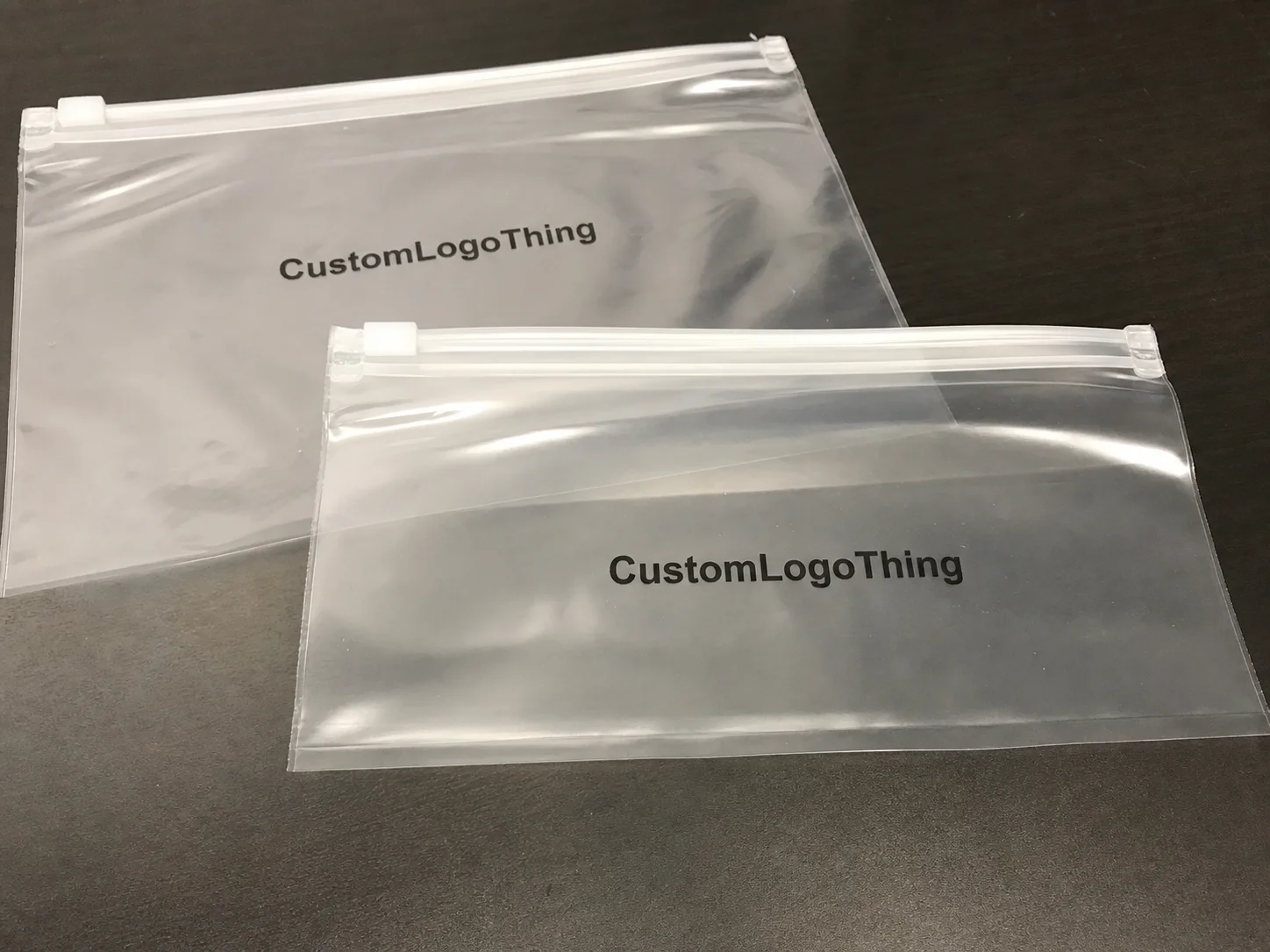
A clear zipper bags private label supplier manufactures transparent resealable bags under the buyer’s brand. The work can include sizing, material selection, artwork setup, printing, zipper selection, punching, inspection, counting, carton packing, SKU labeling, and branded carton marks. In a more developed private label program, the supplier may also coordinate inserts, barcode placement, warning labels, packing counts by SKU, and repeat-order standards.
The product sits in a narrow middle zone. It is not just commodity packaging, because it must communicate brand value in seconds. It is not a rigid luxury box either, because it still has to flex, reseal, protect, hang, ship, and fit inside a cost model. A 5,000-piece starter run with one-color logo printing lands in a very different cost band than a custom-size laminated zipper pouch with full-color artwork and retail carton organization.
Use cases vary more than many first-time buyers expect. A bag for hair clips may need excellent clarity and hang strength. A bag for screws needs puncture resistance and a zipper that survives repeated opening. A bag for sample sachets may need clean print, quick packing, and reliable counting more than heavy film. A bag for cosmetic brushes has to protect shape, reduce dust exposure, and still look polished under store lighting.
The vocabulary matters. Stock clear zipper bags are pre-made sizes with little or no branding. Custom printed bags add a logo, barcode, warning, or simple artwork to an existing format. Private label zipper bag programs go further: custom dimensions, selected film gauge, brand-specific print standards, SKU separation, carton labeling, and sometimes matching Custom Labels & Tags for product families.
Clear bags look simple because the package disappears. In production, that is exactly why flaws become so visible.
Transparency does not hide variation. It exposes it. Haze, static, seal distortion, zipper inconsistency, trapped dust, ink scuffs, and poor stack counting become easier to spot because there is nowhere for the defect to hide. A serious supplier is useful because it anticipates those weak points before cartons are already sitting on a warehouse floor.
How Custom Clear Zipper Bag Production Works
Custom clear zipper bag production usually begins with film selection. Depending on the project, the supplier may extrude film, source pre-made rolls, or use a laminated structure for better print protection and shelf feel. The workflow then moves through printing, curing, cutting, zipper application, heat sealing, hang-hole punching if required, inspection, counting, carton packing, and shipping.
Film gauge matters. A lot.
Gauge is thickness, often discussed in mils in the U.S. market or microns in international quoting. A lightweight 1.5 to 2 mil LDPE bag may work for paper inserts or small samples. A 3 to 4 mil bag feels sturdier and often performs better for hardware, cosmetics tools, travel accessories, or reusable storage. Push the structure too thick, though, and soft goods can look overpacked and stiff. More material is not automatically better packaging.
Material choice affects clarity, hand feel, strength, recyclability claims, odor risk, and price. LDPE is flexible and common for resealable plastic bags. PE blends can improve stiffness or processing behavior. CPP can offer strong clarity and a crisper feel. PET laminates can protect reverse-printed graphics and improve presentation, although recycling claims become more complicated. Frosted or semi-clear films reduce scuff visibility and can create a softer, more controlled impression. Recycled-content films may be possible in some applications, but clarity, odor, and compliance need closer review.
Food-contact use adds another layer. If the bag will directly touch edible goods, buyers should ask for documentation rather than accepting a casual “food grade” claim. The U.S. FDA framework, destination-market requirements, migration limits, and the supplier’s material declarations all matter. For sustainability claims, the U.S. EPA recycling guidance is a useful starting point, although local recycling access still varies sharply.
Printing can be surface print or reverse print. Surface printing is common for simpler logos, warnings, and one- or two-color branding. Reverse printing places graphics behind a clear outer layer, which protects ink from scuffing and gives a cleaner retail look, but it usually adds cost and setup time. Spot color printing works well for crisp brand marks. Full-color printing is better for image-heavy designs, gradients, or product education, but barcode testing becomes more important on transparent film.
Zipper style changes performance. Press-to-close zippers are common and cost-efficient. Slider zippers improve convenience but add material and assembly cost. Double-track zippers can improve closure confidence for heavier contents. Child-resistant formats may be relevant for regulated goods, but they require a real compliance discussion, not a quick catalog selection. Hang holes, euro slots, header space, and zipper placement all affect how the bag behaves on retail pegs.
Before approval, a good clear zipper bags private label supplier should check zipper alignment, seal strength, print adhesion, haze level, odor, static, bag opening ease, and stack count per carton. ASTM test methods may be relevant for film properties or seal performance. Distribution testing through ISTA protocols can help when packaged products face parcel shipping stress, especially for heavier kits or sharp-edged items.
Key Specs That Decide Whether the Bag Feels Retail-Ready
Size should start with the filled product, not the flat product. Obvious on paper. Frequently missed in early quoting.
A folded scarf, blister card, set of metal parts, and cosmetic brush create different internal pressure inside a bag. Thickness, trapped air, folds, sharp corners, and the customer’s ability to remove the item without fighting the zipper all affect final dimensions. A product measuring 4 x 6 inches flat may need a bag closer to 5 x 8 inches once handling and fill depth are considered.
Core dimensions include width, height, lip size above the zipper, bottom seal, side seal, header space, hang hole, and any gusset. The zipper can sit above the display area or inside the branded header zone. A bottom gusset may help a thicker product sit better, but it can reduce carton efficiency. For peg display, the hang hole needs reinforcement through material choice, header height, or both.
Clarity is not only a material trait. It is a branding decision. Crystal-clear film shows color, texture, stitching, ingredients, or finish beautifully. It also shows scuffs, dust, and handling marks. Frosted film hides minor abrasion and can make low-cost contents feel more curated. Semi-clear film offers a compromise: the buyer sees the product, while the package keeps some visual control.
Film thickness changes perception. A 2 mil bag may work for lightweight promotional samples, especially if the bag is not intended for repeated use. A 3 mil or 3.5 mil structure feels more substantial and usually suits cosmetics tools, hardware kits, travel accessories, and premium stationery. Above that, the bag can feel durable but less flexible, and the zipper must be strong enough to match the film.
Compliance details belong in the first specification round. Suffocation warnings may be needed for certain bag sizes and markets. Recycling marks require care because material type, local collection, and print structure affect claims. Barcode zones need enough contrast and quiet space; a barcode printed over a visible product edge can fail at checkout. Lot codes, country-of-origin markings, age warnings, and food-contact documentation may also be required depending on the product category.
A packaging spec sheet protects the buyer and the supplier. It should list finished width and height, film type, gauge, zipper type, print colors, artwork position, hang-hole dimensions, tolerances, packing count, carton size, barcode requirements, and approval steps. Without that document, two suppliers can quote “medium thickness clear zipper bag” and mean two different products. A disciplined supplier will push for detail because vague specifications create defects no inspection team can fully repair.
Cost, MOQ, and Quote Variables Buyers Should Compare
Unit cost is rarely just “bag price.” It is shaped by material, gauge, size, order volume, print method, color count, zipper type, tooling, testing, freight, packing, and SKU count. A low ex-factory quote can become expensive once freight, duties, repacking labor, or rejected bags are counted.
Typical quote line items include plate or cylinder charges, setup fees, sample fees, per-unit production cost, carton packing, SKU labels, domestic freight, international freight, duties, and inspection. For a starter quantity around 5,000 pieces, a simple stock-based logo print may be quoted far below a custom-size, multi-color, laminated zipper pouch. The difference can be only cents per unit. That sounds minor until a reorder reaches 50,000 pieces.
| Option | Typical Best Use | Cost Drivers | Buyer Watchout |
|---|---|---|---|
| Stock clear zipper bag with label | Small launches, samples, mixed SKUs | Bag size, label material, application labor | May look less integrated than direct print |
| Stock bag with one-color print | Simple logos, warnings, barcode zones | Print setup, ink coverage, quantity | Limited size choices can hurt product fit |
| Custom-size printed bag | Retail-ready product lines | Tooling, film gauge, print colors, MOQ | Requires tighter artwork and sample approval |
| Laminated private label bag | Premium presentation, protected graphics | Film structure, reverse print, longer setup | Recycling claims may be more complex |
MOQ depends on customization. Low minimums may be possible for stock bags with simple logo printing or labels. Fully custom dimensions, specialty film, slider zippers, high ink coverage, or full-color graphics usually push minimums higher because the supplier must justify setup, film sourcing, machine time, and waste during tuning.
The cheapest quote can become the most expensive one. If 4% of bags have weak zippers, the buyer is not just losing 4% of packaging. Staff may need to repack goods, replace damaged products, ship late orders, and explain inconsistent presentation to retailers. In retail packaging, failure cost often hides in operations rather than the packaging invoice.
Ask for price breaks at starter, reorder, and scale-up volumes: 5,000 pieces, 10,000 pieces, 25,000 pieces, and 50,000 pieces, for example. Then compare the landed cost per usable bag, not just the per-unit production quote. A serious clear zipper bags private label supplier should separate tooling, recurring production, freight, and packing assumptions clearly enough for a buyer to model cash flow.
Process and Timeline from Artwork to Delivered Bags
A practical private label bag project moves through discovery, spec confirmation, artwork review, dieline approval, sampling or proofing, pre-production approval, mass production, quality control, packing, and delivery. Repeat orders can move faster because the artwork, film, zipper, and packing method are already known. New projects need more review points.
Delays often come from basic gaps: incomplete dimensions, missing vector artwork, unclear Pantone references, late barcode changes, unapproved warning text, custom film sourcing, or freight decisions made after production. A bag may be physically simple. The approval chain is not always simple.
Before quoting, a competent supplier should ask for product dimensions, fill weight, target quantity, desired material, print coverage, zipper style, use case, retail channel, destination, and compliance needs. If a supplier quotes a custom retail bag from only a photo and rough size, treat that quote as preliminary. Useful, perhaps. Not final.
Proof types have different jobs. A digital mockup is fast and useful for layout review, but it cannot prove hand feel, haze, zipper strength, or product fit. A blank physical sample can test size and material quickly. A printed pre-production sample is best for color-critical launches, barcode review, and retailer approval, but it costs more and adds time.
Lead times vary because capacity, material availability, print complexity, inspection level, and shipping method all matter. A simple repeat order may move in a few production weeks after proof approval. A new private label program with custom sizing, sampling, color matching, and ocean freight can take much longer. Build the calendar backward from the launch date and leave room for one sample revision. Two is safer for a product with odd thickness, sharp corners, or retail approval requirements.
A packaging calendar should include internal buyer approvals, artwork lock date, sample review, production deposit, pre-production approval, mass production, inspection, freight booking, customs clearance if applicable, warehouse receipt, and packing into finished goods. For brands using coordinated Custom Labels & Tags, add time to align label stock, bag print color, and barcode data across all SKUs.
Common Mistakes That Make Clear Zipper Bags Look Cheap
The most common mistake is approving a flat bag size without testing the actual filled product inside it. A bag can measure correctly on paper and still fail in the hand. Too much headspace makes the product look undersized. Too little space strains the zipper, curls the film, and irritates the customer.
Print placement creates another group of problems. Logos placed too close to the seal can distort during heat sealing. Low-contrast ink on transparent film can disappear against the product inside. Barcodes printed over a textured item may fail scanning. Heavy artwork across the product-view zone can defeat the main advantage of clear packaging.
Material mismatches are just as damaging. Thin film around heavy contents feels flimsy and may split at the side seal. Overly stiff film around soft goods can make a textile item look compressed. Cloudy film around premium visual products reduces perceived value. The wrong zipper type can turn a resealable package into a one-use package after three openings.
Communication gaps show up later, and they are expensive. Vague quote specs, no tolerance ranges, no sample approval process, unclear color responsibility, and no written policy for freight damage can create disputes after cartons arrive. A written spec sheet is not bureaucracy. It is evidence.
Warehouse details deserve more attention than they usually get. Skipping carton labeling and SKU separation can turn a clean packaging order into a sorting project. If 12 similar sizes arrive in unmarked cartons, someone has to identify them, count them, relabel them, and keep them from mixing during fulfillment. That labor can erase the savings from a slightly cheaper quote.
A retail-ready zipper bag is not judged only by the first impression. It is judged again when the customer opens it, closes it, stores it, and decides whether the brand feels organized.
What Should You Ask a Clear Zipper Bags Private Label Supplier Before Ordering?
Ask a clear zipper bags private label supplier for material options, film gauge, zipper type, print method, MOQ, tooling fees, sample process, tolerances, lead time, carton packing, quality checks, and landed freight assumptions. Get those answers in writing. The goal is not a longer email thread; it is a quote that can survive production.
For a quick checklist, ask the supplier to confirm the bag size, filled-product fit, material structure, thickness, zipper performance, artwork requirements, barcode location, compliance markings, sample approval process, defect tolerance, packing count, carton labels, lead time, and total landed cost.
One useful test: send the same product details to two or three suppliers and compare the questions they ask back. The weakest suppliers often rush to price. Better ones pause around the variables that can break the project: filled thickness, sharp edges, print contrast, hang-hole stress, barcode scanning, film haze, and whether the bags will sit in storage for months before use.
Ask about retained production standards as well. For repeat orders, the approved sample, artwork file, color reference, film specification, and packing method should not live only in someone’s inbox. A mature clear zipper bags private label supplier should be able to reference the prior order and explain what will stay the same, what may vary, and what needs buyer approval before the next run begins.
Next Steps Before You Approve a Private Label Bag Order
Before requesting quotes, gather the basics: product dimensions, filled thickness, fill weight, target quantity, launch date, retail channel, preferred film feel, print needs, barcode placement, warning text, shipping destination, and carton packing preference. These details help suppliers quote the same package instead of guessing in different directions.
Request a fit sample before committing to production, especially for bulky, sharp-edged, oily, powdered, fragile, or high-value products. A blank sample can reveal whether the zipper is easy to open, whether the film scuffs, whether the hang hole tears, and whether the product looks properly sized. That test may cost a few days. It can save an entire run.
Ask for material options side by side. A small film change can shift cost, clarity, durability, and shelf feel. Moving from a thinner LDPE film to a heavier PE blend may improve perceived value and puncture resistance. A frosted finish may hide handling marks better than crystal-clear film. The best option depends on the product, channel, and reorder plan.
Prepare artwork in vector format with Pantone or CMYK references, bleed, safe zones, barcode size, warning copy, and required marks. If the package needs a separate label, tag, insert, or hang card, align those elements early through Custom Labels & Tags so the full retail set feels intentional rather than assembled at the last minute.
Before paying the production deposit, request a written spec sheet with finished dimensions, tolerance ranges, film structure, gauge, zipper type, print method, color standard, packing count, carton size, approval steps, defect responsibility, and freight terms. Not every project needs laboratory testing or ISTA validation. Every project needs a shared definition of acceptable product.
The practical move is straightforward: collect real product measurements, compare landed cost per usable bag, approve the right sample, and choose a clear zipper bags private label supplier that documents the package as carefully as it manufactures it.
FAQs
What should I ask a clear zipper bags private label supplier before ordering?
Ask about material options, film thickness, zipper type, print method, MOQ, tooling fees, sample availability, production lead time, quality tolerances, carton packing, and landed freight cost. Request a written spec sheet so every quote is based on the same dimensions, gauge, print coverage, and packing requirements.
How much do private label clear zipper bags usually cost?
Pricing depends on size, film gauge, material, order quantity, print colors, zipper style, tooling, packing, and freight. A simple stock-based printed bag may cost far less than a custom-size laminated structure, but the better comparison is landed cost per usable bag. Rejected bags, repacking labor, and slow freight can erase a cheap quote quickly.
What MOQ should I expect from a clear zipper bags private label supplier?
MOQ varies by customization level. Stock bags with simple logo printing may allow lower quantities, while custom sizes, specialty film, slider zippers, and full-color printing usually require higher minimums. Ask for quantity price breaks so you can compare a test run against a reorder-level purchase.
How long does production take for clear zipper bags with private label printing?
The timeline depends on artwork readiness, sampling needs, material availability, print complexity, production queue, inspection, and shipping method. New custom projects take longer than repeat orders because dimensions, samples, colors, barcodes, and approvals must be confirmed before mass production.
Can custom clear zipper bags be made food-safe or recyclable?
Yes, but the supplier needs to know the product use, contact requirements, destination market, and labeling needs before recommending material. Ask for food-contact documentation, recycling guidance, and material data instead of relying on generic claims.