If a hoodie feels soft but the neck label scratches, the whole garment feels cheaper. That small failure is exactly why Custom Heat Transfer labels have moved from niche option to practical standard for brands that care about comfort, presentation, and repeat purchases. They can turn an ordinary interior finish into something that feels intentional, especially on tees, activewear, loungewear, and kids’ apparel.
Packaging buyers understand the same principle from a different angle. The customer may never inspect every component, but they notice friction immediately. A label that disappears into the fabric often does more for perceived quality than a flashy finish that irritates the skin or lifts after a few washes.
Why heat-applied branding can outperform sewn tags
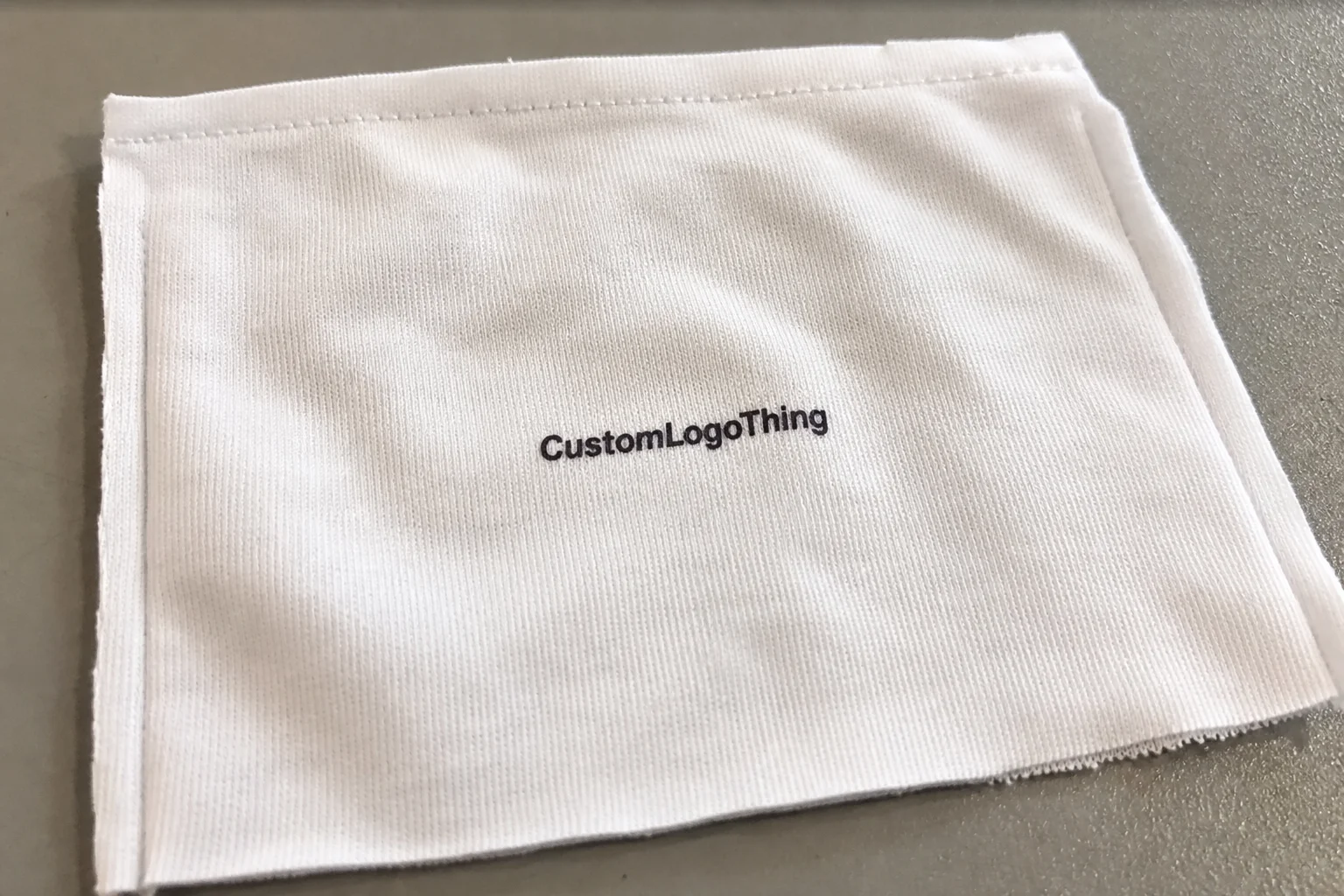
Heat-applied labels are simple in concept and exacting in production. Graphics, care information, size marks, or brand text are transferred onto fabric using heat and pressure, usually without stitching. The finish is flatter than a woven sew-in label, and that changes how the garment wears from the first try-on onward.
Buyers usually compare three alternatives. Woven labels bring a traditional apparel feel and a tactile edge. Printed neck tags sit lower visually and can be cost-effective on simpler programs. Hang tags work well for shelf presentation, but they do nothing once the garment is worn. A heat-applied interior label lives in a different category: it is meant to be felt less, not more.
That distinction matters. A design that lands a few millimeters off can sit too close to a seam, press into a ribbed neckline, or catch against skin where the garment stretches. On a spec sheet, those details look minor. On a finished product, they shape comfort, wash durability, and the customer’s sense of quality. In apparel, the inside matters almost as much as the outside.
For brands, the appeal is straightforward. Custom Heat Transfer Labels support cleaner presentation, faster application on the production line, and a tagless feel that fits modern basics and performancewear. They also reduce the “why does this itch?” complaints that tend to show up in product reviews, especially in lower-priced apparel where buyers are already comparing every detail.
“The strongest label is often the one customers barely notice, except that the garment feels better than expected.”
How the transfer process works on fabric
The production chain is more controlled than many buyers expect. It starts with artwork prep, where the supplier checks line thickness, spacing, dimensions, and color count. Then comes the carrier or film creation, followed by application with a heat press. After that, the transfer cools or cures, and the finished labels are inspected before packing and shipping.
The process is closer to precision printing plus bonding than to ordinary decoration. That comparison matters because it explains why process control is so important. If temperature drifts, dwell time changes, or pressure is uneven, the label may look fine in the center and weak at the edges. Sewing tolerates a bit of variation. Heat transfer is less forgiving.
Fabric type changes the equation. Cotton usually accepts transfers differently than polyester. Blends can perform well, but performance knits may need tighter control because they stretch, trap heat differently, or include surface finishes that affect adhesion. Textured fleece and coated fabrics are even more demanding. There is no universal setting that works on every garment, and buyers who assume there is often end up revising the first run.
Two technical variables deserve extra attention: adhesive chemistry and application temperature and time. One determines how the label bonds to the textile. The other determines whether that bond fully develops without harming the garment. A press set too hot can scorch sensitive fibers or create shine marks. Too cool, and the label may lift after repeated laundering.
Placement is a practical decision, not just an aesthetic one. Care instructions are often placed in the back neck or side seam. Size marks may sit near the hem or inside the neckline. Brand logos are sometimes used as subtle inside-neck marks, and sometimes as decorative internal branding for special editions. The best layout is the one that stays readable and comfortable without fighting the garment’s construction.
Key factors that affect durability, feel, and appearance
Fabric compatibility comes first because a strong design can still fail on the wrong substrate. A soft cotton jersey, a slick polyester performance knit, and a textured fleece all react differently. If the garment surface cannot tolerate the heat, or if the weave is too uneven, the label may not bond consistently across the full area.
Wash performance is where claims get tested. Repeated laundering, abrasion, and stretch recovery all matter. A label that looks perfect after application is not automatically durable after 10 or 20 wash cycles. For brands selling into retail or direct-to-consumer channels, that distinction affects returns and reputation. If a transfer lifts at a corner, buyers notice.
Artwork specs matter more than first-time buyers usually expect. Tiny type can blur. Hairline strokes can disappear into fabric texture. A logo with too much edge detail may look crisp on screen and soft on cloth. In practice, bolder shapes and stronger contrast survive better than delicate artwork, especially on darker or textured garments. That is a familiar lesson from packaging design: the finer the detail, the more carefully it has to be engineered.
Finish and feel are just as important as durability. Some brands want a matte, nearly invisible interior mark. Others want a slightly more present finish that still feels soft. The question is not only “can it print?” but “should it be noticeable at all?” For apparel sold as premium basics, the answer is often no.
Compliance also belongs in this discussion. Care instructions, fiber content, size markers, and country-of-origin details may need to remain readable through use. Depending on the market, that can intersect with textile labeling rules and retailer requirements. If a label is purely decorative, the job is easier. If it carries compliance data, the tolerance for failure drops sharply. ASTM and similar testing frameworks can help teams define wear and wash expectations, while broader packaging standards from organizations such as Packaging School and the Packaging Institute are useful for thinking about quality control and specification discipline.
For buyers comparing custom heat transfer labels with woven or printed neck tags, the real tradeoff is simple: do you want the most visible brand texture, or the most comfortable interior finish? The right answer usually depends on the garment price point and how much the label is supposed to contribute to the customer experience.
Cost, pricing, MOQ, and unit cost: what buyers should compare
Pricing usually depends on size, color count, quantity, setup complexity, and whether the artwork needs special effects. A one-color size mark is not priced like a multi-color logo with tight registration. A small order is not priced like a high-volume run. That sounds obvious, but buyers often compare quotes as if the label itself were the only variable.
MOQ changes the math. Lower quantities usually cost more per piece because setup is spread across fewer units. Larger runs bring the unit cost down because proofing and production overhead are distributed more efficiently. The key is not just to chase the lowest quoted price, but to understand where the breakpoints sit.
Hidden costs are where budgets get distorted. Multiple placements add labor. Variable data adds complexity. Rush production can increase cost quickly. Premium adhesive systems may be worth it for performancewear, but they should be priced as a deliberate decision, not an accidental add-on. If you are also buying Custom Labels & Tags for woven trims or other finishing details, ask whether the same supplier can coordinate the full spec stack.
Here is a practical way to compare options:
| Order profile | Typical unit cost range | Best for | Main tradeoff |
|---|---|---|---|
| Small run, simple one-color label | $0.18-$0.32 | New launches, testing, limited drops | Higher per-unit cost |
| Mid-volume, standard logo plus care text | $0.10-$0.22 | Core apparel programs | More artwork discipline needed |
| High-volume, repeated placement | $0.06-$0.15 | Uniform programs, basics, retail packs | Requires tighter QC and line control |
| Special adhesive or premium finish | $0.20-$0.40 | Technical fabrics, premium hand feel | Higher material and setup expense |
Those ranges are directional, not universal. Final pricing depends on the supplier, the garment, and the production process. Still, they help buyers ask better questions. The best comparison is total applied cost, not just label price. If the label is cheap but creates rework, spoilage, or customer complaints, the budget is already off.
For brands building a larger product packaging system, it can help to compare interior branding costs alongside Custom Packaging Products such as mailers, inserts, or printed boxes. The label may be small, but once labor is included, the spend impact is not always small.
Production steps and timeline: from artwork to delivery
A clean timeline usually follows a predictable sequence: artwork review, proofing, sample approval, production, quality check, packing, and shipment. If the artwork is already press-ready and the garment specs are clear, the process moves faster. If not, revisions can add days before production even starts.
For standard orders, turnaround often depends on sampling and queue time. Rush jobs depend heavily on whether the supplier can approve art immediately. A first order usually takes longer than a repeat order because the team is still solving fit, placement, and application questions. That is not a flaw. It is how risk gets reduced before scale.
Seasonal demand can stretch the schedule. Fashion launches, school apparel, holiday programs, and promotional drops all compete for production windows. A buyer planning a small capsule collection may think two weeks is enough. Sometimes it is. Sometimes a sample round pushes the schedule further than expected.
A realistic framework looks like this:
- Artwork review: 1-2 business days if files are ready.
- Sampling and approval: 2-5 business days, sometimes longer for technical fabrics.
- Production: often 5-10 business days after approval.
- Shipping: depends on destination and service level.
That may sound conservative, but it is safer than assuming a frictionless turnaround. Buyers who account for approval time usually avoid expensive surprises. The same discipline applies to packaging: when printed cartons are tied to apparel launch timing, the slowest component tends to set the pace for the whole shipment.
Common mistakes brands make before ordering
The first mistake is using artwork that is too detailed for the target size. Fine lines, tiny text, and complex shading can look attractive in a file and fail once scaled down. If the label is only an inch wide, the design has to respect that physical reality. Many production issues start with overdesigned art.
The second mistake is skipping fabric testing. One adhesive setting may work on a cotton tee and fail on a stretch blend or a coated synthetic. Buyers sometimes assume that a supplier’s standard setting is enough. It may be for a certain garment family. It is not universal.
Placement errors are another recurring issue. If a buyer does not confirm a template, labels can sit too high, too low, or off-center. That seems cosmetic until customers start noticing discomfort or uneven brand presentation. Interior finishing should look intentional, not improvised.
There is also a temptation to choose the cheapest option and stop there. That usually backfires when wash durability is weak and replacements become necessary. A label that saves a few cents but generates returns is not actually a savings. It is deferred cost.
Compliance slips matter too. Care symbols, fiber content, and multilingual instructions can be overlooked when teams focus only on appearance. For some markets, that creates avoidable risk. If the label is part of a broader product packaging and retail packaging strategy, compliance should be checked with the same seriousness as color matching.
Expert tips for a cleaner application and better resale value
Start by simplifying the design language. Bold type, fewer micro-details, and a clear hierarchy usually perform better than ornate artwork. A label does not need to shout to feel premium. It needs to stay legible, survive washing, and feel good against the skin.
Test on the exact garment material you plan to sell, not a similar one. That is the fastest way to catch issues with stretch, surface texture, or heat sensitivity. In apparel, “close enough” often costs more than doing the test properly the first time.
Standardize application settings across production runs. If dwell time changes from one batch to the next, consistency suffers. A spec sheet should document temperature, pressure, placement, and cooling instructions so operators are not making judgment calls on the fly. That kind of process discipline is common in stronger packaging operations, and it translates well here.
- Use a placement diagram with measurements from the neckline, side seam, or hem.
- Keep a sample library of approved garment and label combinations.
- Track failures by fabric type, not only by style number.
- Review customer feedback for comfort complaints and wash issues.
Think of the label as part of the resale value story. Customers rarely say, “I bought this because the inside label was excellent.” They do say a garment feels premium, and interior details contribute to that perception. That is especially true in direct-to-consumer apparel, where the unboxing moment and the first wear are closely linked.
Brands that already care about finish quality in custom printed boxes usually understand this instinctively. The same buyer who specifies a neat outer carton should care about a smooth neck application. The garment is the product. The label is part of the experience.
Next steps: what to finalize before you request samples
Before you ask for samples, gather the essentials: final artwork, garment fabric type, label placement, size range, and intended wash conditions. If any of those are vague, the sample may be useful but not truly representative.
Then decide your priorities in order. Is comfort first? Durability? Lowest unit cost? Fastest turnaround? Highest-end finish? Buyers often want all five, but the quote will be clearer if the ranking is explicit. A supplier can recommend a better option when the tradeoffs are visible.
Ask for a sample or proof that matches the real garment as closely as possible. A transfer tested on the wrong fabric can mislead you. If the sample is for a performance tee, test it on that exact knit, not just on a nearby alternative.
Compare vendors with the same checklist:
- Is the artwork reviewed for printability?
- What fabric types were tested?
- What is the unit cost at each quantity tier?
- What is the estimated turnaround after approval?
- Are care symbols and compliance details included?
That side-by-side review makes pricing and lead time easier to judge, and it reduces the chance of overlooking process quality. If a vendor cannot explain the settings or the limits, that is a signal. Not always a dealbreaker, but definitely a signal.
For teams building a full branded packaging system, the best results usually come from treating apparel labeling as one part of the larger presentation. Coordinating garment finish, package branding, and external packaging creates a cleaner customer experience from shipment to first wear. If you want a flatter, more comfortable interior finish, custom heat transfer labels are often the right fit.
For final approval, review your spec sheet one last time, confirm placement, and lock the care requirements before production starts. That simple discipline saves money, protects quality, and makes the finished garment feel more deliberate the moment a customer puts it on.
FAQ
Are custom heat transfer labels durable enough for frequent washing?
Yes, when the fabric, adhesive, and application settings are matched correctly. Durability improves when the garment is tested under real wash and wear conditions before full production. If the first run survives a proper wash test, the odds are much better for the full order.
What fabrics work best with custom heat transfer labels?
Cotton, polyester, and many blends can work well, but performance fabrics need more careful testing. Textured, coated, or heat-sensitive fabrics may require special settings or a different labeling method. The substrate matters as much as the artwork.
How do custom heat transfer label prices usually get calculated?
Pricing is typically based on size, quantity, color complexity, setup work, and any rush or special finish requests. The best comparison is total landed cost, including application and possible rework. A low unit price is not automatically the lowest real cost.
What is a normal turnaround for custom heat transfer labels?
Turnaround depends on artwork readiness, sample approval time, and the current production queue. First orders usually take longer because proofing and testing can add extra steps. If your deadline is tight, build in a buffer before placing the order.
Can custom heat transfer labels be used for care instructions and size marks?
Yes, they are commonly used for care details, size identifiers, and inside-neck branding. The layout should prioritize readability, compliance, and comfort against the skin. That balance is what makes the label useful instead of just decorative.